
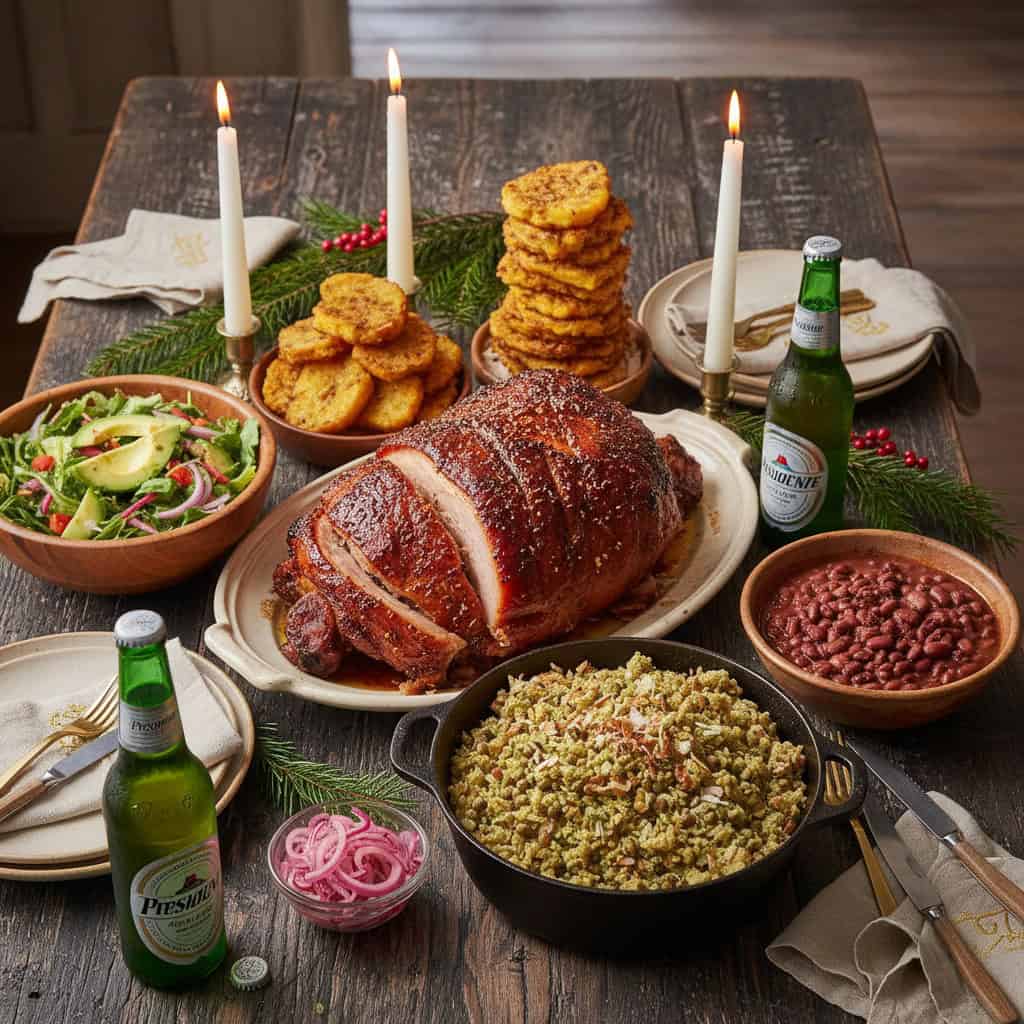
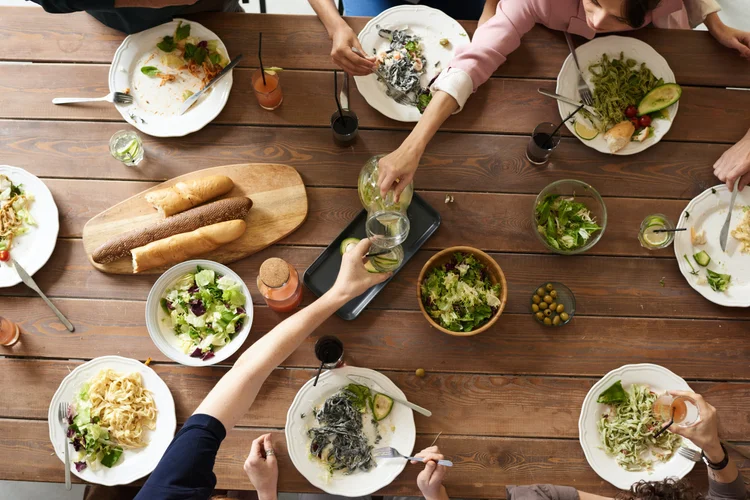
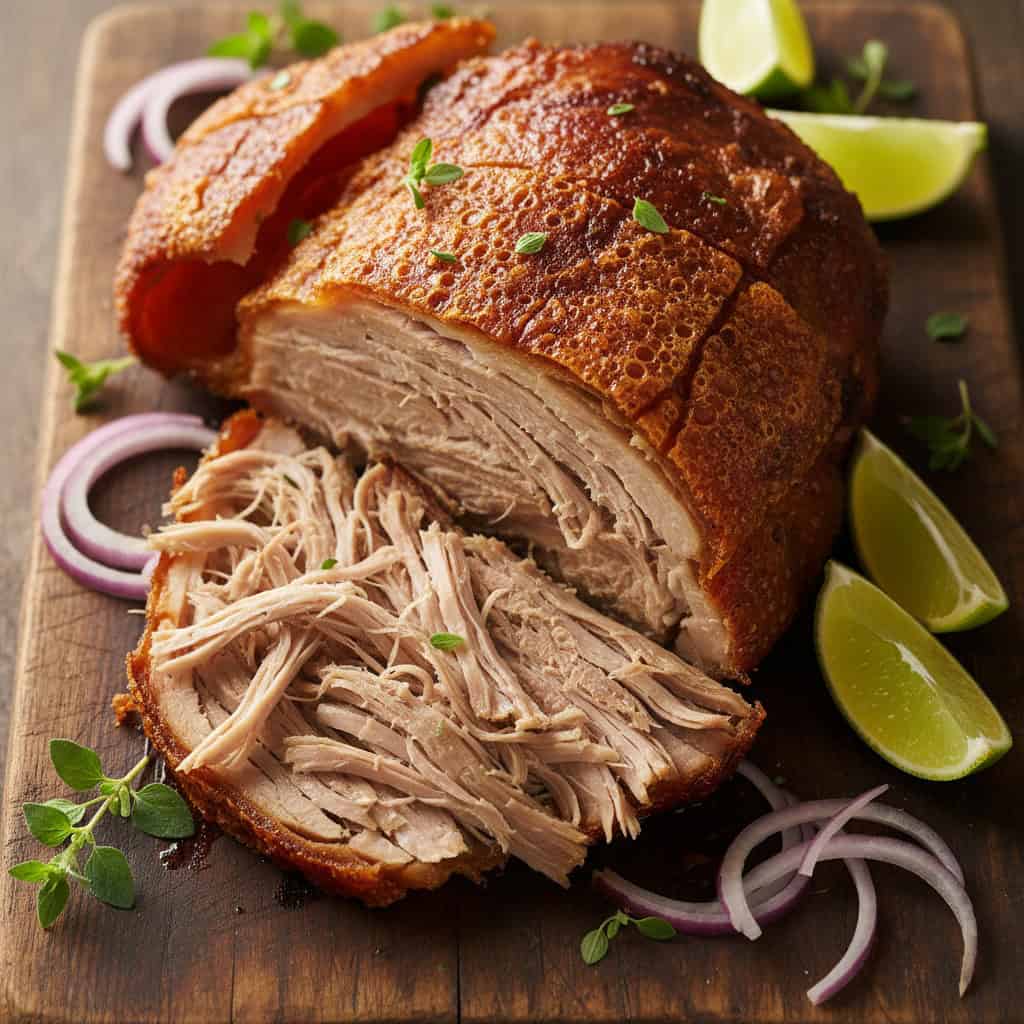
Pernil is the centerpiece. Everything else plays a supporting role. Here's how to build the perfect plate around it. If you've spent eight hours roasting a pork shoulder for Nochebuena (Dominican Christmas Eve) or a Sunday dinner, the last thing you want is to dump it next to plain rice and call it done. The sides matter just as much as the meat.
Growing up in Santo Domingo, the pernil spread was a holiday performance. My mom and tías would coordinate four or five sides between three kitchens, somehow timing everything so the rice came out hot, the tostones stayed crisp, and the salad still had crunch when the carving started. This guide is the playbook from those holidays — both the non-negotiables and the supporting cast.
The Non-Negotiables
If you're serving pernil and you don't have these three things on the table, you're missing the canonical Dominican spread. Everything else is optional. These are not.
1. Moro de Guandules con Coco
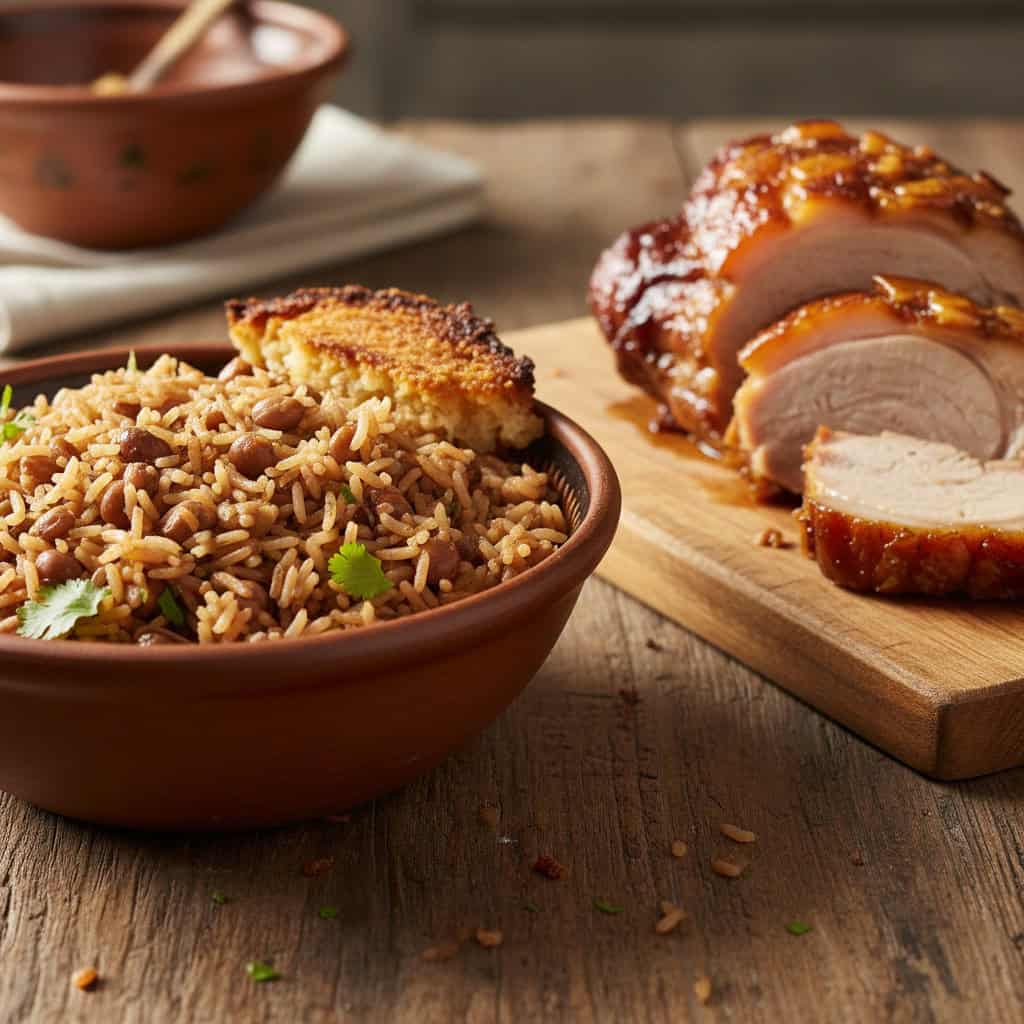
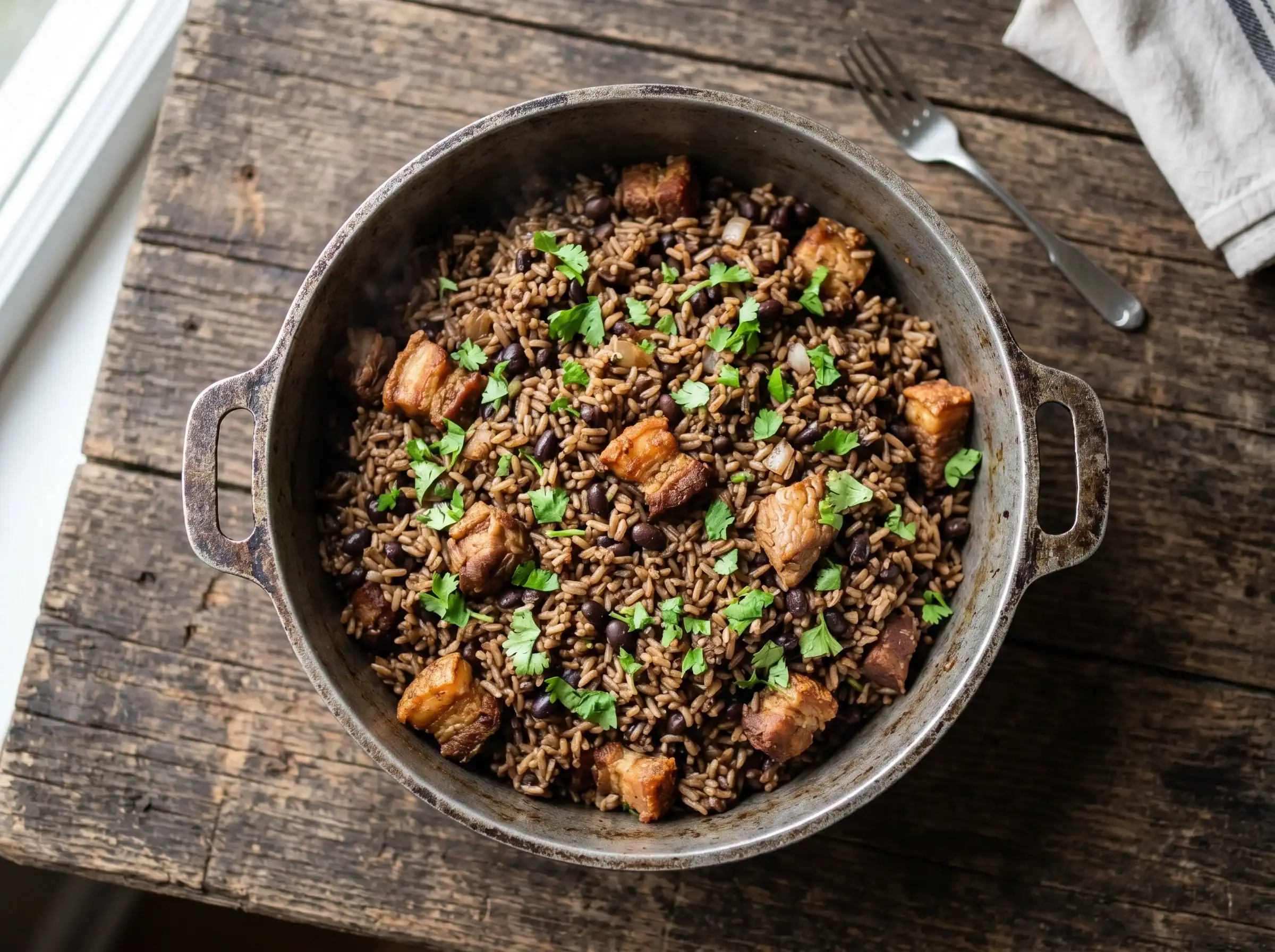
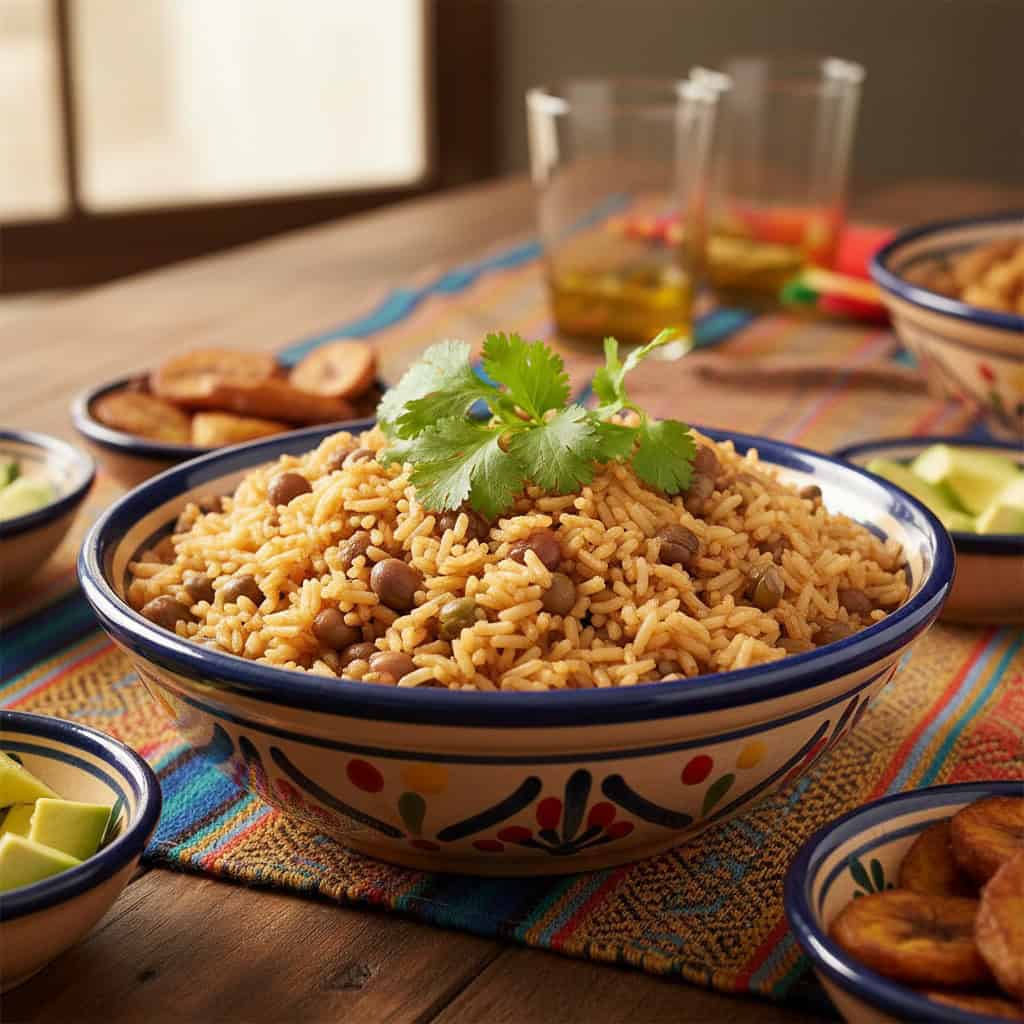
Moro de guandules con coco — pigeon peas and rice cooked together with coconut milk — is the rice that belongs next to pernil. The coconut richness echoes the fat of the pork. The pigeon peas add an earthy, almost-nutty bite that cuts through the richness. The signature concón (crispy bottom layer) of the moro is the textural counterpart to the crackling pork skin (cuerito). This is the most important pairing on this list. Don't skip it.
2. Crispy Tostones
You need crunch on the plate. Dominican tostones — twice-fried green plantain rounds — give you exactly that. They're salty, neutral, and sturdy enough to scoop up the moro or sop up pork juices. If you're going hands-off for the holiday, the air fryer tostones version is faster and cuts way down on stove space — useful when you've got four other things going.
3. Ensalada Verde (Dominican Green Salad with Avocado)
The freshness lift. Dominican ensalada verde is simple — iceberg or romaine, sliced cucumber, sliced tomato, sliced red onion, and big slices of ripe avocado, dressed with olive oil, white vinegar (or lime), salt, and dried oregano. That's it. The acid and crunch are what stop the meal from feeling like nothing but rich pork and starch. Make it last so the lettuce stays crisp.
The Extras (Traditional Additions)
Beyond the non-negotiables, here are the additional sides that show up on Dominican holiday tables — and how to think about which ones to add depending on the size of your gathering.
4. Arroz Blanco (Plain White Rice)
For households that don't always serve moro on holidays, or for families that want both rice options on the table, classic arroz blanco Dominicano with crispy concón is always welcome. Some people prefer plain white rice with their pernil so they can taste the pork without competition. Both rices on the same table is a power move at a big family meal.
5. Habichuelas Guisadas
If you're serving plain arroz blanco instead of moro, then habichuelas guisadas — Dominican stewed red beans — should join the table. The bean sauce ladled over the rice gives you the same richness moro provides on its own. Beans + plain rice + pernil is the Dominican everyday version of this plate.
6. Pasteles en Hoja (Christmas Tradition)
For Nochebuena specifically, pasteles en hoja — Dominican plantain-and-meat tamales wrapped in banana leaves — are the holiday addition. These are time-consuming and traditionally made by a group of women in the family the day before Christmas Eve. If you're not making them yourself, ask your tía if there's a Dominican lady in your area who sells them by the dozen — there always is.
7. Yuca al Mojo
Boiled yuca (cassava) topped with a sharp garlic-and-onion mojo. The starch is similar to potato but denser and slightly sweet. Drowned in pickled red onions and garlicky olive oil, it's a Dominican holiday classic. If you've got pernil on the table, yuca al mojo is one of the best supporting starches you can add — it picks up the leftover pork drippings beautifully.
8. Maduros (Fried Sweet Plantains)
The sweet counterpart to tostones. Ripe yellow plantains sliced on a diagonal and fried until the edges caramelize and the inside turns custardy and sweet. The sweetness is a deliberate contrast to the salty pork — every Dominican plate benefits from a sweet element somewhere, and maduros are how that usually happens at the holiday table. Some families serve both tostones and maduros so guests can choose.
9. The Pernil Sandwich (Next-Day Move)
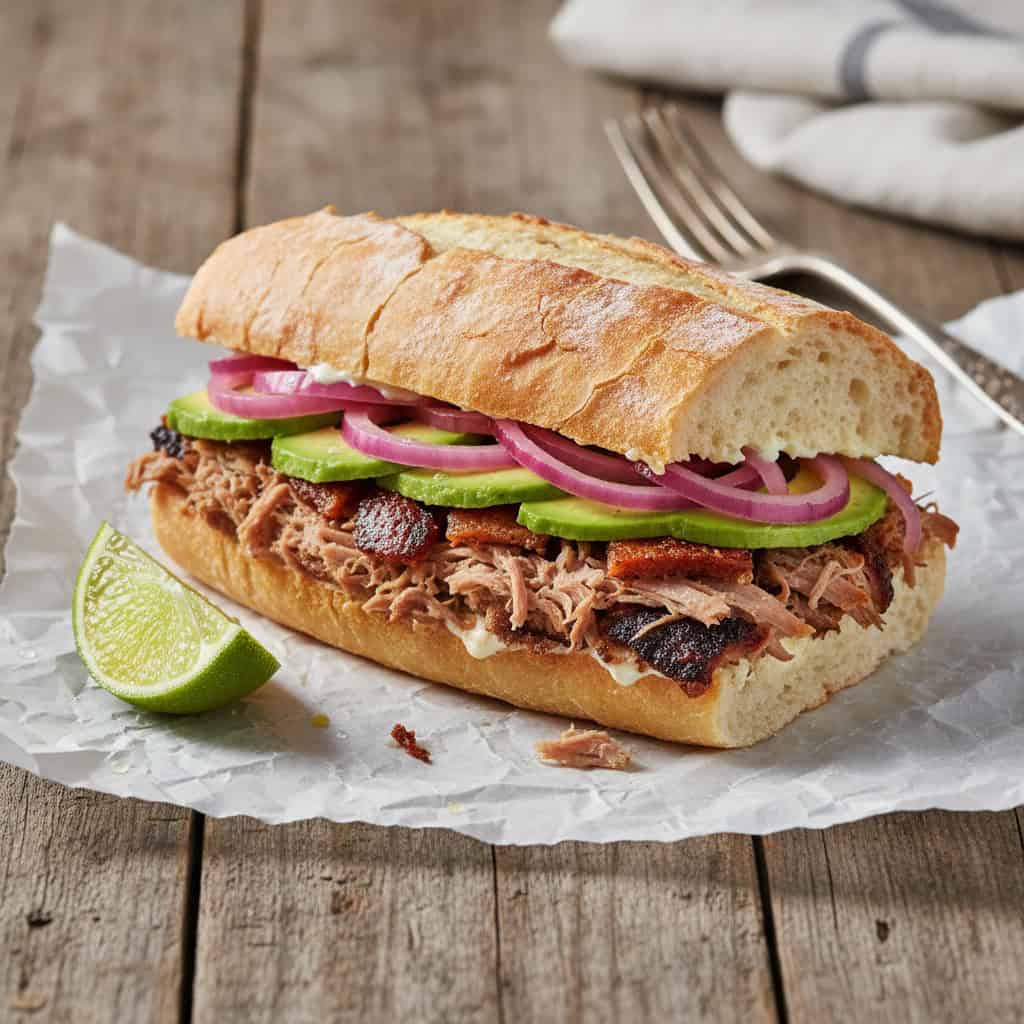
This isn't technically a "side" — but it's the most important Dominican pernil tradition you might not know about. The day after the holiday, leftover pernil gets piled onto fresh pan de agua (Dominican bread) with a smear of mayo, pickled red onions, a slice of avocado, and a few crispy bits of cuerito. This is the sandwich that gets eaten for breakfast, lunch, and dinner for three days after Nochebuena. Make extra pernil for this exact reason.
10. Ensalada de Coditos (Cold Pasta Salad)
The unexpected one. Dominican ensalada de coditos — elbow macaroni with mayo, diced ham, peas, sweet pepper, hard-boiled egg, and a touch of evaporated milk — is the cold side that shows up on every Dominican holiday table. It sounds wrong written out and tastes incredibly right next to the rest of the spread. Make a big bowl, refrigerate overnight, serve cold.
What to Drink with Pernil
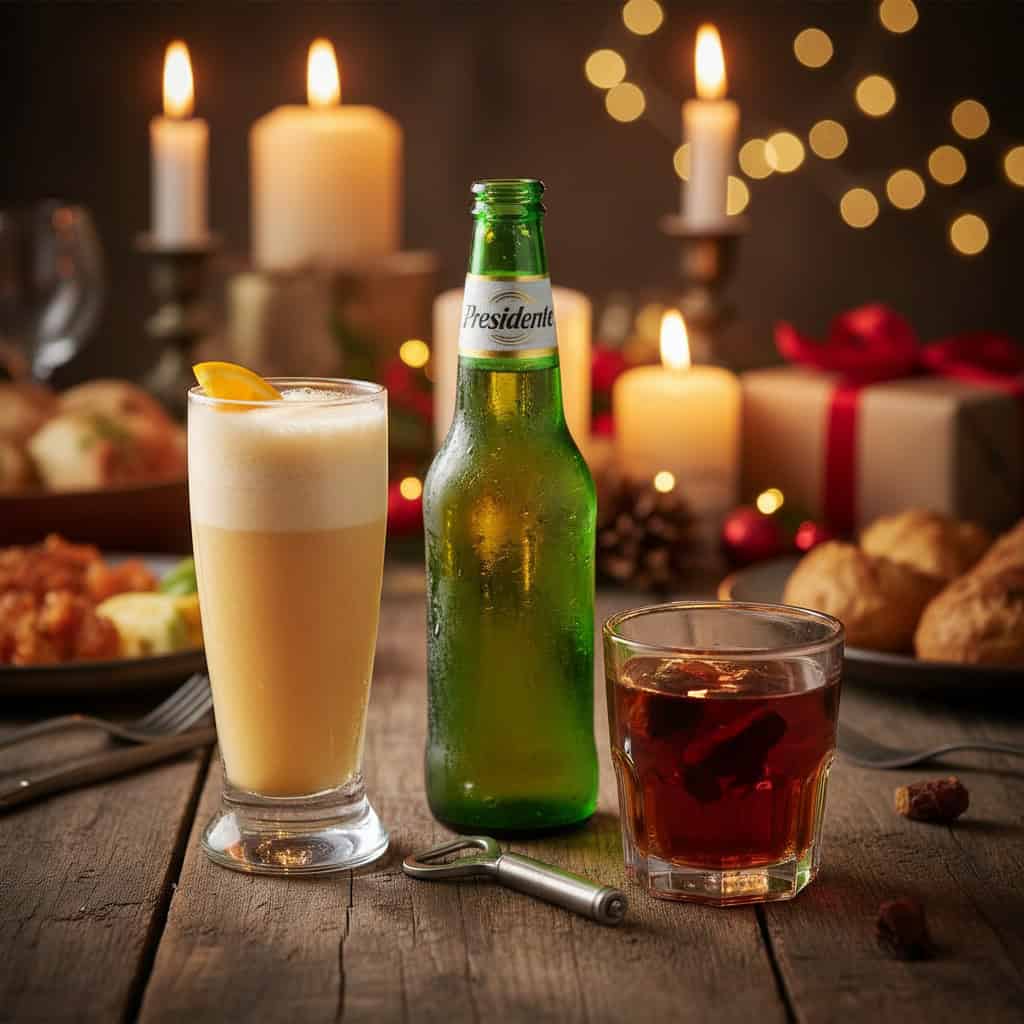
- Presidente Beer: The unofficial Dominican national beverage. Ice cold, slightly sweet, and clean — exactly what you want next to rich pork.
- Morir Soñando: The orange-and-milk drink Dominicans grew up on. The acidity and creaminess balance the pork richness. Great for kids and adults.
- Mamajuana: The Dominican rum-and-roots digestif. After dinner only. Pour a small glass and sip slowly. It's medicine, vibe, and tradition all in one.
- Red Wine (Tempranillo or Garnacha): If you're serving wine, lean Spanish. The slightly rustic, earthy reds are a great match for slow-roasted pork.
Make-Ahead Timeline for the Pernil Spread
Coordinating five sides plus a pork shoulder is the actual hard part of this meal. Here's the timeline I use:
- 2 days before: Season the pernil and refrigerate. Make ensalada de coditos (it gets better overnight). Soak the dried pigeon peas if making moro from dried.
- 1 day before: Make habichuelas guisadas (always tastes better day 2). Make pickled red onions for the salad and the sandwich. Buy fresh pan de agua.
- Day of, morning: Pernil into the oven (low and slow, 6-8 hours). Boil the yuca, then refrigerate.
- Day of, 1 hour before serving: Cook the moro de guandules and arroz blanco in two pots. Reheat habichuelas. Make the ensalada verde.
- Day of, 30 minutes before serving: Crank the pernil oven temperature to 500°F to crisp the cuerito. Fry the tostones (or air fry). Reheat yuca and pour over fresh mojo.
- Right before serving: Let the pernil rest 15 minutes. Carve at the table. Have everyone make their own plate.
Use a meat thermometer for the pernil — pulling it at the right internal temp is the single most important thing for getting tender meat with shattering skin. I use a ThermoPro instant-read thermometer for this and recommend it to everyone who asks.
Frequently Asked Questions
What is the most traditional side dish for Dominican pernil?
The single most traditional side dish for Dominican pernil is moro de guandules con coco (pigeon peas and rice cooked with coconut milk). The coconut richness and the earthy pigeon peas pair perfectly with slow-roasted pork. Tostones and ensalada verde are the other two non-negotiables on the canonical Dominican holiday plate.
What rice goes with pernil?
Two options work — either moro de guandules con coco (the holiday standard) or arroz blanco Dominicano with habichuelas guisadas on top (the everyday standard). On big Dominican holidays, both rices are often on the table at the same time so guests can choose.
What vegetable goes well with pernil?
Ensalada verde — Dominican green salad with romaine, tomato, cucumber, red onion, and avocado dressed in oil, vinegar, and oregano — is the traditional vegetable. Boiled yuca al mojo is also classic. For non-traditional options, roasted Brussels sprouts or a citrus-fennel slaw both work beautifully against the rich pork.
What dessert pairs with pernil?
For Christmas, habichuelas con dulce (sweet cream of beans) is the canonical Dominican holiday dessert and the one most associated with the season. Outside of Easter/Christmas, flan dominicano, tres leches cake, or bizcocho dominicano are all classic finishers.
How much pernil per person should I serve?
Plan on ½ to ¾ pound of raw bone-in pork shoulder per person. So for 10 people, buy a 6-8 pound shoulder. This accounts for shrinkage during the long roast, the bone weight, and leaves some leftovers for the all-important next-day pernil sandwich. If you're worried about not having enough, always size up — leftover pernil is one of the great gifts of cooking this dish.
You May Also Like
- Authentic Dominican Pernil Recipe — the centerpiece
- Moro de Guandules con Coco Recipe
- Dominican Tostones Recipe
- What to Serve with Tostones — 15 Pairings
- Morir Soñando Recipe
Shop This Post
View on Amazon →
View on Amazon →
View on Amazon →
As an Amazon Associate I earn from qualifying purchases at no extra cost to you.
Feliz Navidad, mi gente. Make extra and save room for the sandwich tomorrow.
Leave a Reply