
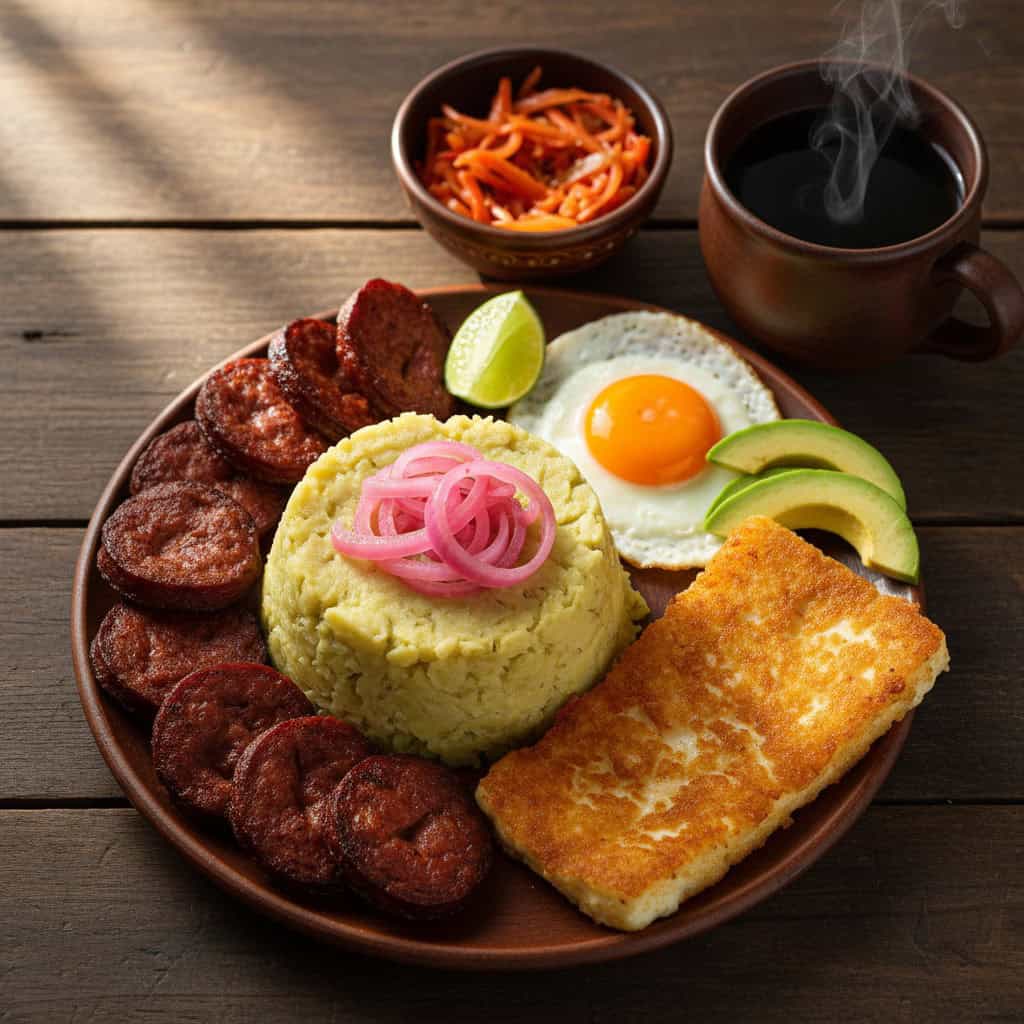
If you grew up in a Dominican household, you already know mangú is never served alone. The mashed green plantains are the foundation — but they're meant to be the platform for everything else on the plate. Get the pairings right and you've got one of the great breakfasts in the world. Get them wrong and you've just got a bowl of plantain mush.
I've eaten mangú for breakfast at least once a week my entire life — first in Santo Domingo, now in my own kitchen — and I've spent years figuring out which sides actually elevate it and which ones get in the way. This guide is everything I've learned, plus a few combinations Dominican home cooks have been quietly perfecting for generations.
The Classic: Los Tres Golpes
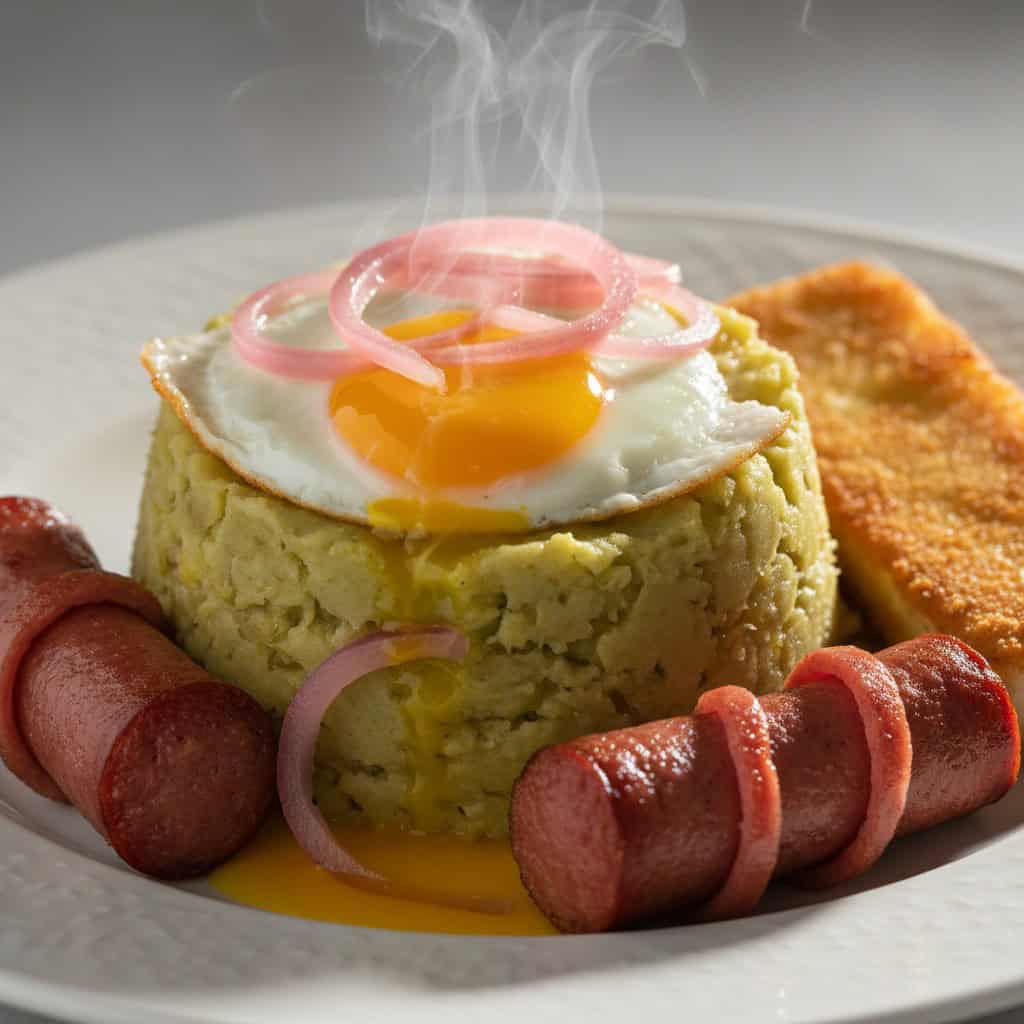
Before we get to alternatives, you have to understand the original. Los tres golpes — "the three hits" — is the canonical Dominican breakfast, and it's the standard every other mangú pairing is measured against. The three hits are: fried Dominican salami (thick coins of pink, peppery sausage seared until the edges curl), queso frito (a thick slab of salty white cheese pan-fried until golden and squeaky), and a sunny-side-up egg (the runny yolk is the sauce that ties the whole plate together).
The genius of los tres golpes is the contrast. Mangú is mild, starchy, and slightly tangy from the pickled red onions on top. The salami is fatty and salty. The cheese is firm and briny. The egg is rich and creamy. Each bite is a different combination of those four elements, and you build the perfect forkful yourself. There's no recipe — just the components, the plate, and your own balance.
You don't need fancy equipment for this, but a heavy skillet makes a real difference for crisping the salami and getting a proper crust on the queso frito. I use my Staub cast iron skillet for both — it holds heat the way the old aluminum pans my mom used to swear by, and it's what gives the salami those crackling, almost-burnt edges that are the whole point.
12 Things to Serve with Mangú (Beyond the Classics)
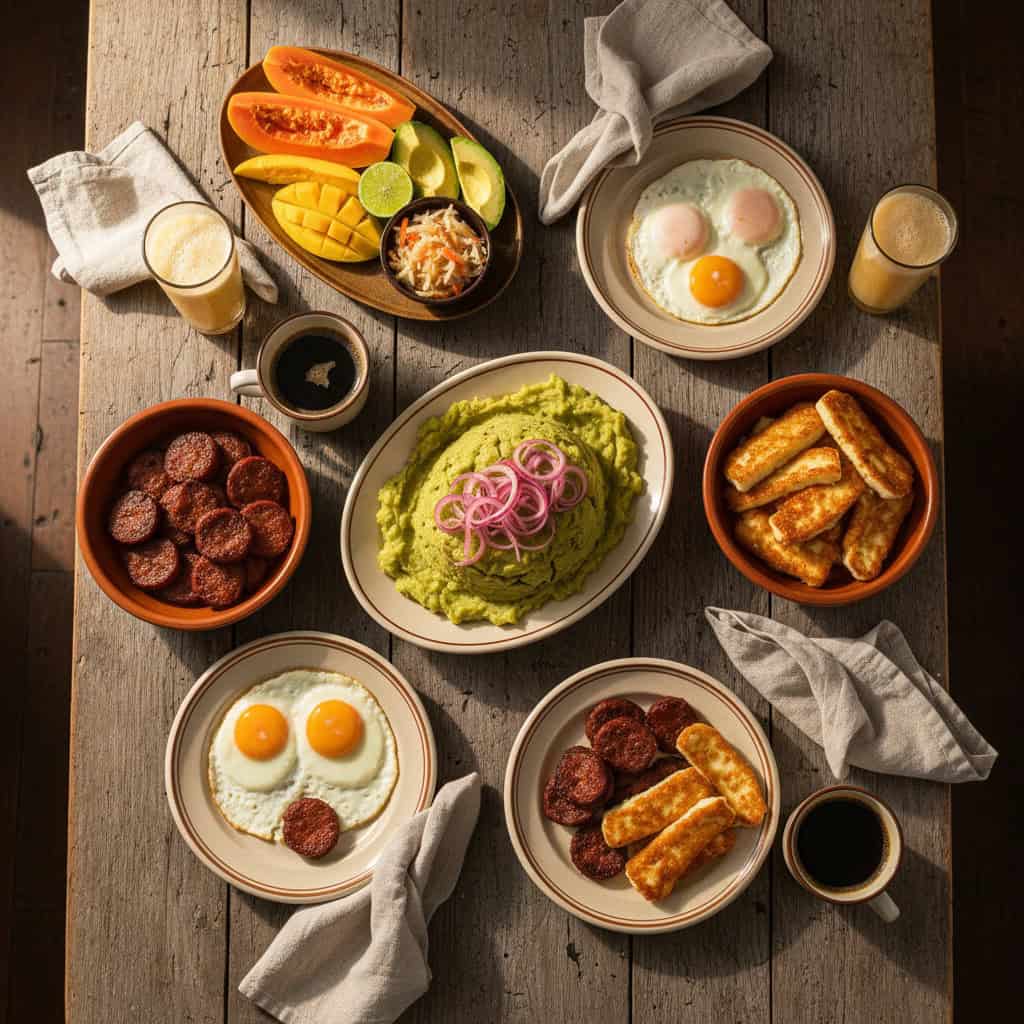
Once you've nailed los tres golpes, you start to see how mangú can flex into other meals — lunch, dinner, or just a bigger, more elaborate breakfast. Here are 12 pairings I make on rotation, ranked roughly by how often they end up on my plate.
1. Fried Dominican Salami
Salami Induveca is the brand most Dominicans grew up with — a thick, soft, garlicky pork-and-beef sausage that bears almost no resemblance to Italian salami. Slice it ½ inch thick, fry in a dry skillet until the edges are crispy and the centers are juicy, and you've got the single most important mangú companion. Look for it at any Latin grocery, or substitute thick-cut bologna in a pinch (don't tell my mom I said that).
2. Queso Frito (Fried White Cheese)
Queso frito is made with queso de freír, a firm, salty Dominican frying cheese that holds its shape over high heat. Cut into ½-inch slabs, pan-fry in a thin film of oil until each side is deep golden brown with a near-crackling crust. The inside stays soft and salty. If you can't find queso de freír, halloumi or queso para freír (sold by Tropical or Cacique brands) work well.
3. Sunny-Side-Up Eggs
The yolk is the sauce. Cook the eggs in butter or pork fat until the whites are set and the yolks are still molten. Don't flip them. Plate them right on top of the mangú so the yolk breaks and pools into the plantain. This is non-negotiable in my kitchen — even when I'm doing a healthier version, the egg stays.
4. Longaniza Sausage
Longaniza is a coarse, garlicky pork sausage seasoned with sour orange and Dominican oregano. Sliced into thick coins and pan-fried until the edges char, it's a smokier, spicier alternative to salami. I'll sometimes do half longaniza and half salami on the same plate when I'm feeding company — you get two different flavor profiles in one breakfast.
5. Pollo Guisado
Take leftover Dominican pollo guisado from last night's dinner and spoon it over your mangú the next morning. The mahogany sauce soaks into the plantain, the chicken pulls apart with a fork, and you've turned breakfast into something closer to a lunch plate. This is how Dominican families stretch leftovers into a second meal — nothing gets wasted.
6. Carne Guisada
Same logic as pollo guisado: Dominican carne guisada over mangú is a Sunday-morning move when there's leftover stew from the night before. The beef braising liquid is even richer than the chicken version, and the contrast between the silky plantain and the fork-tender beef is the kind of combination you don't forget. Serve with a side of avocado.
7. Habichuelas Guisadas
Stewed red beans aren't a traditional mangú pairing in most Dominican homes — but in some Cibao households (the northern region), spooning habichuelas guisadas over mangú alongside fried salami is a known move. The beans add creaminess, body, and a smoky-sweet element that plays beautifully with the tangy onions on top of the plantain.
8. Avocado Slices with Lime
This is the easiest upgrade you can make. A few thick slices of ripe avocado on the side of a mangú plate, hit with a squeeze of lime and a pinch of flaky salt, brings a creamy coolness that balances the fattiness of the salami and cheese. I always have an avocado on the counter when I'm making mangú for this exact reason.
9. Pikliz (Haitian Spicy Slaw)
This is a borderline-controversial recommendation in Dominican circles, but Haitian pikliz — pickled cabbage, carrots, and Scotch bonnet peppers — is a perfect heat-and-acid hit on top of mangú. The vinegar cuts the starch, the spice wakes everything up, and it bridges Hispaniola in the most delicious way possible. A spoonful on the side, not on top.
10. Curtido (Pickled Cabbage Slaw)
If pikliz feels too aggressive, a milder Latin-style curtido — shredded cabbage, carrots, and onions in a light oregano-and-vinegar brine — is a great middle ground. It's basically a quick-pickled slaw, and a small mound on the side of a mangú plate gives you the same acid lift without the full Scotch bonnet ride.
11. Salami and Eggs Scramble
This is the diner-style move I make on lazy weekends. Dice fried salami small and fold it into a scramble with eggs, a little milk, and a handful of chopped scallions. Pile it next to the mangú instead of having the salami and eggs separate. It's the same flavor profile, just merged into one comfort-food mountain.
12. Fresh Fruit (Papaya, Mango, Pineapple)
The lighter option. A few slices of ripe papaya, mango, or pineapple on the side of a mangú plate is what my mom did when she wanted to make breakfast feel less heavy. The sweetness and acidity from the fruit cuts through the starch and salt of the rest of the plate. If you're trying to eat lighter, swap one of the proteins for fruit and you've still got a complete breakfast.
What NOT to Serve with Mangú
I'm going to be direct with you, because the internet is full of bad mangú advice. There are pairings that get suggested constantly that just don't belong on a Dominican breakfast plate. Here's what to skip:
- Bacon. I know, I know. Bacon is fine. But Dominican breakfast doesn't use bacon — that's an American substitution, and it makes the plate read more "diner" than Dominican. Use salami or longaniza. The flavor profile is completely different.
- Sausage gravy or any cream-based sauce. Mangú is already a rich, starchy base. Adding gravy turns it into a heavy mush. The egg yolk is your sauce — that's it.
- Toast or biscuits. No starch on starch. If you want bread on the side, do a slice of fresh Dominican pan de agua, not a piece of toast.
- Sweet condiments (jam, syrup, honey). Mangú is a savory dish. Any sweetness on the plate should come from fruit or maduros, not added sugar.
- Heavy cheeses (cheddar, mozzarella). The whole point of queso frito is the firm, salty, frying-cheese texture. Melted cheddar turns the plate into a Tex-Mex breakfast bowl.
How to Build the Perfect Mangú Plate
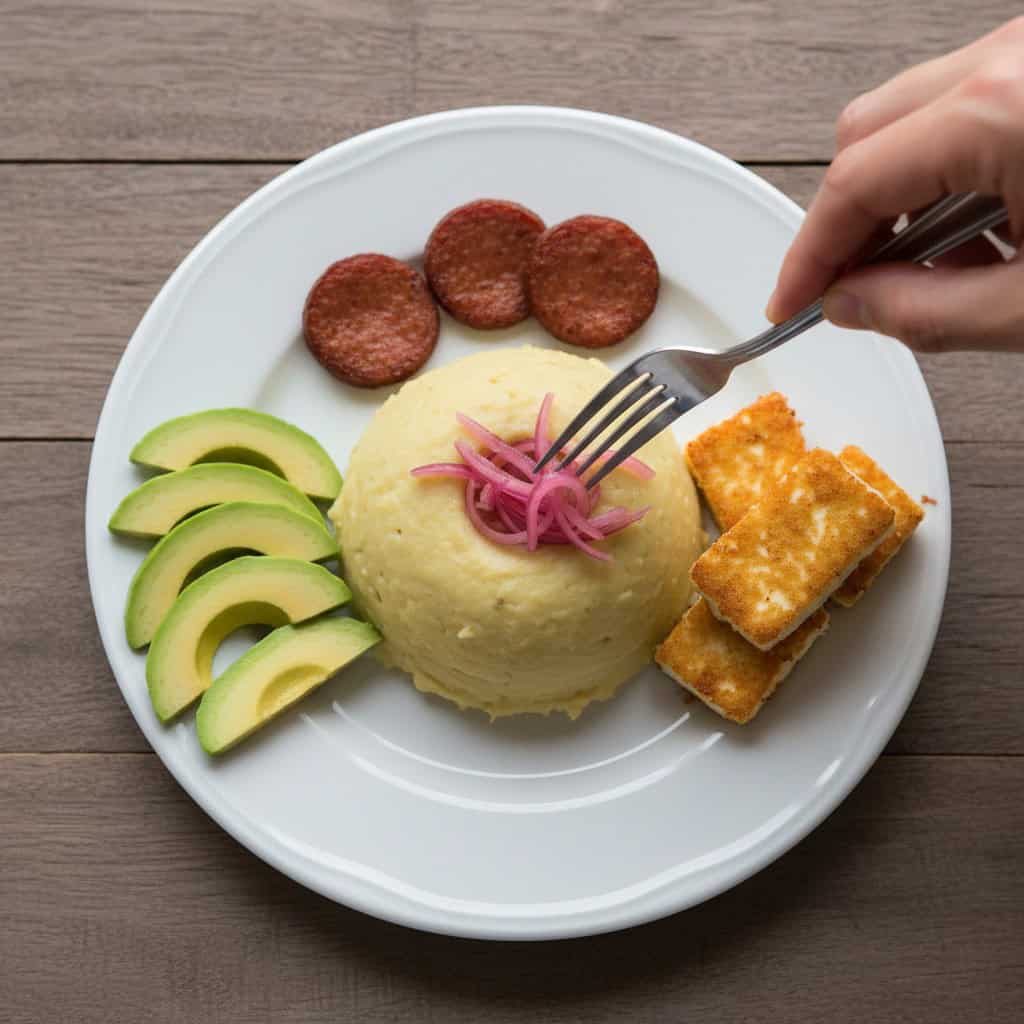
Plating matters. Here's the order I always use:
- Mangú in the center — a mound, not flattened. Make a small well in the top with the back of your spoon for the egg.
- Pickled red onions on top — the cebolla curtida is non-negotiable. The vinegar lifts the whole dish.
- Egg in the well — sunny-side-up so the yolk pools.
- Salami at 12 o'clock, queso frito at 4, second protein or avocado at 8 — the rule of three around the plantain mound.
- Side condiments separate — pikliz, hot sauce, or extra pickled onions go in their own small bowl, not piled on the plate.
This is how every Dominican grandma I know plates it, and there's a reason. You can pick and choose which element to combine with each forkful of mangú instead of being locked into one combination.
Frequently Asked Questions
What is the traditional accompaniment to mangú?
The traditional accompaniment is los tres golpes — fried Dominican salami, queso frito (fried white cheese), and sunny-side-up eggs. The three are served together around a mound of mangú topped with pickled red onions. This is the canonical Dominican breakfast and the version you'll get at any Dominican home or breakfast spot.
Can mangú be eaten for dinner?
Yes. While mangú is most associated with breakfast in the Dominican Republic, it's commonly served for dinner too — usually paired with a stew like pollo guisado or carne guisada instead of the breakfast tres golpes. Spooning a saucy stew over mangú is one of the great Dominican comfort dinners.
What drink goes with mangú?
Strong black Dominican coffee (café Bustelo or café Santo Domingo) is the standard pairing. For a sweeter option, morir soñando (Dominican orange-and-milk drink) works beautifully — the citrus and dairy balance the salt and fat of the breakfast plate. Fresh-squeezed orange juice is also common.
What kind of cheese is queso frito made from?
Queso frito is made with queso de freír (Dominican frying cheese), a firm, salty cheese specifically formulated to hold its shape under high heat. If you can't find it, halloumi is the closest substitute — it has the same firm, salty, doesn't-melt quality. Avoid soft cheeses like mozzarella or fresh queso blanco, which will collapse in the pan.
Are there vegetarian sides for mangú?
Yes — queso frito, eggs, avocado with lime, sliced tomatoes with red onion and oregano, sautéed mushrooms, or a side of habichuelas guisadas all make excellent vegetarian pairings. You can build a complete meatless mangú breakfast around queso frito, eggs, avocado, and a side of pickled vegetables. Many Dominican households eat mangú this way during Lent.
You May Also Like
- Authentic Dominican Mangú Recipe — the base recipe everything in this guide is built around
- Dominican Breakfast Ideas — 12 Traditional Morning Meals
- Dominican Pollo Guisado Recipe — the perfect leftover-mangú pairing
- Morir Soñando Recipe — the Dominican drink to serve alongside
Shop This Post
View on Amazon →
View on Amazon →
View on Amazon →
As an Amazon Associate I earn from qualifying purchases at no extra cost to you.
Make it the way your abuela would. Buen provecho, mi gente.

Leave a Reply