
Carne guisada is the recipe my dad taught me when I was 12. He stood next to me at the stove, hand on my shoulder, while I caramelized the sugar for the first time. 'Watch the color, mi'jo. Not too dark. Like coffee with milk.' Twenty years later, I still hear his voice when I make it.
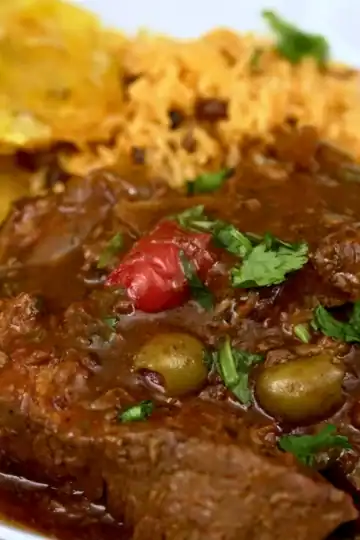
This is real Dominican carne guisada — beef stew with sofrito, tomato sauce, olives, and that signature azúcar quemada that gives the meat its mahogany color. Slow-simmered until the chuck literally falls apart. No flour, no thickener — the collagen from the bone-in meat does all the work.
I'll show you how to get the deepest flavor, the most tender meat, and the silkiest sauce. This is the carne guisada my family makes on Sundays when we want pure comfort food.
Why You'll Love This Carne Guisada Recipe
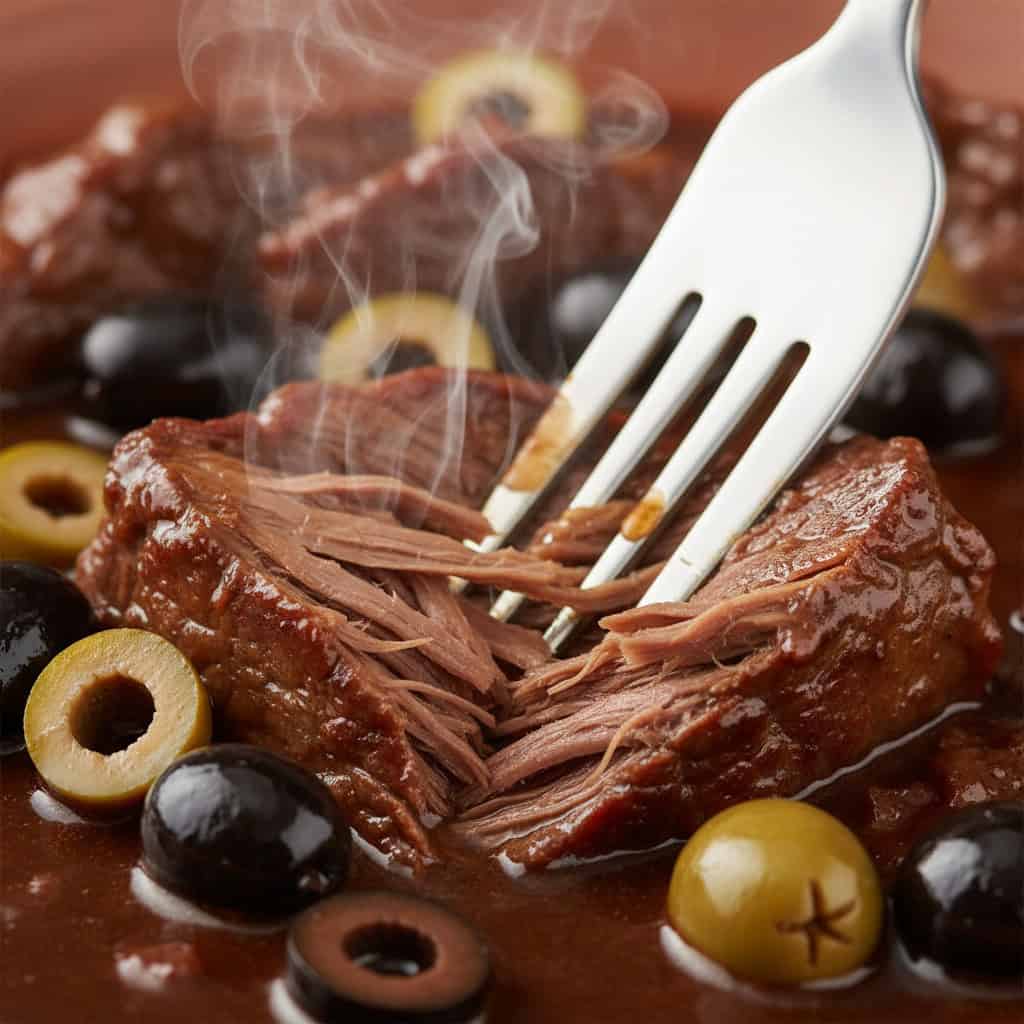
- Fall-apart tender beef: The 2-hour braise breaks down even the toughest cuts into shreds.
- Naturally rich, glossy sauce: Collagen from bone-in beef thickens the sauce — no flour needed.
- Budget-friendly: Beef chuck is one of the cheapest cuts. Feeds a family for under $15.
- Better the next day: Like all stews, day-2 carne guisada is the real carne guisada.
- Pairs with everything: Over rice, with tostones, on top of pasta — this stew is endlessly versatile.
What Is Carne Guisada?
Carne guisada means 'stewed beef' in Spanish — beef chuck slow-braised in a rich tomato-based sofrito sauce with olives and capers. The Dominican version is distinct for using azúcar quemada (caramelized sugar) to sear the meat, which gives it a deep mahogany color and slight bittersweet undertone you can't get any other way.
Unlike Tex-Mex carne guisada (which is heavily spiced with cumin and chili powder), or Puerto Rican versions (which often add potatoes), Dominican carne guisada keeps it simple: sofrito, tomato, olives, capers, and patience. The flavor comes from technique, not from a long ingredient list.
Every Dominican household has their own version. Some add a splash of beer or wine for tang. Others add cubed potatoes in the last 30 minutes. My family adds bay leaf and a pinch of cumin. The version I'm sharing is the one I learned from my dad.
The carne guisada tradition reflects broader patterns in Dominican cooking philosophy. Unlike American beef stew which often features visible vegetables (carrots, celery, potatoes) as equal participants, Dominican carne guisada keeps the focus on the meat and the sauce. The sofrito vegetables are aromatics that disappear into the sauce — they flavor everything but don't appear as recognizable chunks on the plate. This represents a fundamentally different approach to cooking: vegetables as flavor agents rather than as standalone components. The result is a dish that's pure beef and sauce, served over rice that absorbs everything. Different regions of the Dominican Republic have their own carne guisada variations. In the Cibao (the agricultural north), the dish often includes a splash of milk or cream at the end for richness. In the southern regions, it's spicier with the addition of aji caballero peppers. Coastal areas sometimes substitute beef with goat (chivo guisado) which is the regional specialty. Despite these variations, the fundamental technique — sear in azúcar quemada, build sofrito, slow braise — remains constant across the country and across families.
Carne guisada also pairs uniquely well with Dominican breads. Beyond white rice, many Dominicans serve carne guisada over yuca con cebolla (boiled cassava with pickled onions), with crusty pan de agua for sopping up the sauce, or even spooned over baked sweet potatoes. Some restaurants in the Dominican Republic serve a brunch dish called 'huevos con carne guisada' — fried eggs over the leftover beef stew, served with white rice. The versatility of the dish is part of why it has survived as a beloved staple. You can build entire meal plans around a single batch of carne guisada — Sunday dinner over rice, Monday lunch in tacos, Tuesday breakfast with eggs, Wednesday dinner over pasta. The Dominican home cook understands this kind of meal economy better than almost any other culinary tradition.
Ingredients You'll Need
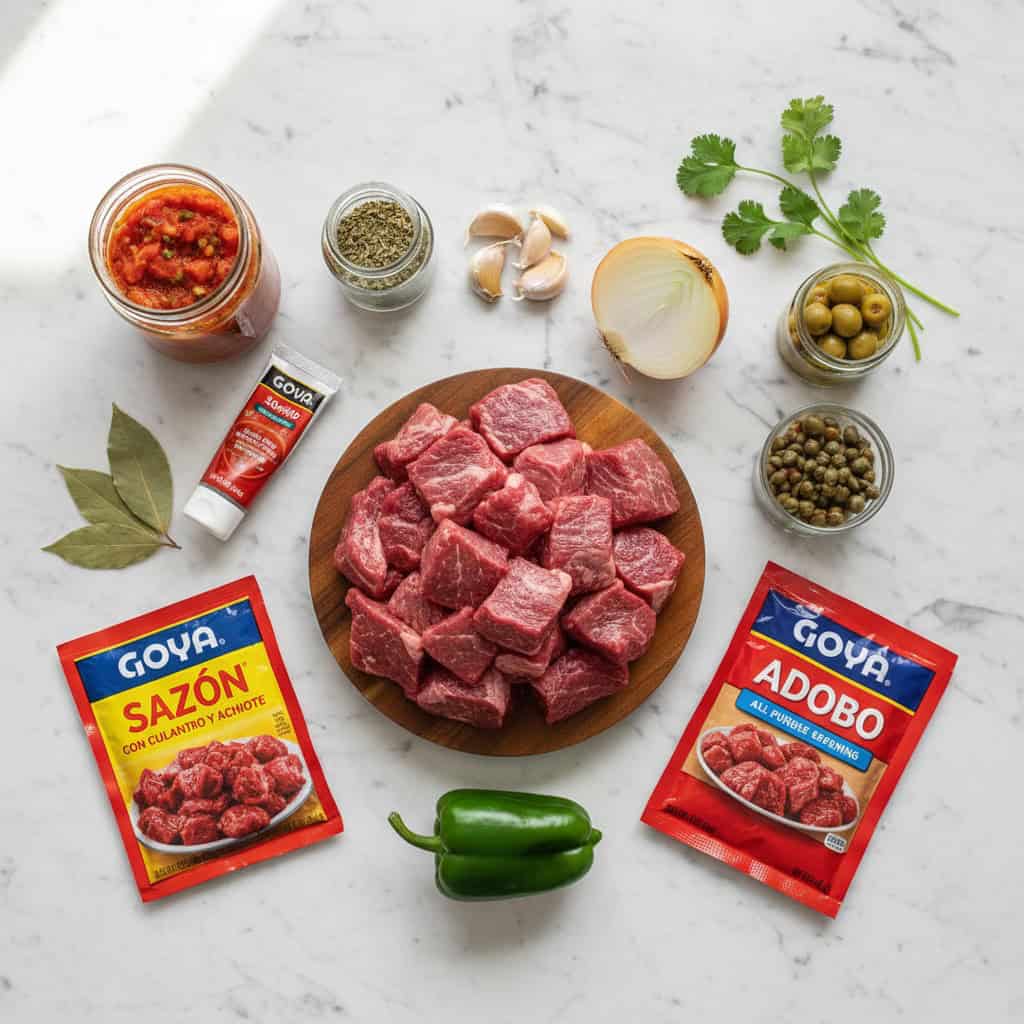
- 2 lbs beef chuck, cut into 1.5-inch cubes
- 2 packets sazón con culantro y achiote
- 1 tablespoon adobo seasoning
- 1 teaspoon dried oregano
- 4 cloves garlic, minced
- 3 tablespoon vegetable oil
- 2 tablespoon granulated sugar
- 1 large yellow onion, diced
- 1 cubanelle pepper, diced
- ¼ cup homemade sofrito
- 3 tablespoon tomato paste
- ½ cup tomato sauce
- ¼ cup pimiento-stuffed olives
- 1 tablespoon capers
- 2 cups beef stock
- 2 bay leaves
- Salt and pepper to taste
Equipment: A heavy Dutch oven is essential. I use my All-Clad Dutch Oven for the perfect even braise.
Step-by-Step Instructions
Step 1 — Season the Beef
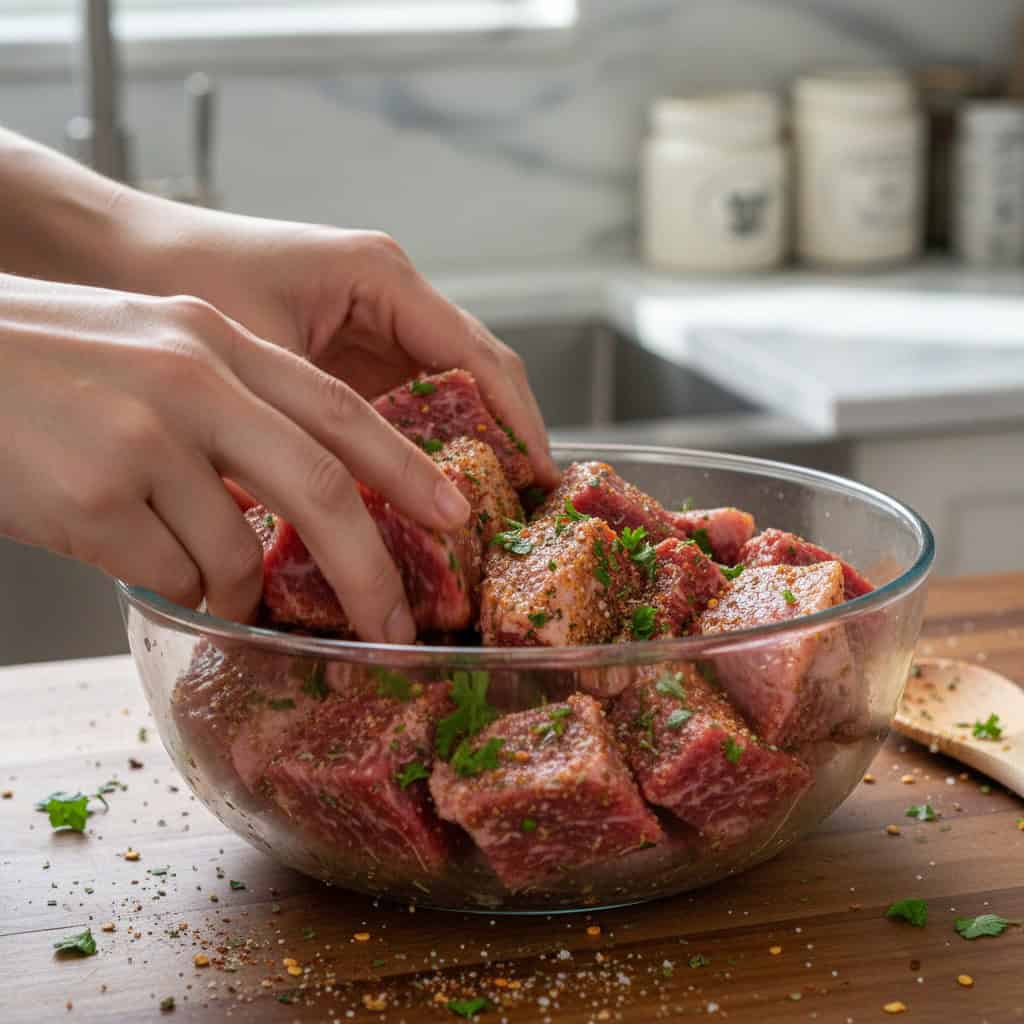
Pat beef cubes completely dry with paper towels. Season generously with sazón, adobo, oregano, and minced garlic. Toss to coat. Let sit 30 min minimum.
Step 2 — Make Azúcar Quemada
Heat oil in Dutch oven over medium-high heat. Add sugar. Let it caramelize without stirring until deep mahogany, about 2-3 min. Watch it carefully — dark brown, not black.
Step 3 — Sear the Beef
Add beef in a single layer (work in batches). Sear 3-4 min per side until deep golden brown. Remove and set aside.
Step 4 — Build Sofrito Base
Sauté onion and cubanelle pepper 5 min until soft. Add sofrito and cook 2 min more. Add tomato paste and let caramelize 2 min.
Step 5 — Combine and Simmer
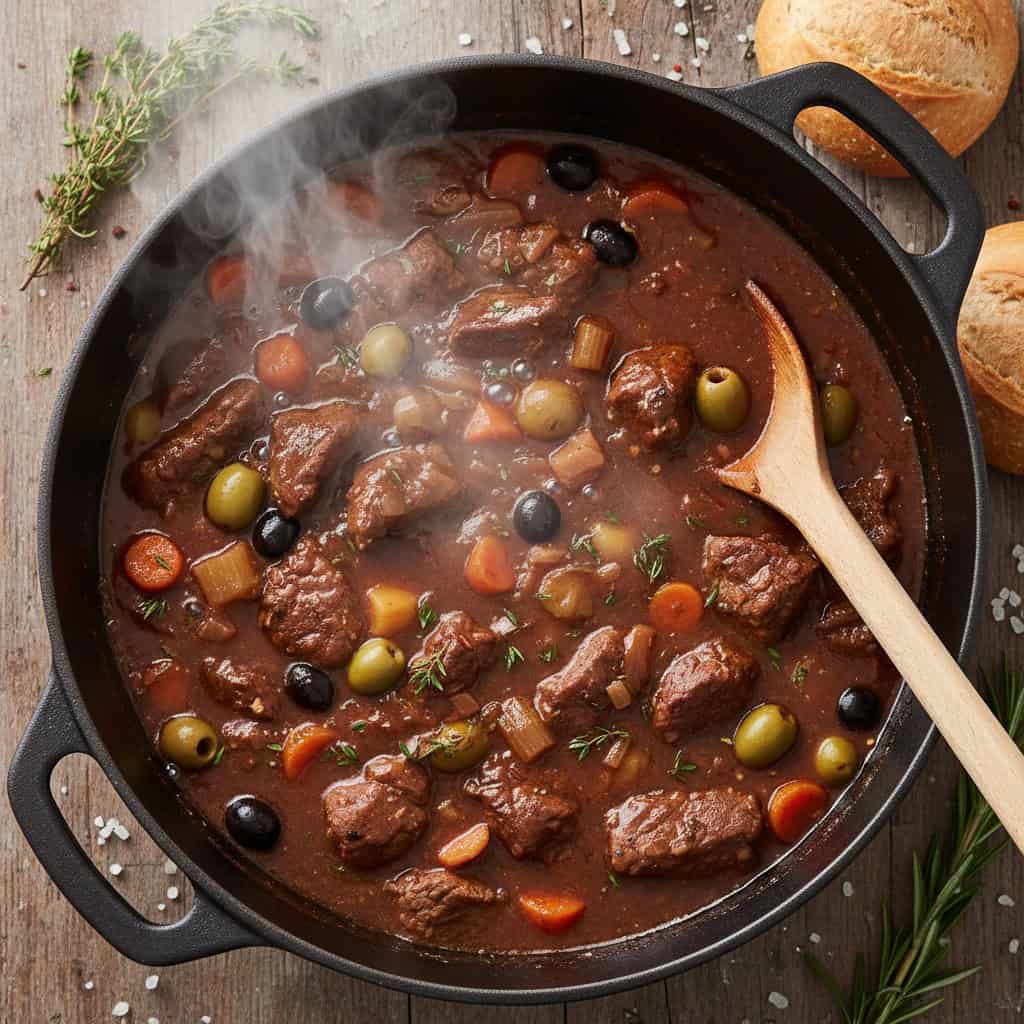
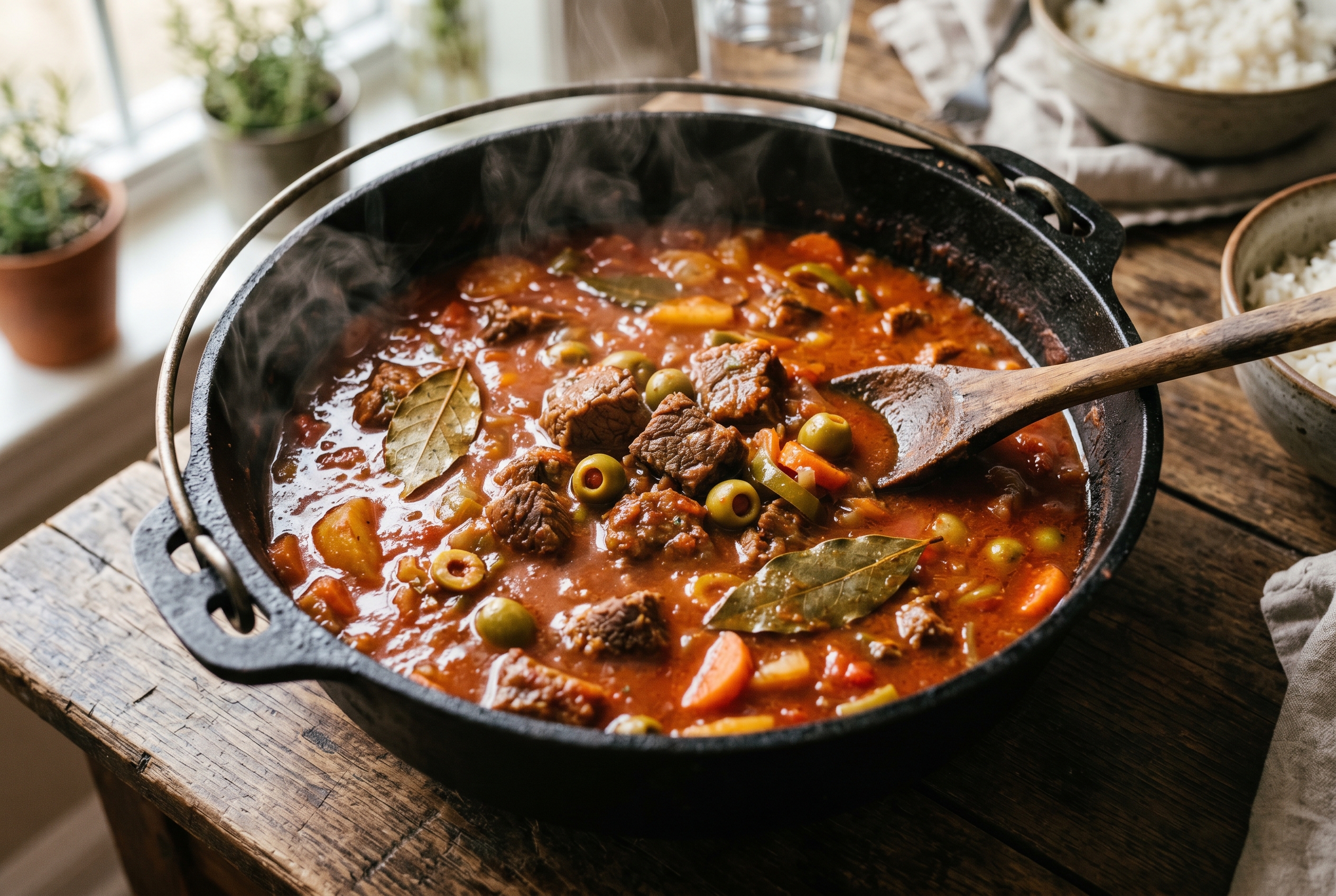
Stir in tomato sauce, olives, capers, beef stock, and bay leaves. Return beef to pot. Bring to boil, then reduce to lowest heat. Cover and simmer 1.5-2 hours until fork-tender.
Step 6 — Reduce and Finish
Remove lid. Simmer uncovered 10-15 min to reduce sauce until thick and glossy. Adjust salt and pepper. Remove bay leaves. Serve over rice.
Pro Tips for Perfect Carne Guisada
- Use bone-in chuck if possible: Boneless works, but bone-in chuck adds collagen for richer sauce.
- Don't rush the sear: Each side needs 3-4 min for proper crust. Crust = flavor.
- Cook low and slow: After the boil, drop to the lowest heat possible. Two hours of gentle simmer beats one hour of hard boil.
- Taste before serving: Salt levels change as the sauce reduces. Always taste at the end.
- Make double: Carne guisada freezes for 3 months and tastes better day 2.
- Sear in batches without crowding: If you try to sear too much beef at once, the pan temperature drops and the meat steams instead of browns. Work in 3-4 batches with space between each piece. The extra 5 minutes of patience pays off in deeper flavor.
- Add a splash of red wine: Just before adding the beef stock, splash ¼ cup of red wine into the pot to deglaze. The acidity tenderizes the beef further and adds incredible depth. Optional but transformative.
- Skim fat at the end: After the long braise, fat will have risen to the top of the sauce. Skim 2-3 tablespoons off the surface before serving. Save it — it's flavor gold for cooking rice or vegetables the next day.
- Let it rest before serving: Once you turn off the heat, let the carne guisada sit covered for 10 minutes before serving. The meat absorbs more sauce and the temperature evens out for the perfect serving heat.
Variations
Slow Cooker Carne Guisada
After searing and building sofrito, transfer to slow cooker on low for 8 hours. Even more tender.
Instant Pot Carne Guisada
Use sauté for searing/sofrito. Pressure cook 35 min with natural release. Done in under an hour.
Carne Guisada con Papas
Add 2 cubed potatoes during last 30 min of simmering. Stretches the dish to feed more people.
What to Serve With Carne Guisada
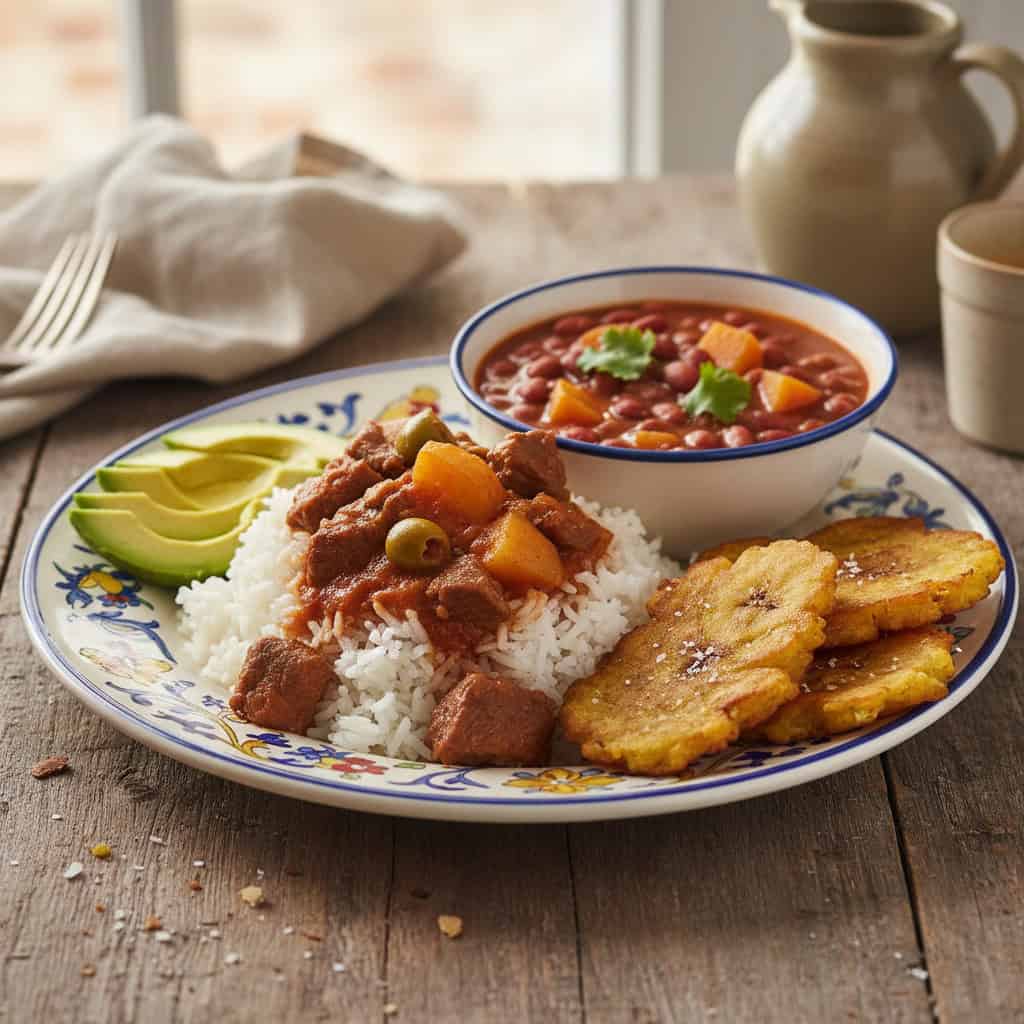
- Arroz blanco: The non-negotiable pairing.
- Habichuelas guisadas: Beans on the side make it la bandera dominicana.
- Tostones: Crispy plantains for crunch.
- Sliced avocado: Cooling contrast.
- Pan de agua: For sopping up the sauce.
Frequently Asked Questions
Can I use other cuts of beef?
Yes — beef short ribs, oxtail, or beef shank all work well. Avoid lean cuts like sirloin or tenderloin — they will dry out during the long braise. You need fat and collagen.
Do I really need azúcar quemada?
For authentic Dominican carne guisada, yes. The caramelized sugar gives the meat its signature mahogany color and a subtle bittersweet base flavor. You can skip it but the result won't be the same.
How long does it take?
About 2.5 hours total: 30 min prep, 2 hours simmering. Most of that time is hands-off.
Can I freeze carne guisada?
Yes — freezes for 3 months. Cool completely, portion into containers, freeze. Thaw overnight in fridge before reheating.
What's the difference between Dominican and Puerto Rican carne guisada?
Dominican uses azúcar quemada and rarely adds potatoes. Puerto Rican often adds cubed potatoes and uses sofrito as the primary flavor base without the burnt sugar.
Why is my beef tough?
Either you didn't cook it long enough (needs at least 90 min at low simmer) or your heat was too high (boiling instead of simmering). Tough beef just needs more time and lower heat.
Can I make this without sofrito?
Yes — substitute with finely chopped onion, green pepper, garlic, and cilantro. About ¼ cup of each. Won't taste quite as authentic but will still be delicious.
Can I freeze carne guisada?
Yes — it freezes beautifully for up to 3 months. Cool completely, portion into freezer-safe containers, and freeze. Thaw overnight in the fridge before reheating gently on the stovetop with a splash of water. The texture and flavor hold up perfectly.
What's the best cut of beef for carne guisada?
Beef chuck is the gold standard — well-marbled, breaks down into shreds with long cooking, and is affordable. Beef shank, short ribs, and oxtail also work beautifully and add even more collagen. Avoid lean cuts like sirloin or tenderloin — they will dry out and toughen during the long braise.
Can I add potatoes or carrots to carne guisada?
Absolutely — many Dominican families add cubed Yukon Gold potatoes and chopped carrots during the last 30 minutes of simmering. The potatoes absorb the sauce and become little flavor bombs. Some versions also include green olives stuffed with pimiento (in addition to the regular olives) for extra brininess.
How long does carne guisada last in the fridge?
5-6 days in an airtight container. The flavor actually improves over the first 2-3 days as the meat continues to absorb the sauce. Reheat gently on the stovetop with a splash of water — high heat will toughen the meat back up.
Can I cook carne guisada in the oven?
Yes — after searing and building the sofrito on the stovetop, transfer to a 325°F oven, covered, for 2.5-3 hours. The oven provides more even, gentle heat than a stovetop. Some Dominican cooks prefer this method for the most consistent results.
Can I cook carne guisada in a pressure cooker?
Absolutely — and many busy Dominican-Americans do exactly this. After searing and building the sofrito on sauté mode, pressure cook on high for 35 minutes with natural release. The texture is nearly identical to stovetop carne guisada, in a fraction of the time. The Instant Pot has become one of the best modern adaptations of traditional Dominican cooking.
What if I don't have azúcar quemada and want to skip the burnt sugar step?
You can skip it but the dish won't have the signature dark color. To compensate for the missing color, add 1 tablespoon of paprika to the sofrito and 1 packet of sazón to the marinade. The flavor will be less complex but still good. For authentic results, don't skip the burnt sugar — it's only 2-3 minutes of work.
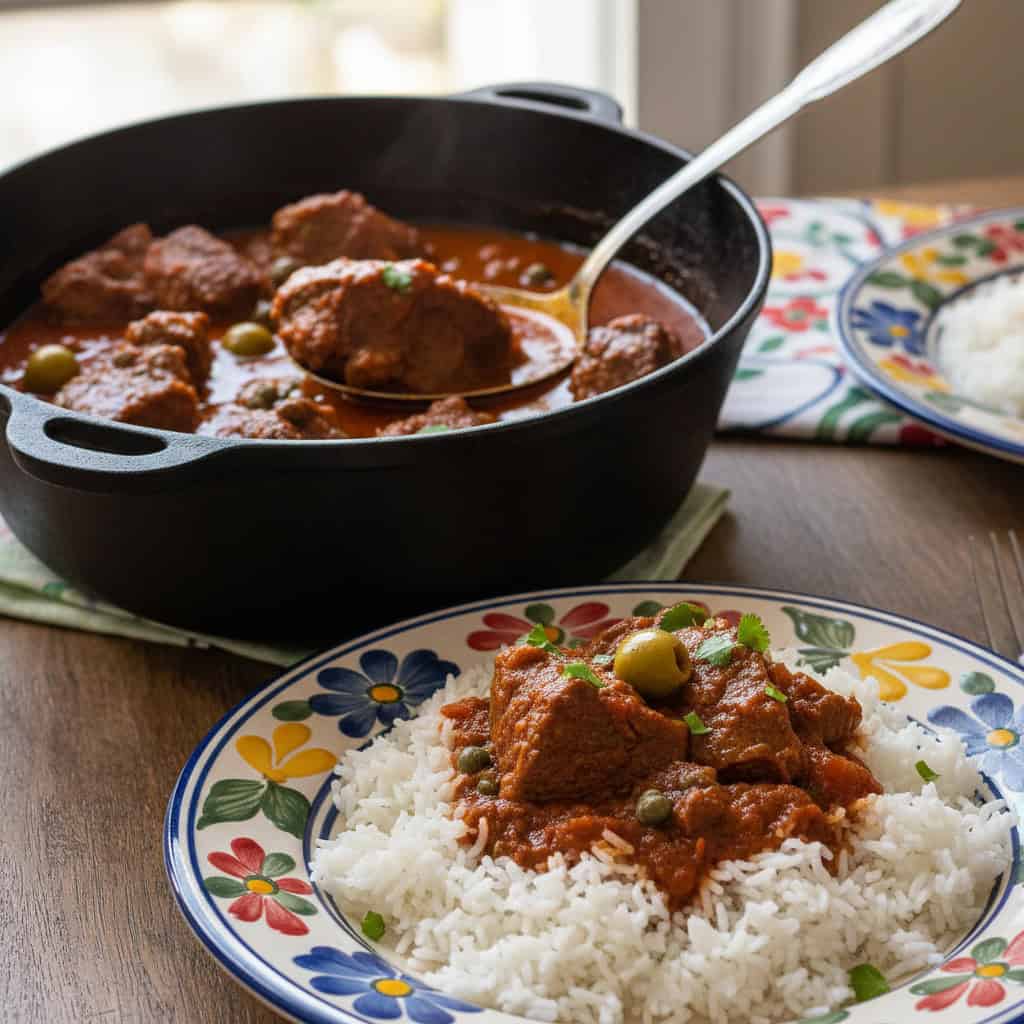
Dominican Carne Guisada
Ingredients
Method
- Pat beef dry. Season with sazón, adobo, oregano, garlic. Toss. Let sit 30 min.
- Heat oil in Dutch oven medium-high. Add sugar, caramelize 2-3 min to deep mahogany.
- Sear beef in single layer 3-4 min per side. Work in batches. Set aside.
- Sauté onion, pepper 5 min. Add sofrito, cook 2 min. Add tomato paste, caramelize 2 min.
- Add tomato sauce, olives, capers, stock, bay leaves. Return beef. Boil, then simmer covered 1.5-2 hours.

- Uncover, reduce 10-15 min until thick. Adjust salt. Serve over rice.
Notes
Tried this recipe?
Let us know how it was!Shop This Recipe
View on Amazon →
View on Amazon →
View on Amazon →
As an Amazon Associate I earn from qualifying purchases at no extra cost to you.
Make this on a rainy Sunday. It's the best comfort food in the Caribbean.
You May Also Like
📺 Watch a similar recipe: Slow Cooker Dominican Pot Roast (Carne Guisada Style)
- Instant Pot Dominican Goat Stew
- Dominican Braised Pig Feet (Patas de Cerdo Guisadas) — Slow-braised pig feet in a rich, deep sofrito sauce with olives and capers.
- Dominican Habichuelas Guisadas Recipe (Authentic Stewed Beans) — Authentic Dominican stewed red beans with auyama, sofrito, and Caribbean spices. Naturally thick.


Leave a Reply