
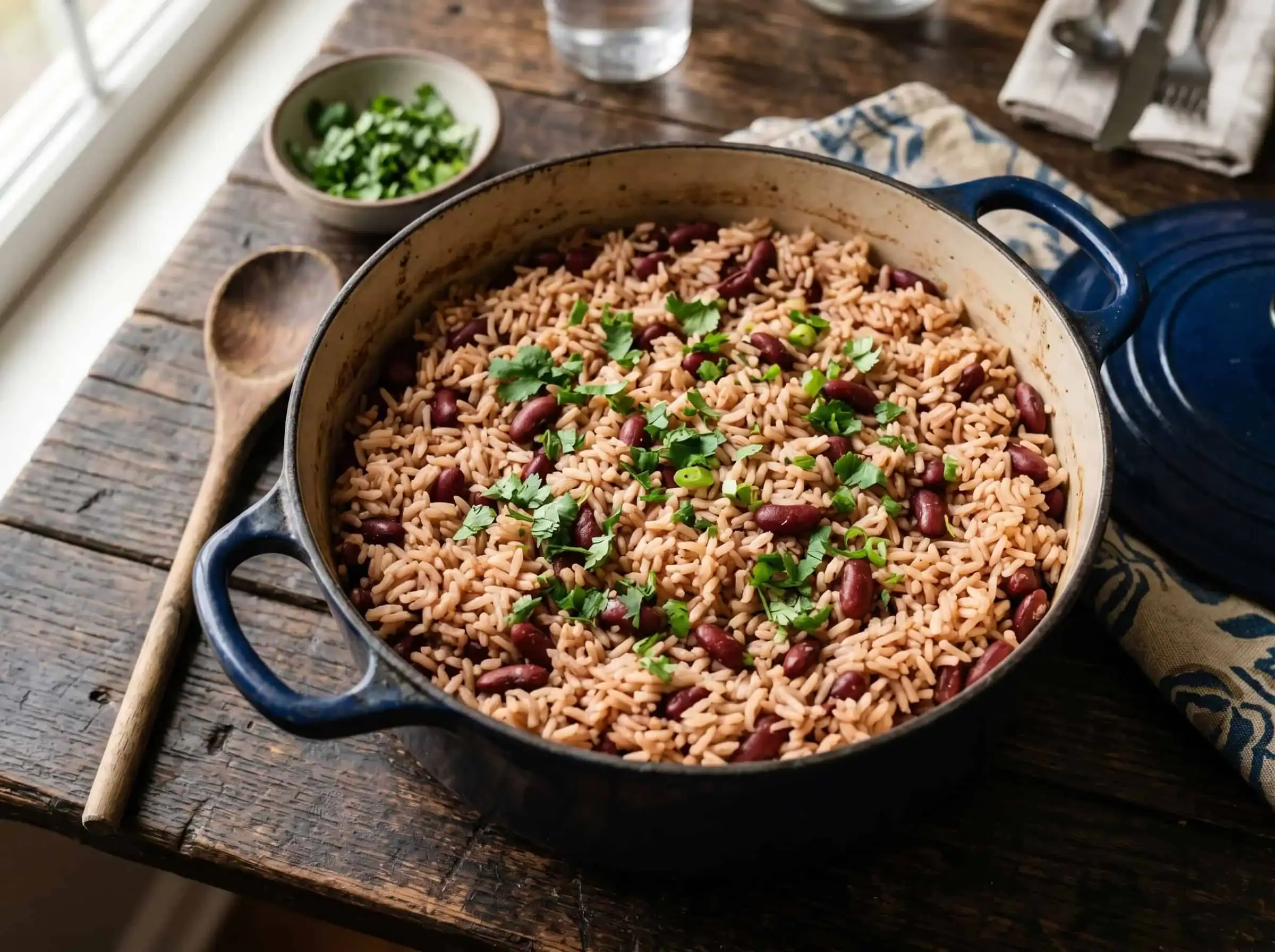
Habichuelas guisadas are the soul of Dominican cooking. If pollo guisado is the headline act, habichuelas guisadas is the bass line — quiet, foundational, present at every meal. Growing up in Santo Domingo, I don't remember a single weekday lunch that didn't have a pot of stewed red beans bubbling on the stove. They're the most quintessentially Dominican thing I know how to cook.
This is the version my mom makes. Auyama (Caribbean pumpkin) gets melted into the sauce — that's the secret. It thickens the broth naturally and adds a subtle sweetness that balances the savory sofrito. No chicken stock cubes. No shortcuts. Just dried beans, real sofrito, auyama, and time.
I'm sharing both the dried bean version (the right way) and the canned bean shortcut (the weeknight way). Both are legitimate. Both feed a family for under $5. And both will make your kitchen smell like a Dominican grandmother's house.
Why You'll Love This Habichuelas Guisadas Recipe
- Authentically Dominican: Made with auyama (Caribbean pumpkin) the way my mom and abuela made them. Not just stewed beans.
- Naturally thick and creamy: The melted auyama acts as a natural thickener — no flour or cornstarch needed.
- Pennies per serving: A pound of dried beans makes enough to feed a family for 3 days, for under $5.
- Vegetarian-friendly: Skip the smoked meat and you have a complete vegetarian protein.
- Better the next day: Like all Dominican stews, habichuelas taste even better after a night in the fridge.
What Is Habichuelas Guisadas?
Habichuelas guisadas — literally 'stewed beans' in Spanish — are a daily staple in Dominican households. The name refers specifically to red beans (sometimes pinto or pink) cooked in a savory sauce based on sofrito, tomato, and pieces of auyama (Caribbean pumpkin). They are served almost exclusively over white rice as part of la bandera dominicana — the 'Dominican flag' plate of rice, beans, and meat.
What makes Dominican habichuelas different from Puerto Rican or Cuban versions? Three key things. First, the use of auyama, which other Caribbean traditions don't use as commonly. Second, the addition of pumpkin or squash that fully melts into the broth and thickens it naturally. Third, the use of vinegar at the end for brightness — a small touch that wakes everything up.
Habichuelas guisadas connect deep to Dominican cultural identity. They appear at every weekday lunch, every party, every wake, every birthday. Eating Dominican food without habichuelas is like a sandwich without bread — technically possible, but not really the experience.
Habichuelas guisadas also reflect deeper Dominican cultural values around hospitality and abundance. In Dominican households, no one ever runs out of beans. There's always a pot, ready to feed unexpected guests. The traditional Dominican phrase 'siempre hay habichuelas' (there are always beans) has become a kind of cultural shorthand for Dominican generosity — meaning that a Dominican home will always have enough food to share. This connects to broader Caribbean traditions of food as expression of love. Cooking beans, in particular, is associated with caring for family. A grandmother making habichuelas for her grandchildren, a wife making them for her husband returning from work, a mother making them for her children — these are intimate, daily expressions of love through food. Restaurants serve habichuelas, but the home version always tastes different — better — because of the love that goes into it. Dominican-Americans living abroad often describe craving 'mom's habichuelas' specifically — not just any beans, but the exact version their mother made. This emotional connection to specific cooks' versions of the dish is universal in Dominican culture. Each cook has their own slight variations: more or less garlic, different proportions of auyama, a tiny pinch of cumin, an extra splash of vinegar. These variations are how Dominican families distinguish their cooking traditions across generations.
Beyond beans themselves, the quality of your sofrito makes an enormous difference. Homemade sofrito made fresh that morning will give you better results than store-bought sofrito sitting in your fridge for weeks. If you have time, make a fresh batch of sofrito the day you're cooking habichuelas — the difference is noticeable. Many Dominican families make sofrito weekly specifically for this reason.
Ingredients You'll Need
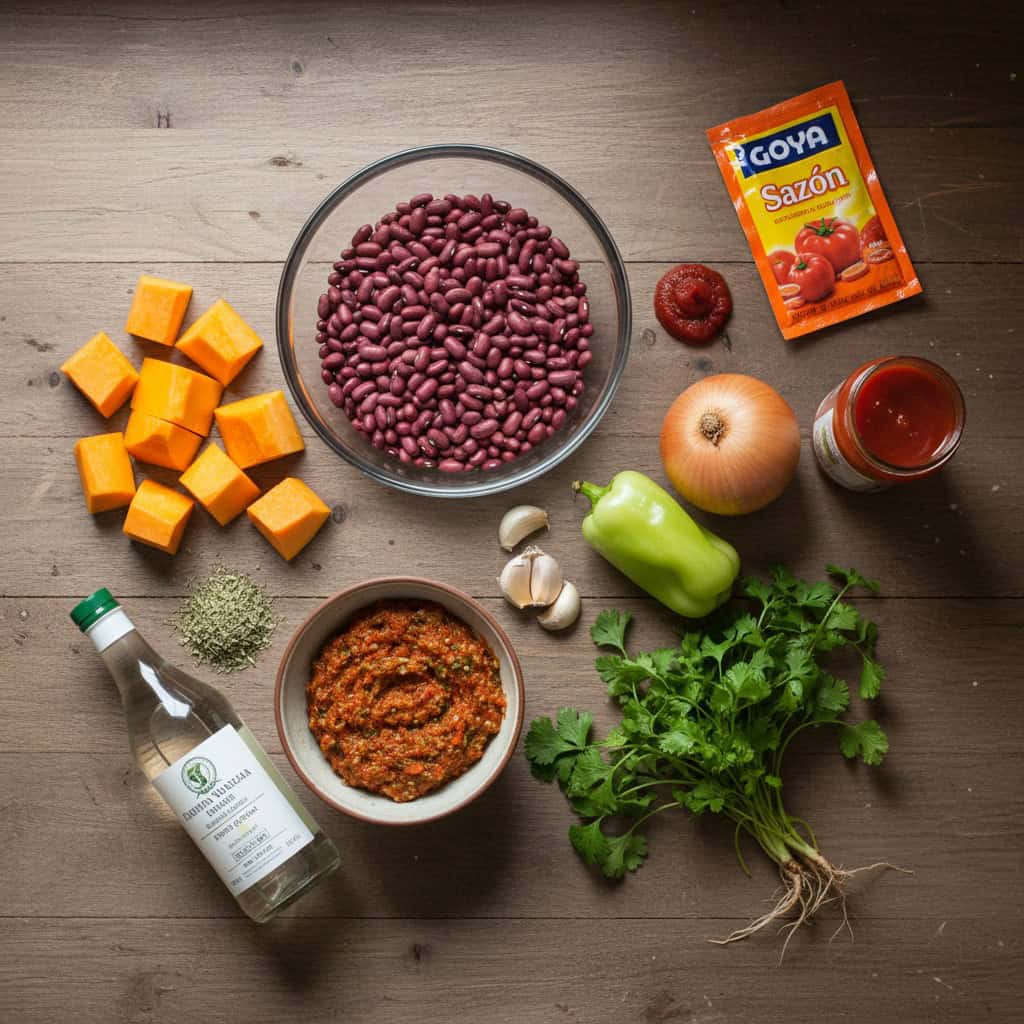
- 1 lb dried red beans (or 3 cans red beans, drained)
- 3 tablespoon olive oil
- ½ cup homemade sofrito
- 1 large onion, diced
- 1 cubanelle pepper, diced
- 4 cloves garlic, minced
- ¼ cup tomato sauce
- 2 tablespoon tomato paste
- 1 cup auyama (Caribbean pumpkin or butternut squash), peeled and diced
- 1 packet sazón con culantro y achiote
- 1 teaspoon dried oregano
- 4 cups water (or bean cooking liquid)
- 2 tablespoon white vinegar
- 2 tablespoon fresh cilantro, chopped
- Salt and pepper to taste
- Optional: 4 oz smoked pork or 1 ham hock
Equipment: A heavy pot like an All-Clad Dutch Oven or pressure cooker speeds up the dried beans dramatically.
Step-by-Step Instructions
Step 1 — Prepare the Beans
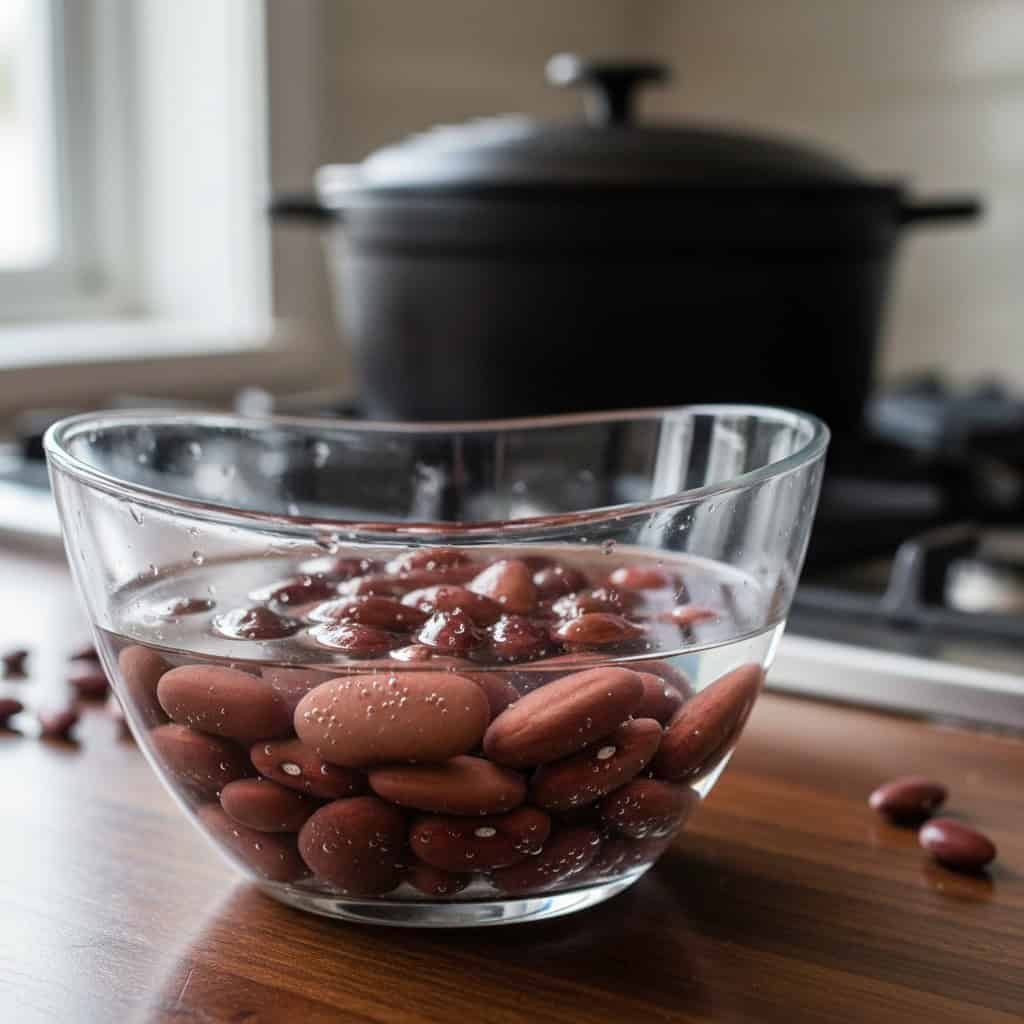
If using dried: soak overnight in cold water. Drain. Cover with fresh water by 2 inches. Bring to a boil, reduce to simmer, and cook 60-90 min until tender. Save the cooking liquid. If using canned: drain and rinse.
Step 2 — Build the Sofrito Base
Heat olive oil in a Dutch oven over medium heat. Add onion, cubanelle pepper, garlic. Sauté 5 minutes until softened. Stir in sofrito and cook 2 minutes more.
Step 3 — Add Tomato and Spices
Add tomato paste and let it caramelize 1 minute. Add tomato sauce, sazón, and oregano. Stir to combine.
Step 4 — Add Beans and Auyama
Add the cooked (or canned) beans, diced auyama, and 4 cups of bean cooking liquid (or water). Add optional smoked pork. Stir gently.
Step 5 — Simmer Until Thick
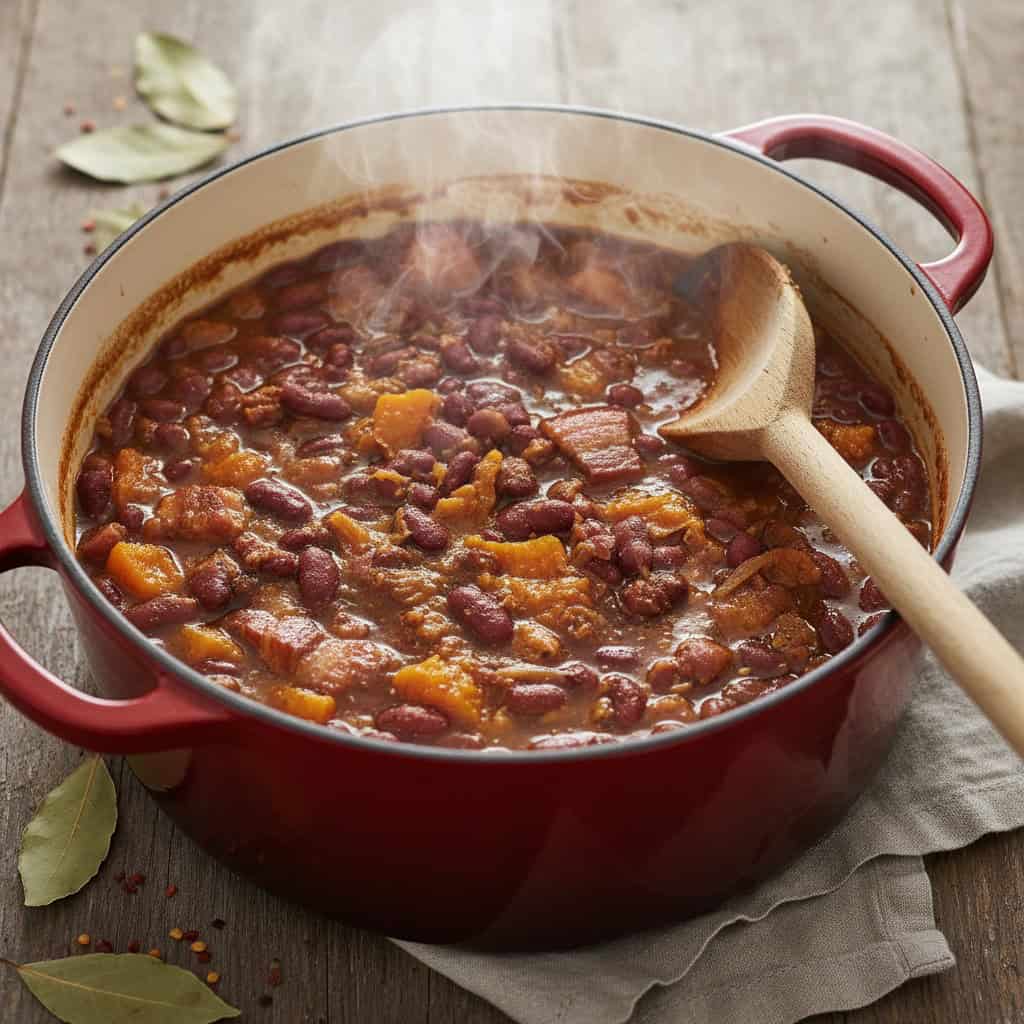
Bring to a boil, then reduce to low. Simmer uncovered 20-25 minutes. Use a spoon to mash some of the auyama into the broth — this is what makes it thick and creamy. Cook until the broth coats the back of a spoon.
Step 6 — Finish and Serve
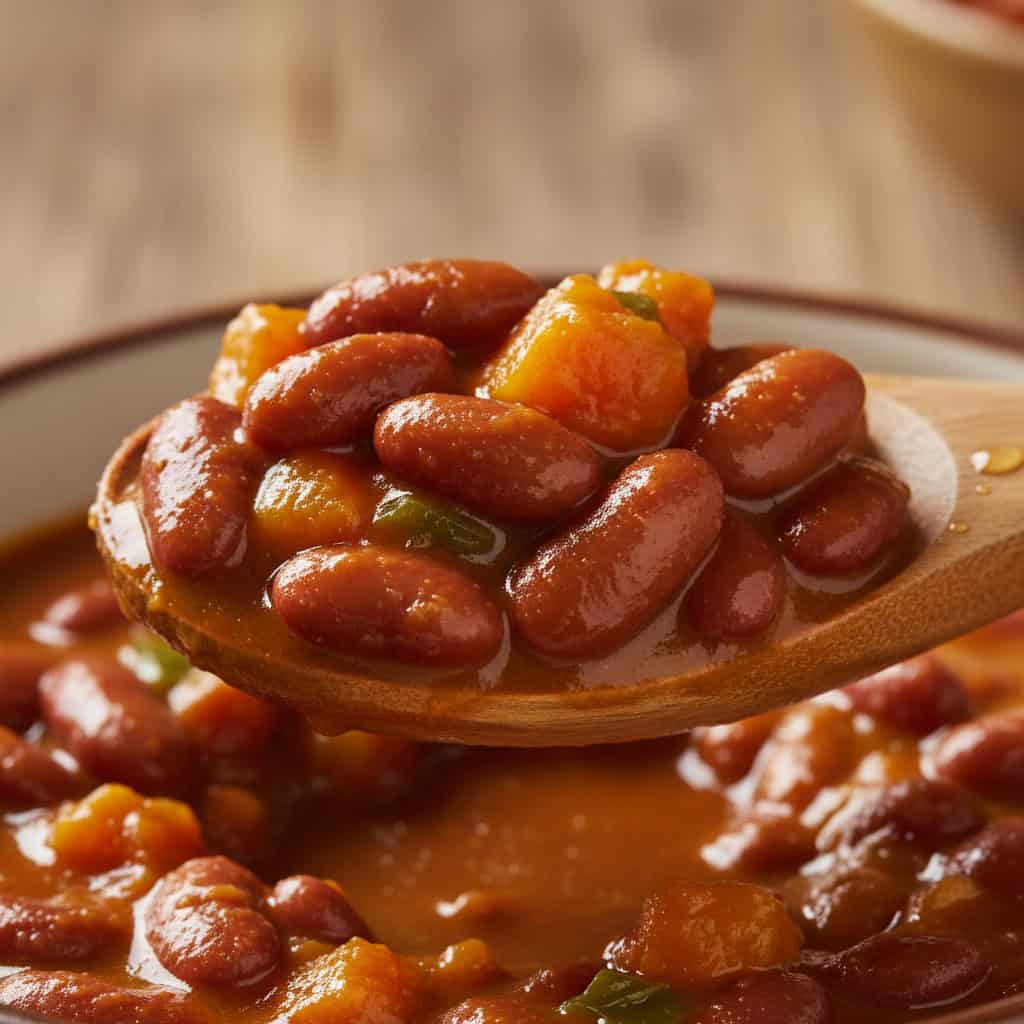
Stir in vinegar and cilantro. Taste and adjust salt and pepper. Serve hot over white rice.
Pro Tips for Perfect Habichuelas Guisadas
- Don't skip the auyama: It's not optional in Dominican habichuelas. The melted pumpkin is what gives the sauce its body and slight sweetness.
- Save the bean cooking liquid: It's full of flavor and starch. Use it instead of water in the stew for a richer, thicker result.
- Add vinegar at the end: Just 2 tablespoons of white vinegar at the very end brightens everything. Don't add too early — the heat will cook off the brightness.
- Let it rest: Habichuelas thicken as they cool. If they seem too thin off the heat, give them 10 minutes to set up before adjusting.
- Make a double batch: These freeze beautifully for 3 months. Freeze in single-meal portions for instant Dominican meal prep.
- Mash a few beans against the pot side: After 20 minutes of simmering, use the back of a wooden spoon to mash 5-6 beans against the side of the pot. The starch released thickens the sauce dramatically. This is what your abuela does without thinking.
- Add a splash of bean cooking liquid as it simmers: If the beans look like they're getting too thick during the simmer, add ¼ cup at a time of the reserved bean cooking liquid (or just water). You want a thick but pourable consistency — not a paste.
- Add a strip of bacon for smoky depth: If you want extra smoke flavor, add 1 strip of thick-cut bacon (chopped) when sautéing the onion. The smoke and fat enhance the beans without dominating. Optional but transforms the flavor.
- Use the right ratio of beans to liquid: Aim for slightly more bean than liquid — about 1.5 cups beans per cup of liquid. The natural starches will thicken everything. Too much liquid means thin watery beans; too little means dry, bound-up beans.
Variations
Instant Pot Habichuelas
Use 1 lb unsoaked dried beans + 6 cups water + all aromatics. Pressure cook 45 minutes with natural release. Add auyama, sauté 10 minutes uncovered to thicken. Done in an hour from dried.
Black Beans (Habichuelas Negras)
Substitute black beans for red beans. Skip the auyama and add 1 teaspoon ground cumin and a small piece of pork belly. More Cuban-style.
Vegan Habichuelas
Skip any smoked meat. Add 1 tablespoon liquid smoke for the smoky flavor. Use vegetable stock instead of bean liquid. Same recipe, fully plant-based.
What to Serve With Habichuelas Guisadas
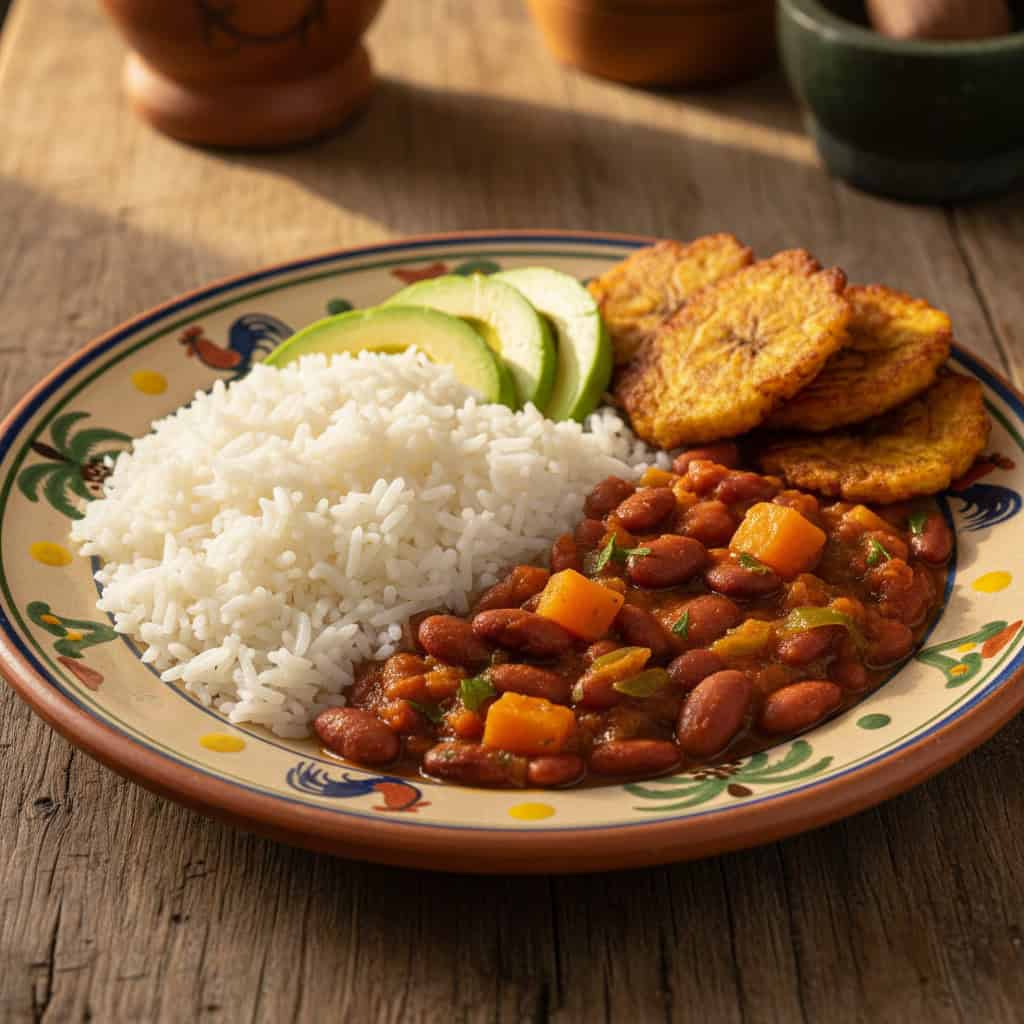
- Arroz blanco: The non-negotiable pairing. Beans on rice with a crispy concón is la bandera dominicana.
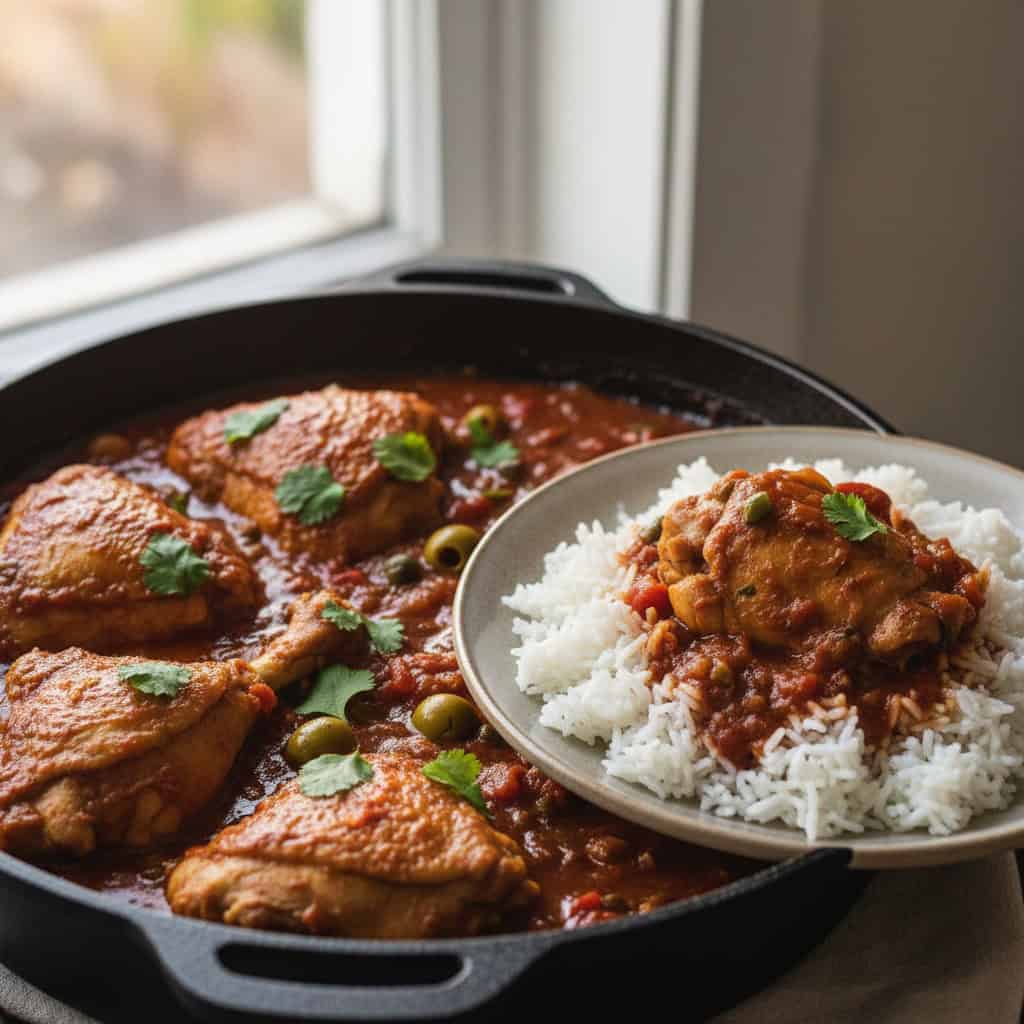
- Pollo guisado: The classic protein on the side completes the perfect Dominican plate.
- Tostones: Crispy fried green plantains for crunch.
- Sliced avocado: A creamy contrast that makes everything better.
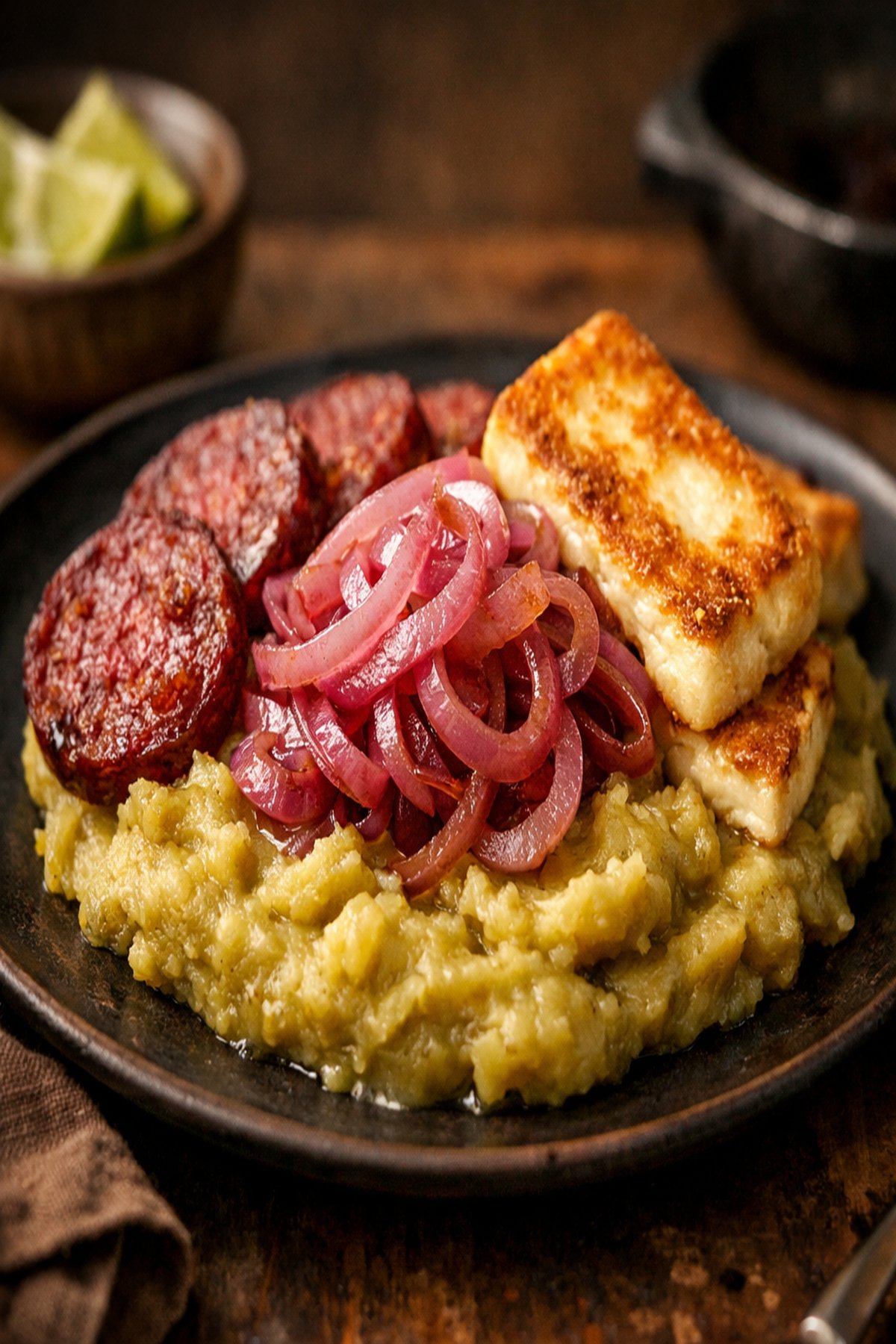
- Aguacate y queso frito: Avocado and fried cheese is an underrated Dominican combo.
Frequently Asked Questions
Yes — drain and rinse 3 cans of red beans and start at the sofrito step. The dish takes only 30 minutes total. Add 2 cups of water or stock instead of bean cooking liquid.
What's the difference between Dominican and Puerto Rican habichuelas?Dominican habichuelas almost always include auyama (Caribbean pumpkin) which thickens the sauce naturally. Puerto Rican habichuelas typically don't, relying instead on a tomato-heavier base. Dominican beans also tend to be thicker and creamier.
Can I make habichuelas without sofrito?You can — sub 1 large onion, 1 green pepper, 4 cloves garlic, and ¼ cup chopped cilantro all minced together. But homemade sofrito makes it taste authentically Dominican.
How do I make habichuelas thicker?Mash some of the auyama or beans against the side of the pot with a spoon. Or simmer uncovered 10 more minutes. Or add 2 tablespoons more tomato paste.
Can I freeze habichuelas guisadas?Yes — freeze in airtight containers for up to 3 months. The texture holds up well. Thaw overnight in fridge and reheat on stovetop with a splash of water.
What are 'habichuelas' vs 'frijoles'?Both mean beans. Dominicans, Puerto Ricans, and most Caribbean Latinos say 'habichuelas.' Mexicans and Central Americans say 'frijoles.' Same beans, different word.
Do I need to soak the beans?Soaking dried beans 8+ hours dramatically reduces cooking time (from 2 hours to 1) and helps with digestion. If you forget, no problem — just add 30 minutes to cooking time. With Instant Pot, no soaking needed.
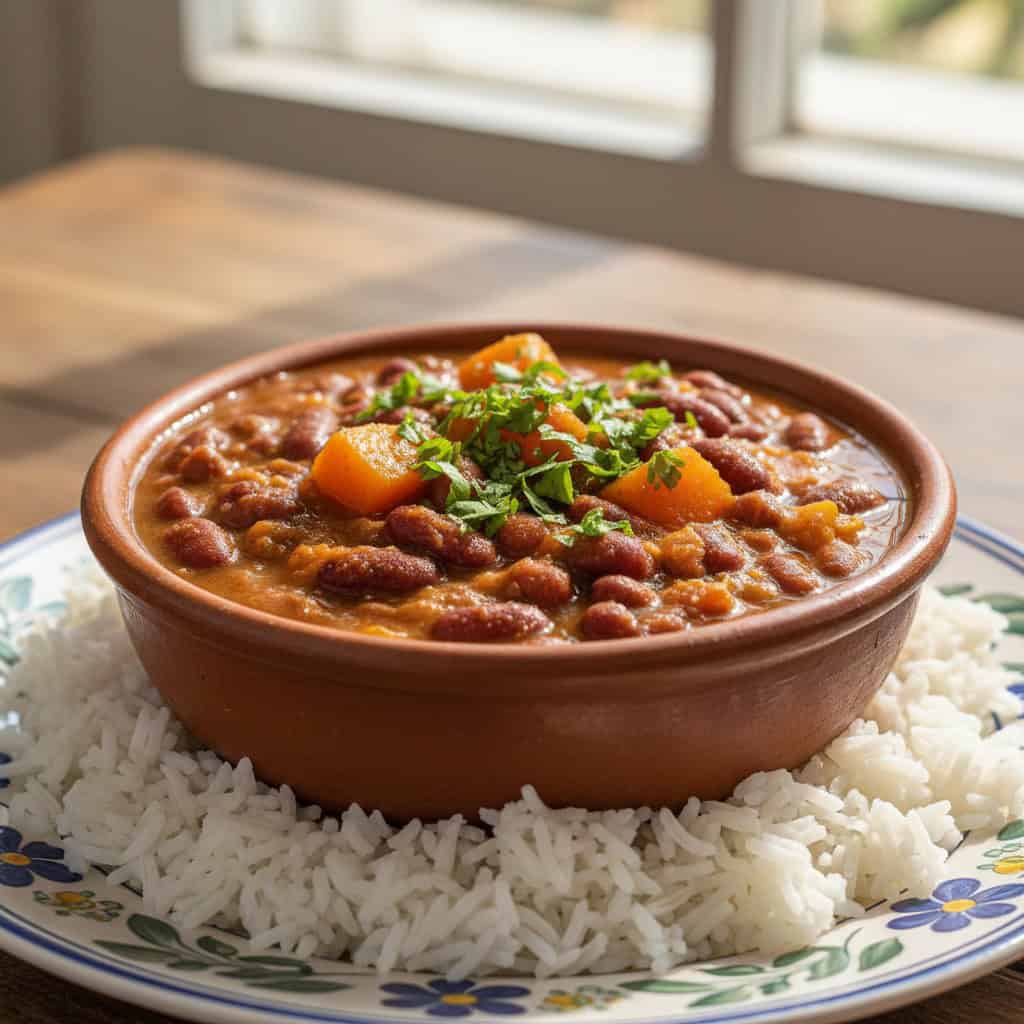
Dominican Habichuelas Guisadas
Ingredients
Method
- Soak dried beans overnight, drain, simmer in fresh water 60-90 min until tender. Save cooking liquid.
- Heat oil in pot. Sauté onion, pepper, garlic 5 min. Add sofrito, cook 2 min.
- Add tomato paste, caramelize 1 min. Add tomato sauce, sazón, oregano.
- Add cooked beans, auyama, 4 cups bean liquid. Stir gently.

- Simmer uncovered 20-25 min, mashing some auyama into broth, until thick.
- Stir in vinegar and cilantro. Adjust salt and pepper. Serve over rice.
Nutrition
Notes
Tried this recipe?
Let us know how it was!Shop This Recipe
View on Amazon →
View on Amazon →
View on Amazon →
As an Amazon Associate I earn from qualifying purchases at no extra cost to you.
Make a pot on Sunday. Eat it Monday, Tuesday, and Wednesday. That's the Dominican way.
You May Also Like
📺 Watch a similar recipe: Slow Cooker Dominican Pot Roast (Carne Guisada Style)
- Asopao de Camarones — Dominican Shrimp and Rice Soup — Make Asopao de Camarones — a bold Dominican shrimp and rice soup cooked.
- Marry Me Pollo Guisado — Dominican Marry Me Chicken — Marry Me Pollo Guisado combines the viral Marry Me Chicken trend with authentic.
- Res Guisada Dominicana — Sunday Beef Stew — Tender chunks of beef chuck simmered slow in a sofrito-tomato sauce with bay.


Leave a Reply