
If you can't make perfect Dominican white rice, you can't really cook Dominican food. I know that sounds harsh, but it's true. Arroz blanco is the foundation that everything else sits on. Pollo guisado over wet, mushy rice is a tragedy. Habichuelas over fluffy, separate-grain rice with a crispy concón at the bottom is poetry. Same beans. Different rice. Completely different meal.
Growing up in Santo Domingo, my mom taught me how to make rice when I was 9 years old. She made me practice every Saturday until I could nail the water-to-rice ratio by sight, listen for the precise moment to lower the heat, and pull a perfect concón off the bottom of the pot every single time. This is the recipe I learned from her, the way Dominican rice has been made for generations. No fancy tricks. Just technique.
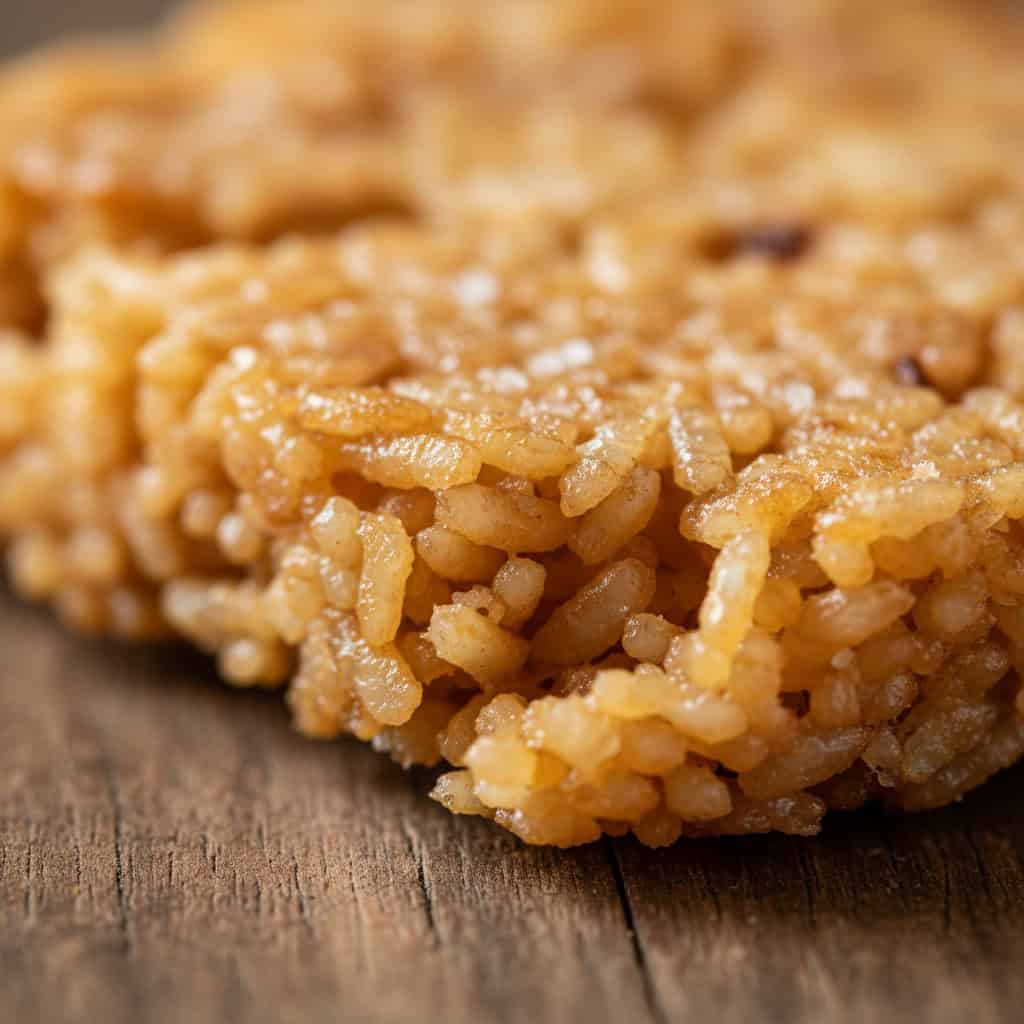
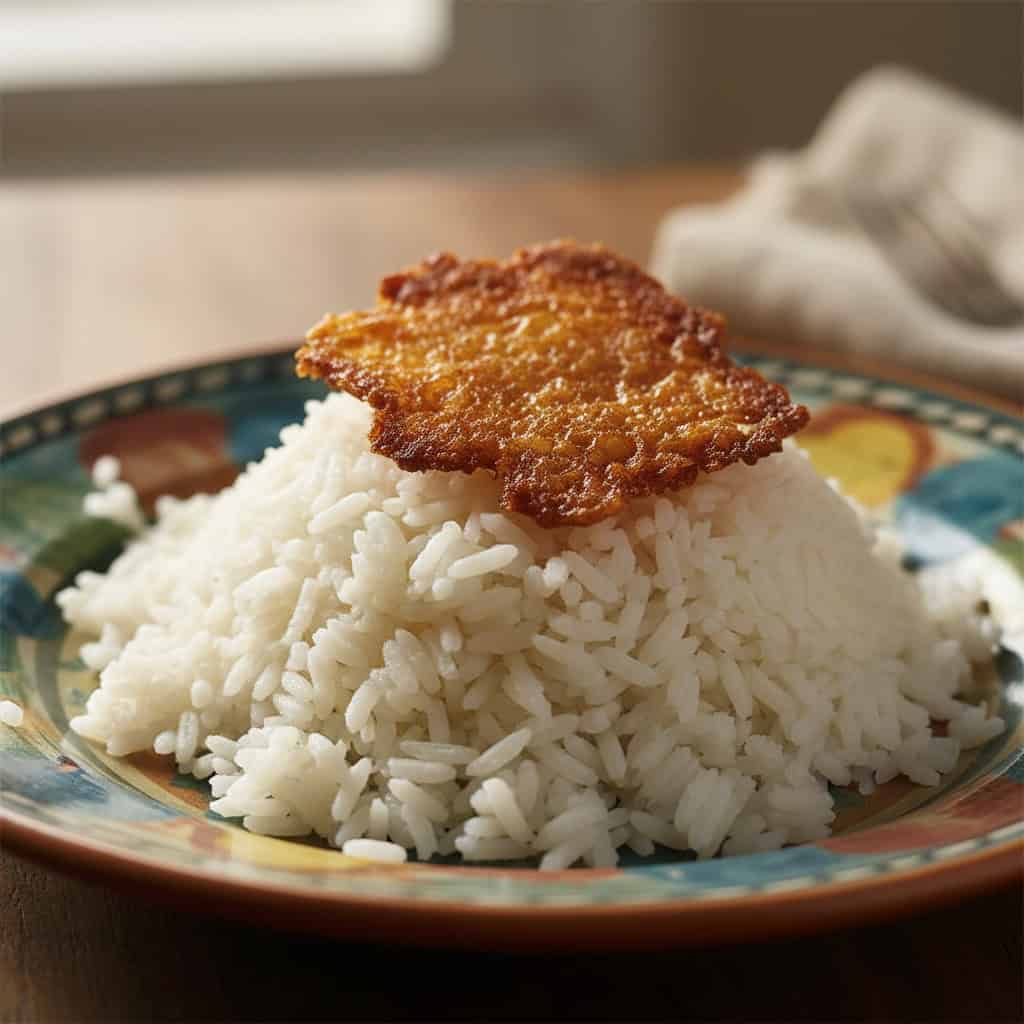
I'll teach you how to get fluffy, separate grains every time, plus how to develop that signature crispy concón — the golden-brown crust at the bottom of the pot that's the most fought-over part of any Dominican meal.
Why You'll Love This Arroz Blanco Dominicano Recipe
- Fluffy, separate grains: The Dominican technique gives you grains that don't clump together — essential for absorbing sauces from beans and stews.
- The famous concón: That golden, crispy crust at the bottom of the pot is the most coveted part of any Dominican meal.
- Foundation for everything: Without good white rice, no Dominican meal feels complete. This recipe gets it right every time.
- Pennies per serving: A pound of long-grain rice makes 4-6 servings for under $1.
- Quick weeknight side: Ready in 25 minutes, no special equipment needed.
What Is Arroz Blanco Dominicano?
Arroz blanco dominicano is the foundation of Dominican cuisine — fluffy, dry-cooked long-grain white rice prepared in a heavy pot to develop a crispy crust at the bottom called concón. It is served at virtually every meal across the Dominican Republic, paired with stewed beans, meats, and vegetables.
What makes Dominican white rice distinct from American or Asian preparations? Three things: the precise water-to-rice ratio (1.75:1 instead of 2:1), the use of oil and salt cooked into the rice from the start, and the deliberate development of concón — the crispy bottom layer that other rice traditions actively try to avoid.
Concón has cultural significance beyond just being delicious. In Dominican homes, it's traditionally the cook's reward for making the meal. Family members often fight over who gets the largest piece. Some Dominicans grew up eating concón sandwiches between two slices of pan de agua — a perfect cheap, filling snack.
Beyond technique, the relationship between Dominicans and their rice is deeply emotional. Stories abound of Dominicans living abroad who can't find proper aluminum calderos and have rice care packages sent from family in the Dominican Republic. The thin pots commonly sold in American department stores produce inferior results — they don't hold heat the same way, and you simply cannot get the same concón. Some Dominican-Americans drive hours to Latin grocery stores specifically to buy authentic calderos because using anything else feels like a betrayal of the tradition. The rice itself matters too. While long-grain American rice works fine, traditional Dominican home cooks prefer specific brands — Mahatma, Carolina, or Don Carlos — that have the right starch content for proper Dominican rice texture. Some swear by basmati for its fragrance; others stick to whatever the local Dominican grocery sells in 5-pound bags. The choice is personal, but the standard is universal: fluffy, separate grains with a perfect concón at the bottom.
Ingredients You'll Need
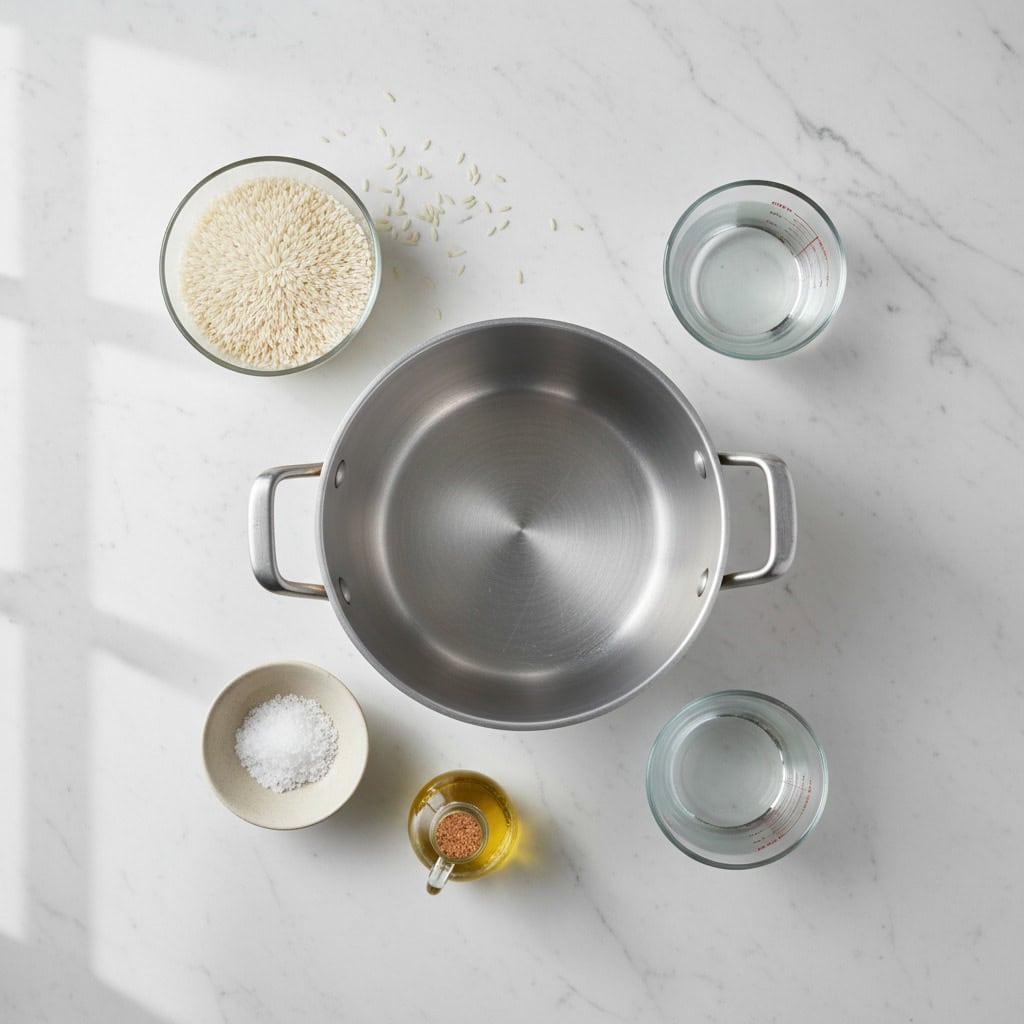
- 2 cups long-grain white rice (basmati works too)
- 3 tablespoon vegetable oil
- 3 ½ cups water (the 1.75:1 ratio)
- 1 ½ teaspoon salt
That's it. Four ingredients. Don't add garlic, butter, stock, or anything else — that's not Dominican rice. The technique does all the work.
Equipment: A heavy-bottomed pot is non-negotiable for proper concón. I use my All-Clad Dutch Oven. A thin-bottomed pot will scorch the rice unevenly.
Step-by-Step Instructions
Step 1 — Heat the Oil
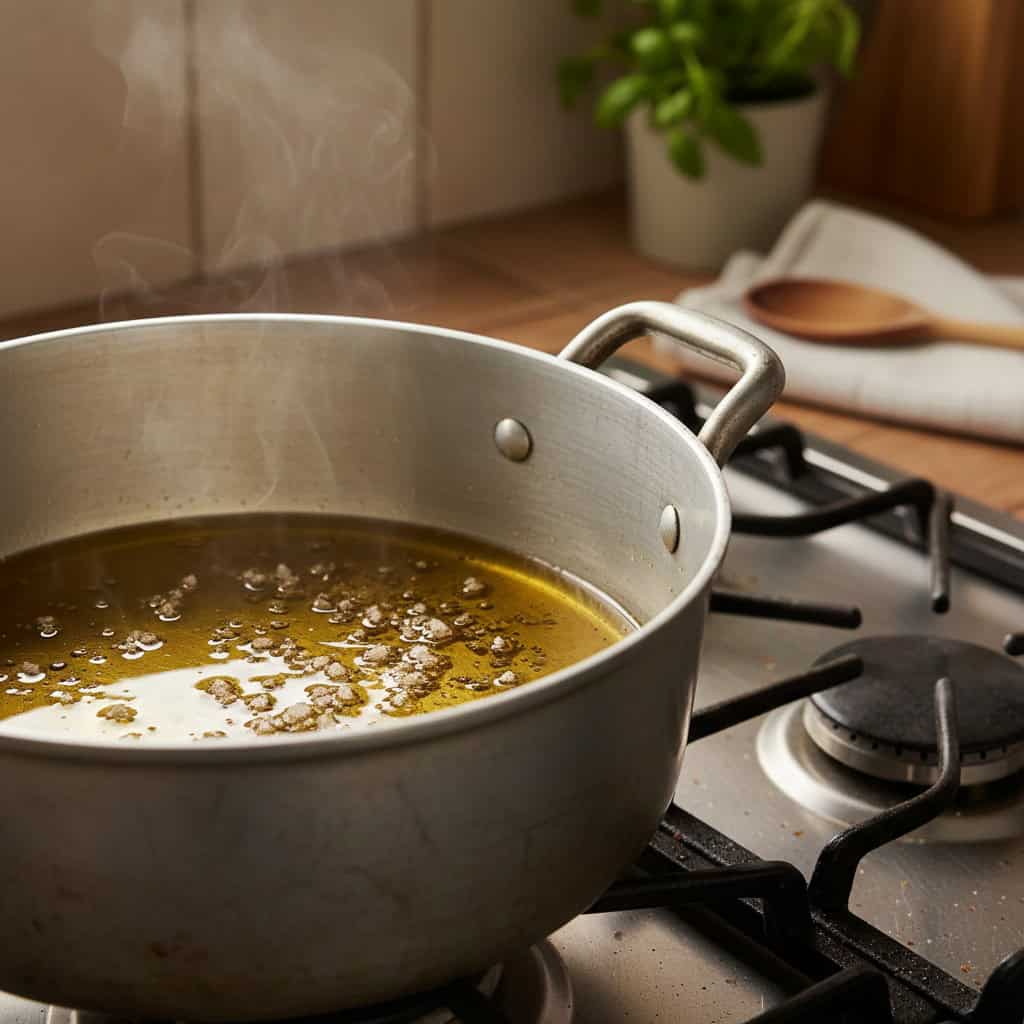
Heat the vegetable oil in a heavy pot over medium-high heat. Add the salt and stir into the oil. Let it warm for 30 seconds.
Step 2 — Toast the Rice
Add the dry rice and stir to coat every grain in oil. Toast the rice for 1-2 minutes, stirring constantly. The grains should look slightly translucent and the kitchen should smell nutty.
Step 3 — Add the Water
Pour in the water all at once. Stir once to distribute the rice evenly. Bring to a boil over high heat.
Step 4 — First Stage Boil
Once boiling, reduce heat to medium-low. Let the rice cook uncovered until you can see craters forming on the surface — small holes where steam is escaping — about 5-7 minutes. The water should be mostly absorbed at this point.
Step 5 — Stir, Cover, and Lower Heat
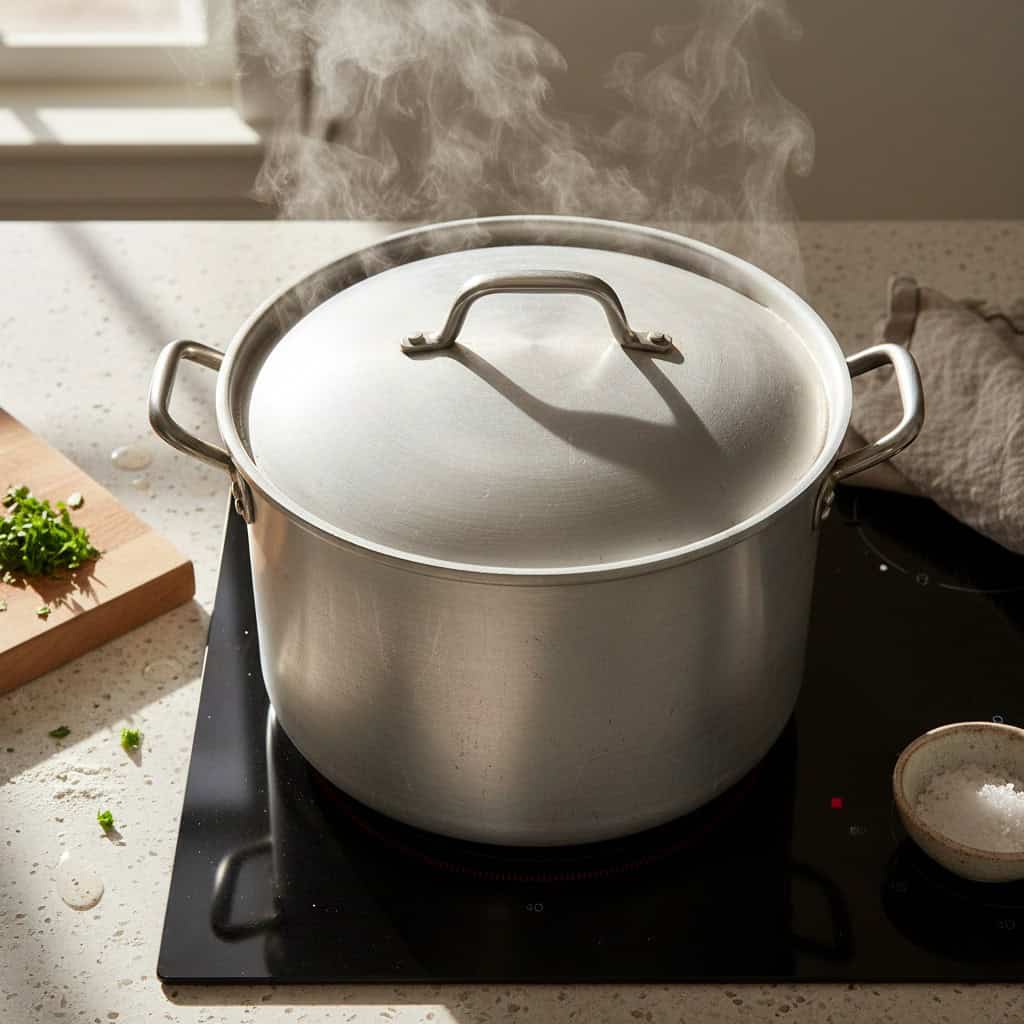
Use a wooden spoon to give the rice ONE good stir from the bottom up. Cover tightly with a lid. Reduce heat to the lowest setting. Cook covered for 18-20 minutes.
Step 6 — Develop the Concón
Don't open the lid. After 20 minutes, you'll hear the rice making a slight crackling sound — that's the concón forming. Turn off the heat. Let sit covered another 5 minutes.
Step 7 — Fluff and Serve
Remove the lid. Use a fork to fluff the top layer gently. Don't dig down — the bottom layer is the concón. Serve, then scrape the concón with a flat spoon and serve it as a treat.
Pro Tips for Perfect Arroz Blanco Dominicano
- Use a heavy-bottomed pot: Thin pots scorch the rice. A thick aluminum or cast-iron caldero is ideal. The heat needs to distribute evenly.
- Don't lift the lid during the steam stage: Every time you peek, you lose steam and cooking time. Trust the process. Set a timer.
- Listen for the concón: When you hear a faint crackling sound from the pot, the concón is forming. That's your cue that it's almost done.
- Don't stir after covering: Stirring after the rice is steaming will make it gummy. The single stir before covering is all you need.
- Fluff with a fork, never a spoon: A fork separates the grains. A spoon mashes them together.
- Salt the cooking water generously: 1.5 teaspoons of salt for 2 cups of rice may seem like a lot, but the rice grains absorb almost all of it. Under-salting is the #1 mistake American cooks make with Dominican rice.
- Listen for the sizzle change: When the steam-cooking phase nears its end, the sound from the pot changes from a soft hiss to a higher-pitched crackle. That's your cue that the concón is forming and you should turn off the heat within 2-3 minutes.
- Add a teaspoon of extra oil for better concón: If you're really going for maximum concón, add an extra teaspoon of oil before adding the water. The extra fat at the bottom of the pot creates a thicker, crispier crust.
- Never wash the pot until the rice is gone: If you have leftover rice with concón, store the entire pot in the fridge with the rice still in it. The concón stays attached and reheats perfectly the next day. Washing the pot too early loses you the second-day concón experience.
Variations
Instant Pot Arroz Blanco
Add 2 cups rice + 2 ¼ cups water + 1 teaspoon salt + 1 tablespoon oil to Instant Pot. Pressure cook 4 minutes with 10 minute natural release. No concón possible, but very fast and consistent.
Arroz con Aceite (Coconut Rice)
Substitute 1 cup of the water with coconut milk. Adds richness — perfect alongside seafood or pernil.
Rice Cooker Method
Use 2 cups rice + 2 ½ cups water + 1 teaspoon salt + 1 tablespoon oil. Press cook. Let it switch to warm and sit 10 min. No concón, but reliable.
What to Serve With Arroz Blanco Dominicano
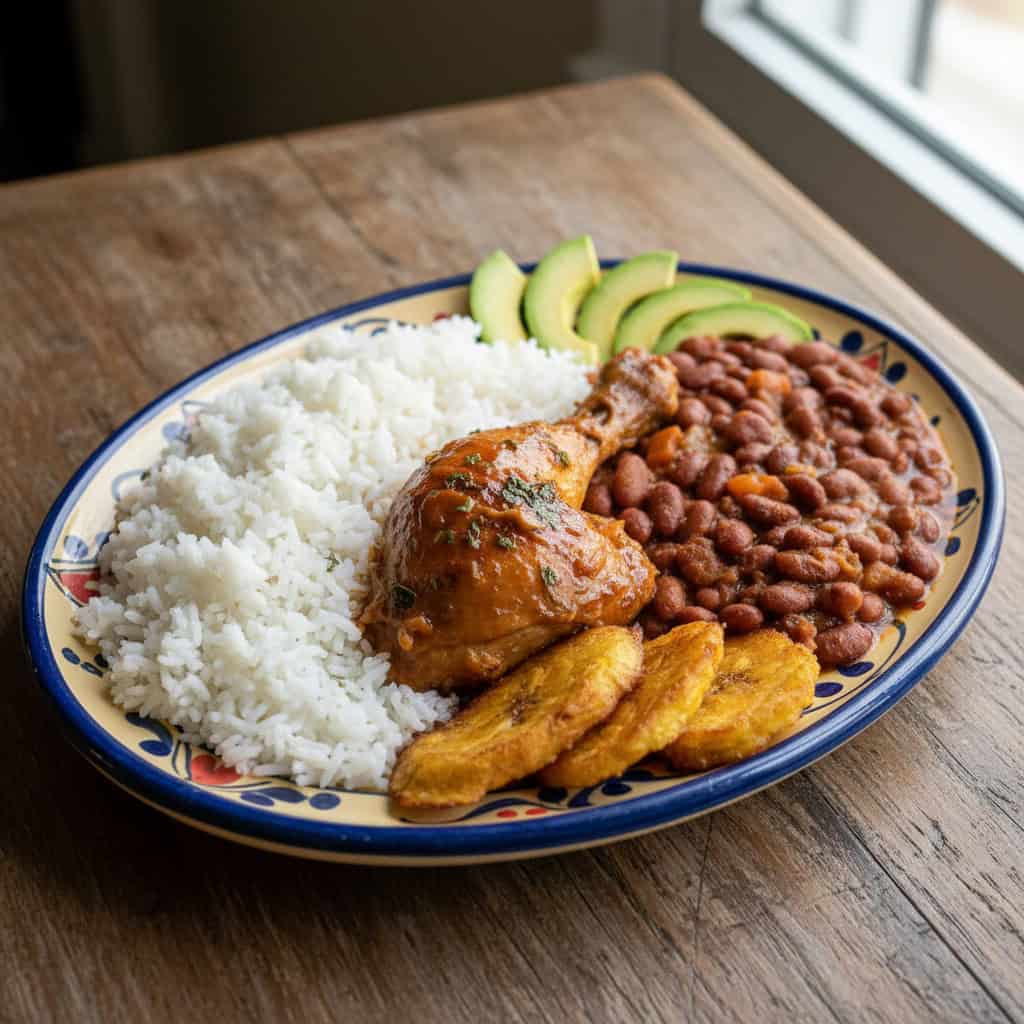
- Habichuelas guisadas: The non-negotiable pairing. Beans over rice with concón = la bandera dominicana.
- Pollo guisado: Stewed chicken sauce soaks into the fluffy rice perfectly.
- Carne guisada: Beef stew over rice is pure comfort food.
- Huevos fritos: A fried egg on top of fluffy rice — the perfect quick lunch.
- Avocado and salt: Sometimes that's all you need. Sliced avocado on hot rice with a little salt.
Frequently Asked Questions
What's the right water-to-rice ratio?
1.75:1 — for every 1 cup of long-grain rice, use 1 ¾ cups water. American recipes often call for 2:1, which gives you wet, mushy rice. The Dominican ratio gives you fluffy, separate grains every time.
Why isn't my rice fluffy?
Three reasons usually: too much water, you stirred it during the steam stage, or you used short-grain rice. Stick to long-grain or basmati, use the 1.75:1 ratio, and don't touch the rice once you cover it.
How do I get the concón?
You need a heavy-bottomed pot, the right ratio of water, and patience. Cook the rice fully (about 18-20 minutes covered on low). Then leave it on low for an extra 5-7 minutes to develop the crust. You'll hear it crackling when it's ready.
Can I use brown rice?
Yes — but increase the water to 2:1, increase cooking time to 35-40 minutes, and accept that you won't get the same concón. Brown rice has too much bran to crisp up the same way.
Why does my rice burn but the top isn't done?
Your heat is too high or your pot is too thin. Use the lowest heat setting on your stove for the steam stage, and use a heavy pot. If you're stuck with a thin pot, place a heat diffuser between the pot and burner.
Can I add garlic or onion to the rice?
Technically yes, but that's not authentic Dominican white rice anymore — that becomes arroz amarillo or arroz con pollo. Pure white rice is the canvas. Let the meats and beans you serve with it provide the flavor.
How do I store leftover rice?
Refrigerate in an airtight container for up to 5 days. Reheat with a splash of water in the microwave or a covered pan on the stove. Cooled and refrigerated rice is also perfect for fried rice the next day.
Why is Dominican rice yellowish on the bottom?
The bottom layer of rice (the concón) develops a golden-yellow to deep brown color from caramelization on contact with the hot pot. The oil cooked into the rice helps the bottom layer crisp up. The deeper the color (without burning), the more flavor.
What kind of pot is best for arroz blanco?
A heavy-bottomed aluminum caldero is the traditional Dominican pot of choice — it conducts heat evenly and develops the perfect concón. A cast iron Dutch oven works just as well. Avoid thin stainless steel pots which create hot spots and uneven cooking. If you're serious about Dominican cooking, invest in a real caldero (you can find them at Latin grocery stores).
Can I rinse the rice before cooking?
This is debated in Dominican households. My grandmother never rinsed; my mother always did. Rinsing removes some surface starch and can give you slightly more separate grains, but it also washes away some of the natural texture. If you rinse, do it once and pat dry — don't soak. The technique matters more than rinsing.
Why do some Dominican rice recipes use chicken broth?
Plain water gives you the cleanest, purest rice flavor — which is why it's traditional for arroz blanco. Chicken broth is sometimes used in Spanish-influenced versions or when the rice is being served with very mild proteins. For everyday Dominican rice that pairs with sauced dishes like pollo guisado or carne guisada, water is preferred because the sauce will provide flavor.
Can I add garlic to my arroz blanco?
Some Dominican families add a single crushed garlic clove to the oil before the rice. It's not traditional but adds subtle aroma. If you do this, remove the garlic before serving so it doesn't burn or become bitter. For more flavored rice, look at locrio recipes instead — that's where Dominicans add aromatics to rice intentionally.
Dominican Arroz Blanco
Ingredients
Method
- Heat oil and salt in heavy pot over medium-high heat 30 sec.
- Add dry rice. Toast 1-2 min stirring constantly until grains are translucent.
- Add water. Stir once. Bring to boil over high heat.
- Reduce to medium-low. Cook uncovered 5-7 min until craters appear and water is mostly absorbed.
- Stir once from bottom up. Cover tightly. Reduce to lowest heat. Cook 18-20 min.

- Don't open lid. Listen for crackling concón. Turn off heat, let sit covered 5 min.
- Fluff top with fork. Scrape concón from bottom and serve as treat.
Notes
Tried this recipe?
Let us know how it was!Shop This Recipe
View on Amazon →
View on Amazon →
View on Amazon →
As an Amazon Associate I earn from qualifying purchases at no extra cost to you.
Master this and you've mastered the foundation of Dominican cooking.
You May Also Like
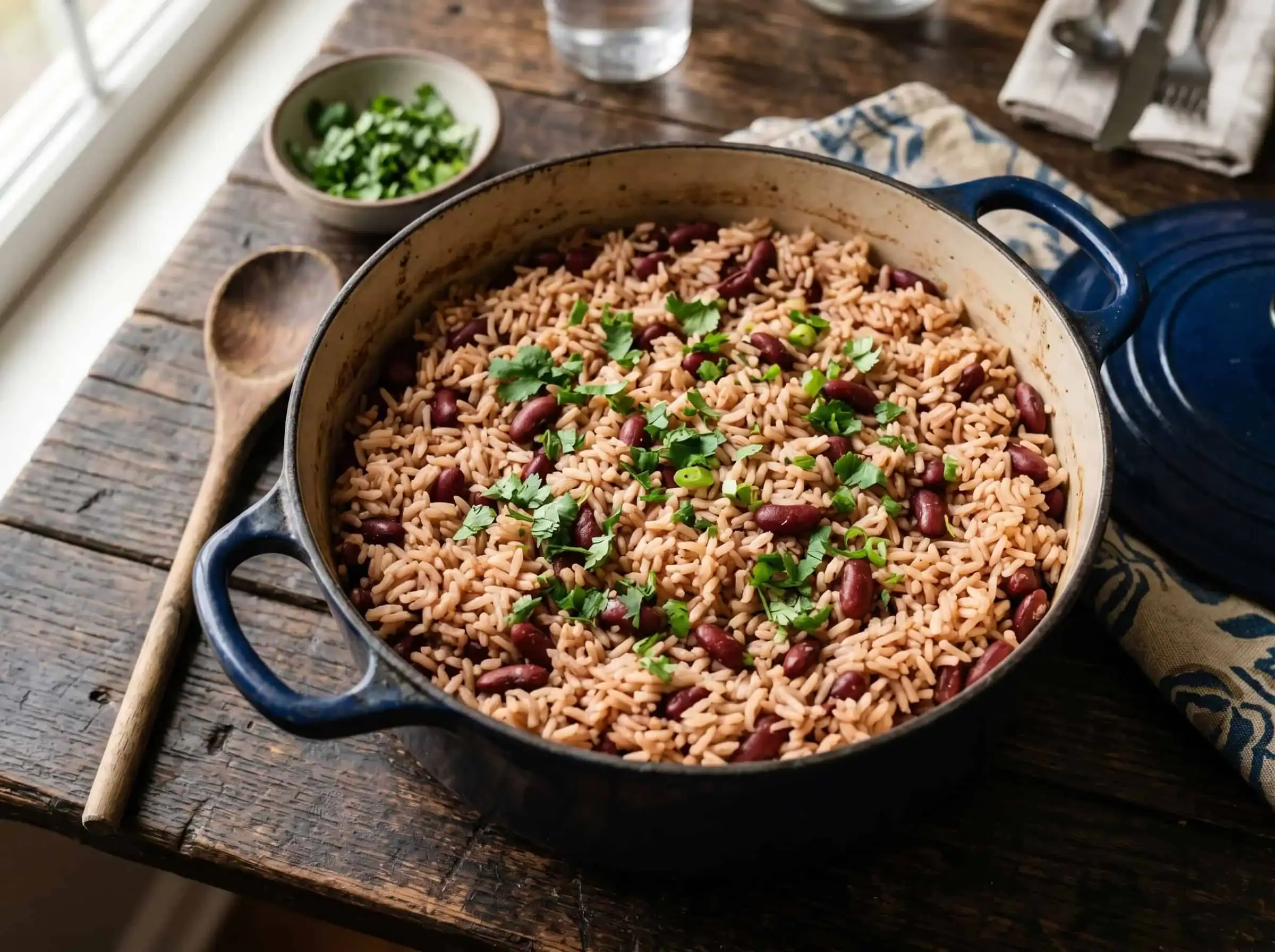
- Instant Pot White Rice Recipe — Perfect fluffy white rice made in the Instant Pot every single time. This.
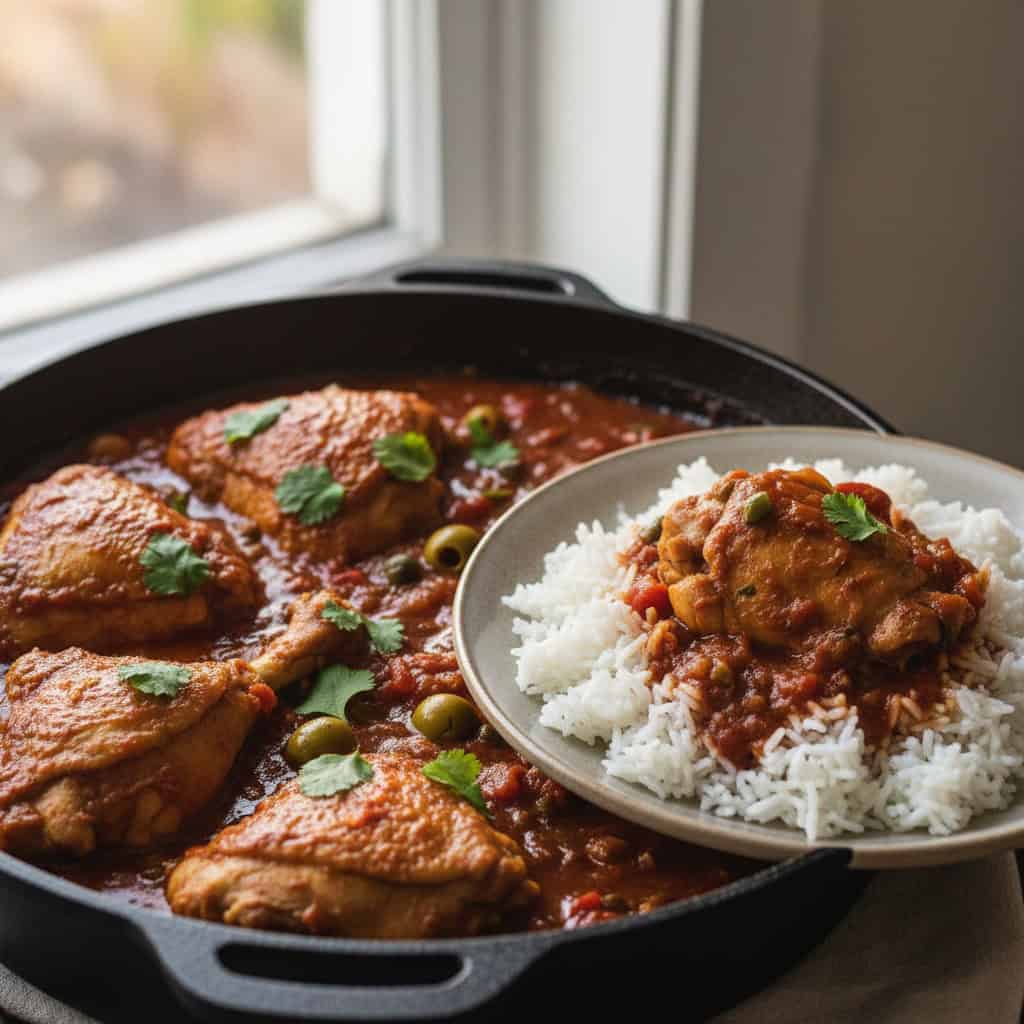
- Dominican Locrio de Pollo Recipe (One-Pot Chicken & Rice) — Dominican one-pot rice and chicken with azúcar quemada, sofrito, olives, and capers. Better.
- Dominican Moro de Guandules Recipe (Christmas Rice) — Authentic Dominican rice and pigeon peas cooked together with coconut milk and sofrito.

Leave a Reply