
Pollo guisado is the recipe that defined my childhood. Growing up in Santo Domingo, this wasn't just food — it was the heartbeat of every Sunday afternoon in our kitchen. My mom would have the pollo guisado going by mid-morning, the smell traveling through the whole house, calling everyone to the table whether they were ready or not. That's the thing about Dominican cooking: it doesn't ask permission. It announces itself.
When I moved to the States and started cooking for myself, this was one of the first dishes I had to figure out from memory. My mom never wrote anything down — she'd say "lo que sea, mi'jo" and laugh when I asked for measurements. So I called my abuela, then my tías, then my cousins, and I pieced it together the way every Dominican-American kid eventually does: through a thousand phone calls and a lot of trial and error. This is the version that finally tasted like home.
I'm going to walk you through every single step the way my abuela taught me — from the azúcar quemada (burnt sugar) that gives the chicken that signature mahogany color, to the slow simmer that turns tough chicken thighs into fall-apart tender pieces. This is real Dominican pollo guisado. No shortcuts.
Why You'll Love This Pollo Guisado Recipe
- Authentically Dominican: This isn't a watered-down version. It uses azúcar quemada, fresh sofrito, and bone-in chicken — the way my family has made it for generations.
- One-pot meal: Everything happens in a single caldero. Less cleanup, more flavor as the fond builds up at the bottom of the pan.
- Budget-friendly: Bone-in chicken thighs and drumsticks are some of the cheapest cuts at any grocery store. This recipe feeds a family of 4-6 for under $12.
- Make-ahead friendly: Like every great stew, pollo guisado tastes even better the next day. The sauce thickens and the flavors deepen overnight.
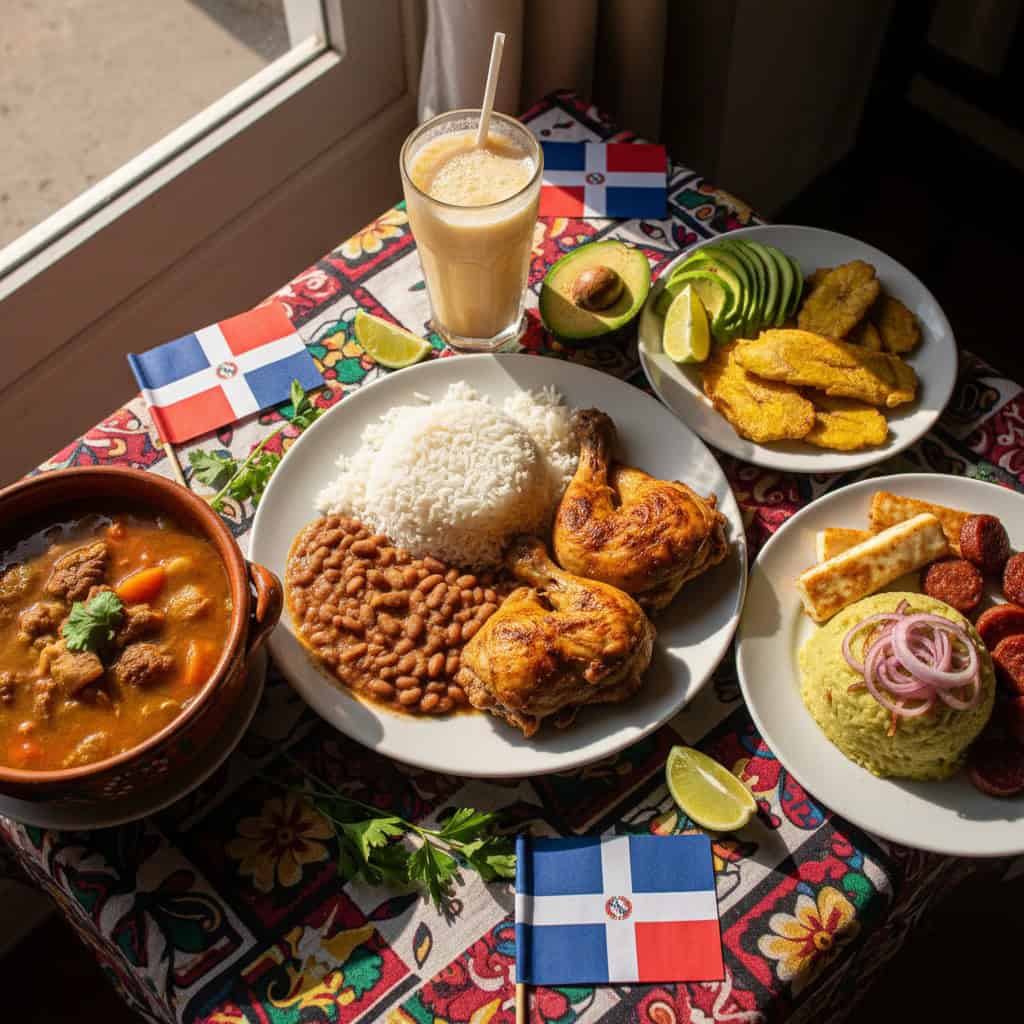
- Pairs with everything: Serve it over white rice with red beans and tostones for the full Dominican plate, or just a piece of crusty bread to mop up the sauce.
What Is Pollo Guisado?
Pollo guisado literally translates to "stewed chicken" in Spanish — but that translation does this dish absolutely zero justice. In the Dominican Republic, pollo guisado is the foundation of weekday family meals. Bone-in chicken pieces are seared in caramelized sugar, then slow-simmered in a rich, tomato-based sauce built on a foundation of sofrito (a blend of onions, peppers, garlic, and cilantro), olives, capers, and Dominican seasonings until the meat is fall-off-the-bone tender.
What makes the Dominican version distinct from the Puerto Rican or Cuban versions? Three things. First, the azúcar quemada — burnt sugar — which we use to sear the chicken. This gives it the signature dark mahogany color and a subtle bittersweet undertone you simply can't replicate with paprika or annatto alone. Second, the use of bone-in, skin-on chicken — never boneless breasts. The bones add body to the sauce and the dark meat holds up to the long simmer without drying out. Third, the addition of pimiento-stuffed Spanish olives and capers, which bring brininess and acid that cut through the richness.
Every Dominican household has their own slight variation. Some families add a splash of vinegar or beer for tang. Others throw in cubed potatoes or carrots in the last 30 minutes. My mom always added a bay leaf and a pinch of cumin — both small touches that make the dish unmistakably hers. The version I'm sharing today is the one I grew up eating, refined over years of cooking it in my own kitchen.
Ingredients You'll Need for Pollo Guisado
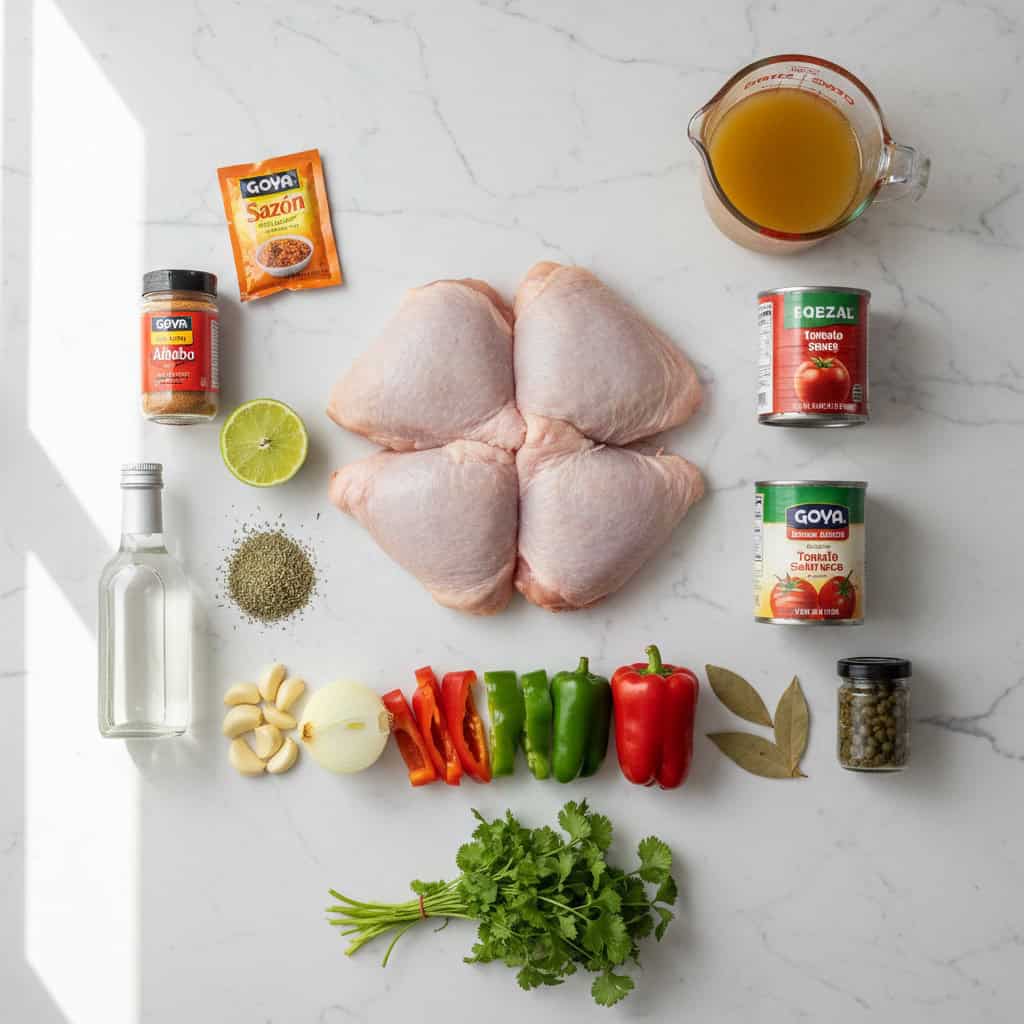
For the Chicken
- 3-4 lbs bone-in, skin-on chicken pieces (thighs and drumsticks preferred)
- 2 packets sazón con culantro y achiote
- 1 tablespoon adobo seasoning
- 1 teaspoon dried oregano (Dominican oregano if you can find it)
- ½ teaspoon ground cumin
- 4 cloves garlic, minced
- Juice of 1 lime (for cleaning)
- 1 tablespoon white vinegar (for cleaning)
For the Stew
- 3 tablespoons vegetable oil
- 2 tablespoons granulated sugar (for azúcar quemada)
- 1 large yellow onion, diced
- 1 cubanelle pepper, diced (or green bell pepper)
- ½ red bell pepper, diced
- ¼ cup fresh cilantro, chopped (or use 3 tablespoons of homemade sofrito)
- 3 tablespoons tomato paste
- ½ cup tomato sauce
- ¼ cup pimiento-stuffed Spanish olives
- 1 tablespoon capers
- 2 cups chicken stock (or water)
- 1 bay leaf
- Salt and pepper to taste
Equipment: The single most important piece of equipment for pollo guisado is a heavy-bottomed pot. I use my All-Clad Dutch Oven for this — it distributes heat evenly and the dark interior helps build the fond at the bottom.
Step-by-Step Instructions
Step 1 — Clean and Season the Chicken
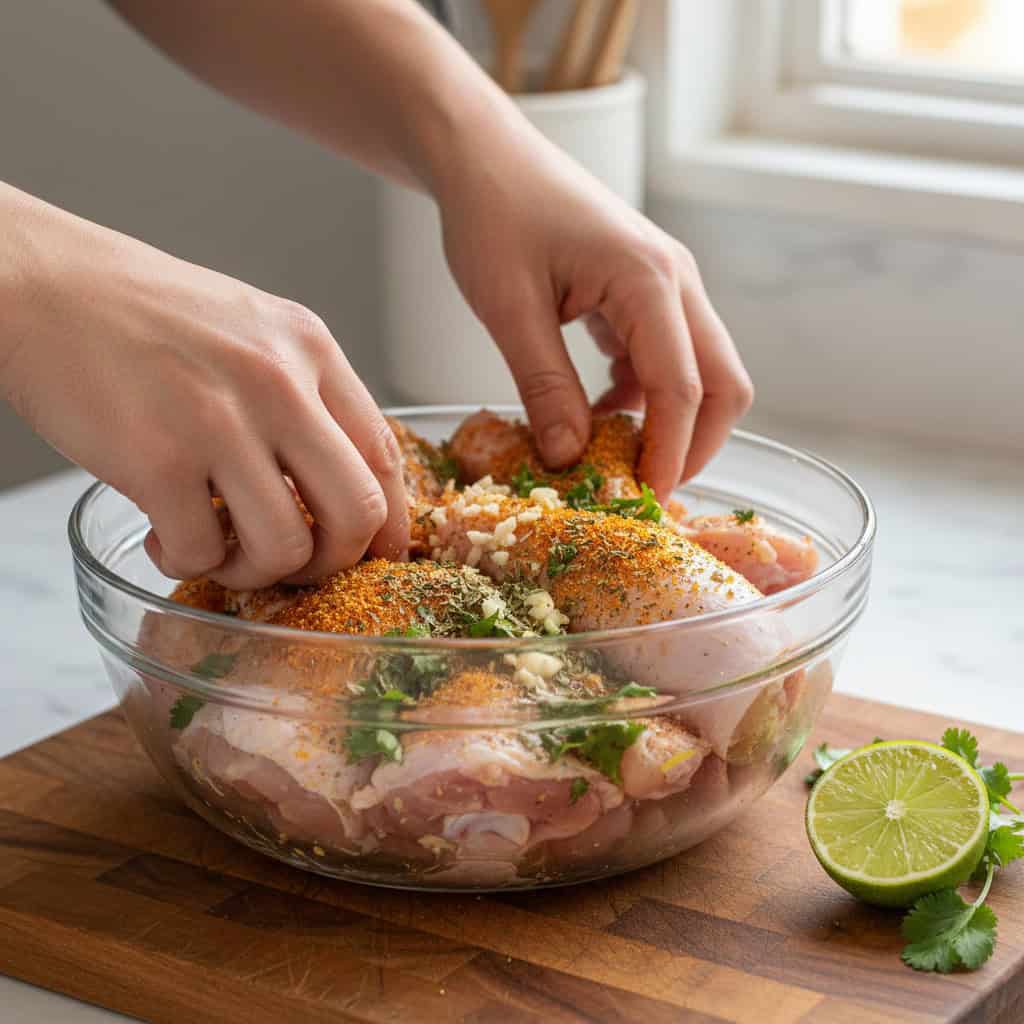
This is the step American recipes always skip — and the step that makes Dominican chicken taste cleaner and better. Place the chicken pieces in a large bowl. Squeeze the lime juice over them, add the vinegar, and rub everything in. Let it sit for 5 minutes, then rinse under cold water and pat completely dry with paper towels. Season generously with sazón, adobo, oregano, cumin, and minced garlic. Massage the seasonings deep into the meat and under the skin. Cover and refrigerate for at least 1 hour, or ideally overnight.
Step 2 — Make the Azúcar Quemada
Heat the vegetable oil in your Dutch oven over medium-high heat. Add the sugar and let it melt without stirring. It will bubble, then turn amber, then deep mahogany brown. This takes about 2-3 minutes. Watch it carefully — you want dark caramel, not burnt black. The smell should be slightly smoky and sweet, not acrid.
Step 3 — Sear the Chicken
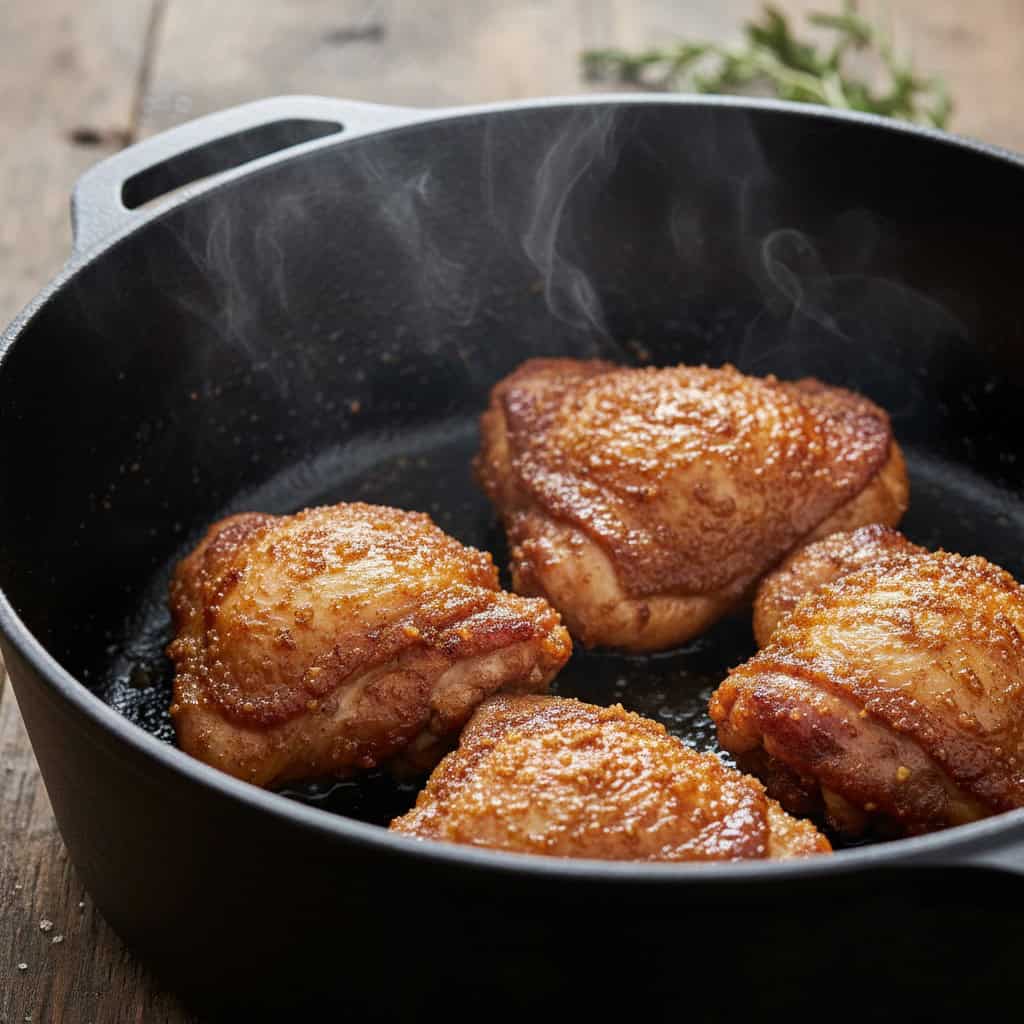
As soon as the sugar reaches deep mahogany, add the chicken pieces in a single layer (work in batches if needed). They will sizzle aggressively — that's good. Sear for 3-4 minutes per side until each piece has a deep golden-brown crust. Don't rush this. The crust = flavor. Remove the chicken and set aside.
Step 4 — Build the Sofrito Base
In the same pot (don't clean it — that fond is gold), add the diced onion, cubanelle pepper, and red bell pepper. Cook over medium heat for 5 minutes until softened and translucent. Add the cilantro (or sofrito) and cook another minute. Push the vegetables to the sides and add the tomato paste in the center. Let it cook and caramelize for 2 minutes — this is where you build savory depth.
Step 5 — Combine and Simmer
Stir the tomato paste into the vegetables. Add the tomato sauce, olives, capers, chicken stock, and bay leaf. Stir to combine, then return the chicken to the pot, nestling the pieces into the sauce. The liquid should come about halfway up the chicken. Bring to a boil, then reduce heat to low. Cover and simmer for 35-45 minutes, turning the pieces every 15 minutes.
Step 6 — Reduce and Finish
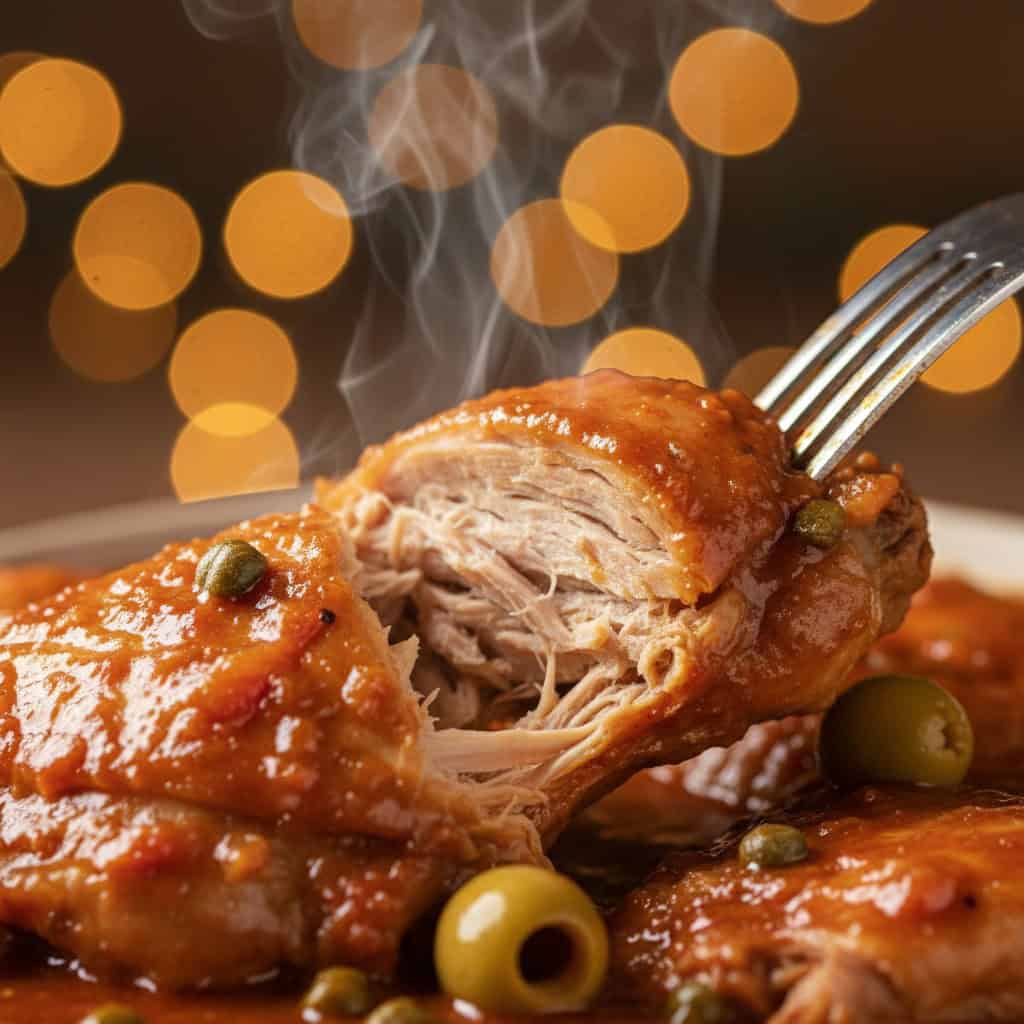
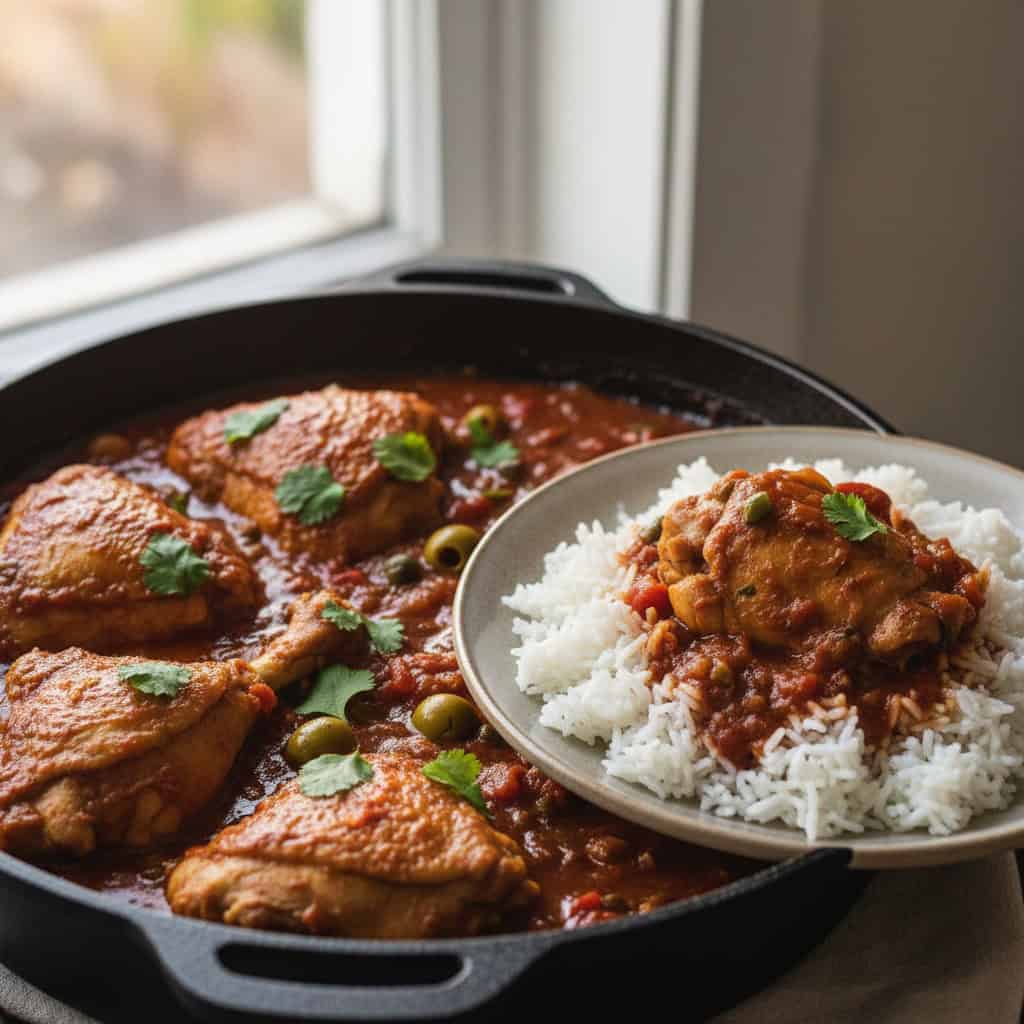
Remove the lid for the last 10-15 minutes and let the sauce reduce until it's thick and glossy. The chicken should be fork-tender and pulling away from the bone. Taste and adjust salt and pepper. Remove the bay leaf. Garnish with fresh cilantro and serve immediately.
Pro Tips for Perfect Pollo Guisado
- Don't skip the lime and vinegar wash. Dominicans clean chicken this way for a reason — it removes any gamey smell and tightens the skin so it crisps better when seared. Five minutes is all it takes.
- Make your azúcar quemada in the actual cooking oil. Some recipes tell you to caramelize sugar separately — don't. The caramel needs to bloom in the hot oil to coat the chicken evenly.
- Use bone-in, skin-on chicken — every time. The bones release collagen that thickens the sauce naturally. The skin adds richness. Boneless breasts will give you dry, sad chicken.
- Cook low and slow. Once you reduce the heat after searing, keep it on the lowest setting. A gentle simmer for 40 minutes is what makes the chicken fall apart.
- Always make extra. Pollo guisado tastes 30% better the next day. The sauce sets into a near-gel from the collagen and the flavors meld. I always make a double batch.
Variations
Slow Cooker Pollo Guisado
After searing the chicken and building the sofrito on the stovetop (steps 1-4), transfer everything to a 6-quart slow cooker. Cook on low for 6-8 hours or high for 3-4 hours. The chicken will be even more tender. If the sauce is too thin, transfer to a pot and reduce on the stove for 10 minutes.
Instant Pot Pollo Guisado
Use the sauté function for steps 2-4. Then add the chicken stock, lock the lid, and pressure cook on high for 15 minutes with natural release. Quick and just as flavorful — perfect for weeknights.
Pollo Guisado con Papas (with Potatoes)
This is the version my aunt makes in Santiago. Add 2 medium potatoes, peeled and cut into 1-inch cubes, during the last 25 minutes of simmering. The potatoes absorb the sauce and become little flavor bombs. It also stretches the dish to feed more people.
What to Serve With Pollo Guisado
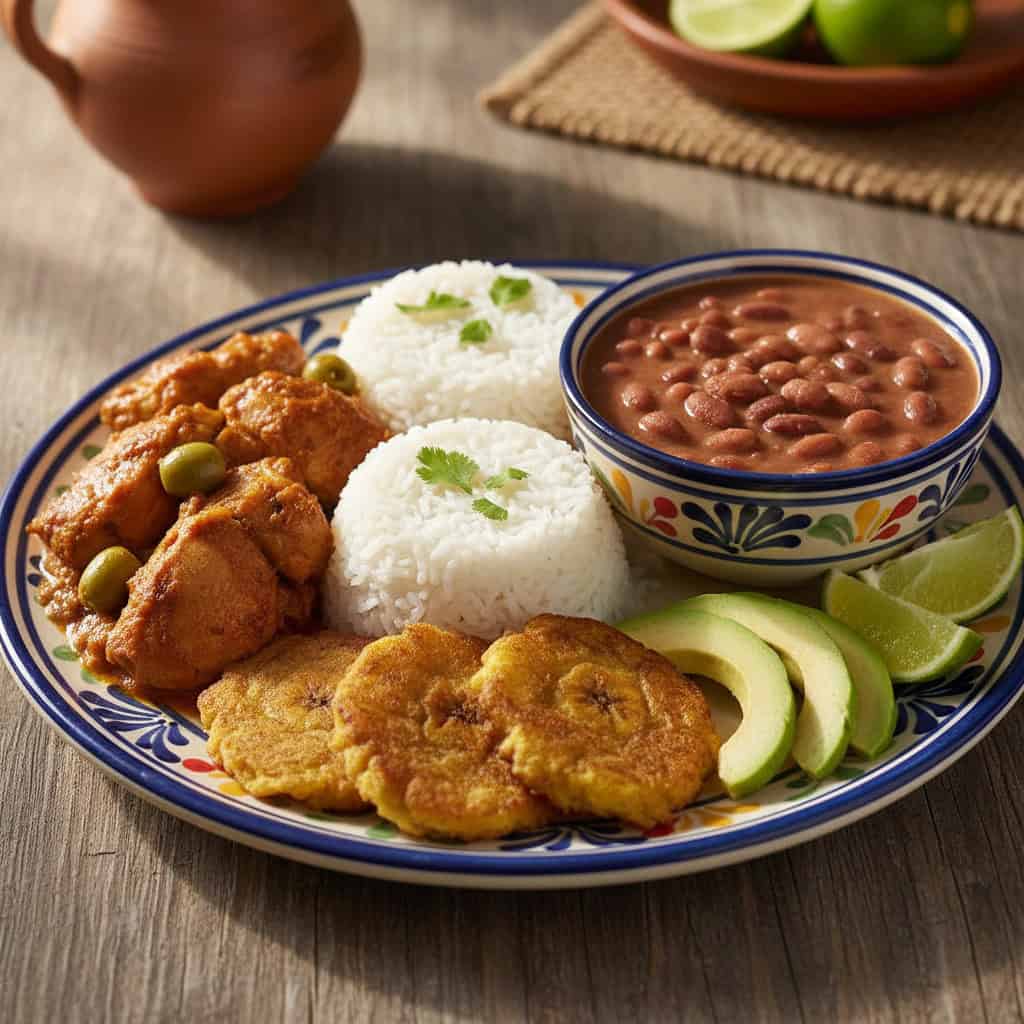
- Arroz blanco Dominicano: The non-negotiable pairing. Fluffy white rice with a crispy concón soaks up the sauce perfectly.
- Habichuelas guisadas: Stewed red beans on the side make it the classic "la bandera dominicana" plate.
- Tostones: Crispy fried green plantains for crunch and contrast.
- Sliced avocado: Always have a ripe avocado on the table for a creamy, cooling element.
- Ensalada verde: A simple lettuce, tomato, and onion salad with lime dressing cuts through the richness.
- Maduros: Sweet fried ripe plantains on the side for those who like a touch of sweetness with their savory meal.
Frequently Asked Questions
You can, but I don't recommend it. Boneless breasts will overcook and dry out during the long simmer. If you must use boneless meat, use thighs and reduce the simmer time to 20 minutes. The bones and skin are part of what makes pollo guisado what it is.
What is azúcar quemada and is it really necessary?Azúcar quemada means "burnt sugar" — it's caramelized sugar used as both a coloring agent and a subtle flavor base in Dominican cooking. It's absolutely necessary for authentic pollo guisado. Without it, you'll get pale, flat-tasting chicken. The technique is the same one used in Cuban ropa vieja and Puerto Rican pernil.
How long does pollo guisado last in the fridge?Stored in an airtight container, pollo guisado keeps for 4-5 days in the refrigerator. The sauce will thicken into almost a gel from the collagen — completely normal. Reheat gently on the stovetop with a splash of water or stock.
Can I freeze pollo guisado?Yes — it freezes beautifully for up to 3 months. Cool completely, portion into freezer-safe containers, and freeze. Thaw overnight in the fridge before reheating. The texture and flavor hold up perfectly.
What's the difference between Dominican and Puerto Rican pollo guisado?The two are very similar but with key differences. Dominican pollo guisado uses azúcar quemada for color, while Puerto Rican pollo guisado typically uses sofrito and achiote (annatto) without the burnt sugar. Puerto Rican versions also tend to include sofrito blended into the sauce, while Dominicans add the sofrito ingredients fresh and chopped.
Why is my chicken tough?Tough chicken usually means it didn't simmer long enough, or you're using boneless breasts. Bone-in dark meat needs at least 35 minutes at a low simmer to break down and become tender. If your chicken is tough, just keep cooking — it will eventually get there.
Can I make this without sazón?You can, but it won't taste quite the same. Sazón con achiote provides that signature reddish-orange color and umami depth. If you don't have it, substitute with ½ teaspoon paprika, ¼ teaspoon turmeric, ¼ teaspoon garlic powder, ¼ teaspoon onion powder, and ¼ teaspoon ground coriander. It's close, but not identical.
You May Also Like
One-Pan Lemon Garlic Chicken & Rice | Easy Weeknight Dinner
Dominican Pollo Guisado
Ingredients
Method
- Place chicken in a bowl. Squeeze lime juice and add vinegar. Rub in, let sit 5 min. Rinse under cold water, pat dry. Season with sazón, adobo, oregano, cumin, and garlic. Massage in. Refrigerate 1 hour minimum, ideally overnight.
- Heat vegetable oil in a Dutch oven over medium-high heat. Add sugar and let it caramelize without stirring until deep mahogany, about 2-3 minutes.
- Add chicken in a single layer. Sear 3-4 minutes per side until deeply golden brown. Work in batches if needed. Remove and set aside.

- In same pot, sauté onion, cubanelle, and red bell pepper for 5 minutes until softened. Add cilantro and cook 1 more minute. Push vegetables aside, add tomato paste, and let it caramelize for 2 minutes.
- Stir tomato paste into vegetables. Add tomato sauce, olives, capers, chicken stock, and bay leaf. Stir to combine. Return chicken to pot, nestling into the sauce. Bring to a boil.
- Reduce heat to low. Cover and simmer 35-45 minutes, turning chicken every 15 min, until fork-tender.
- Remove lid for last 10-15 minutes to reduce sauce until thick and glossy. Taste and adjust salt and pepper. Remove bay leaf. Garnish with fresh cilantro and serve over white rice.
Nutrition
Video
Notes
Tried this recipe?
Let us know how it was!Shop This Recipe
View on Amazon →
View on Amazon →
View on Amazon →
As an Amazon Associate I earn from qualifying purchases at no extra cost to you.
Buen provecho, mi gente. Make it once and you'll be making it for life.

Leave a Reply