
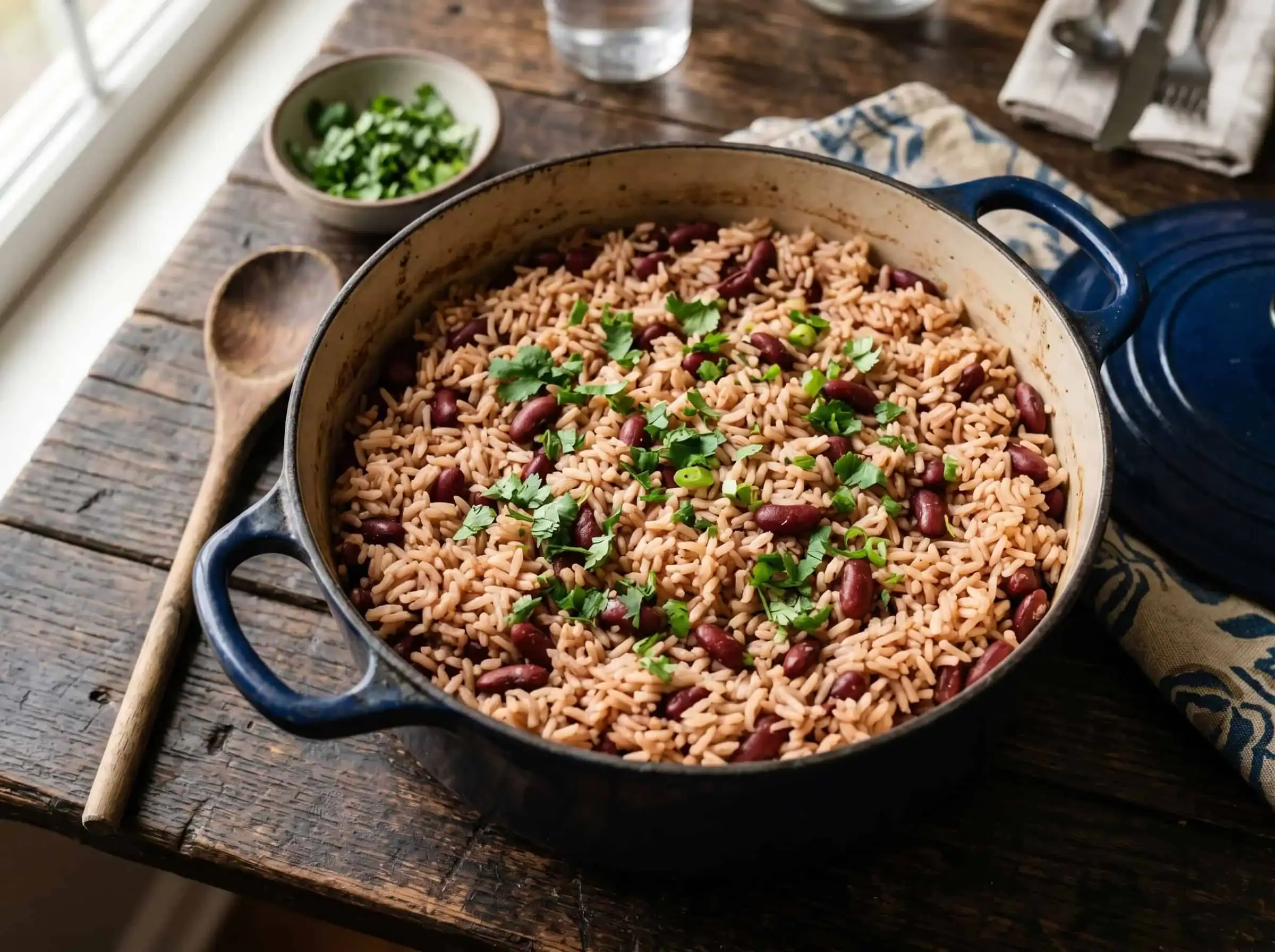
Moro de guandules is the dish that means Christmas in my family. Not turkey. Not stuffing. Moro. Without it, December 24th simply doesn't happen.
This is rice cooked together with pigeon peas (guandules) in coconut milk, smoked pork drippings, and sofrito until every grain is infused with flavor. The rice and beans aren't separate — they're cooked as one. That's what makes it 'moro' instead of just 'arroz con habichuelas.'
I'm sharing the version my abuela taught me, the one with coconut milk that gives the rice a subtle sweetness and richness. This is true Dominican Christmas food.
Why You'll Love This Moro de Guandules Recipe
- The Dominican Christmas dish: Every Nochebuena features moro de guandules — it's tradition.
- One-pot wonder: Rice and pigeon peas cooked together, no extra dishes.
- Coconut milk magic: The coconut milk gives subtle sweetness that pairs beautifully with savory sofrito.
- Pairs with everything: Especially perfect with pernil for the ultimate Dominican holiday plate.
- Make ahead friendly: Reheats beautifully — perfect for big family gatherings.
What Is Moro de Guandules?
Moro de guandules is rice cooked together with pigeon peas in a flavorful base of sofrito, coconut milk, and pork drippings. The word 'moro' means rice and beans cooked together as one dish (unlike serving them separately). Guandules are pigeon peas — small green-brown legumes that are common in Caribbean cuisine.
Dominican moro de guandules differs from Puerto Rican arroz con gandules in subtle but important ways. Dominicans typically add coconut milk for richness and slight sweetness, while Puerto Ricans rely more heavily on sofrito and achiote for color. Dominican moro is also typically less brightly colored and more subtly flavored.
This dish is the centerpiece of the Dominican Christmas Eve table, served alongside pernil. Outside of December, it appears at Sunday family gatherings, weddings, and any meal that needs to feel like a celebration.
Beyond Christmas Eve, moro de guandules has become a year-round Dominican comfort food that many consider second only to arroz blanco in cultural significance. Wedding receptions almost always include moro alongside the meat dishes. Birthdays, especially milestone ones, feature moro as a substantial side. Sunday family lunches often include moro de guandules as a special treat that elevates the meal above ordinary weekday eating. The dish is also Dominican in a deep way that's hard to articulate — there's something distinctly Dominican about the combination of rice, beans, coconut milk, and sofrito flavors that even Dominicans abroad immediately recognize as 'home.' Restaurants serving moro de guandules to Dominican-American customers have to nail the texture and flavor profile precisely, or customers will say 'that's not Dominican moro' and never come back. The flavor profile is specific. Beyond Dominican households, moro de guandules has begun appearing on broader Caribbean menus and even some American Latin fusion restaurants. Chefs experimenting with Dominican ingredients often start with moro because it's distinctive, satisfying, and showcases the unique combination of African, Spanish, and Caribbean influences that define Dominican cuisine. The dish is also having a moment in food media — it's been featured in Bon Appétit, the New York Times food section, and various Caribbean cooking shows. Its profile is rising deservedly.
Beyond Christmas Eve, moro de guandules has special connection to Dominican identity celebrations. February 27th is Dominican Independence Day, and many families serve moro de guandules with various meats as part of a celebratory meal. The dish represents agricultural abundance, cultural continuity, and the layered flavor heritage of the country. Dominican cultural events in the United States — from local cultural festivals in cities like Boston and Miami to large-scale Dominican parades in New York — almost always feature moro de guandules served alongside pernil at food stations. The dish has become a culinary symbol of Dominican identity in the diaspora. Even within Dominican families abroad who have largely Americanized their cooking, moro de guandules often makes a comeback for special occasions — particularly Christmas Eve, which remains the most universal Dominican holiday observation regardless of how long families have been in the United States. The smell and taste of properly made moro de guandules is one of those sensory anchors that connects people to their Dominican roots no matter how far they've traveled from the island.
The dish has also become an important touchstone for Dominican-Americans teaching their children about cultural heritage. Many parents specifically make moro de guandules during the holidays as a way to pass down traditional Dominican cooking. The act of cooking together — measuring rice, draining pigeon peas, learning the ratio — becomes a way of teaching identity through food. This continuity is part of why Dominican-American children growing up far from the Dominican Republic still feel connected to the country's culinary traditions.
Ingredients You'll Need
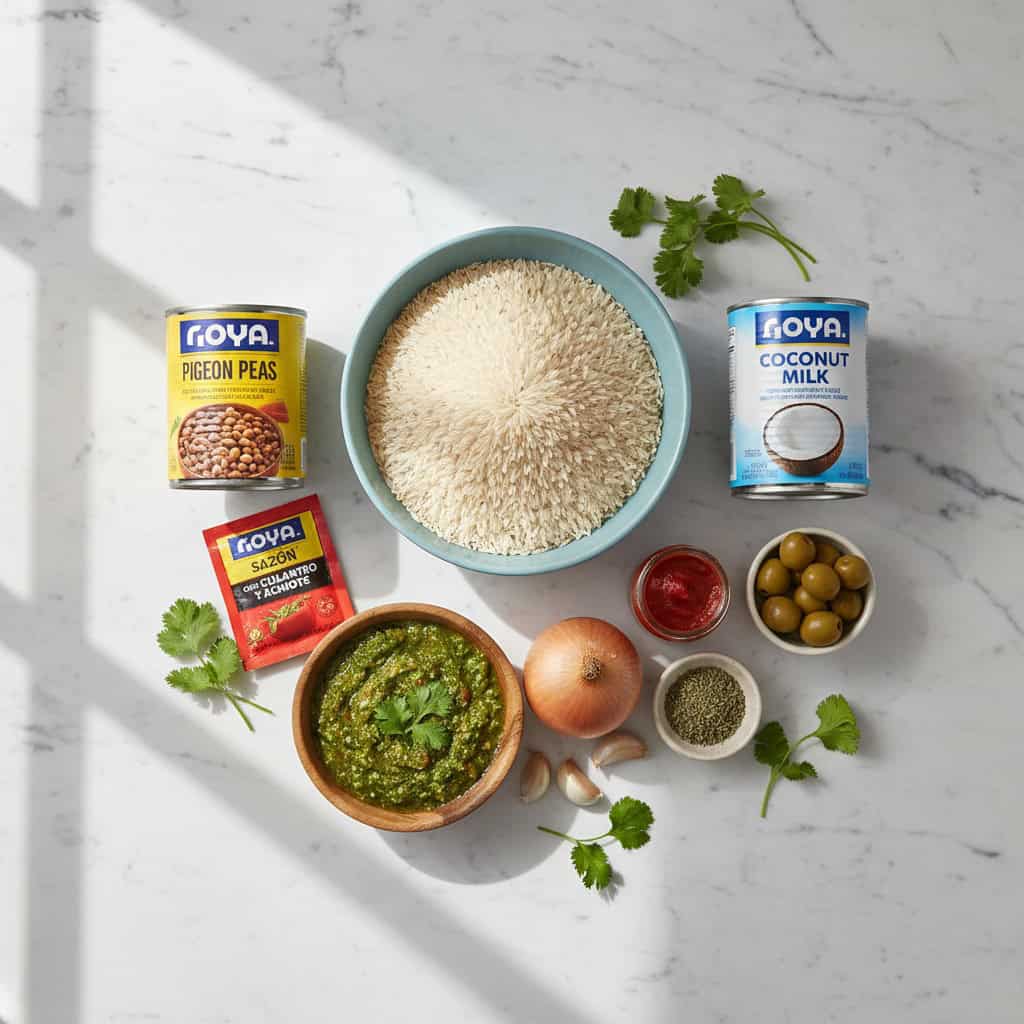
- 2 cups long-grain white rice
- 1 (15 oz) can pigeon peas (guandules), drained
- 3 tablespoon olive oil (or pernil drippings)
- ¼ cup homemade sofrito
- 1 small onion, diced
- 4 cloves garlic, minced
- 2 tablespoon tomato paste
- 1 packet sazón con culantro y achiote
- 1 teaspoon dried oregano
- ½ cup coconut milk
- 2 ¼ cups water or chicken stock
- ¼ cup pimiento-stuffed olives (optional)
- 1 tablespoon capers (optional)
- 2 tablespoon fresh cilantro, chopped
- 1 teaspoon salt
Equipment: An Instant Pot makes this foolproof, but a heavy Dutch oven works perfectly.
Step-by-Step Instructions
Step 1 — Build the Sofrito Base
Heat oil in heavy pot over medium heat. Add onion and garlic, sauté 4 min. Stir in sofrito and cook 2 min more.
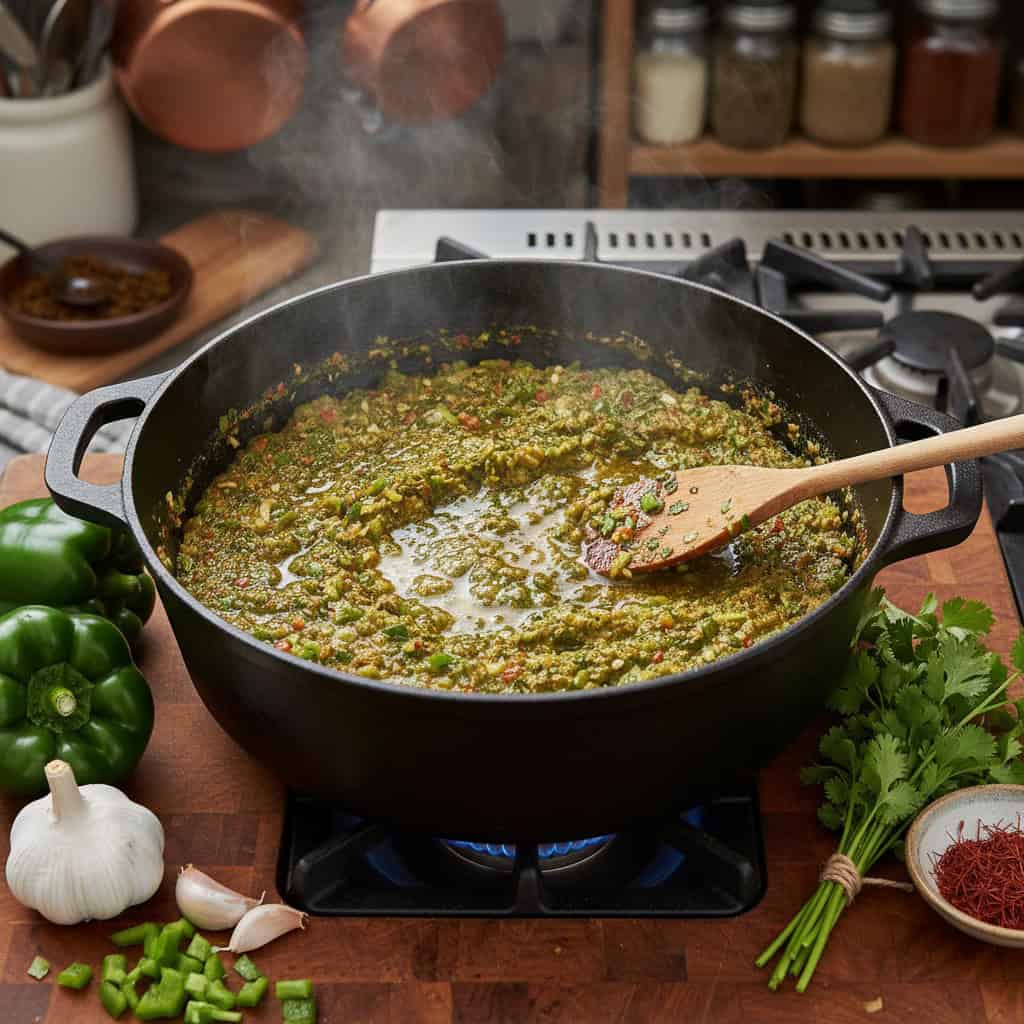
Step 2 — Add Tomato and Spices
Add tomato paste and let caramelize 2 min. Add sazón and oregano, stir to combine.
Step 3 — Add Liquids and Guandules
Pour in coconut milk and water/stock. Add drained guandules, olives, capers, salt. Stir and bring to a boil.
Step 4 — Add the Rice
Stir in the dry rice. Make sure rice is fully submerged. Bring back to a boil.
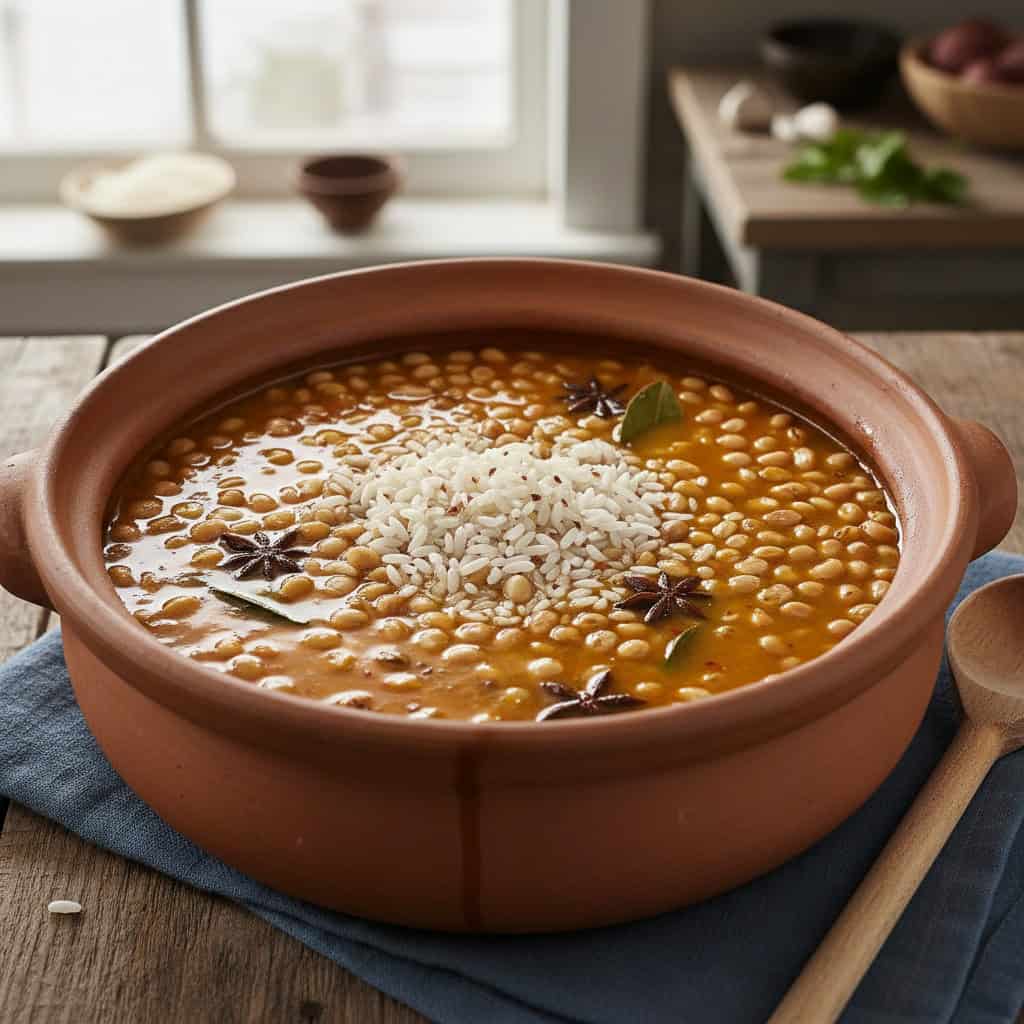
Step 5 — Cover and Cook
Reduce heat to lowest setting. Cover tightly. Cook 20 minutes without lifting the lid.
Step 6 — Rest and Fluff
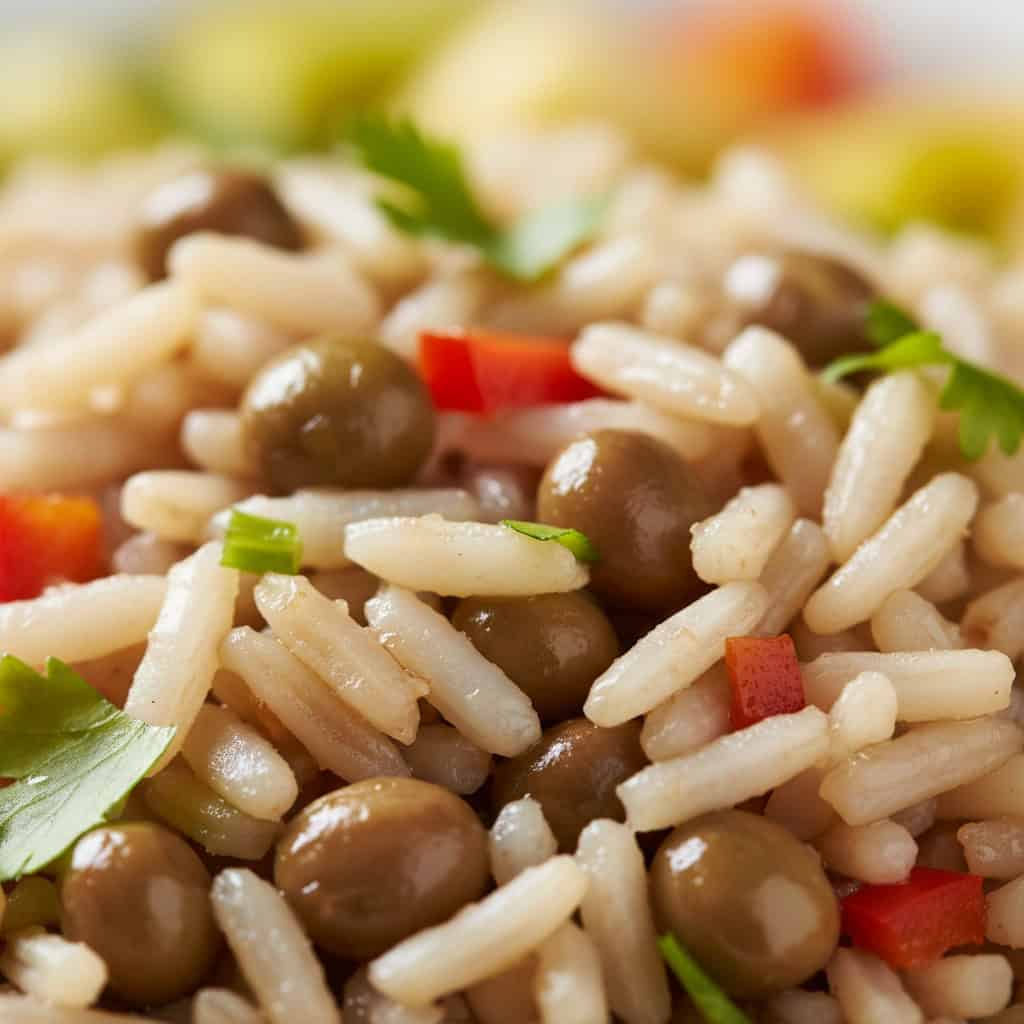
Turn off heat. Let sit covered 10 min. Fluff with a fork. Stir in fresh cilantro. Serve.
Pro Tips for Perfect Moro de Guandules
- Use full-fat coconut milk: Don't substitute light coconut milk — you need the fat for the right flavor and texture.
- Save pernil drippings if possible: Using leftover pernil fat instead of olive oil makes this exponentially better.
- Don't lift the lid: Once it's covered, leave it alone for the full 20 minutes plus 10 min rest.
- Use a heavy pot: A thick-bottomed pot prevents scorching and helps form a slight concón.
- Make ahead: Moro reheats beautifully — perfect for holiday meal prep. Make a day ahead, reheat covered with a splash of water.
- Save and use pernil drippings: If you're making moro the day after roasting a pernil, use 3 tablespoons of the strained pernil fat instead of olive oil. The result is exponentially better — richer, deeper, more flavorful.
- Toast the rice before adding liquid: Before adding the coconut milk and stock, toast the dry rice in the sofrito for 2 minutes. This helps the grains cook up separate and fluffy rather than clumping together.
- Don't open the lid for at least 20 minutes: Like all Dominican rice dishes, moro de guandules requires undisturbed steam to develop properly. Opening the lid early loses heat and stops the cooking process. Set a timer and resist the urge to peek.
- Use the back of a spoon to break up clumps: After fluffing with a fork, use the back of a wooden spoon to gently separate any rice clumps. The texture should be light and individual, not packed together. This finishing touch makes a big difference in presentation.
Variations
Instant Pot Moro de Guandules
Sauté aromatics on sauté mode. Add liquids and rice. Pressure cook 4 min with 10 min natural release. Foolproof every time.
Moro Negro (Black Bean Moro)
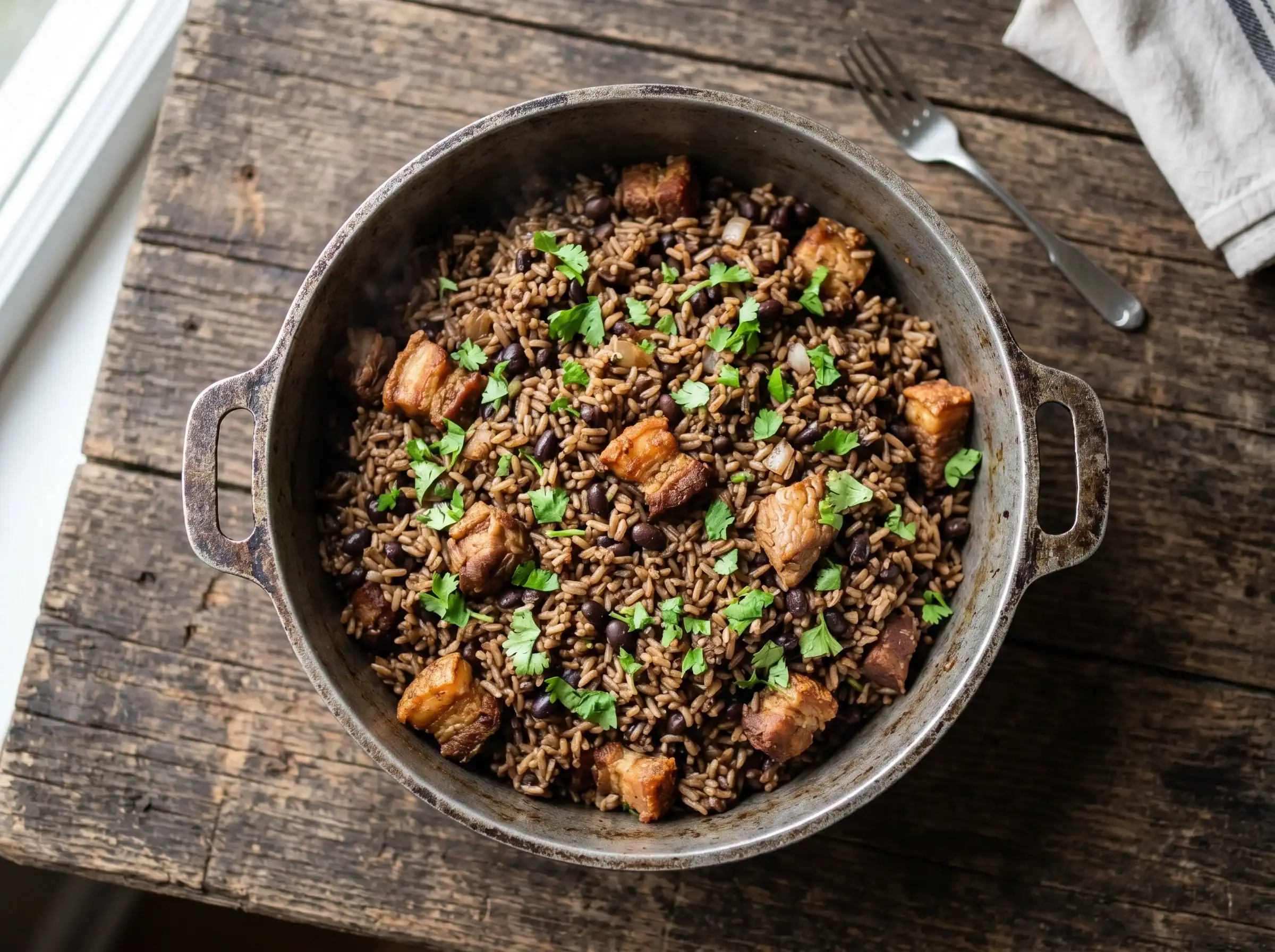
Substitute black beans for pigeon peas. Skip coconut milk. More common in everyday meals than guandules.
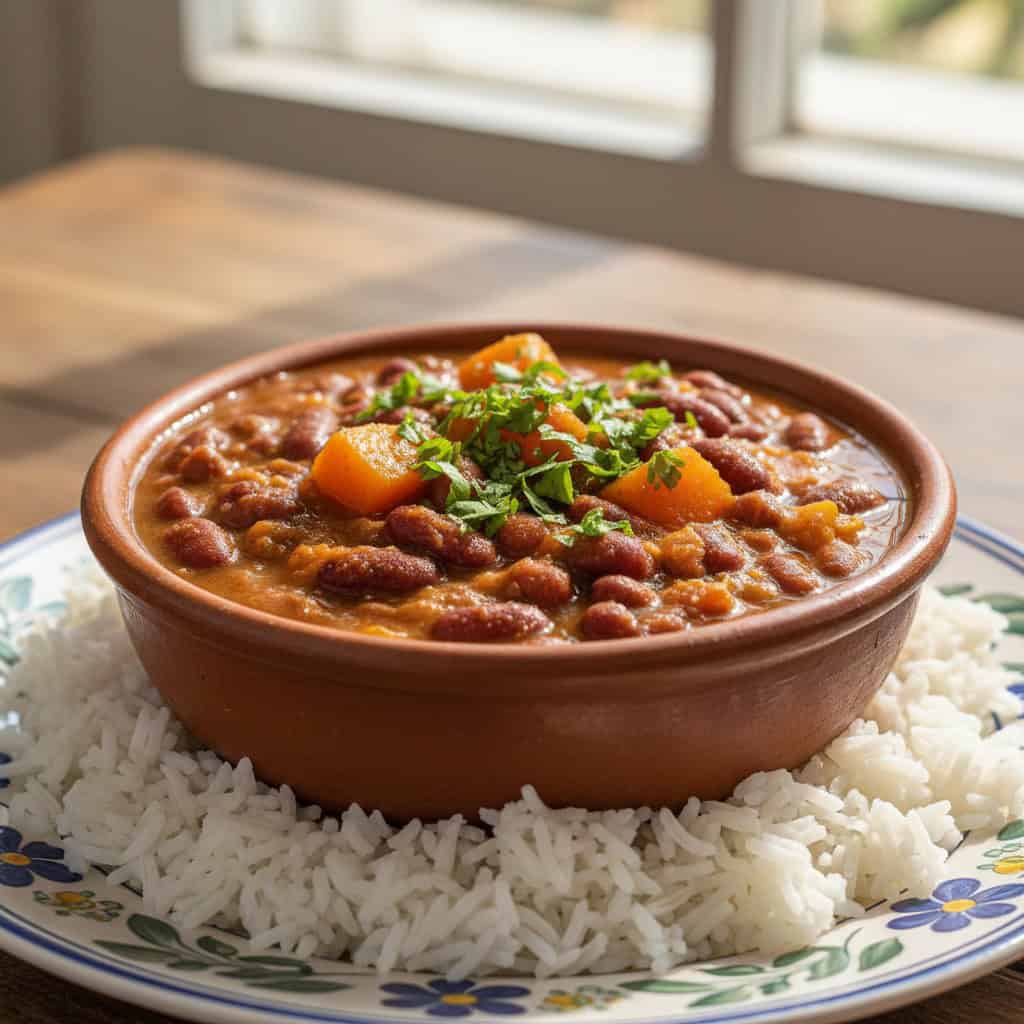
Moro de Habichuelas Rojas
Use red kidney beans instead of pigeon peas. Equally delicious, often easier to find.
What to Serve With Moro de Guandules
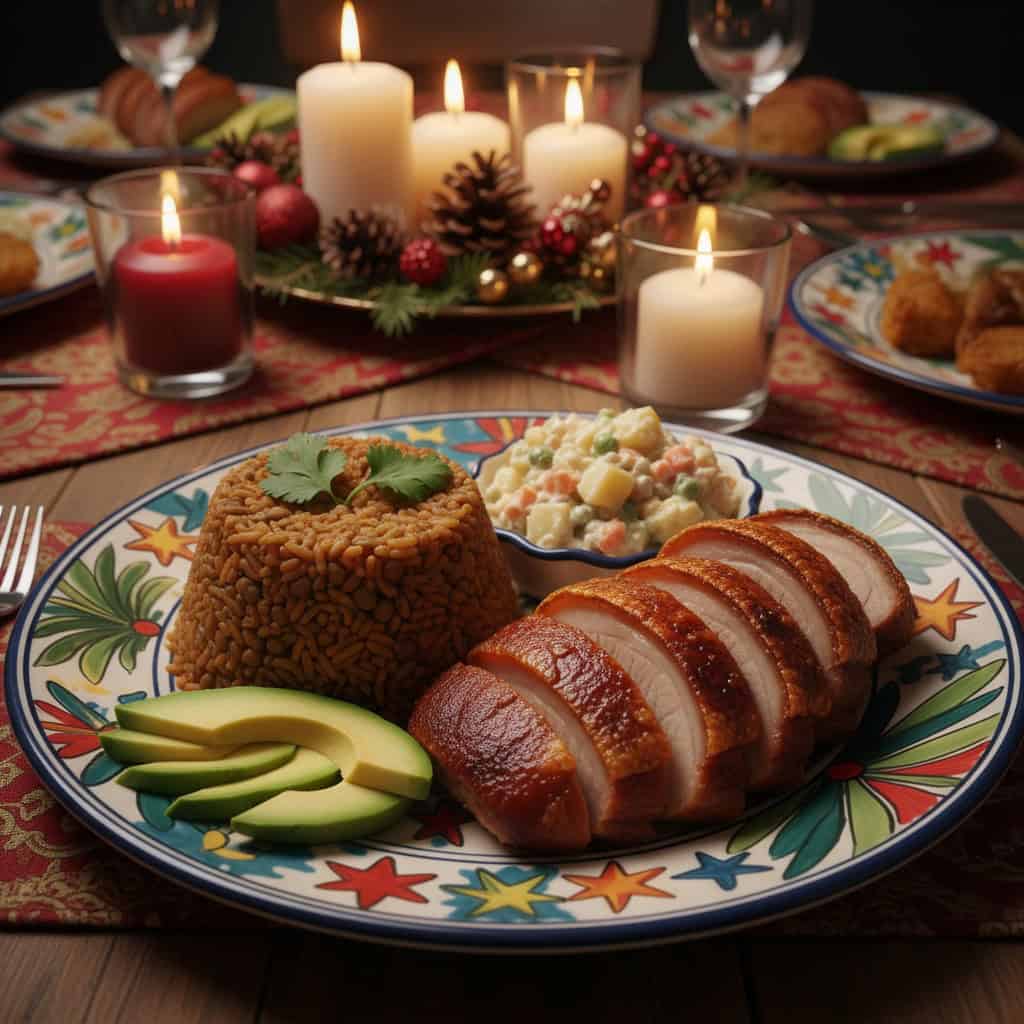
- Pernil dominicano: The classic Christmas pairing.
- Pollo guisado: Stewed chicken on top of moro is everyday perfection.
- Ensalada rusa: Dominican potato salad — every holiday party staple.
- Sliced avocado: Always.
- Fried sweet plantains (maduros): The sweet contrast that completes the plate.
Frequently Asked Questions
What are guandules?
Guandules are pigeon peas — small, brown-green legumes common in Caribbean and Latin American cooking. Find them canned at any grocery store (Goya brand is reliable) or fresh at Latin markets during the holidays.
Can I use frozen guandules?
Yes — actually preferred when available. Use 1 ½ cups frozen pigeon peas. They'll cook with the rice.
What's the difference between moro and arroz con gandules?
Moro is the Dominican name; arroz con gandules is the Puerto Rican name. Same idea — rice and pigeon peas cooked together. Dominican version typically includes coconut milk.
Why is my moro mushy?
Too much liquid or you stirred while it was steaming. The 1.75:1 liquid-to-rice ratio is critical. Don't open the lid during the cooking phase.
Can I skip the coconut milk?
Yes, but it won't taste quite as Dominican. Substitute with extra chicken stock. Coconut adds the signature richness.
How long does moro keep?
Refrigerate up to 5 days. Reheat with a splash of water, covered, on the stovetop or in the microwave. Freezes for 3 months.
Can I use brown rice?
Yes — increase liquid to 2.5 cups and increase cooking time to 35 min. The texture will be different but still delicious.
What are guandules and where can I find them?
Guandules are pigeon peas — small, brown-green legumes common in Caribbean and Latin American cooking. Find them canned at any grocery store (Goya brand is reliable), in the dry beans aisle, or fresh at Latin markets during November-December. If you can't find them, dried green or yellow split peas work as a backup, though the flavor will be different.
Can I use frozen guandules?
Yes — frozen pigeon peas (often available in Latin markets) are actually preferred when fresh ones are out of season. Use 1.5 cups of frozen guandules. They'll cook with the rice and require no pre-cooking. The texture is closer to fresh than canned.
Why is my moro de guandules dry?
Either too little liquid or you cooked it too long. The 1:1.125 rice-to-liquid ratio (2 cups rice to 2.25 cups liquid + 0.5 cup coconut milk) should give you perfect texture. If it's dry after cooking, sprinkle 2 tablespoons of warm chicken stock over the top, cover, and let sit 5 more minutes — the rice will absorb the moisture.
Can I make moro de guandules without coconut milk?
Technically yes, but you'll lose the signature Dominican Christmas flavor. Substitute with extra chicken stock if you must — the dish becomes more like Puerto Rican arroz con gandules (which doesn't traditionally use coconut milk). The coconut adds the richness and slight sweetness that makes Dominican moro distinct.
Why is my moro de guandules sticky?
Sticky moro usually means too much liquid or too much stirring. The 1.5:1 liquid-to-rice ratio (or slightly less when using coconut milk for the moisture) is critical. Stir only twice — once after adding rice, once after fluffing at the end. Too much stirring releases starch and creates clumping.
How do I keep my moro de guandules from getting too sticky?
Three keys: use the right liquid ratio (1.5:1 stock-to-rice plus 0.5 cup coconut milk), don't stir too much (only twice — once after adding rice, once after fluffing), and use a heavy pot. Sticky moro usually means too much liquid or too much stirring.
Can I add other meats to moro de guandules?
Yes — many traditional versions include chunks of smoked pork, ham hock, or longaniza sausage for extra flavor. Add the meat to the sofrito stage and let it cook with the rest. The fat and salt from the meat enhances the dish significantly. This version is especially popular in southern Dominican Republic.
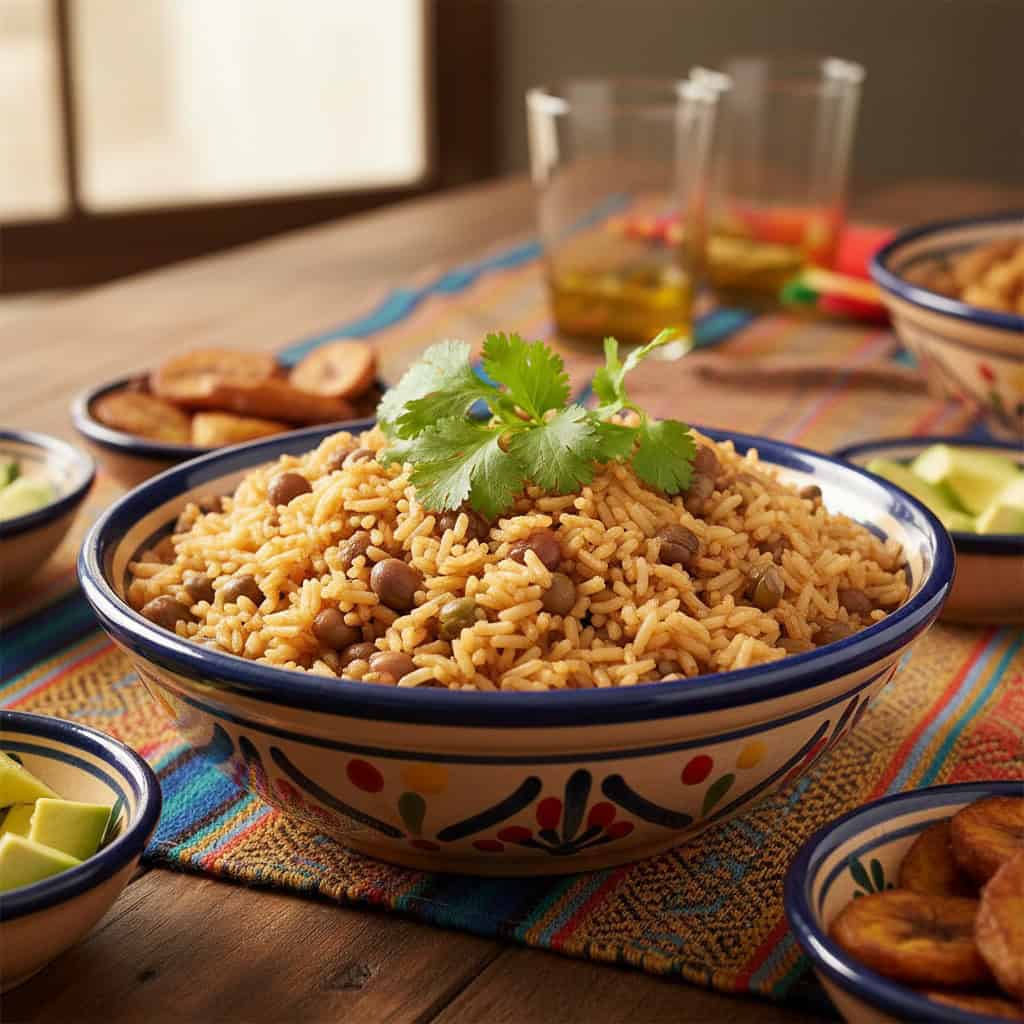
Dominican Moro de Guandules
Ingredients
Method
- Heat oil in heavy pot. Sauté onion and garlic 4 min. Add sofrito, cook 2 min.
- Add tomato paste, caramelize 2 min. Add sazón and oregano.
- Add coconut milk and stock. Add guandules, olives, capers, salt. Bring to boil.
- Stir in dry rice. Submerge fully. Boil.

- Reduce to lowest heat. Cover tightly. Cook 20 min without opening.
- Rest covered 10 min. Fluff with fork. Stir in cilantro. Serve.
Notes
Tried this recipe?
Let us know how it was!Shop This Recipe
View on Amazon →
View on Amazon →
View on Amazon →
As an Amazon Associate I earn from qualifying purchases at no extra cost to you.
Make this for Christmas Eve. Make it again the day after. That's the Dominican way.
You May Also Like
📺 Watch a similar recipe: Dominican Moro de Habichuelas Negras (Rice & Black Beans)
- Locrio de Salami Recipe — Dominican one-pot rice cooked directly with browned Dominican salami, sofrito, and tomato paste.
- Caribbean Crispy Rice Salad with Spicy Tahini — A Caribbean twist on the viral crispy rice salad featuring rice crisped in.
- Instant Pot White Rice Recipe — Perfect fluffy white rice made in the Instant Pot every single time. This.
Leave a Reply