
Habichuelas con dulce is the most uniquely Dominican dessert in the world. Sweet beans? Yes. With coconut milk, evaporated milk, sugar, raisins, sweet potato, and cinnamon? Also yes. Sounds bizarre. Tastes incredible. And during Easter Week (Semana Santa), every Dominican family in the world is making a giant pot of it.
I grew up looking forward to Easter not because of religious holidays — though those were nice — but because Easter meant my mom was making habichuelas con dulce. It would simmer all afternoon, the kitchen filling with the smell of cinnamon and coconut, and we'd eat it warm or cold for the entire week.
If you've never had it, prepare yourself for a flavor experience that has no real American or European equivalent. It's not exactly a dessert. It's not exactly a soup. It's somewhere in between — and it's unforgettable.
Why You'll Love This Habichuelas con Dulce Recipe
- Uniquely Dominican: No other cuisine in the world has anything quite like this dessert.
- Easter Week tradition: Every Dominican family makes habichuelas con dulce during Semana Santa.
- Make-ahead friendly: Tastes better the next day — perfect for prepping ahead.
- Sweet but not too sweet: Balanced flavors of cream, beans, spices, and a touch of sweet potato.
- Customizable: Adjust sweetness, spices, and consistency to your preference.
What Is Habichuelas con Dulce?
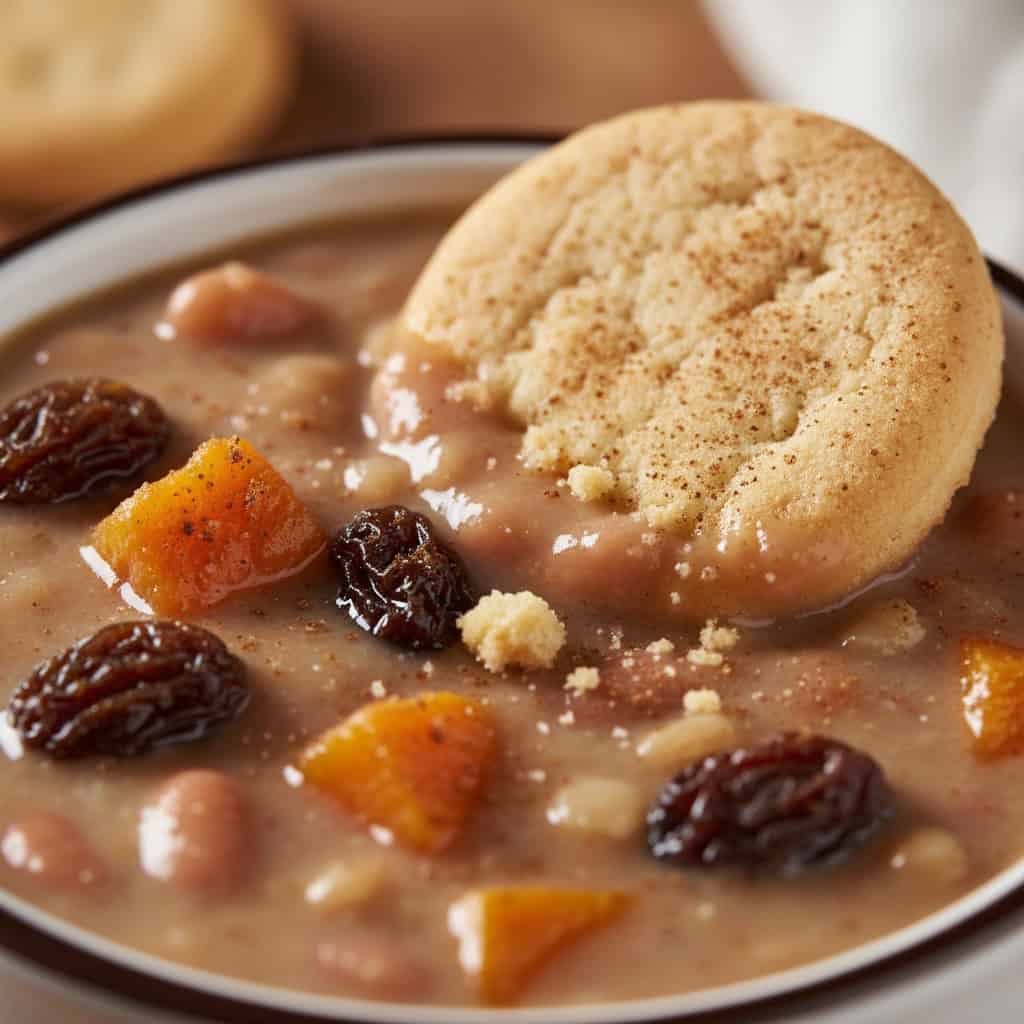
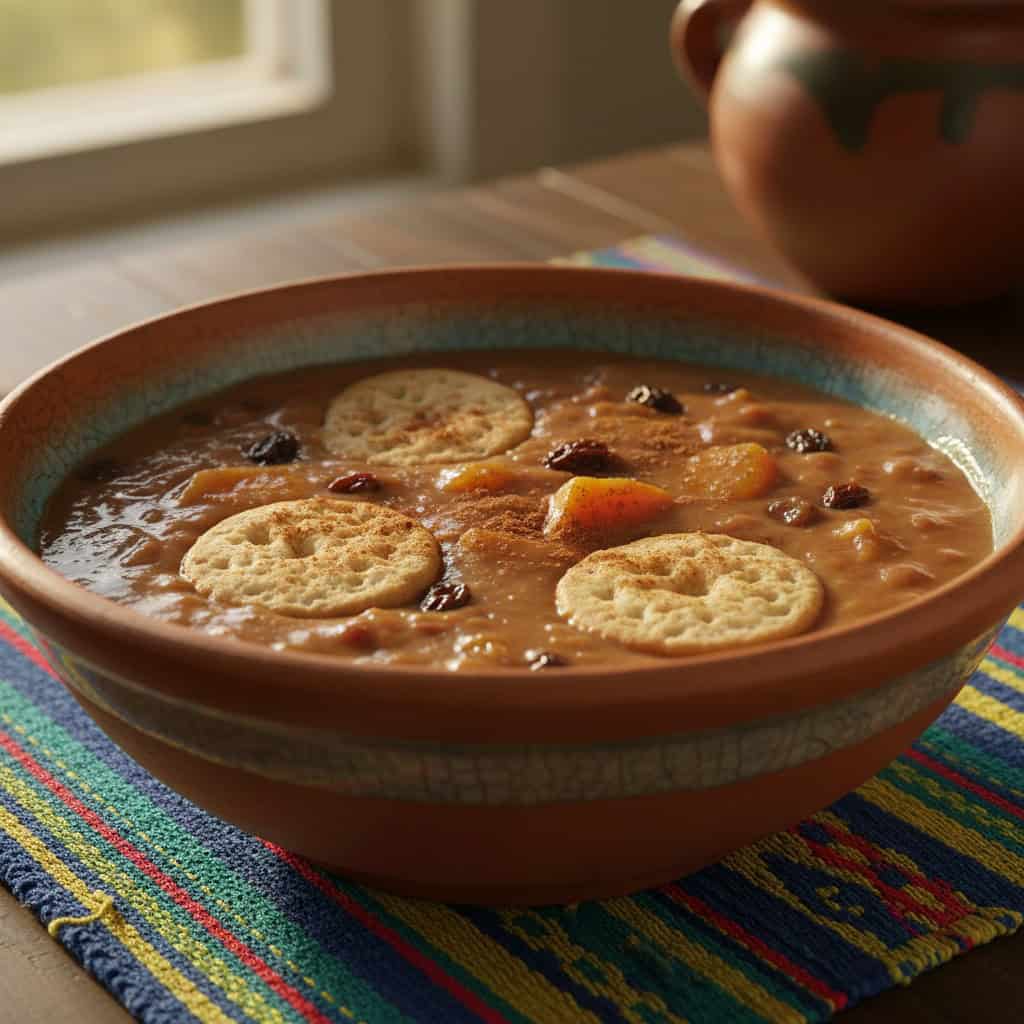
Habichuelas con dulce — literally 'beans with sweet' — is a traditional Dominican dessert made by cooking red beans (sometimes pinto) with coconut milk, evaporated milk, sugar, sweet potato, raisins, and warm spices (cinnamon, cloves, vanilla). The result is a creamy, slightly thick beverage-like dessert served warm or cold, traditionally garnished with small dry cookies called galletas de leche or casabe.
The dish is most strongly associated with Holy Week (Semana Santa) in the Dominican Republic. During the days leading up to Easter, every Dominican household — regardless of religious observance — makes a large batch. It's traditionally a meatless dish, which fits with the Catholic tradition of abstaining from meat during Holy Week.
What makes habichuelas con dulce remarkable is how it bridges the line between sweet and savory. The beans provide body and earthy depth. The coconut and evaporated milk provide creamy richness. The sugar and spices make it dessert-like. The sweet potato adds another layer of natural sweetness. It's a textural and flavor masterpiece that every Dominican grew up loving.
Beyond the religious and cultural significance, habichuelas con dulce represents a fascinating example of Caribbean culinary creativity. Sweet bean dishes exist in other cultures (Asian red bean desserts, Brazilian feijoada doce, certain Middle Eastern bean sweets), but the Dominican version is unique in its specific combination of beans, two types of milk (coconut and evaporated), sweet potato, and warm spices. The result has no exact equivalent anywhere else in the world. The dish is also remarkable for how it has resisted modernization. While many traditional Dominican dishes have been simplified for modern home cooking (instant pots, food processors, shortcuts), habichuelas con dulce is still made the traditional way in most households. The blending and straining steps cannot really be skipped. The slow simmering develops flavors that quick cooking won't achieve. Modern Dominicans have not really found ways to make this dish faster or more convenient — and that's part of why it remains so culturally important. Making habichuelas con dulce takes time and effort, which is the point. It's a labor of love made for special occasions, not a casual weeknight dessert. When a Dominican grandmother makes habichuelas con dulce for her family during Holy Week, she's continuing a tradition that has been passed down through generations of women using essentially the same technique. There's something profound about that continuity in our fast-paced modern world.
Note that some Dominican families use a specific kind of milk cookie called galletas Dulcerias, which are slightly sweeter than the standard galletas de leche. The brand of cookie matters less than the freshness — stale cookies will fall apart immediately and turn the dish gummy. Always taste your cookies before using.
Ingredients You'll Need
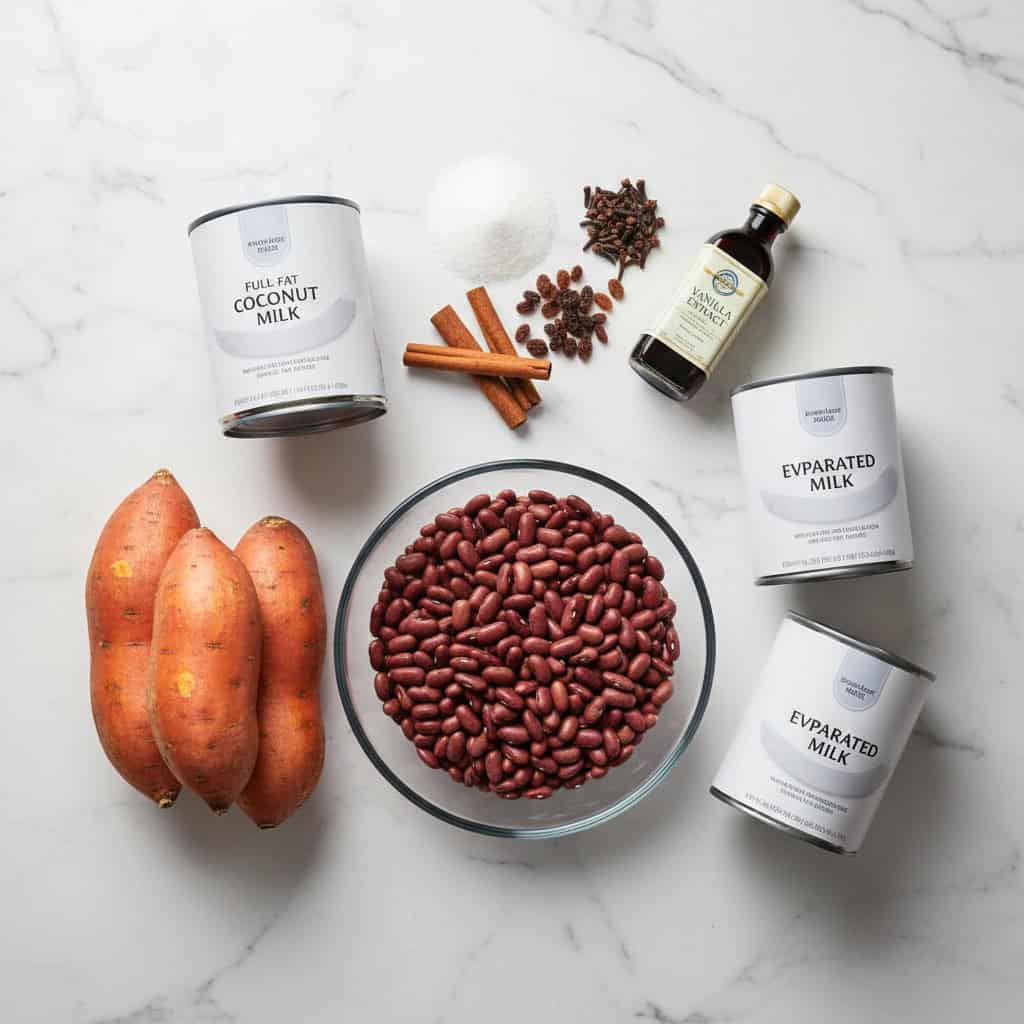
- 1 lb dried red beans, soaked overnight
- 2 sweet potatoes (batata), peeled and cubed
- 1 (13.5 oz) can coconut milk
- 2 (12 oz) cans evaporated milk
- 2 cups sugar (or to taste)
- 3 cinnamon sticks
- 5 whole cloves
- 1 teaspoon vanilla extract
- ¼ teaspoon salt
- ½ cup raisins
- 4 cups water (or bean cooking liquid)
- For serving: small milk cookies (galletas de leche) or casabe (cassava bread)
Equipment: A heavy pot like an All-Clad Dutch Oven and a blender are essential.
Step-by-Step Instructions
Step 1 — Cook the Beans
Drain soaked beans. Cover with fresh water by 2 inches. Boil, then simmer 60-90 min until very tender. Save the cooking liquid.
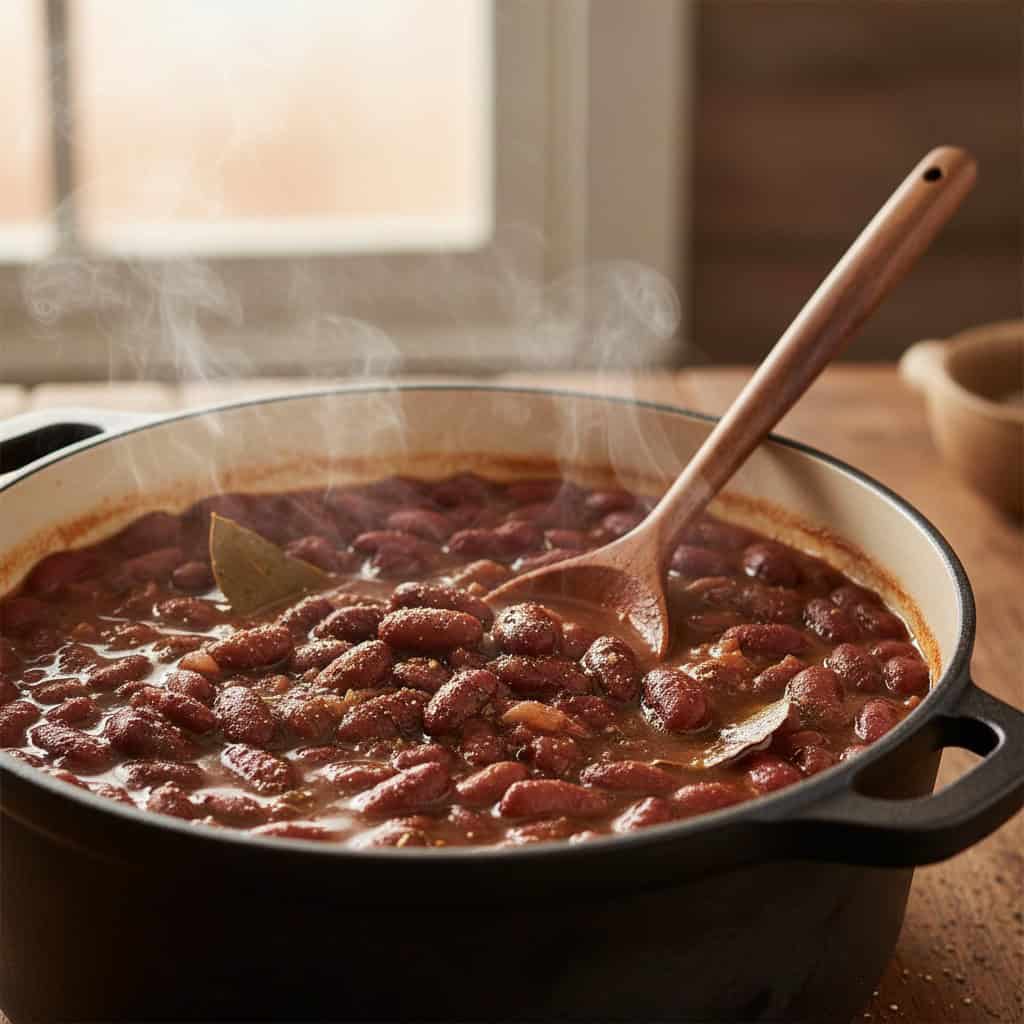
Step 2 — Blend the Beans
Transfer cooked beans (with 2 cups of cooking liquid) to a blender. Blend until completely smooth. This is what gives the dish its creamy texture.
Step 3 — Strain the Bean Puree
Pour blended beans through a fine mesh strainer back into the pot. Discard the skins/sediment. This step gives habichuelas con dulce its signature smooth consistency.
Step 4 — Add Sweet Potatoes
Add cubed sweet potatoes to the strained bean puree. Add 2 more cups of bean liquid (or water). Bring to a simmer. Cook 15 minutes until potatoes are tender.
Step 5 — Add Milks and Sugar
Stir in coconut milk, evaporated milk, sugar, cinnamon sticks, cloves, and salt. Simmer uncovered 15-20 min, stirring frequently to prevent burning, until thickened slightly.
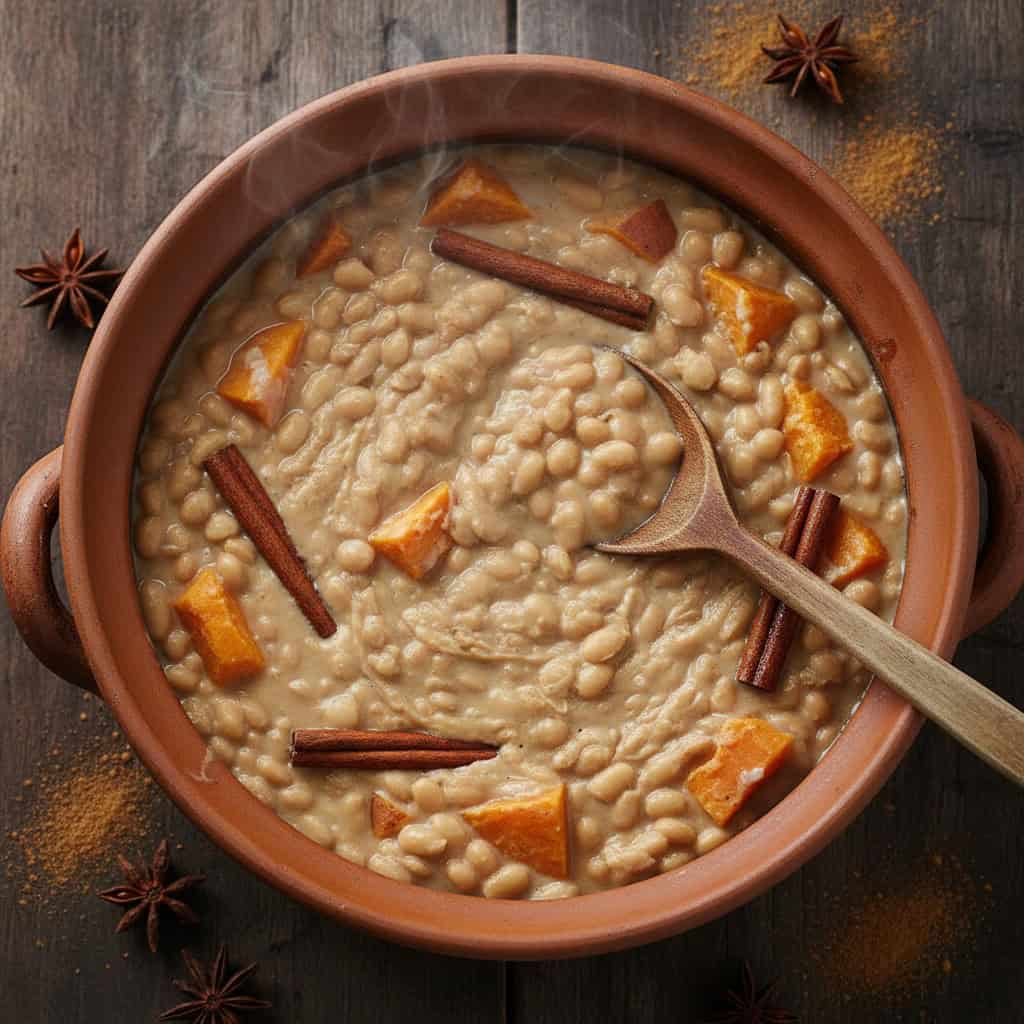
Step 6 — Finish with Vanilla and Raisins
Add vanilla and raisins. Simmer 5 more min. Remove cinnamon sticks and cloves. Taste and adjust sugar.
Step 7 — Serve
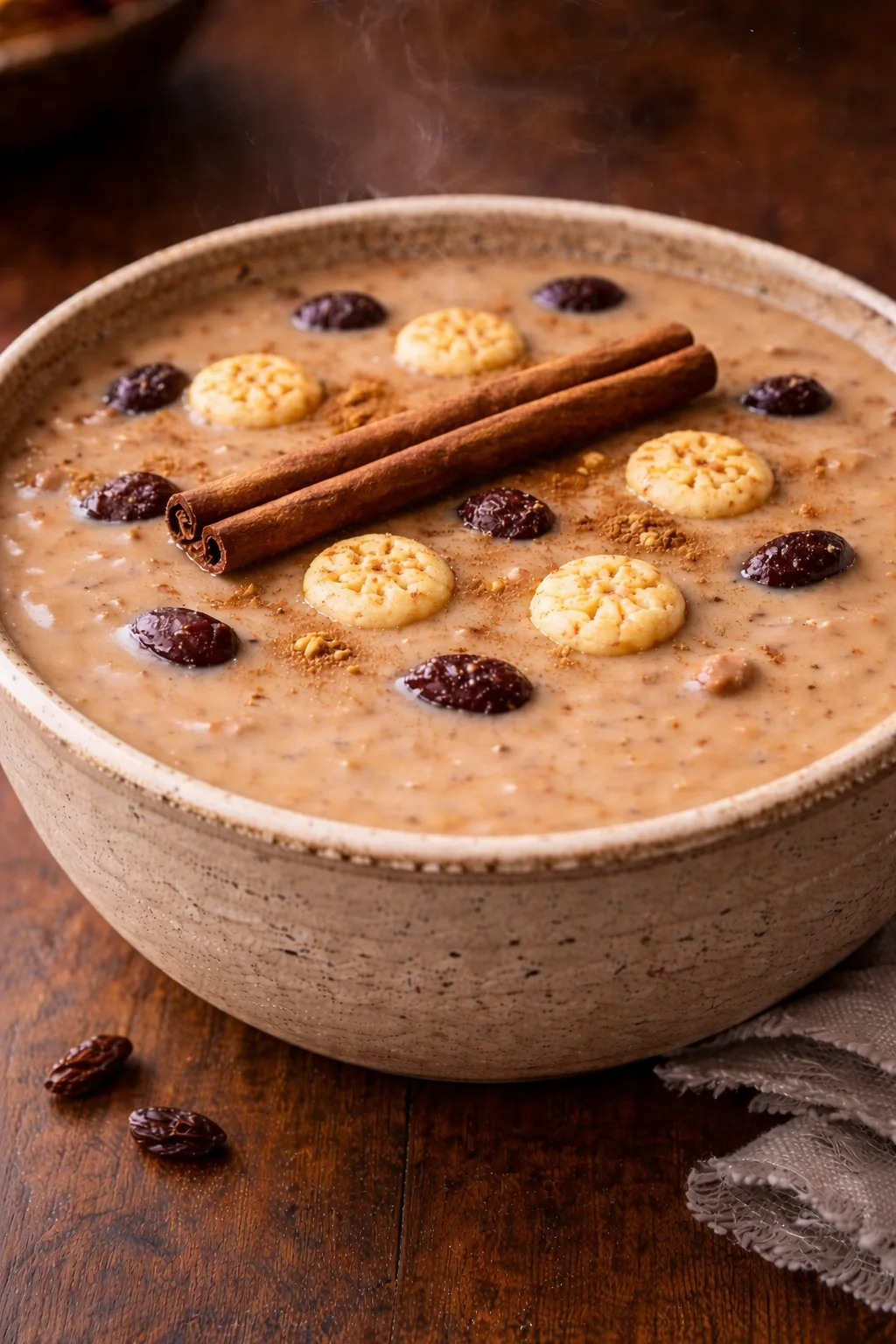
Serve warm or cold in small bowls or cups. Float a few small milk cookies (galletas de leche) on top, the traditional garnish.
Pro Tips for Perfect Habichuelas con Dulce
- Soak beans overnight: Day-of cooking is too risky. Overnight soaking is essential for proper texture and shorter cooking time.
- Strain after blending: This step is non-negotiable for that smooth Dominican texture. Don't skip it.
- Stir frequently after adding milks: The coconut and evaporated milks will burn at the bottom of the pot if you don't stir constantly.
- Adjust thickness to your preference: Some Dominicans like it thick like pudding; others like it more soup-like. Add more milk if too thick, simmer longer if too thin.
- Better the next day: Like all Dominican stews, habichuelas con dulce tastes even better after a day in the fridge. Make ahead.
- Use a high-powered blender: The smoothness of habichuelas con dulce depends entirely on how well you blend the cooked beans. A regular blender works but takes 2-3 minutes; a Vitamix or NutriBullet does it in 30 seconds. Stop blending only when the mixture is completely smooth with no visible bean fragments.
- Add a pinch of nutmeg or star anise: Beyond the traditional cinnamon and cloves, a small pinch of fresh-grated nutmeg or one star anise pod added with the spices brings unexpected depth. Be careful — both are powerful, so use sparingly.
- Stir constantly during the dairy phase: Once you add the coconut milk and evaporated milk, the dish becomes prone to scorching. Use a wooden spoon and stir from the bottom every minute. This is the most labor-intensive part of the recipe but also the most critical.
- Toast the spices first: Some traditional cooks toast the cinnamon sticks and cloves in a dry pan for 30 seconds before adding to the dish. This activates the spice oils and adds another layer of warm flavor. Optional but recommended.
Variations
Instant Pot Habichuelas con Dulce
Use 1 lb unsoaked dried beans + 6 cups water. Pressure cook 45 min with natural release. Then blend, strain, add other ingredients on sauté mode.
Vegan Habichuelas con Dulce
Substitute evaporated milk with full-fat coconut cream or cashew cream. Use date sugar or coconut sugar for a refined-sugar-free version.
Casabe-Topped Version
Instead of milk cookies, top each serving with broken pieces of casabe (Dominican cassava flatbread). More traditional and adds nice crunch.
What to Serve With Habichuelas con Dulce
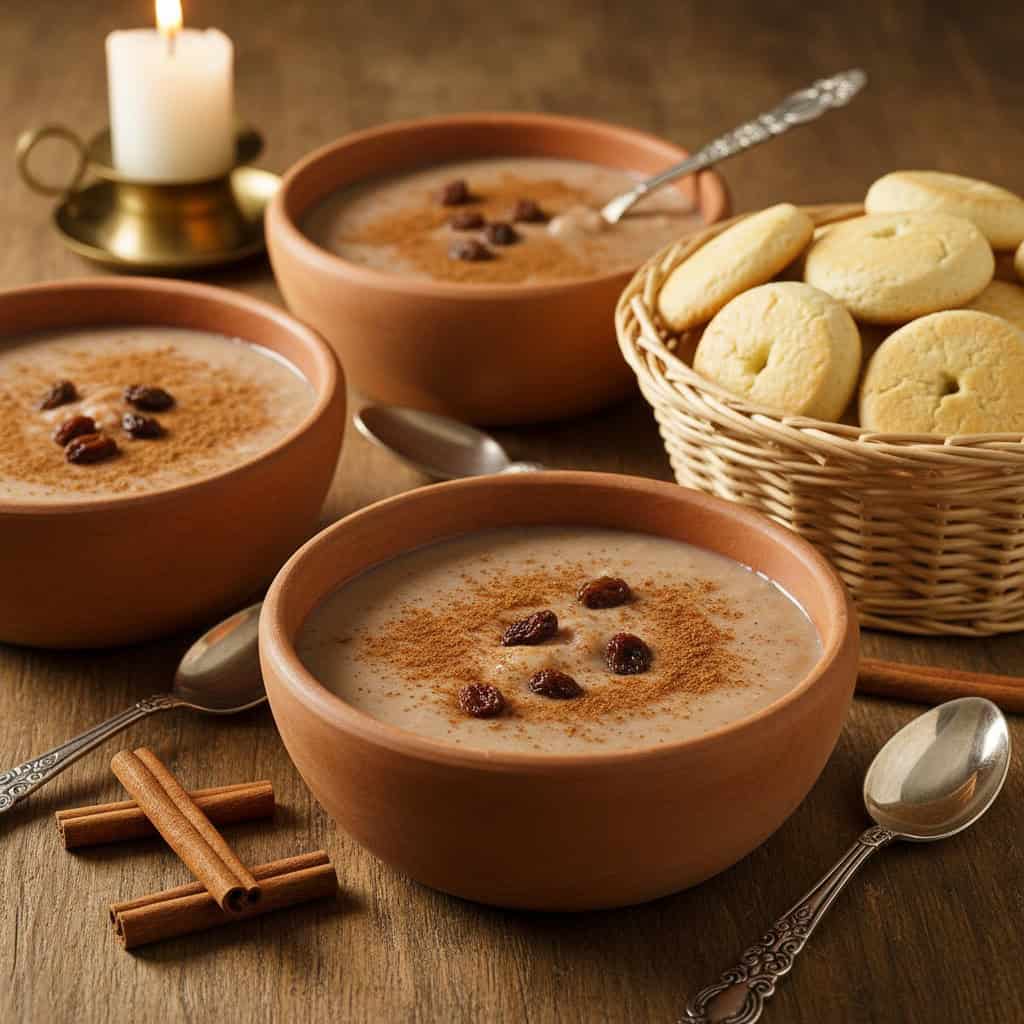
- Galletas de leche: The traditional small dry milk cookies floated on top.
- Casabe: Cassava flatbread broken into pieces for crunch.
- Strong coffee: The bitter contrast pairs beautifully with the sweet beans.
- Pan de agua: Some people dunk Dominican white bread into it.
- Vanilla ice cream: Modern twist — a scoop on top transforms it into a sundae-like dessert.
Frequently Asked Questions
What does habichuelas con dulce taste like?
Creamy, slightly sweet, with notes of cinnamon and coconut. The beans add earthy body. Sweet potato adds natural sweetness. The texture is similar to a thin pudding or thick custard. It tastes like nothing else in world cuisine — uniquely Dominican.
When do Dominicans eat habichuelas con dulce?
Most strongly during Holy Week (Semana Santa, the week leading to Easter). It's traditional to make a large batch on Holy Wednesday or Thursday and eat it through Easter Sunday. Some families also make it for special occasions throughout the year.
Can I use canned beans?
Yes — drain and rinse 3 cans of red beans, then start at the blending step. The flavor won't be quite as deep but will still be delicious. Use 2 cups water instead of bean cooking liquid.
Why do you strain the beans?
Straining removes the bean skins and gives the dessert its signature smooth, almost silky texture. Without straining, you'll have a chunky bean soup rather than the creamy dessert it's supposed to be.
How long does habichuelas con dulce last?
5-7 days in the refrigerator. The flavor improves over 2-3 days. Can be served cold straight from the fridge or warmed gently on the stove. Don't freeze — the texture changes.
Can I make this less sweet?
Yes — start with 1 ½ cups sugar and adjust to taste. Some Dominicans also use a combination of brown and white sugar. Coconut sugar works as a less-refined alternative.
What are the small cookies on top?
Galletas de leche — small, slightly sweet, very dry milk cookies. They float on top of the dessert and slowly soften in the warm milk. You can find them at Latin grocery stores. Substitute with vanilla wafers if needed.
Can I freeze habichuelas con dulce?
Yes, but with one caveat — the texture changes slightly after freezing (becomes a bit grainier as the dairy proteins separate and reform). Freeze in airtight containers for up to 2 months. Thaw overnight in the fridge and reheat slowly on the stovetop, stirring constantly to recombine the texture.
Is habichuelas con dulce really a dessert?
Sort of. It occupies a category unique to Dominican cuisine — not exactly a dessert, not exactly a soup. It's served at the end of meals like a dessert, eaten in small portions like a dessert, and it's sweet like a dessert. But it's also nutritious enough to be a meal on its own — beans, sweet potato, coconut milk all provide protein, fiber, and healthy fats. Many Dominicans have it as breakfast during Holy Week.
What if I don't have evaporated milk?
Substitute with 1 cup heavy cream + ½ cup whole milk. The result is slightly richer than the traditional version. For a dairy-free option, use full-fat coconut cream — the dish becomes more coconut-forward but is equally delicious. Don't substitute with sweetened condensed milk — that would make it cloyingly sweet.
What kind of beans should I use?
Traditional Dominican habichuelas con dulce uses small red beans (habichuelas rojas pequeñas). You can substitute with pinto beans, kidney beans, or even black beans (though black beans give a darker color). Avoid garbanzo or white beans — they don't have the right starch content for the creamy texture.
Can I add cookies into the dessert itself?
Some modern Dominican families crumble milk cookies or vanilla wafers into the warm habichuelas con dulce just before serving, creating a layered texture. This isn't traditional but is becoming popular as a modern variation. The traditional way is to float whole cookies on top.
Dominican Habichuelas con Dulce
Ingredients
Method
- Soak beans overnight. Drain. Boil in fresh water 60-90 min until very tender. Save liquid.
- Blend cooked beans with 2 cups cooking liquid until smooth.
- Strain through fine mesh into pot. Discard skins.
- Add sweet potatoes and 2 more cups liquid. Simmer 15 min until tender.
- Add coconut milk, evap milk, sugar, cinnamon, cloves, salt. Simmer 15-20 min stirring frequently.

- Add vanilla and raisins. Simmer 5 more min. Remove whole spices.
- Serve warm or cold in small bowls. Top with milk cookies.
Notes
Tried this recipe?
Let us know how it was!Shop This Recipe
View on Amazon →
View on Amazon →
View on Amazon →
As an Amazon Associate I earn from qualifying purchases at no extra cost to you.
Make this for Easter. Make extra. Your family will demand more next year.
You May Also Like
📺 Watch a similar recipe: Authentic Dominican Arroz con Dulce (Coconut Rice Pudding)
- Dulce Frío Dominicano — The no-bake Dominican trifle of every cumpleaños and summer gathering — layers of.
- Majarete Dominicano Recipe — Silky Dominican corn pudding made from fresh blended and strained corn, coconut milk.
- Tres Leches Cake Recipe — A heavenly Tres Leches Cake — traditional Latin American dessert with a light.



Leave a Reply