

Sopa de res dominicana is what Sunday afternoon smells like in a Dominican house. You walk in and you already know — the windows are a little foggy, abuela is watching the front door, and there is a stockpot on the back burner that has been working quietly since just after church.
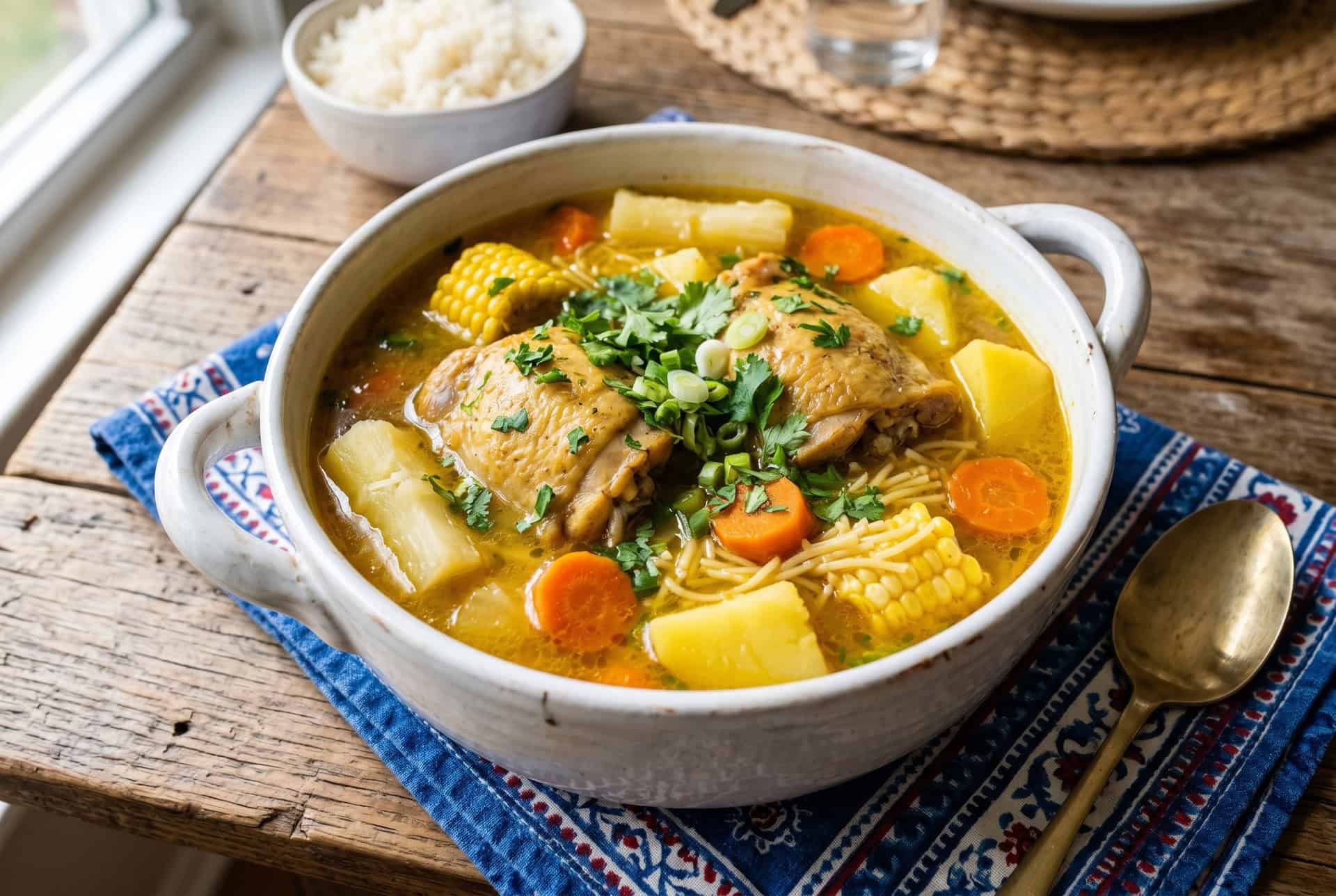
It is hearty beef soup. Bone-in beef, yuca, auyama, corn, yautía, carrots — all of it simmered slow in a broth that starts pale and ends up a deep gold. You eat it out of a deep bowl with a spoon in one hand and a piece of bread in the other, and by the second bowl you have forgotten whatever was bothering you when you walked in.
The first time I made this on my own, I called my mom three times — once to ask if I really needed the bones (yes), once to ask if I could skip the yautía (no, not really), and once to ask why the broth looked watery at the one-hour mark (because I hadn't added the starchy roots yet). This recipe is the version I cook now without calling anyone, and it is the version that tastes right.
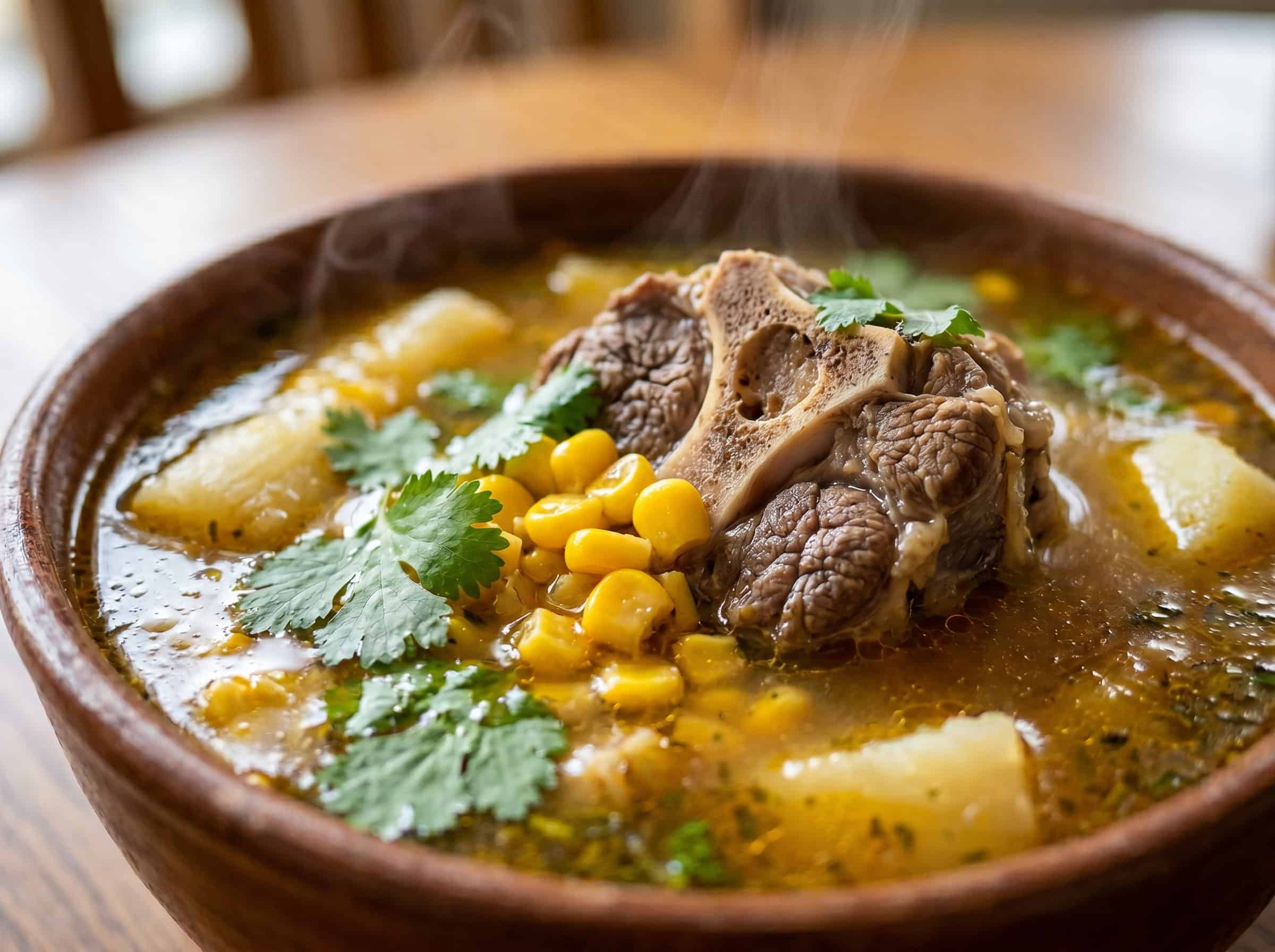
What Is Sopa de Res Dominicana
Sopa de res is Dominican beef soup. It sits in the same family as sancocho dominicano and mondongo dominicano — the Sunday-soup bloodline — but it is lighter than sancocho (only one kind of meat, fewer tubers) and cleaner than mondongo (no tripe).
What makes it Dominican and not some generic beef-and-vegetable soup:
- Bone-in beef. Oxtail, short ribs, or beef shank. The marrow and the connective tissue melt into the broth and give it body.
- Auyama. Dominican kabocha / West Indian pumpkin. It dissolves slightly into the broth and thickens it from within.
- Yuca and yautía. Starchy viandas that turn a thin broth into a meal.
- Sofrito and sazón. The Dominican flavor base. Green sofrito goes in early, sazón makes the broth golden.
- Corn on the cob, cut into rounds. Not optional. The cob is what makes it a sopa and not a stew.
Eat it with white rice on the side (yes, rice with soup — it's a Dominican thing) and a lime wedge to brighten every bowl.
Ingredients You'll Need
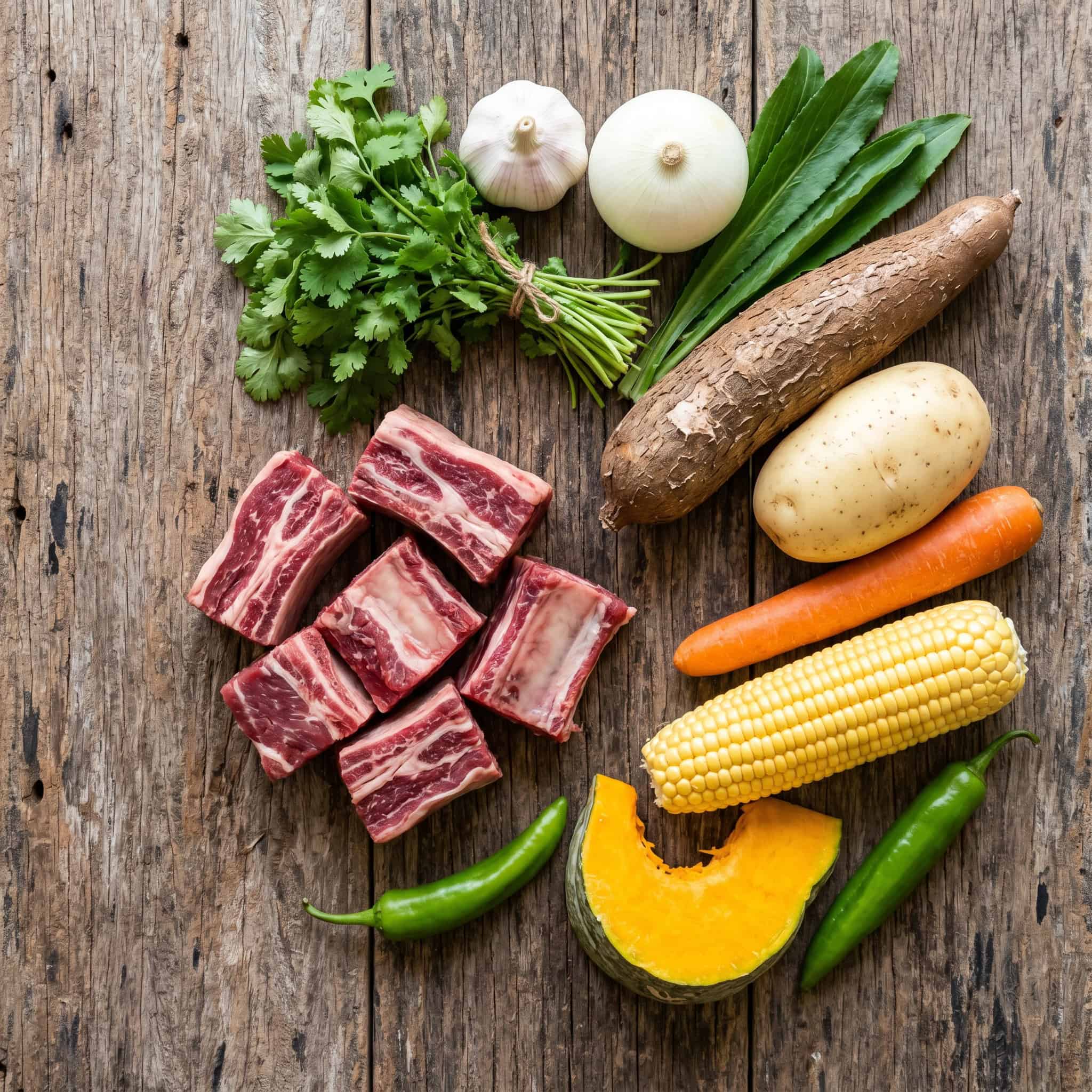
The Beef
Use bone-in cuts. My preference order:
- Oxtail — best flavor, most gelatin, most expensive.
- Beef shank — my default. Affordable, plenty of marrow, great body.
- Short ribs — rich, a little fatty, very flavorful.
You can mix two. Boneless stew meat alone does not give the same broth — the bones are doing real work here.
The Viandas (Root Vegetables)
- Yuca (cassava) — find it frozen if fresh is hard to get. Always peel the waxy skin and the pink under-layer before cooking.
- Auyama — West Indian pumpkin. Substitute: kabocha squash works beautifully. Butternut in a pinch.
- Yautía (taro root) — the hairy brown root. Its starchy body thickens the broth and adds a slight earthy note. Skip it if you can't find it but the soup loses a little character.
- Corn on the cob — cut each ear into 3-4 rounds, cob and all.
- Carrots and potatoes — supporting roles. Potatoes are optional but common.
The Flavor Base
- Dominican sofrito (green) — onion, pepper, cilantro, culantro, garlic blended.
- Sazón — one packet or 1 teaspoon homemade (annatto is what turns the broth golden).
- Adobo — or just salt, garlic powder, oregano.
- Tomato paste — one tablespoon. Deepens the color and adds a mild sweetness.
- Oregano — dried.
- Fresh cilantro — stirred in at the end.
How to Make Sopa de Res Dominicana
Step 1 — Sear the Beef
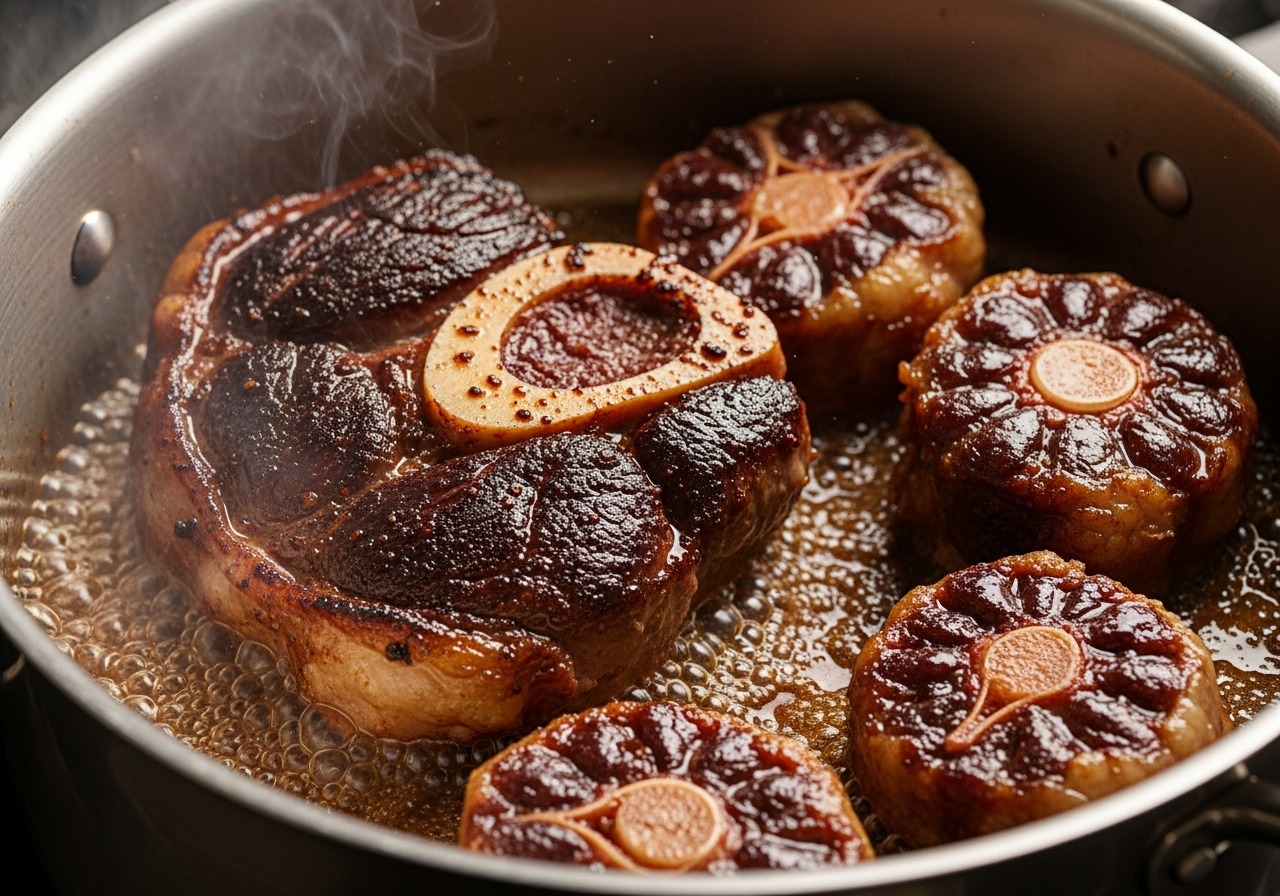
This is the step people skip and it's the step that matters most. Pat the beef dry. Salt it well. Heat olive oil in a heavy stockpot over medium-high until it shimmers. Lay the beef in a single layer — do not crowd. Sear 3-4 minutes per side until a deep brown crust forms.
Work in batches if your pot isn't wide enough. If you throw all the beef in at once, it steams instead of searing and you lose half the flavor.
Step 2 — Build the Sofrito Base
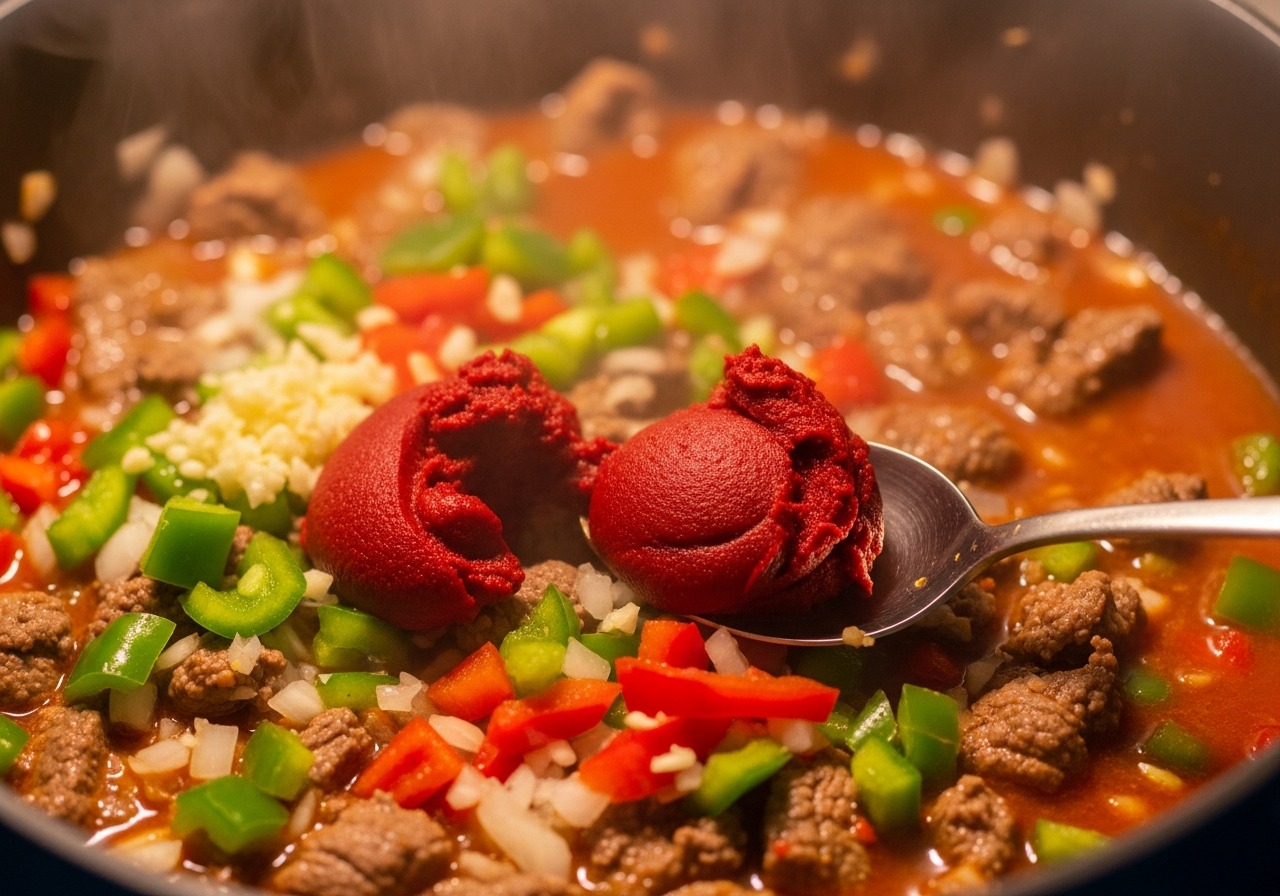
Push the beef to one side. Add onion, cubanelle, and garlic to the pot. Let them sweat for 2 minutes until the onion turns translucent. Add sofrito and tomato paste and stir for one full minute — you want the tomato paste to darken and the sofrito to lose its raw smell.
Add sazón, adobo, and oregano. Stir everything together so the beef is coated.
Step 3 — The Long Simmer
Pour in 10 cups of water, scraping the bottom of the pot with a wooden spoon to lift the browned bits (fond). Bring to a full boil, then lower to a gentle simmer. Cover and let it go for 1 hour and 15 minutes, or until the meat is fork-tender.
In the first 20 minutes, skim any brown foam that rises to the top. After that, it settles down on its own.
You are not making chicken soup — this is not a 30-minute broth. The gelatin has to break down, the marrow has to dissolve, the broth has to deepen. Let it cook.
Step 4 — Add the Hardy Vegetables
Add the yuca, yautía, and carrots. Simmer uncovered for 15 minutes. The uncovered part matters — the broth will reduce slightly and concentrate.
These are the firm roots. They need the most time. The yuca and yautía will also release starch into the broth, which is how a Dominican soup thickens — no flour, no cornstarch, just viandas doing their job.
Step 5 — Add the Auyama, Corn, and Potatoes
Add the auyama, corn rounds, and potatoes (if using). Simmer another 15-20 minutes until a knife slides through the auyama with no resistance and the yuca is fork-tender.
Auyama cooks faster than yuca — that's why it goes in last. A little bit will break down into the broth and that is what turns it from a thin soup into something that coats the spoon.
Taste now. Adjust salt. The broth should taste bright, savory, and a little sweet from the pumpkin. Flat broth = not enough salt. Sharp broth = add more water.
Step 6 — Rest and Serve
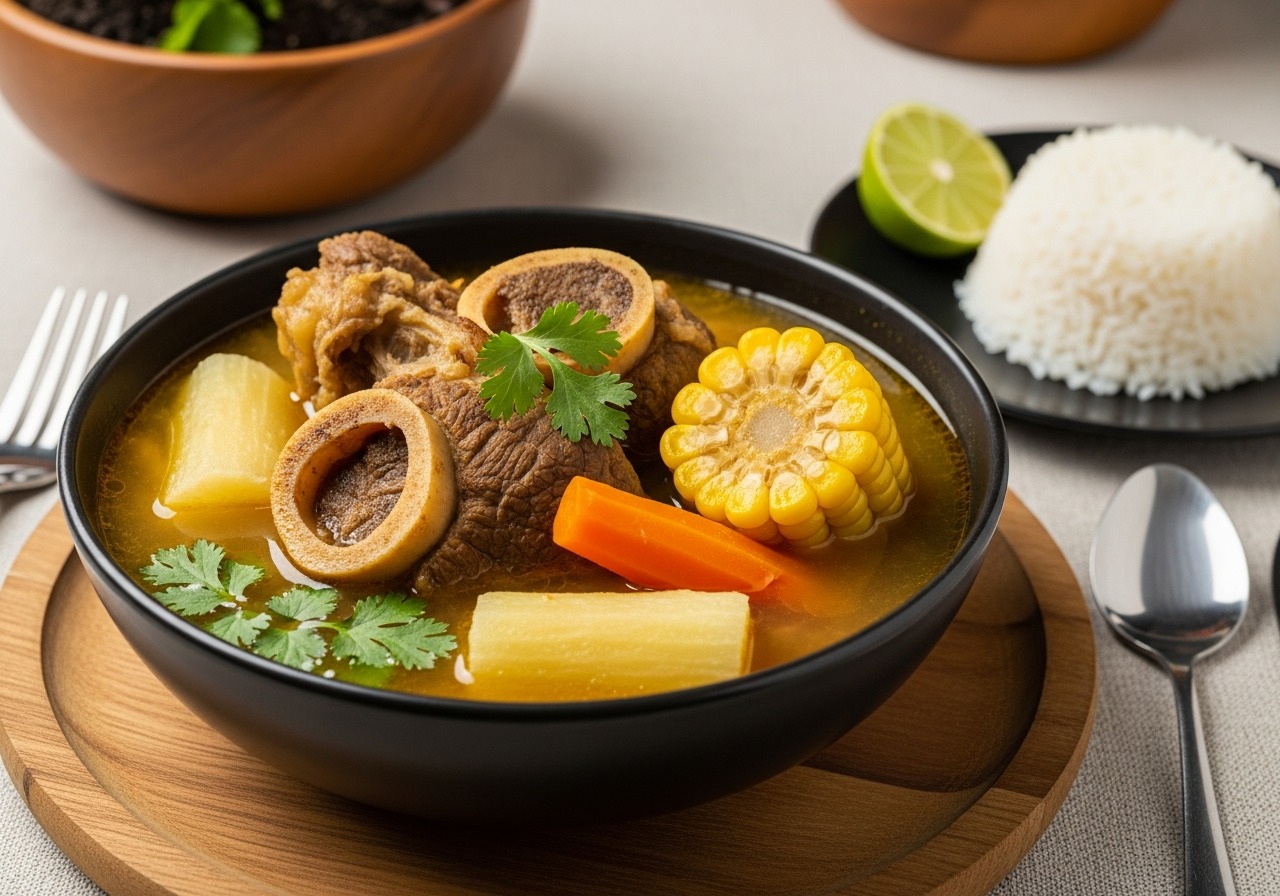
Kill the heat. Let it sit 5 minutes. This rest is small but real — the broth clarifies and the flavors settle.
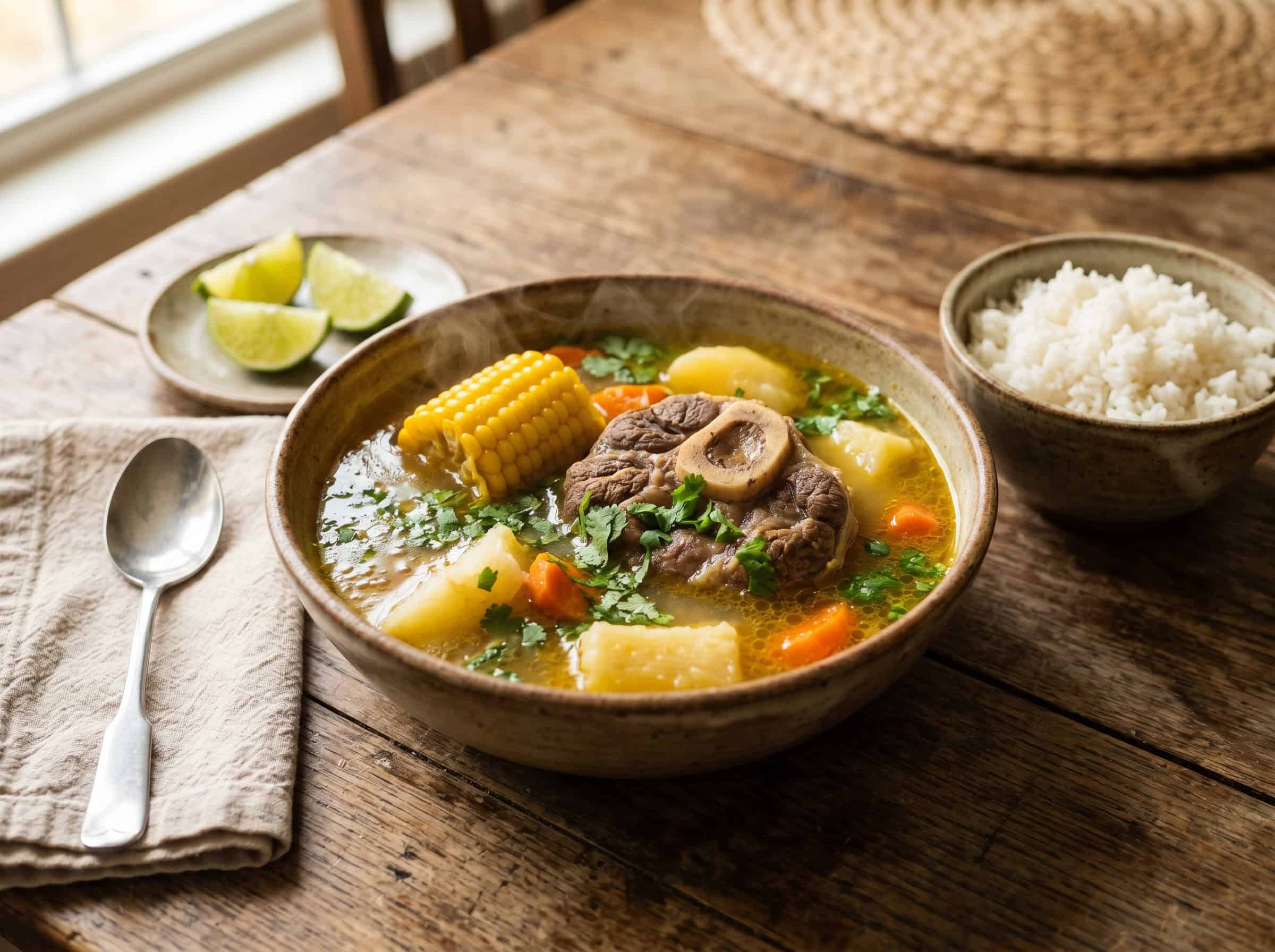
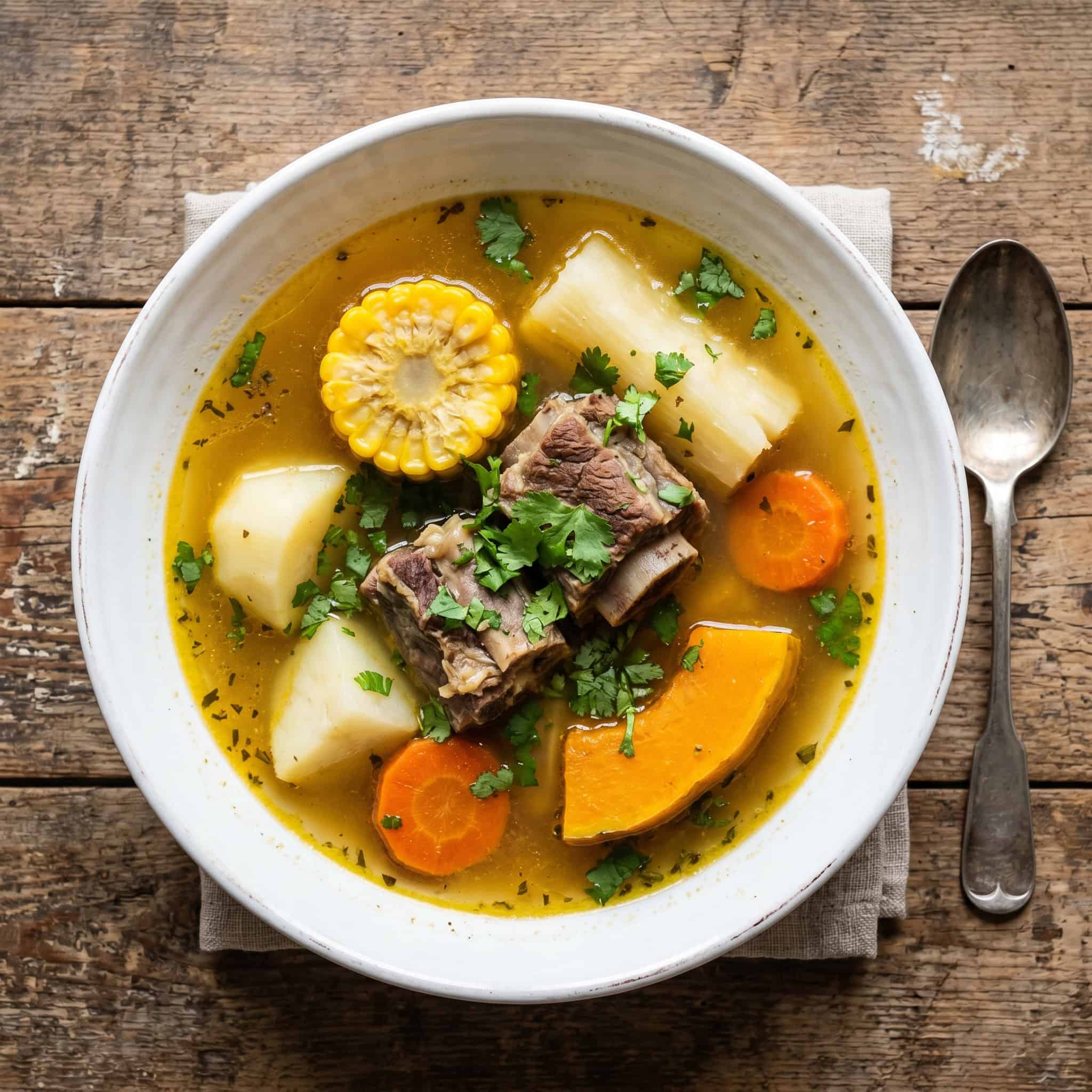
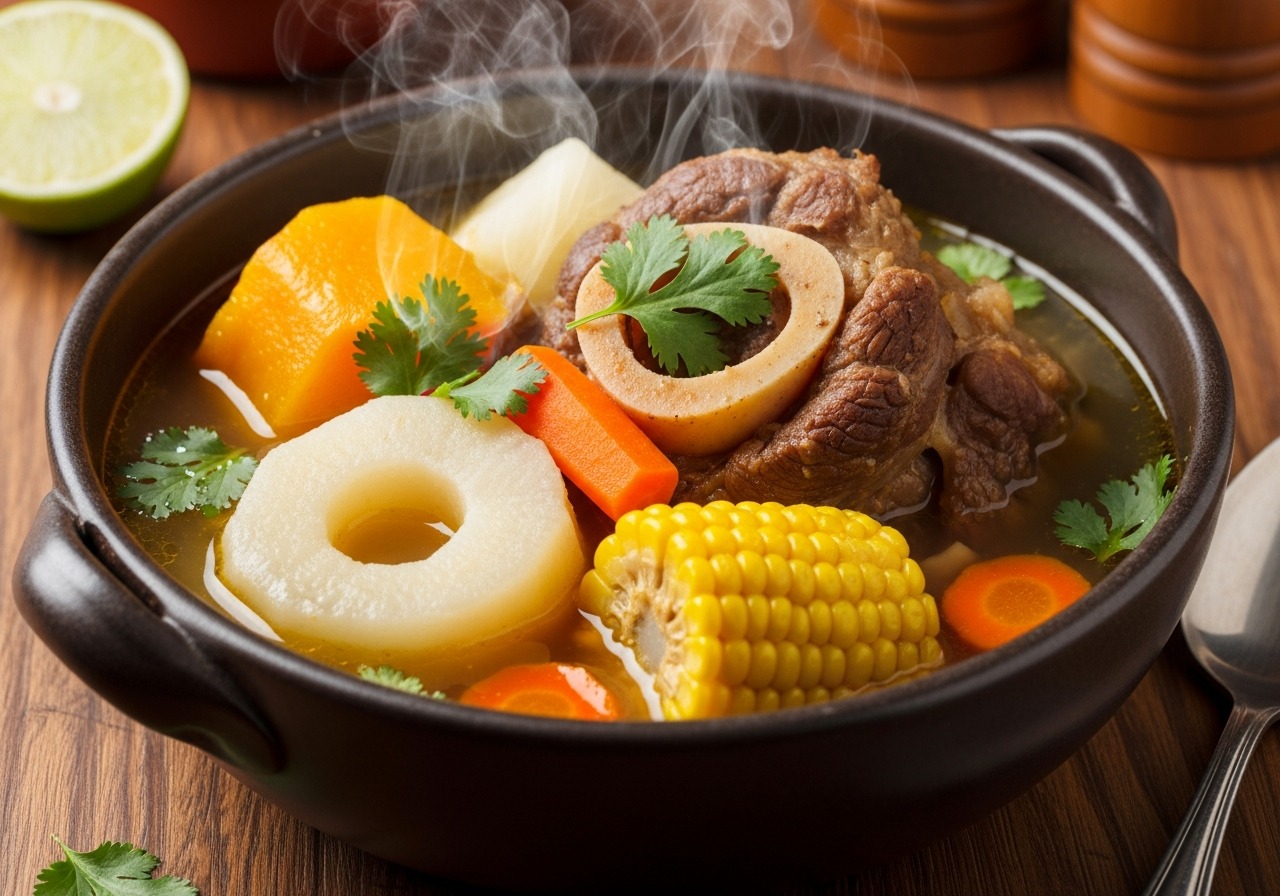
Ladle into deep bowls. Every bowl should get: a piece of meat, a chunk of auyama, a ring of corn, and a piece of yuca. Garnish with chopped cilantro. Serve with arroz blanco on the side and a lime wedge.
Pro Tips
- Sear hard. Deep brown, not pale gray. You are building flavor for the whole pot.
- Cold water first. When you pour water into a hot pot, you lift more fond. Scrape the bottom.
- Timing order matters. Firm roots (yuca, yautía, carrot) first. Soft ones (auyama, corn, potato) last. Get this backwards and you have mush or raw yuca — neither is good.
- Don't over-stir late. After the auyama goes in, just fold gently. Hard stirring breaks the pumpkin and turns the broth muddy.
- Salt twice. A little at the start, a final adjustment at the end. Salting only at the end makes the beef taste flat.
- Use bones. Boneless stew meat makes a sad soup. The bones are 70% of what makes this broth taste like home.
- Day-two soup. Like most Dominican stews, it is even better the next day. The flavors tighten up overnight.
How to Serve Sopa de Res
Traditional Dominican way:
- Deep bowl of soup
- Small plate of white rice — you eat a spoonful of rice between spoonfuls of soup, or scoop the rice into the soup, both are legal
- Lime wedge
- Avocado slices on a separate plate if you have them
- Fresh bread for mopping
For lunch, this is the whole meal. No appetizer needed, no dessert required. Just soup and silence.
How to Store Leftovers
- Fridge: 4 days in an airtight container.
- Freezer: up to 3 months. Cool completely first. Freeze in single-serve containers for weeknight dinners.
- Reheat: low heat on the stovetop. The yuca and potato get slightly softer on reheat — that's normal, not a problem.
- The broth may gel in the fridge — that is gelatin from the bones and it is a very good sign. It melts back to broth on the first 30 seconds of heat.
FAQ
Can I use boneless beef?
You can, but the broth will be thinner and less rich. If boneless is all you have, add a beef bouillon cube and a marrow bone to compensate.
What if I can't find yautía or auyama?
Substitute kabocha squash or butternut for auyama. Skip yautía if you must — use more potato. The soup will still be good, it just loses a little of its Dominican personality.
Can I make this in a pressure cooker or Instant Pot?
Yes. Sear the beef on sauté mode, build the sofrito, add water, pressure cook on high 35 minutes natural release. Then add vegetables and simmer on sauté mode until tender. You lose a little of the slow-cook depth but save an hour.
Can I make it ahead?
Yes — even better the next day. Make the night before, cool, refrigerate. Reheat low on the stovetop and add a splash of water if needed.
How is this different from sancocho?
Sancocho uses multiple meats (beef, pork, chicken, sometimes goat) and more types of viandas. Sopa de res is the simpler weekday cousin — one meat, fewer roots, faster. Both are Dominican. Both are delicious.
Why lime at the end?
A rich beef soup needs acid to stay bright. One squeeze of lime cuts the richness and makes every other flavor pop. Don't skip it.
Make this on a Sunday. Make extra. Eat it slowly. That is the entire recipe, written between the lines.
Sopa de Res Dominicana
Ingredients
Method
- Heat olive oil in a large stockpot over medium-high heat. Add the bone-in beef pieces in a single layer and sear 3-4 minutes per side until a deep brown crust forms. Do not crowd — work in batches if needed. This sear is where half the broth's flavor comes from.

- Push the meat to one side. Add the diced onion, cubanelle, and garlic to the pot. Sauté 2 minutes until softened. Stir in the sofrito and tomato paste and cook 1 minute until the color deepens.
- Add sazón, adobo, and oregano. Pour in 10 cups of water and stir to release all the fond from the bottom. Bring to a boil, then reduce heat to low, cover, and simmer 1 hour 15 minutes, or until the meat is fork-tender. Skim any foam that rises in the first 20 minutes.
- Add the yuca, yautía, and carrots. Simmer uncovered 15 minutes. These root vegetables need the most time and release starch that thickens the broth.
- Add the auyama, corn rounds, and potatoes (if using). Simmer another 15-20 minutes until a knife slides easily through the auyama and the yuca is fork-tender. Taste and adjust salt — the broth should taste bright and savory, never flat.
- Turn off the heat. Let the soup rest 5 minutes — this helps the broth clarify and the flavors settle.
- Ladle into deep bowls making sure every bowl gets a piece of meat, a chunk of auyama, and a ring of corn. Garnish with chopped cilantro. Serve with lime wedges on the side and a mound of white rice or crusty bread.
Nutrition
Notes
Tried this recipe?
Let us know how it was!Kitchen Tools Used in This Recipe
- 🔗 Dutch Oven
- 🔗 Chef Knife
As an Amazon Associate I earn from qualifying purchases.

Leave a Reply