
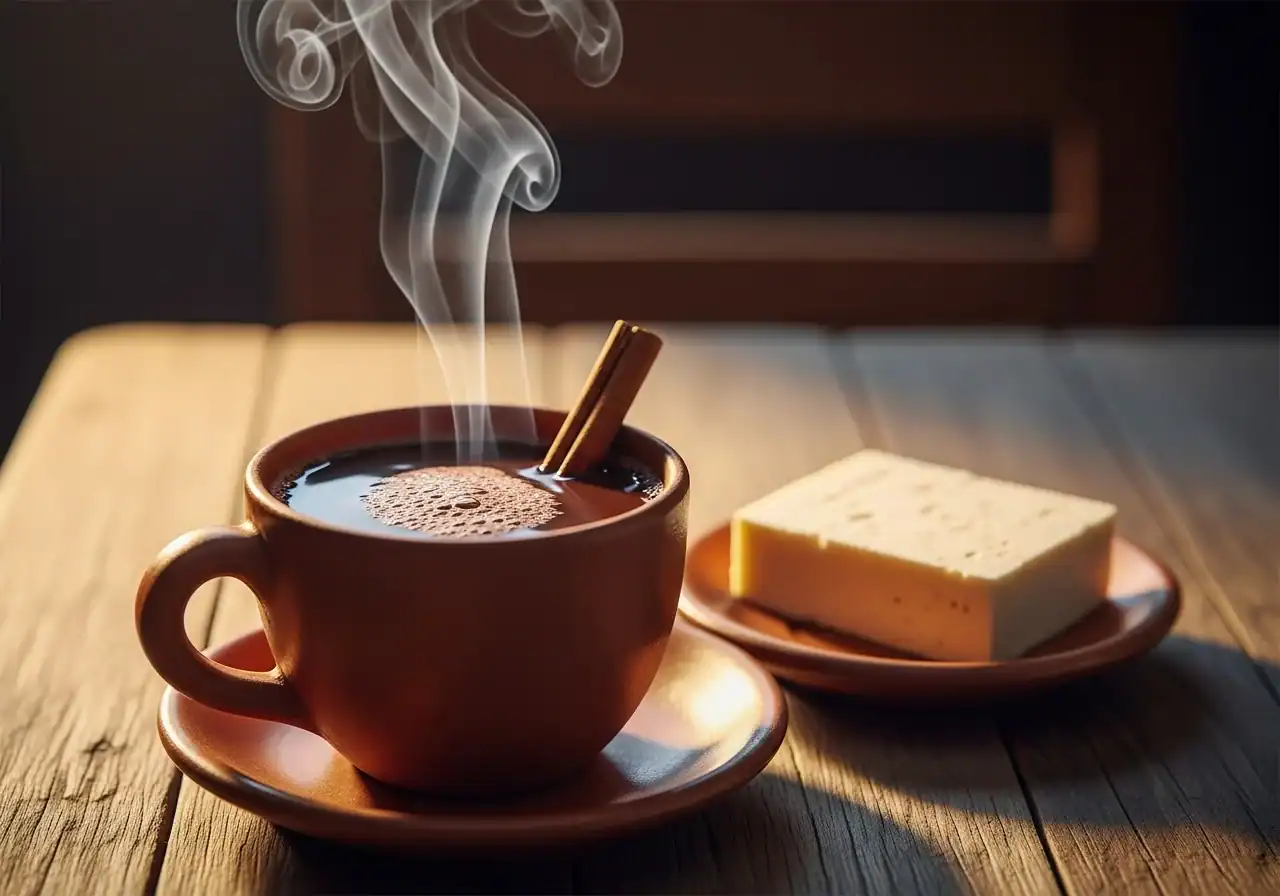
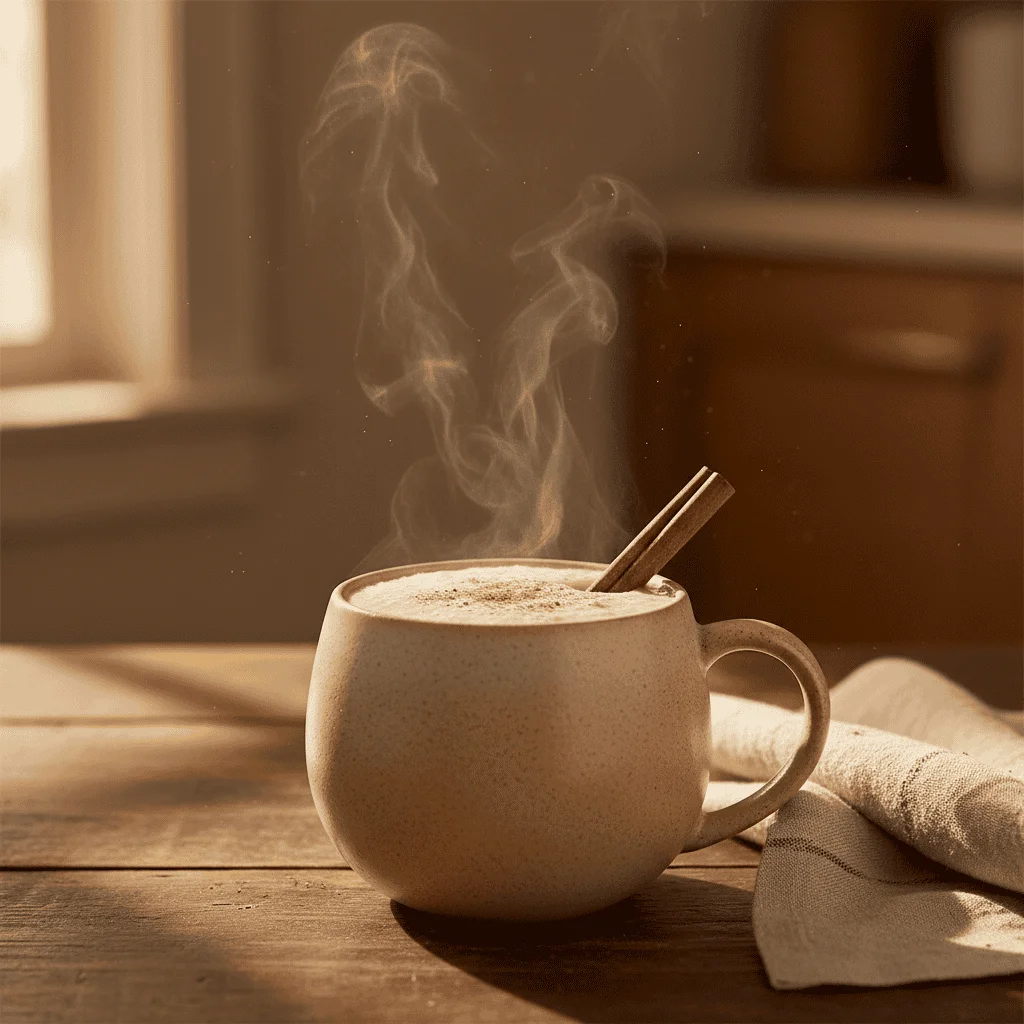
Chocolate de agua is Dominican hot chocolate made the old way — with water, not milk. That sounds wrong until you taste it. Then it makes sense. Real cacao is so intense, so layered, so genuinely chocolatey, that milk actually gets in the way. Water lets the cacao do the talking.
This is the breakfast drink I remember from childhood mornings at my grandmother's house. She'd be in the kitchen before the sun came up, and by the time I shuffled out in socks, the smell of cinnamon and melting cacao tablet was filling the whole house. She'd pour me a small cup — a jarrito — and hand me a piece of queso blanco on a plate, and that was breakfast. No ceremony. Just the best chocolate in the world.
If you have never made chocolate from a real cacao tablet, this recipe will change how you think about hot chocolate forever.
What Is Chocolate de Agua
Chocolate de agua literally means "chocolate of water" — hot chocolate made using water instead of milk as the base. It's the traditional Dominican version, rooted in rural campo cooking where fresh milk wasn't always available, and where good cacao was.
The star ingredient is the tableta de chocolate — a dense, rustic cacao tablet made of ground roasted cacao beans, sugar, cinnamon, and sometimes nutmeg, pressed into disks or bricks. It isn't smooth or glossy like European chocolate. It's grainy, intensely bitter-sweet, and packed with actual chocolate flavor.
You dissolve the tablet in hot water with a little extra sugar, simmer until it's deep and dark, froth it up, and pour. That's the whole thing. Fifteen minutes. Three ingredients if you count water.
It tastes like the purest hot chocolate you've ever had — no creaminess hiding anything, just roasted cacao, cinnamon warmth, and a little sweetness. If you've only had hot chocolate from a packet of powder, this is going to be a small life event.
The Cacao Tablet — The One Non-Negotiable
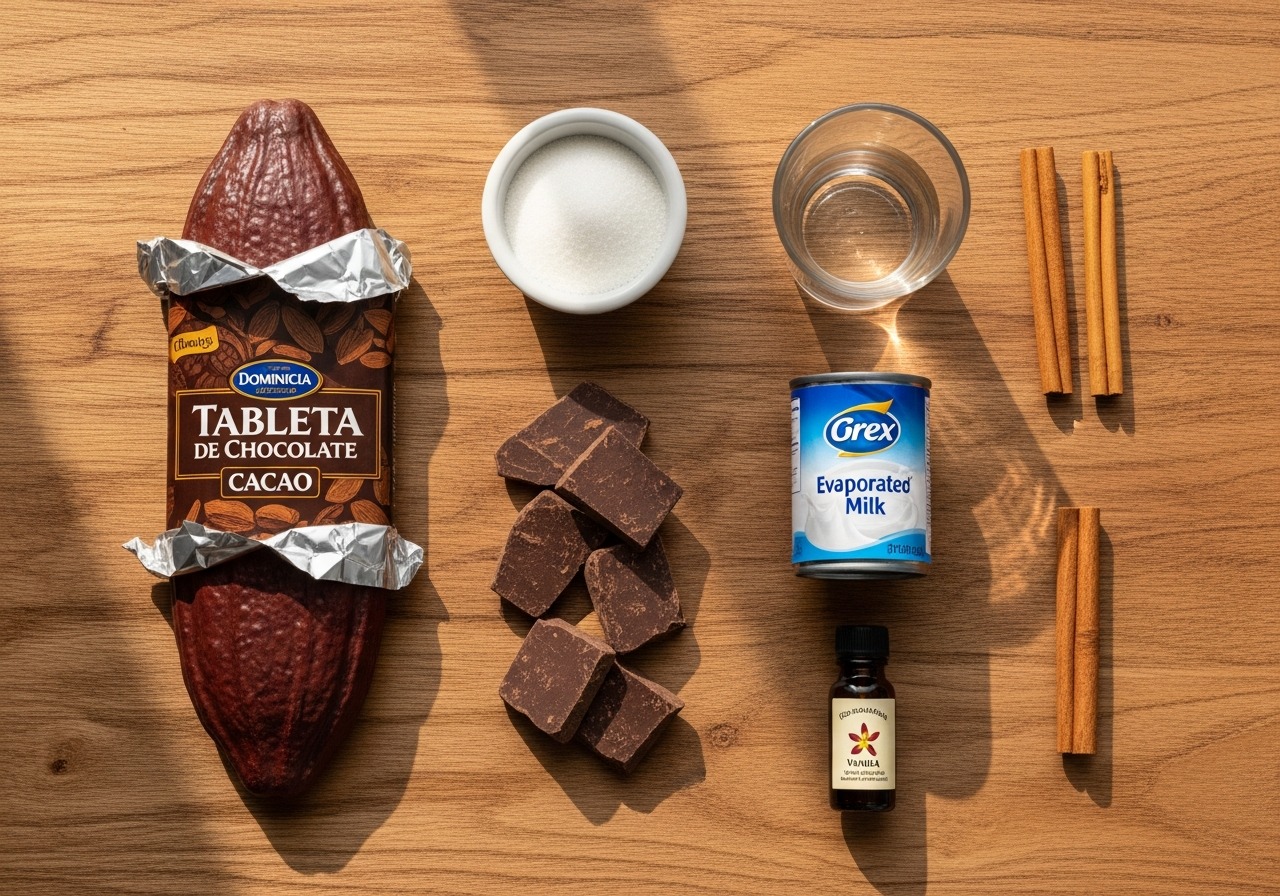
This recipe requires a real Dominican cacao tablet. Cocoa powder does not substitute. Hershey's does not substitute. Hot chocolate mix does not substitute. You need the tablet.
Brands to Look For
- Chocolate Embajador — the most common, reliable flavor, found at every Latin market.
- Chocolate Cortés — Puerto Rican origin but widely used in DR, slightly sweeter.
- Chocolate Munne — Dominican brand, traditional flavor, often dusted with cinnamon.
- Chocolate Sánchez — another Dominican brand, widely available.
They come as small rectangular bars or flat disks, usually wrapped in simple paper or cellophane. One tablet is about 3 oz.
If you can't find Dominican brands, Mexican chocolate de mesa (Ibarra, Abuelita, Taza) works. The flavor profile is close — both are grainy, rustic, cinnamon-warmed.
How to Make Chocolate de Agua
Step 1 — Steep the Cinnamon
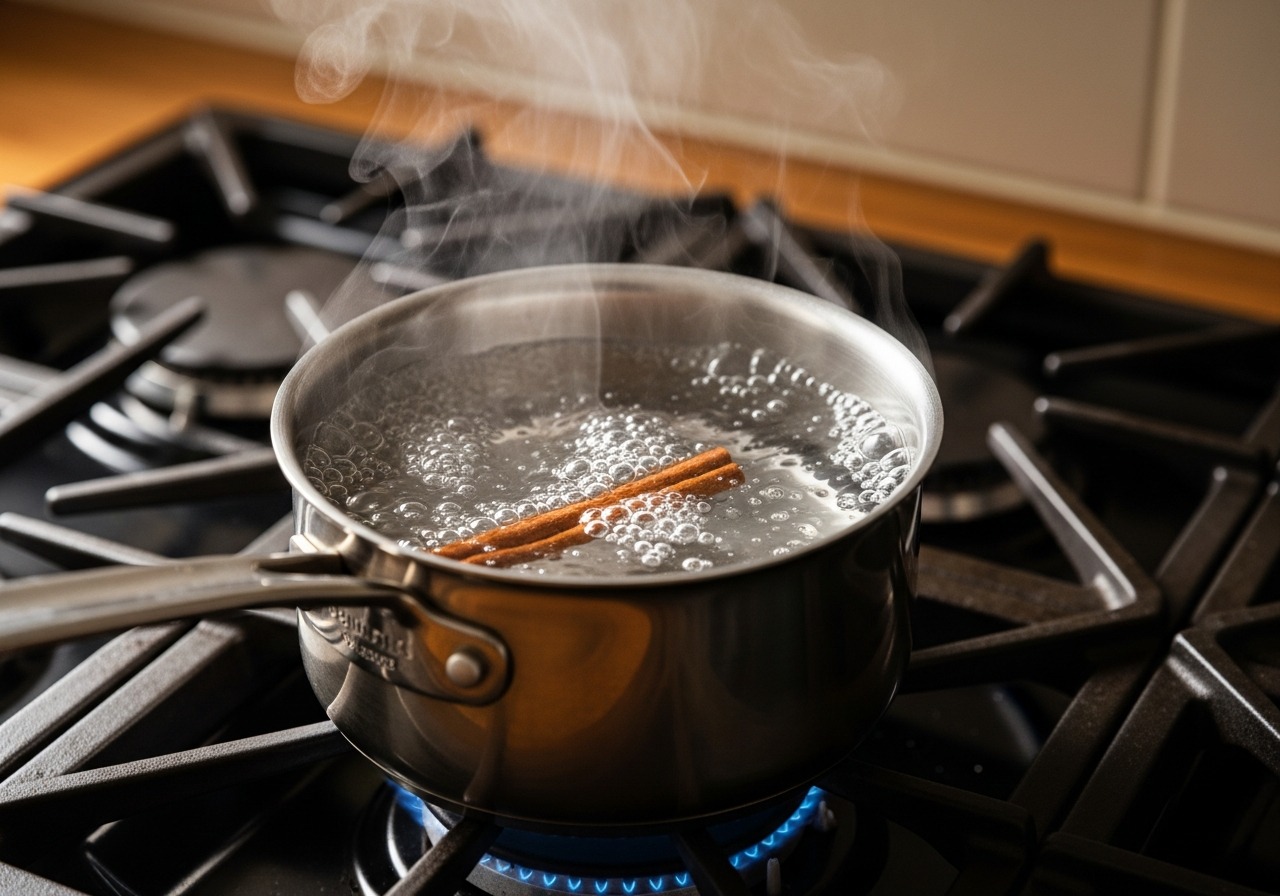
In a small pot, combine 4 cups of water and a cinnamon stick. Bring to a gentle boil over medium-high heat. Let the cinnamon steep 2 minutes before adding the chocolate — the water takes on the warm background note.
If you only have ground cinnamon, use ½ teaspoon and add it directly with the cacao.
Step 2 — Break the Tablet
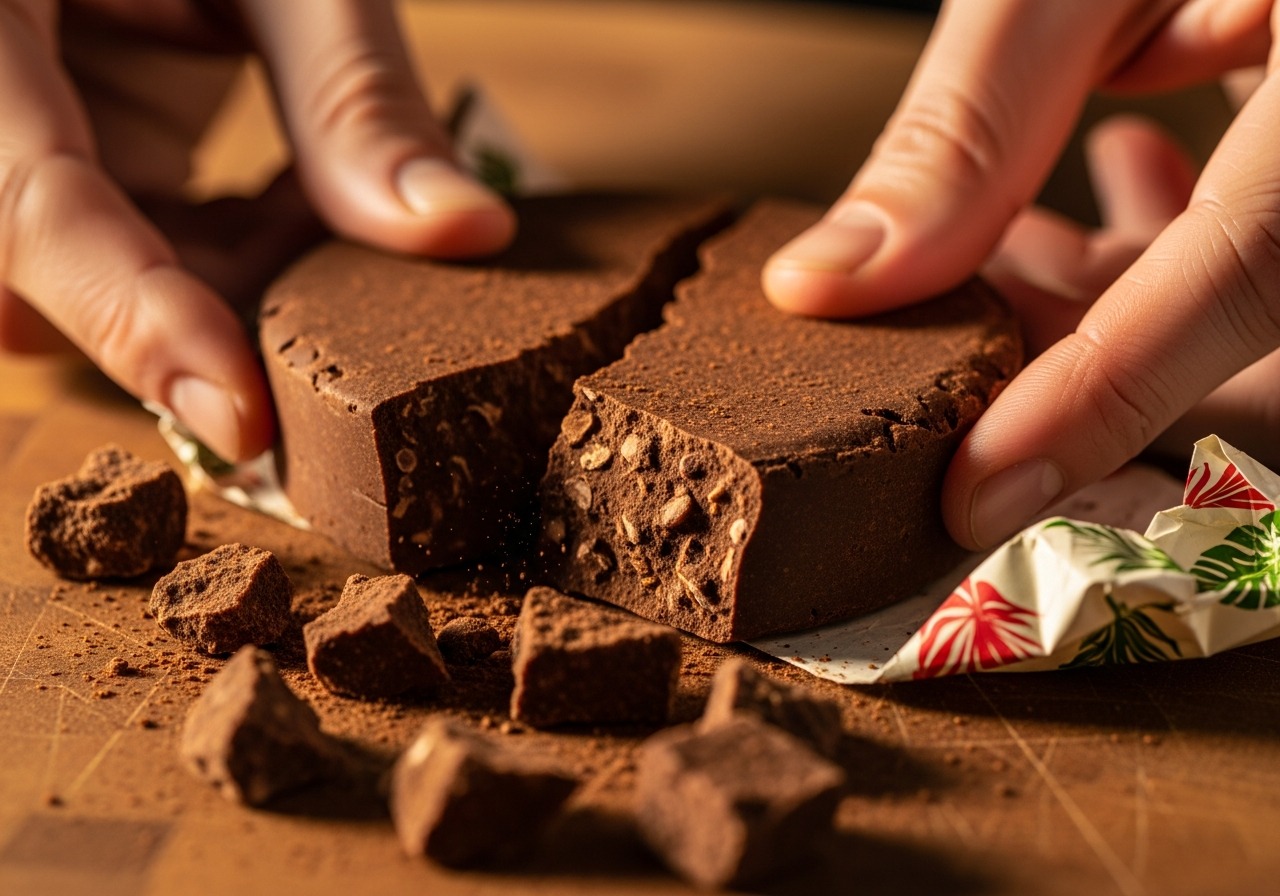
While the water is heating, break the cacao tablet into small pieces. These tablets are hard — use a firm press with your hands to snap them along their natural grooves, or cut with a knife. Warming the tablet on the outside of the hot pot for a few seconds makes it easier to break.
Smaller pieces dissolve faster. Aim for pieces roughly the size of a thumbnail.
Step 3 — Melt the Cacao
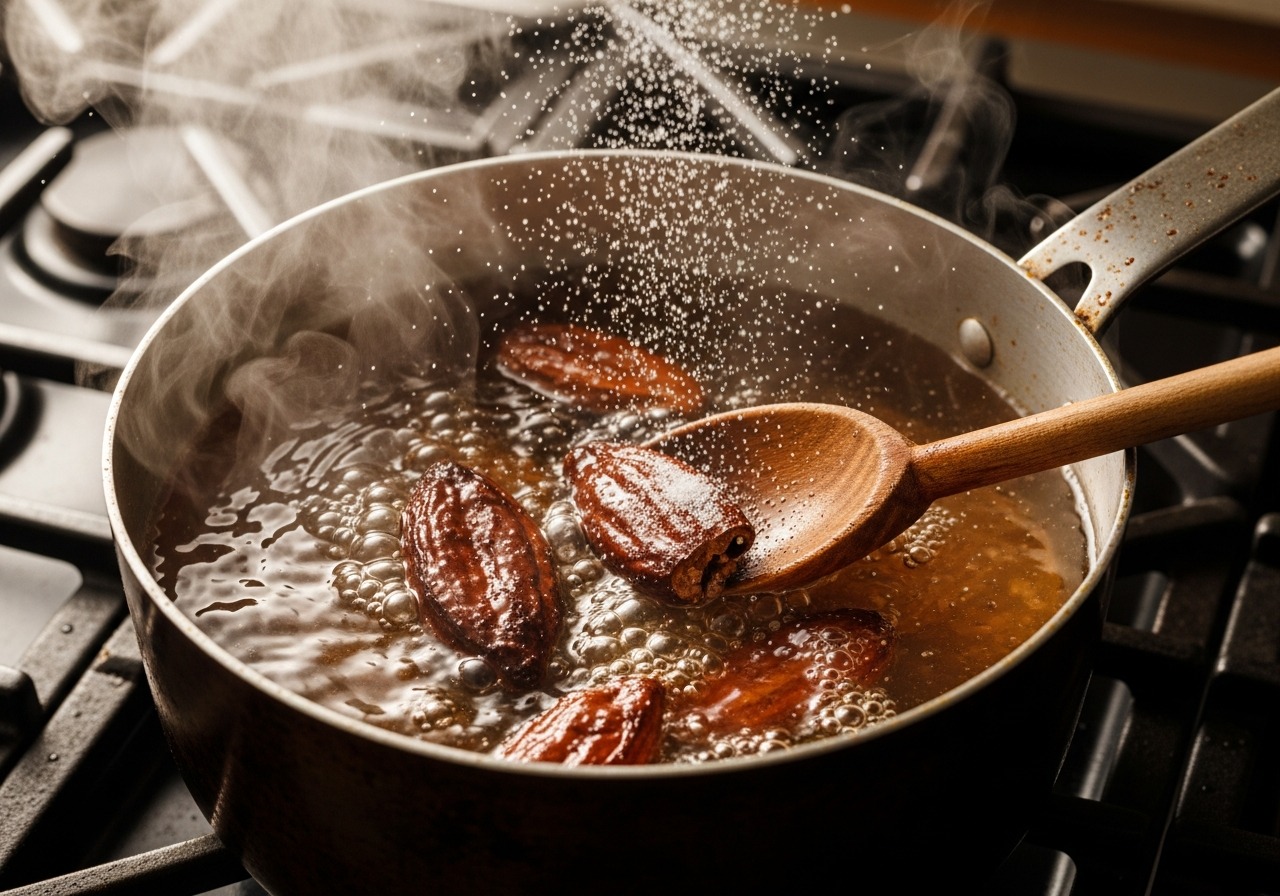
Reduce heat to medium-low. Add the cacao pieces, sugar, and a pinch of salt. Stir constantly with a wooden spoon. The chocolate will dissolve over 4-5 minutes, turning the water from clear to deep rich brown.
Keep stirring. The cacao likes to stick to the bottom of the pot.
Taste. The salt might seem strange but it sharpens the chocolate flavor without being noticeable.
Step 4 — Simmer
Once everything is dissolved, simmer gently for 3 more minutes, stirring often. This is where flavor builds — you'll smell the kitchen fill with deep chocolate and cinnamon.
Step 5 — Froth It Up
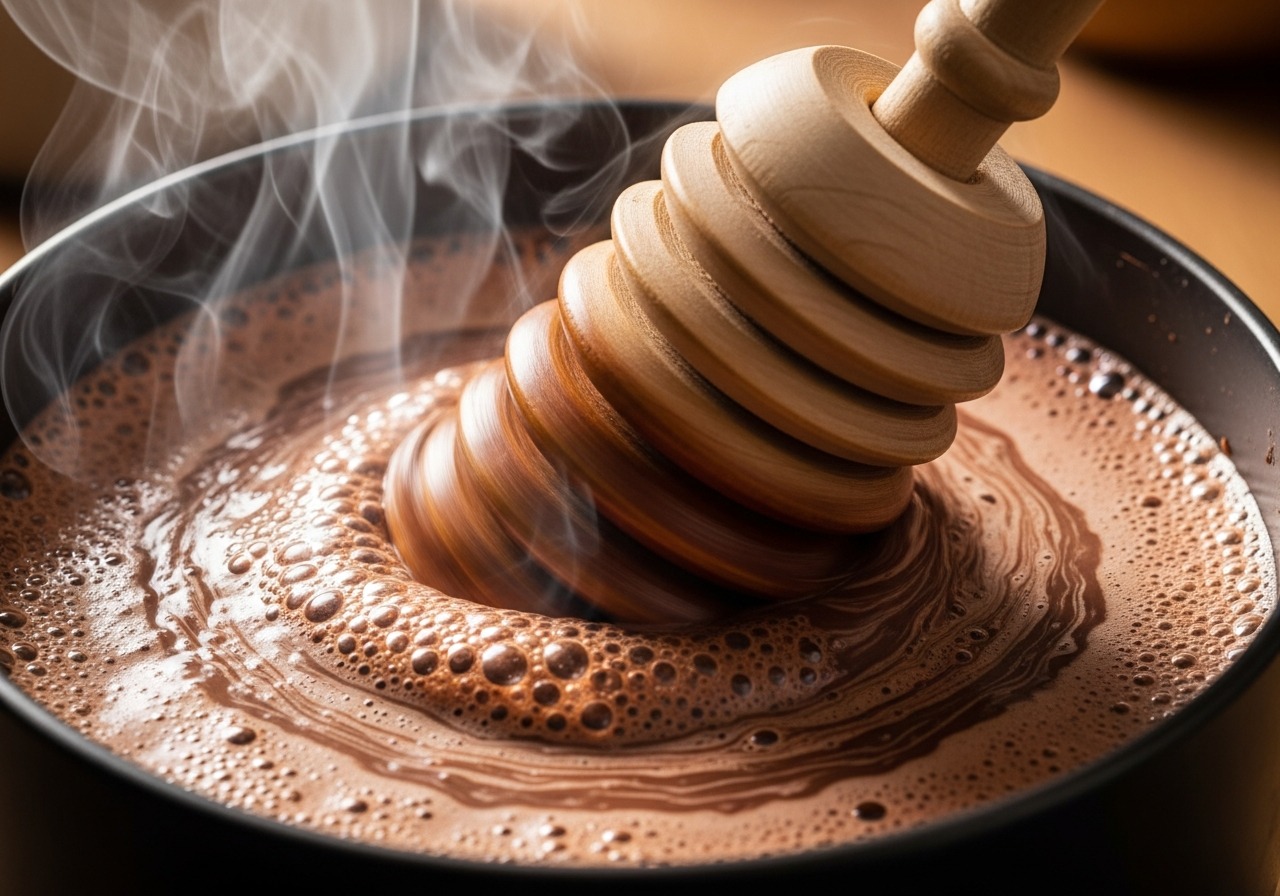
The traditional finish is a thin layer of foam on top. You get it with a molinillo — a wooden whisk you spin between your palms. Slide the molinillo head into the chocolate and roll the handle rapidly between your hands for 30 seconds to 1 minute. Foam forms on the surface.
No molinillo? Use a regular whisk and beat vigorously. Or pour the chocolate from one pot to another from a height of about a foot, back and forth 4-5 times. The aeration creates the same foam.
Step 6 — Finish and Serve
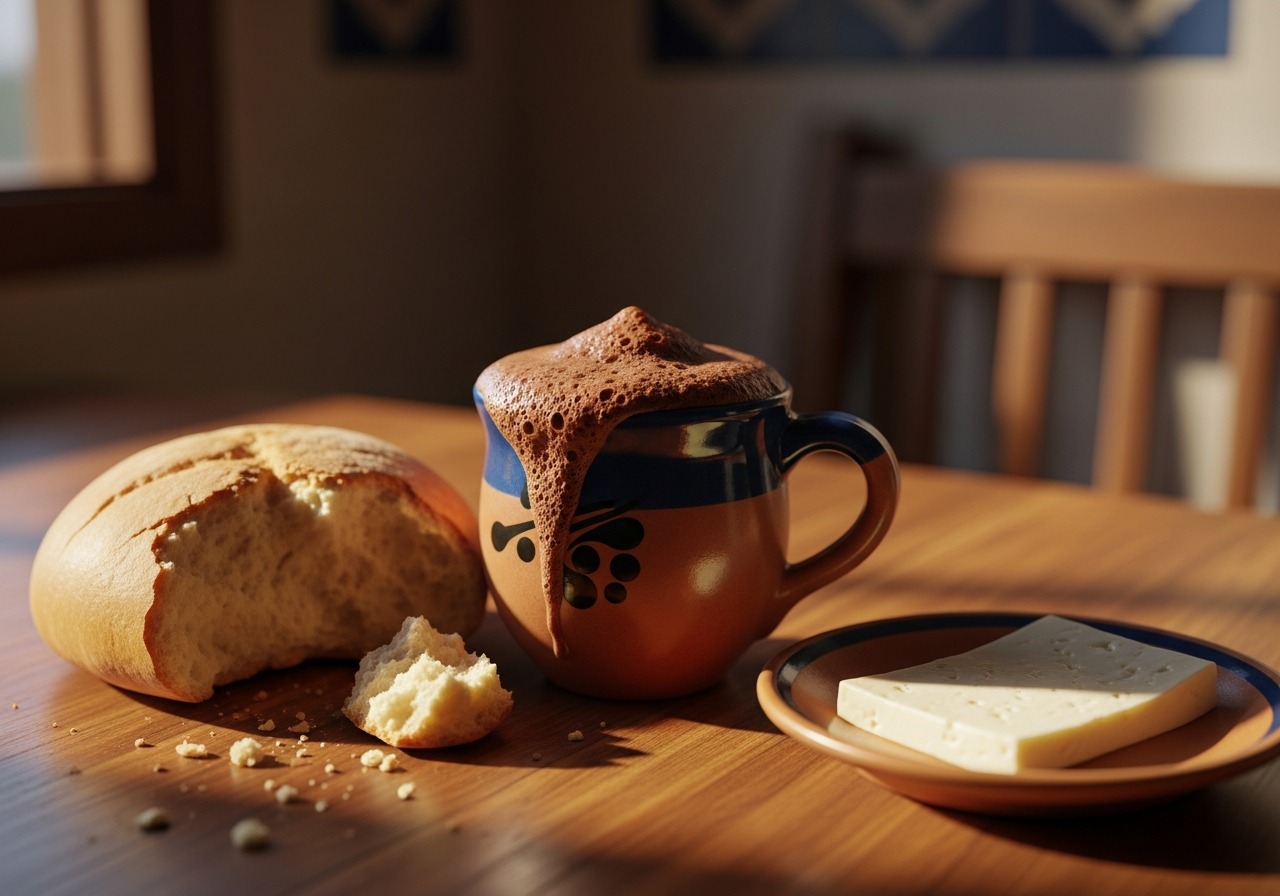
Stir in vanilla extract if using. If you like a softer finish, stir in 2 tablespoons of evaporated milk at the very end — this is a modern touch. Remove the cinnamon stick.
Pour into small ceramic cups (jarritos) or whatever you have. Serve hot.
The Classic Dominican Breakfast
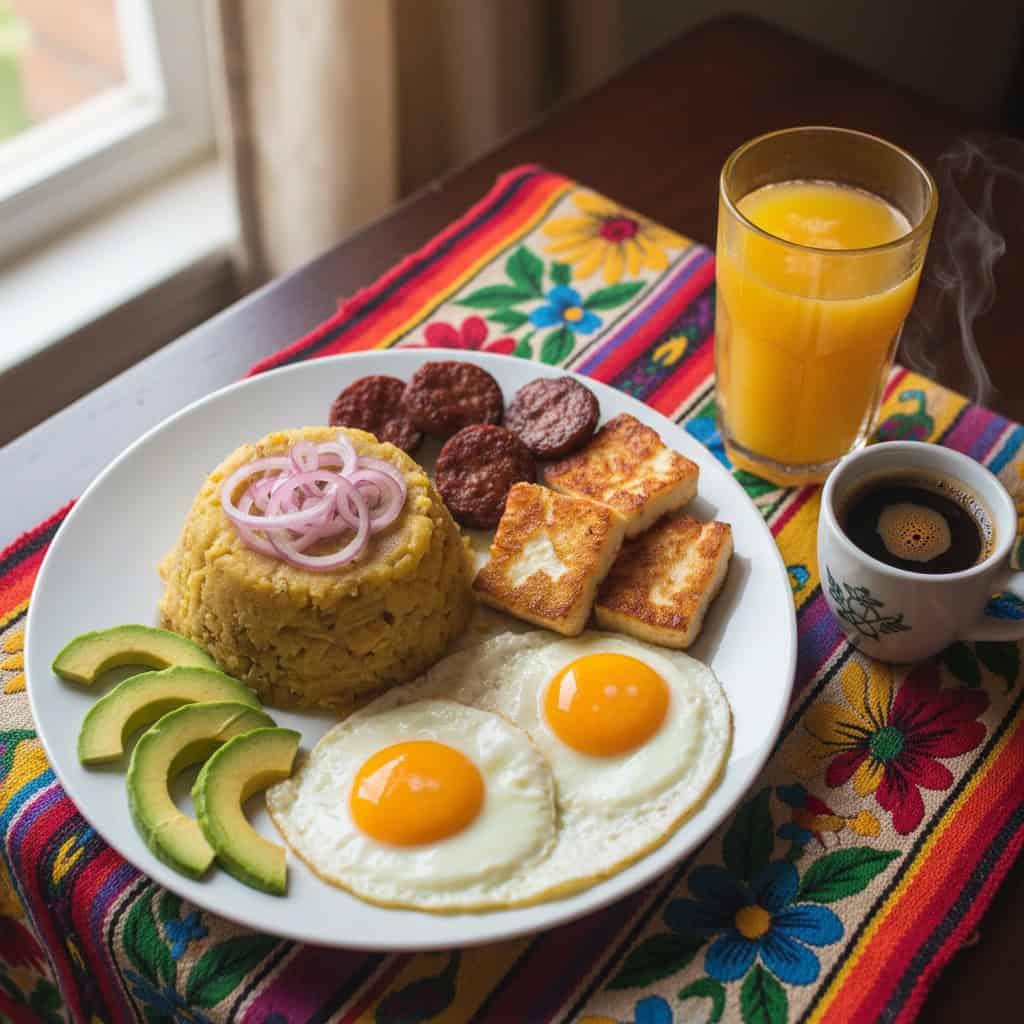
In a Dominican household, chocolate de agua shows up alongside:
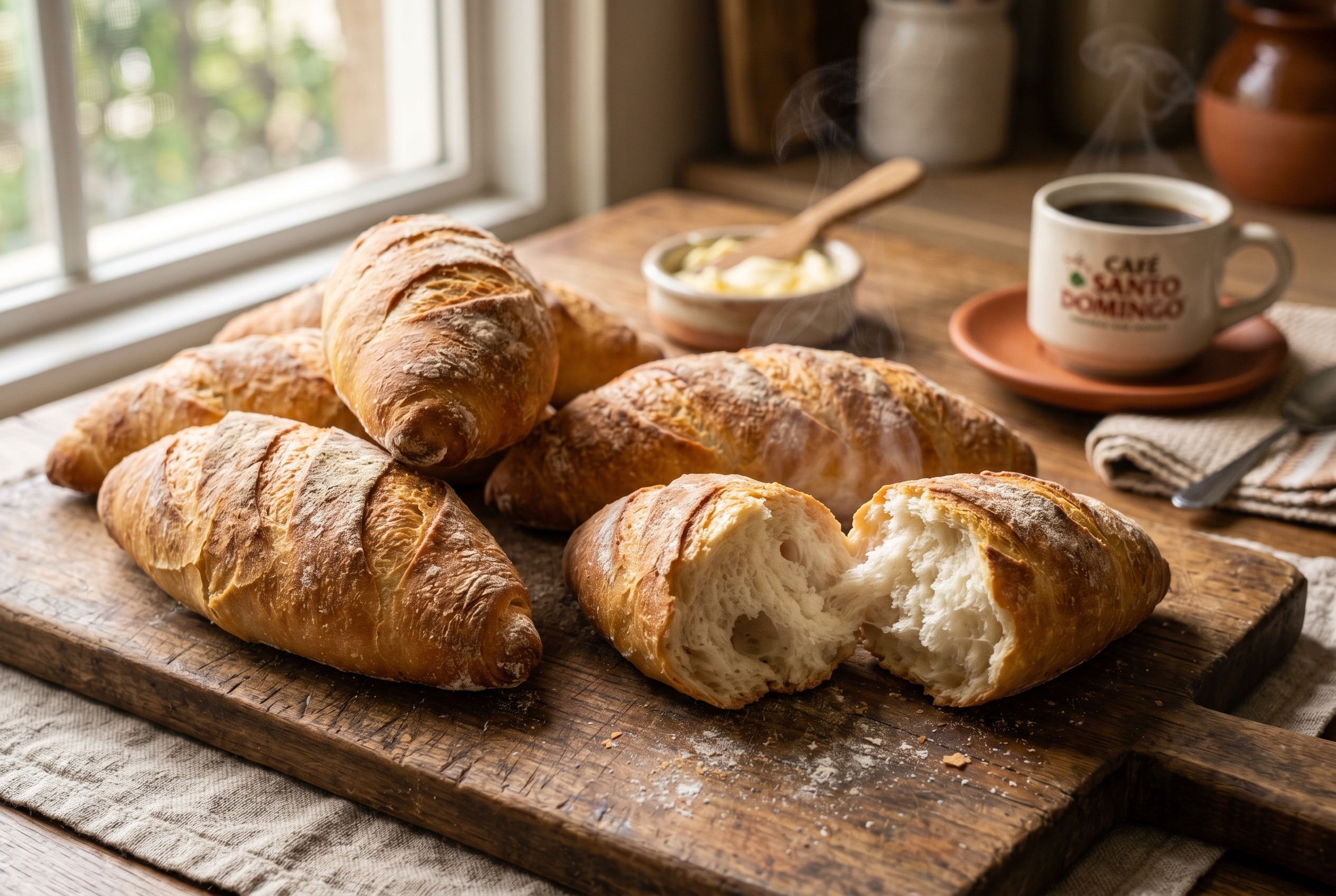
- Pan de agua — a soft Dominican water-based bread, often torn, not cut
- Queso blanco or queso de freir — a slice on the side for dipping or eating between bites
- Salami or mashed mangú for a heartier plate
- Nothing at all — some days a small cup of chocolate and silence is the whole breakfast
The bread-and-cheese combo is the classic. Dunk the bread in the chocolate. Eat the cheese between sips. That is the ritual.
Pro Tips
- Use a real cacao tablet. The flavor is 90% of what makes this drink what it is.
- Taste and adjust sugar. Some tablets come pre-sweetened. Start with less sugar, taste, add more.
- Stir constantly. The cacao sediment sinks fast. If you stop stirring, you get a scorched bottom.
- Pinch of salt. Small but real — it deepens the chocolate without making anything taste salty.
- Don't boil hard. Gentle simmer only. Aggressive boiling breaks the chocolate and makes it grainy.
- Foam or no foam — it's tradition but not required. The drink tastes the same either way.
- Small cups, not big mugs. This is a rich drink. 6-8 oz is the serving. Two cups is plenty.
Variations
- Chocolate con leche — same recipe but with 50/50 water and whole milk. Creamier, less intense.
- Chocolate espesado — thicker version. Add 1 tablespoon cornstarch dissolved in cold water in the last 2 minutes.
- Chocolate con coco — replace 1 cup of water with coconut milk. Tropical twist.
- Adult version — splash of Brugal (Dominican rum) stirred in at the end. Nightcap mode.
Storage
- Fridge: refrigerate leftover chocolate in a sealed container up to 3 days.
- Reheat: stovetop on low heat, whisk as it warms to re-emulsify.
- Do not microwave aggressively — it separates. Low power, stir, low power again.
- Cold chocolate de agua over ice is also underrated. Try it.
FAQ
Why water and not milk?
Tradition, practicality, and flavor. Rural Dominican homes didn't always have fresh milk. More importantly, water lets the cacao flavor shine — milk rounds it off and softens what you're tasting. Try it both ways, you'll see.
Can I use cocoa powder?
It's not the same drink, but if you really can't find a tablet: combine 3 tablespoon unsweetened cocoa powder + 4 tablespoon sugar + 1 tablespoon coconut oil or butter + a generous pinch of cinnamon. Simmer in 4 cups of water. Not quite chocolate de agua but a passable substitute.
Why is it grainy?
Real cacao tablets are always a little grainy — they're made of ground cacao and sugar, not refined chocolate. The texture is part of it. If it's very grainy, you might not have stirred enough or you boiled too hard.
How is this different from Mexican hot chocolate?
Mexican hot chocolate (champurrado, sometimes) is often thickened with masa and made with milk. Chocolate de agua is thinner, water-based, no masa. Same cacao-cinnamon DNA, different finish.
Is this caffeinated?
Lightly. Real cacao has a small amount of caffeine — about the level of decaf coffee. It's more stimulating than chamomile tea, less than regular coffee.
Make this on a cold rainy Saturday morning. Make it when you're homesick. Make it for someone who has only had Swiss Miss. It will ruin Swiss Miss for them forever, and that is a gift.
More Dominican Drinks to Try
If you're exploring Dominican drinks, this is just the beginning. Try mamajuana — the legendary bark-and-rum infusion that every Dominican family keeps on the kitchen counter. Or go lighter with morir soñando (orange cream) and batidos dominicanos (tropical milkshakes).
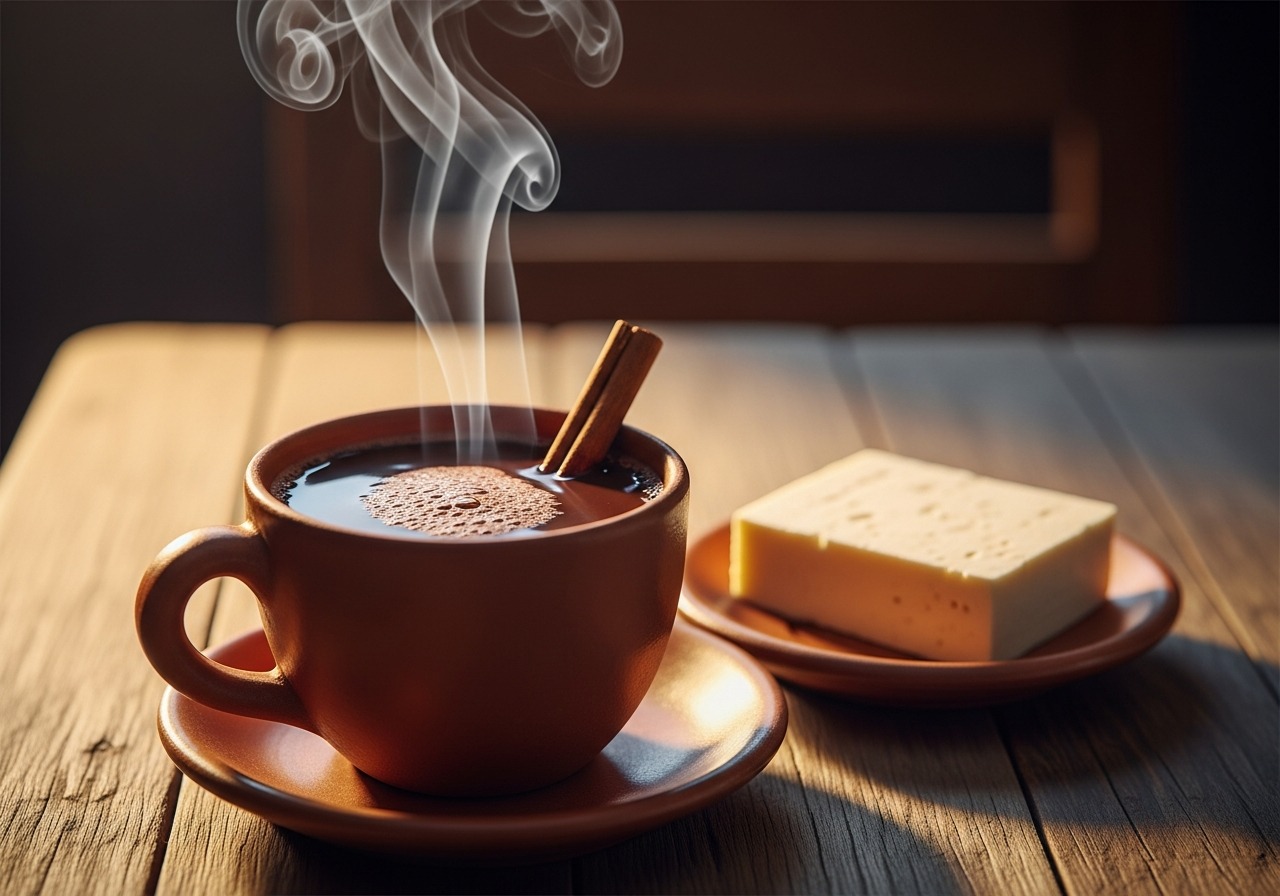
Chocolate de Agua Dominicano
Ingredients
Method
- In a small pot, combine water and the cinnamon stick. Bring to a gentle boil over medium-high heat. Let the cinnamon steep for 2 minutes — this is where the subtle warmth of the drink comes from.

- While the water is heating, break the cacao tablet into small pieces using your hands or a knife. Dominican cacao tablets are hard — warming them on the side of the pot for a few seconds helps them break.
- Once the water is boiling, reduce heat to medium-low and add the broken cacao pieces, sugar, and salt. Stir with a wooden spoon until the cacao dissolves — this takes 4-5 minutes. The drink will turn from clear water to deep rich brown.
- Bring to a gentle simmer and cook 3 more minutes, stirring constantly to prevent scorching and to develop flavor. The aroma should fill the kitchen — deep chocolate, cinnamon, warm and comforting.
- For the traditional frothy top: use a molinillo (wooden whisk) or a regular whisk to beat the chocolate vigorously for 1 minute until a thin foam forms on top. If you don't have a molinillo, pour the chocolate from one pot to another a few times to aerate.
- Taste and adjust sweetness. Stir in vanilla extract and evaporated milk if using. Remove the cinnamon stick. Pour into cups (traditionally small jarritos) and serve immediately while hot and foamy.
Nutrition
Notes
Tried this recipe?
Let us know how it was!Kitchen Tools Used in This Recipe
As an Amazon Associate I earn from qualifying purchases.

Leave a Reply