
Mondongo is the dish that splits Dominican families right down the middle. Half the table loves it — slow-cooked tripe in a savory criollo broth with chayote, calabaza, and potato, bright with cilantro and a squeeze of lime at the end. The other half wrinkles their nose and asks for eggs. I was always in the first camp. For me, a pot of mondongo simmering on Sunday afternoon meant my uncle was in town, someone was probably hungover from the night before, and the whole kitchen smelled like Santo Domingo.
This is an all-day project. Not weeknight food. Not a shortcut recipe. You clean the tripe yourself (lime, salt, vinegar, a lot of scrubbing), you marinate it in sour orange, you build a proper sofrito base, and then you let it simmer for three hours until the tripe is tender and the broth is deep and savory. In a caldero, ideally — the same heavy aluminum pot Dominicans use for everything. By the time it's ready, you're hungry, your kitchen smells incredible, and the neighbors are wondering what you're making.
This recipe has been on my site for years and I'm refreshing it with a cleaner method, my grandmother's cleaning technique, and all the little steps I used to gloss over. If you've made mondongo before, you'll notice the difference. If you've never made it, start here and take your time.
Why You'll Love This Mondongo Dominicano Recipe
- The ultimate hangover cure: Warm, savory, full of vegetables and protein — Dominicans swear by a bowl of mondongo to fix any rough morning.
- Pure criollo flavor: Sofrito, sazón, oregano, sour orange — all the Dominican big hitters in one pot.
- Feeds a crowd: Makes 8 generous servings, great for Sunday family lunch or a cookout.
- A real kitchen project: If you miss cooking all day the way your grandmother did, this is the dish. No shortcuts, all payoff.
- Budget-friendly: Tripe is one of the cheapest proteins at the butcher counter, and the vegetables are basic Dominican pantry items.
What Is Mondongo Dominicano?
Mondongo dominicano is a slow-cooked tripe stew made with beef honeycomb tripe (the lining of the cow's second stomach), a savory criollo broth built on sofrito and aromatics, and hearty chunks of Dominican vegetables — chayote, calabaza, potato, and carrot. It's typically served with white rice, tostones on the side, a small bowl of cilantro for topping, and lime wedges to squeeze over right before eating. Dominicans eat it for Sunday lunch, as a midday restorative, and absolutely as a hangover cure on Saturday mornings.
The dish comes from Spanish colonial tripe cooking, but the Dominican version has been reshaped over centuries by local ingredients and Taíno influences. Similar stews exist across Latin America — Colombian mondongo uses a tomato-heavy broth; Mexican menudo is built on red chile; Puerto Rican mondongo is closer to the Dominican but often includes hominy. Dominican mondongo stays criollo — sofrito, sazón, sour orange, and tropical root vegetables. Every family has a slightly different recipe. Some add chickpeas. Some add beef chunks alongside the tripe. Some swear by cooking it in a pressure cooker. This one is the stovetop version my family makes, taught to me by my tía.
The most important thing to know about mondongo is that cleaning the tripe is half the job. Modern supermarket tripe comes mostly cleaned, but you still need to scrub it hard with lime, salt, and vinegar to remove any lingering funk and any grey film. If you skip this step, your mondongo will taste off — and you'll understand why half your family refuses to eat it. Cleaned properly, the tripe is neutral-tasting, tender after three hours, and soaks up the broth beautifully.
Ingredients You'll Need
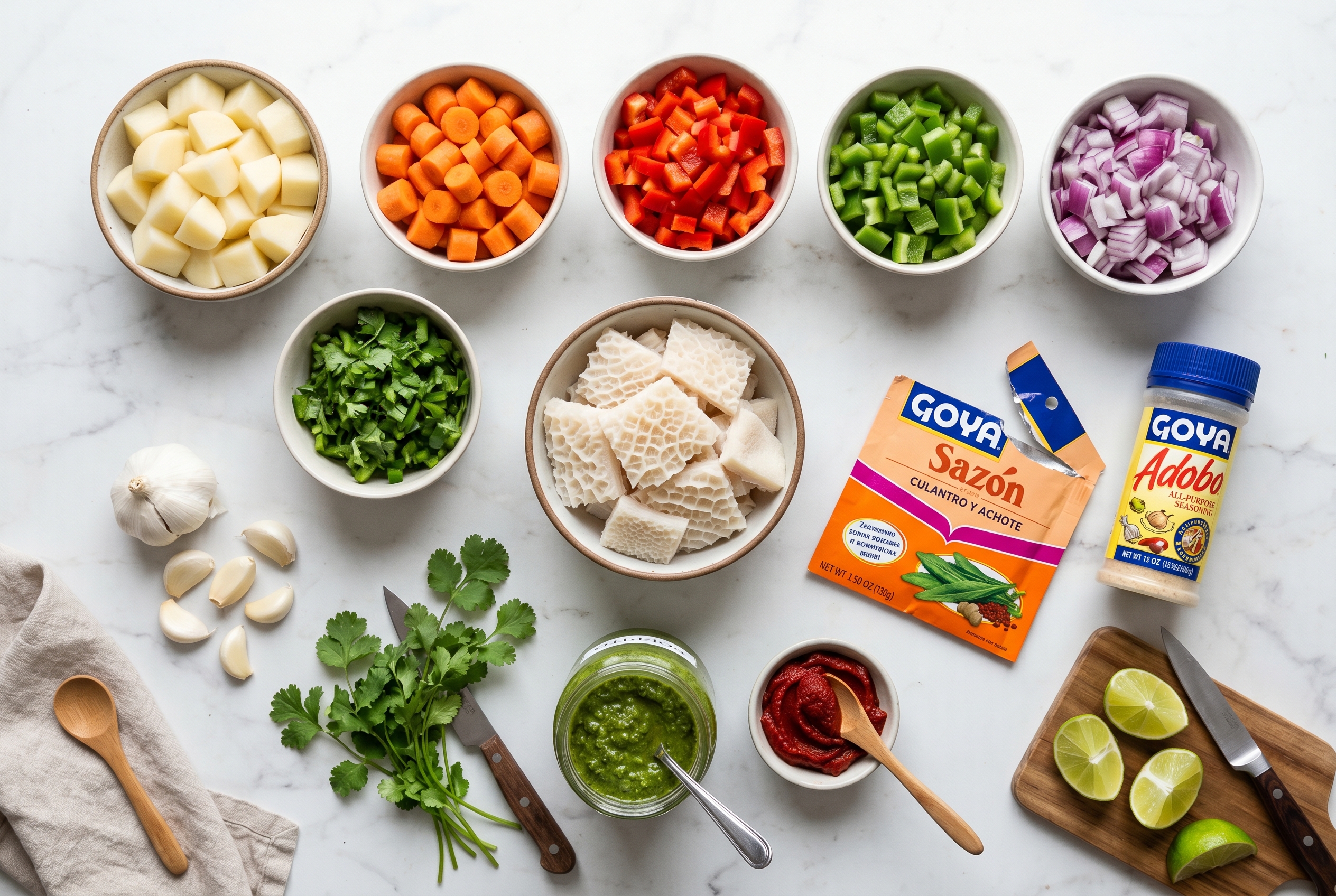
For cleaning the tripe:
- 2 lb beef honeycomb tripe
- 3 limes, halved
- Kosher salt, for scrubbing
- ½ cup white vinegar, for rinsing
For the marinade:
- 1 cup sour orange juice (or ⅔ cup orange juice + ⅓ cup lime juice)
- 2 teaspoon salt
For the stew:
- 3 tablespoon vegetable oil
- 4 tablespoon Dominican sofrito (homemade or store-bought)
- 1 large onion, diced
- 1 red bell pepper, diced
- 6 cloves garlic, minced
- 1 tablespoon dried Dominican oregano
- 1 tablespoon sazón (con culantro y achiote)
- 2 bay leaves
- 1 teaspoon ground cumin
- 1 can (8 oz) tomato sauce
- 2 tablespoon tomato paste
- 8 cups water or low-sodium beef broth
- Salt, to taste
For the vegetables:
- 1 chayote, peeled and cubed
- 1 lb calabaza (West Indian pumpkin), peeled and cubed
- 2 medium potatoes, peeled and cubed
- 2 carrots, sliced
To finish:
- Fresh cilantro, chopped
- Lime wedges
Equipment: A large heavy caldero or Dutch oven (6 quarts minimum), a sharp knife for cleaning and cutting the tripe, a wooden spoon, and patience.
7 Keys to Getting Dominican Mondongo Right
- Clean the tripe thoroughly: Lime, salt, vinegar, scrub, rinse. Repeat until the tripe is pale and odorless. Do not skip.
- Marinate in sour orange: Naranja agria is the acid that tenderizes and flavors. 30 minutes minimum.
- Use real sofrito: Same base you use for habichuelas guisadas and la bandera. Homemade beats store-bought.
- Simmer low and slow: 2-3 hours minimum for the tripe. Rushing it gives you chewy tripe.
- Add vegetables last: They take 30-45 minutes, not 3 hours. Root veg goes in the final stretch.
- Season the broth at the end: Taste after cooking and adjust salt and acid. Tripe absorbs a lot of seasoning.
- Serve with white rice and tostones: Arroz blanco, tostones, a squeeze of lime. Full Dominican Sunday.
Step-by-Step Instructions
Step 1 — Clean the Tripe
Place the tripe in a large bowl. Squeeze the limes over it, then rub the cut halves all over the tripe surface. Sprinkle heavily with salt. Scrub the tripe vigorously for 3-5 minutes — both sides, getting into all the honeycomb folds. Rinse under cold water. Repeat the lime + salt scrub one more time, then do a final rinse with cold water and a splash of white vinegar. The tripe should be pale, almost white, and smell clean — not like a farm. Cut into 1-inch strips or bite-size pieces.
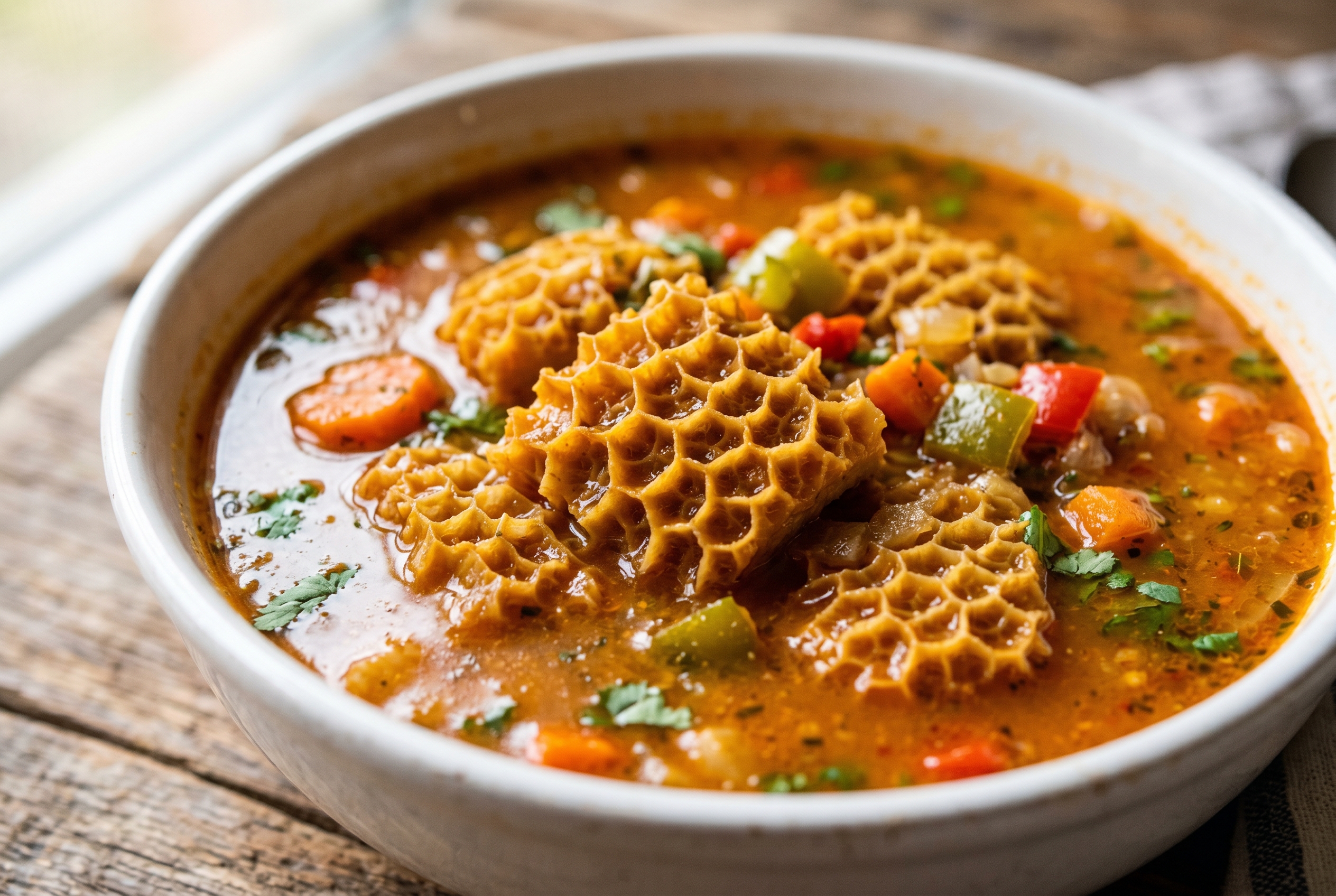
Step 2 — Marinate in Sour Orange
Place the cleaned tripe in a bowl. Pour the sour orange juice over it and sprinkle with the 2 teaspoon salt. Toss to coat. Cover and let marinate at room temperature for 30 minutes (or in the fridge up to 2 hours). Drain before using. This step is non-negotiable — the acid further tenderizes the tripe and gives it its characteristic Dominican flavor.
Step 3 — Build the Sofrito Base
In a large caldero or Dutch oven, heat the vegetable oil over medium heat. Add the sofrito, diced onion, red bell pepper, and minced garlic. Cook, stirring, for 5-7 minutes until soft and fragrant. The whole kitchen should smell like a Dominican abuela's Sunday kitchen at this point. Add the oregano, sazón, bay leaves, and cumin. Stir for 30 seconds to bloom the spices.
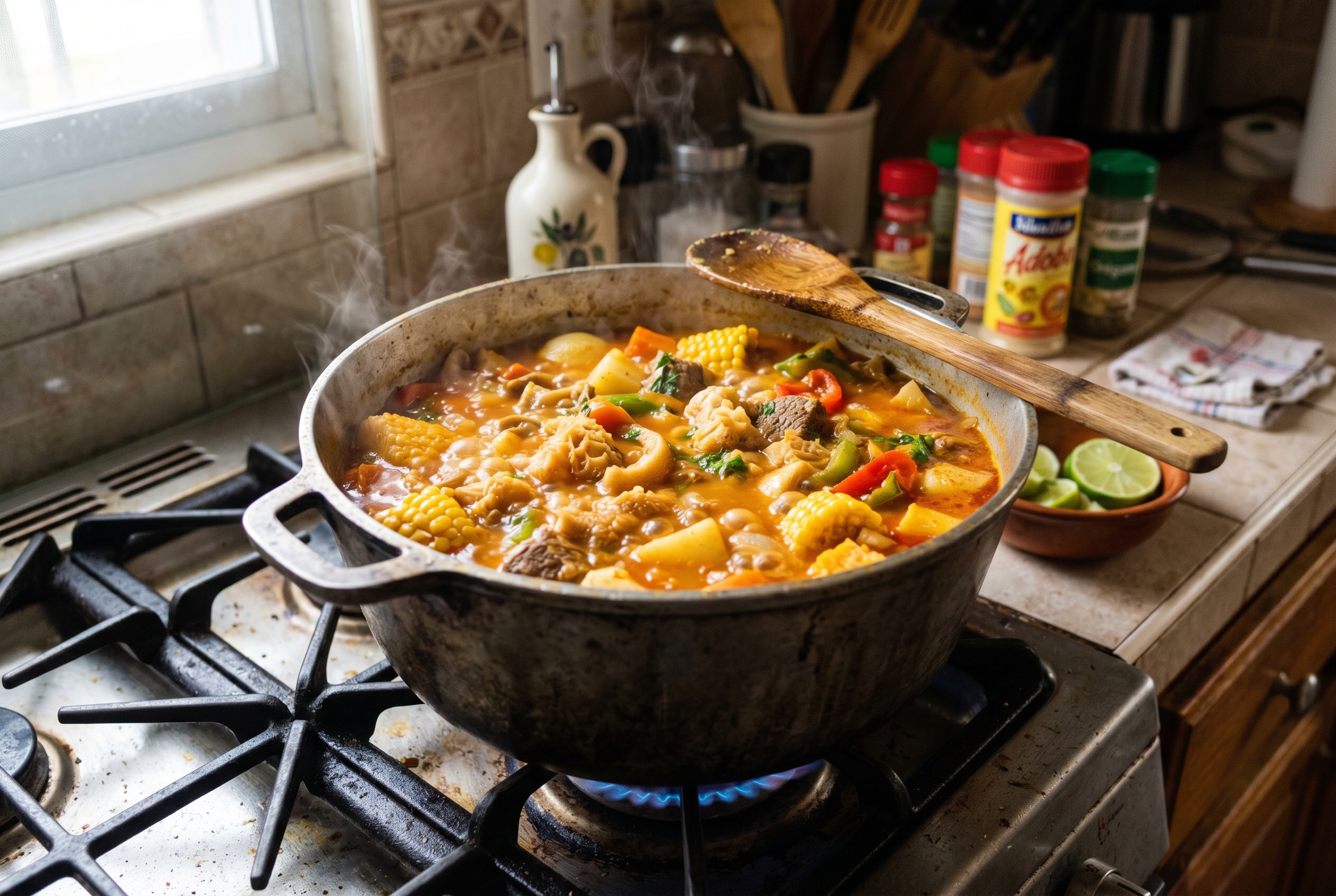
Step 4 — Add Tomato and Tripe
Stir in the tomato paste and let it toast in the pan for 1-2 minutes until it darkens slightly — this deepens the broth flavor. Add the tomato sauce and stir. Drain the marinated tripe and add it to the pan. Stir to coat everything in the tomato-sofrito mixture. Cook for 3-4 minutes to let the tripe take on flavor.
Step 5 — Simmer Low and Slow
Pour in the water or beef broth. Bring to a boil, then reduce heat to low, cover partially, and simmer for 2 hours — stirring occasionally and topping up water if it gets too low. The tripe needs the full 2 hours to become tender. After 2 hours, test a piece — it should bite easily without being rubbery. If it still has bite, simmer another 30-45 minutes. Every batch of tripe is a little different.
Step 6 — Add Vegetables and Finish
Once the tripe is tender, add the chayote, calabaza, potatoes, and carrots. Simmer for another 30-45 minutes until the vegetables are fork-tender and the calabaza has started to break down slightly, thickening the broth. Taste and adjust salt. Remove bay leaves. Ladle into deep bowls. Top with chopped cilantro and serve with lime wedges, white rice, and tostones on the side.
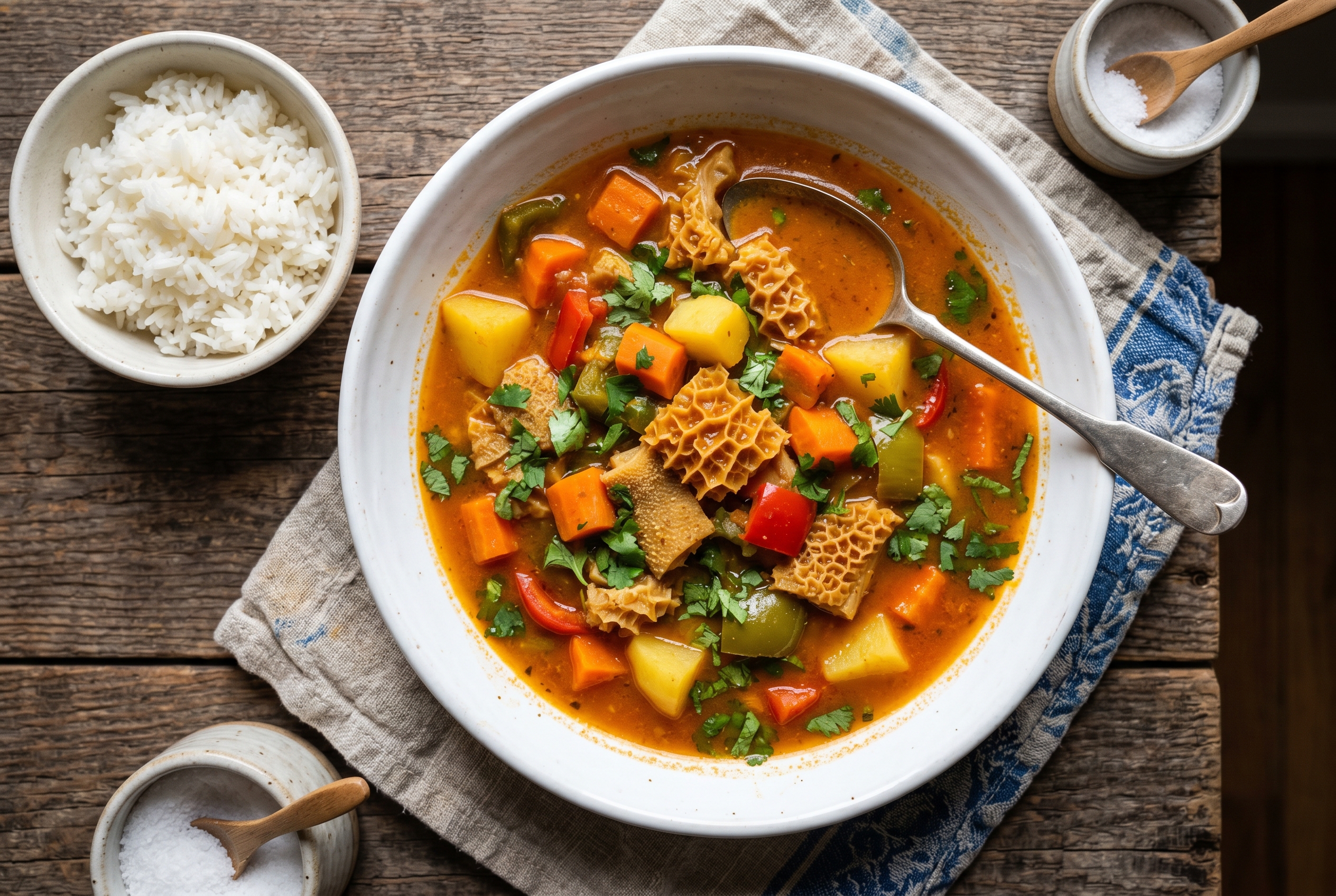
Pro Tips for Perfect Mondongo Dominicano
- Cleaning the tripe is the whole game: Do it twice. Do it thoroughly. Do not get lazy. Under-cleaned tripe is what gives mondongo a bad reputation. Cleaned properly, it tastes neutral and clean.
- Minimum 2 hours of simmering: Tripe is connective tissue — collagen that needs time and low heat to soften. Don't turn up the heat thinking you'll speed it up. You'll get rubber.
- Add root vegetables last: If you put the chayote, calabaza, and potato in with the tripe from the start, they dissolve into mush. Add them in the final 30-45 minutes. You want them whole and tender, not erased.
- Let the calabaza thicken the broth: A few pieces of calabaza will break down — that's a feature, not a bug. It thickens the broth naturally into a silky criollo sauce. Don't stir too hard and preserve some chunks.
- Season at the end: Tripe and root vegetables both absorb salt. What tastes seasoned at hour one will taste underseasoned at the end. Adjust salt after the vegetables go in, not before.
Variations
Mondongo with Chickpeas and Beef
Add 1 lb beef chuck cubes and 1 can (15 oz) drained chickpeas along with the tripe. Increases richness significantly — common at parties and big family gatherings. Also extends the dish to feed 10-12 people.
Pressure Cooker Mondongo
After step 4, pressure-cook the tripe and broth on high for 45 minutes. Quick-release, add vegetables, and simmer uncovered 25-30 minutes until vegetables are tender. Cuts the cooking time nearly in half. A lot of younger Dominicans cook it this way now.
Spicy Mondongo
Add 1-2 whole ají caballero or habanero peppers (pierced but not chopped) to the simmering broth. They infuse heat without turning the whole pot spicy. Remove before serving, or leave them in and warn eaters. Adds a background warmth that works really well with the tripe.
What to Serve With Mondongo Dominicano
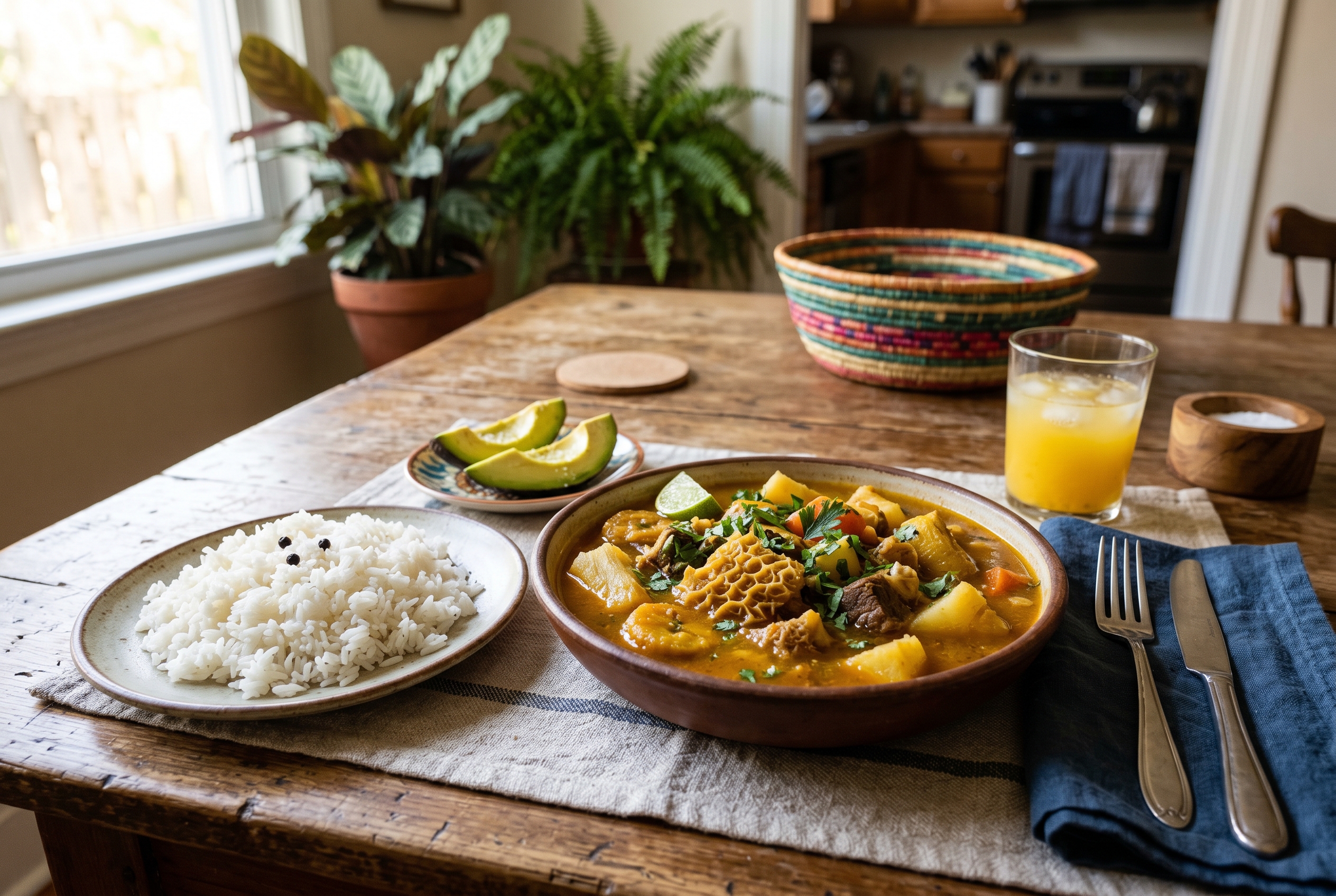
- Arroz Blanco: White rice is essential — spoonfuls of mondongo over rice is the traditional way to eat it.
- Tostones: Crispy smashed plantains on the side to dip into the broth.
- Concón: The crispy rice at the bottom of the pot is the best thing to crumble into the broth.
- Wasakaka: A drizzle of the Dominican garlic sauce over the top brightens the richness.
- Cold Presidente beer: Culturally mandatory. Especially if this is your Sunday hangover meal.
Frequently Asked Questions
What exactly is tripe?
Tripe is the stomach lining of a cow. Honeycomb tripe (from the second stomach) is the most common for mondongo — it has that distinctive textured surface. It's a traditional ingredient across Latin America, Europe, and Asia. Modern supermarket tripe is pre-cleaned (bleached) before sale, so it's milder than old-school tripe — but still benefits from a thorough home cleaning.
Where do I buy honeycomb tripe?
Any Latin or Caribbean supermarket will have it in the meat case. Mexican, Dominican, Colombian, and Puerto Rican markets always carry it. Some mainstream supermarkets carry it in larger cities. Ask the butcher if you don't see it — it's usually in the back. Frozen tripe works fine if that's what you can find.
How do I know if the tripe is clean enough?
It should be pale (nearly white), smooth, and have no strong smell other than faint meat. If there's any grey film, slime, or barnyard odor after your second cleaning, scrub it again with more lime and salt. When you're done, it should smell like clean meat — not gross. Trust your nose.
Can I use a pressure cooker?
Absolutely. Pressure-cook the tripe in the broth for 45 minutes, quick-release, then add vegetables and simmer 25-30 minutes uncovered. Cuts the total cooking time from 3 hours to roughly 1.5 hours. Popular with younger Dominican cooks who don't have all Sunday to tend a pot.
Why is my mondongo bitter?
Usually one of two things: the tripe wasn't cleaned well enough, or the tomato paste burned during the sofrito step. For the first, there's no fix once it's cooked — clean more thoroughly next time. For the second, catch it early and start over. Toasted tomato paste is great; burned tomato paste ruins the broth.
Can I freeze mondongo?
Yes — it freezes very well for up to 3 months. The tripe actually gets more tender after freezing and reheating. Let cool completely before packing into freezer containers. Thaw in the fridge overnight and reheat gently on the stove. Don't freeze more than once.
Why do Dominicans eat mondongo for hangovers?
Science and tradition both play a role. The broth replenishes electrolytes and fluids. The protein helps process alcohol byproducts. The spicy/savory flavor wakes up dulled senses. And culturally, it's a comforting Sunday meal associated with recovery and family care. Call it placebo or call it pharmacology — it works.
What's the difference between Dominican and Colombian mondongo?
Colombian mondongo (also called mondongo paisa) is typically tomato-heavier, includes pork belly and chorizo, and often has cilantro stems and potatoes. Dominican mondongo has more sofrito, uses chayote and calabaza (tropical root veg), and leans on sour orange. Same general idea, different regional DNA. Both are delicious.
Can I make this without chayote?
Yes — substitute a second potato or some zucchini. The chayote adds a subtle sweetness and specific Dominican texture, but the dish still works without it. Calabaza is harder to skip — its sweetness and starchy thickening are core to the final broth.
How long does leftover mondongo keep in the fridge?
Up to 4 days covered in the fridge. Flavor actually improves on day 2 — Dominicans will tell you mondongo is always better the next day. Reheat gently on the stove with a splash of water or broth to loosen the consistency if needed.
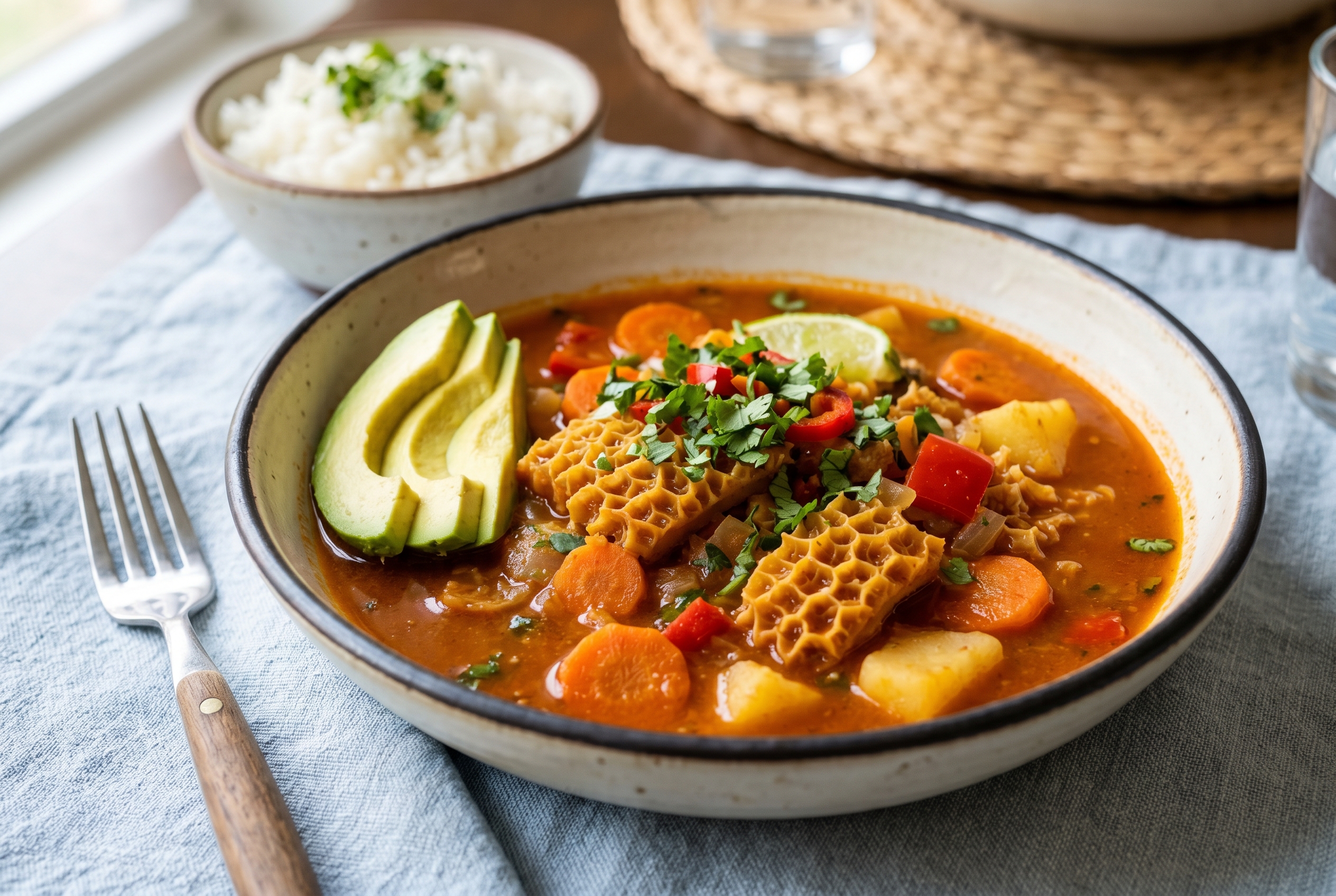
Mondongo Dominicano (Dominican Tripe Stew)
Ingredients
Method
- Clean tripe vigorously with lime halves, kosher salt, and vinegar rinse. Scrub until pale and odor-free. Cut into 1-inch strips.

- Marinate tripe in sour orange juice and 2 teaspoon salt for 30 minutes. Drain.
- In caldero, heat oil. Sauté sofrito, onion, bell pepper, and garlic 5-7 minutes. Add oregano, sazón, bay leaves, cumin.
- Stir in tomato paste, toast 1-2 min, then tomato sauce. Add drained tripe and cook 3-4 min.
- Add water or broth. Bring to boil, reduce heat, simmer partially covered 2 hours until tripe is tender.
- Add chayote, calabaza, potatoes, and carrots. Simmer 30-45 minutes until vegetables tender. Adjust salt. Top with cilantro. Serve with lime, rice, tostones.
Nutrition
Notes
Tried this recipe?
Let us know how it was!Shop This Recipe
View on Amazon →
View on Amazon →
View on Amazon →
As an Amazon Associate I earn from qualifying purchases at no extra cost to you.
Spend a Sunday making this. Eat it with rice. Save some for tomorrow when it tastes even better.
You May Also Like
📺 Watch a similar recipe: Slow Cooker Dominican Pot Roast (Carne Guisada Style)
- Dominican Pollo Guisado Recipe (Authentic Stewed Chicken) — Authentic Dominican stewed chicken simmered in a rich tomato-based sofrito sauce with olives.
- Dominican Sancocho Recipe (Authentic 7-Meat Stew) — The legendary Dominican seven-meat stew with viandas (root vegetables), simmered for hours into.
- Salami Guisado Dominicano (Dominican Stewed Salami) — Dominican salami braised in a rich sofrito-tomato sauce with onions, peppers, and herbs.

Leave a Reply