
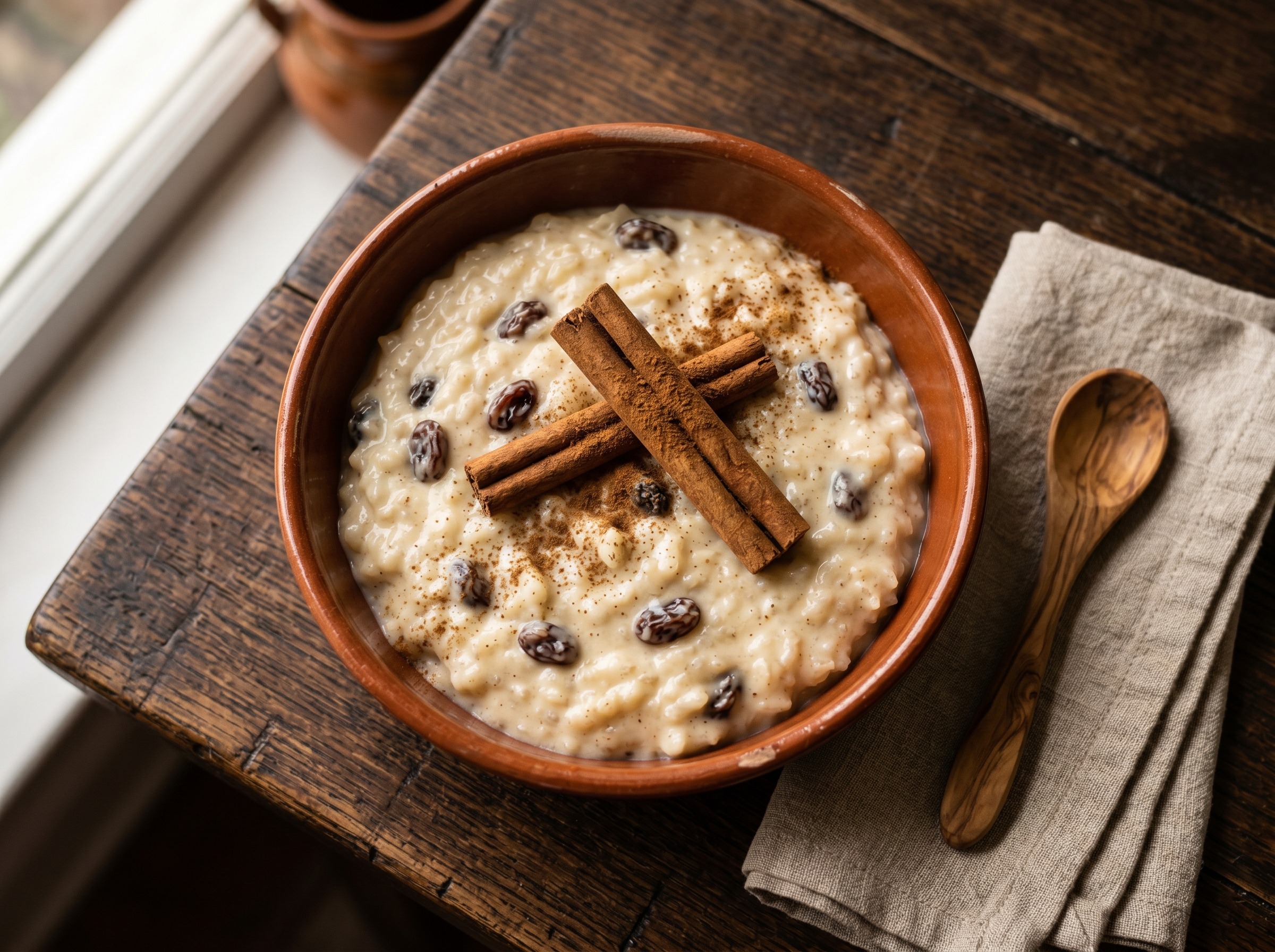
If you grew up in a Dominican household, you already know that arroz con dulce is one of those desserts that makes everything feel right. I was born in Santo Domingo and raised in New York City, and no matter where we were — a small apartment in Washington Heights or a family reunion back on the island — a big pot of arroz con dulce on the stove meant something special was happening. Maybe it was a holiday. Maybe it was just a Sunday. Either way, someone had taken the time to stir that rice slow and steady until it turned into something magical, and I knew I was about to eat well.
Now that I'm settled here in Pennsylvania with my own kitchen and my own family, I make arroz con dulce the same way my abuela and my mom taught me. I use real coconut milk — the thick, creamy kind from the can — whole spices, plump raisins, and a little bit of patience. This is not the same thing as arroz con leche. I love arroz con leche too (and I have a great recipe for it here), but arroz con dulce is its own thing entirely. It is richer, more fragrant, and built on a coconut milk base that gives it that unmistakable Dominican flavor. If you've only ever had rice pudding made with cow's milk, this will be a revelation.
This recipe is the real deal — the kind of arroz con dulce dominicano that you'd find served in little plastic cups from a street vendor in Santiago, or piled into bowls at a Nochebuena table surrounded by family. It's creamy, sweet, warmly spiced, and absolutely addictive. I'm going to walk you through every step, share all my tips, and make sure your pot comes out perfect. Let's get into it.
Why You'll Love This Recipe
- Authentic Dominican flavor: This is made the traditional way with coconut milk, whole cinnamon sticks, and cloves — not a shortcut version. The flavor is deep, warm, and unmistakably Caribbean.
- Incredibly creamy texture: The combination of coconut milk, whole milk, and slow-cooked rice creates a pudding-like consistency that is rich without being heavy. Every spoonful is velvety.
- Simple pantry ingredients: You don't need anything exotic or hard to find. Rice, canned coconut milk, sugar, spices, and raisins — that's it. Most of this is probably already in your kitchen.
- Perfect make-ahead dessert: Arroz con dulce actually tastes better the next day after the flavors have had time to meld. Make it the night before a gathering and you're golden.
- Versatile serving: Serve it warm straight from the pot, at room temperature for a party, or chilled on a hot summer day. It works beautifully every way, and it feeds a crowd.
What Is Arroz con Dulce?
Arroz con dulce is a traditional Dominican dessert made by slowly cooking rice in sweetened coconut milk until it becomes thick, creamy, and pudding-like. The name translates literally to "rice with sweet," and that is exactly what it is — sweetened rice elevated with warm spices like cinnamon and cloves, studded with plump raisins, and perfumed with vanilla and a hint of lime zest. It is one of the most beloved desserts across the Dominican Republic, and for good reason. It is comfort in a bowl.
Now, a lot of people confuse arroz con dulce with arroz con leche, and I understand why — they're both rice-based desserts. But they are different dishes. Arroz con leche is built on a cow's milk base and is common across all of Latin America and Spain. Arroz con dulce dominicano specifically uses coconut milk as the primary liquid, which gives it a distinctly tropical, richer flavor profile that sets it apart. The coconut milk makes the texture silkier and adds a subtle sweetness that you just can't get from regular milk alone. Some families use a mix of coconut milk and whole milk (that's what I do), and some go all coconut. Either way, the coconut is the star.
Think of arroz con dulce as the Dominican answer to rice pudding — but bolder, more aromatic, and deeply connected to the island's culinary identity. Once you've had the real thing, you'll understand why Dominicans are so passionate about it.
The Story Behind Arroz con Dulce in Dominican Culture
In the Dominican Republic, arroz con dulce is woven into the fabric of celebration. You'll find it at almost every major holiday gathering — Christmas Eve (Nochebuena), New Year's, Easter, birthday parties, and baptisms. It sits right alongside other iconic Dominican desserts like habichuelas con dulce and flan de leche. During Semana Santa (Holy Week), it's practically mandatory. My family always made a massive pot — enough to feed the whole block — and neighbors would stop by with their own containers to take some home. That's just how it works. You make extra because you know people are coming.
Beyond the holidays, arroz con dulce is an everyday treat in the DR. Street vendors sell it in small plastic cups or bags, especially in the afternoons and evenings. You can find it at corner colmados, at church fundraisers, and at school events. It's the kind of dessert that transcends occasion — fancy enough for a holiday table, humble enough for a Tuesday afternoon snack. Every family has their own version, their own ratio of coconut to milk, their own opinions about raisins (some people leave them out, but in my house, the raisins are non-negotiable). Making arroz con dulce is an act of love and tradition, and every pot tells the story of the hands that stirred it.
Ingredients You'll Need
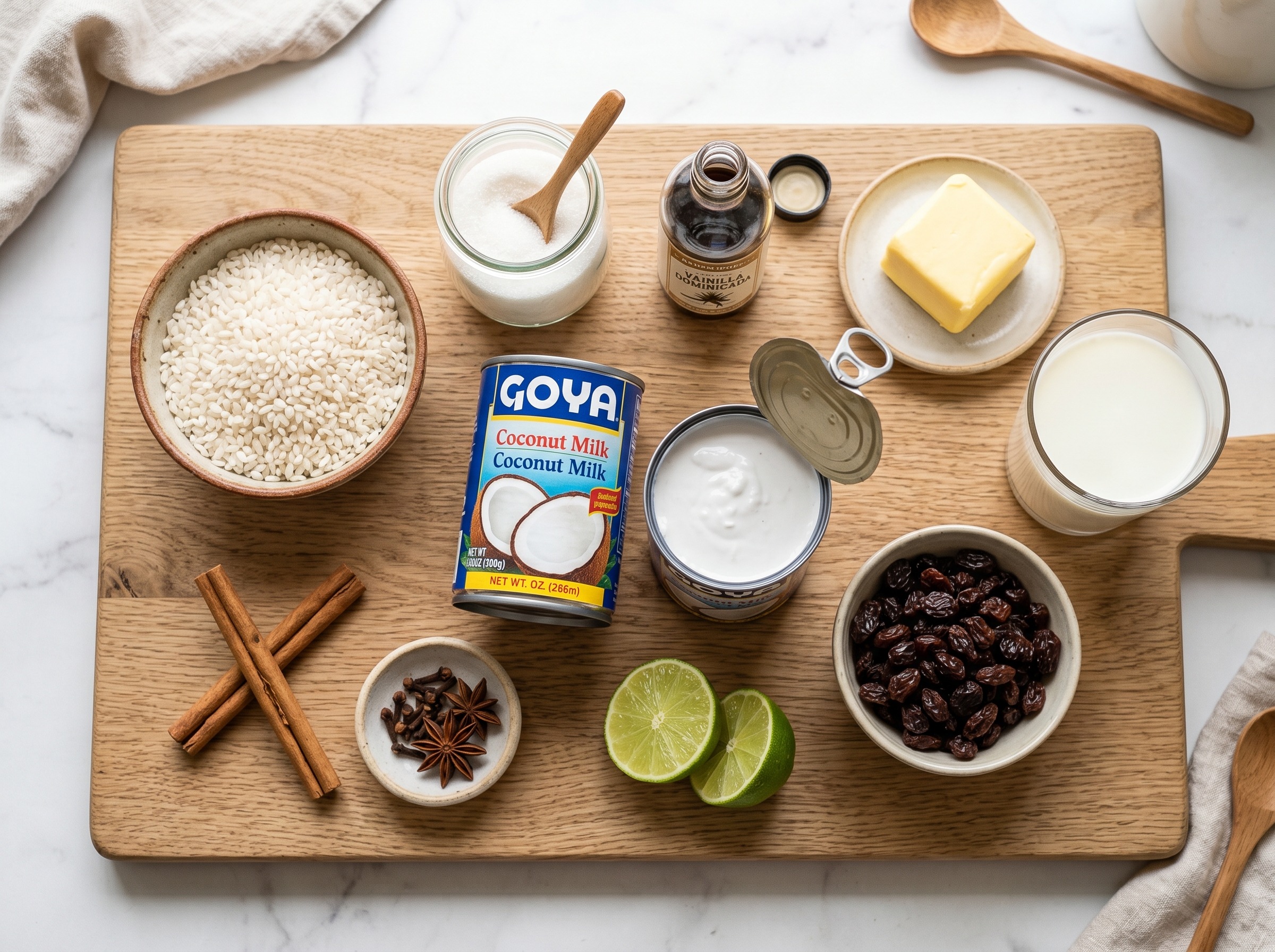
Here's what you'll need to make a perfect pot of arroz con dulce dominicano:
- Short-grain or medium-grain rice (1 ½ cups): Short-grain rice gives you the creamiest result because it releases more starch as it cooks. Medium-grain works well too. Avoid long-grain rice — it stays too separate and won't give you that pudding texture.
- Full-fat coconut milk (2 cans, 13.5 oz each): This is the foundation of the dish. Use full-fat, not lite. You want all that rich coconut cream for the best flavor and texture.
- Whole milk (1 ½ cups): Adding some whole milk rounds out the coconut flavor and adds extra creaminess. You can substitute with more coconut milk if you want to keep it dairy-free.
- Granulated sugar (¾ cup): Adjust to your sweetness preference. Some people like it sweeter, some less. Start with ¾ cup and taste as you go.
- Cinnamon sticks (2 large): Whole cinnamon sticks are essential here. They infuse slowly while the rice cooks and give a warm, fragrant flavor that ground cinnamon can't replicate.
- Whole cloves (5-6): Another signature spice. Cloves add a subtle warmth and depth. Don't skip them — they're part of what makes this taste authentically Dominican.
- Raisins (½ cup): Dark raisins are traditional. They plump up as the rice cooks and add little bursts of sweetness throughout. Soak them in warm water for 10 minutes beforehand if they're dry.
- Vanilla extract (1 teaspoon): Adds another layer of warmth and aroma. Use pure vanilla extract if you can.
- Lime zest (from 1 lime): A small amount of fresh lime zest brightens the whole dish and balances the richness of the coconut. This is a traditional touch that many Dominican cooks swear by.
- Butter (1 tablespoon): A small knob of butter stirred in at the end adds a silky finish. Optional but recommended.
- Salt (¼ teaspoon): Just a pinch to balance all the sweetness and make the flavors pop.
- Water (1 cup): Used to initially cook the rice before adding the milks.
Equipment You'll Need
The most important piece of equipment for arroz con dulce is a good heavy-bottom saucepan or Dutch oven. Because this dish cooks low and slow, a thin-bottomed pot will cause the rice to scorch on the bottom before it's fully cooked. A heavy pot distributes heat evenly and gives you much more control. You'll also want a sturdy wooden spoon for all that stirring — metal spoons can break up the rice too much. That's really it. Simple dish, simple tools.
Step-by-Step Instructions
Making arroz con dulce is not complicated, but it does require your attention. This is a dish that rewards patience and steady stirring. Here is exactly how I make it, step by step.
Step 1: Rinse and Par-Cook the Rice
Rinse your rice under cold water until the water runs mostly clear — this removes excess surface starch and prevents the final dish from being gummy. In your heavy-bottom saucepan, combine the rinsed rice with 1 cup of water, the cinnamon sticks, and the whole cloves. Bring it to a boil over medium-high heat, then reduce to a simmer and cook for about 8-10 minutes until the water is mostly absorbed and the rice is partially cooked. The grains should still have a firm center — they'll finish cooking in the coconut milk.
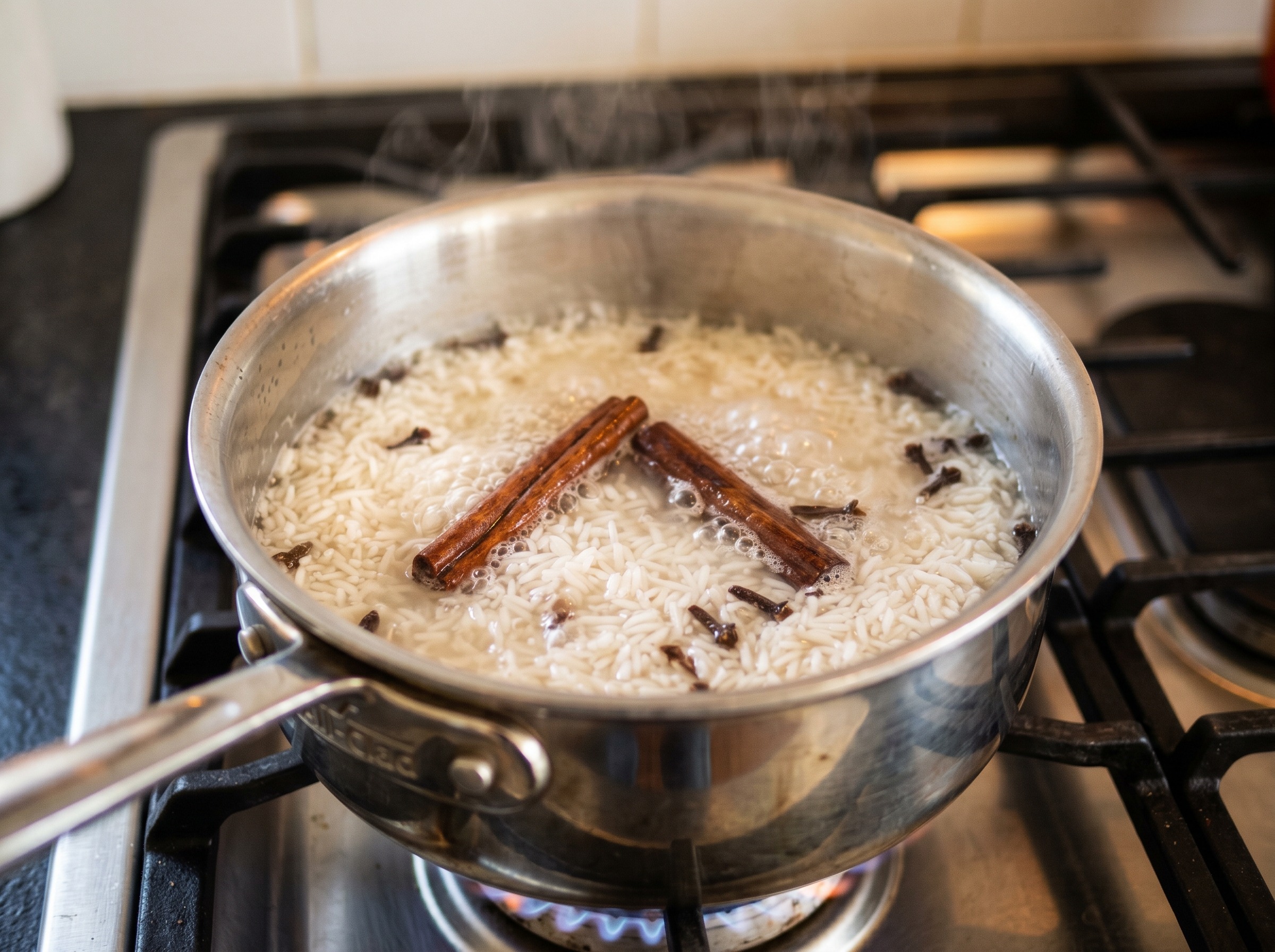
Step 2: Add the Coconut Milk
Once the water is mostly absorbed, pour in both cans of coconut milk. Stir well to combine and make sure nothing is sticking to the bottom. Bring the mixture back to a gentle simmer over medium-low heat. This is where the magic starts — the rice will begin absorbing all that rich coconut milk and the kitchen will start smelling incredible.
Step 3: Add Milk, Sugar, and Raisins
After about 10 minutes of simmering in the coconut milk, add the whole milk, sugar, salt, and raisins. Stir everything together thoroughly. Reduce the heat to low and let it cook, stirring frequently — every 3-4 minutes at minimum. The rice will slowly absorb the liquid and thicken. This stage takes about 25-30 minutes. Be patient and keep stirring, especially along the bottom of the pot, to prevent scorching. The mixture will gradually transform from soupy to thick and creamy.
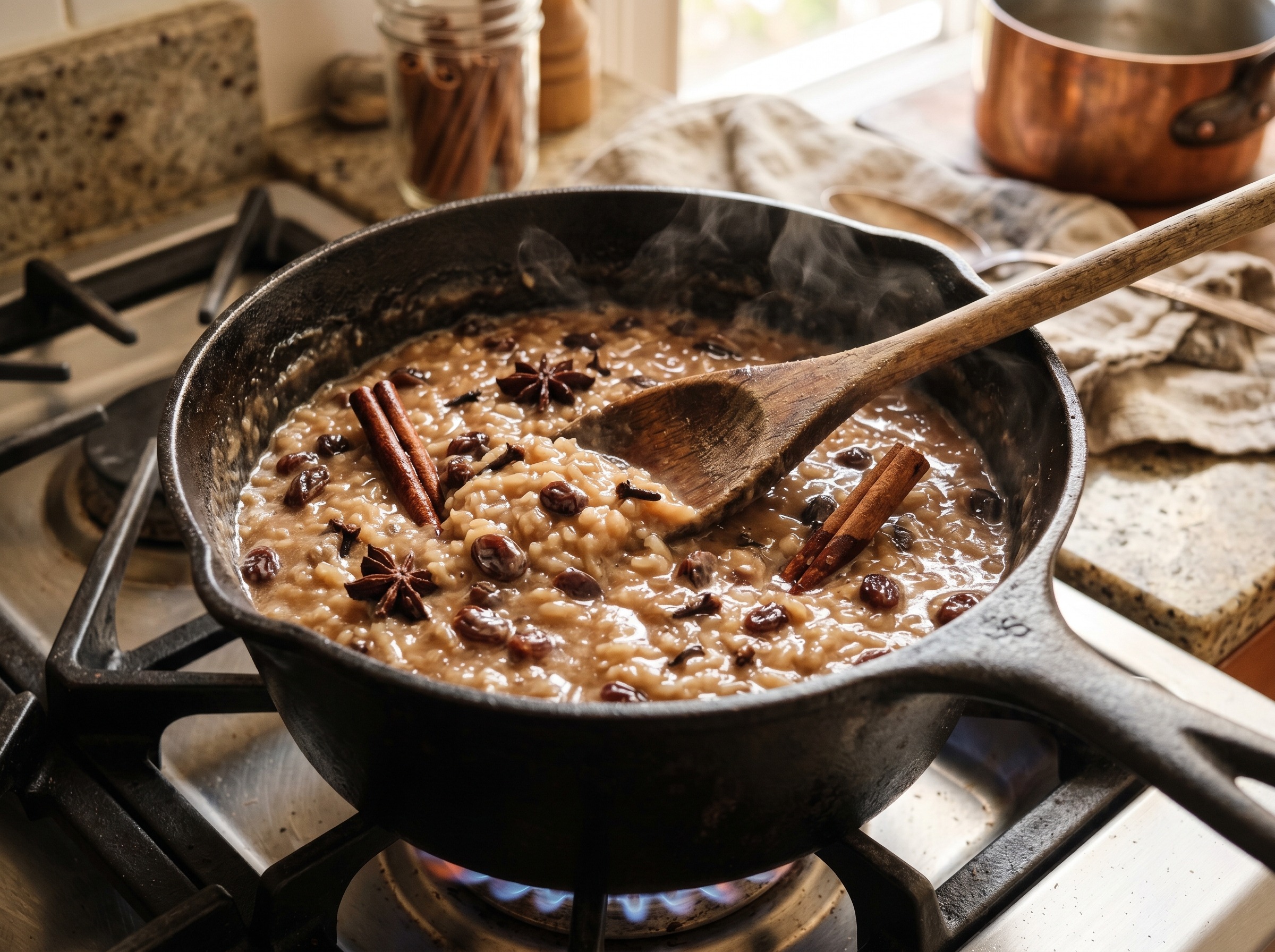
Step 4: Add Vanilla, Lime Zest, and Butter
When the rice is tender and the mixture is thick and creamy (it should mound slightly on a spoon), remove it from the heat. Stir in the vanilla extract, lime zest, and butter. The residual heat will melt the butter right in. Taste and adjust the sugar if needed. Remember, the sweetness will mellow slightly as it cools, so if it tastes just right now, it's perfect.
Step 5: Remove Whole Spices
Fish out the cinnamon sticks and as many of the whole cloves as you can find. Some people leave a cinnamon stick in for presentation — that's totally fine. Just make sure nobody bites into a clove, because that's an unpleasant surprise nobody wants at the dessert table.
Step 6: Cool and Serve
Transfer the arroz con dulce to a serving dish or individual bowls. You can eat it warm, at room temperature, or chilled — all three ways are delicious. As it cools, it will thicken further, so don't worry if it still seems slightly loose when you pull it off the heat. Dust the top with ground cinnamon for a beautiful finish. If you're serving it later, cover it with plastic wrap pressed directly against the surface to prevent a skin from forming.
Pro Tips for the Best Arroz con Dulce
- Use full-fat coconut milk — always. Lite coconut milk will give you a watery, disappointing result. The full-fat version is what creates that luxurious, creamy texture. Shake the can well before opening.
- Don't rush the cooking process. Low and slow is the key to perfect arroz con dulce. High heat will cause the milk to scorch on the bottom before the rice is fully cooked. Keep it at a gentle simmer and stir regularly.
- Stir, stir, stir. This is not a set-it-and-forget-it recipe. You need to stir every few minutes to prevent sticking and to help the rice release its starch evenly. A wooden spoon is your best friend here.
- Account for thickening as it cools. Arroz con dulce continues to thicken significantly as it cools. Pull it off the heat when it's still slightly looser than your desired final consistency. If it over-thickens, stir in a splash of coconut milk to loosen it up.
- Soak your raisins if they're dry. If your raisins are old or particularly dry, soak them in warm water for 10 minutes before adding them. This ensures they plump up nicely in the rice. Drain before adding.
- Toast your spices for extra depth. For an even more aromatic result, lightly toast the cinnamon sticks and cloves in the dry pot for about 30 seconds before adding the rice and water. This blooms their essential oils and intensifies the flavor.
- Lime zest is not optional. I know it sounds like a small thing, but that little bit of fresh lime zest adds a brightness that balances all the richness. Don't skip it — it's what takes the dish from good to incredible.
- Taste as you go. Everyone's sweetness preference is different. Start with ¾ cup of sugar and adjust. You can always add more, but you can't take it out.
Variations to Try
Arroz con Dulce with Condensed Milk
For an even sweeter, more indulgent version, replace the granulated sugar with one can of sweetened condensed milk. Add it along with the coconut milk in step 2. This creates an ultra-creamy, caramel-toned result that is incredibly popular in some Dominican families. Just be aware that the sweetness level will be higher, so taste before adding any additional sugar.
Vegan Arroz con Dulce
This recipe is already almost vegan — just skip the butter and replace the whole milk with an additional half-can of coconut milk or your favorite plant-based milk (oat milk works great here). Use the same spices, raisins, and method. The coconut milk carries so much flavor that you won't miss the dairy at all. This is perfect for Lent observances or for anyone avoiding dairy.
Arroz con Dulce with Coconut Flakes and Nuts
For extra texture and visual appeal, fold in a handful of toasted coconut flakes and chopped cashews or almonds at the end, right before serving. The toasted coconut doubles down on that tropical flavor, and the nuts add a satisfying crunch that contrasts beautifully with the creamy rice. This is a great variation for parties and special occasions.
What to Serve With Arroz con Dulce & When to Serve It
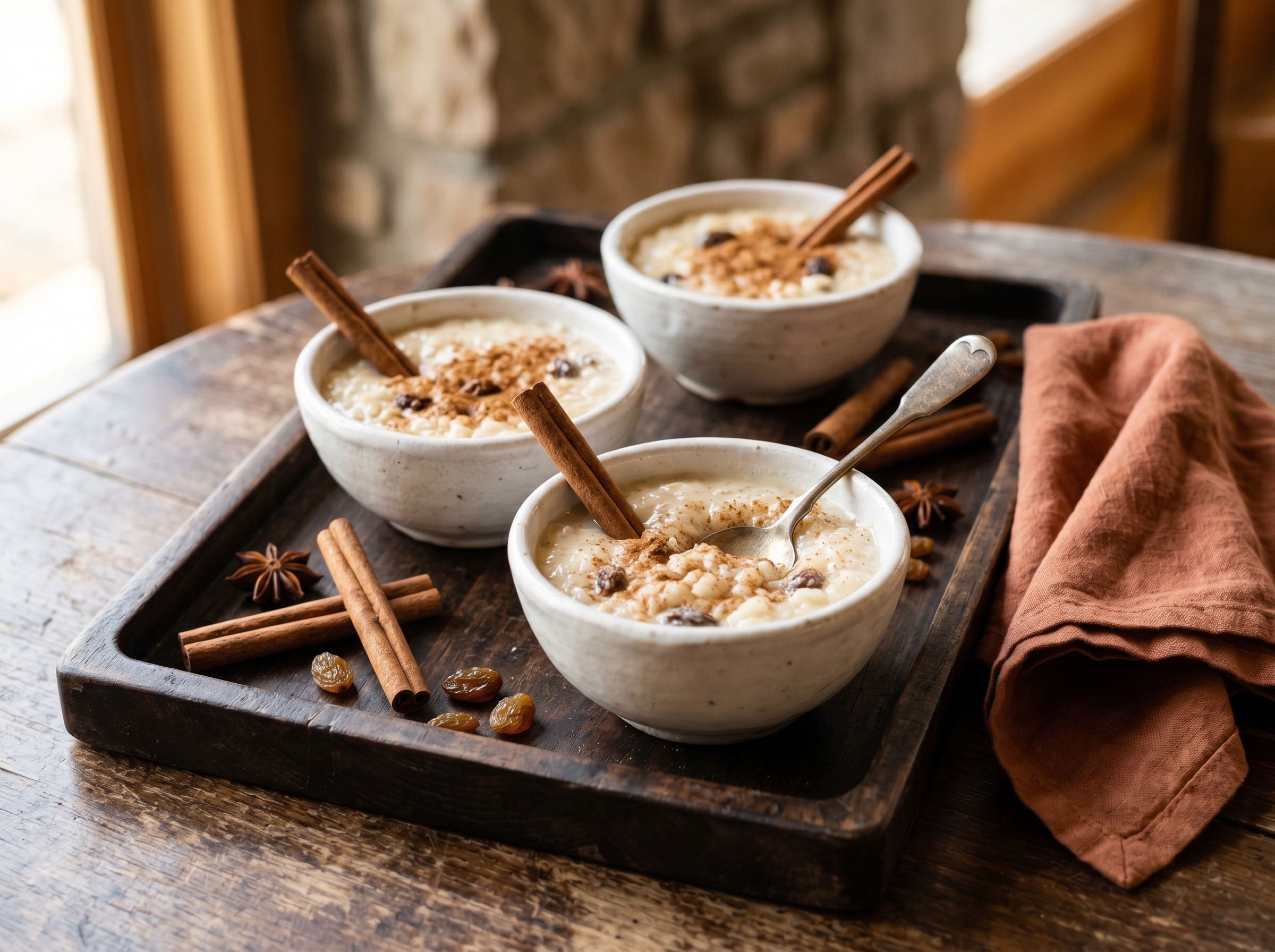
Arroz con dulce is traditionally served as a standalone dessert, but it fits beautifully into a larger Dominican spread. At holiday gatherings, it often shares the table with habichuelas con dulce, flan de leche, and bizcocho dominicano. For a Nochebuena dinner, serve it after your main course of roasted pork or pasteles en hoja. It also works wonderfully as an afternoon treat with a cup of Dominican coffee.
You can serve arroz con dulce warm, at room temperature, or chilled — it's genuinely delicious all three ways. Warm is my favorite for a cozy weeknight dessert. Chilled is perfect for summer gatherings or when you want to make it ahead. For parties, spoon it into individual cups or small bowls, dust with ground cinnamon, and lay a cinnamon stick across the top for a beautiful presentation. It keeps well in the refrigerator for up to 4-5 days, so don't hesitate to make a big batch.
Want to see the full process? Watch the video below to see exactly how I make my arroz con dulce dominicano from start to finish.
You May Also Like This
Frequently Asked Questions
What is the difference between arroz con dulce and arroz con leche?
The main difference is the base liquid. Arroz con leche uses cow's milk as the primary liquid and is common across Latin America and Spain. Arroz con dulce dominicano uses coconut milk as the base, which gives it a distinctly tropical, richer flavor. The spice profile also differs slightly — arroz con dulce typically uses whole cloves along with cinnamon, which is less common in arroz con leche. Both are delicious, but they are different desserts with different flavor profiles.
Can I use long-grain rice for arroz con dulce?
I don't recommend it. Long-grain rice stays separate and doesn't release as much starch, so your arroz con dulce won't get that signature creamy, pudding-like texture. Short-grain or medium-grain rice is the way to go. If you absolutely can't find either, use regular (not parboiled) white rice and expect a slightly less creamy result.
How do I store leftover arroz con dulce?
Store it in an airtight container in the refrigerator for up to 4-5 days. Press plastic wrap directly against the surface before sealing to prevent a skin from forming on top. To reheat, add a splash of coconut milk or regular milk and warm it gently on the stovetop over low heat, stirring frequently. You can also eat it cold straight from the fridge — many people prefer it that way.
Can I freeze arroz con dulce?
Yes, you can freeze arroz con dulce for up to 2 months. Let it cool completely, then transfer to freezer-safe containers. Leave a little room at the top for expansion. Thaw in the refrigerator overnight, then reheat gently on the stovetop with a splash of milk to restore the creamy consistency. The texture won't be quite as perfect as fresh, but it's still delicious.
Is arroz con dulce gluten-free?
Yes! Arroz con dulce is naturally gluten-free. Just double-check your vanilla extract label to make sure it doesn't contain any gluten-based additives (most don't, but it's worth a look). All the other ingredients — rice, coconut milk, sugar, spices, and raisins — are naturally gluten-free.
Can I make arroz con dulce dairy-free or vegan?
Absolutely. Replace the whole milk with additional coconut milk or oat milk, and skip the butter (or use a plant-based butter). Everything else in the recipe is already dairy-free and vegan. The coconut milk carries so much flavor that you won't miss the dairy.
Why is my arroz con dulce too thick or too thin?
If it's too thick, stir in a splash of coconut milk or regular milk until you reach your desired consistency. If it's too thin, continue cooking on low heat with frequent stirring until more liquid evaporates. Remember that arroz con dulce thickens considerably as it cools, so always pull it off the heat when it's slightly looser than you want the final product to be.
What brand of coconut milk is best for arroz con dulce?
Look for brands that have a high coconut content and minimal additives. Thai Kitchen, Aroy-D, and Goya are all solid choices. Shake the can well before opening. If you open the can and find a thick layer of coconut cream on top with water underneath, that's actually a good sign — it means the coconut content is high. Just stir it together before measuring.
Arroz con Dulce Dominicano (Dominican Sweet Coconut Rice)
Full printable recipe card below:
Arroz con Dulce Dominicano (Dominican Sweet Coconut Rice)
Ingredients
Method
- Rinse the rice under cold water until the water runs mostly clear. In a heavy-bottom saucepan, combine the rinsed rice, 1 cup of water, cinnamon sticks, and whole cloves. Bring to a boil over medium-high heat, then reduce to a simmer and cook for 8-10 minutes until the water is mostly absorbed and the rice is partially cooked.
- Pour in both cans of coconut milk and stir well. Bring the mixture back to a gentle simmer over medium-low heat and cook for about 10 minutes, stirring occasionally.
- Add the whole milk, sugar, salt, and raisins. Stir well to combine. Reduce heat to low and cook for 25-30 minutes, stirring every 3-4 minutes to prevent scorching. The mixture will gradually thicken into a creamy, pudding-like consistency.
- When the rice is tender and the mixture is thick and creamy (it should mound slightly on a spoon), remove from heat. Stir in the vanilla extract, lime zest, and butter until the butter is melted and everything is combined. Taste and adjust sugar if needed.
- Remove and discard the cinnamon sticks and whole cloves (you can leave one cinnamon stick for presentation if desired).
- Transfer to a serving dish or individual bowls. Dust with ground cinnamon. Serve warm, at room temperature, or chilled. If serving later, press plastic wrap directly against the surface to prevent a skin from forming.
Nutrition
Tried this recipe?
Let us know how it was!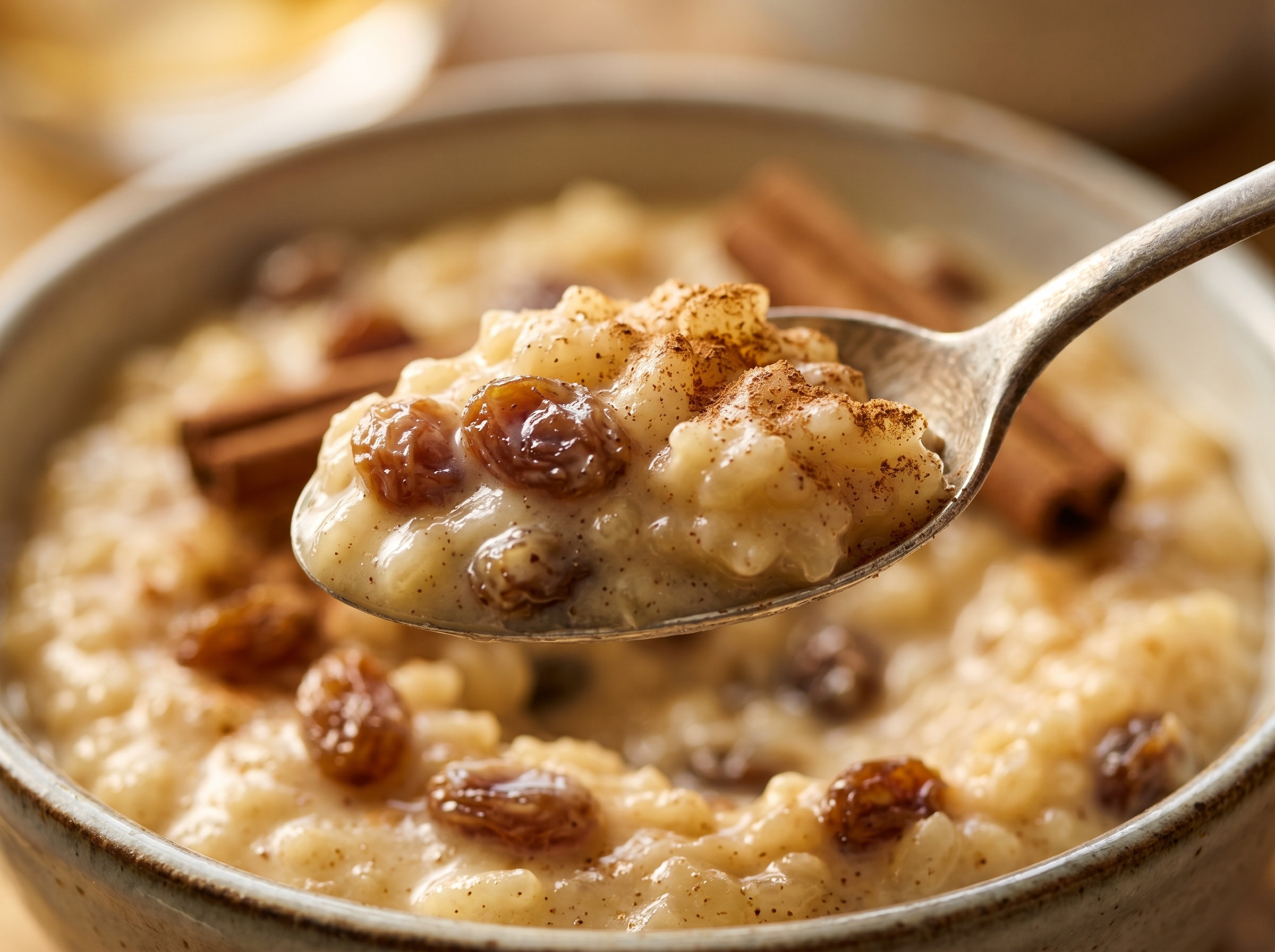
Shop This Recipe
Here are some of the tools and ingredients I use to make this arroz con dulce. These are affiliate links, so I may earn a small commission if you purchase — but it doesn't cost you a penny extra.
- Cuisinart Heavy-Bottom Saucepan — My go-to pot for arroz con dulce. Even heat distribution prevents scorching.
- OXO Good Grips Wooden Spoon Set — Sturdy, comfortable, and perfect for all that stirring. Won't scratch your pots.
- Ceramic Dessert Bowls Set — Beautiful small bowls that are perfect for serving arroz con dulce, flan, and other Dominican desserts.
If you make this arroz con dulce dominicano, I want to see it! Tag me on Instagram or leave a comment below telling me how it turned out. And if this is your first time making a Dominican dessert, welcome to the family — you're going to love it here.


Leave a Reply