
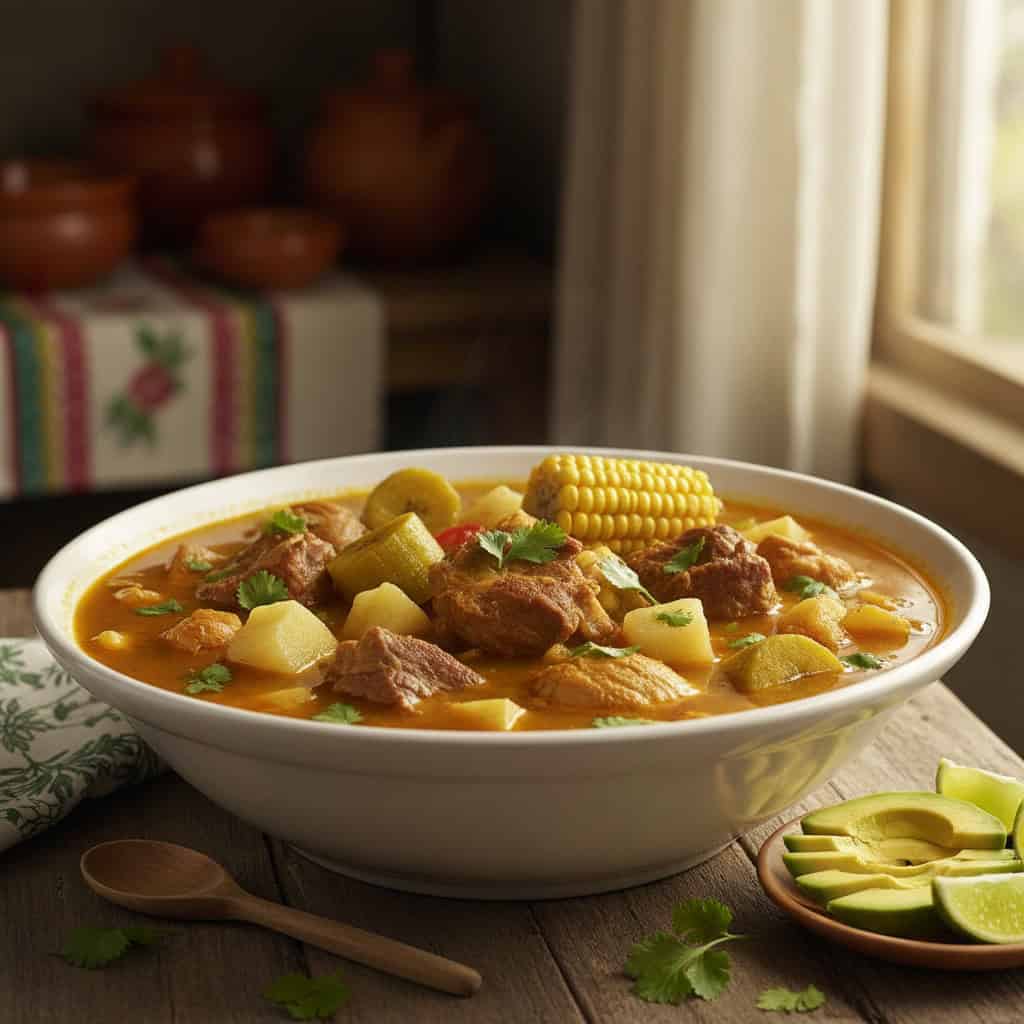
Sancocho dominicano is the dish I make when someone needs healing. Sick? Sancocho. Heartbroken? Sancocho. Lost a job? Sancocho. There's no Dominican household problem that can't be at least temporarily solved by a giant pot of this seven-meat stew bubbling on the stove for half a day. Growing up in Santo Domingo, sancocho was reserved for special Sundays — the kind where the whole family showed up unannounced and somehow my mom always had enough.
This is sancocho de siete carnes — the legendary seven-meat version. Yes, seven different meats. No, that's not too much. Each meat brings something different: chicken brings the broth, beef brings depth, pork ribs bring richness, and the goat or oxtail brings that gelatinous body that makes the broth thick enough to coat a spoon. Add the viandas — yuca, ñame, yautía, plantain — and you have the most legendary stew in Dominican cuisine.
This recipe is the version my dad taught me, and it's the version we still make every New Year's Day. It's a project — three hours of cooking, lots of chopping. But the payoff is the kind of soul-warming meal that makes you understand why food is identity.
Why You'll Love This Sancocho Recipe
- The legendary seven-meat stew: Multiple proteins create a depth of flavor you cannot achieve with just one type of meat.
- Comfort food at its peak: Thick, hearty broth packed with root vegetables. The Dominican answer to chicken soup.
- Feeds a crowd: One pot easily serves 10-12 people. Perfect for big family gatherings or meal prep.
- Customizable: Use whatever combination of meats you can find. Even three meats makes a great sancocho.
- Even better the next day: The flavors meld and deepen overnight. Many Dominicans say day-2 sancocho is the real sancocho.
What Is Sancocho?
Sancocho is a hearty stew with countless variations across Latin America and the Caribbean — every country has their own. The Dominican version, however, stands apart for its use of multiple meats (sometimes called sancocho de siete carnes when seven different meats are used) and the heavy use of viandas (root vegetables): yuca, yautía, ñame, plantain, and sometimes auyama (Caribbean pumpkin).
Dominican sancocho traces back to a fusion of indigenous Taíno cooking (which featured root vegetables and slow stews), Spanish colonial cuisine (the meat traditions), and African flavor profiles (the bold seasonings and sofrito base). The result is a stew that tastes like the entire history of the island in one bowl.
What makes Dominican sancocho different from Puerto Rican or Colombian versions? Three things: the multiple meats simmered together for hours, the specific use of yautía (taro root) as a thickening agent that practically dissolves into the broth, and the absolute essential garnish of ripe avocado and fresh lime served on the side. Without those last two, it's just stew.
Ingredients You'll Need
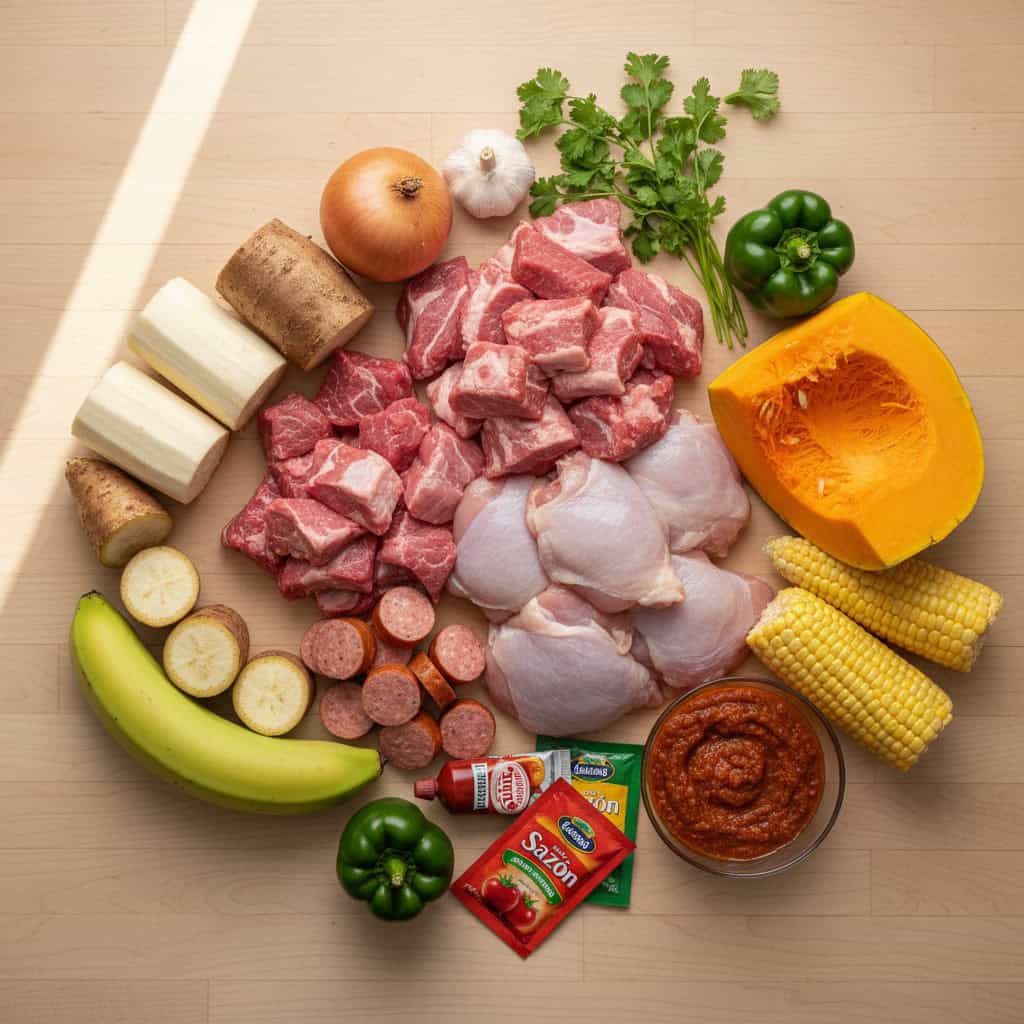
For the Meats
- 1 lb beef chuck, cut into 2-inch cubes
- 1 lb pork ribs, cut into 2-rib portions
- 1 lb chicken (bone-in thighs or drumsticks)
- ½ lb smoked pork or longaniza sausage, sliced
- ½ lb beef oxtail or goat (optional but traditional)
- 2 tablespoons sazón con culantro y achiote
- 1 tablespoon adobo seasoning
- 1 teaspoon dried oregano
- Juice of 2 limes (for cleaning meat)
For the Stew
- 3 tablespoons olive oil
- 1 large onion, diced
- 2 cubanelle peppers, diced
- 6 cloves garlic, minced
- ½ cup fresh cilantro, chopped
- ¼ cup homemade sofrito
- 2 tablespoons tomato paste
- 10-12 cups water or chicken stock
- 1 lb yuca, peeled and chunked
- 1 lb yautía, peeled and chunked
- 1 lb ñame, peeled and chunked (or extra yuca)
- 2 green plantains, peeled and sliced into 2-inch chunks
- 1 cup auyama, peeled and chunked (Caribbean pumpkin or butternut squash)
- 2 ears corn, cut into 2-inch rounds
- 2 bay leaves
- Salt and pepper to taste
Equipment: Sancocho needs a big pot — at least 8 quarts. I use my All-Clad Dutch Oven when I have time, or my Instant Pot when I'm in a rush.
Step-by-Step Instructions
Step 1 — Clean and Season the Meats
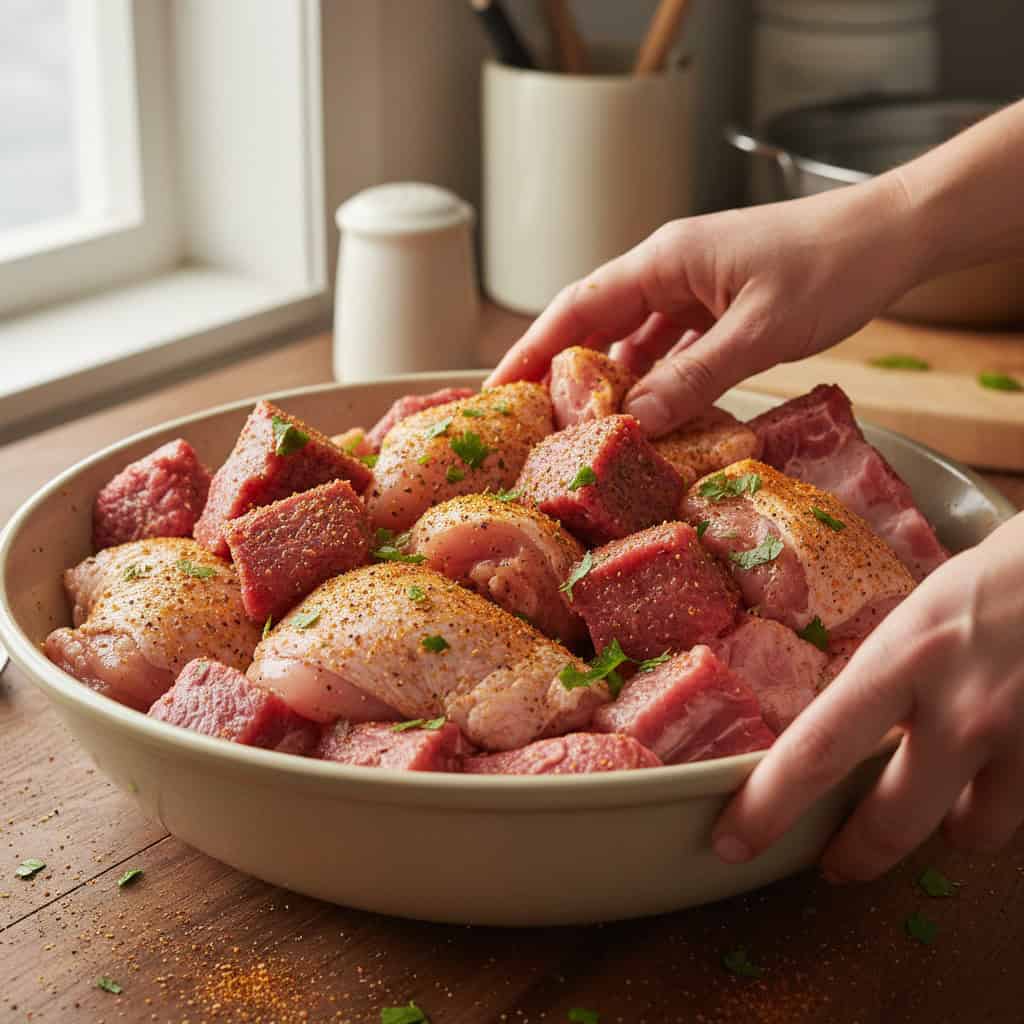
Place all the meats in a large bowl. Squeeze lime juice over them and add a tablespoon of vinegar. Rub in, then rinse under cold water and pat dry. Season with sazón, adobo, and oregano. Toss to coat. Let sit for 30 minutes minimum.
Step 2 — Sear the Meats
Heat olive oil in a large pot over medium-high heat. Brown the meats in batches — beef first (it takes longest), then pork ribs, then chicken. Don't crowd the pot. Each batch should sear for 4-5 minutes total. Set seared meats aside.
Step 3 — Build the Sofrito Base
In the same pot, sauté onion, cubanelle pepper, and garlic for 5 minutes. Add cilantro and homemade sofrito. Cook 2 minutes. Add tomato paste and let it caramelize for another 2 minutes.
Step 4 — Add the Tougher Meats and Simmer
Return the beef, oxtail/goat, and smoked sausage to the pot. Add water or stock to cover by 2 inches. Add bay leaves. Bring to a boil, then reduce to low. Simmer covered for 1 hour.
Step 5 — Add the Remaining Meats and Viandas
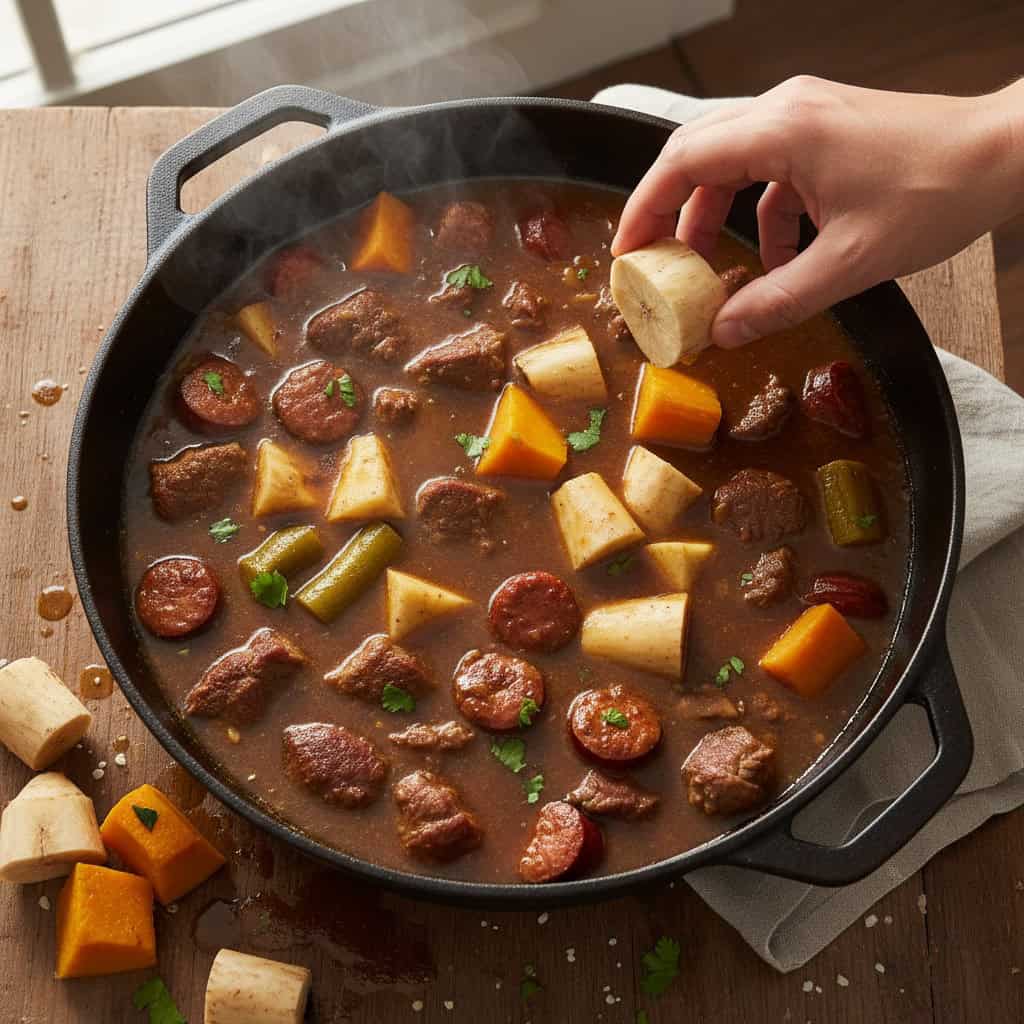
Add the chicken, pork ribs, yuca, yautía, ñame, plantains, and auyama. Make sure everything is submerged in liquid (add water if needed). Simmer covered for 45 minutes.
Step 6 — Add Corn and Finish
Add the corn and continue simmering uncovered for 15-20 minutes until the broth thickens slightly and the viandas are fork-tender. The yautía will partially dissolve and naturally thicken the soup. Taste and adjust salt and pepper.
Step 7 — Serve
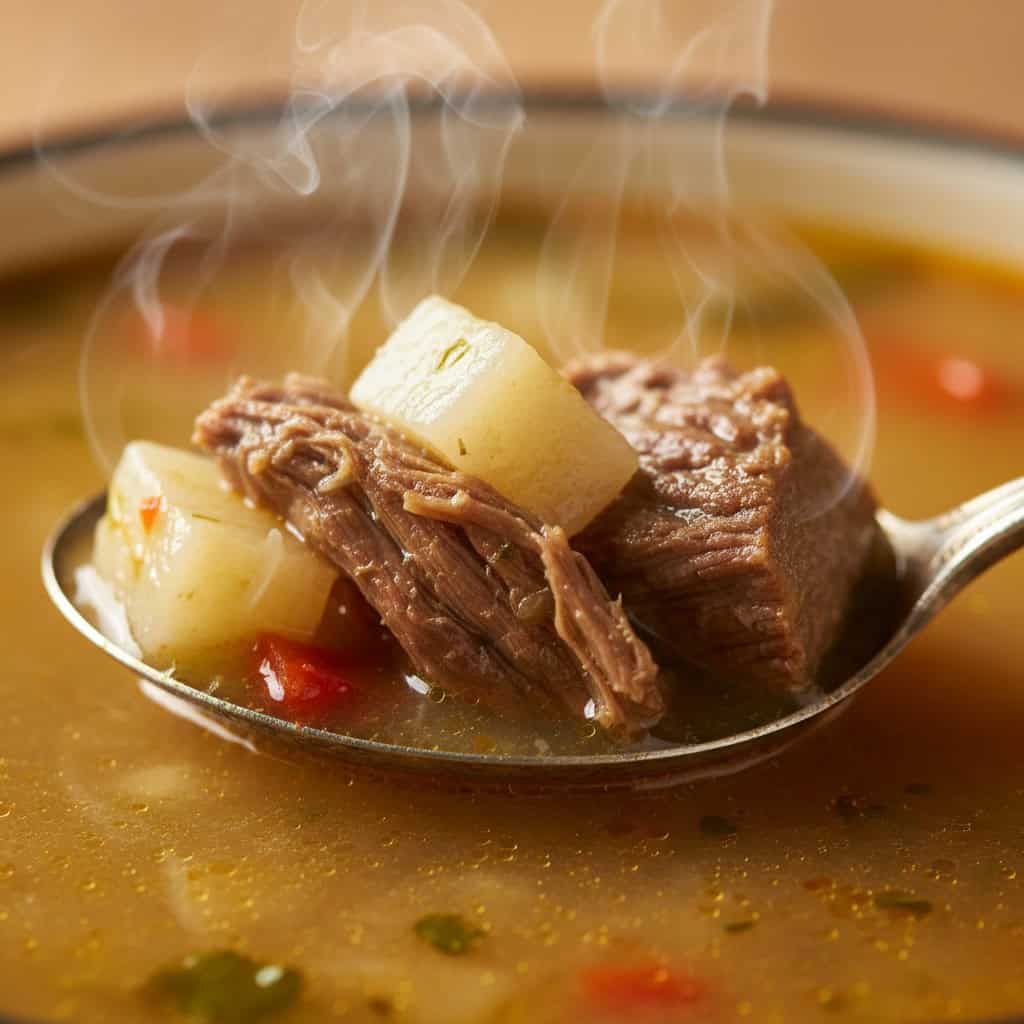
Ladle into deep bowls, making sure each bowl gets a mix of meats and vegetables. Serve with white rice on the side, sliced ripe avocado, and lime wedges. Some people stir the rice into the sancocho — that's the Dominican way.
Pro Tips for Perfect Sancocho
- Use bone-in meats: The bones add gelatin and depth to the broth. Boneless cuts will give you a thinner, less satisfying soup.
- Add viandas in stages if possible: Yuca takes longer than plantain. If you want perfect texture, add yuca and yautía 15 minutes before the others.
- Skim the foam: When the meats first come to a boil, lots of foam rises to the top. Skim it off — it makes the broth clearer and tastes cleaner.
- Don't skip the lime and avocado: Squeezing fresh lime over the bowl right before eating wakes up all the flavors. Avocado adds creamy contrast.
- Make a double batch: Sancocho freezes beautifully and tastes even better the next day. Always make extra.
Variations
Instant Pot Sancocho
Sear meats and build the sofrito on sauté mode. Add tougher meats and 8 cups water. Pressure cook 30 minutes. Quick release. Add viandas, pressure cook another 8 minutes. Quick release. Cuts the cooking time in half.
Slow Cooker Sancocho
Sear meats and build sofrito on stovetop. Transfer to a 7-quart slow cooker with all liquid and tougher meats. Cook on low 6 hours. Add viandas and remaining meats, cook 2 more hours.
Vegetarian Sancocho
Skip all meats. Use 12 cups vegetable stock, double the sofrito, add 2 cups chickpeas, and load up on viandas. Surprisingly satisfying.
What to Serve With Sancocho
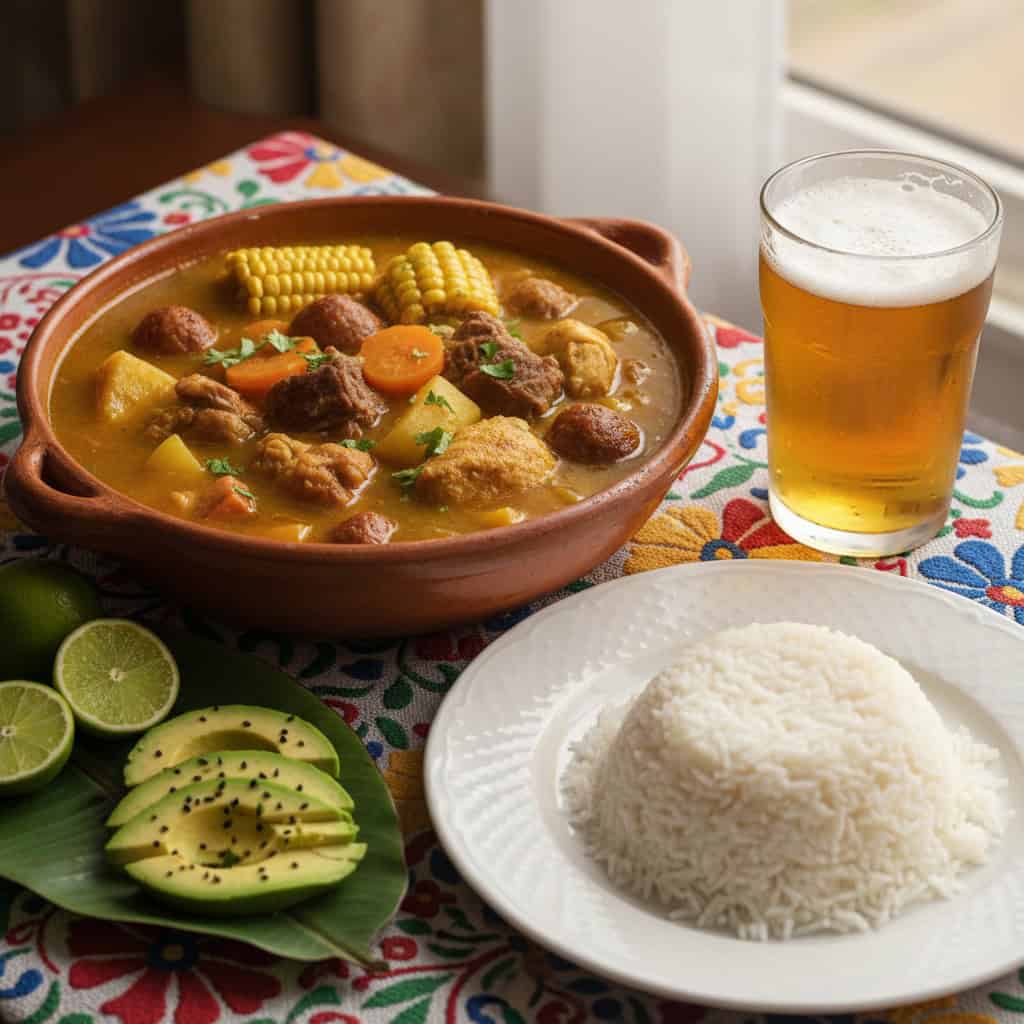
- Arroz blanco: Always served alongside, often stirred directly into the sancocho.
- Sliced avocado: Non-negotiable. Adds creamy contrast to the rich broth.
- Lime wedges: A fresh squeeze right before eating wakes up all the flavors.
- Tostones: For dipping into the broth.
- Hot sauce: Pique or aji caballero on the side for those who want heat.
- Pan de agua: Soft Dominican bread for sopping up the broth.
Frequently Asked Questions
Traditional sancocho de siete carnes uses seven different meats. But a great sancocho can be made with just three: beef, chicken, and pork. The variety builds depth of flavor — pick whatever combination of beef, chicken, pork ribs, smoked pork, sausage, oxtail, or goat you can find.
What are viandas?Viandas are starchy root vegetables central to Caribbean cooking: yuca (cassava), yautía (taro), ñame (yam), plátano (plantain), and auyama (Caribbean pumpkin). They give sancocho its body and that signature thick broth. Find them at any Latin market, frozen if needed.
Can I make sancocho ahead?Absolutely — sancocho actually tastes better on day 2 or 3 as the flavors meld. Store in the fridge up to 5 days or freeze up to 3 months. Reheat gently on the stovetop.
Why is my broth too thin?Thin broth usually means not enough yautía (which thickens naturally), or you simmered with the lid off too much. The fix: mash a few pieces of yuca or yautía against the side of the pot and stir to thicken. Or simmer uncovered for 15 minutes to reduce.
What if I can't find sour orange or specific viandas?Use what you can find. Sour orange substitutes: ⅓ OJ + 3 tablespoon lime. Missing yautía: extra yuca or potato. Missing ñame: more plantain. Sancocho is a forgiving dish.
Can I freeze sancocho?Yes — freeze in airtight containers for up to 3 months. The viandas can get slightly soft after freezing, but the flavor improves. Thaw in the fridge overnight and reheat slowly.
How do you eat sancocho?Serve in deep bowls with rice on the side. Most Dominicans stir a scoop of rice directly into the sancocho. Squeeze lime over the top and add a slice of ripe avocado on every spoonful. It's a full meal in one bowl.
Dominican Sancocho
Ingredients
Method
- Clean meats with lime juice and vinegar. Rinse and pat dry. Season with sazón, adobo, oregano. Let sit 30 min.
- Sear meats in batches in olive oil over medium-high heat. Don't crowd. Set aside.
- Sauté onion, cubanelle, garlic 5 min. Add cilantro, sofrito, then tomato paste. Cook 2 min more.
- Return beef, oxtail, sausage to pot. Add water/stock to cover by 2 inches. Add bay leaves. Boil, then simmer covered 1 hour.
- Add chicken, pork ribs, yuca, yautía, ñame, plantains, auyama. Submerge fully. Simmer 45 min.

- Add corn. Simmer uncovered 15-20 min until viandas fork-tender and broth thickens. Adjust salt/pepper.
- Serve in deep bowls with rice, sliced avocado, and lime wedges.
Nutrition
Notes
Tried this recipe?
Let us know how it was!Shop This Recipe
View on Amazon →
View on Amazon →
View on Amazon →
As an Amazon Associate I earn from qualifying purchases at no extra cost to you.
Make this on a Sunday with the people you love. That's what it's for.
You May Also Like
📺 Watch a similar recipe: Slow Cooker Dominican Pot Roast (Carne Guisada Style)
- Dominican-Style Calamares Guisados (Garlicky Calamari Stew with Lemon & Cilantro) — Dominican-Style Calamares Guisados is a garlicky calamari stew simmered in a rich tomato.
- Dominican Slow Cooker Goat Stew Recipe (Chivo Guisado) — Fall-apart tender goat meat simmered low and slow with rich Dominican flavors —.
- Hígado Guisado (Dominican Liver Stew) — The Real Way

Leave a Reply