
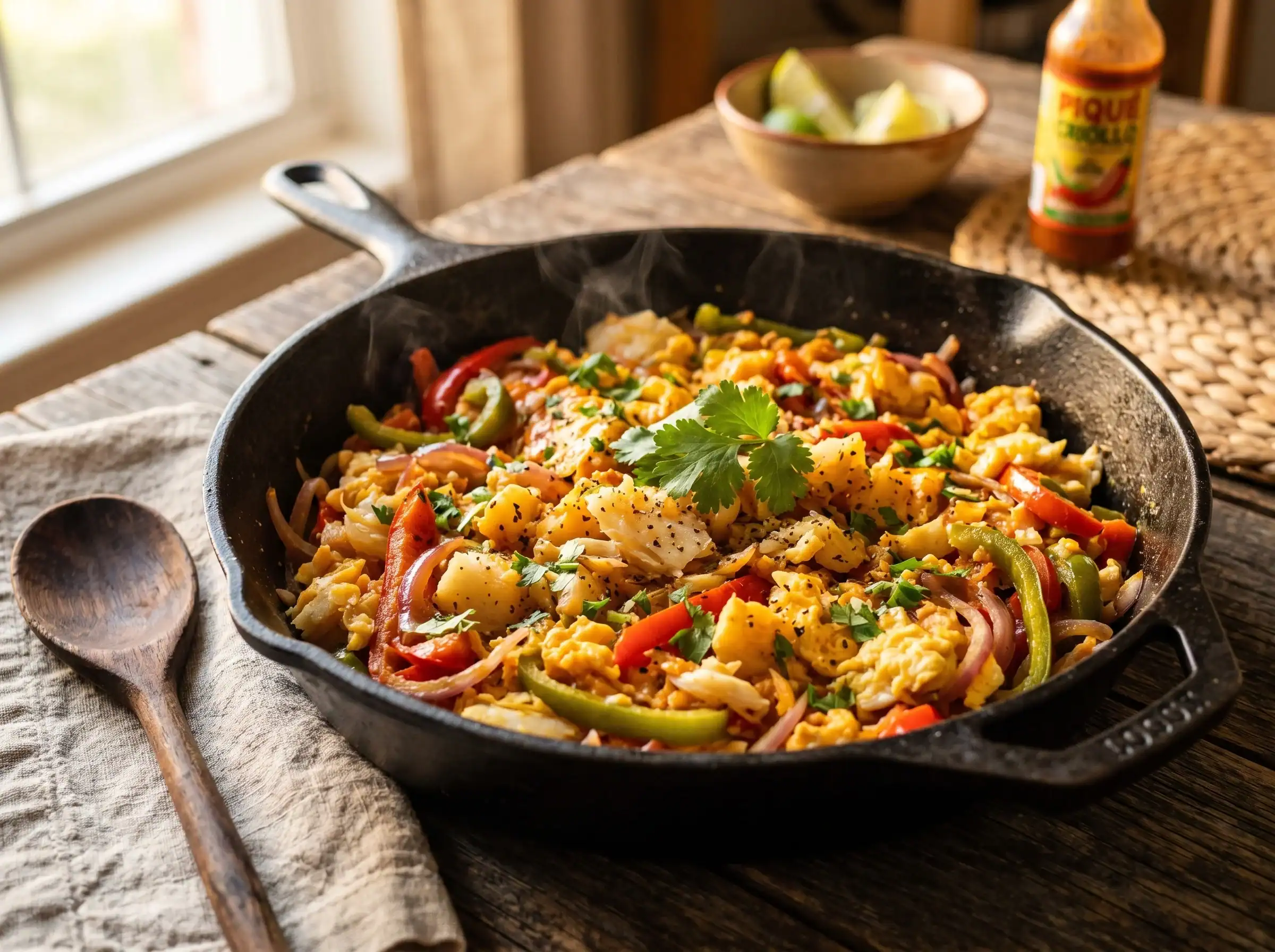
If you grew up in a Dominican household, Bacalao con Huevos is one of those dishes that instantly brings people to the table. Flaky salted cod cooked with fluffy scrambled eggs, sliced peppers, onions, and the unmistakable orange glow of achiote oil — it is savory, deeply seasoned comfort food that tastes like home. Once your bacalao has soaked, the whole dish comes together in under thirty minutes, which is exactly why it shows up on so many Dominican tables, especially during Lent and on quiet Friday lunches.
In this recipe I am going to walk you through the exact way my family has been making bacalao con huevos for decades, including the part that nobody tells you about — how to properly soak the cod so it is tender, clean, and just salty enough. Skip the soak, and you end up with a dish you can't eat. Do it right, and you end up with one of the most satisfying meals in the entire Dominican repertoire.
What Is Bacalao con Huevos?
Bacalao con huevos translates literally to "codfish with eggs." In Dominican cooking, bacalao refers specifically to dried, salted cod — a preserved fish that arrived in the Caribbean during the colonial period and stuck around because it kept well in hot climates long before refrigeration existed. Salt cod is still a pantry staple across the Dominican Republic, Puerto Rico, the rest of the Caribbean, and much of Latin America, and each region has its own signature way of cooking it.
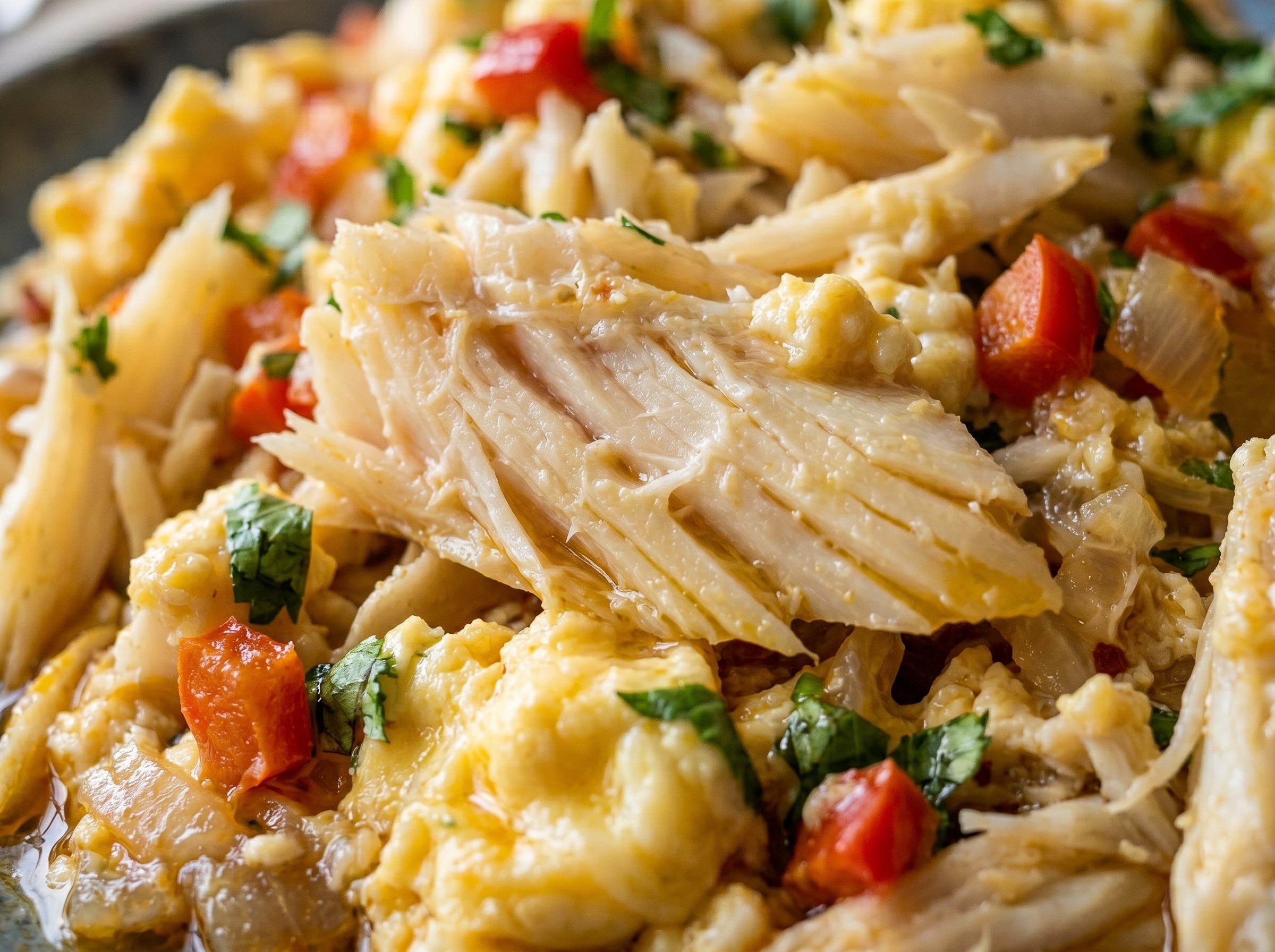
The Dominican version is usually built on the same flavor base you find in countless dishes across the island: onions, bell peppers, garlic, and achiote-tinted oil. After the aromatics come together, the shredded cod goes in, and eggs are scrambled directly into the pan at the end. The result is a one-skillet dish that is somehow creamy, flaky, rich, and bright all at once. It is hearty enough to eat on its own with a piece of crusty Dominican bread, and endlessly versatile as a protein served alongside rice and tostones.
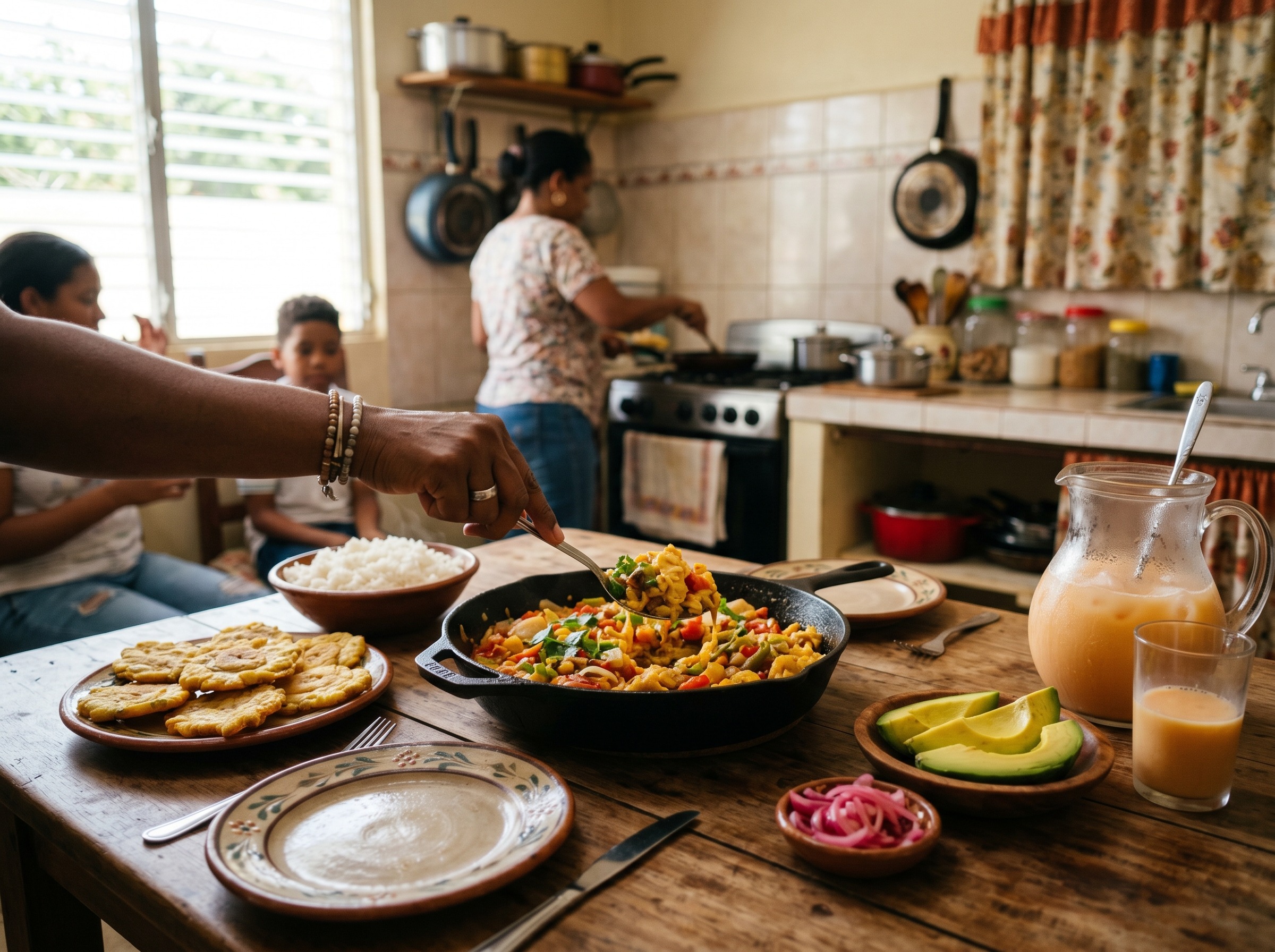
You will find this dish served most often on Fridays during Lent — when many Dominican Catholic households abstain from red meat — and also as a regular, cozy lunch throughout the year. Some families make it for breakfast with mangú, turning it into a full, plantain-anchored morning plate. Others save it for that Sunday moment when everyone is home and the kitchen is full.
Why You Will Love This Recipe
- Big flavor, small ingredient list. Nearly everything here is a pantry staple. The bacalao itself does most of the heavy lifting on flavor.
- Budget-friendly. A pound of bacalao easily feeds four and stretches even further served with rice.
- Meatless but substantial. This is one of those dishes that satisfies without ever feeling light.
- Authentic. This is exactly how it gets made in Dominican kitchens — no shortcuts, no substitutes that change the spirit of the dish.
- One-pan. Everything happens in a single skillet, which means very little cleanup.
Ingredients You Will Need
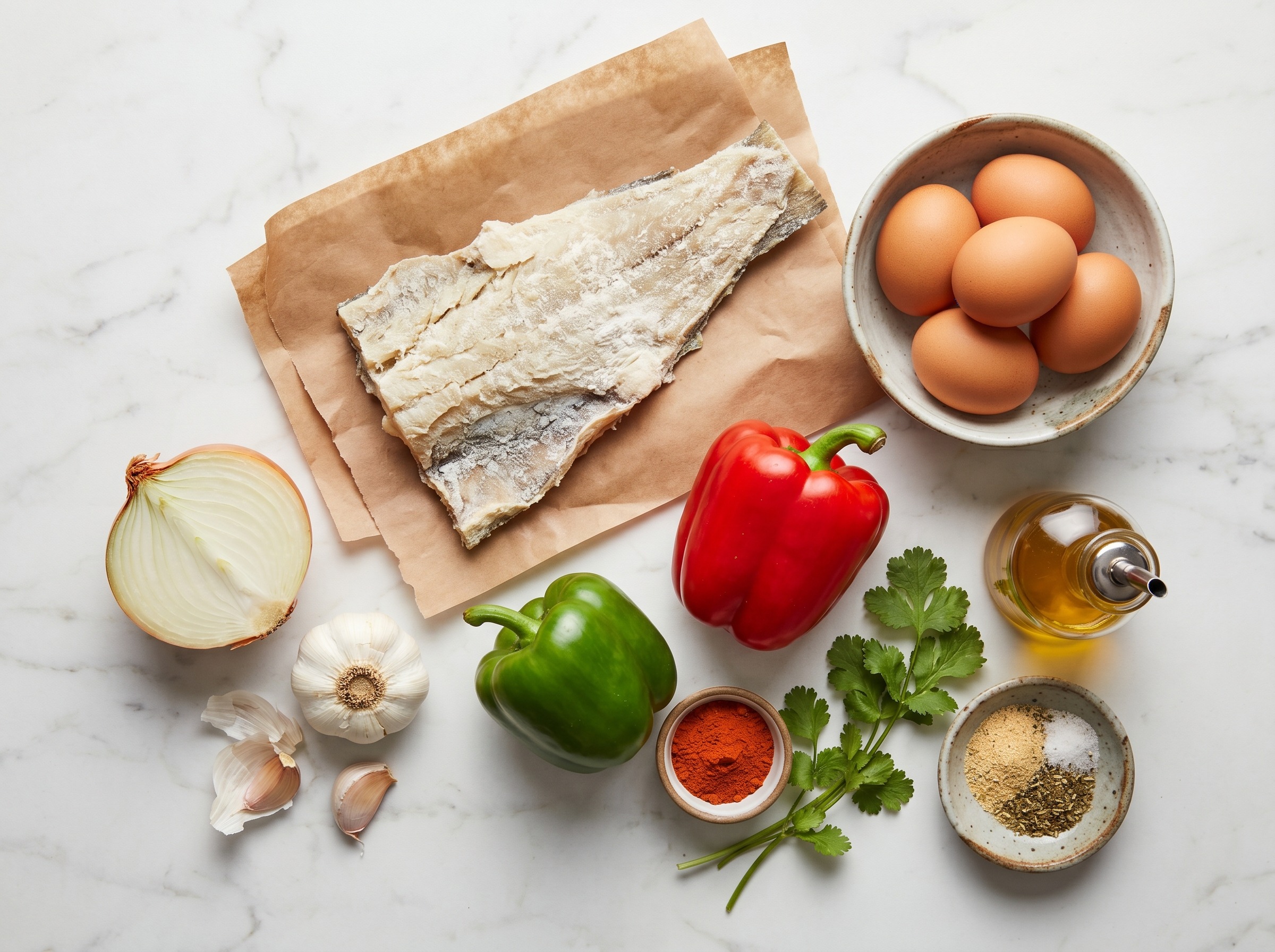
Every ingredient here earns its place. Here is what goes into authentic Dominican bacalao con huevos:
- Dried salted bacalao (salt cod) — the star. Look for thick, firm pieces at a Latin or Caribbean market, or in the ethnic aisle of a well-stocked grocery store. Boneless fillet-style bacalao is the easiest to work with, but if yours has bones, just pick them out after soaking.
- Eggs — four large eggs, lightly beaten. They get folded into the cod at the very end.
- Yellow onion — sliced thin so it melts into the dish rather than standing out.
- Red and green bell peppers — a combination gives you color, a touch of sweetness, and the look Dominicans expect on the plate.
- Garlic — three cloves, minced. Non-negotiable.
- Olive oil — use a decent one; it becomes the achiote-infused base of the whole dish.
- Achiote (annatto) — the ingredient that gives the oil its signature orange hue and a subtle, earthy, slightly peppery flavor. Powder or paste both work.
- Dominican adobo seasoning — an all-purpose seasoning blend of garlic, oregano, turmeric, and salt. Use sparingly — remember the bacalao is already salty.
- Fresh cilantro — chopped and showered over the top at the end.
- Freshly ground black pepper — to taste.
How to Properly Soak Bacalao (Do Not Skip This)
This is the single most important step in the entire recipe, and the one people get wrong. Dried salt cod is preserved with an enormous amount of salt, and if you cook it straight out of the package it is genuinely inedible. Here is how to soak it the right way:
- Rinse the bacalao briefly under cold water to knock off any surface salt crystals.
- Submerge it in a large bowl of cold water — the fish should be covered by at least two inches.
- Refrigerate and let it soak for 24 hours. If you are short on time, a minimum of 12 hours will work, but 24 is the sweet spot.
- Change the water 2 to 3 times during the soak. Every time you change the water, a little more salt leaves the fish.
- Taste-test a small corner before cooking. The fish should be pleasantly savory — not aggressively salty. If it is still too salty, give it another hour or two in fresh water.
- Drain thoroughly, remove any bones and skin, and flake the cod into bite-sized pieces.
Some cooks also like to give the bacalao a quick 3-minute boil after soaking to finish softening it — this is a great idea if your cod is extra thick or if you are in a rush on soak time. Drain, cool, and flake the same way.
How to Make Dominican Bacalao con Huevos
Once the soak is done, the actual cooking is fast and easy. The detailed recipe card is below, but here is the step-by-step in plain language:
- Bloom the achiote. Heat the olive oil over medium heat, add achiote powder, and stir for about 30 seconds until the oil turns deep orange. This is the moment the dish starts looking Dominican.
- Sauté the aromatics. Add the onions, red and green bell peppers, and garlic. Cook for 3–4 minutes, stirring, until everything is softened and fragrant but not browned.
- Cook the cod. Add the flaked bacalao and stir to coat in the achiote oil. Sprinkle in adobo and black pepper. Cook for 8–10 minutes, stirring occasionally, so the fish drinks in the flavor.
- Fold in the eggs. Lower the heat. Pour the beaten eggs directly over the bacalao mixture. Let them set for 30 seconds, then gently fold with a wooden spoon. Keep folding slowly until the eggs are just set — soft and tender, never dry.
- Finish. Taste for seasoning. Almost always, it does not need any extra salt. Shower with chopped cilantro and serve immediately.
Ingredients
Method
- Place the dried salt cod in a large bowl and cover with cold water by at least 2 inches. Refrigerate and soak for 24 hours, changing the water 2–3 times. Drain, rinse well, remove any bones and skin, and flake into bite-sized pieces.

- Heat the olive oil in a large skillet (cast iron works beautifully) over medium heat. Add the achiote powder and stir for about 30 seconds until the oil turns a deep orange — this is what gives the dish its signature color.
- Add the sliced onion, red and green bell peppers, and minced garlic. Sauté for 3–4 minutes until softened and fragrant but not browned.
- Add the flaked bacalao to the skillet and stir to coat everything in the achiote oil. Sprinkle in the adobo seasoning and a few grinds of black pepper. Cook, stirring occasionally, for 8–10 minutes so the cod absorbs the flavors.
- Lower the heat to medium-low and pour the beaten eggs directly over the bacalao mixture. Let them set for about 30 seconds, then gently fold everything together with a wooden spoon. Continue folding slowly for 3–4 minutes until the eggs are just set — soft curds, not dry.
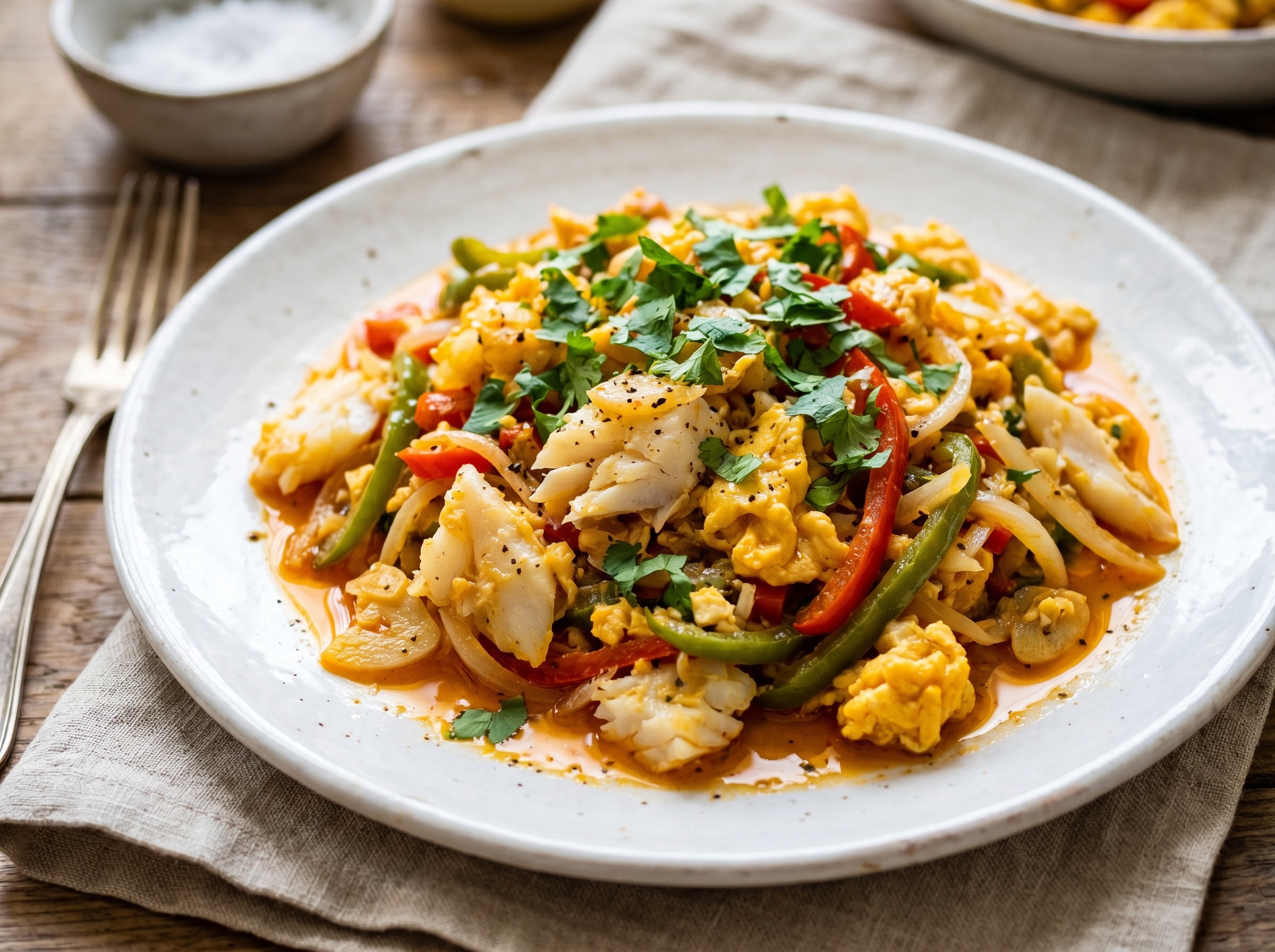
- Remove from the heat, taste and adjust seasoning (it almost never needs extra salt). Garnish generously with chopped fresh cilantro. Serve immediately with white rice, tostones, boiled yuca, or mangú.
Nutrition
Video
Notes
Tried this recipe?
Let us know how it was!What to Serve with Bacalao con Huevos
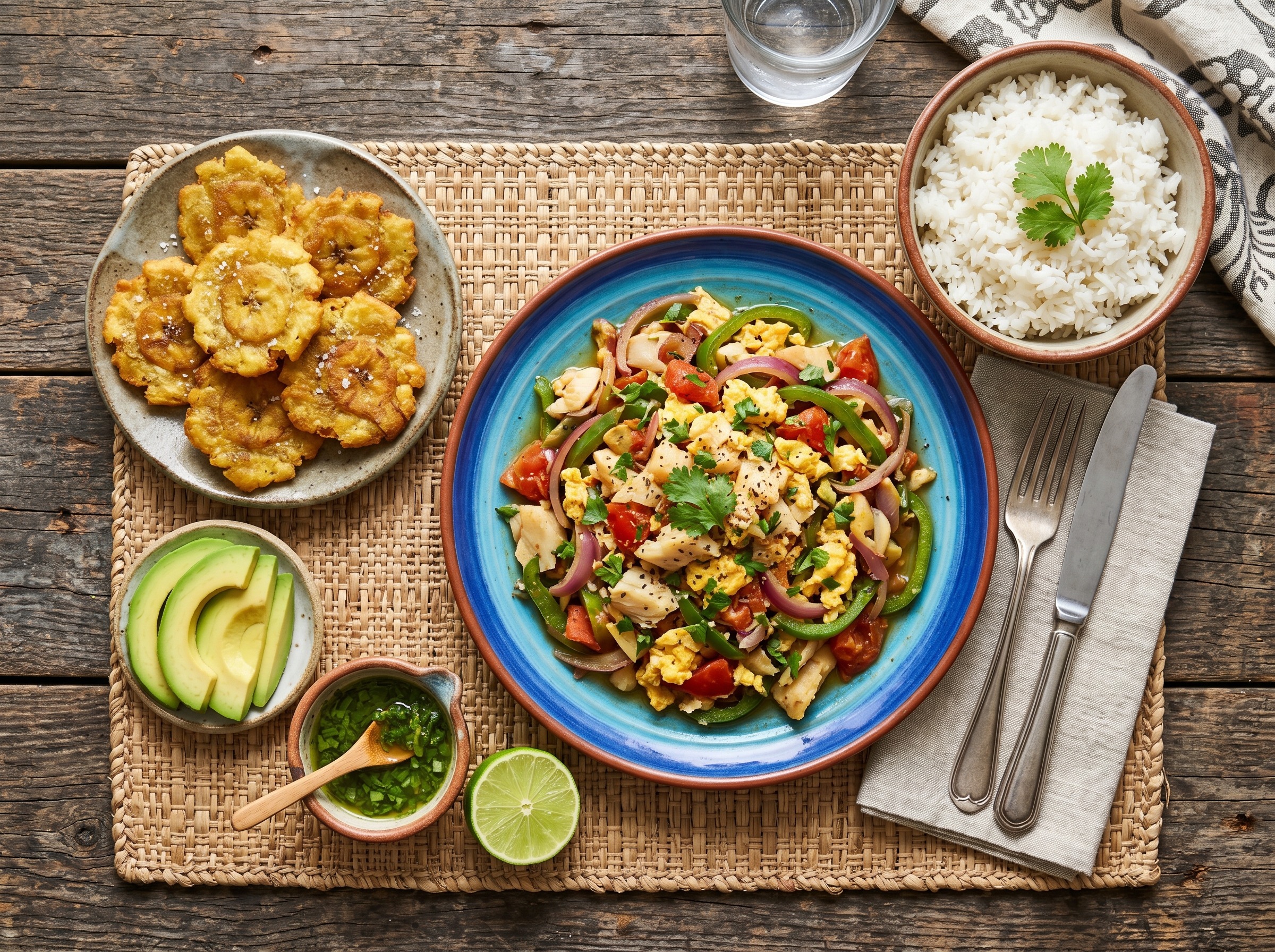
Bacalao con huevos is almost never served alone. It is a protein dish that shines alongside a few very specific Dominican sides. Any of these make a complete, deeply satisfying plate:
- White rice — the classic pairing. A big scoop of fluffy Dominican arroz blanco is the most common partner.
- Tostones — crispy twice-fried green plantains. The contrast between the salty, soft bacalao and the crunchy tostones is unbeatable.
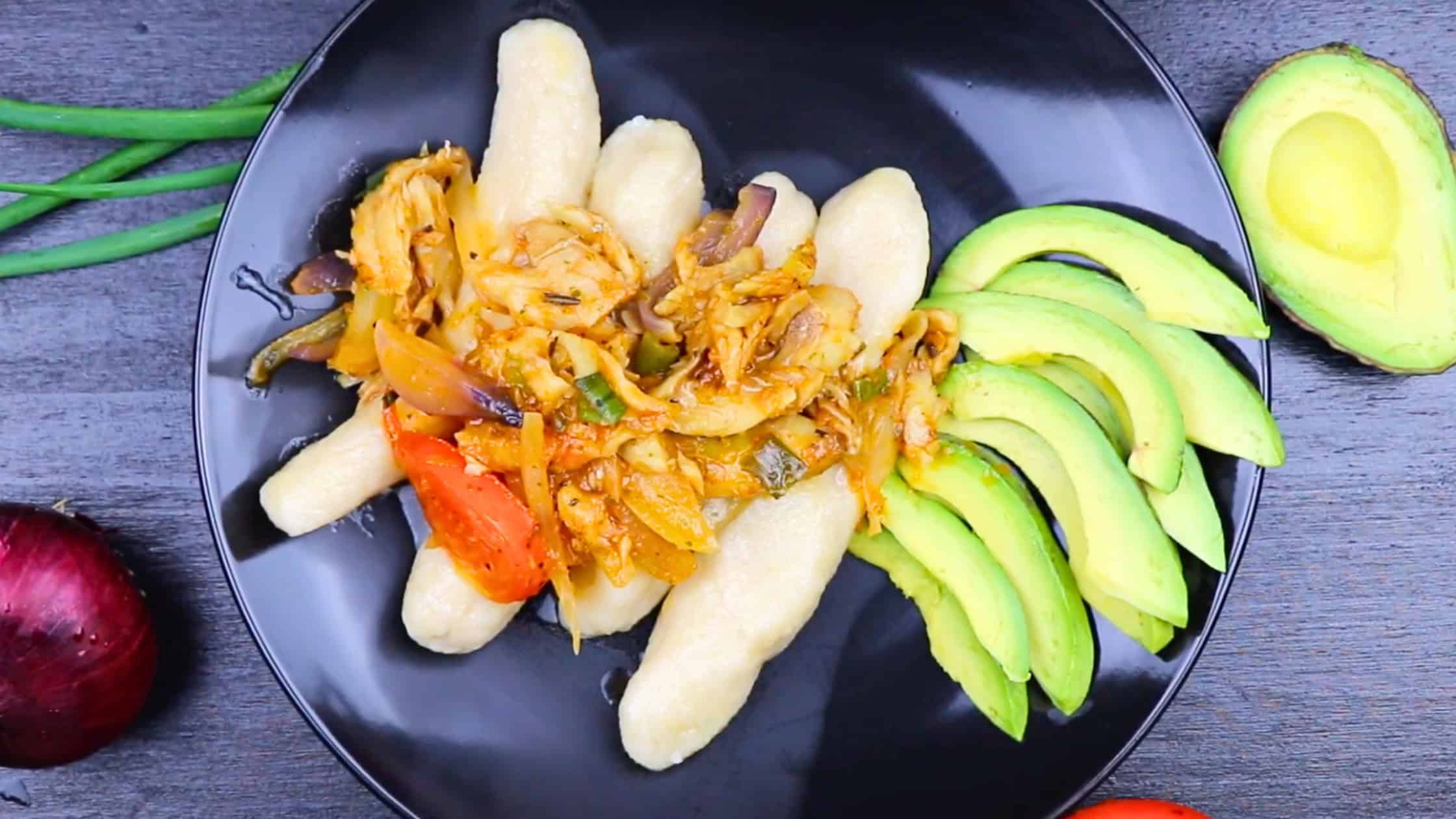
- Boiled yuca or batata — root vegetables that soak up the achiote oil and balance the saltiness beautifully. This is especially common in the campo.
- Mangú — mashed green plantains turn this into a full Dominican breakfast-style plate. Add sautéed onions on top and you have los dos golpes.
- Sliced avocado — cool, creamy, and absolutely necessary in my house.
- Wasakaka — the Dominican garlic sauce. A spoonful on the side adds a bright, punchy kick.
Tips for the Best Bacalao con Huevos
- Taste before you add any salt. Bacalao is naturally salty even after a thorough soak. Nine times out of ten, the adobo is all the seasoning the dish needs.
- Change the soaking water often. The more you change it, the better the final texture and flavor. Two changes is the minimum, three is better.
- Do not overcook the eggs. Add them at the very end, fold gently, and pull the skillet off the heat while they still look slightly glossy — residual heat finishes them perfectly.
- Use fresh achiote paste when you can. Powder works, but paste has a deeper color and more rounded flavor. Whisk a teaspoon of paste into the oil instead of powder if you have it.
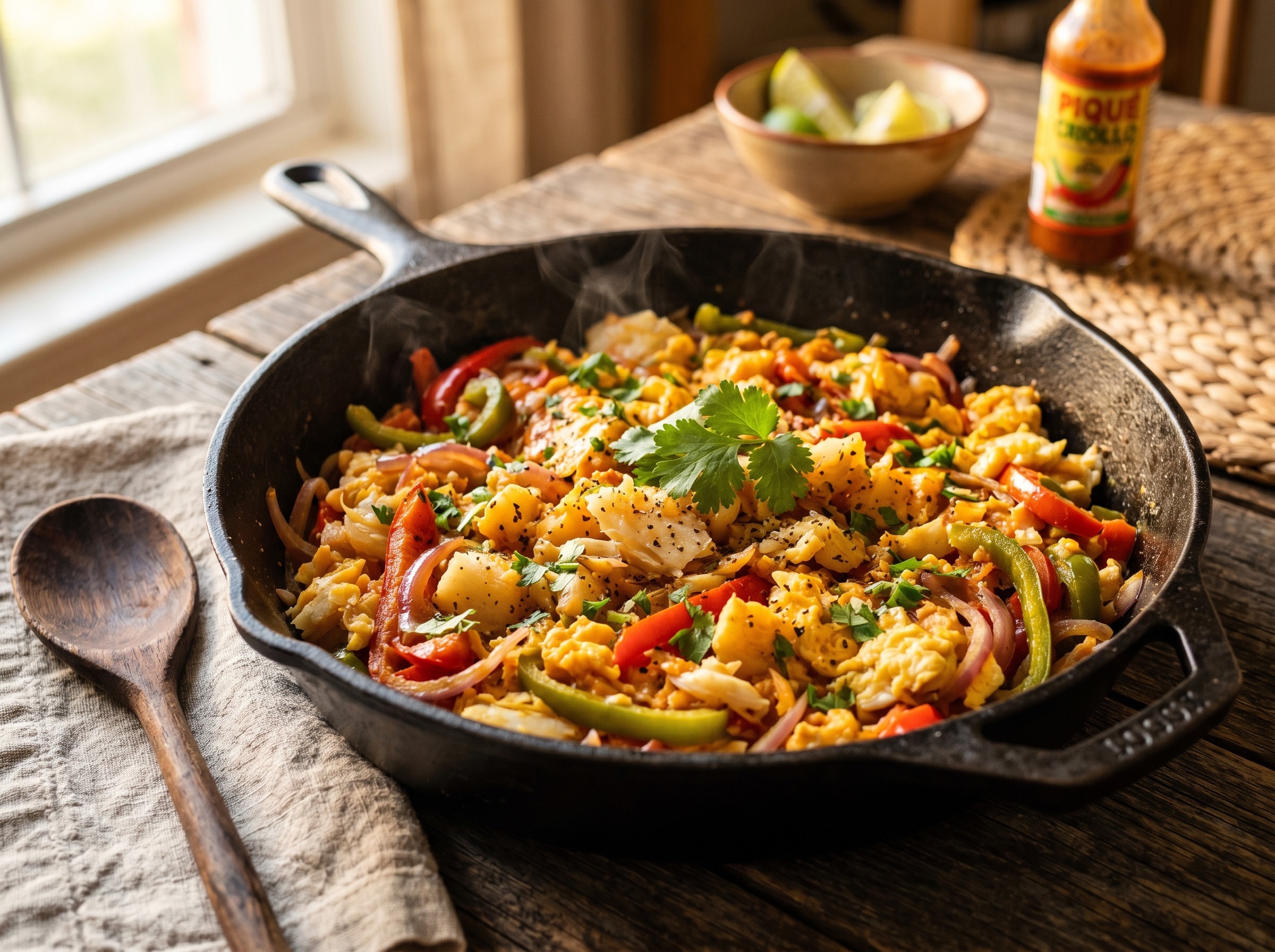
- Cook in a wide skillet. You want room to fold the eggs without breaking them into a million pieces. Cast iron or a heavy nonstick both work great.
- Finish with acid. A small squeeze of lime at the very end brightens everything. Try it once — you will never go back.
Common Variations
- Bacalao Guisado: Skip the eggs and simmer the cod in a light tomato sauce with the same aromatics. Serve over rice.
- Bacalao con Papas: Add cubed boiled potatoes along with the cod for a heartier version that eats almost like a hash.
- Bacalao con Plátano: Fold in boiled, mashed green plantains at the end for a rustic campo-style plate.
- Spicy version: Add a sliced ají caballero or a little scotch bonnet with the aromatics if your table likes heat.
Storage and Reheating
Leftovers hold up surprisingly well. Store bacalao con huevos in an airtight container in the refrigerator for up to 3 days. To reheat, warm gently in a skillet over low heat with a small splash of olive oil — a minute or two is all it takes. Microwaving works in a pinch, but the eggs can get rubbery, so go in short bursts and stop while it is still warm rather than piping hot.
I do not recommend freezing this dish — the eggs lose their texture after freezing. If you know you are going to want leftovers for the week, cook only the cod-and-aromatics base, freeze that portion, and add freshly scrambled eggs the day you serve it.
Frequently Asked Questions
Can I use fresh cod instead of salt cod?
You can, but it will not be the same dish. Salt cod has a distinctive firm, flaky texture and a briny depth that fresh cod just does not have. If you do substitute fresh cod, season it generously with salt and let it sit for 30 minutes before cooking to pull some of that flavor forward. Expect a lighter, less intense result.
What if I forgot to soak the bacalao overnight?
You have two emergency options. One: soak it in hot tap water, changing the water every 20 minutes for at least 2 hours — not ideal, but it works. Two: after a short cold-water soak of any length, boil the cod for 5–8 minutes in a pot of fresh water, drain, and repeat with a second pot of fresh water for another 5 minutes. This rapid-desalting trick is a known home cook's workaround. Always taste before you cook with it.
Is bacalao con huevos served hot or at room temperature?
Best hot, straight from the skillet. As it cools, the achiote oil starts to solidify and the eggs firm up. If you need to hold it, keep it covered and warm on the lowest stove setting.
Can I double this recipe for a crowd?
Absolutely. Soak double the bacalao, and either cook in a very large skillet or split between two pans. The only trick is the eggs — it is easier to scramble the eggs in smaller batches so they stay tender. Fold half the eggs into half the bacalao, then repeat.
Why is my dish too salty?
The soak was not long enough, or you did not change the water often enough. You can partially rescue an over-salty batch by stirring in a few cooked diced potatoes or a little extra scrambled egg and serving it on a generous pile of unsalted rice. Next time, soak longer and change the water 3–4 times.
A Little Cultural Note
Salt cod has a long and slightly strange history in Caribbean food. It is not a native fish — cod does not swim in warm Caribbean waters — but it became a staple across the region because salted, dried fish kept indefinitely and could travel from northern Atlantic fishing ports to tropical ports without spoiling. Colonial-era trade routes brought enormous quantities of bacalao to the Caribbean, and over generations Dominicans (like Puerto Ricans, Cubans, and countless others) made it their own.
Today, bacalao sits comfortably in the pantry right next to rice, beans, and achiote — a shelf-stable, protein-rich, deeply flavorful ingredient that turns into an entire meal in half an hour. Every Dominican family has their own version of bacalao con huevos. Some cooks add tomatoes. Some add olives and capers (a Spanish influence). Some keep it minimal, just cod, onion, and eggs. This recipe represents the most common casero version you will find in home kitchens across the island — flavored with peppers, garlic, adobo, and achiote, finished with cilantro, and served with whatever starch is already on the stove.
You May Also Like
Watch the full cooking process step by step in my video below, and if you love Dominican seafood and classic comfort recipes, these are the ones to try next:
- Pescado con Coco — Samaná Fish in Coconut
- Camarones Guisados — Dominican Shrimp Stew
- Dominican Mangú — Mashed Green Plantains
- Los Tres Golpes — The Dominican Breakfast
- Wasakaka — Dominican Garlic Sauce
Looking for even more? Browse all of my Dominican recipes here.
Made this Dominican Bacalao con Huevos? Leave a star rating and a comment below — I love hearing how the dishes turned out in your kitchen. And if you have a family variation of your own, drop it in the comments so the rest of us can try it too.
Kitchen Tools Used in This Recipe
As an Amazon Associate I earn from qualifying purchases.


Leave a Reply