
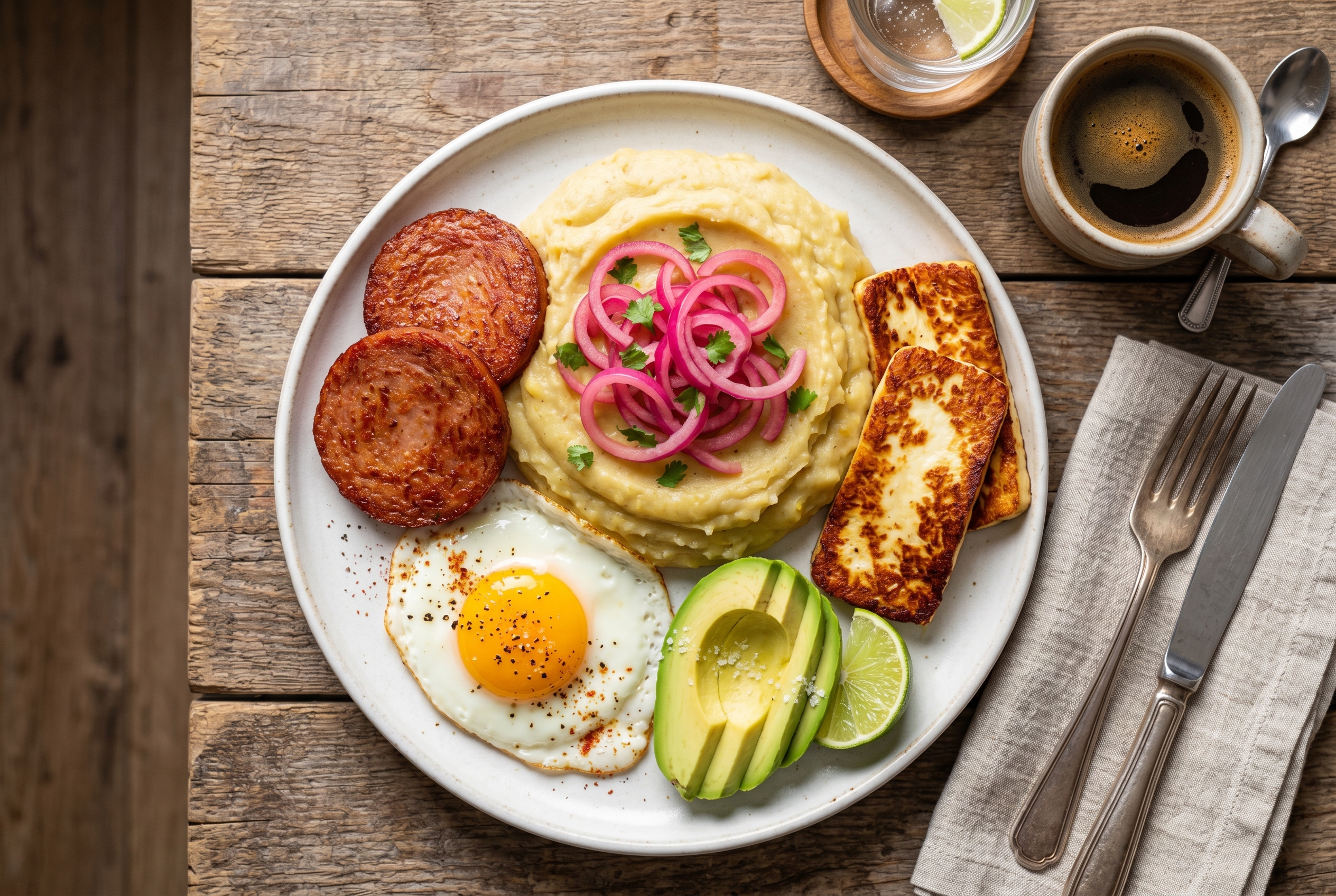
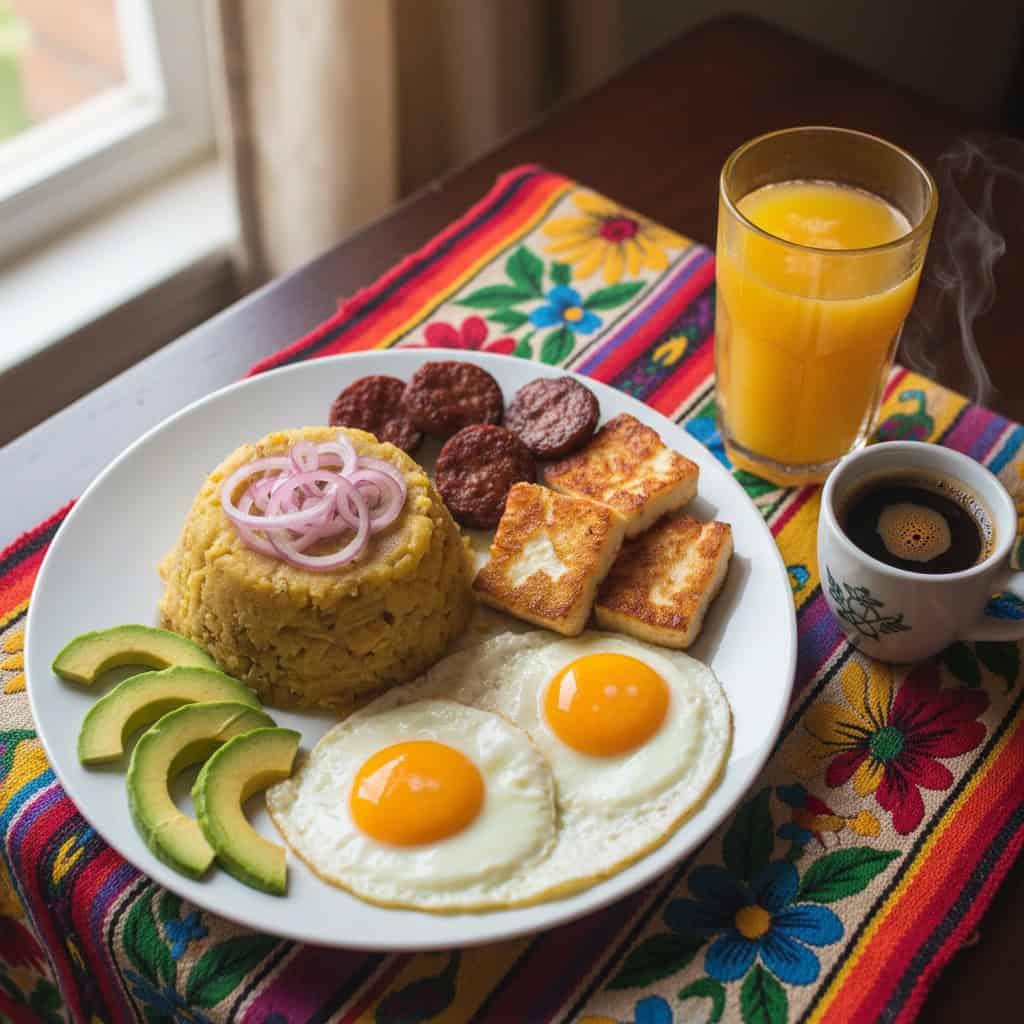
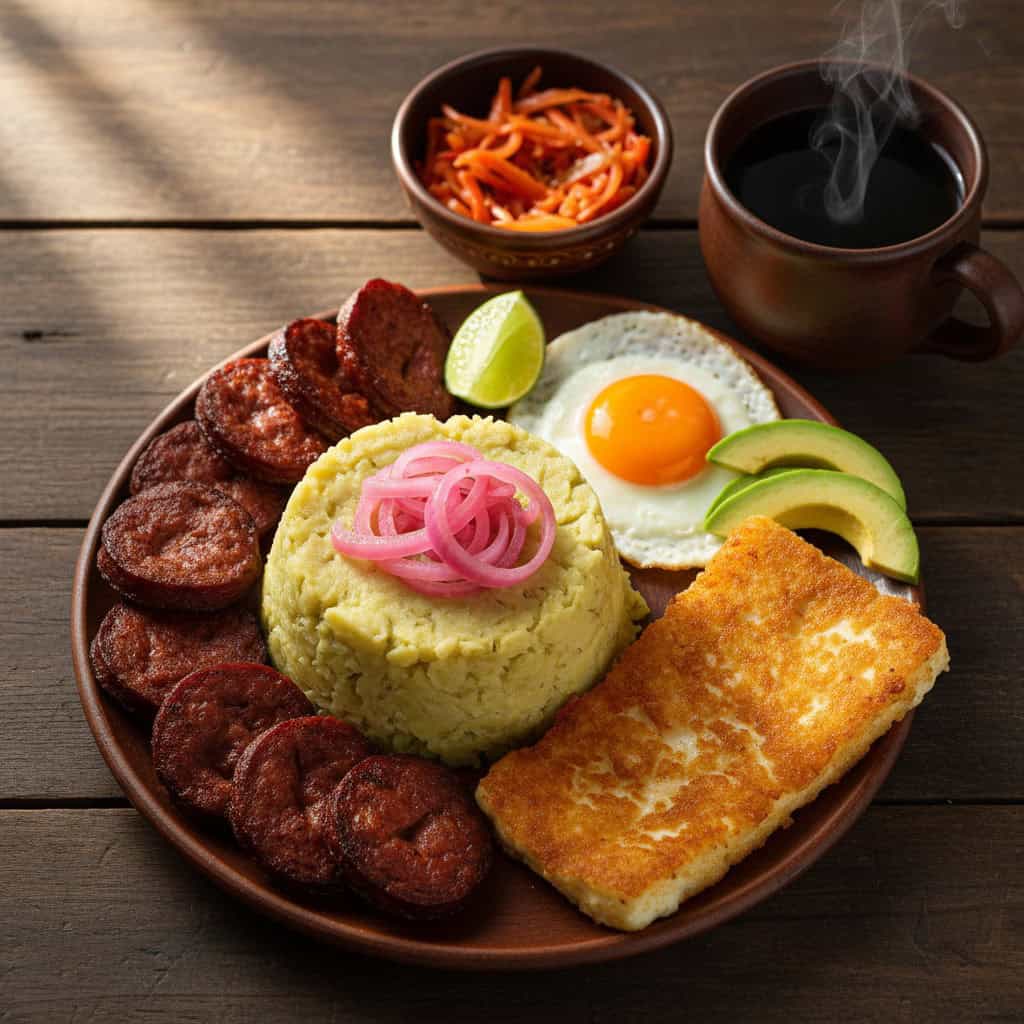
Los tres golpes is the most Dominican breakfast that exists. "The three hits" — mangú topped with pickled red onion, queso frito on the side, salami frito next to that, and a fried egg crowning the plate. It's what Dominican families eat on Saturday and Sunday mornings. It's what you order at every Dominican diner. It's what my mom made when my cousins came to stay the weekend, with everyone standing around the stove waiting for the plantains to mash.
"Tres golpes" literally means "three hits" — the three components being queso frito, salami frito, and huevo frito. The mangú is the base; the three fried elements are the golpes. Some Dominicans argue about whether it should be called tres or cuatro golpes if the egg counts, but everyone agrees on the plate. Put a sliced avocado on the side and you've got the full setup.
Today I'm walking you through the whole thing end-to-end — how to time it so everything hits the plate hot, how to pickle the onion so it curls instead of bites, and how to get the mangú silky instead of gluey. This is Dominican breakfast at its peak. Once you make it, you'll understand why we call it the national plate.
Why You'll Love This Los Tres Golpes Recipe
- The most complete Dominican breakfast: Starch, protein, dairy, egg — nothing else needed. You won't be hungry until dinner.
- Everything cooks in 25 minutes: Once you know the timing, the mangú, salami, cheese, and eggs all come together in parallel.
- Impresses Dominican and non-Dominican guests alike: If you've only ever served American pancakes at brunch, this plate will change that forever.
- Uses ingredients you can actually find: Green plantains, Dominican salami (or substitute), queso de freír, eggs, onion. No obscure hunts.
- Forever a weekend tradition: Make it once and it becomes part of your Saturday morning DNA. Trust me on this.
What Is Los Tres Golpes?
Los tres golpes is the iconic Dominican breakfast plate: a mound of mangú (mashed boiled green plantains finished with olive oil and topped with pickled red onions) accompanied by three fried components — queso frito (fried Dominican cheese), salami frito (fried Dominican salami), and huevo frito (fried egg). Aguacate (sliced avocado) is often served alongside. It's the most recognizable breakfast in the Dominican Republic, found in every home kitchen, every comedor, every beachside spot, and every Dominican diner in New York City.
The dish's DNA is all Dominican. The mangú base comes from African culinary tradition — boiled starchy vegetables mashed smooth, which African cooks brought to the Caribbean during the colonial era. Green plantains became the Dominican variant. The salami component reflects the large Italian immigrant influence on Dominican charcuterie in the early 1900s, which produced the distinctive Dominican salami (brands like Induveca and Higüero). Queso de freír evolved as Dominican cooks perfected a firm white cheese that could be sliced and fried without melting. Pull them all together and you get a plate that's completely Caribbean and completely Dominican.
The name "tres golpes" tells you how Dominicans think about food. The mangú is the foundation; the three fried elements hit you one after another, each bite a different flavor and texture. The salty-rich salami, the squeaky-chewy cheese, the runny-yolked egg — all resting beside soft mashed plantains with bright, vinegary pickled onions to cut through everything. It's engineering as much as cooking. Every component plays its role.
Ingredients You'll Need
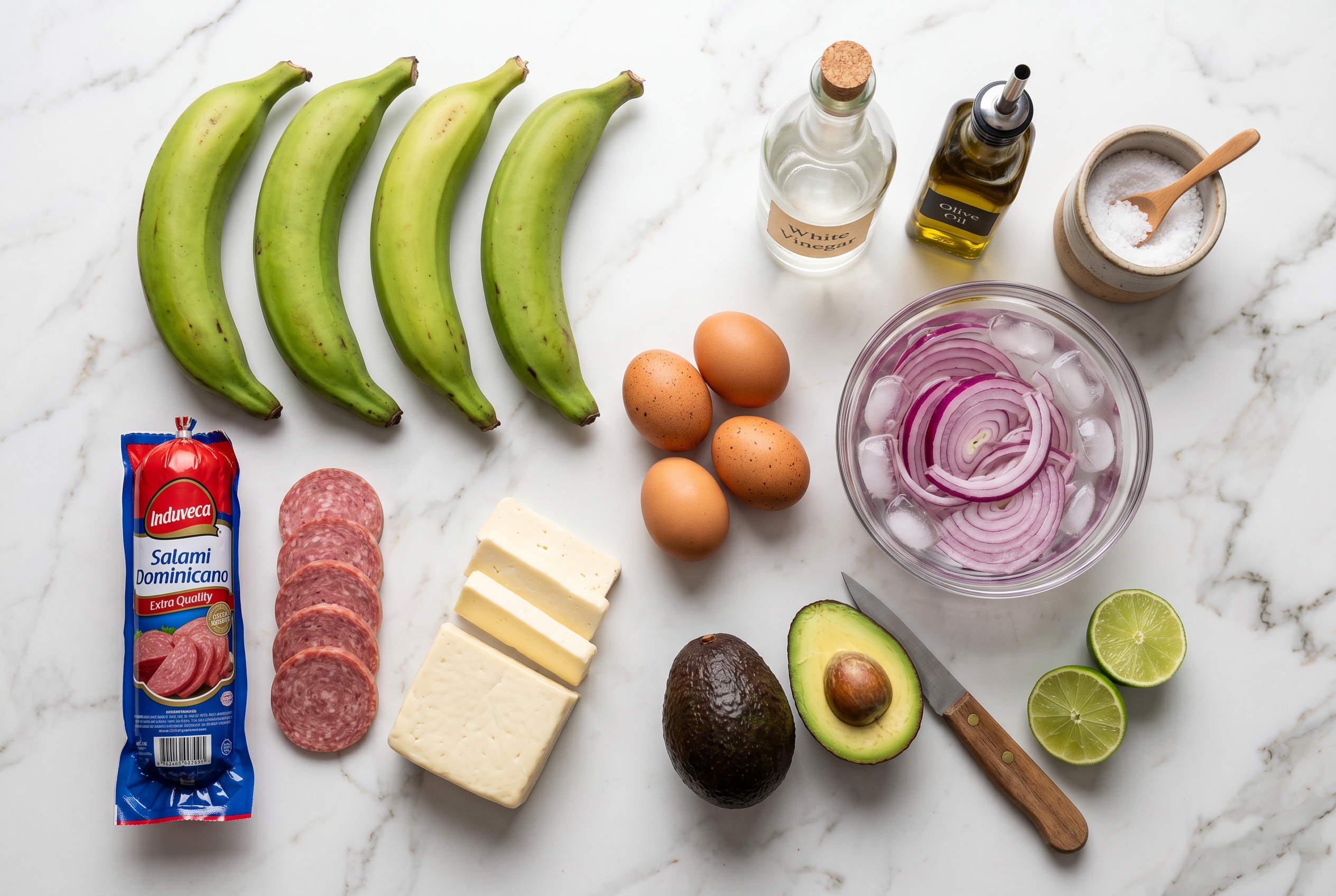
- 4 green plantains, peeled and cut into chunks
- 1 teaspoon salt (for boiling plantains)
- 3 tablespoon olive oil (for mangú)
- 8 oz Dominican salami (Induveca, Higüero, or similar), thick-sliced
- 8 oz queso de freír, thick-sliced into 4-5 pieces
- 4 large eggs
- 1 large red onion, thinly sliced
- 2 tablespoon white vinegar
- ½ teaspoon salt (for pickled onion)
- Ice water, enough to cover onion slices
- Vegetable oil, for frying cheese and eggs
- 1 lime, optional (for the avocado)
- 1 avocado, optional, sliced
Equipment: A large pot for boiling plantains, a potato masher or big fork, a large non-stick skillet, and a small bowl for pickling onions.
6 Things to Know Before You Make Tres Golpes
- Use queso de freír specifically: Not queso blanco (which melts), not halloumi (which is the closest sub but not identical). Dominican queso de freír holds its shape and develops golden crispy edges when fried. Look for it at any Latin grocery.
- Dominican salami is non-negotiable: American salami is too dry and seasoned differently. Genoa, summer sausage — also wrong. Induveca and Higüero are the classic brands. Most Latin grocers carry one or the other.
- Pickle the onion first, then start cooking: The onions need 5 minutes in ice water with vinegar. Start them before you boil the plantains so they're ready when everything else hits the plate.
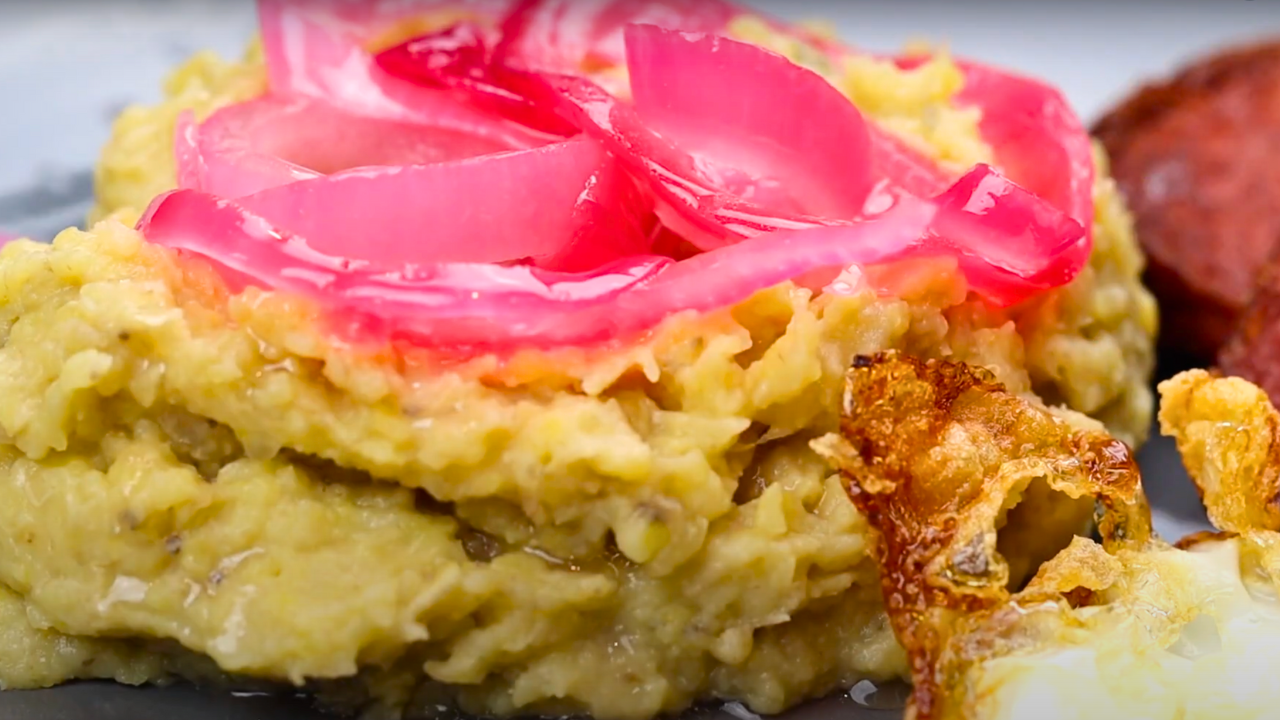
- Mash the plantains HOT: Room-temp or cold plantains turn gluey when mashed. You have a narrow window — mash them the moment they come out of the water. Learn more in my mangú recipe.
- Cook the components in parallel: Once the plantains are on the stove, start the salami and cheese. Fry the eggs last so they're hot when served. Timing is everything.
- Serve on a warm plate: Dominican breakfast eats fast, and cold mangú is a crime. Warm your plates in a low oven while you cook — makes the whole experience better. Pairs great with a cup of Dominican coffee or a glass of morir soñando.
Step-by-Step Instructions
Step 1 — Pickle the Onions
Thinly slice 1 large red onion. Drop the slices into a bowl of ice water. Add 2 tablespoon white vinegar and ½ teaspoon salt. Stir once and set aside for at least 5 minutes (up to 30 minutes). The ice water curls the onions and the vinegar takes the bite out. This step is non-negotiable for authentic Dominican mangú.
Step 2 — Boil the Plantains
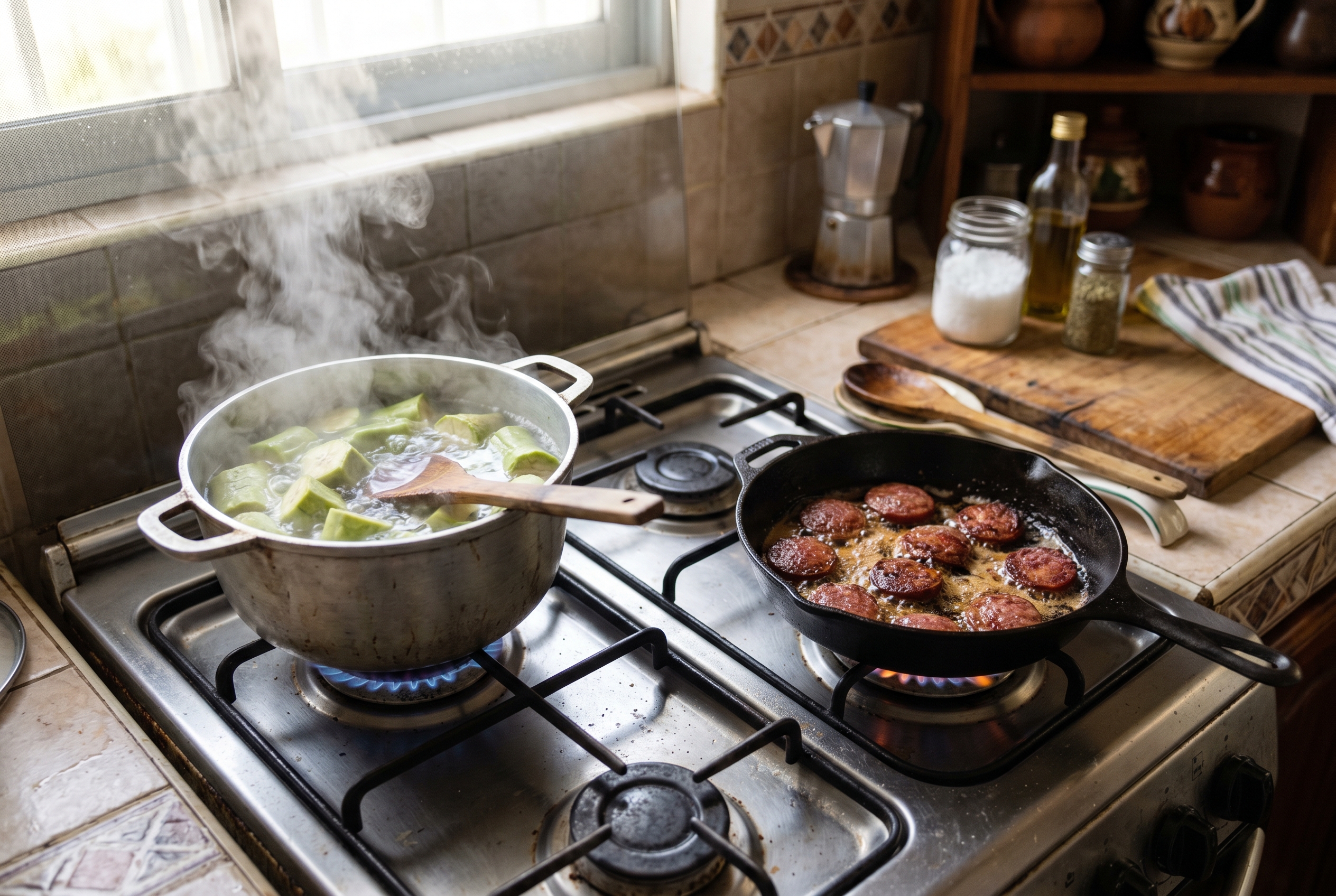
Peel 4 green plantains and cut into 2-inch chunks. Place in a large pot, cover with water, add 1 teaspoon salt, and bring to a boil. Reduce to medium and cook for 20 minutes until very tender when pierced with a fork. Don't under-boil — hard plantains don't mash smooth.
Step 3 — Fry the Salami
While the plantains boil, heat a large non-stick skillet over medium. Add the thick salami slices in a single layer — no oil needed, the salami releases its own fat. Cook 2-3 minutes per side until the edges are crispy and the slices are browned. Transfer to a paper-towel-lined plate. Keep the rendered fat in the skillet.
Step 4 — Fry the Queso
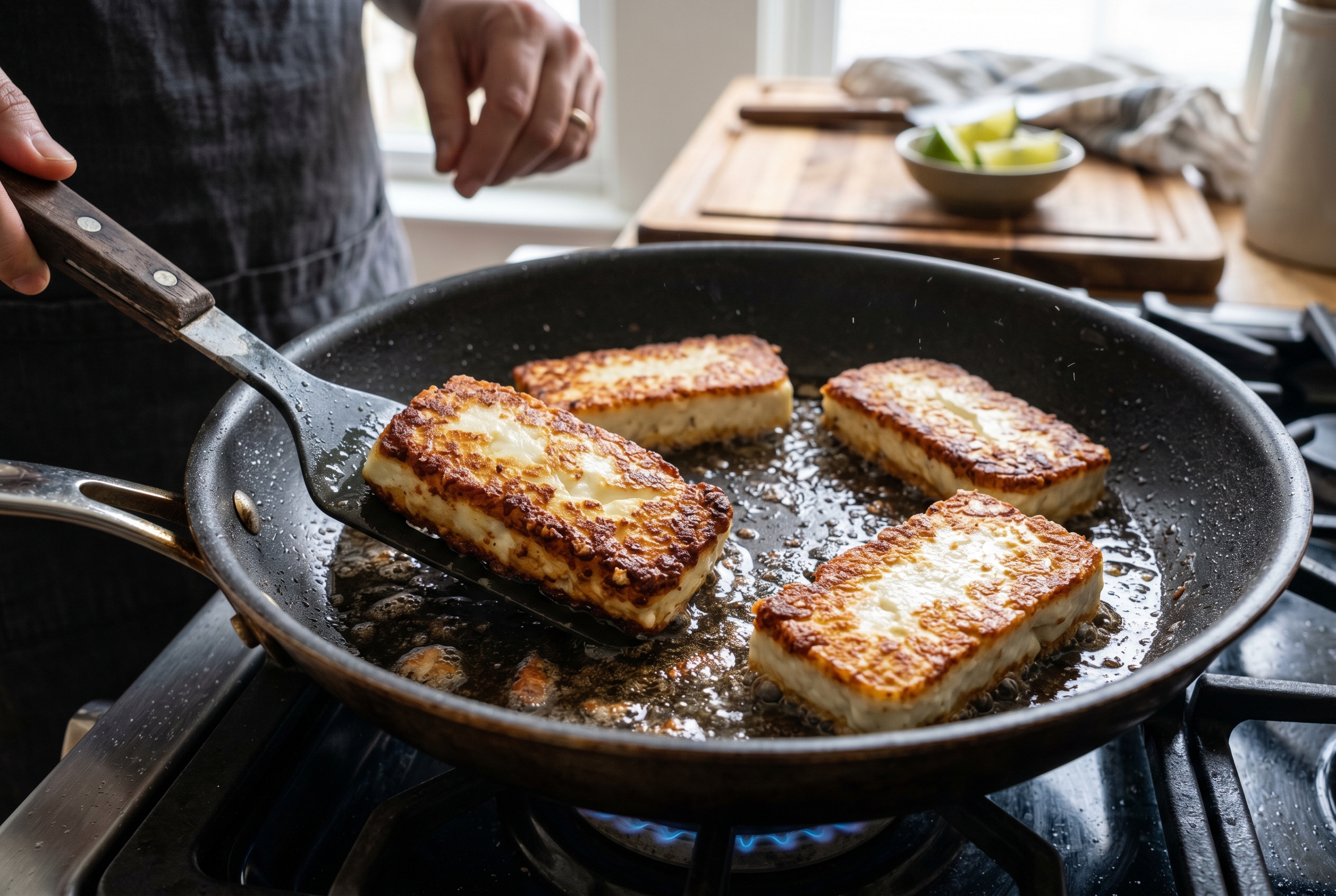
In the same skillet (with the salami fat), add the queso de freír slices in a single layer. Cook 60-90 seconds per side until each slice is deep golden and has crispy edges. The cheese won't melt — it firms up and browns. Transfer to the same paper-towel-lined plate. Keep the skillet going.
Step 5 — Mash the Plantains and Fry the Eggs
Drain the plantains, reserving ½ cup of the cooking liquid. Immediately transfer the HOT plantains to a large bowl. Mash with a potato masher or big fork, adding 3 tablespoon of olive oil and splashes of the reserved liquid until smooth and silky — about the consistency of mashed potatoes but a touch looser. Salt to taste. Cover to keep warm. Meanwhile, crack 4 eggs into the still-hot skillet and fry sunny-side up (or over easy) — 2-3 minutes, lid on for the last minute to set the whites.
Step 6 — Plate and Serve
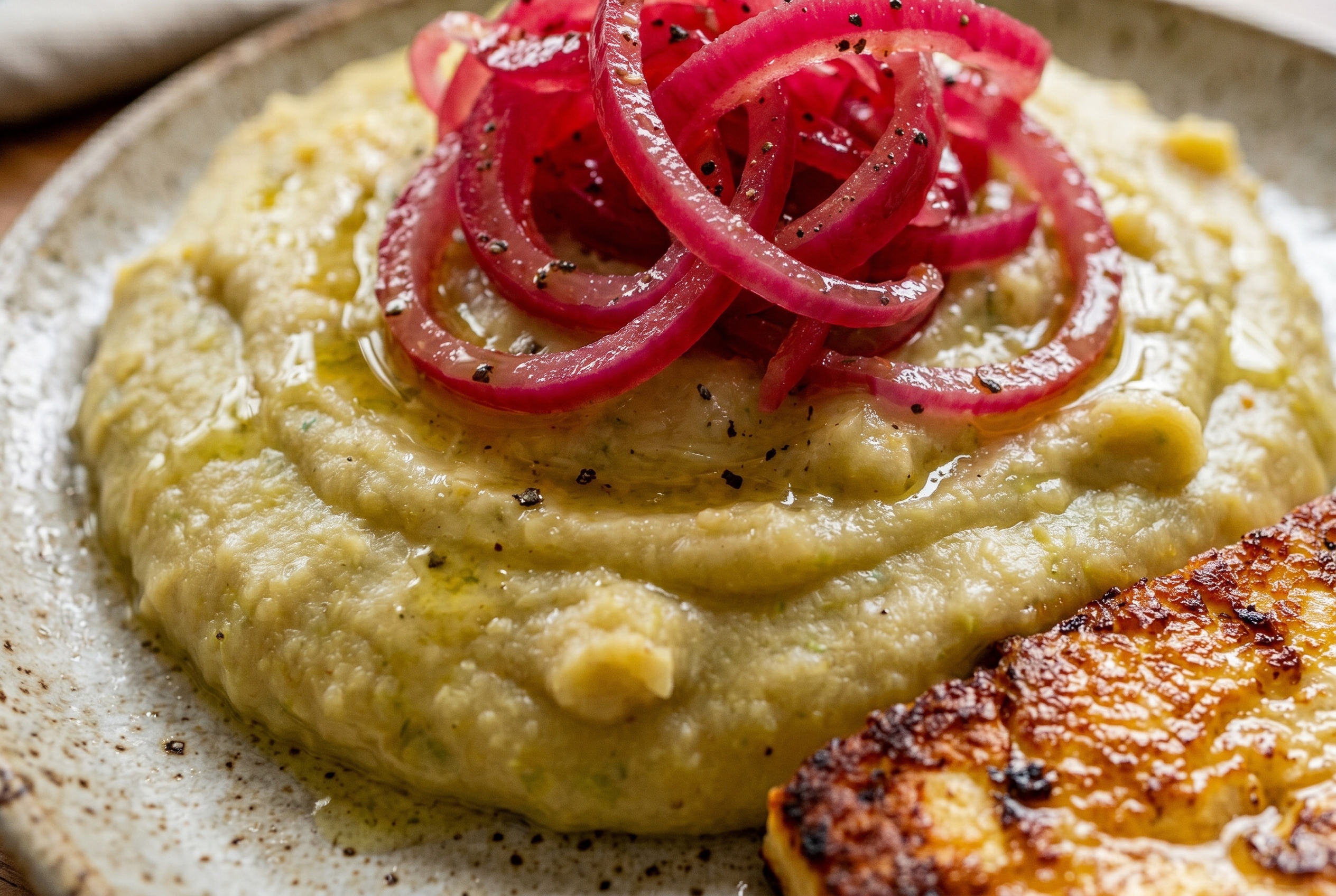
On each warm plate, mound a generous scoop of mangú. Drain the pickled onions and pile them on top of the mangú. Arrange slices of queso frito and salami frito on the side. Top with the fried egg — or place it beside the mangú. Add avocado slices if using. Serve immediately while everything is hot.
Pro Tips for Perfect Tres Golpes
- Thick-slice the cheese and salami: At least ½ inch thick. Thin slices cook through too fast and dry out. Thick slices give you a crispy exterior and a tender interior.
- Don't skip the mangú reserved liquid: Splashes of the plantain cooking water are what make Dominican mangú silky. Water alone works in a pinch — milk does NOT belong in traditional Dominican mangú (that's a Mexican/Colombian technique).
- Salami before cheese in the same pan: The salami fat flavors the cheese. Don't wipe the pan between them. That's the secret to authentic Dominican breakfast flavor.
- Warm the plates: Pop them in a 200°F oven for 10 minutes while you cook. Cold ceramic sucks heat out of the food instantly. Warm plates keep the mangú and eggs hot all the way through breakfast.
- Make extra pickled onions: They keep a week in the fridge in their liquid and are excellent on sandwiches, tacos, and grilled meats. Always worth making a double batch.
Variations
Cuatro Golpes (with Avocado)
Add sliced ripe avocado to the plate and some people call it cuatro golpes. Works great with a squeeze of lime and a sprinkle of salt on the avocado. Especially good during the Dominican avocado season (August-October) when the fruit is at peak flavor.
Swap Salami for Longaniza
Dominican longaniza (pork sausage) is the traditional substitute when salami isn't on the menu. Slice it thick, fry the same way, and serve. Slightly richer and more intensely seasoned than salami. Common in the Cibao region.
With Chicharrón
Some Dominican households use crispy chicharrón de cerdo (fried pork rinds / pork belly) in place of the salami. Same spirit — a crispy, fatty, salty component alongside the mangú. Especially popular in the countryside.
What to Serve With Los Tres Golpes
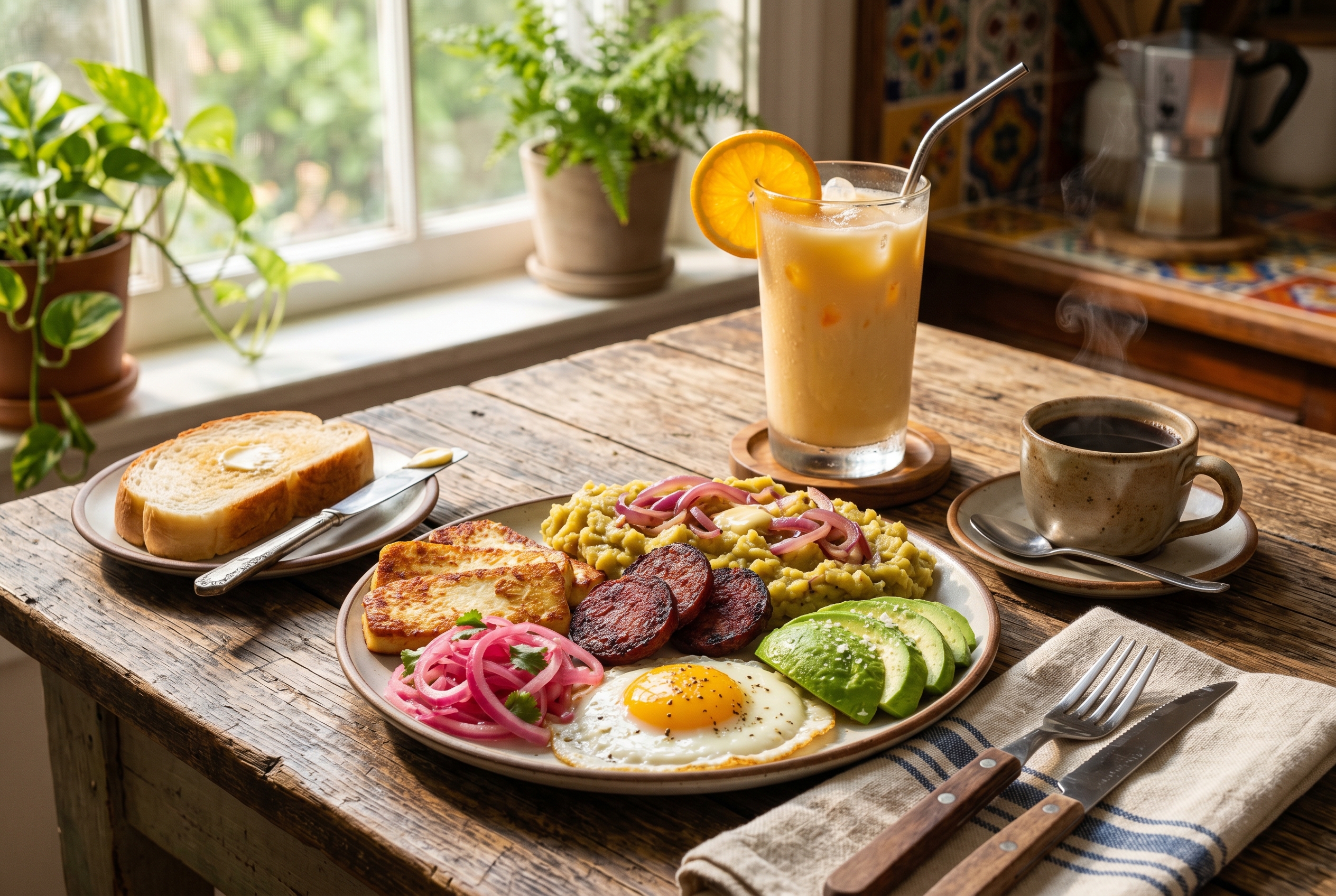
- Dominican black coffee: Strong, sweet, small cup. The classic pairing — cuts through the richness of everything on the plate.
- Morir soñando: Orange juice and milk shaken with ice and sugar. Dominican-only beverage, killer breakfast pairing.
- Pan de agua: A slice of Dominican bread on the side for soaking up the fried egg yolk.
- Mangú on its own: If you want to try just the base, the mangú deep dive is on my site.
- Sliced avocado: Add it to make it cuatro golpes. Always welcome.
Frequently Asked Questions
What does "los tres golpes" mean?
Literally "the three hits" in Spanish. Refers to the three fried components — queso frito, salami frito, and huevo frito — that accompany the mangú base. Each "hit" is a different flavor and texture. Some argue it's really cuatro golpes (four hits) when you count the egg, but tres golpes is the name everyone uses.
Can I use regular salami?
Not really — it's a different product. Dominican salami (Induveca, Higüero) is softer, juicier, and mildly spiced. American salami is too dry and intensely cured. If you truly cannot find Dominican salami, longaniza or a soft chorizo is closer than American deli salami. Any Latin grocery will have Dominican salami.
What's queso de freír exactly?
A firm, white, salted cheese designed to be fried. It holds its shape and browns instead of melting. Similar in function to halloumi or paneer. Brands like Tropical and La Chona are common in the US. Check the Latin cheese section at any grocery in a Latino neighborhood. See my queso frito recipe for the full breakdown.
Can I make the mangú ahead?
Not recommended — mangú turns gluey and pasty when it cools and gets microwaved. The magic of mangú is the texture right after mashing hot plantains. If you must prep ahead, boil the plantains ahead and mash them right before serving. Keep plantain cooking liquid in a jar to rewet if needed.
Do I really need to pickle the onions?
Yes. The pickled onion is what Dominicans call "cebolla encurtida" — it provides the acidic punch that cuts through the starch and richness of everything else on the plate. Raw onion is too sharp and aggressive. Without them, it's not authentic tres golpes.
Can I use ripe (yellow) plantains?
No. Ripe plantains are sweet and too soft for mangú. Green plantains are starchy and firm, which is exactly what you want. If your plantains have yellow patches, they're already too ripe for mangú — save them for maduros or tostones instead.
How do I know when the plantains are done?
A fork should slide into the thickest plantain chunk with zero resistance — like butter. If there's any firmness in the center, cook 5 more minutes. Undercooked plantains produce lumpy, fibrous mangú no matter how hard you mash. Overcooked is almost impossible — keep boiling until they're really tender.
What if I don't have red onion?
White or yellow onion works. Red onion is traditional for its color and sharper flavor, but the pickling step neutralizes most of the sharpness anyway. Red onion looks prettier on a white mound of mangú — that's the main reason Dominicans default to it.
Do Dominicans eat this every day?
No — it's a weekend breakfast, not a daily one. Weekdays tend to be lighter (coffee and bread, maybe mangú alone). Tres golpes is a Saturday/Sunday occasion, or a special breakfast when family or visitors are in town. It's celebratory food.
Is tres golpes the same as mangú?
Related but different. Mangú is just the mashed plantain component (topped with pickled onion). Tres golpes is the full plate: mangú PLUS the three fried sides. You can eat mangú on its own as a lighter breakfast — it's only tres golpes when the cheese, salami, and egg are all on the plate.
Los Tres Golpes (Dominican Breakfast)
Ingredients
Method
- Pickle onion: slice thinly, soak in ice water with vinegar and salt 5 min.
- Boil peeled plantain chunks in salted water 20 min until very tender.

- Fry salami slices in dry skillet medium heat 2-3 min per side until crispy-edged. Transfer to paper towel.
- In same skillet with salami fat, fry queso slices 60-90 sec per side until golden.
- Drain plantains reserving ½ cup liquid. Mash HOT with olive oil and splashes of reserved liquid until silky. Fry eggs in same skillet 2-3 min sunny side up.
- Plate: mound of mangú topped with drained pickled onions, queso frito and salami frito on the side, fried egg on top. Add avocado if using. Serve hot.
Nutrition
Notes
Tried this recipe?
Let us know how it was!Shop This Recipe
View on Amazon →
View on Amazon →
View on Amazon →
As an Amazon Associate I earn from qualifying purchases at no extra cost to you.
Make this Saturday. Serve with Dominican coffee. Watch everyone stop talking.
You May Also Like
📺 Watch a similar recipe: Dominican Mangú — The 3-Ingredient Breakfast
- Bistec Encebollado — Dominican Steak and Onions in 30 Minutes — Dominican thinly sliced steak smothered in caramelized onions cooked in the beef drippings.
- Sopa de Res Dominicana Recipe — Dominican bone-in beef soup simmered slow with yuca, auyama, corn, and yautía until.
- Dominican Tostones (Crispy Fried Plantains) — Crispy, salty, and impossible to stop eating — these Dominican Tostones are twice-fried.

Leave a Reply