
Pollo al horno dominicano is the Sunday centerpiece every Dominican kid grew up smelling from the hallway. Whole chicken, massaged with a paste of garlic, sour orange, oregano, and sazón, then roasted until the skin turns mahogany and crackles when you touch it. It's the dish my mom pulled out of the oven when primos were coming over, when there was something to celebrate, or when she just wanted Sunday to feel like Sunday. Simple ingredients, long marinade, high-temperature roast. That's the whole story.
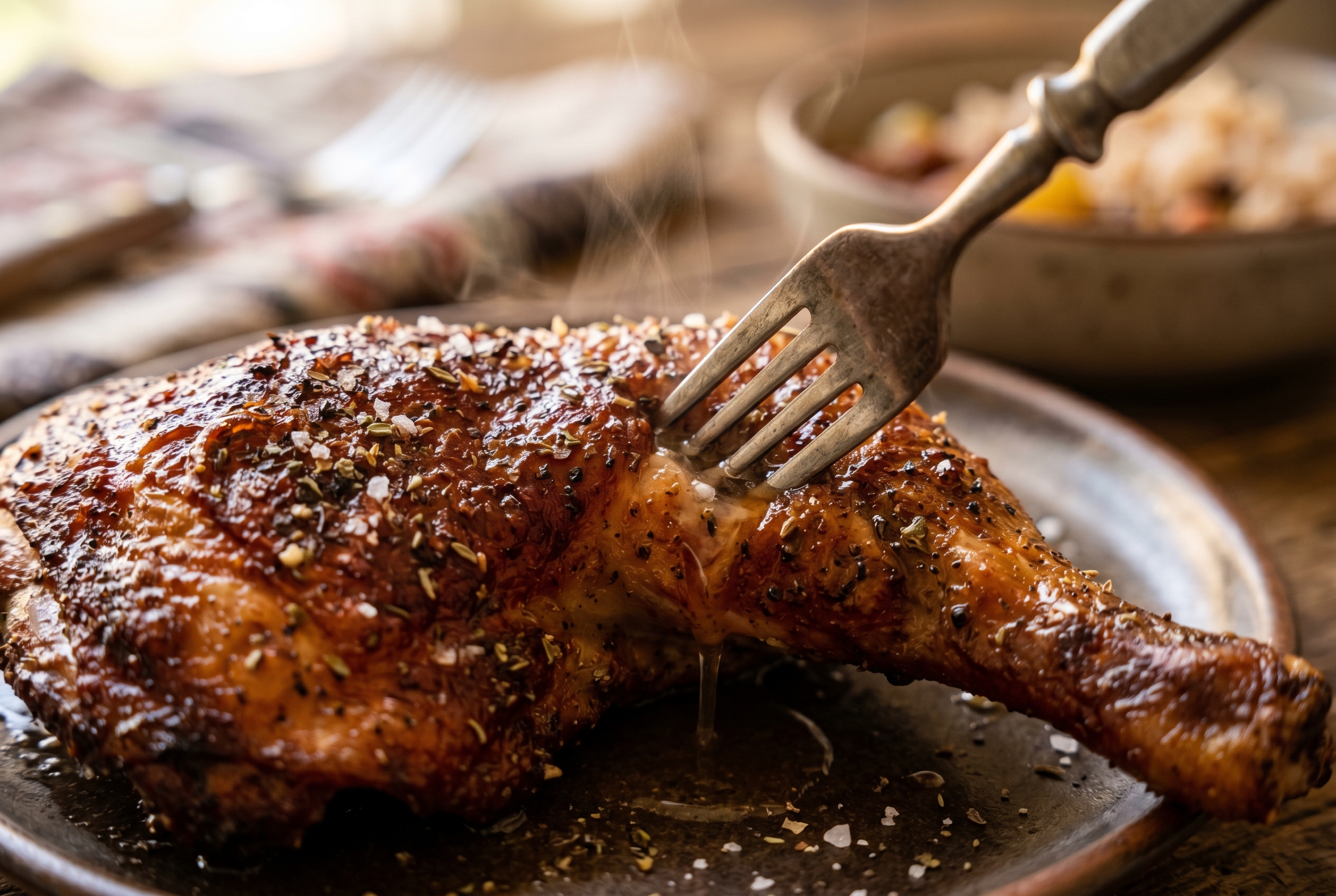
Growing up in Santo Domingo, the smell of this chicken roasting was the soundtrack to holidays. Noche Buena, Año Nuevo, cumpleaños, first communions — any time the family gathered around a long table, there was a golden pollo al horno sitting in the middle, next to a mountain of arroz blanco and a big bowl of ensalada verde. My grandma would stab the thigh with a fork, see the juices run clear, and announce "ya está" like a chef pulling a dish in a restaurant kitchen. That was the green light for everyone to sit down.
This is the exact way my family makes it. No butter injections, no fancy brine. Just a real Dominican adobo paste, a long rest in the fridge, and a two-phase roast — high heat first to set the skin, then lower heat to cook the bird through without drying it out. The sour orange is the detail most gringo recipes get wrong. Don't skip it.
Craving the same oven-baked, Dominican-seasoned technique on pork instead of chicken? These juicy oven baked pork chops are the natural companion recipe.
Why You'll Love This Pollo al Horno Recipe
- Crispy golden skin, juicy meat: The two-temperature roast technique locks in moisture while crisping the skin like a Dominican rotisserie chicken.
- Authentic Dominican adobo: Sour orange, garlic, oregano, sazón — the exact marinade my mom uses in Santo Domingo, no Americanized substitutions.
- Sunday dinner made simple: Once the marinade is on, the oven does the work. Perfect for entertaining or lazy Sundays.
- Holiday centerpiece: This is Noche Buena and Año Nuevo food in Dominican households. One chicken feeds six easily.
- Pairs with everything: Arroz blanco, ensalada, tostones, maduros — pollo al horno goes with every Dominican side dish in the repertoire.
What Is Pollo al Horno Dominicano?
Pollo al horno dominicano is a whole chicken marinated in Dominican-style adobo — a wet paste of mashed garlic, sour orange juice (naranja agria), dried oregano, salt, pepper, sazón, and olive oil — then roasted in the oven until the skin is deeply golden and the interior is juicy. The marinade is massaged under the skin and inside the cavity, left to penetrate for at least 4 hours (ideally overnight), and the bird is roasted at high heat first and then finished at moderate heat. The result is a chicken that tastes of citrus, garlic, and oregano from skin to bone.
"Al horno" simply means "from the oven" in Spanish, distinguishing this preparation from pollo guisado (stewed), pollo frito (fried), or pollo a la brasa (rotisserie). In Dominican cuisine, pollo al horno is the special-occasion version of chicken — the one you make when you have time to marinate overnight and sit-down time to carve. It's not a weeknight dish; it's a Sunday or holiday dish.
The defining ingredient is sour orange. Naranja agria is a small, bitter Caribbean citrus with a flavor somewhere between orange and lime, and it's what gives Dominican adobo its unmistakable tang. If you can't find sour oranges at a Latin grocery, the standard substitute is equal parts orange juice and lime juice. It's not identical, but it's close enough that your abuela might not notice — might.
Ingredients You'll Need
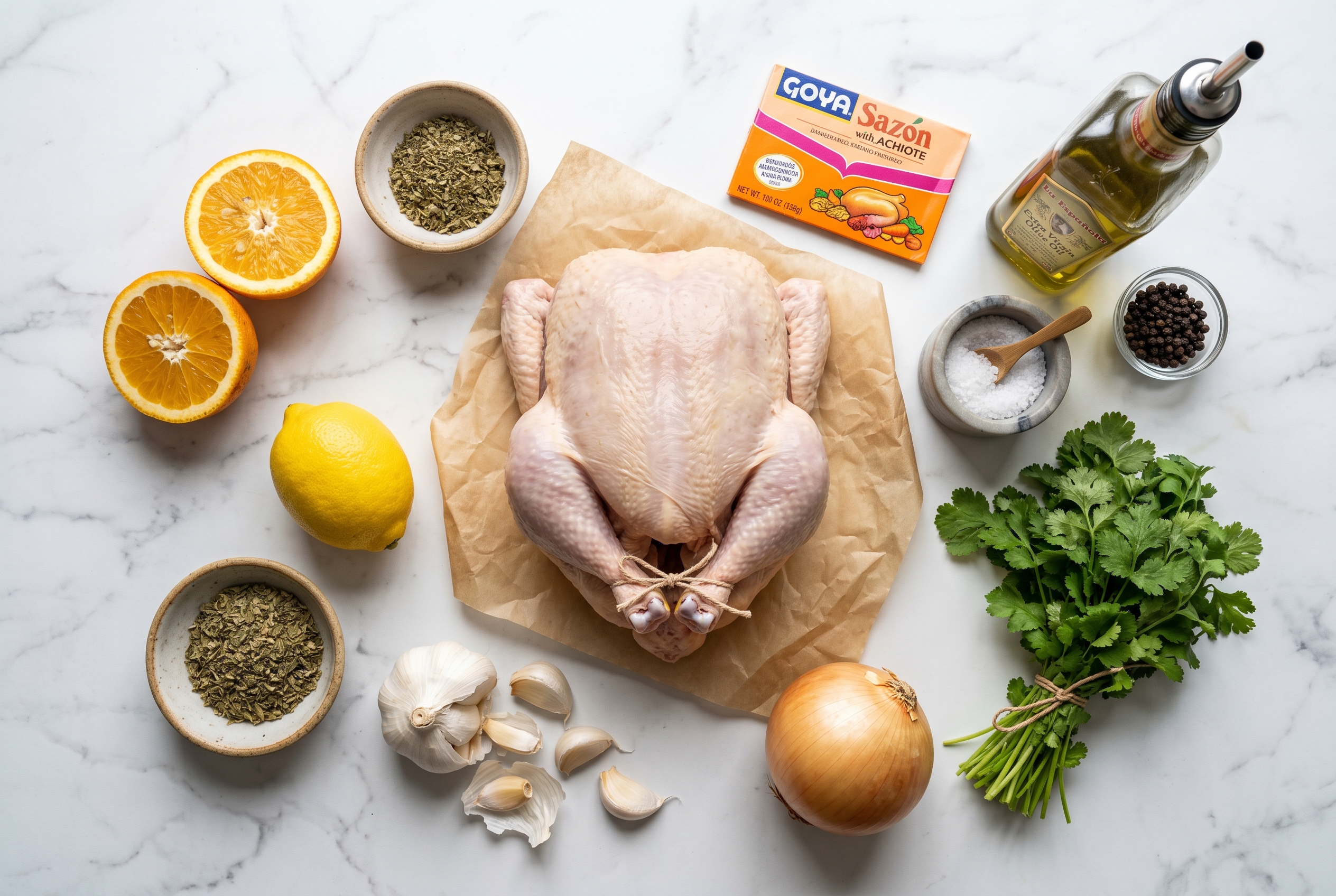
- 1 whole chicken, 4-5 lbs, giblets removed and patted dry
- ½ cup sour orange juice (or ¼ cup orange juice + ¼ cup lime juice)
- 8 garlic cloves, mashed into a paste
- 2 tablespoon dried Dominican oregano
- 2 teaspoon kosher salt (plus more for cavity)
- 1 tablespoon sazón with cilantro and achiote
- ¼ cup extra virgin olive oil
- 1 teaspoon black pepper, freshly ground
- 1 onion, quartered (for the cavity)
- 1 lemon, halved (for the cavity)
- A small bunch of fresh cilantro (for the cavity)
Equipment: A sturdy roasting pan with rack and a reliable meat thermometer. The thermometer is non-negotiable — guessing doneness by eye is how you end up with dry chicken or pink chicken.
7 Sides to Serve With Pollo al Horno
- Arroz blanco: The classic base — white rice with the roasting juices spooned over.
- Moro de habichuelas rojas: Red beans and rice cooked together. Holiday-level pairing.
- Ensalada verde: Simple lettuce-tomato salad with oil and vinegar — always on the Sunday table.
- Tostones: Crispy fried green plantains for texture contrast.
- Maduros: Sweet fried ripe plantains — the sugar-and-salt combo is unbeatable.
- Yuca con mojo: Boiled cassava with garlic mojo alongside the chicken.
- Pan de agua: For making Sunday-night leftover chicken sandwiches.
Step-by-Step Instructions
Step 1 — Make the Adobo Paste
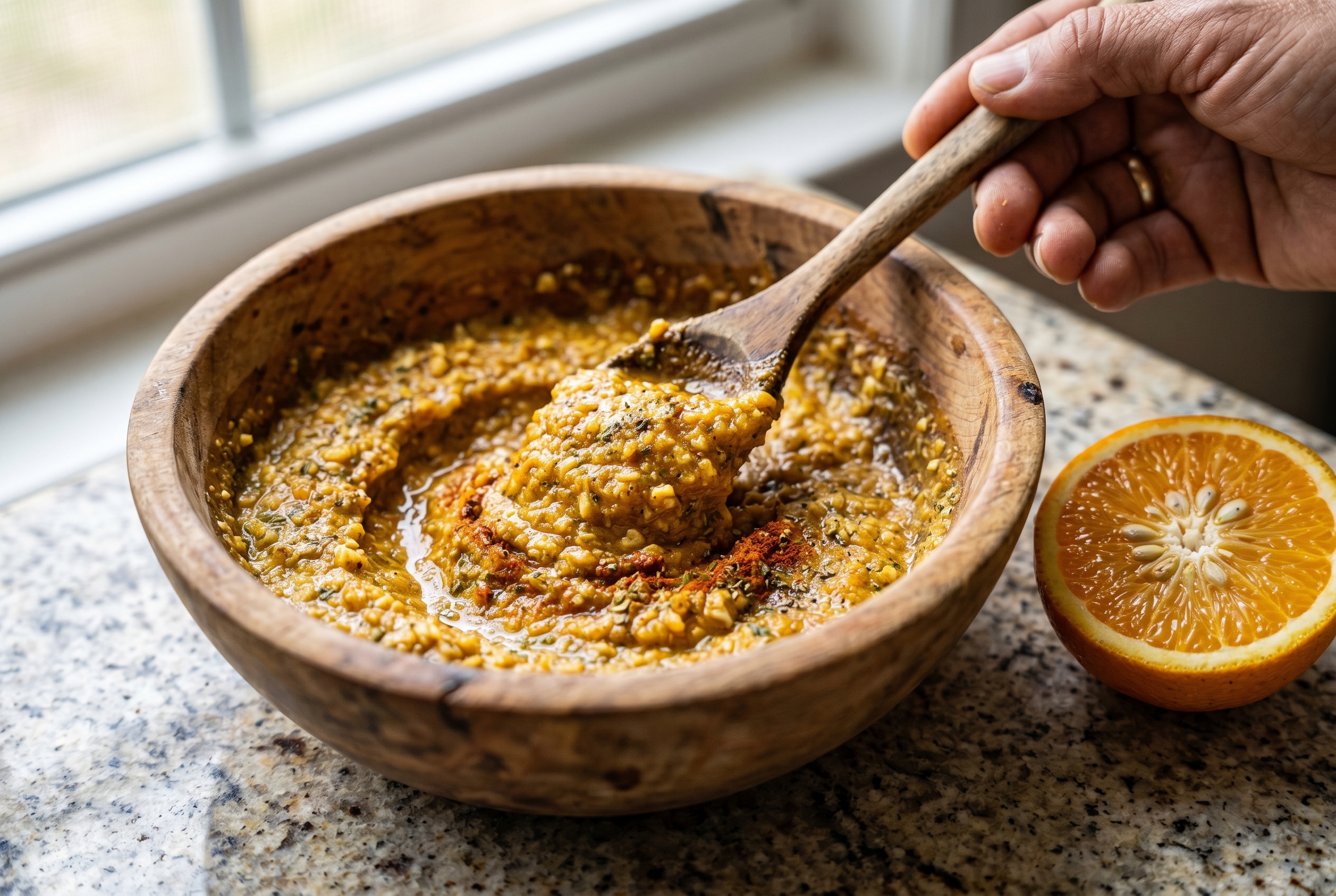
In a mortar and pestle (or food processor), mash 8 garlic cloves with 2 teaspoon salt until it forms a wet paste. Transfer to a bowl and whisk in the sour orange juice, oregano, sazón, olive oil, and black pepper. It should be thick like a loose pesto — pourable but not watery. This is the adobo.
Step 2 — Marinate the Chicken
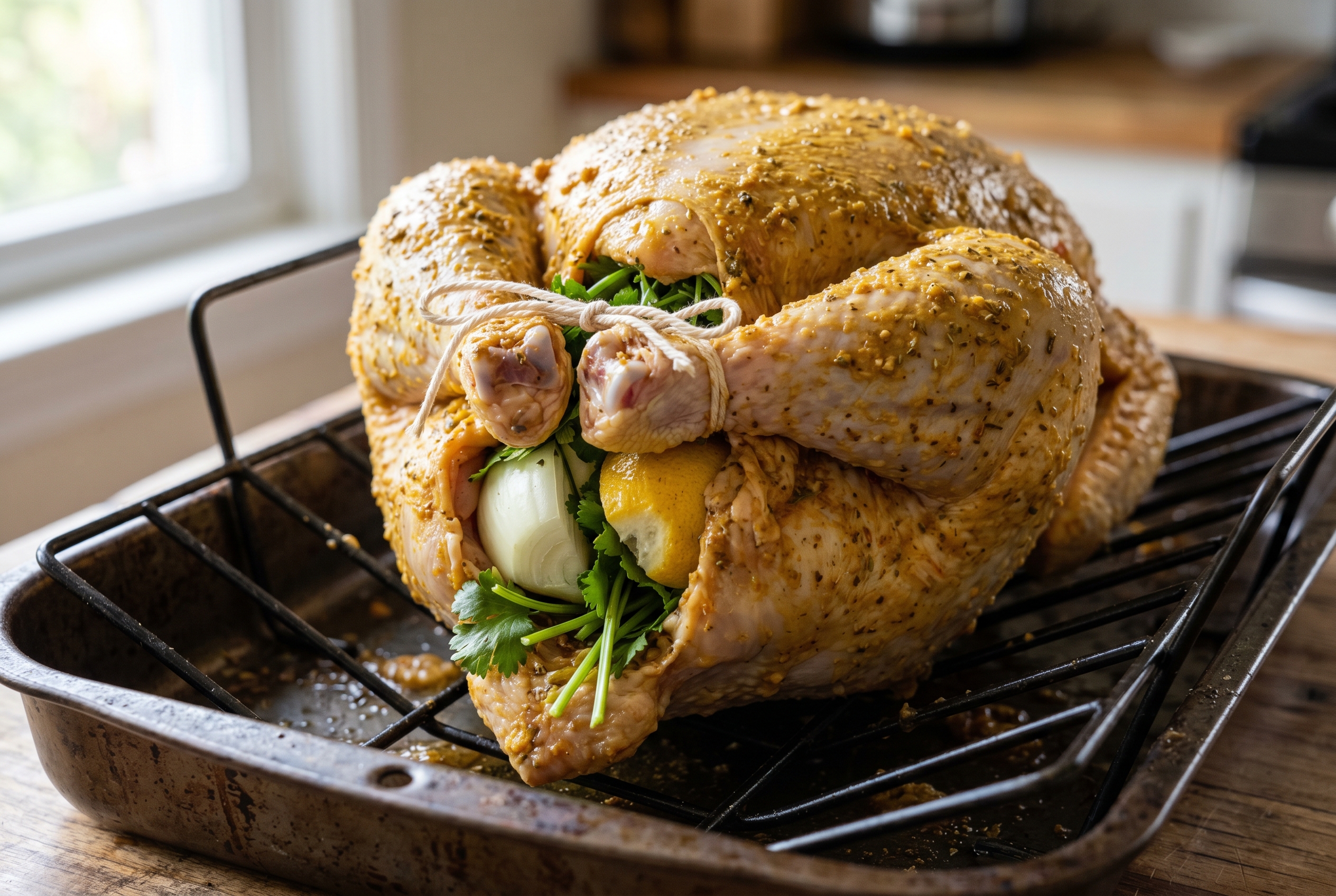
Pat the chicken completely dry with paper towels — inside and out. Using your fingers, gently loosen the skin over the breasts and thighs without tearing it. Rub the adobo paste directly onto the meat under the skin, then rub the rest all over the outside and inside the cavity. Place the chicken breast-up in a large dish, cover, and refrigerate 4-24 hours. Overnight is ideal.
Step 3 — Prep for the Oven
Take the chicken out of the fridge 45 minutes before roasting to bring it closer to room temperature (this promotes even cooking). Stuff the cavity with the quartered onion, halved lemon, and cilantro bunch. Tie the legs together with kitchen twine and tuck the wing tips under the body. Place breast-up on a rack set inside a roasting pan.
Step 4 — High-Heat Blast
Preheat the oven to 400°F. Slide the chicken in on the middle rack and roast for 30 minutes undisturbed. This first blast of high heat is what sets the skin — it blisters and tightens and starts turning golden. Don't open the oven during this phase.
Step 5 — Reduce Heat and Baste
After 30 minutes, reduce the oven to 375°F. Continue roasting for 60 more minutes, basting every 20 minutes with the juices that pool in the pan. If the breast is browning too fast, tent loosely with foil. The chicken is done when a thermometer inserted into the thickest part of the thigh (not touching bone) reads 165°F.
Step 6 — Rest and Carve
Transfer the chicken to a cutting board and tent loosely with foil. Rest for 15 minutes — this is critical. The juices redistribute and the meat stays moist. Don't skip it no matter how hungry everyone is. Carve into standard pieces (thighs, drumsticks, wings, breast halves), pour the pan drippings over the top, and serve immediately.
Pro Tips for Perfect Pollo al Horno
- Marinate overnight, not just for hours: 4 hours is the minimum for the sour orange and garlic to penetrate. 12-24 hours is where the magic happens. Plan ahead — start Saturday afternoon for Sunday lunch.
- Get the marinade under the skin: Rubbing adobo only on the outside means most of the flavor drips off while roasting. Loosen the skin with your fingers and massage the paste directly onto the breast and thigh meat. This is the single biggest flavor upgrade.
- Use a meat thermometer, always: 165°F at the thickest part of the thigh is doneness. Breast meat should hit 160°F (carryover will bring it to 165°F during rest). Poking and guessing costs you either dry meat or food poisoning — just buy the thermometer.
- Baste, but don't open the oven every 5 minutes: Every 20 minutes is plenty. Every time you open the oven door you drop the temperature 25°F and extend the cook time. Discipline yourself.
- Rest for 15 minutes, no negotiation: Cutting into hot chicken immediately means all the juices run out onto the cutting board instead of staying in the meat. Rest. Tent with foil. Patience is part of the recipe.
Variations
Pollo al Horno with Potatoes
Add 1.5 lbs of small yellow potatoes or halved red potatoes to the bottom of the roasting pan. They cook in the drippings and soak up all the adobo flavor. Salt them lightly, toss with a little oil, and arrange around the rack. Dominican one-pan Sunday dinner.
Spatchcocked Pollo al Horno
Remove the backbone with kitchen shears and flatten the chicken. Marinate the same way. Roast at 425°F for 45-55 minutes total, no temperature change needed. Cooks faster and the skin gets even crispier because all of it is exposed to the heat. My go-to for weeknight versions.
Pollo al Horno con Piña
Add 1 cup of fresh pineapple chunks and 2 tablespoon brown sugar to the marinade. The bromelain in the pineapple tenderizes the meat and adds a sweet-tropical undertone. Popular in Dominican beach towns and Christmas dinners.
What to Serve With Pollo al Horno
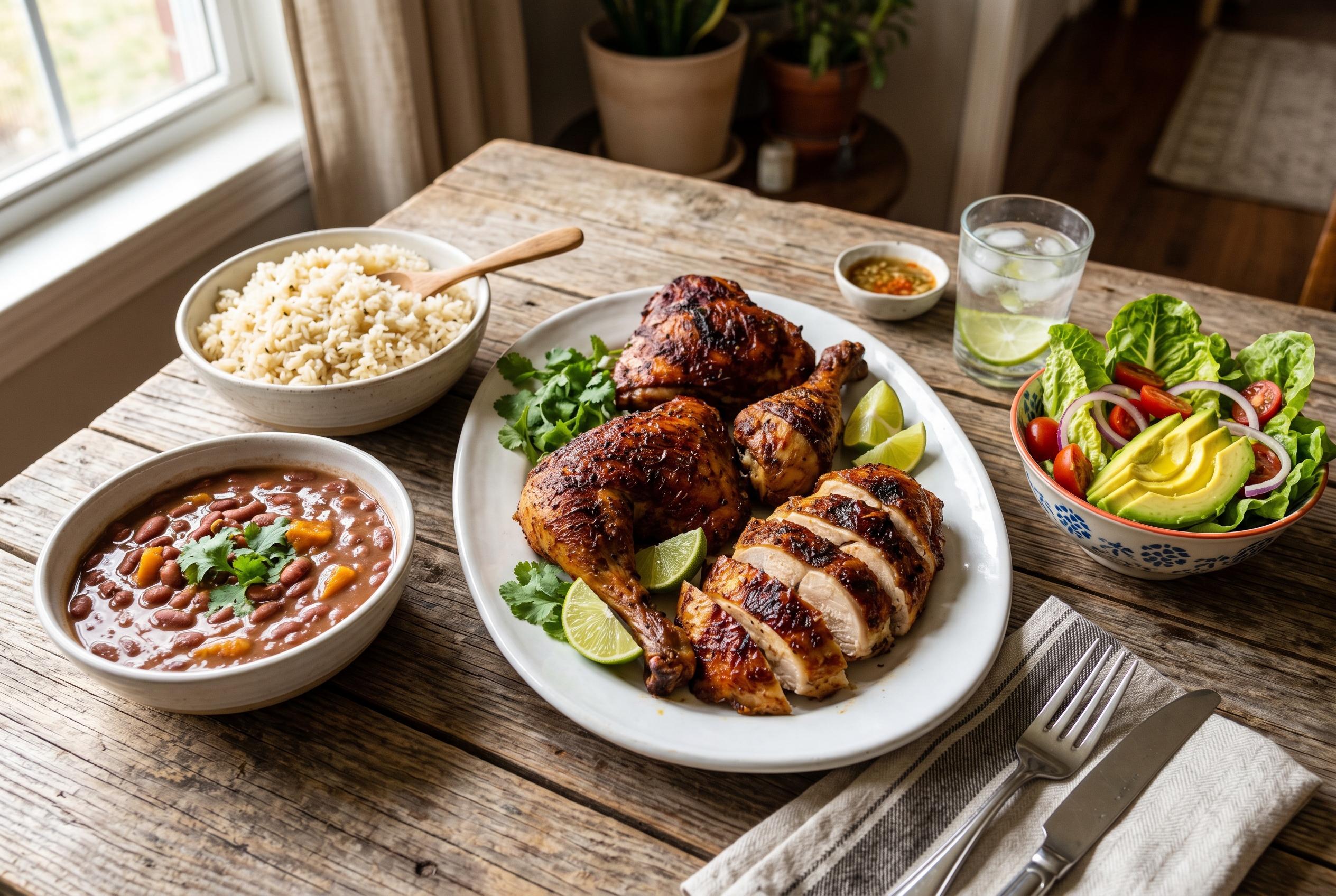
- Arroz blanco: Fluffy white rice with drippings spooned over.
- Moro de habichuelas rojas: Classic holiday pairing.
- Ensalada verde: Simple oil-and-vinegar green salad.
- Tostones: Crispy green plantains.
- Maduros: Sweet ripe plantains.
Frequently Asked Questions
How long should I marinate the chicken?
Minimum 4 hours, ideal 12-24 hours. Overnight in the fridge gives the sour orange and garlic time to fully penetrate the meat. Don't go past 36 hours — the citric acid can start breaking down the protein and turn the texture mushy. Dominicans finish a dinner like this with a little mamajuana drink — my recipe shows you exactly how to make it.
What if I don't have sour orange?
Substitute ¼ cup orange juice + ¼ cup lime juice. It's the standard Dominican substitute outside the island. The flavor is slightly less complex but still delivers the citrus tang the recipe needs.
How do I know when the chicken is done?
Use a meat thermometer inserted into the thickest part of the thigh (without touching the bone). It should read 165°F. The juices should also run clear, not pink, when you pierce the thigh joint. Visual cues alone are unreliable — trust the thermometer.
Can I roast a bigger chicken?
Yes — a 5-6 lb chicken works with this recipe. Add about 15 minutes of roasting time per extra pound. A 6-lb chicken will need roughly 1 hour 45 minutes total. Always confirm doneness with a thermometer, not a timer.
Why is my chicken skin not crispy?
Three usual culprits: (1) the chicken wasn't patted dry before marinating or roasting — moisture steams the skin instead of crisping it; (2) the oven temperature was too low during the initial 30 minutes; (3) the chicken was too cold going in. Pat dry, roast at 400°F first, let the bird come up to room temp for 45 minutes before roasting.
Can I make this in a convection oven?
Yes — convection is actually excellent for this recipe. Reduce the temperatures by 25°F (so 375°F high / 350°F finish) and cut the total time by about 15 minutes. Check with a thermometer starting at the 1-hour mark.
What's the best cut of whole chicken for this?
A 4-5 lb "roaster" chicken is the sweet spot — small enough to cook through without the breast drying out, big enough to feed 6. Look for air-chilled chicken if available; the skin crisps better than water-chilled birds.
Can I use this adobo on chicken pieces?
Absolutely — the adobo works for bone-in thighs, drumsticks, leg quarters, or even wings. Marinate 2-4 hours and roast at 400°F for 35-45 minutes depending on size. Adjust the adobo quantity — this recipe's marinade covers about 3-4 lbs of pieces.
Can I freeze leftovers?
Yes — pull the meat off the bone, store in airtight containers with some of the pan juices. Freezes well for up to 3 months. Great for shredded chicken sandwiches on pan de agua later in the week.
How is this different from Cuban roast chicken or Puerto Rican pollo asado?
All three are Caribbean Spanish roast chickens with sour orange marinades — they share the same colonial-era DNA. Cuban versions lean more heavily on cumin and sometimes add bay leaf. Puerto Rican pollo asado often uses sazón and sometimes recaíto. Dominican pollo al horno uses more oregano, less cumin, and frequently includes pimento-stuffed olives on the side. Close cousins, distinct flavors.
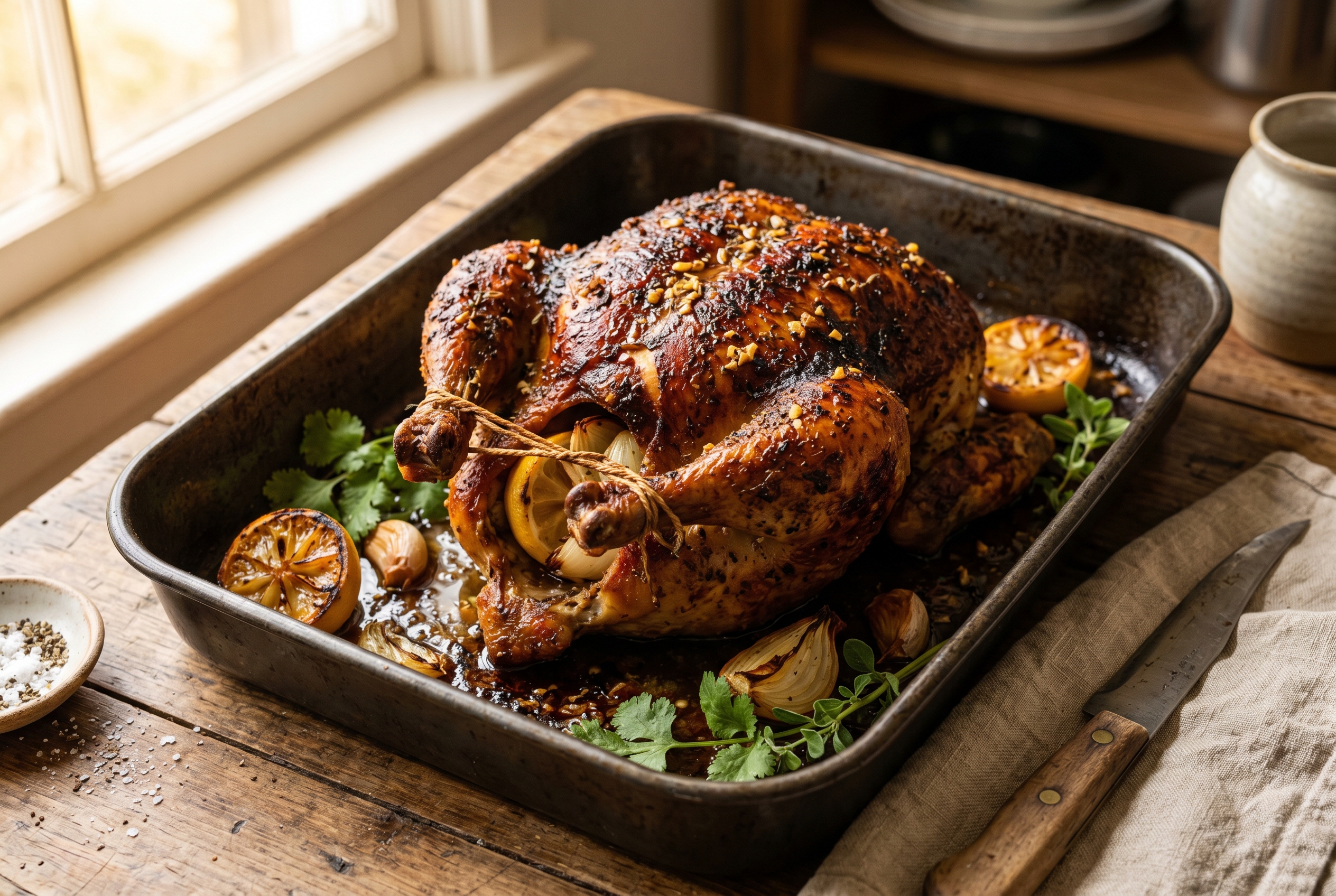
Pollo al Horno Dominicano (Dominican Roasted Chicken)
Ingredients
Method
- Mash garlic with salt to form a paste. Whisk with sour orange juice, oregano, sazón, olive oil, and black pepper to form adobo.

- Pat chicken completely dry. Loosen skin over breast and thighs. Rub adobo under skin and all over inside and outside. Cover and refrigerate 4-24 hours.
- Remove chicken from fridge 45 minutes before roasting. Stuff cavity with onion, lemon, and cilantro. Tie legs, tuck wing tips, set on rack in roasting pan.
- Preheat oven to 400°F. Roast chicken undisturbed for 30 minutes to set and crisp the skin.
- Reduce heat to 375°F. Continue roasting 60 more minutes, basting every 20 minutes. Chicken is done when thigh reaches 165°F.
- Transfer to cutting board, tent with foil, rest 15 minutes. Carve into pieces and serve with pan drippings.
Nutrition
Video
Notes
Tried this recipe?
Let us know how it was!Shop This Recipe
View on Amazon →
View on Amazon →
View on Amazon →
As an Amazon Associate I earn from qualifying purchases at no extra cost to you.
Marinate overnight. Roast on Sunday. Serve with arroz blanco and ensalada. That's how we do it.
Looking for more authentic Dominican dishes? Browse more authentic Dominican recipes — over 100 dishes from breakfast to dessert.
You May Also Like
📺 Watch a similar recipe: Caribbean Chicken Gizzard Escabeche
- Escabeche Recipe Chicken Gizzards in the Instant Pot
- Puerto Rican Chicken Gizzard Escabeche (Stovetop)
- Dominican Spaghetti con Pollo — Dominican espagueti con pollo — spaghetti braised directly in a rich, seasoned chicken.
Leave a Reply