
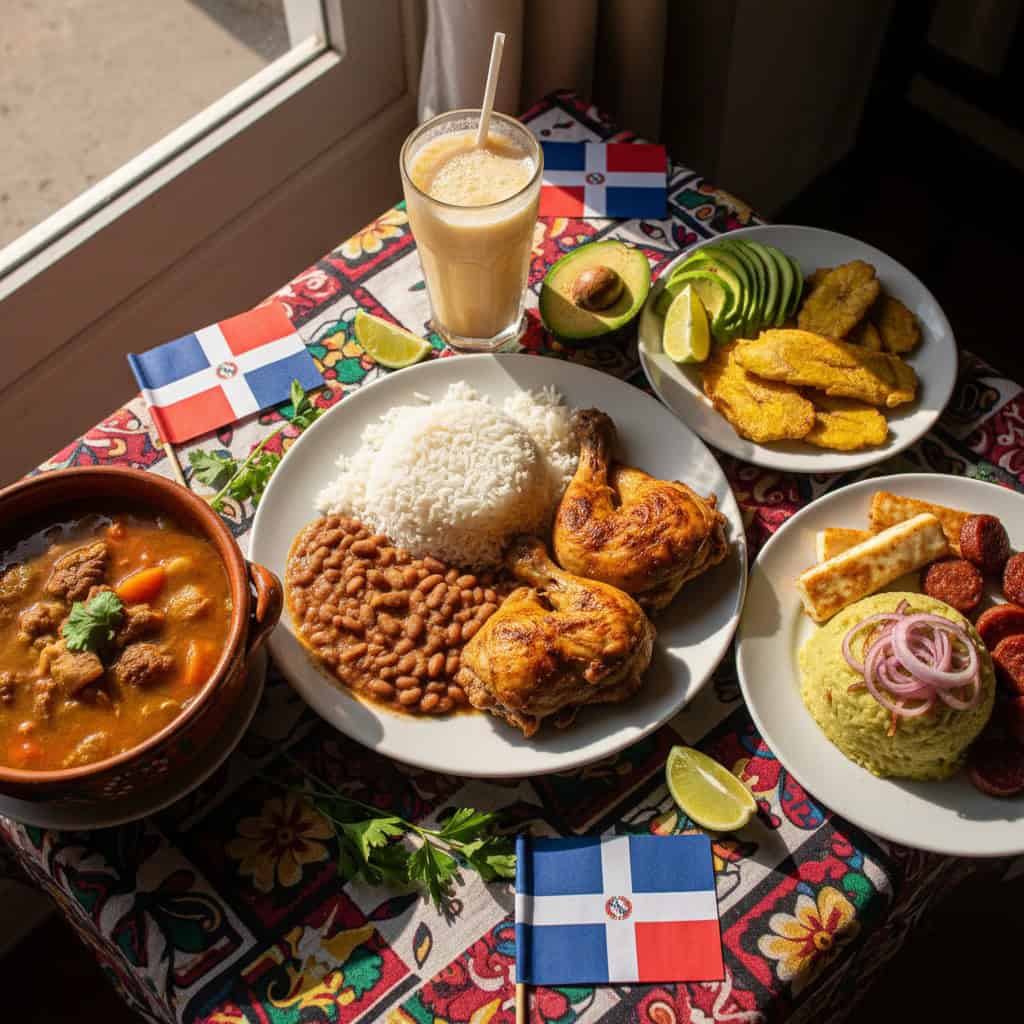
Dominican food is one of the world's great undiscovered cuisines. While Mexican, Italian, and Thai food have become household names in the United States, the food I grew up eating in Santo Domingo is still a mystery to most Americans. That's a tragedy — and I'm here to fix it.
This is your complete guide to Dominican cuisine. Every must-try dish, every cultural ritual, every regional difference, every essential ingredient. Whether you're planning a trip to the Dominican Republic, dating a Dominican partner who keeps mentioning sancocho, or just curious about the flavors of one of the Caribbean's most underrated food traditions — this guide covers everything.
Pull up a chair. We're going to take a virtual tour through every important Dominican dish, drink, and dessert. By the end, you'll know what to order, what to make at home, and why Dominicans put avocado on everything.
Why You'll Love This Dominican Food Recipe
- Complete cuisine overview: Every major Dominican dish, breakfast to dessert, in one guide.
- Cultural context: Understand the history and traditions behind the food.
- Direct recipe links: Click through to detailed recipes for any dish that catches your eye.
- Restaurant ordering guide: Know exactly what to order next time you visit a Dominican restaurant.
- Regional differences: How food varies from Santo Domingo to Santiago to the coast.
What Is Dominican Food?
Dominican cuisine is the food tradition of the Dominican Republic, the country that occupies the eastern two-thirds of the Caribbean island of Hispaniola. It blends three primary influences: indigenous Taíno cooking (which contributed root vegetables, corn, and certain fish dishes), Spanish colonial cuisine (the meat traditions, rice, beans, and dairy), and West African flavor profiles brought by enslaved Africans (the bold seasonings, sofrito-style aromatics, and slow stewing techniques).
What makes Dominican food distinct from other Caribbean cuisines? Several things. First, the heavy use of viandas (root vegetables) like yuca, yautía, ñame, and plantains as the starch base for many meals. Second, the centrality of la bandera dominicana — the daily lunch plate of rice, beans, and meat that is eaten across the country regardless of class or region. Third, the use of azúcar quemada (caramelized sugar) as a base for stews and rice dishes, giving them a distinctive dark, savory color that you don't see in Puerto Rican or Cuban cooking.
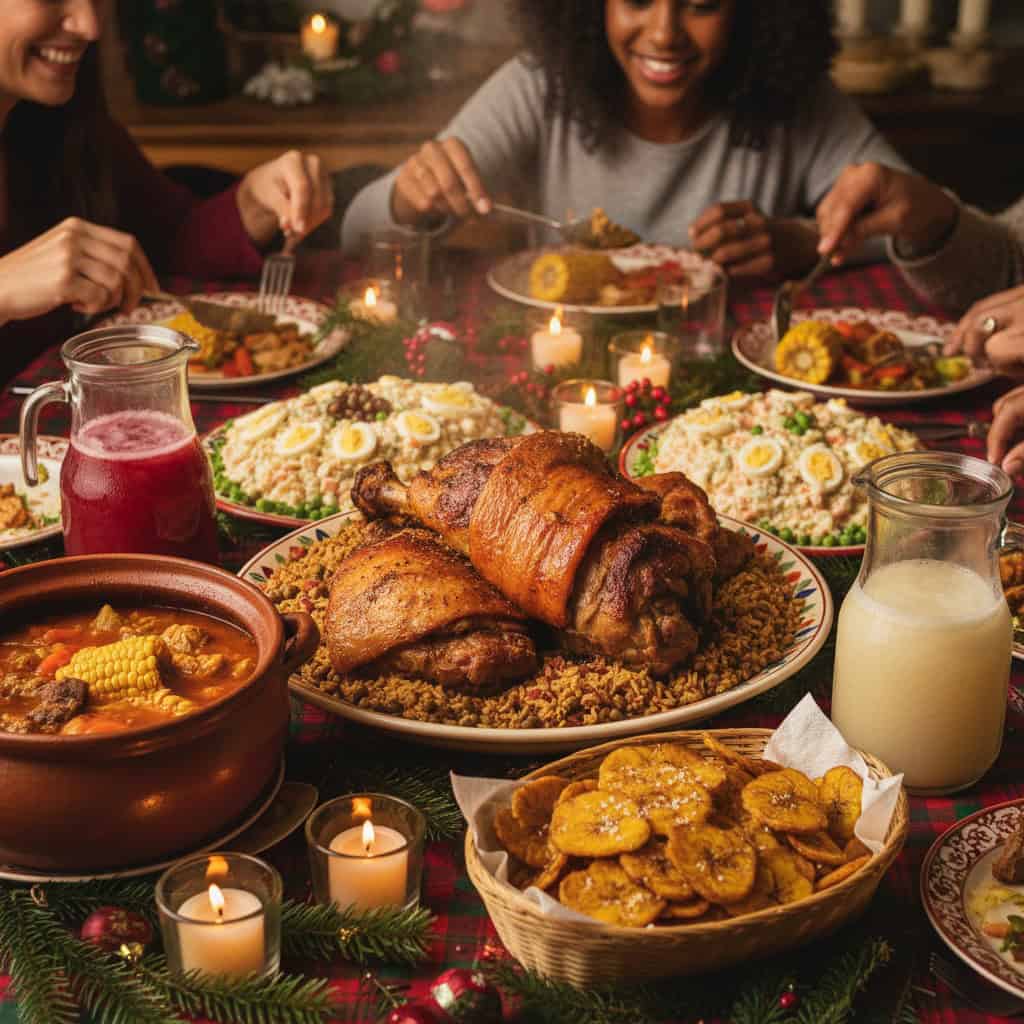
Dominican food is meal-centric and family-centric. Big lunches are the most important meal of the day. Sundays are reserved for slow-cooked dishes that take hours. Christmas Eve is the only night of the year that pernil and moro de gandules absolutely must appear on the table. Food is identity, memory, and the way Dominicans express love for each other.
Understanding Dominican food also requires understanding the rhythm of Dominican meals. Breakfast (desayuno) is hearty and traditional — plantains, eggs, salami, cheese, coffee. Lunch (almuerzo) is the largest meal of the day, eaten between 12:00-2:00 PM, almost always centered on la bandera dominicana. Dinner (cena) is lighter — often soup, leftover lunch reheated, or simple sandwiches. This is the opposite of American eating patterns where dinner is the main meal. Dominican meal timing reflects the country's agricultural and tropical heritage — it makes sense to eat the biggest meal in the middle of the day when you need energy, not at night when you're winding down. Snacking between meals is also common, especially mid-afternoon when many Dominicans have a small treat with coffee. Common snacks include yaniqueques, pastelitos (small meat-filled pastries), empanadas, dulce de coco (coconut sweet), and various fritters. The Dominican cookie tradition is also worth exploring — galletas de leche, suspiritos, and dulce de leche cookies are staples in every panadería. Beyond meals themselves, Dominicans have strong rituals around hospitality. If you visit a Dominican household, you will be offered food. Refusing politely is acceptable; refusing entirely is genuinely insulting. Eating with the family is how relationships are built and maintained.
Ingredients You'll Need
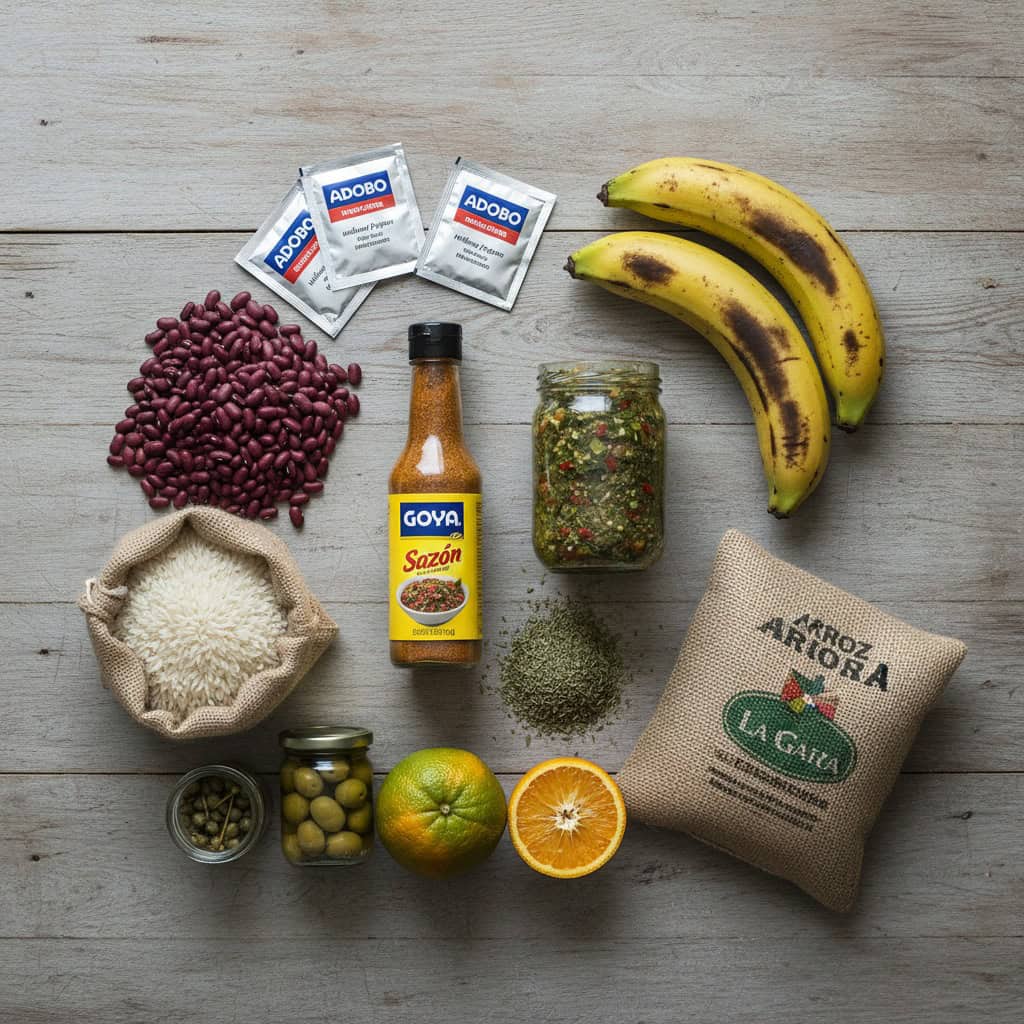
Essential Dominican Pantry Items
- Sazón con culantro y achiote: The Dominican spice blend that gives stews their orange-red color.
- Adobo seasoning: All-purpose Dominican seasoning for meat.
- Sofrito: A blend of onion, peppers, garlic, and cilantro that's the base of nearly every savory dish.
- Dominican oregano: Stronger and more pungent than Mediterranean oregano.
- Sour orange (naranja agria): Used in marinades for meat.
- Pimiento-stuffed Spanish olives: Adds brininess to stews.
- Capers: Acidic counterpoint in stews and rice dishes.
- Long-grain white rice: The foundation of every meal.
Must-Have Equipment
- Caldero or Dutch oven: A heavy aluminum or cast iron pot for stews and rice. I use my All-Clad Dutch Oven daily.
- Tostonera (plantain press): For making perfect tostones.
- Wooden mortar: For mashing mangu and pilon ingredients.
Step-by-Step Instructions
Step 1 — Breakfast Dishes
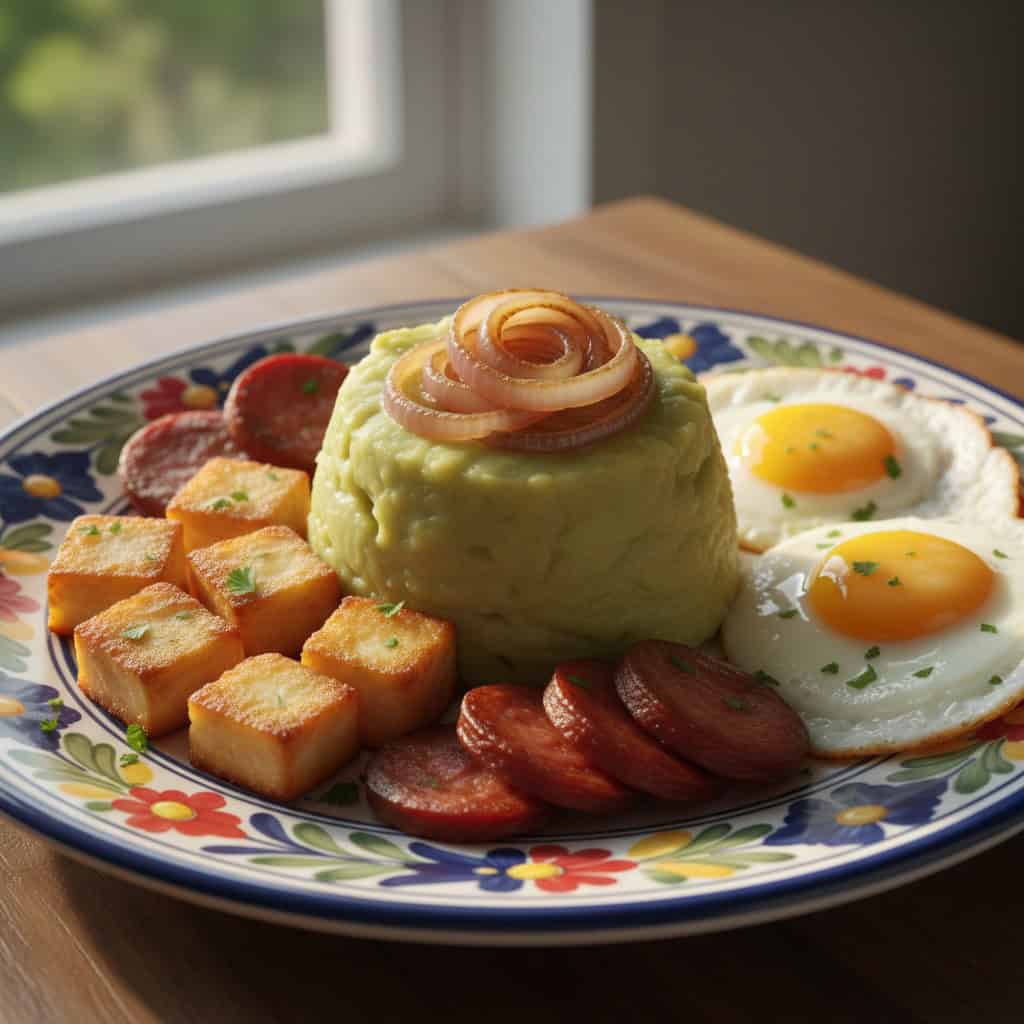
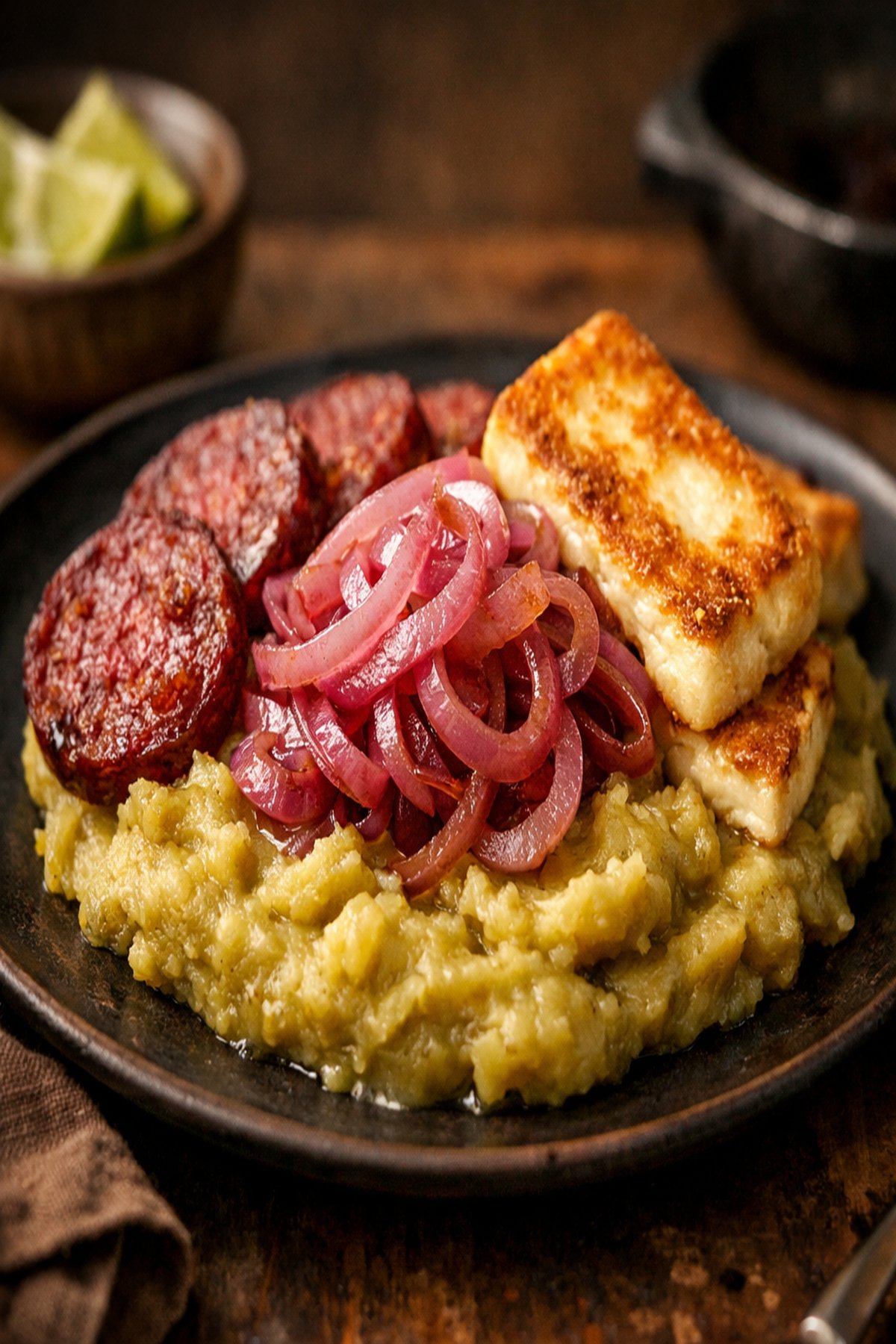
Mangu (mashed plantains) is the iconic Dominican breakfast — usually served with fried cheese, fried salami, and fried eggs as 'Los Tres Golpes' (the three hits). Other common breakfasts include pan de agua (Dominican bread) with butter and cheese, mangú con queso frito, or yaniqueques (fried flatbread) with honey or coffee.
Step 2 — Lunch Dishes (La Bandera Dominicana)
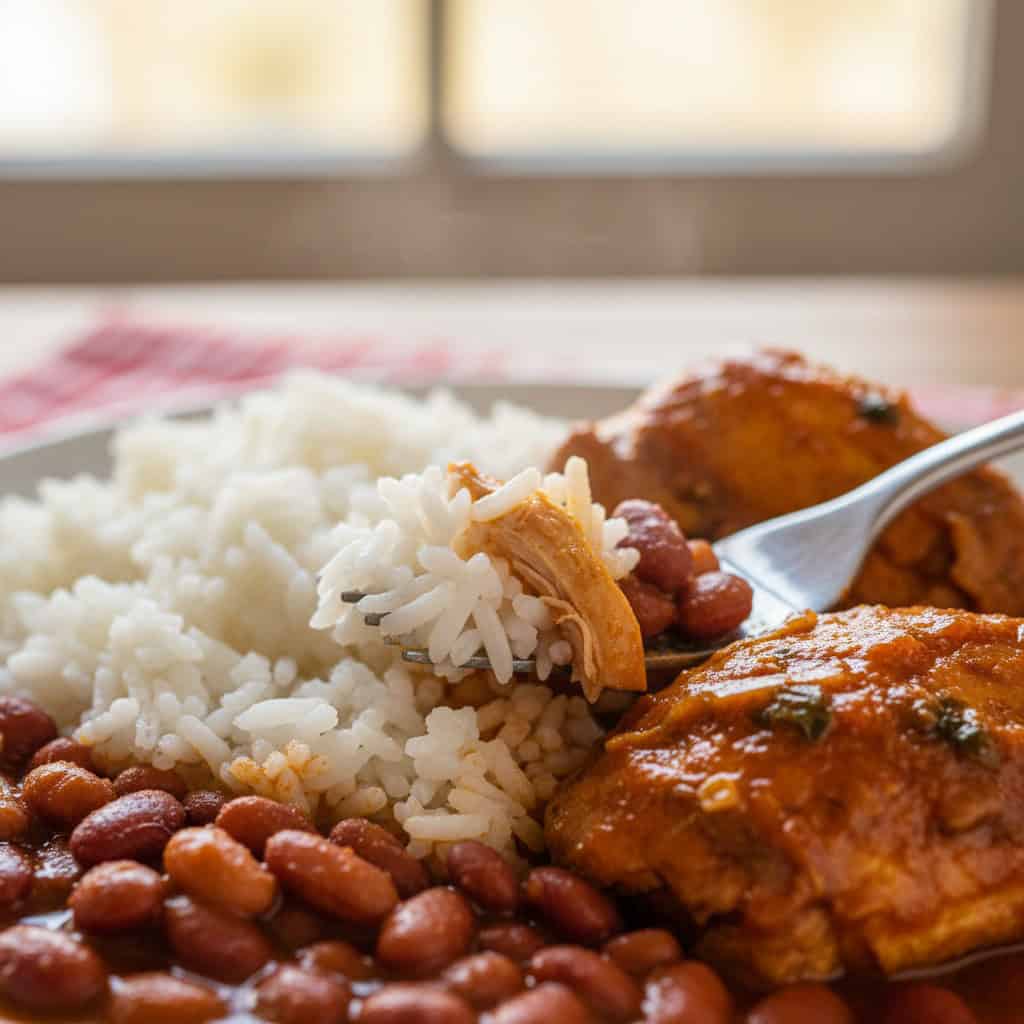
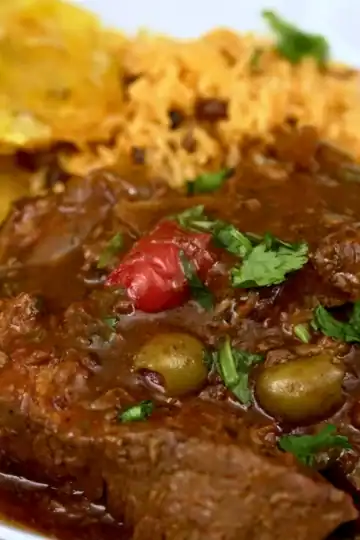
The midday meal in the Dominican Republic centers on 'la bandera' — a plate of rice, beans, and meat. Common preparations include pollo guisado (stewed chicken), carne guisada (stewed beef), or pescado con coco (fish in coconut sauce). The plate always includes salad, sometimes tostones or maduros (sweet plantains).
Step 3 — Dinner & Special Occasion Dishes
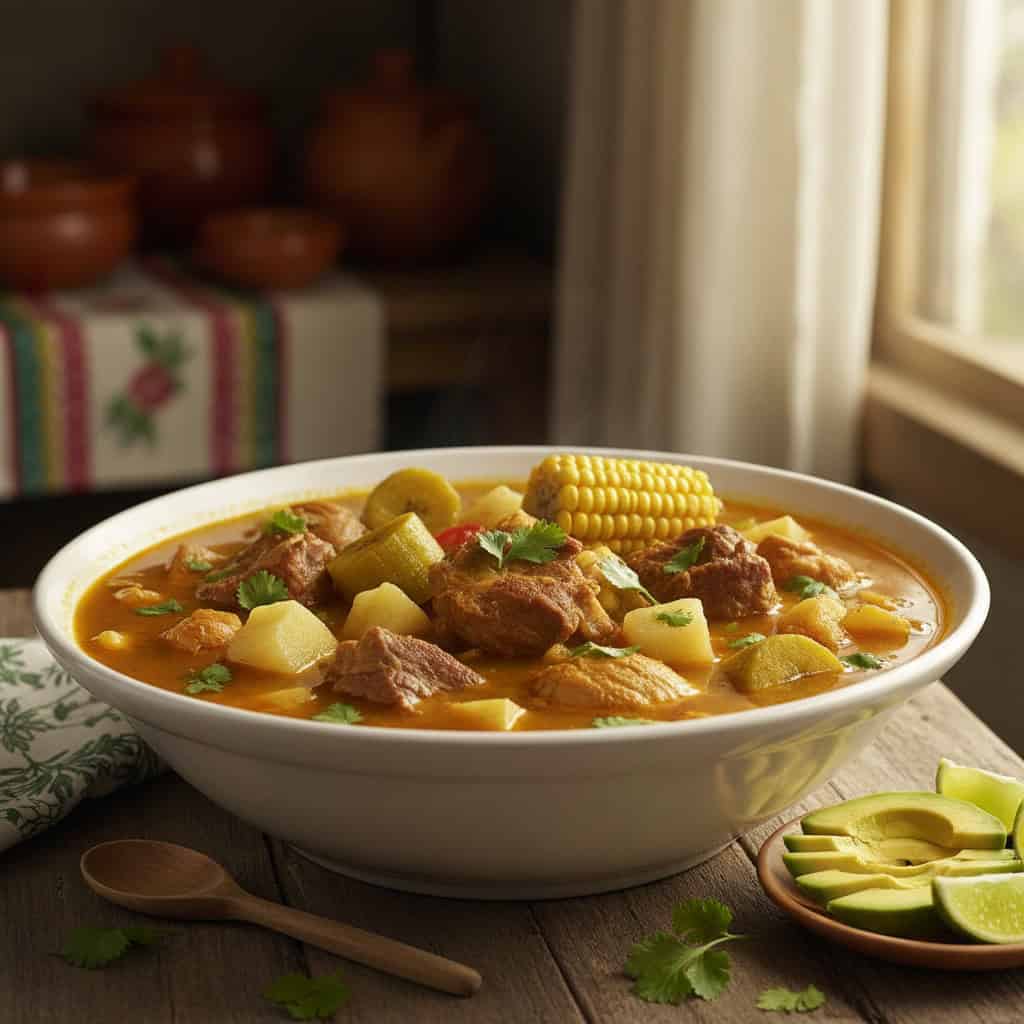
Dinners are often lighter — soups like sancocho or asopao, or simpler preparations of leftover lunch. Special occasions call for big-deal dishes: pernil (slow-roasted pork) at Christmas, sancocho (seven-meat stew) for Sunday gatherings, locrio de pollo for big family meals.
Step 4 — Sides & Accompaniments
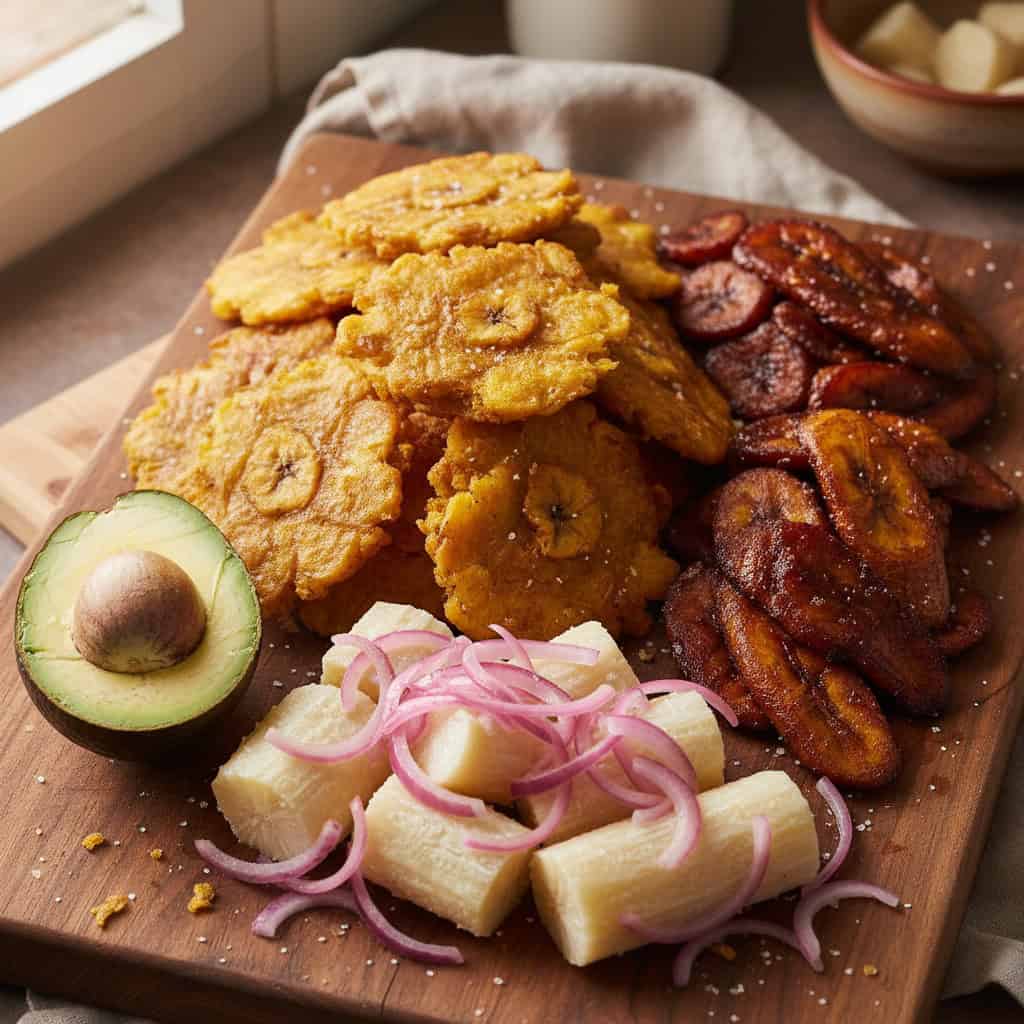
Tostones (twice-fried green plantains), maduros (sweet ripe plantains), yuca con cebolla (boiled yuca with pickled onions), ensalada rusa (potato salad), aguacate (always sliced avocado), pan de agua (Dominican white bread).
Step 5 — Drinks
Morir soñando (orange-milk drink), Dominican coffee (strong, sweet, served in small cups), jugo de chinola (passion fruit juice), Mama Juana (a traditional fermented rum infusion), Presidente beer (the national beer), and refrescos like Country Club Cola.
Step 6 — Desserts
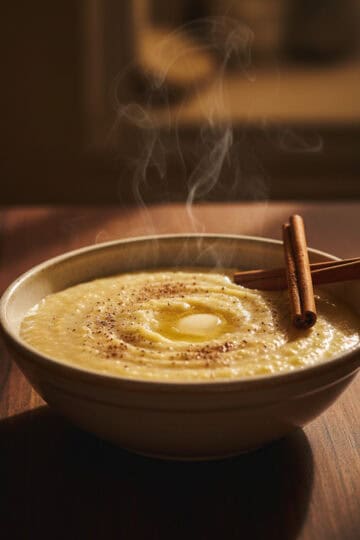
Habichuelas con dulce (sweet bean dessert eaten during Easter), bizcocho dominicano (the iconic birthday cake), tres leches, dulce de leche, dulce de coco (coconut sweet), majarete (corn pudding).
Pro Tips for Perfect Dominican Food
- Use sofrito as your foundation: Almost every savory Dominican dish starts with sofrito. Make a big batch on Sundays and freeze in ice cube trays for easy use all week.
- Bone-in meats are non-negotiable: Dominican stews need bone-in cuts. The bones add flavor and gelatin that boneless meats simply can't replicate.
- Embrace azúcar quemada: The caramelized sugar technique is what makes Dominican food look and taste distinctly Dominican. Don't skip it.
- Always have plantains: Green for tostones, ripe for maduros, in-between for mangu. Plantains are the most versatile ingredient in Dominican cooking.
- Make extra and freeze: Dominican food tastes better day 2 and freezes beautifully. Stews, rice dishes, and beans all freeze well.
- Build a Dominican spice cabinet first: Before tackling any specific recipe, stock your kitchen with the Dominican basics: sazón con culantro y achiote, adobo, dried Dominican oregano, sour orange (naranja agria), and packets of Goya seasonings. With these on hand, you can make any Dominican dish.
- Buy a caldero: Almost every Dominican dish benefits from cooking in a heavy aluminum caldero (or Dutch oven). The traditional aluminum caldero costs $20-30 at any Latin grocery store and lasts decades. It's the single most important Dominican kitchen investment.
- Subscribe to a Dominican YouTube channel: Watching authentic Dominican home cooks is the fastest way to understand technique. My channel and others like 'Cocinando con Yolanda' show the real way Dominican food is made — much more useful than reading recipes.
- Visit a Dominican restaurant before cooking at home: Eating la bandera dominicana at a real Dominican restaurant gives you a benchmark for what you're trying to recreate. Once you've tasted authentic versions, you'll recognize when your own cooking hits the mark.
Variations
By Region: La Capital (Santo Domingo)
The capital has the most cosmopolitan food scene — international influences mixed with classic Dominican dishes. You'll find more elaborate preparations and creative twists on traditional recipes.
By Region: El Cibao (Northern Region)
The agricultural heartland. Heavier on dairy (cheese is bigger here), more pork dishes, and traditional preparations of rice and beans. Santiago is the food capital of this region.
By Region: La Costa (Coastal Areas)
Seafood dominates — pescado con coco (fish in coconut sauce), camarones al ajillo (garlic shrimp), and pulpo guisado (stewed octopus) are staples. Sancocho de pescado (fish sancocho) replaces the meat version.
What to Serve With Dominican Food
- Pollo guisado: The most iconic Dominican chicken dish.
- Sancocho: The legendary Sunday stew.
- Pernil: The Christmas centerpiece.
- Habichuelas guisadas: The daily beans.
- Dominican breakfast guide: Start your day the Dominican way.
- Tostones: The essential side dish.
Frequently Asked Questions
What is the most popular Dominican dish?
La bandera dominicana (rice, beans, and meat — usually pollo guisado) is the most commonly eaten meal in the Dominican Republic. It's eaten daily across all socioeconomic levels. Among special occasion dishes, sancocho and pernil are the most beloved.
Is Dominican food spicy?
Generally, no. Dominican food is well-seasoned but not spicy in the chili-pepper sense. Heat is added at the table via aji caballero or pique sauce — never built into the cooking. This makes Dominican food approachable for all palates.
What makes Dominican food different from Puerto Rican food?
The two cuisines share roots but diverge in key ways. Dominicans use azúcar quemada (caramelized sugar) for color in stews; Puerto Ricans use achiote (annatto). Dominicans love viandas (root vegetables) more heavily. Puerto Rican cuisine has more African influence in some dishes; Dominican has more Spanish influence in others.
What do Dominicans eat for breakfast?
Mangu con tres golpes is the iconic Dominican breakfast: mashed green plantains topped with sautéed red onions, served with fried cheese, fried salami, and fried eggs. Other common breakfasts include pan de agua with butter and coffee, or yaniqueques (fried flatbread).
What is the national dish of the Dominican Republic?
La bandera dominicana — literally 'the Dominican flag' — is considered the national dish. It's a plate of white rice, red beans (habichuelas guisadas), and stewed meat (usually chicken). Sancocho is the national special occasion dish.
Is Dominican food healthy?
It can be. Dominican food relies heavily on fresh vegetables, beans, lean meats, and seafood. The beans-and-rice combination provides complete protein. The downside is the use of fried foods (tostones, fritura) and the heavy starches. Like any cuisine, balance is everything.
Where can I buy Dominican ingredients?
Latin grocery stores carry everything you need: sazón, sofrito, sour orange, plantains, viandas, dried beans. Goya is a reliable brand for pantry staples. For fresh items like plantains and yautía, larger supermarkets in Latino-heavy areas usually carry them.
What's the best Dominican dish for a beginner cook?
Habichuelas guisadas (stewed beans) — it's hard to mess up, tastes great, teaches you the sofrito-and-sazón technique that underpins most Dominican cooking, and only requires basic pantry items. Once you master habichuelas, pollo guisado is the natural next step.
Where can I find authentic Dominican restaurants in the United States?
Major Dominican populations are in New York City (Washington Heights, the Bronx), Boston (Lawrence, Lynn), New Jersey (Paterson, Union City), Miami (Allapattah), and Providence, RI. Look for restaurants advertising 'la bandera' or 'comida dominicana' as their daily special. Hole-in-the-wall comedores often serve the most authentic food.
What are some lesser-known Dominican dishes to try?
Mondongo (tripe stew), pasteles en hoja (similar to tamales but with green plantains), chivo guisado (stewed goat — the national dish of the southern region), pescado con coco (fish in coconut sauce — coastal specialty), and pasteles de yuca (cassava pastries). Each represents a different region or tradition within Dominican cuisine.
Are there famous Dominican chefs?
Yes — María Marte, the first Latin American woman to receive a Michelin star, is Dominican. Chef James Beard nominee Karina Grossman runs Dominican-influenced restaurants in NYC. Chef Aysha Bilgrami is a leader in the Dominican culinary scene. The Dominican Republic also has a growing fine-dining culture, with restaurants in Santo Domingo and Punta Cana that elevate traditional Dominican dishes for international audiences.
What Dominican drinks should I try?
Beyond morir soñando: jugo de chinola (passion fruit juice), agua de coco (fresh coconut water), Mama Juana (a fermented rum infusion that's a Dominican specialty), Brugal rum (the most popular Dominican rum), Presidente beer (the iconic Dominican lager), Country Club Cola (local cola brand), and freshly squeezed orange juice (jugo de naranja). The Dominican drink tradition is rich and worth exploring.
Shop This Recipe
View on Amazon →
View on Amazon →
View on Amazon →
As an Amazon Associate I earn from qualifying purchases at no extra cost to you.
Dominican food is identity. Try one dish, fall in love, and explore the rest.
Leave a Reply