
Camarones guisados are what I cook when I want Dominican food on the table in twenty-five minutes. Big peeled shrimp simmered in a quick criollo sauce — sofrito, tomato, onion, peppers, garlic — and spooned over a mound of white rice. Habichuelas on the side, avocado if you have one, and you've got a Tuesday-night version of a Sunday comedor plate. Rich, garlicky, and ready before the rice is done.
Growing up in Santo Domingo, guisado was the verb that described half of our weekly meals. Pollo guisado, res guisada, chivo guisado, camarones guisados — same technique, different protein. The sofrito-and-tomato sauce is the Dominican weeknight superpower. With shrimp it's the quickest of all of them because the protein cooks in four minutes. My mom used to start the sauce, set the rice going, and have everything plated before my sister and I finished setting the table.
The one rule nobody breaks: shrimp goes in LAST and comes out fast. Overcooked shrimp is rubber. Perfectly cooked shrimp is plump, pink, and bursting with the criollo sauce around it. Here's exactly how I do it — with tips for using frozen shrimp (what most of us actually cook with), how to reduce the sauce to the right consistency before the shrimp ever hits the pan, and what to serve alongside for a proper Dominican dinner.
This is one of those recipes where the technique matters more than the shopping list. The ingredients are simple and available anywhere — a bag of frozen shrimp from the supermarket, a can of tomato sauce, onions, peppers, garlic, sazón. But the order of operations and the timing at the very end are what separate a shrimp dish that tastes like a Dominican comedor from one that tastes like generic stewed shrimp from a cookbook. Follow the sequence exactly and you'll have dinner nobody will believe was cooked in under half an hour.
Why You'll Love This Camarones Guisados Recipe
- 25-minute dinner: Faster than delivery. The sauce takes 10 minutes, the shrimp takes 4.
- Classic criollo flavor: Sofrito, tomato, peppers, garlic — the same foundation as every other Dominican guisado, just with shrimp.
- Pantry-friendly: Tomato sauce, sofrito, sazón — ingredients Dominican kitchens keep on hand year-round.
- High protein, low carb (the shrimp itself): The shrimp portion is lean. Pair with arroz blanco for a traditional plate or serve over cauliflower rice if you're watching carbs.
- Family crowd-pleaser: Kids eat it, adults eat it, picky eaters eat it. The sauce is mild and savory, not spicy.
What Are Camarones Guisados?
Camarones guisados translates literally to "stewed shrimp," and in Dominican cooking that means shrimp simmered in a tomato-based criollo sauce. The sauce is built on sofrito (the blended aromatic base of onion, pepper, garlic, cilantro) plus additional chopped onion and peppers, tomato sauce, tomato paste, sazón, oregano, and a bay leaf. The shrimp goes in at the end and cooks just long enough to turn pink — usually 3-5 minutes, never more.
The dish sits in the "plato fuerte" category — the main protein that gets paired with arroz blanco and habichuelas to make a full Dominican meal. Along with pollo guisado, it's one of the two most common weeknight proteins in Dominican homes. Coastal towns like San Pedro de Macorís, Boca Chica, and Samaná serve it constantly because of fresh shrimp access, but inland families cook it just as often using frozen shrimp from the supermarket.
What makes the Dominican version distinct from Puerto Rican, Cuban, or Colombian stewed shrimp dishes is the specific sofrito profile — Dominican sofrito uses culantro or cilantro heavily, tends toward orange-red color from achiote and tomato, and doesn't use bacon or ham (unlike some Cuban variants). The flavor is cleaner, more herbal, and shrimp-forward. No cream, no wine — just aromatics, tomato, and fresh shrimp.
The dish is also a coastal identity marker. In Boca Chica, San Pedro, and La Romana — the southern coast towns — camarones guisados is standard menu fare at every beachside comedor, usually made with local shrimp caught that morning. In the capital Santo Domingo and further inland, families make it with frozen shrimp and it's treated as an upgrade from the usual pollo guisado — a "we're having something a little nicer tonight" protein. Either way, the preparation is the same. Sofrito, tomato, shrimp, 25 minutes. A recipe that's been doing its job in Dominican kitchens for generations.
Ingredients You'll Need
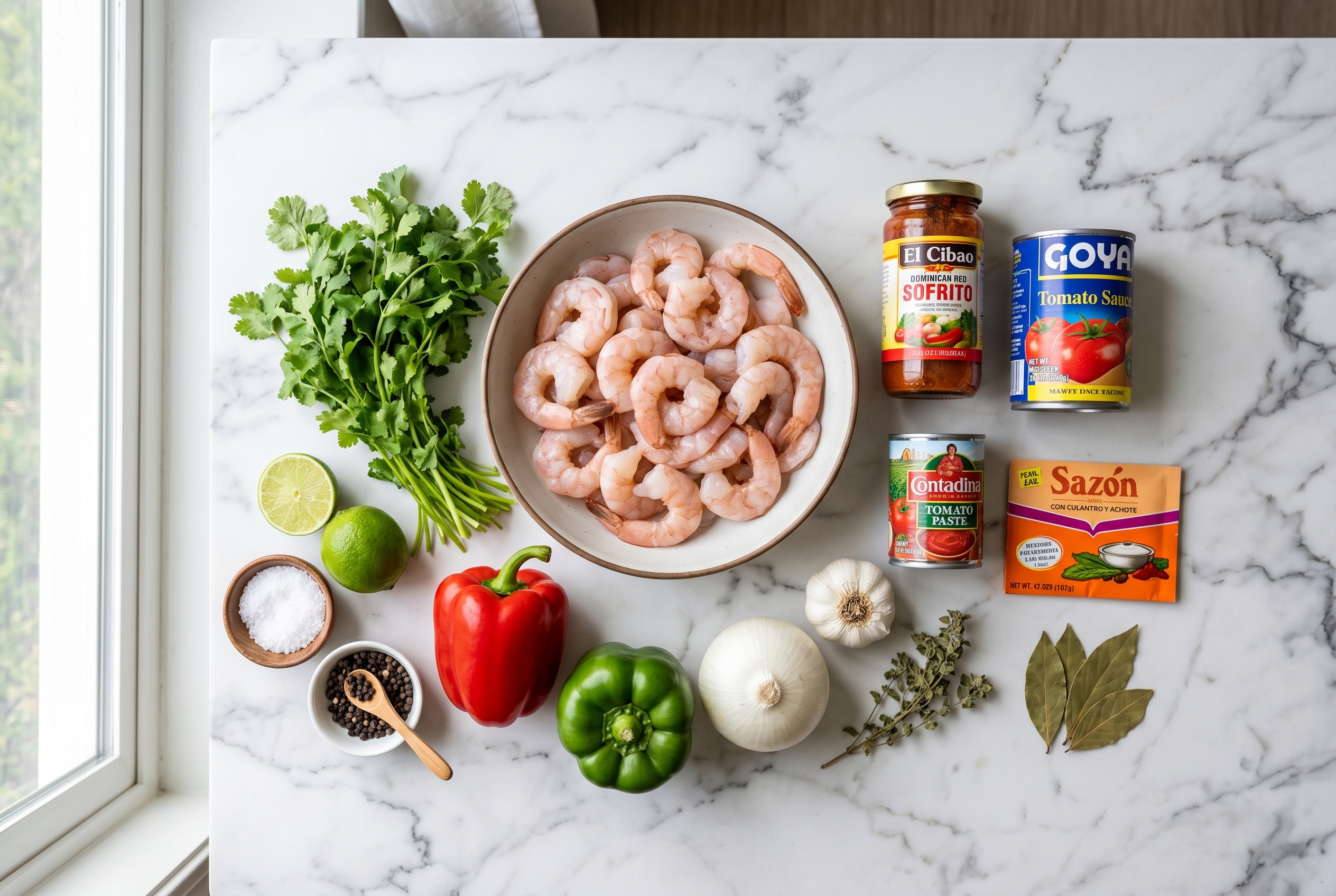
- 1 ½ lb large shrimp, peeled and deveined (fresh or thawed)
- 2 tablespoon lime juice
- Salt and black pepper to taste
- 3 tablespoon vegetable or olive oil
- 3 tablespoon sofrito (Dominican)
- 1 medium onion, diced
- 1 red bell pepper, diced
- 1 green bell pepper, diced
- 3 garlic cloves, minced
- 1 can (8 oz) tomato sauce
- 1 tablespoon tomato paste
- 1 teaspoon sazón (Goya con culantro y achiote)
- ½ teaspoon dried Dominican oregano
- 1 bay leaf
- ½ cup water or seafood stock
- 2 tablespoon fresh cilantro, chopped
Equipment: A wide caldero or 12-inch skillet with a lid, a sharp knife for the veg, and a wooden spoon.
6 Things to Serve With Camarones Guisados
- Arroz blanco: The default base — rice soaks up the criollo sauce.
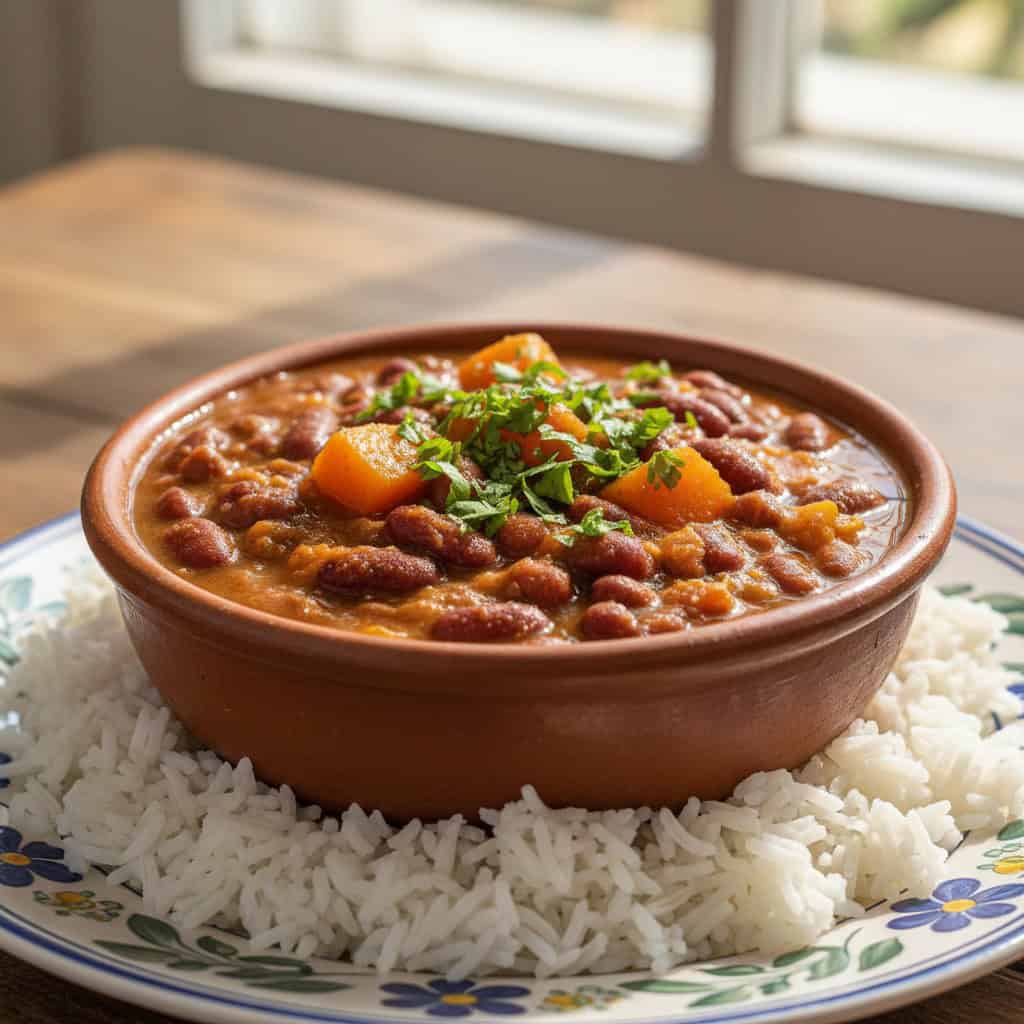
- Habichuelas guisadas: Red beans make it a full bandera-style plate (seafood edition).
- La bandera: Swap the usual pollo guisado for camarones to make a coastal bandera.
- Tostones: Crispy plantains on the side for contrast.
- Aguacate: Cool avocado slices balance the sauce.
- Moro de habichuelas: If you want rice and beans in one dish, moro is the upgrade.
Step-by-Step Instructions
Step 1 — Season the Shrimp
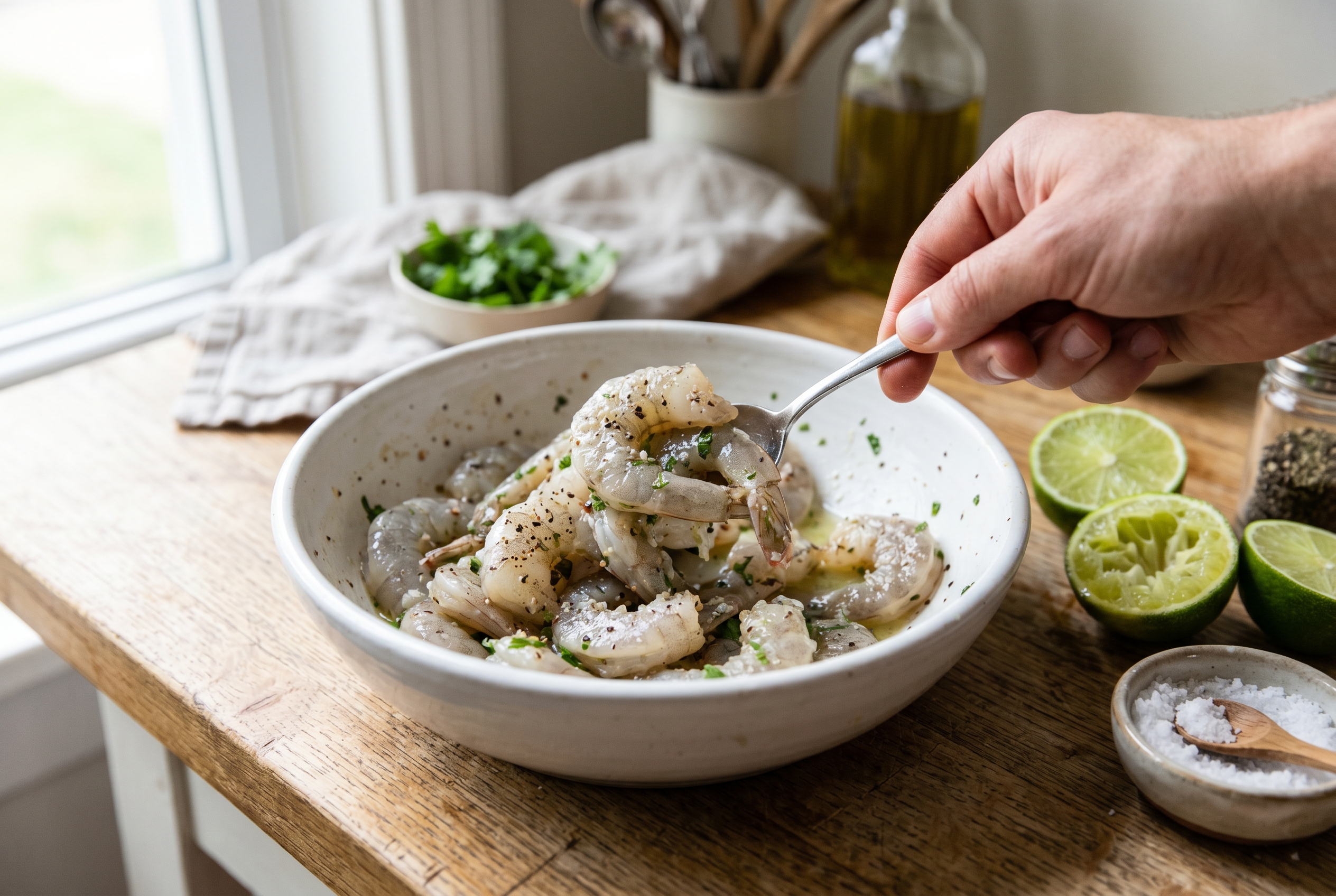
Place the peeled shrimp in a bowl. Toss with 2 tablespoon lime juice, ½ teaspoon salt, and ¼ teaspoon black pepper. Set aside while you build the sauce. This quick seasoning takes the "iciness" off frozen shrimp and boosts flavor from the inside.
Step 2 — Start the Sofrito
Heat 3 tablespoon oil in a wide caldero or 12-inch skillet over medium heat. Add the sofrito and let it bloom for 30 seconds. Then add the diced onion, red pepper, and green pepper. Sauté 4-5 minutes, stirring, until the onion is translucent and the peppers have softened. Add the minced garlic and cook 30 seconds more — just until fragrant, don't let it brown.
Step 3 — Toast the Tomato Paste
Push the vegetables to one side of the pan. Add the 1 tablespoon tomato paste to the cleared space and let it fry in the oil for 30-60 seconds, stirring. It'll darken slightly — that caramelization is where the deep tomato flavor comes from. Stir to mix with the vegetables.
Step 4 — Build and Reduce the Sauce
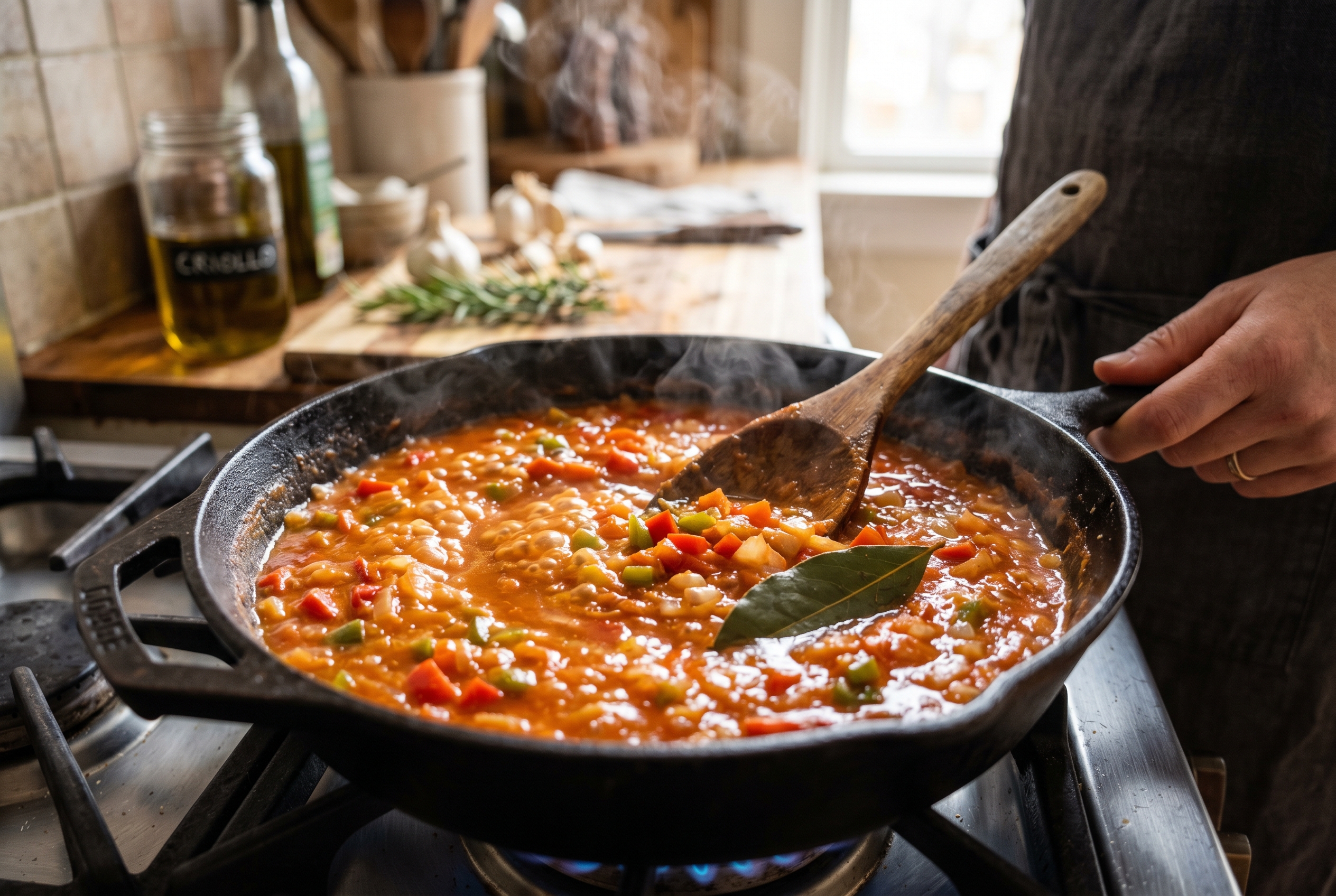
Pour in the tomato sauce, ½ cup water (or seafood stock), sazón, oregano, and bay leaf. Stir. Bring to a simmer and cook uncovered for 5 minutes to let the sauce thicken and the flavors meld. Taste and adjust salt and pepper. The sauce should taste almost finished — it only has 5 more minutes with the shrimp.
Step 5 — Add the Shrimp
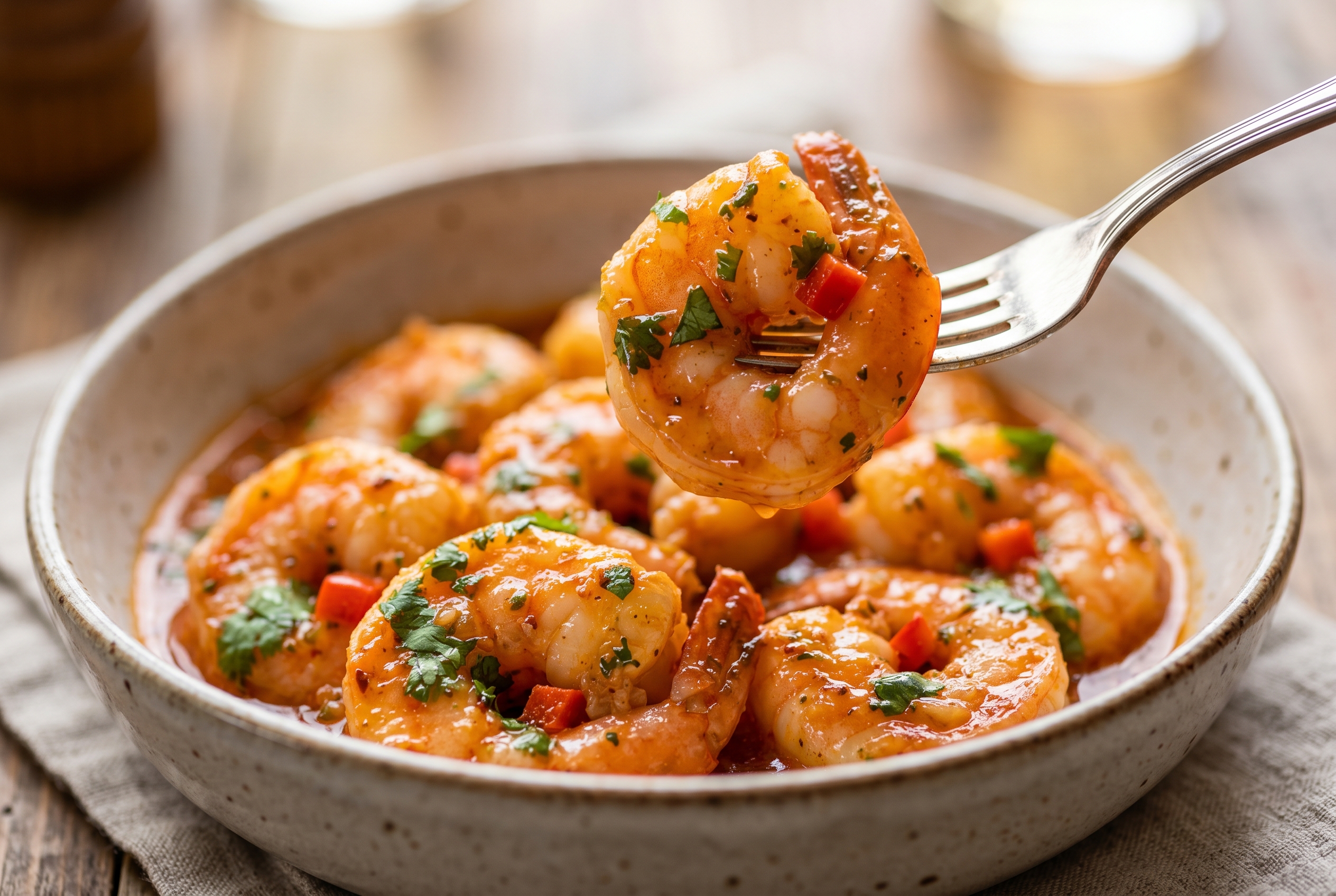
Add the seasoned shrimp (with any liquid from the bowl) to the simmering sauce. Stir to coat. Cook 3-5 minutes total, stirring once or twice, until the shrimp are pink and opaque. Large shrimp need about 4 minutes; jumbo need 5. This is the most important timing in the whole recipe — overcooked shrimp is tough and rubbery. As soon as they turn pink and curl, they're done.
Step 6 — Finish and Serve
Remove from heat immediately. Sprinkle the chopped cilantro over the top. Serve over arroz blanco with habichuelas and a few slices of avocado. A lime wedge on the plate lets everyone brighten theirs to taste. Don't let the finished dish sit — shrimp continues to cook in hot sauce and goes from perfect to overdone in minutes.
Pro Tips for Perfect Camarones Guisados
- Shrimp goes in LAST, always: Reduce the sauce to the consistency you want before the shrimp hits the pan. Once shrimp is added, you have 3-5 minutes max before it's done. Everything about this recipe is about protecting the shrimp from overcooking.
- Fresh or raw-frozen shrimp over pre-cooked: Pre-cooked (the pink ones in the freezer aisle) will turn to rubber when you heat them again. Buy raw frozen shrimp, thaw overnight in the fridge or quickly under cold water, and cook from raw. Huge texture difference.
- Large or jumbo size, 16/20 or 21/25 count: Bigger shrimp are more forgiving on timing and more satisfying to eat. Tiny salad shrimp cook in 90 seconds and are easy to ruin.
- Reduce the sauce first: If your sauce is too thin when the shrimp go in, the dish will be soupy. Simmer the sauce without the shrimp until it's the thickness you want your final dish to be — it won't reduce further in the 4 minutes the shrimp is cooking.
- Serve immediately: Unlike pollo guisado or res guisada that improve with resting, camarones guisados is a dish that's perfect the moment the shrimp turns pink and declines from there. Plate it the second it's ready.
- Start the rice before the sauce: Arroz blanco takes about 22 minutes. The sauce plus shrimp takes about 18. Start the rice first, then start the sauce — both finish around the same time and you sit down to dinner with everything hot.
- Pat the shrimp dry before seasoning: Frozen shrimp release water when thawed. Pat them dry with paper towels before tossing with lime and salt — otherwise the excess water dilutes the sauce when they're added to the pan.
Variations
Spicy Camarones al Ajillo Style
Double the garlic to 6 cloves, add 1 finely diced jalapeño or aji caballero to the sofrito, and finish with a pinch of red pepper flakes. A Dominican-meets-Spanish shrimp ajillo hybrid.
Camarones con Coco
Replace the ½ cup water with ½ cup full-fat coconut milk. Turns the sauce silky and tropical, Samaná style. Pair with maduros instead of habichuelas.
Mixed Seafood Guisado
Use ¾ lb shrimp + ¾ lb bay scallops or chunks of firm white fish. Add all to the sauce together at Step 5 and cook 4-5 minutes until everything is done. A coastal Dominican version that shows up at beachside restaurants.
What to Serve With Camarones Guisados
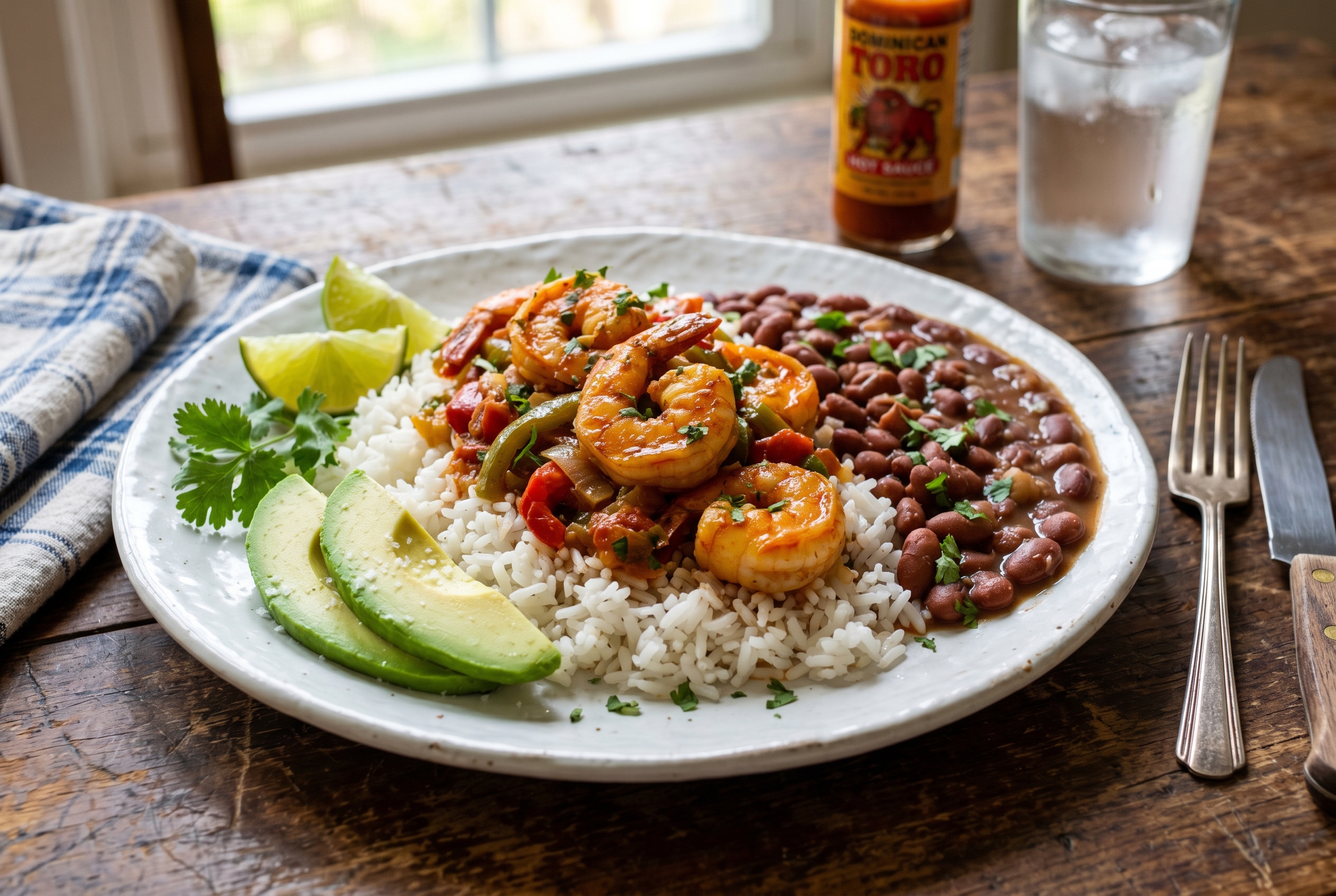
- Arroz blanco: The foundation — rice grabs the sauce.
- Habichuelas guisadas: Red beans complete the Dominican trio.
- Aguacate: Thick avocado slices on the plate.
- Tostones: For crunch and starchy contrast.
- Concón: The crispy bottom rice is a perfect vehicle for the sauce.
Frequently Asked Questions
Can I use frozen shrimp?
Yes — most Dominican home cooks use frozen shrimp, myself included. Buy raw (not pre-cooked) frozen shrimp, peeled and deveined. Thaw overnight in the fridge, or quickly in a bowl of cold water for 15-20 minutes. Pat dry before seasoning. Texture will be great if you don't overcook them.
How do I avoid rubbery shrimp?
Three rules: buy raw (not pre-cooked), use large shrimp (16/20 or 21/25), and cook them 3-5 minutes max in the sauce. The second they're pink and opaque, pull off the heat. Overcooking is the number one killer of camarones guisados.
Shell-on or peeled?
Peeled is the weeknight standard — easier to eat, no mess. Shell-on gives slightly more flavor to the sauce but requires peeling at the table. For family dinner I peel. For a more rustic Sunday comedor vibe I sometimes leave the tails on.
What size shrimp should I buy?
Large or jumbo — count sizes 16/20 or 21/25 per pound. They hold up in the sauce without overcooking and give a satisfying bite. Avoid small or medium shrimp (31/40 or smaller) — they cook in under 2 minutes and are easy to ruin.
Can I make it ahead?
The sauce can be made up to 2 days ahead and refrigerated. Reheat gently, then add the shrimp and cook 4 minutes. I don't recommend cooking the whole dish ahead — reheated shrimp gets tough. Prep the sauce, cook the shrimp fresh.
How spicy is this dish?
Not spicy at all as written. Dominican guisados are savory and aromatic, not hot. If you want heat, add a diced aji caballero, habanero, or jalapeño to the sofrito at Step 2. Start with a small amount — you can always add more.
Can I use canned diced tomatoes instead of tomato sauce?
You can, but crush them with your hand or blend briefly first — Dominican guisados are saucy, not chunky. Add ¼ cup extra water if using diced tomatoes since they have less liquid. The sauce should be smooth, not stewy.
Do I need sofrito to make this?
Yes — sofrito is the flavor base of Dominican guisados. If you don't have any made, make a quick version: blend 1 small onion, 1 bell pepper, 4 garlic cloves, a handful of cilantro, and 1 teaspoon vinegar. Use 3 tablespoon of that for this recipe. Store the rest in the fridge for a week of cooking.
How do I store and reheat leftovers?
Refrigerate in an airtight container up to 2 days. Reheat gently on the stovetop with a splash of water, just until warmed through — don't let the shrimp boil. Microwave works too but do it in 30-second bursts at 50% power. Leftovers are never as good as fresh shrimp, but still tasty.
What's the difference between camarones guisados and camarones al ajillo?
Camarones guisados is a tomato-sofrito based stew, Dominican criollo style. Camarones al ajillo is a Spanish-origin garlic-and-oil sauté without tomato. Dominicans make both, but guisados is the "home" version and al ajillo is more of a restaurant or tapas dish.
Can I use this recipe for other seafood?
Yes — the sauce works for bay scallops (cook 3-4 minutes), chunks of firm white fish like mahi-mahi or tilapia (cook 5-7 minutes, cut into 1-inch cubes), or a combination. Adjust only the cooking time to match what you're using. Mussels and clams also work if you let them steam in the sauce with the lid on until they open.
Is this recipe keto or low-carb friendly?
The dish itself (without the rice) is very low carb — the sauce has maybe 10-12 grams of carbs for the whole pot, and shrimp is essentially zero carb. Skip the rice and serve over cauliflower rice or sautéed greens to keep it keto. The flavor doesn't change at all.
What's the traditional drink with camarones guisados?
In Dominican coastal towns, a cold Presidente beer or a glass of fresh morir soñando (orange juice and milk) is standard. If you're doing a Sunday lunch version, a jugo de chinola (passion fruit juice) or lemonade made with fresh lime is perfect. For a nicer dinner, a crisp white wine like Albariño or Sauvignon Blanc plays well with shrimp in tomato sauce.
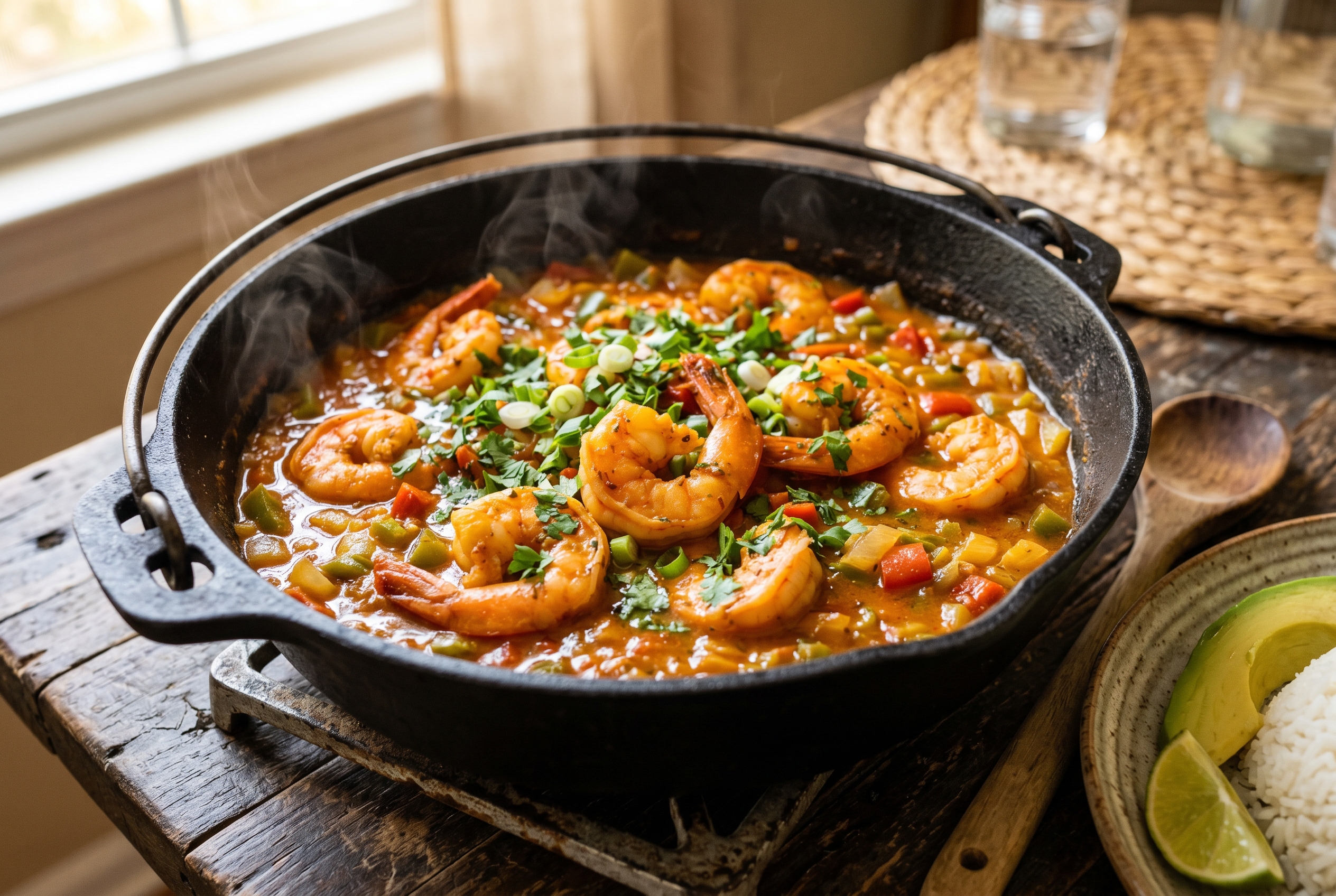
Camarones Guisados (Dominican Stewed Shrimp)
Ingredients
Method
- Toss shrimp with lime juice, salt, and pepper. Set aside.

- Heat oil in wide skillet. Add sofrito, onion, peppers. Sauté 4-5 min. Add garlic, cook 30 sec.
- Push veg aside. Toast tomato paste in oil 30-60 sec. Stir to combine.
- Add tomato sauce, water, sazón, oregano, bay leaf. Simmer uncovered 5 min to thicken.
- Add shrimp and any liquid from bowl. Stir. Cook 3-5 min until pink and opaque.
- Remove from heat. Sprinkle with cilantro. Serve immediately over arroz blanco.
Nutrition
Video
Notes
Tried this recipe?
Let us know how it was!Shop This Recipe
View on Amazon →
View on Amazon →
View on Amazon →
As an Amazon Associate I earn from qualifying purchases at no extra cost to you.
Twenty-five minutes. Start the rice first. Dinner's done before anyone asks "what's for dinner."
You May Also Like
📺 Watch a similar recipe: Dominican-Style Calamares Guisados
- Dominican-Style Calamares Guisados (Garlicky Calamari Stew with Lemon & Cilantro) — Dominican-Style Calamares Guisados is a garlicky calamari stew simmered in a rich tomato.
- Dominican Slow Cooker Goat Stew Recipe (Chivo Guisado) — Fall-apart tender goat meat simmered low and slow with rich Dominican flavors —.
- Hígado Guisado (Dominican Liver Stew) — The Real Way

Leave a Reply