
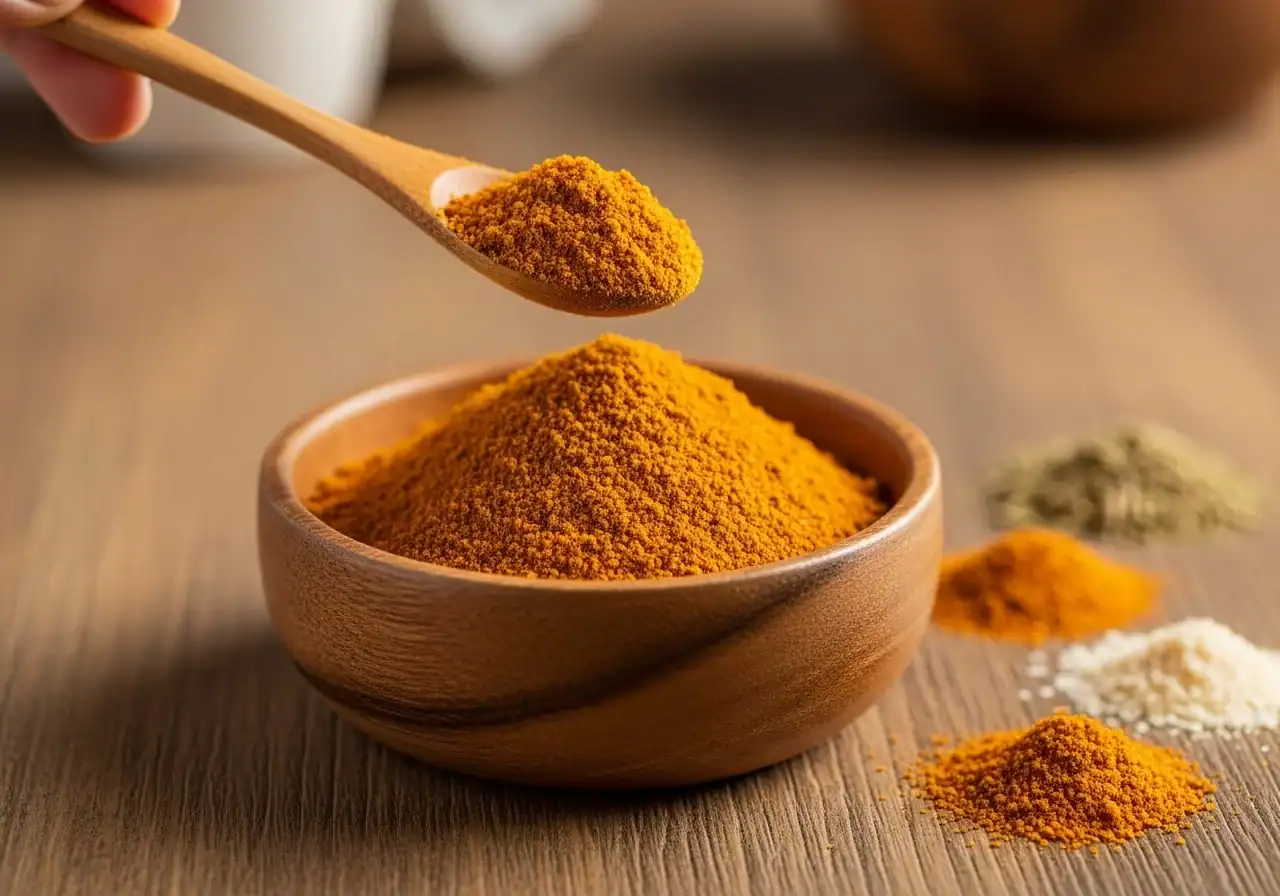
Sazón is the golden powder behind every pot of Dominican rice you've ever loved, every stew that tasted a little deeper than yours, and every pollo guisado that came out the right color. It's the secret. It's also just a blend of spices you probably have in your cabinet right now.
Most Dominican cooks use the little orange Goya packets — fast, convenient, and honestly fine. But once you make it from scratch, you won't go back. No MSG, no fillers, fresher spices, and you control the salt.
This is a 5-minute recipe. Measure, whisk, jar. One batch lasts months. The rest of your Dominican cooking instantly levels up.
What Is Sazón Dominicano
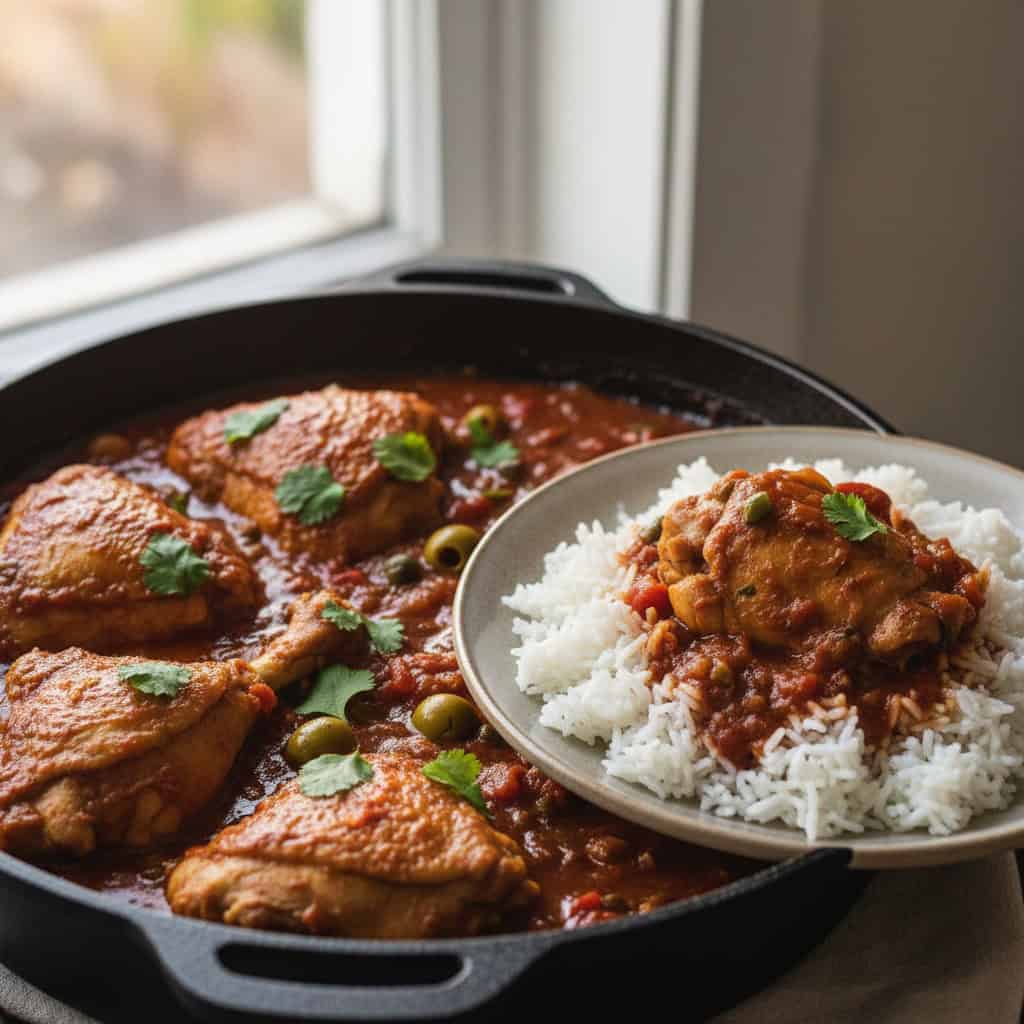
Sazón is a Latin seasoning blend built around annatto (achiote) — a small red seed that carries a mild peppery-nutty flavor and gives everything it touches a deep golden-orange color. It is what makes Dominican arroz con pollo look like the photo. It is the color in pollo guisado. It is the glow inside every locrio.
Every Latin culture has a version of this — Puerto Rican, Cuban, Colombian — and the base is always similar: annatto, cumin, garlic, oregano, and a few supporting spices. Dominican sazón tends to be heavier on cumin and garlic, lighter on heat.
Store-bought packets (like Goya or Badia) are basically this same blend with added MSG, sometimes food coloring, and always a lot of salt. Making your own lets you skip all three and actually taste the spices.
The Ingredients
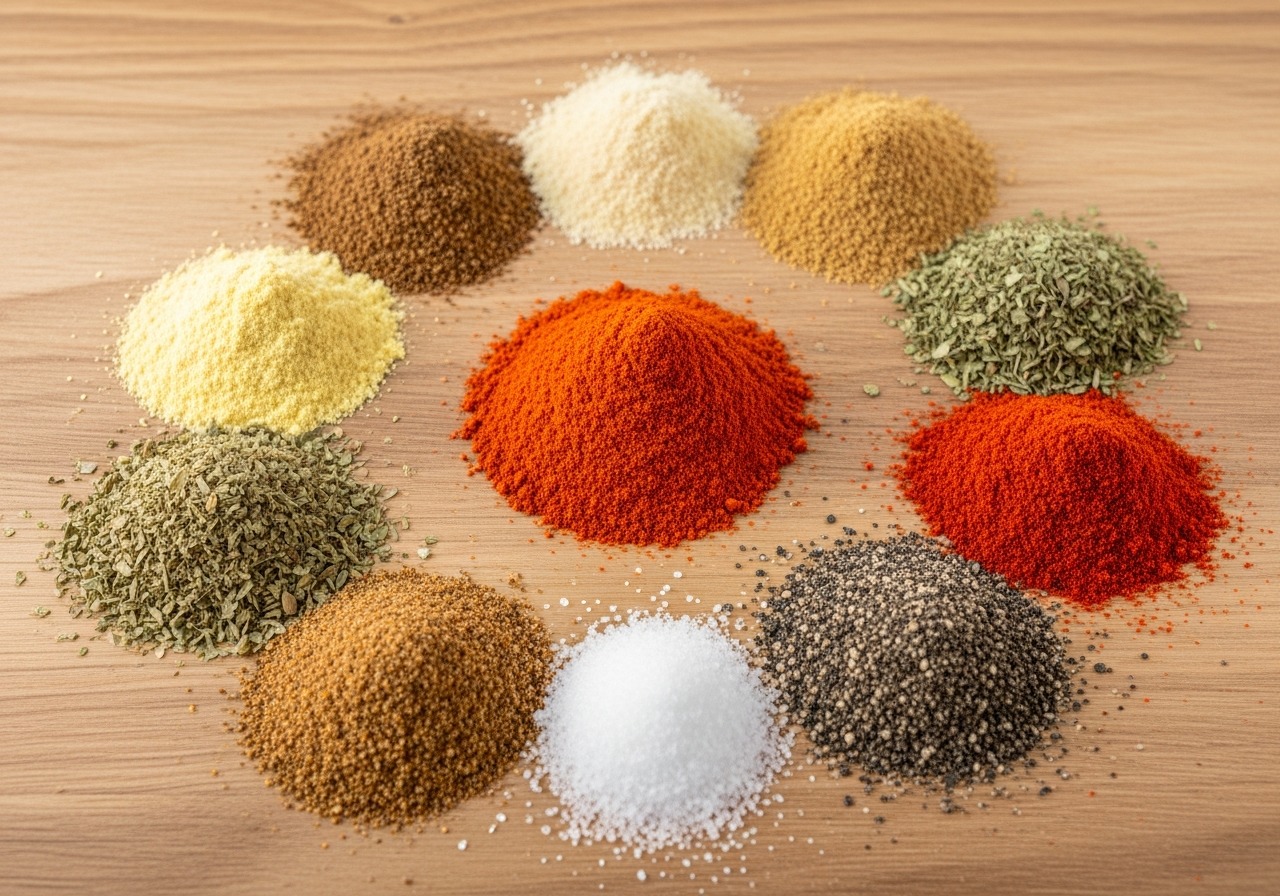
The Anchor: Annatto (Achiote)
Also called achiote, annatto is a small red-orange seed from a tropical tree. It is the only thing in this recipe that turns food that deep golden-orange color. Without it, you have a tasty spice blend — but not sazón.
Buy ground annatto at any Latin market, most Mexican grocers, and online. Labels to look for: "ground annatto," "achiote en polvo," or "ground annatto seed." Get a good-quality one — cheap annatto tastes like dust.
If all you can find is whole annatto seeds, grind them yourself in a spice grinder. The seeds are hard — small batches work better than big ones.
The Supporting Cast
- Ground cumin — warmth and earth. The second loudest voice in the blend.
- Garlic powder — carries the sofrito flavor when you can't add fresh garlic.
- Onion powder — rounds out the savory base.
- Dried oregano — ideally Caribbean or Mexican oregano (more citrusy than Mediterranean). Fine-crumble it if it's whole-leaf.
- Ground coriander — subtle citrus-floral note. Don't skip.
- Black pepper — a little heat and grip.
- Sweet paprika — reinforces the red color and adds a faint smokiness.
- Sea salt — optional. I make two jars: one salted, one unsalted. Unsalted is more flexible.
- Turmeric — optional, 1 teaspoon. Deepens the yellow and adds faint earthiness.
How to Make Sazón Dominicano
Step 1 — Measure Everything
Set out all your spices first. Don't measure over the bowl — measure on a separate surface so a slipped scoop doesn't ruin the whole batch. Proportions matter here. Too much annatto gets dusty. Too much cumin gets heavy.
Step 2 — Whisk Hard
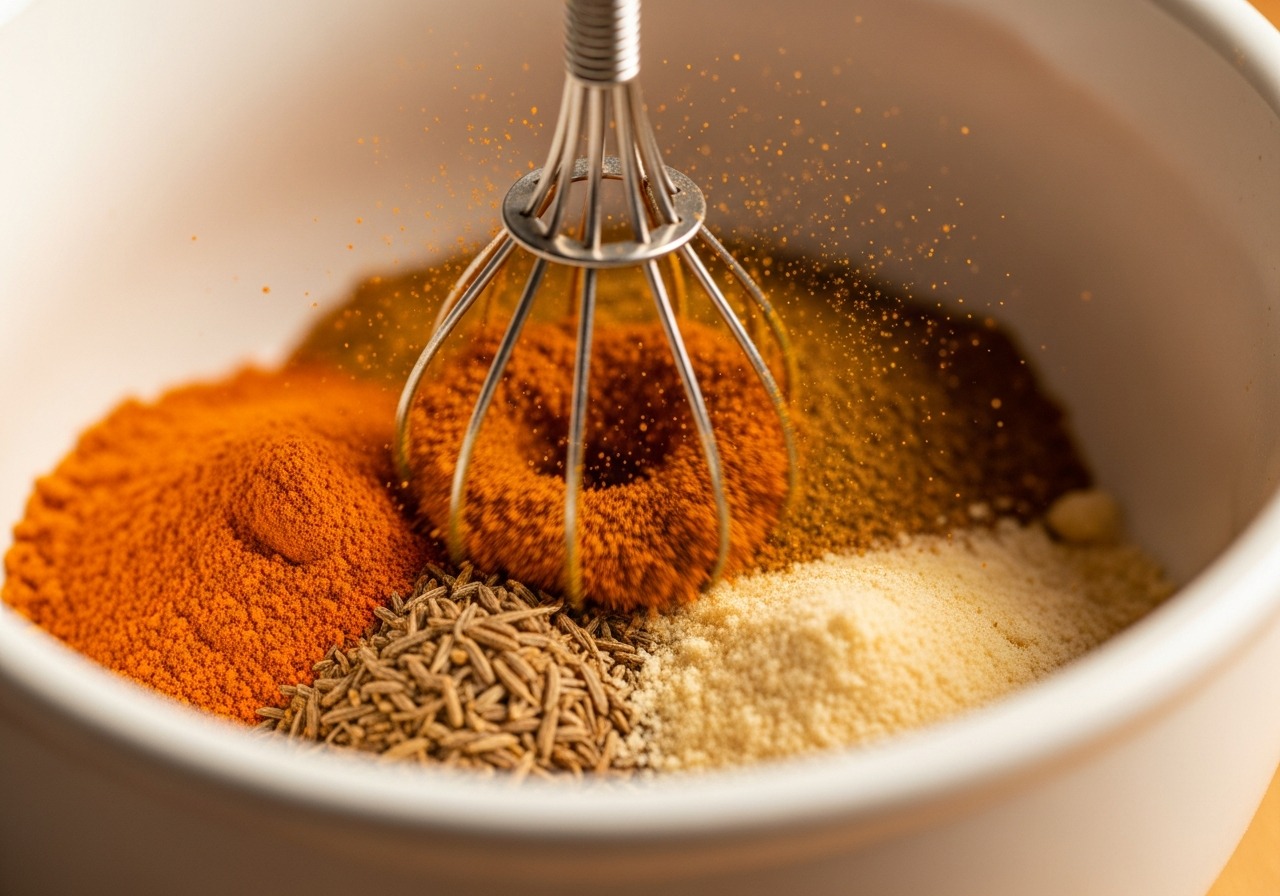
Whisk everything in a medium bowl for a full 30 seconds. You're looking for a single uniform color — no streaks of yellow cumin, no bright red paprika flecks, no white garlic powder. Deep golden-orange, consistent throughout.
Step 3 — Grind for Finer Texture (Optional)
If you want packet-smooth texture: tip everything into a small spice grinder or mini food processor and pulse 10-15 times. The result is a silky powder that dissolves instantly into broth and rice.
If you skip this step, the blend stays a little coarser — still works perfectly, just has a bit more texture when sprinkled dry.
Step 4 — Jar It Up
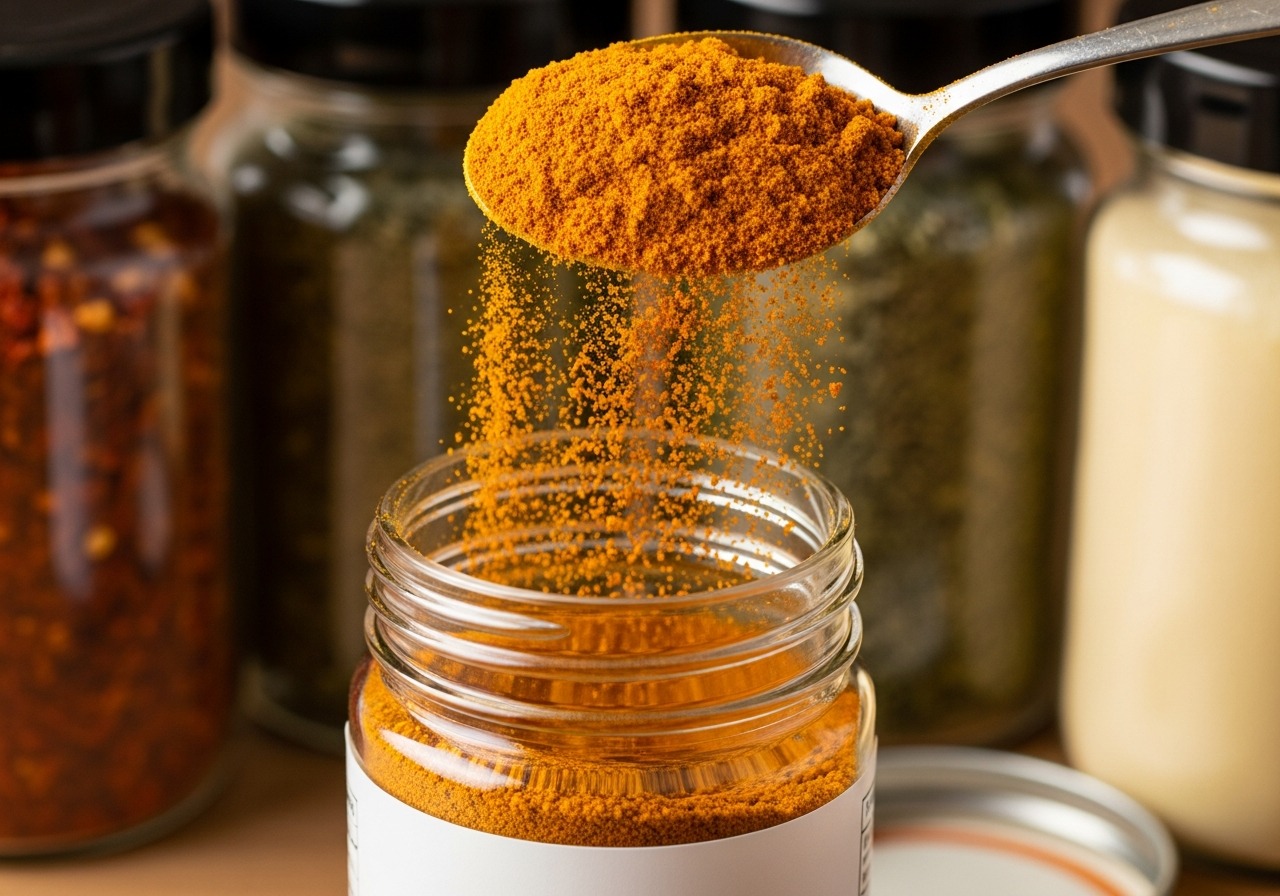
Transfer to a clean dry glass jar. Write the date on the label. Store in a cool dark cabinet away from the stove — heat and light kill spice flavor faster than anything. In a sealed jar in a good spot, this keeps 6 months at full strength.
How to Use Homemade Sazón
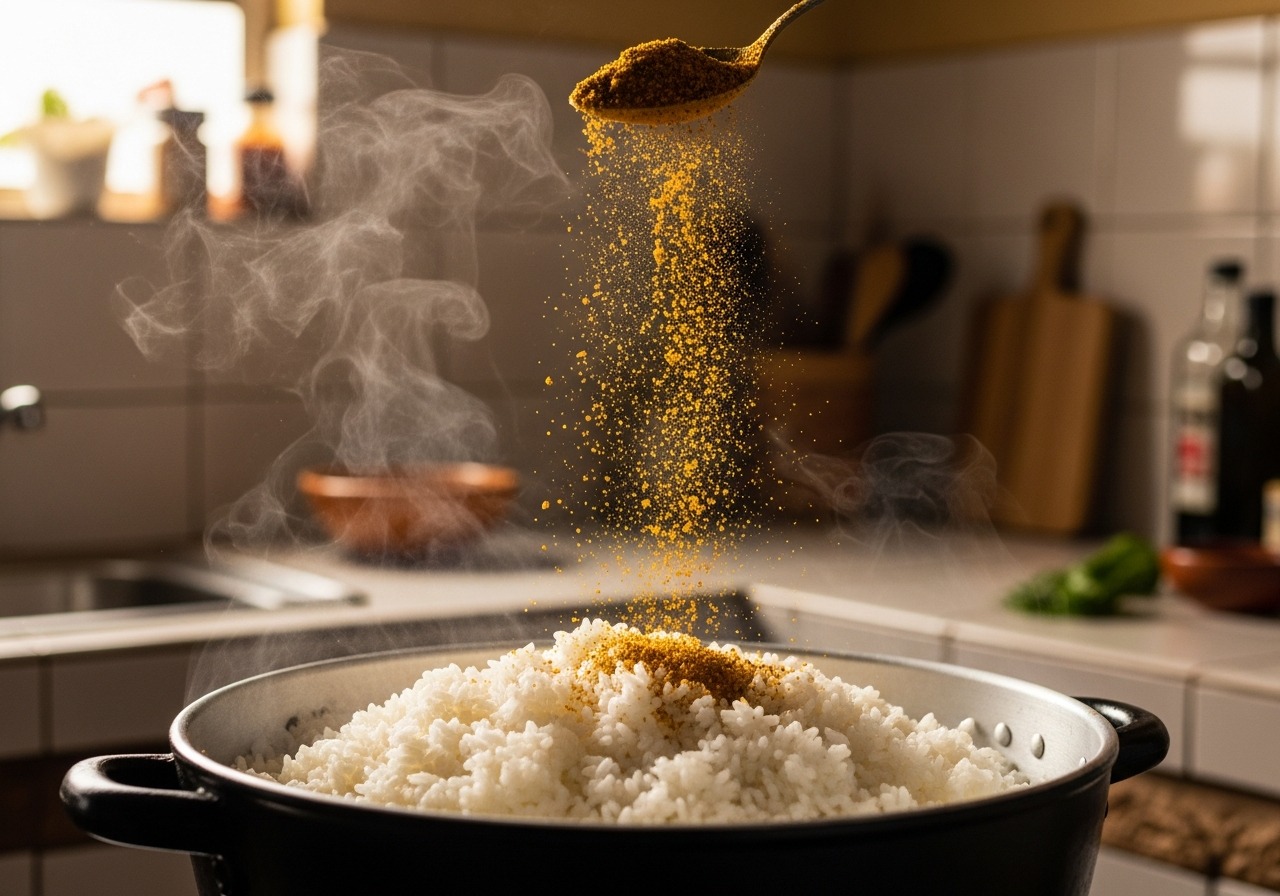
The conversion is simple: 1 teaspoon homemade sazón = 1 packet Goya sazón. Use it everywhere you'd reach for a packet.
Classic Uses
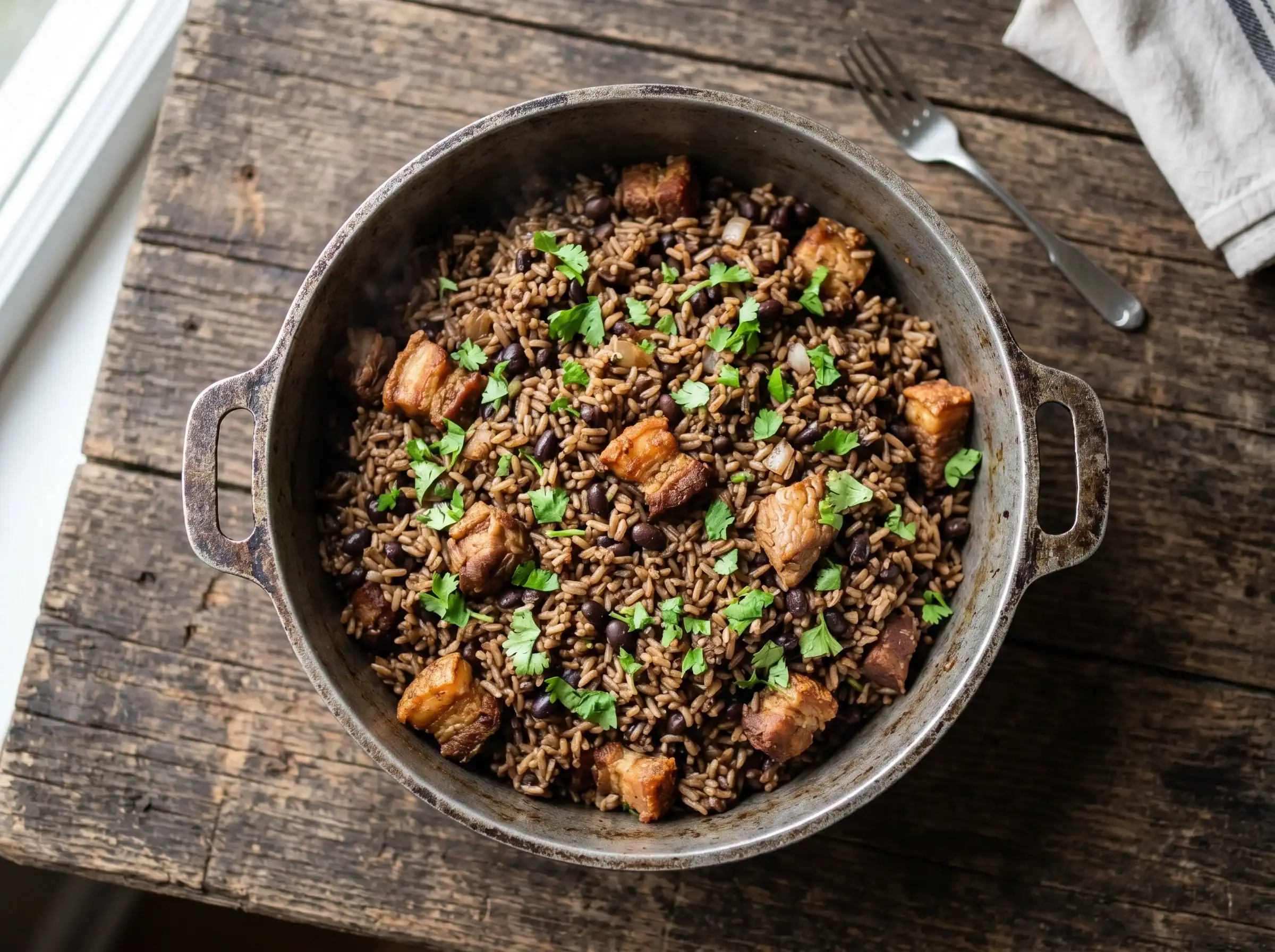
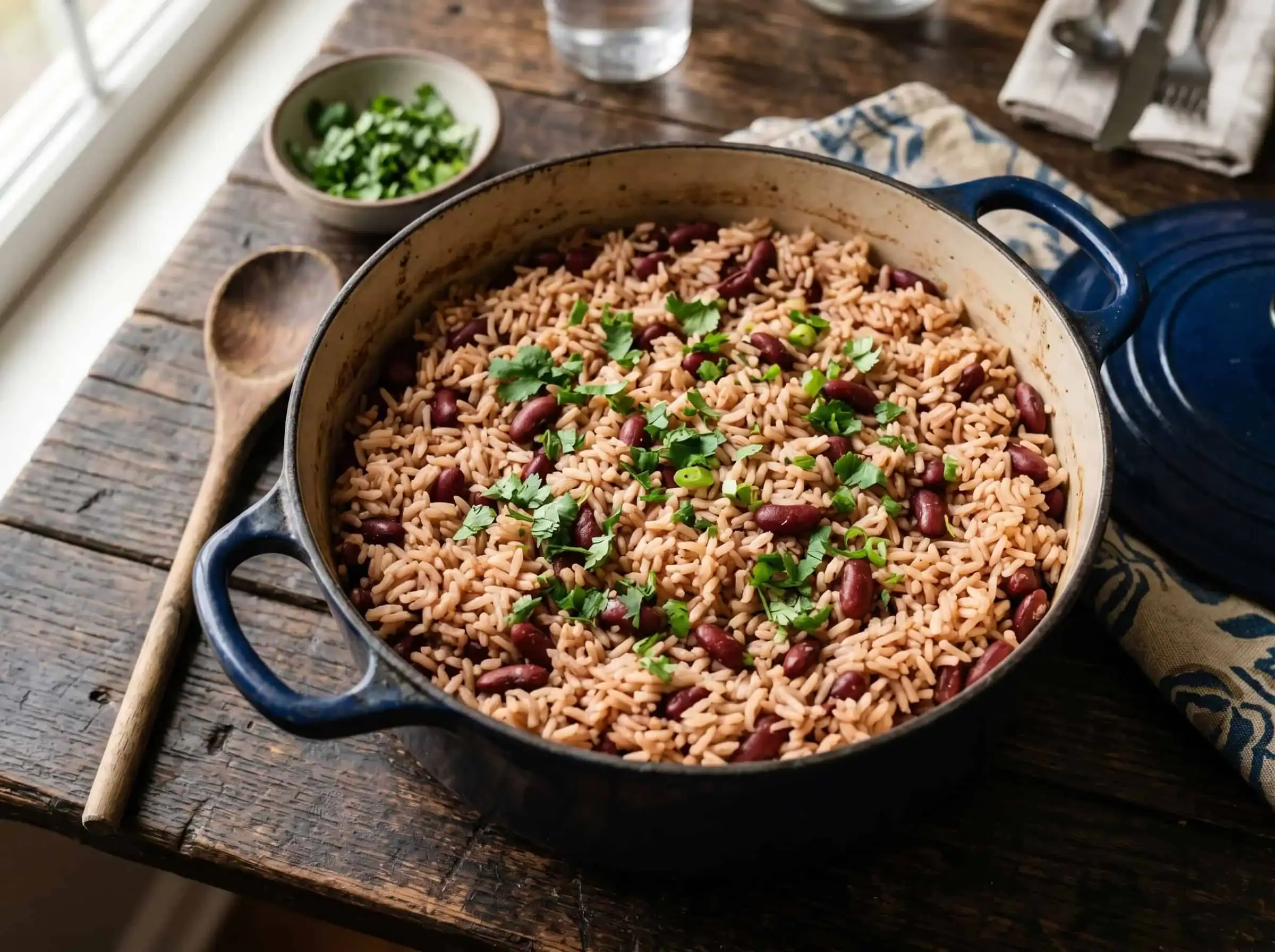
- Rice: any locrio, arroz con pollo, moro de habichuelas.
- Stews: pollo guisado, carne guisada, habichuelas guisadas.
- Meat marinades: rub 1 teaspoon on a pound of chicken or pork before grilling or frying.
- Soups: a teaspoon in sancocho, sopa de res, asopao.
- Beans: always. A teaspoon transforms a pot of plain pinto beans.
- Eggs: try a small pinch in scrambled eggs with a little cheese. Surprising and good.
When to Add It
Bloom sazón in hot oil at the start of cooking — after you've built your sofrito but before you add liquid. A minute in the fat makes the color deeper and the flavor more pronounced. If you dump it in at the end, it doesn't quite integrate and can taste dusty.
Pro Tips
- Fresh spices matter. A blend is only as good as the ingredients. If your cumin is 3 years old, your sazón will taste like nothing. Replace ground spices every 6-12 months.
- Leave out the salt. You can always add salt to the dish. You can't take it out of the blend.
- Toast whole seeds for next-level flavor. If you have whole cumin and coriander seeds, toast them in a dry pan for 30 seconds, then grind. Massive upgrade.
- Double the batch. It disappears fast.
- Label the jar. Sazón, date made, and whether it has salt. Future-you will thank present-you.
- Bloom in oil. Sazón gives up its color best when it hits hot fat at the start of cooking.
- No annatto, no sazón. It's the non-negotiable ingredient. Substitute: turmeric + paprika together approximate the color but never quite get there.
Storage
- Sealed glass jar: 6 months at peak flavor, up to 1 year usable.
- Storage spot: cool, dark, dry. Never above the stove — heat and steam kill spice blends fast.
- Signs it's going stale: color dulls from golden-orange to brown-gray, smell fades, flavor gets flat.
FAQ
Is this the same as Goya sazón?
Close — same flavor family, same color. Goya has MSG and cornstarch added; this version skips both. Flavor-wise, homemade tastes brighter and more defined.
Can I leave out the annatto?
You can, but then it's not sazón — it's just a Latin spice blend. For color without annatto, use 1 tablespoon turmeric + 1 tablespoon extra paprika. Gets you most of the way there visually.
Is sazón the same as adobo?
No — two different blends that often go together. Adobo is the savory all-purpose salt-garlic-oregano blend used on raw meat before cooking. Sazón is the golden color-and-flavor blend added during cooking. Most Dominican recipes use both.
Can I make it without a spice grinder?
Yes — just whisk thoroughly. The texture will be slightly coarser than packet sazón, but it works perfectly in cooking. Blender or food processor also works in a pinch.
How much is a "packet"?
A Goya sazón packet is about 1 teaspoon. So the swap is 1:1.
Make this once. You'll never buy packets again.
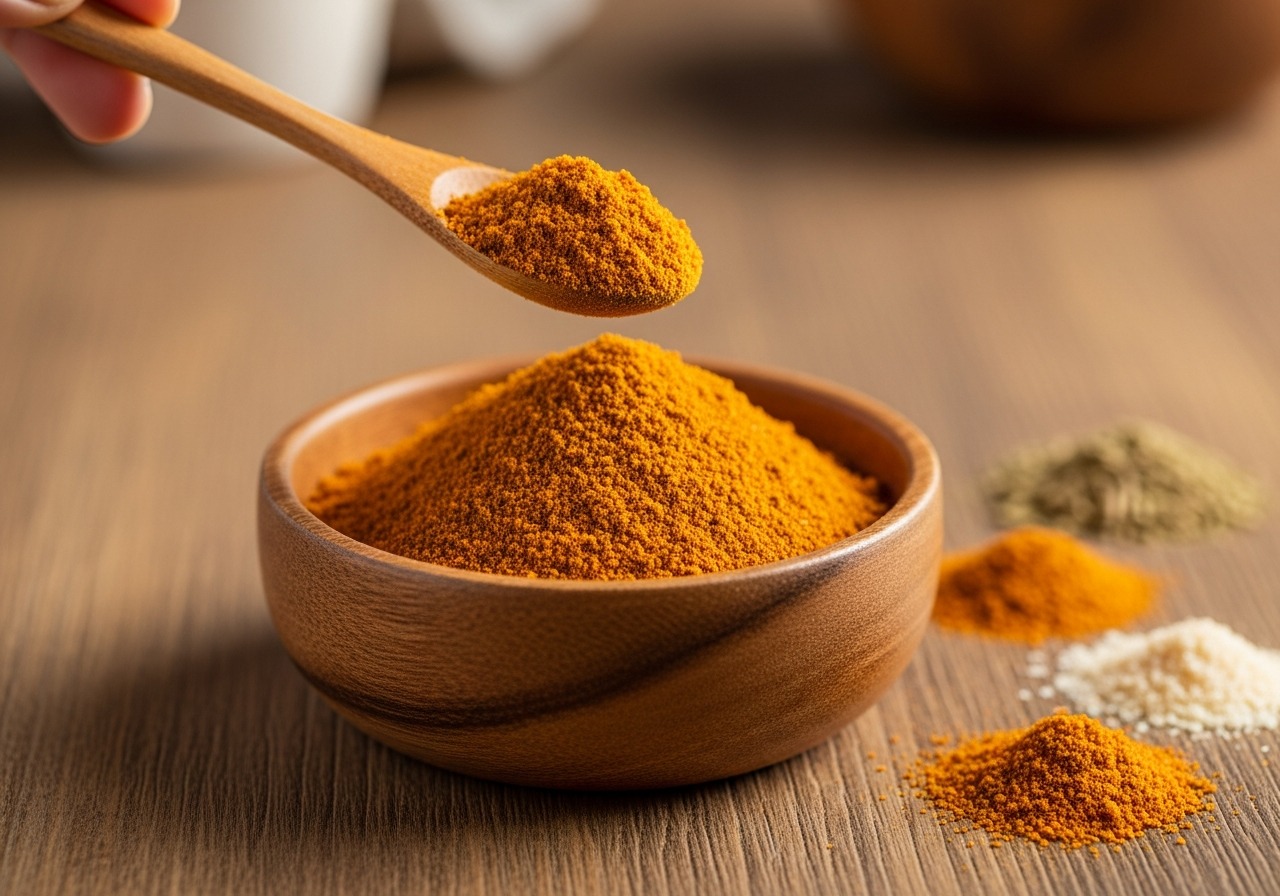
Homemade Sazón Dominicano
Ingredients
Method
- Measure every spice into a medium mixing bowl. If your oregano is whole-leaf instead of ground, crumble it between your fingers or pulse it briefly in a spice grinder until it's a fine dry crumble.

- Whisk the spices together thoroughly with a small whisk or fork for 30 seconds. You want a uniform deep orange-red color with no streaks of yellow cumin or bright red paprika.

- For a finer texture (optional but recommended): transfer the mix to a spice grinder or mini food processor and pulse 10-15 times until it's a smooth powder. This is what gives packet sazón its silky texture.
- Pour into a clean, dry glass jar with a tight-fitting lid. Label with the date. Store in a cool dark cabinet away from the stove — heat and light kill the flavor.
- Use 1 teaspoon of homemade sazón anywhere a recipe calls for 1 packet of store-bought sazón. Add to rice, stews, beans, meats, marinades, sofrito, or anywhere you want Dominican depth and golden color.
Nutrition
Notes
Tried this recipe?
Let us know how it was!Kitchen Tools Used in This Recipe
As an Amazon Associate I earn from qualifying purchases.

Leave a Reply