
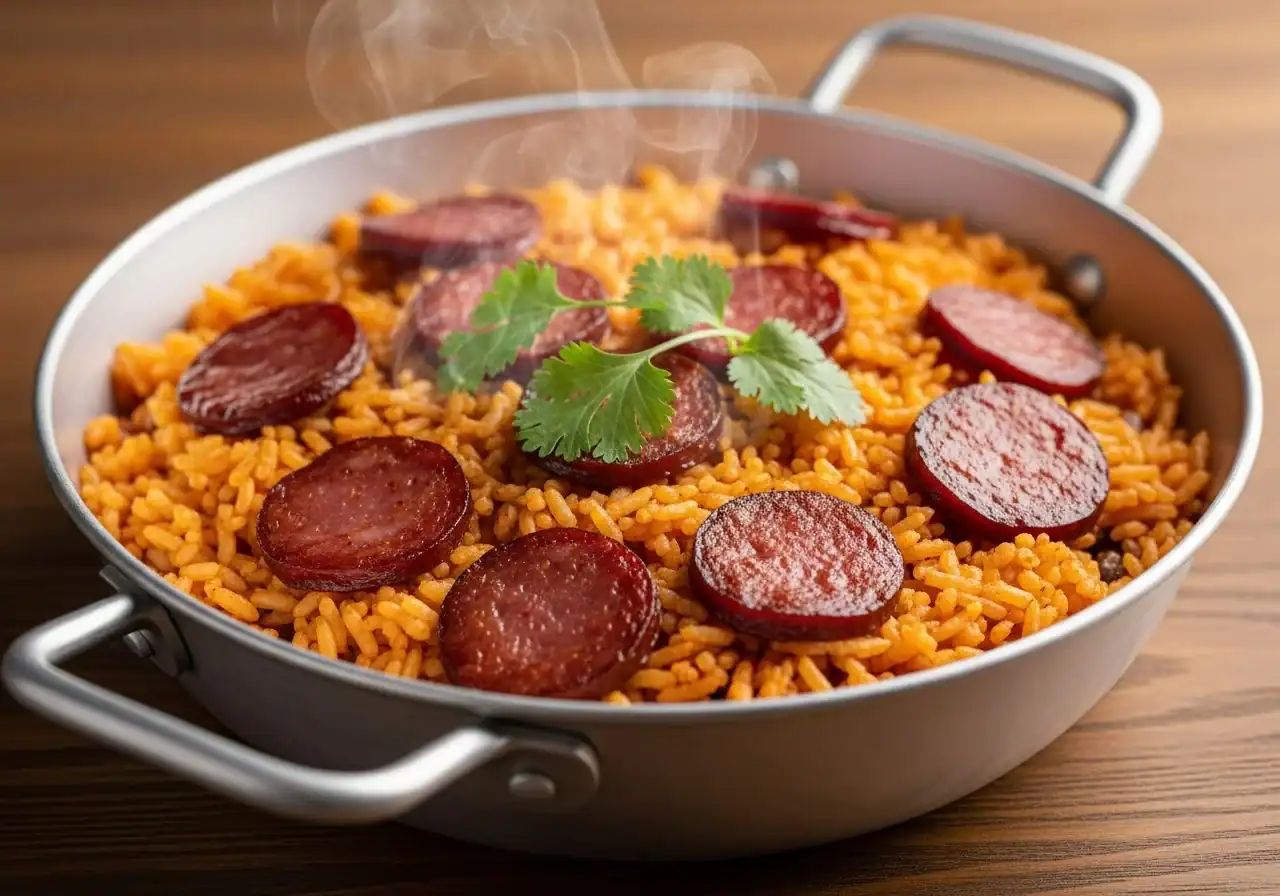
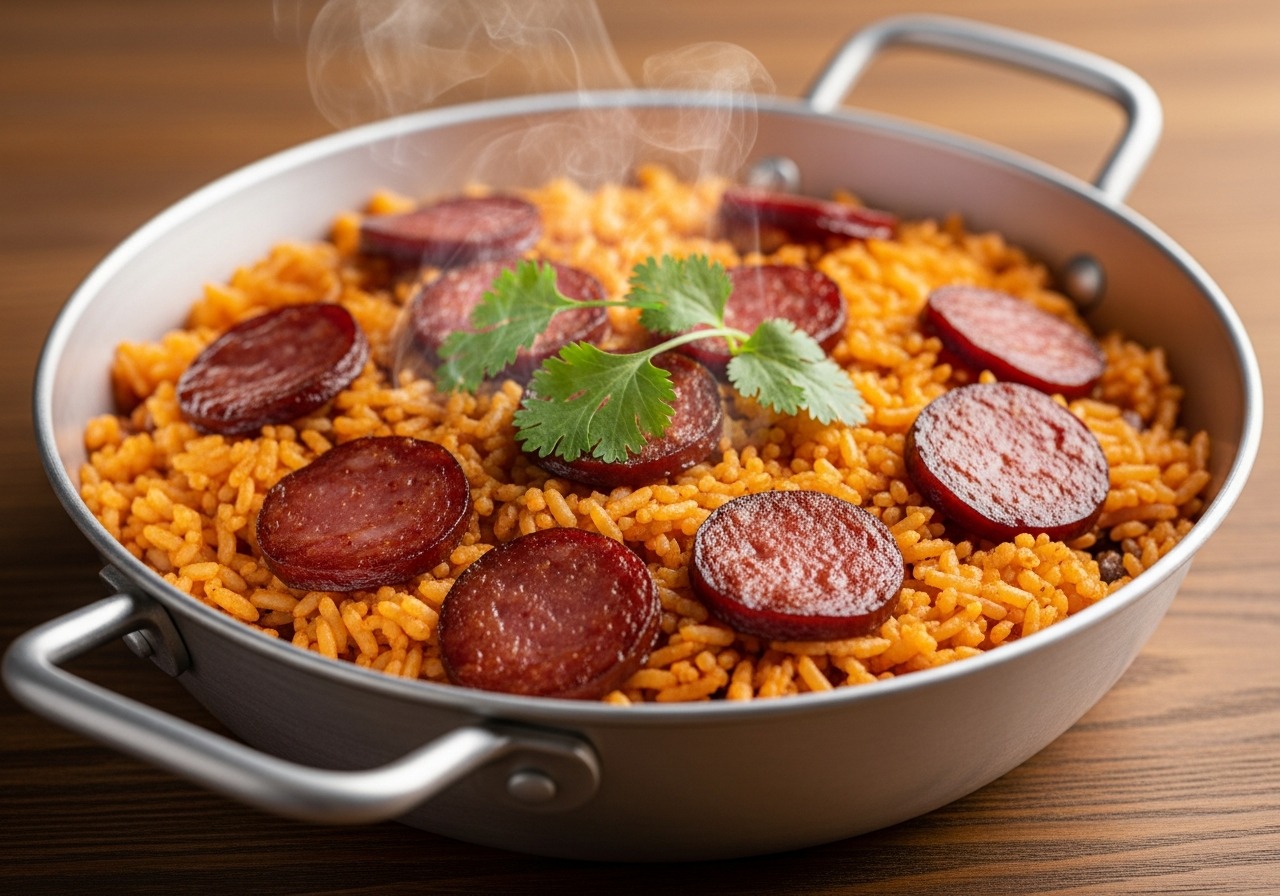
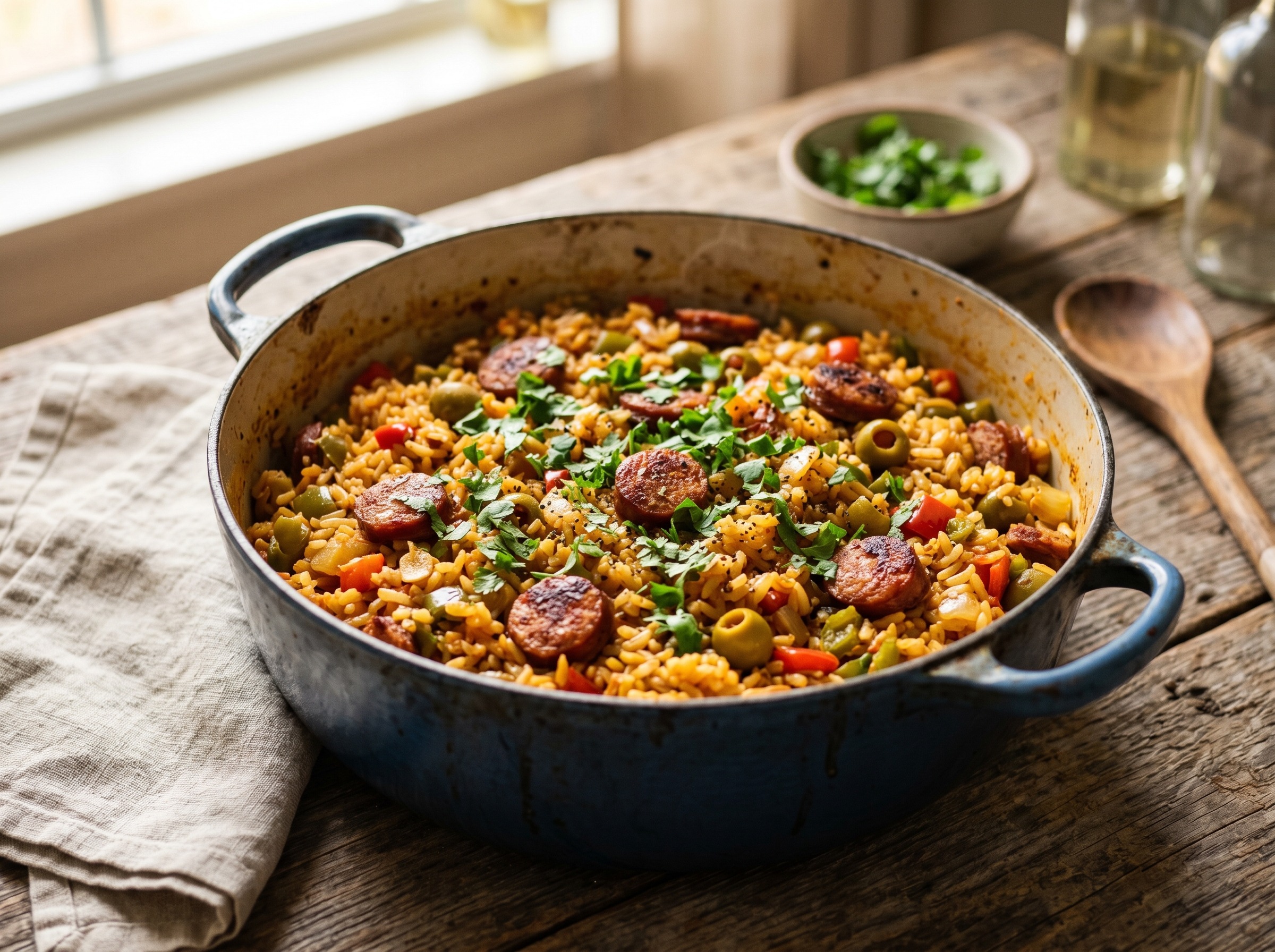
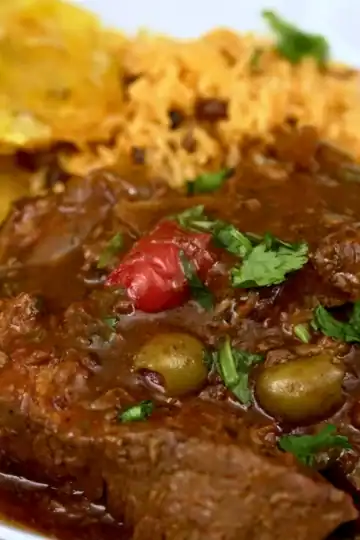
If you grew up Dominican, you grew up eating locrio de salami. It's the weeknight rice dish that appears on the stove when your mom says "qué hay para comer?" and there's nothing fancy in the fridge but there's a tube of Dominican salami sitting there and a bag of rice in the pantry. Twenty minutes later you've got a caldero full of golden-red rice studded with crispy-edged salami pieces, cilantro on top, the bottom of the pot crusty and caramelized, and the whole house smells like sofrito. That's dinner. That's a whole generation of Dominican kids getting fed.
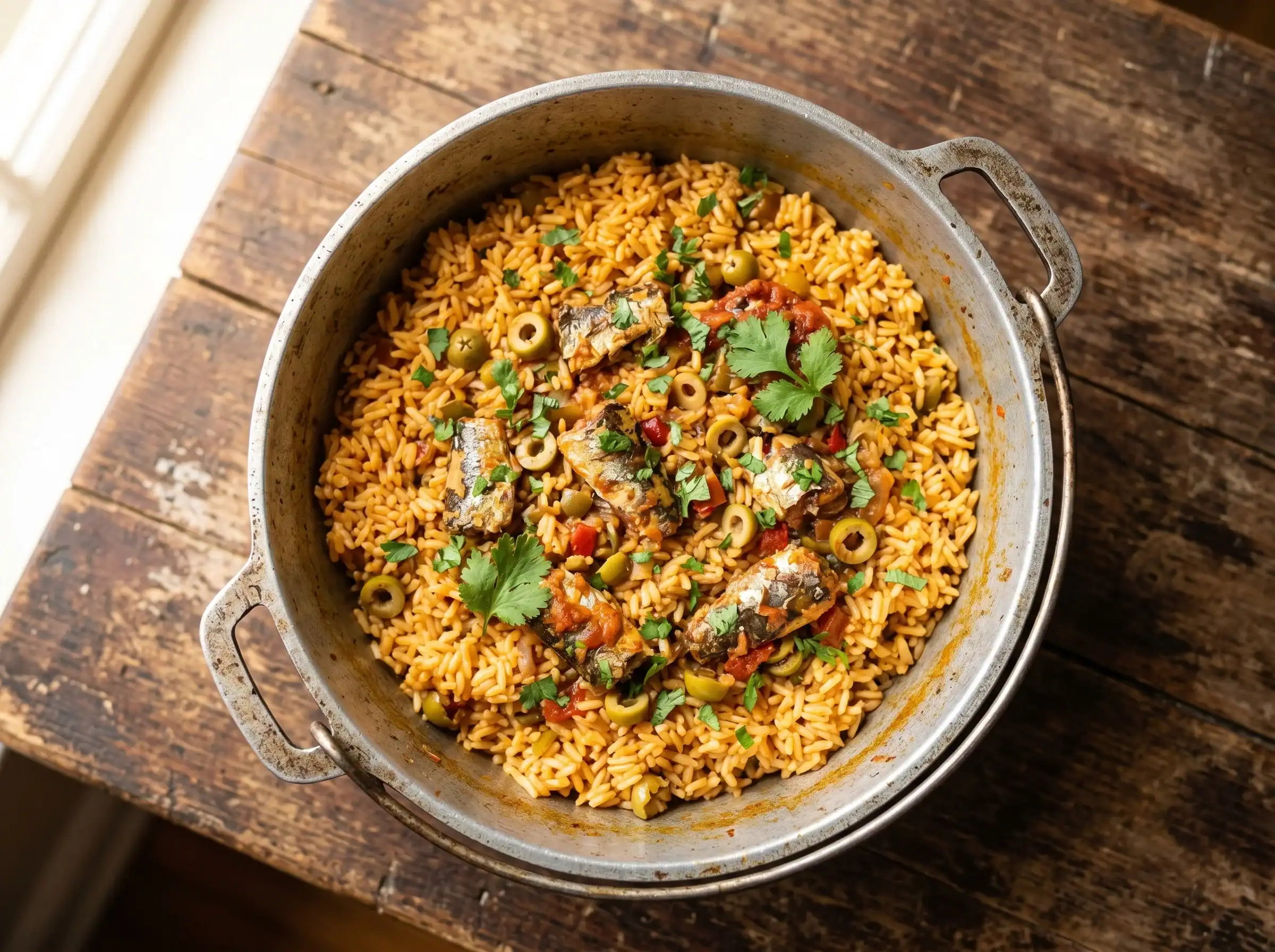
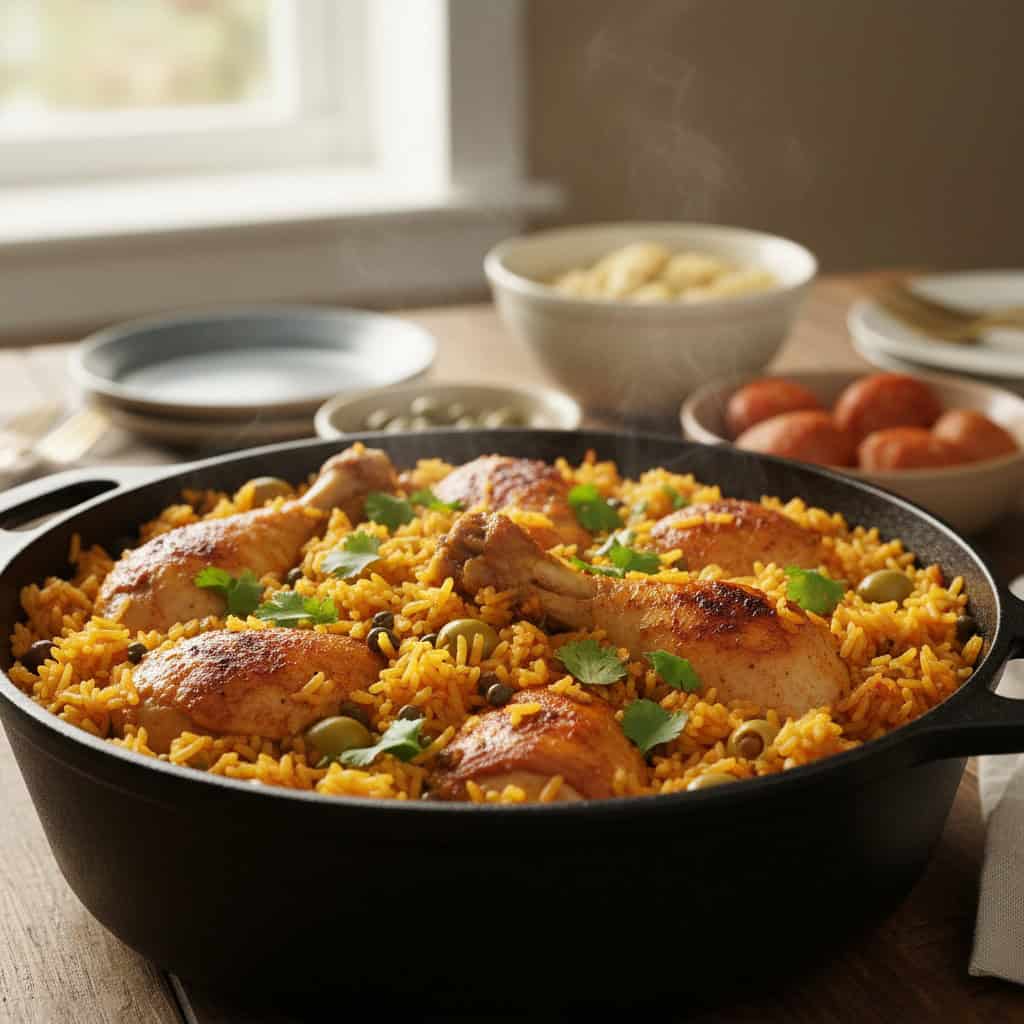
Locrio is the Dominican version of "arroz con todo" — one-pot rice where the protein cooks right in with the rice so every grain picks up the flavor of whatever's in the pot. Locrio de pollo uses chicken, locrio de camarones uses shrimp, locrio de arenque uses smoked herring, and locrio de salami — the one we're talking about — uses Dominican salami (salami caballero), that thick red garlicky-salty sausage that's in every Dominican refrigerator from here to Santo Domingo. You brown the salami first so the fat renders out and seasons everything, then you build the sofrito in that same fat, then you toast the rice in the seasoned oil, then you add liquid and let it go. Twenty minutes on low and a crispy concón at the bottom. That's the formula.
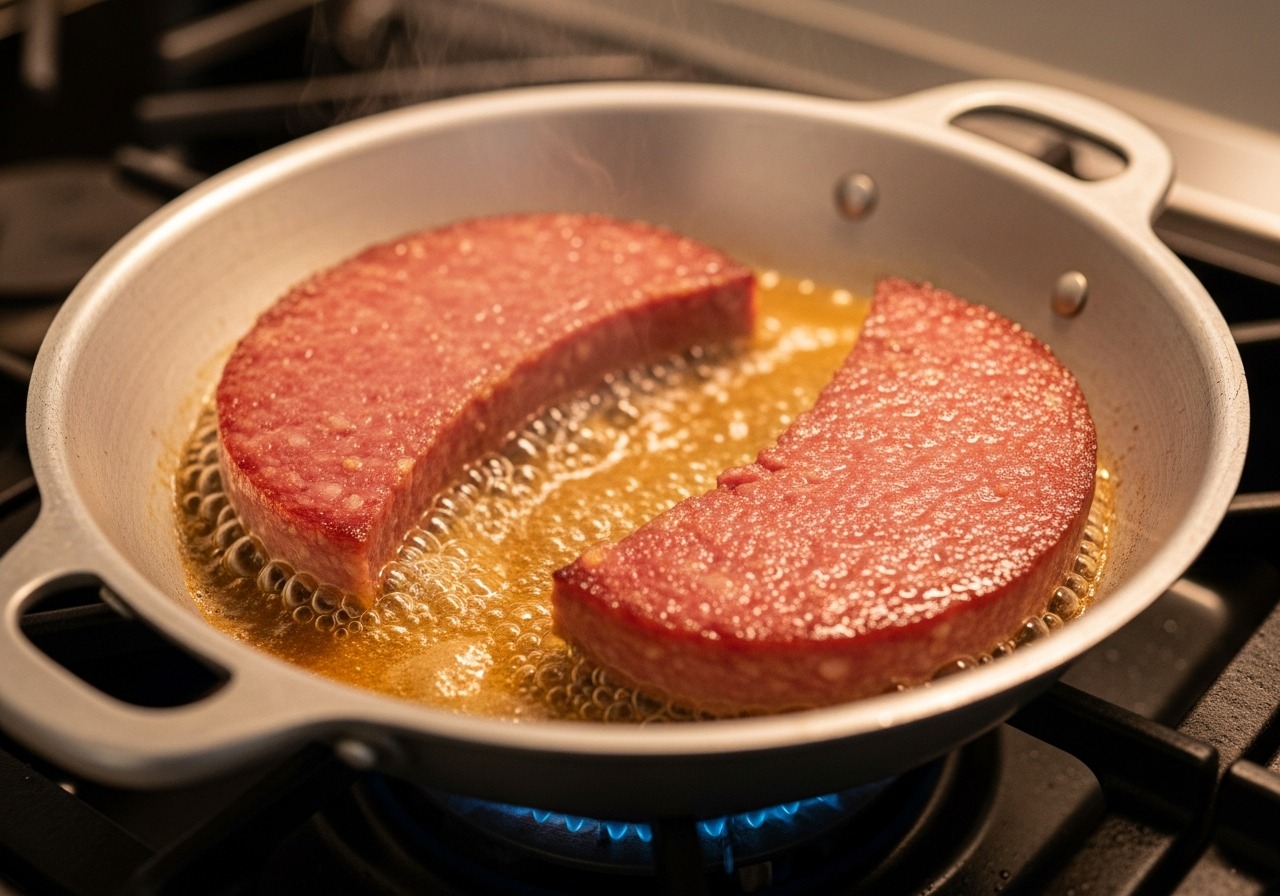
I'm going to tell you the thing nobody tells you. The single biggest difference between a mediocre locrio de salami and one that makes everyone at the table quiet for two minutes because they're eating too fast is the brown on the salami. If your salami goes in and out of the pot white, you've got flavored rice with sausage in it. If your salami gets deep-brown-almost-black-at-the-edges crispy, that caramelization melts back into the dish when you add the liquid and flavors everything. Everything. The sofrito, the rice, the concón. This one step is where amateur locrio and abuela-level locrio separate.
Why You'll Love This Locrio de Salami
- 40 minutes start to plate: One pot, minimal prep, faster than ordering takeout. Actual Dominican weeknight food.
- Pantry-friendly: If you've got a Dominican kitchen stocked, you already have everything. Salami, rice, sofrito, sazón, tomato paste, onion, garlic — done.
- Kid-approved, reliably: There's a reason this is the locrio every Dominican grew up on. Kids love the salty-smoky salami, parents love that it's one pot.
- The concón is the prize: The crispy rice crust at the bottom of the caldero — concón — is worth the whole recipe. Fight your family for it.
- Stretches one tube of salami: 8 oz of salami feeds 4 people generously when you cook it into the rice. Way more economical than serving salami slices on the side.
- Makes great leftovers: Reheats beautifully in a skillet with a splash of water. Dominican kids bringing locrio to school tomorrow know what I'm talking about.
What Is Locrio de Salami?
Locrio de salami is a Dominican one-pot rice dish built around Dominican salami — a thick red pork-and-beef sausage closer in texture to bologna than to Italian salami. The salami gets sliced, browned hard in the bottom of a caldero so the fat renders and the edges crisp, then removed while a sofrito of onion, cubanelle pepper, garlic, and green Dominican sofrito gets built in the leftover fat. Tomato paste and sazón go in for color and umami. Rice gets toasted directly in this flavor-packed oil so every grain gets coated. Water or chicken broth comes in, the salami returns to the pot, and everything cooks covered on low heat for 20 minutes until the rice is fluffy, the salami has re-softened in the hot steam, and a crispy concón has formed at the bottom of the pot. Fluffed, cilantro on top, served hot.
What makes it specifically a "locrio" and not an "arroz con algo" is the technique: the protein cooks in the rice from the start, not separately, so the flavors marry completely. The rice isn't a side — it's the dish, and the salami is structured into it. Dominican cooks distinguish sharply between "arroz con salami" (which would be plain white rice served alongside fried salami slices) and "locrio de salami" (which is this — the one-pot method). They are different dishes. The language matters.
Dominican Salami — Know Your Salami
Not all salami is Dominican salami. The one you want is labeled salami dominicano, salami caballero, or sometimes salami tipo Induveca. The brand Induveca is the most common Dominican export — you'll find it in any Latin grocery store in the US. It comes as a thick red tube, pre-cooked, usually 16 oz. The meat is finely ground, heavily seasoned with garlic and paprika, and has a slightly bouncy texture. Don't substitute Italian hard salami (completely different), pepperoni (too spicy, wrong flavor), or Spanish chorizo (way too intense). If your only option is a non-Dominican sausage, a mild bologna with added garlic powder gets closer than any Italian-style salami. But track down the real thing if you can — it's the dish.
The Caldero Is the Secret Weapon
Dominican rice dishes are written for the caldero — a thin-walled aluminum pot with a heavy bottom and a domed lid. The thin walls heat fast and evenly; the heavy bottom forms the concón without scorching; the domed lid circulates steam so rice cooks evenly. If you don't have one, a heavy Dutch oven is the next best thing. A nonstick skillet with a lid will work but you won't get a real concón — the rice needs to sear slightly against the surface, which nonstick surfaces prevent. If you make Dominican rice more than once a month, buy a 4-quart caldero. They're cheap and they last forever.
Ingredients You'll Need
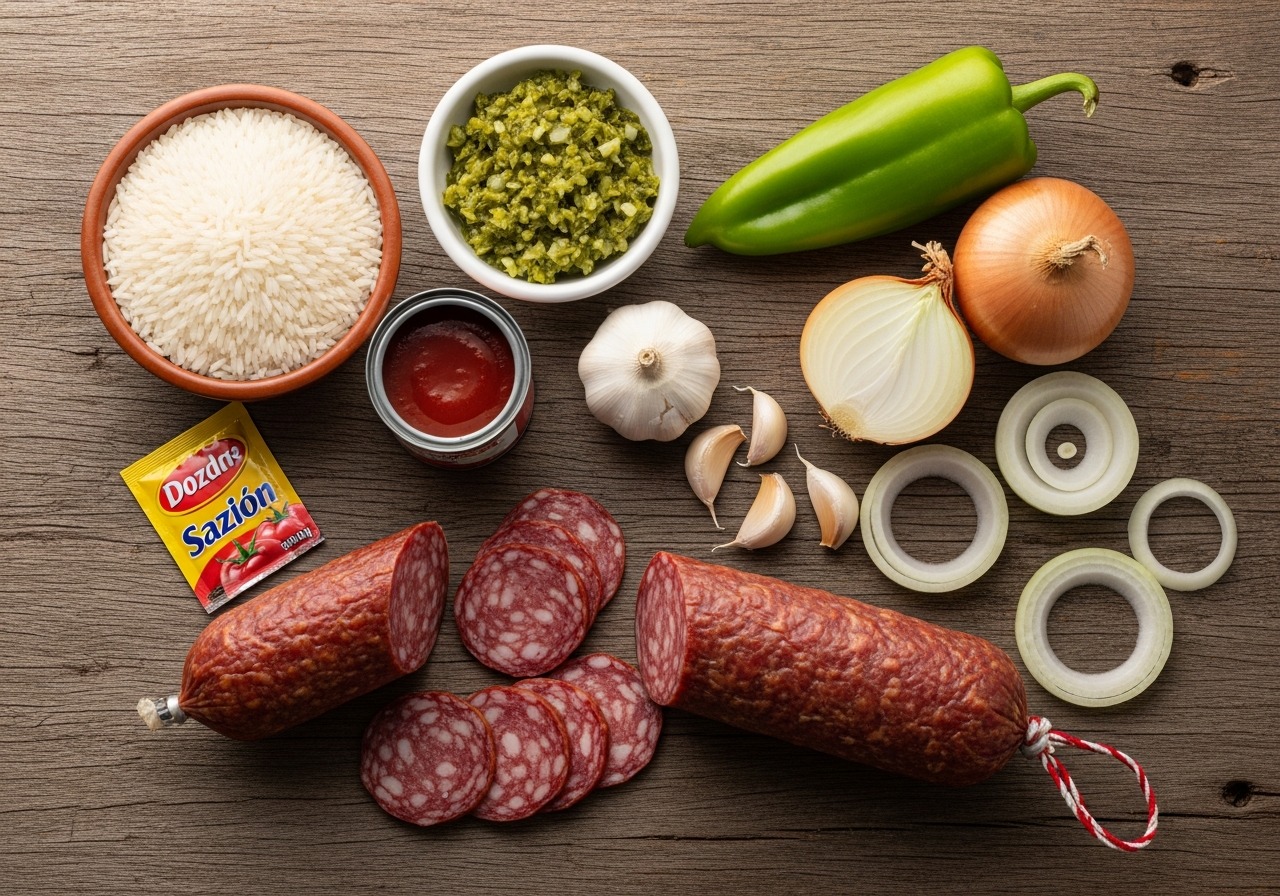
- 2 cups long-grain white rice — jasmine or regular long-grain. Do NOT use medium-grain or parboiled for this. Rinse until the water runs clear.
- 8 oz Dominican salami (salami caballero) — sliced ½ inch thick, then each disc cut in half into half-moons. Half-moons lay flatter in the pot for better browning.
- 2 tablespoon olive oil — just to get the salami started; the salami fat does most of the work after.
- ¼ cup sofrito — Dominican-style green sofrito. Homemade is best but Goya Recaíto works in a pinch.
- 1 packet sazón (or 1 teaspoon homemade sazón dominicano) — the orange-red color and the umami hit.
- 1 teaspoon adobo — the all-purpose Dominican seasoning salt.
- 1 tablespoon tomato paste — depth, color, a touch of sweetness.
- ½ cubanelle pepper, diced small. Bell pepper in a pinch but cubanelle is sweeter and more Dominican.
- ½ onion, diced small.
- 3 garlic cloves, minced.
- 2¾ cups water or chicken broth — broth makes the dish richer; water is what my abuela used because nobody had extra broth in the fridge.
- ½ teaspoon salt — taste first. Salami is already salty. You can always add more at the end.
- 2 tablespoon fresh cilantro, chopped for garnish.
Equipment: A 4-quart caldero or a heavy 4-quart Dutch oven. A wooden spoon. A fork for fluffing.
Step-by-Step Instructions
Step 1 — Brown the Salami Hard
Heat the olive oil in your caldero over medium-high. Once shimmering, add the salami half-moons in a single layer — don't crowd, work in two batches if you have to. Leave them alone for 2-3 minutes. Flip. Another 2-3 minutes on the other side. You want deep reddish-brown, almost-charred edges. The fat will render out and the oil in the pan will turn a reddish-orange. This is the whole flavor base of the dish. Scoop the salami out with a slotted spoon and set aside on a plate. Leave the fat behind.
Step 2 — Build the Sofrito Base
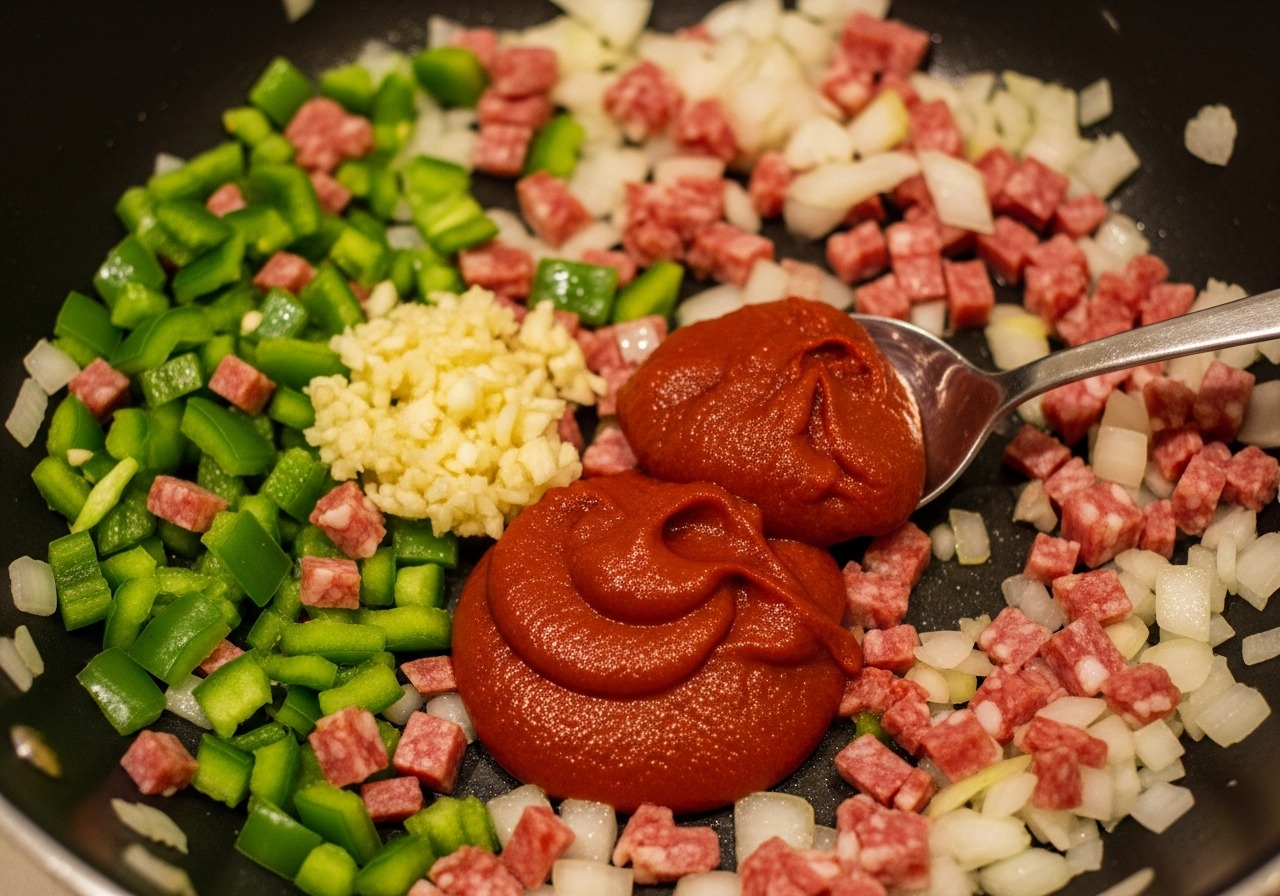
In the same pot with all that beautiful salami fat, add the diced onion, cubanelle pepper, and garlic. Sauté 2 minutes, stirring with a wooden spoon, until everything softens and the kitchen smells like heaven. Add the sofrito and cook 1 more minute — you'll see the moisture boil off and the oil turn bright green. Add the tomato paste, sazón, and adobo. Stir constantly for 1 minute. The tomato paste will darken slightly — that's Maillard-type development and it deepens the final flavor. Everything in the pot should now be a uniform deep red-orange.
Step 3 — Toast the Rice
Add the rinsed rice straight into the pot. Stir with the wooden spoon for a full minute, coating every single grain in the flavored oil. The rice will start to look slightly translucent at the edges. This is the step that most recipes online skip, and it's the reason their locrio tastes flat. Toasted rice holds its structure during the simmer and picks up 3x the flavor of untoasted rice.
Step 4 — Add Liquid and Boil
Pour in the water or chicken broth. Add the ½ teaspoon salt. Stir once to distribute the rice evenly across the bottom of the pot — no hills, no piles. Crank heat to high and bring the whole thing to a rolling boil. As soon as it's boiling hard, you're 30 seconds away from the next step.
Step 5 — Return the Salami and Cover
Drop the salami back into the pot, nestling the half-moons into the rice with the spoon. The liquid should be just barely covering everything. Put the lid on tight — if your lid is loose, drape a layer of aluminum foil under it for a better seal. Reduce heat to low. Set a timer for 20 minutes. Do NOT lift the lid. I know you want to. Don't.
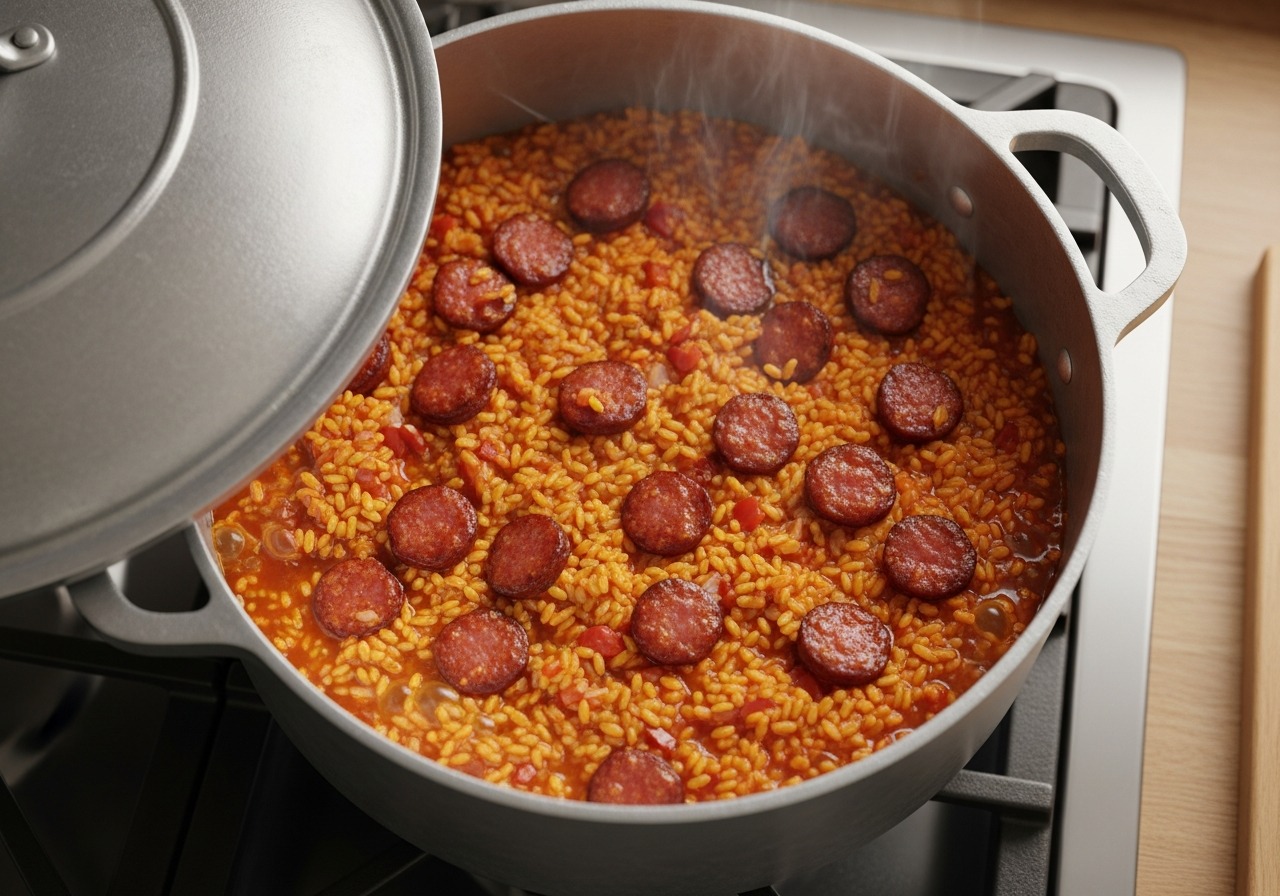
Step 6 — Rest, Fluff, and Find the Concón
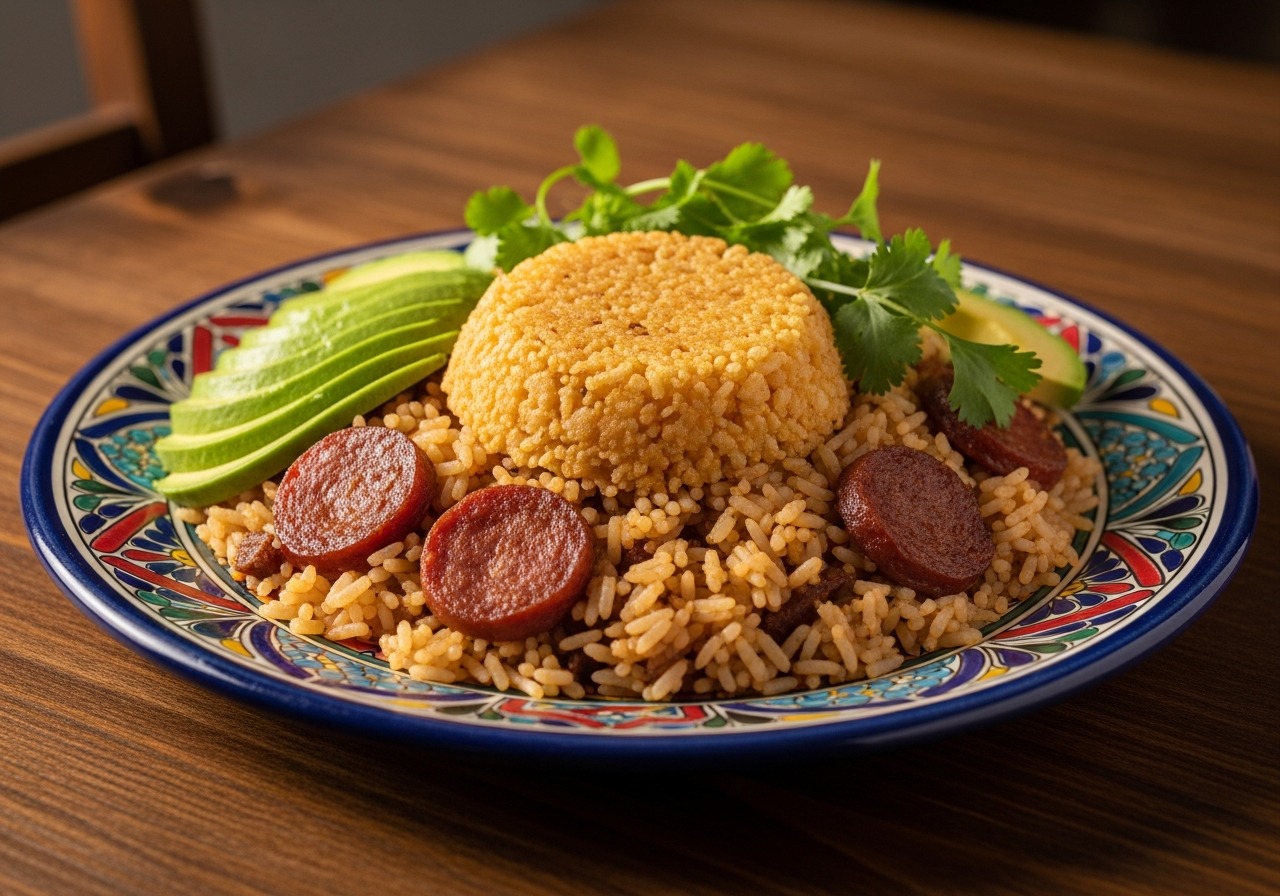
At 20 minutes, kill the heat but leave the lid on. Let it rest covered 5 more minutes. This final rest lets the rice finish absorbing moisture and sets the concón. Uncover, and use a fork to gently fluff from the edges inward — you'll feel the crispy rice crust on the bottom when your fork hits it. Don't mash it. Scrape it up and lay pieces on top of the serving pot. Garnish with a heavy handful of chopped cilantro. Serve immediately.
Pro Tips for Perfect Locrio de Salami
- Brown the salami until you think it's too much: The color on the salami is where the flavor comes from. Pale salami equals pale rice. Go for deep reddish-brown, almost-charred edges. Trust me.
- Rinse the rice: Starchy rice makes gummy locrio. Rinse in a bowl 3-4 times until the water is clear. Drain well before it goes into the pot.
- Toast the rice for 60 seconds: This is the step that separates a home cook's locrio from a restaurant locrio. Do it.
- Don't lift the lid: Every time you lift the lid, you release steam and the rice cooks unevenly. Set the timer, walk away, come back when it goes off.
- The 5-minute rest off-heat is mandatory: Skipping this means the bottom layer of rice is still underdone. Let it rest.
- Concón is the prize — find it: The crispy rice crust at the bottom is the best part. Get a wide spatula and gently scrape the bottom to lift it up in sheets. Serve it on top or as a separate pile that people fight for.
- Taste before adding final salt: Dominican salami is heavily salted already. Adding more salt in Step 4 can make it oversalted. Salt at the table if needed.
Variations
Locrio de Salami con Huevo
Classic Dominican move: plate the locrio, then top each serving with a fried egg with a runny yolk. Break the yolk so it spills down into the rice and salami. Takes the dish from "dinner" to "breakfast-for-dinner glory." Especially common when the locrio is leftover from the night before.
Locrio de Salami y Habichuelas
Add 1 cup of cooked red or pink beans to the pot at Step 5 when you return the salami. The beans cook along with the rice and you end up with a one-pot meal that handles both the rice and the bean course. Great for feeding a bigger crowd.
Spicy Version
Add a diced ají cubanela picante (Caribbean hot pepper) or ½ teaspoon red pepper flakes with the sofrito in Step 2. Adds gentle heat that plays well with the smoky-salty salami.
Vegetable-Heavy Version
Add ½ cup frozen peas and ¼ cup sliced olives with the liquid in Step 4. The peas give a pop of color; the olives add a briny hit that's been traditional in Cibao-region locrio for decades.
What to Serve With Locrio de Salami
- Sliced avocado: The textbook Dominican pairing. Cold avocado next to hot locrio is the balance the plate needs. One quarter of an avocado per person.
- Ensalada verde: A simple Dominican green salad — shredded lettuce, tomato, onion, vinegar and oil. Cuts the richness of the rice.
- Fried egg on top: Especially for leftovers the next day. Cracks this from a side dish into a full meal.
- Tres golpes breakfast plate: If you're going full Dominican brunch, locrio de salami alongside mangú with the three hits (salami, cheese, egg) is maximum Dominican.
- Arroz blanco dominicano: Not together — but if you're feeding people who prefer plain rice, make half a pot of locrio and half a pot of arroz blanco and let them pick.
- Presidente or Malta: A cold Presidente lager or a sweet Malta Morena in the glass next to the plate. That's Dominican dinner.
Cultural Notes
The Locrio Family Tree
- Locrio is a category, not a dish: Locrio de pollo, de salami, de camarones, de arenque (smoked herring), de longaniza, de chicharrón, de bacalao (salt cod) — there are a dozen Dominican locrios. All of them follow the same one-pot method. The only variable is the protein.
- Weekday cooking, not Sunday cooking: Locrio de salami is specifically weeknight food. Sunday food in the DR is sancocho, asado, or mangú. Locrio shows up Monday through Thursday when the family needs dinner in 40 minutes.
- The salami is political: Dominican salami (Induveca being the biggest brand) is one of those foods that Dominicans abroad desperately miss. It's been a running joke for decades that people returning to NY or Miami from a trip to the DR pack a tube of Induveca in their suitcase. Customs has strong opinions about this. The salami wins.
- The word "locrio": The etymology is disputed — some say it's a Dominican cousin of Arabic "loqrio" (an old one-pot rice term), others trace it to a contraction of "loco con arroz" (crazy with rice). Either way, it's a uniquely Dominican word for a uniquely Dominican technique.
You May Also Like This
Frequently Asked Questions
What is locrio de salami?
Locrio de salami is a traditional Dominican one-pot rice dish made by browning Dominican salami, building a sofrito base in the salami fat, toasting rice in that flavored oil, and simmering everything together with tomato paste, sazón, and broth until the rice is tender and a crispy concón forms at the bottom of the pot. It's one of the most common weeknight dinners in Dominican households.
What kind of salami do I use?
Dominican salami, specifically — labeled salami dominicano, salami caballero, or by brand name Induveca. It's a thick red pre-cooked pork-and-beef sausage sold in tubes at Latin grocery stores in the US. Do not substitute Italian hard salami, pepperoni, or Spanish chorizo — the flavor profile is totally different. Dominican bologna or mild garlic sausage is the closest substitute if you absolutely can't find the real thing.
Can I use brown rice?
Technically yes, but you'll need to adjust liquid and time — 3¼ cups liquid, 40-45 minutes covered, 10 minutes rest. Brown rice also doesn't form a concón the same way white rice does. If you want authentic locrio, use white long-grain. If you want a whole-grain version for health reasons, brown works.
Why did my rice come out mushy?
Three possible culprits. First, you didn't rinse the rice (too much starch). Second, you used too much liquid — stick to the 2¾ cups for 2 cups of rice ratio. Third, you lifted the lid during the simmer, which changed the steam balance. If it's already mushy, spread it on a sheet pan to release steam and save it as leftovers. Next time: rinse, measure, don't peek.
What if I don't have sofrito?
Make a quick one: blend 1 bunch cilantro, ½ green bell pepper, ¼ onion, 4 garlic cloves, and 1 teaspoon vinegar with a splash of water until smooth. Use ¼ cup in this recipe, freeze the rest in ice cube trays for next time. Or buy a jar of Goya Recaíto from any grocery store as an acceptable substitute. But homemade sofrito is always better.
How do I get a really good concón?
Three things. Use a caldero or heavy Dutch oven — not a nonstick pot. Use enough oil in the bottom (the salami fat is usually enough). And after the 20-minute simmer, crank the heat to medium-high for 90 seconds right before you kill it — this intensifies the crust at the bottom. Then rest 5 minutes covered before fluffing. That's concón.
Can I make this ahead?
Yes — locrio de salami holds beautifully. Make it, let it cool, refrigerate in an airtight container up to 4 days. To reheat: add the portion to a skillet with 2 tablespoons of water, cover, heat on medium-low for 5-6 minutes until hot. The rice revives like new. I'd avoid the microwave — it dries the rice out unevenly.
Is this the same as arroz con salami?
No. "Arroz con salami" would be plain white rice served with fried salami slices on top. "Locrio de salami" is the one-pot method where the salami cooks in the rice. Different dish, different technique, different flavor. Dominicans distinguish sharply between the two.
Can I freeze locrio?
You can, but the texture is noticeably worse after thawing — the rice gets a little mushy. If you must freeze, portion it into airtight containers, freeze up to 1 month, thaw overnight in the fridge, and reheat in a covered skillet with water. It's acceptable but not great. Better to eat it within 4 days of making.
Locrio de Salami
Ingredients
Method
- Heat olive oil in a heavy caldero or Dutch oven over medium-high heat. Add salami slices in a single layer and cook 2-3 minutes per side until edges crisp and a deep reddish-brown color forms. Remove salami with a slotted spoon, leaving the fat in the pot.

- In the same pot with the salami fat, add the diced onion, cubanelle pepper, and garlic. Sauté 2 minutes until fragrant and softening.
- Stir in the sofrito and cook 1 minute until the water evaporates and the color deepens. Add tomato paste, sazón, and adobo — stir constantly for 1 minute until the paste darkens and everything turns a uniform red-orange.
- Add the rinsed rice and stir to coat every grain in the spice-oil mixture. Toast the rice for 1 minute — this is the step most people skip and it's what gives locrio its depth.
- Pour in the water or broth, add salt, and stir once to distribute the rice evenly. Bring to a rolling boil over high heat.
- Return the browned salami to the pot, nestling the pieces into the rice. Reduce heat to low, cover tightly, and cook 20 minutes without lifting the lid.
- Kill the heat. Let it sit covered 5 more minutes off the heat. Uncover, fluff gently with a fork from the edges, turning the concón (crispy bottom crust) up from the bottom. Garnish with chopped cilantro and serve immediately.
Nutrition
Notes
Tried this recipe?
Let us know how it was!Shop This Recipe
View on Amazon →
View on Amazon →
View on Amazon →
As an Amazon Associate I earn from qualifying purchases at no extra cost to you.
Twenty minutes under the lid, five minutes of rest, cilantro on top. That's the whole thing. Welcome to the Dominican kitchen.

Leave a Reply