
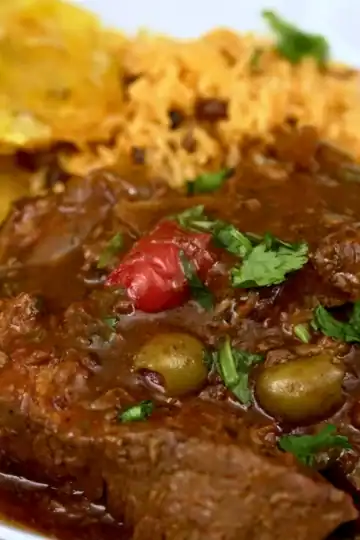
Res guisada is the Sunday lunch that raised me. Tender chunks of beef simmered slow in a tomato and sofrito base, bay leaves floating on top, olives stuffed with pimento bobbing around, the whole kitchen smelling like something serious is happening on the stove. You ladle it over white rice, scoop a spoonful of habichuelas guisadas next to it, drop a few slices of aguacate on the side, and that right there is la bandera dominicana — the Dominican flag on a plate.
Growing up in Santo Domingo, Sunday meant my mom was home from work and the caldero was out early. She'd start marinating the beef before church, and by the time we got back the whole apartment smelled like slow-cooked res. My grandma did it the same way in her house in San Cristóbal. Every Dominican family has their own small twist — some add potato, some do it with a splash of red wine, some skip the olives — but the backbone is always the same: sofrito, tomato, beef, time.
Today I'm showing you exactly how my family makes res guisada. No shortcuts. The slow simmer is the whole point. If you try to rush this dish, you end up with tough chewy beef and watery sauce. Give it 75 minutes on low heat and you get meat that falls apart under a fork with a sauce that's thick and deep and impossible to stop eating.
Why You'll Love This Res Guisada Recipe
- Tender fall-apart beef every time: The marinate + sear + slow simmer method guarantees beef that cuts with a fork, not a knife.
- One-pot Sunday dinner: Everything happens in the caldero — easy cleanup, maximum flavor from the fond.
- Authentic Dominican flavor: Sofrito, sazón, olives, bay — the exact seasoning profile my mom used in Santo Domingo, no substitutions.
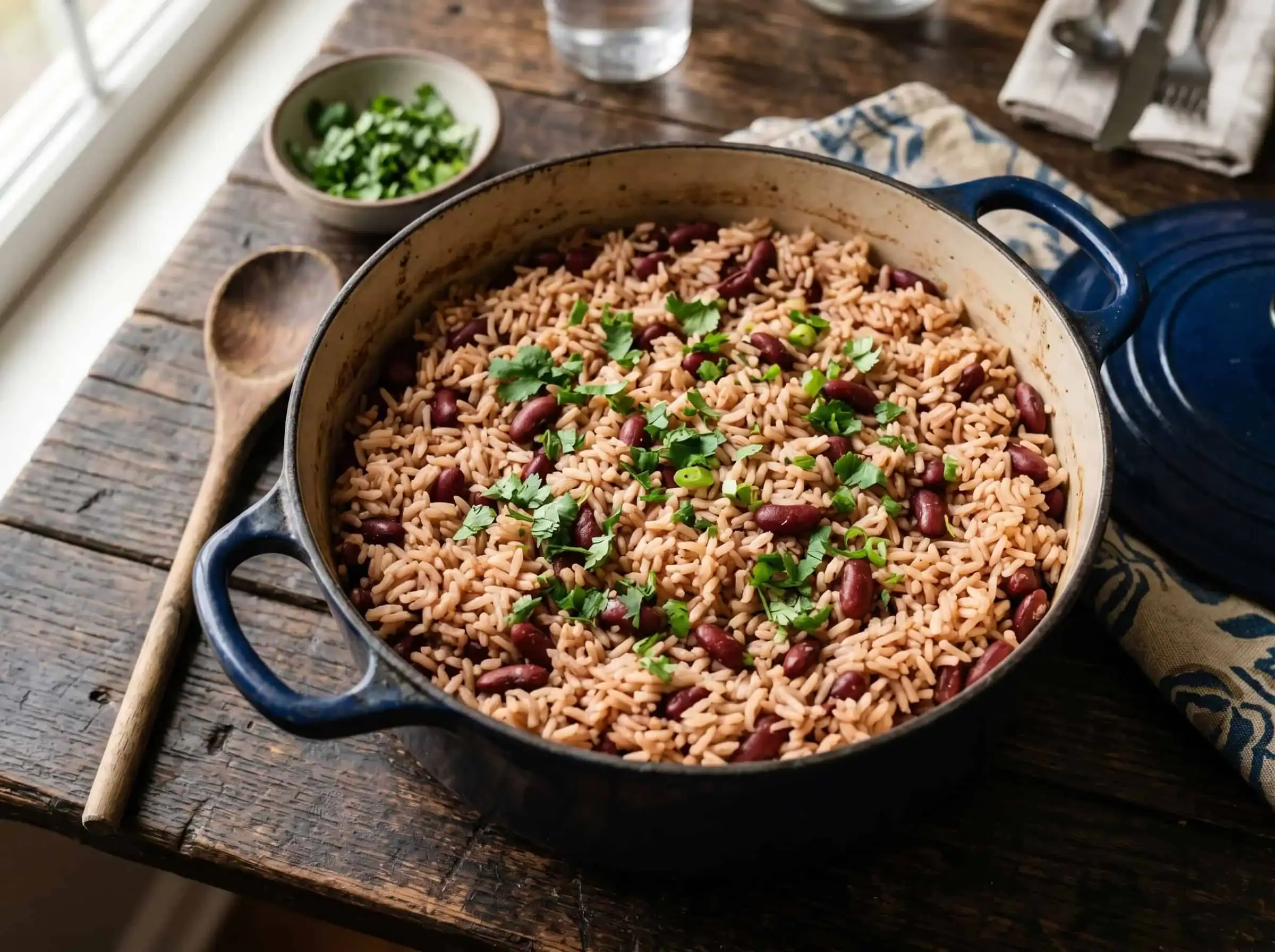
- Makes la bandera instantly: Serve it over arroz blanco with habichuelas guisadas and you have the national dish on your table.
- Reheats better than day one: The sauce gets thicker and deeper overnight. Leftovers are legendary.
What Is Res Guisada?
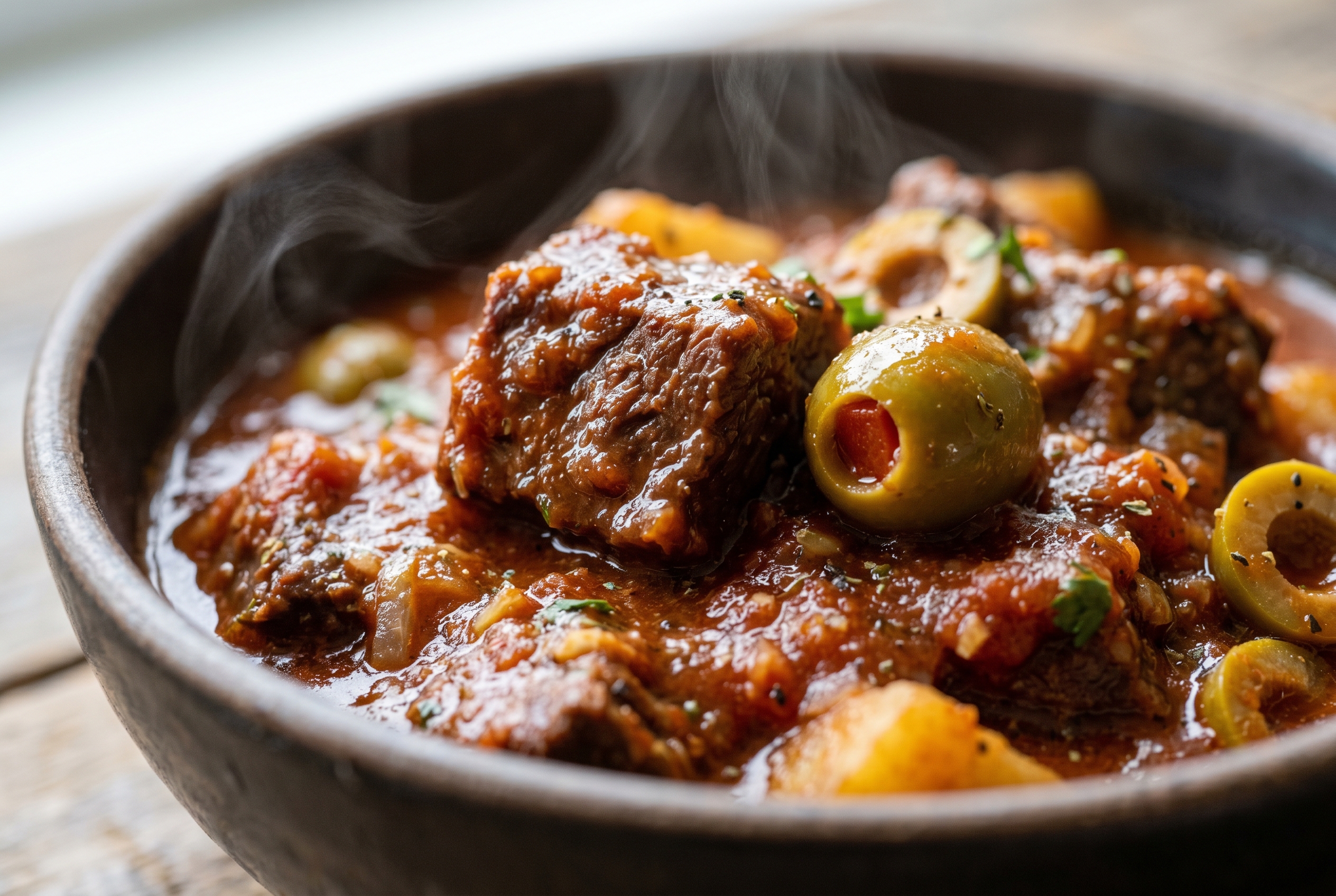
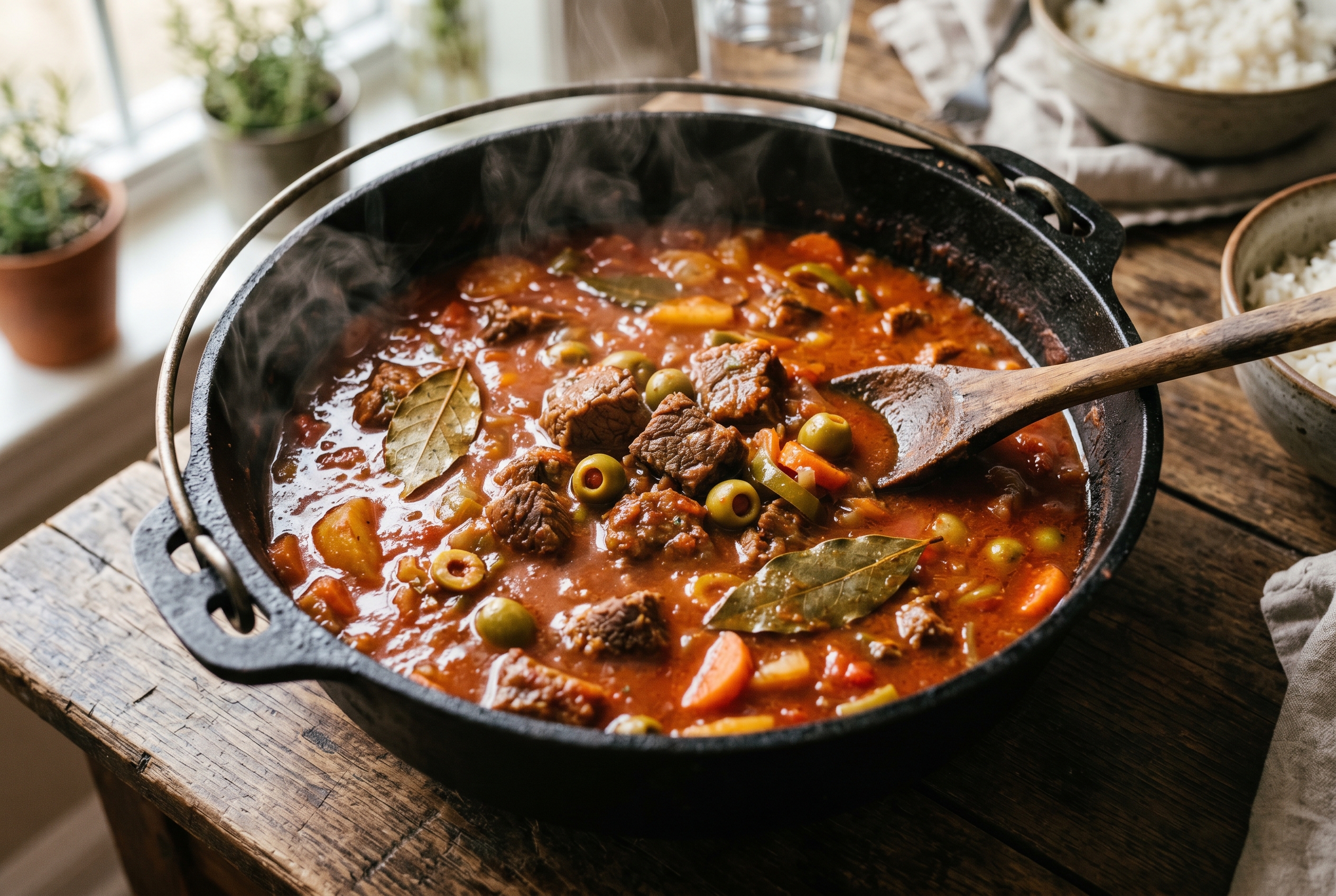
Res guisada is Dominican stewed beef — cubed beef (usually chuck or round) browned in oil, then simmered low and slow in a sauce built from sofrito, tomato paste, tomato sauce, pimento-stuffed olives, bay leaves, and sazón. The finished dish has thick brick-red gravy that clings to the meat, with the olives adding salty pop and the bay leaves giving the whole pot that herbal backbone. It's served hot, spooned over white rice, with the sauce soaking into every grain.
"Guisar" in Dominican Spanish means to stew or braise in a thick sauce. Res guisada sits alongside pollo guisado, chivo guisado, and carne guisada as the core Dominican stew family. Each one uses the same basic technique — sear, sauté aromatics, build a tomato-sofrito base, add protein back, simmer — but the protein dictates the cook time and the supporting flavors. Res guisada is the richest and most robust of the bunch because beef chuck has enough fat and connective tissue to handle a long braise without drying out.
In Dominican households, res guisada shows up at Sunday lunch more than any other meal. It's the dish a mom makes when the whole family is coming over, the dish abuela taught you without a written recipe, the dish you smell in the hallway of every apartment building in Santo Domingo on a Sunday afternoon. It's weekend food, comfort food, "la comida de mami" food. You don't make res guisada on a Tuesday night — you make it when you have time to do it right.
Ingredients You'll Need
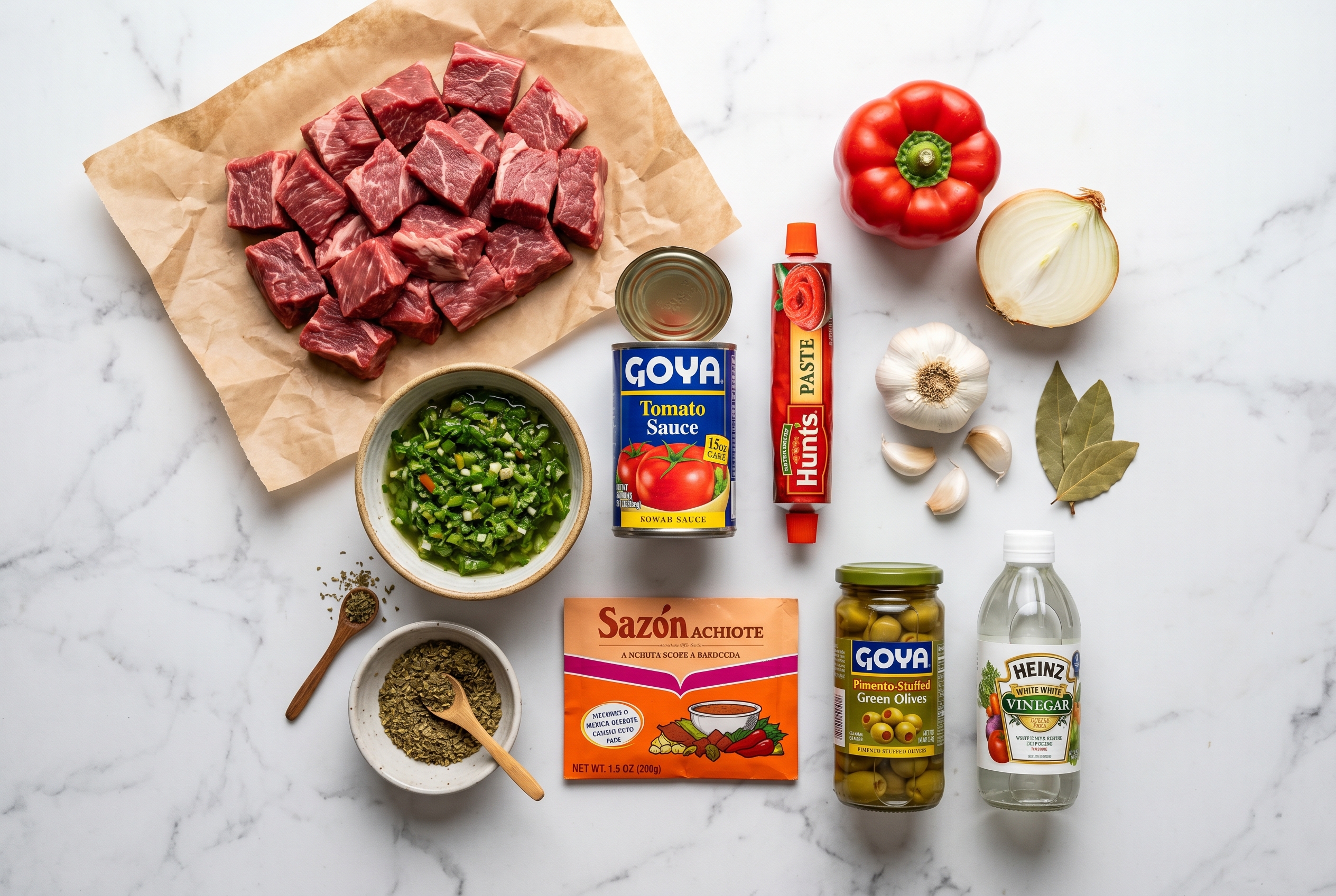
- 2 lb beef chuck, cut into 1-inch cubes
- 3 tablespoon sofrito (homemade or store-bought)
- 2 tablespoon oil (corn, vegetable, or olive)
- 1 medium onion, diced
- 1 red bell pepper, diced
- 3 garlic cloves, mashed
- 1 can (8 oz) tomato sauce
- 2 tablespoon tomato paste
- 2 bay leaves
- 1 teaspoon sazón (Goya or Badia with cilantro and achiote)
- 1 teaspoon dried oregano
- ½ cup pimento-stuffed green olives
- 2 teaspoon white vinegar
- 1 teaspoon sugar (for color and to cut tomato acidity)
- 2 cups water or beef broth
- Salt and black pepper, to taste
Equipment: A heavy caldero or Dutch oven is essential for even slow cooking. A sharp chef's knife for cubing the beef.
6 Things to Serve With Res Guisada
- Arroz blanco: The non-negotiable base — white rice soaks up the gravy like it was made for it.
- Habichuelas guisadas: Stewed red beans on the side, and you've built la bandera.
- Tostones: Crispy smashed plantains for texture contrast.
- Aguacate: Sliced avocado on the side, always.
- Ensalada verde: Simple green salad with oil and vinegar cuts the richness.
- Concón: Crispy rice scraped from the bottom of the pot — Dominican gold.
Step-by-Step Instructions
Step 1 — Marinate the Beef
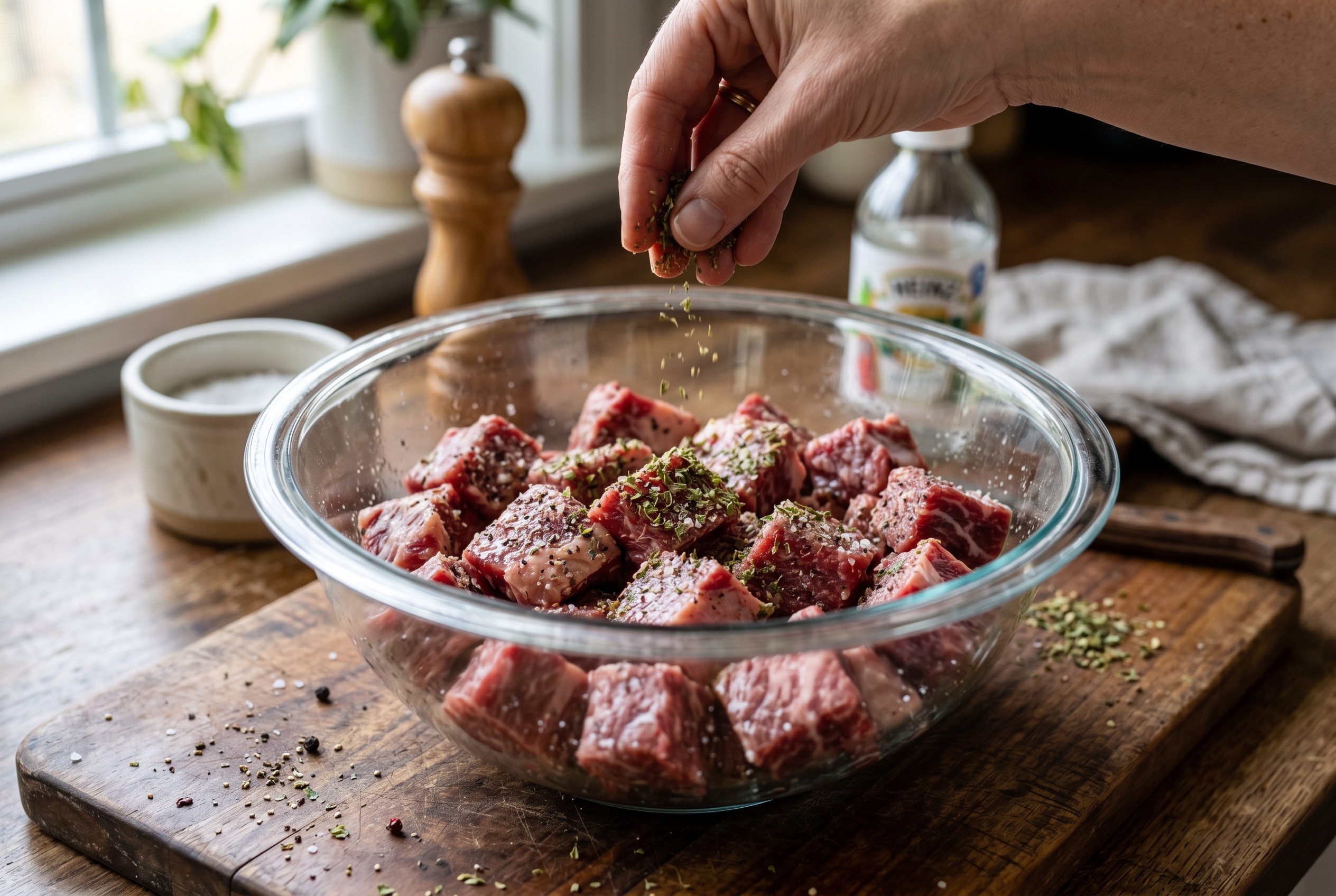
Cut the beef chuck into 1-inch cubes, trimming off any large pieces of hard fat (leave the soft fat — it melts into the sauce). In a bowl, toss the cubes with 1 teaspoon salt, ½ teaspoon black pepper, 2 teaspoon vinegar, and 1 teaspoon oregano. Let sit at room temperature for 30 minutes. This short marinade wakes up the meat and gives you a better sear.
Step 2 — Sear the Beef in Batches
Heat 2 tablespoon oil in a heavy caldero over medium-high heat until shimmering. Add 1 teaspoon sugar to the hot oil — this is an old-school Dominican trick that gives the sauce a deep mahogany color. Let the sugar melt and darken (about 30 seconds), then add the beef in a single layer. Work in 2 batches so the caldero isn't crowded — crowded beef steams, it doesn't sear. Brown each batch 3-4 minutes per side, then transfer to a plate.
Step 3 — Build the Sofrito Base
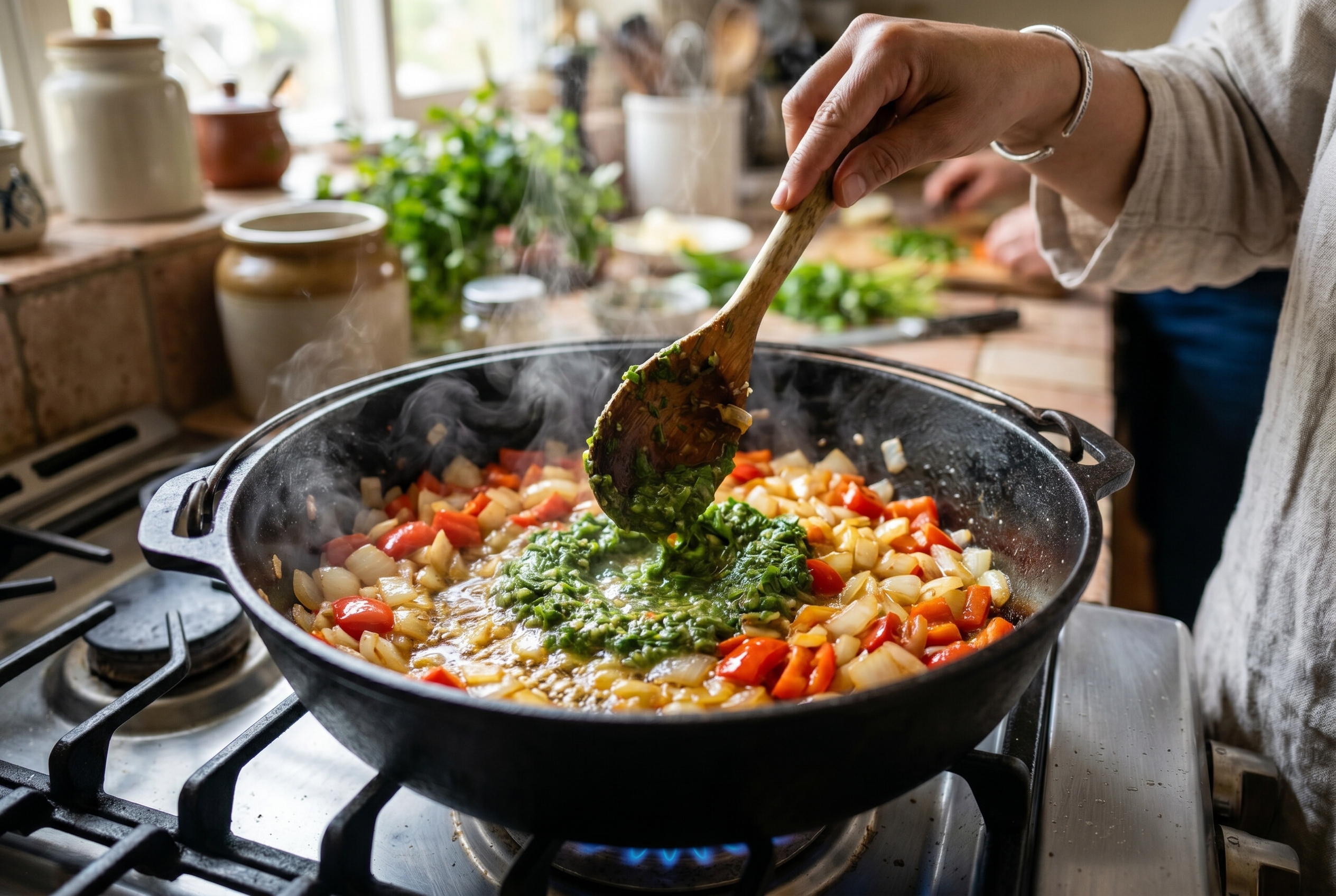
In the same caldero (don't clean it — that fond is pure flavor), drop the heat to medium. Add the diced onion, red pepper, and mashed garlic. Sauté 3-4 minutes until the onion turns translucent. Add 3 tablespoon sofrito and cook another 2 minutes, stirring constantly. The kitchen should smell like every Dominican home you've ever walked into at lunchtime.
Step 4 — Add Tomato and Bloom
Push the sofrito to the side and add 2 tablespoon tomato paste directly to the hot spot. Let it toast for 60 seconds — you want it to turn from bright red to brick red. Stir it into the sofrito. Then pour in the 8 oz can of tomato sauce, add the bay leaves, sazón, and any remaining oregano. Stir to combine.
Step 5 — Return the Beef and Simmer
Return the seared beef and any juices on the plate back to the caldero. Add the olives and 2 cups of water or beef broth. The liquid should just barely cover the meat. Bring to a gentle boil, then drop the heat to low, cover, and simmer for 60 minutes. Check at the 30-minute mark and stir. If the sauce is reducing too fast, add another ¼ cup of water.
Step 6 — Uncover and Reduce
After 60 minutes, uncover the caldero and continue simmering for another 15 minutes to thicken the sauce. The beef should be fork-tender at this point. Taste and adjust salt and pepper. Remove the bay leaves before serving. Ladle generous portions over arroz blanco and serve immediately.
Pro Tips for Perfect Res Guisada
- Always sear in batches: This is the single biggest mistake home cooks make. Crowding the caldero drops the oil temperature and steams the beef gray instead of browning it. Two batches, maybe three — worth the extra 4 minutes.
- Use the sugar-oil trick for color: The teaspoon of sugar melted into the hot oil before the beef is what gives Dominican guisos their signature deep red-brown color. Don't skip it — it's not for sweetness, it's for the caramelized base.
- Don't skimp on the simmer time: Chuck needs time for the connective tissue to break down. 60 minutes covered plus 15 uncovered is the minimum. If you have time, go 90 minutes covered — the beef gets even more tender.
- Chuck beats sirloin every time: Lean cuts like sirloin or top round will be tough and dry in this dish. Chuck has the fat and collagen needed for a proper braise. Bone-in chuck or short rib work beautifully too.
- Taste at the end, not the start: Sazón, olives, and the reduction all concentrate the salt as the sauce cooks down. Wait until the very end to adjust salt or you'll oversalt.
Variations
Res Guisada with Potatoes
Add 2 medium yellow potatoes, peeled and cut into 1-inch cubes, during the last 25 minutes of simmering. They soak up the sauce and stretch the dish for a bigger family. This is how my tía in La Vega always made it.
Red Wine Res Guisada
Replace ½ cup of the water with dry red wine (merlot or tempranillo). Deglaze the caldero with the wine right after searing the beef, scraping up the fond. Richer, slightly more Spanish in character. Excellent for a dinner party.
Pressure Cooker Version
Follow the recipe through Step 5, but instead of simmering on the stove, lock the lid and cook at high pressure for 25 minutes with a natural release. Uncover, reduce on sauté mode for 10 minutes. Cuts the total time roughly in half with nearly identical results.
What to Serve With Res Guisada
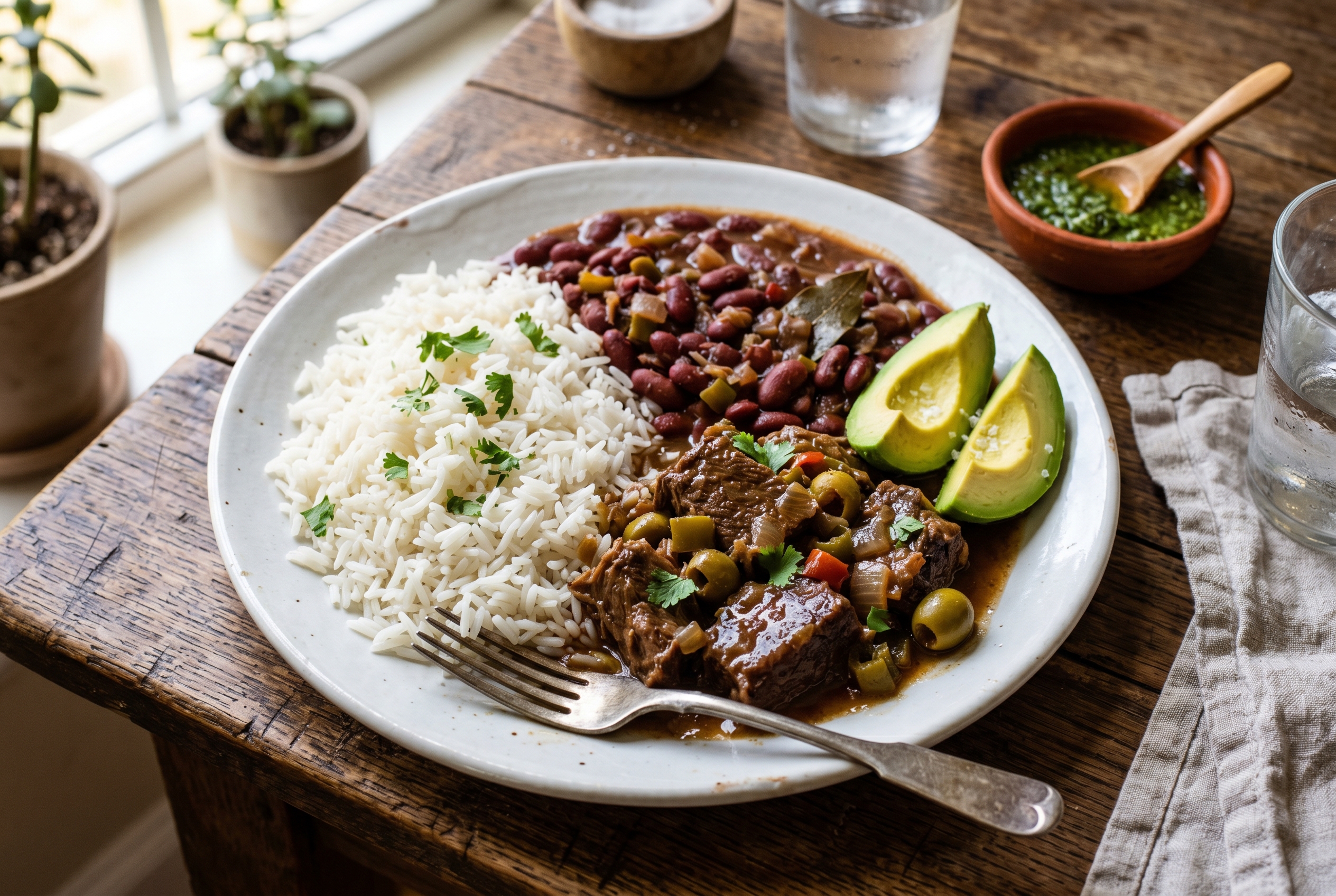
- Arroz blanco: The only acceptable base. Fluffy Dominican white rice.
- Habichuelas guisadas: Stewed red beans — completes la bandera.
- Aguacate: Sliced avocado on the side, room temperature.
- Tostones: For dipping into the sauce.
- Ensalada verde: Simple green salad to cut the richness.
Frequently Asked Questions
What cut of beef is best for res guisada?
Beef chuck is the gold standard — it has enough fat and collagen to stay tender through a long braise. Bottom round, short rib, or boneless shoulder also work. Avoid lean cuts like sirloin or eye of round; they turn tough and dry. Ask your butcher for "stew meat" cut from chuck.
Can I make res guisada in a slow cooker?
Yes. Sear the beef and build the sofrito on the stove as usual (don't skip this — searing is 90% of the flavor), then transfer everything to a slow cooker with the liquid and cook on low for 6-7 hours or high for 3-4 hours. Taste and thicken on the stove at the end if needed.
Why is my beef tough?
Almost always because it didn't cook long enough. Chuck needs at least 75-90 minutes of simmering for the collagen to break down into gelatin. If your beef is tough, cover it and give it another 20 minutes. It will turn tender. Cooking it longer is never the problem — the opposite is.
Do I need to use sofrito?
Yes. Sofrito is the soul of Dominican guisos. If you don't have any, make a quick version: blend 1 green pepper, 1 red pepper, 1 onion, 6 garlic cloves, a handful of cilantro, and 1 ají gustoso (or poblano) until chunky. Use 3 tablespoon for this recipe and freeze the rest.
Can I make this without sazón?
You can, but it will be missing the orange-red color and distinctive savory depth that Dominicans expect. If you don't have sazón, add ½ teaspoon ground cumin, ½ teaspoon achiote powder (or paprika), and a pinch of MSG or extra salt. It won't be identical but it'll be close.
How long does res guisada keep?
Covered in the fridge, 4-5 days. It actually tastes better on day 2 as the flavors deepen. It also freezes beautifully for up to 3 months. Freeze in portions with some extra sauce so the beef doesn't dry out on reheating.
Can I make res guisada spicy?
Traditional Dominican guisos are not spicy — the heat comes from a side of wasakaka or picante at the table. But if you want heat in the pot, add 1 diced aji caballero or ½ teaspoon red pepper flakes with the sofrito.
What's the difference between res guisada and carne guisada?
In Dominican Spanish, "res" specifically means beef (as the animal), while "carne" is a general word for meat. In practice, res guisada and carne guisada are often used interchangeably to mean stewed beef. Puerto Ricans use "carne guisada" more commonly; Dominicans use both but lean toward "res guisada" for beef stew.
Can I double the recipe?
Absolutely — this is a Sunday dish, and Dominican Sundays mean big portions. Double or even triple the recipe. Just make sure your caldero is big enough (you want the meat in a single layer when searing), and sear in more batches. Simmer time stays roughly the same.
Is res guisada the same as Puerto Rican carne guisada?
Very similar — both are Caribbean Spanish tomato-sofrito beef stews. The main differences: Dominican version uses sazón heavier, often includes pimento-stuffed olives, and is typically a thicker gravy. Puerto Rican carne guisada often includes potatoes and carrots in the pot and uses recaíto (cilantro-forward sofrito). Cousins, not twins.
Res Guisada Dominicana (Dominican Stewed Beef)
Ingredients
Method
- Toss cubed beef with salt, pepper, vinegar, and oregano. Marinate 30 minutes at room temperature.

- Heat oil in caldero over medium-high. Add sugar, let melt to deep amber. Sear beef in 2 batches until browned on all sides. Transfer to plate.
- Lower heat to medium. Sauté onion, red pepper, and garlic in the same caldero for 3-4 minutes. Add sofrito and cook another 2 minutes.
- Push sofrito aside. Add tomato paste to the hot spot and toast 60 seconds until brick red. Stir in tomato sauce, bay leaves, sazón.
- Return beef and any juices to the caldero. Add olives and 2 cups water or broth. Bring to a boil, then reduce heat, cover, and simmer 60 minutes.
- Uncover and simmer 15 more minutes to reduce sauce. Beef should be fork-tender. Taste and adjust salt. Remove bay leaves. Serve over arroz blanco.
Nutrition
Video
Notes
Tried this recipe?
Let us know how it was!Shop This Recipe
View on Amazon →
View on Amazon →
View on Amazon →
As an Amazon Associate I earn from qualifying purchases at no extra cost to you.
Make this Sunday. Serve it over arroz blanco with habichuelas and a slice of aguacate. That's la bandera.
You May Also Like
📺 Watch a similar recipe: Slow Cooker Dominican Pot Roast (Carne Guisada Style)
- Sopa de Pollo Dominicana — Authentic Dominican Chicken Soup — Make authentic Sopa de Pollo Dominicana at home — a comforting Dominican chicken.
- Asopao de Camarones — Dominican Shrimp and Rice Soup — Make Asopao de Camarones — a bold Dominican shrimp and rice soup cooked.
- Marry Me Pollo Guisado — Dominican Marry Me Chicken — Marry Me Pollo Guisado combines the viral Marry Me Chicken trend with authentic.


Leave a Reply