
Chivo guisado is one of those dishes that tells you exactly where Dominican cooking comes from. Slow, patient, built on sofrito and time. Goat isn't a meat most people reach for in the US, but in the Dominican Republic it's Sunday dinner — the kind of food that means someone started cooking early and the whole house smells incredible by noon.
This isn't a weeknight recipe and that's the point. What you get at the end is meat so tender it falls off the bone, in a rich herb-forward sauce you'll want to pour over white rice and nothing else.
If you've never cooked goat before, start here. The flavor is deeper than lamb, less gamey than you'd expect, and it absorbs Dominican seasoning like it was made for it — because it was.
Chivo guisado is not everyday food. It's wedding food. It's Noche Buena food. It's the "tío just bought a goat and we're cooking it in the yard" kind of food. In Dominican culture, chivo guisado means something is being celebrated — a baptism, a birthday, Christmas Eve, a son coming home from the military. You don't just make chivo on a Wednesday. You plan for chivo, you marinate it the night before, you stand around the caldero while it simmers, and you feed it to everyone you love.
I grew up watching my tíos make chivo guisado every December 24 in the patio behind my grandma's house in Santo Domingo. A giant caldero, a pile of goat meat bone-in from the local carnicería, sour orange in a bowl, sofrito in another, and a soundtrack of bachata and primos arguing about the seasoning. By the time dinner hit the table, the goat was falling off the bone and the sauce was so thick it barely moved when you tilted the plate. That's the benchmark every chivo guisado should meet.
This recipe is the version my family makes, specifically the northwest style from Monte Cristi — the region most famous for chivo in the Dominican Republic. Overnight marinade in sour orange and Worcestershire. Slow simmer for two hours. Simple seasoning that lets the goat speak. If it's your first time cooking goat, don't panic. It's easier than you think and the payoff is enormous.
Why You'll Love This Chivo Guisado Recipe
- Authentic Monte Cristi style: The northwest Dominican method — sour orange overnight marinade, low-and-slow simmer, minimal fuss.
- Fall-apart tender goat: The long marinade plus 90-minute simmer breaks down the toughest goat into fork-tender meat.
- Holiday centerpiece: This is wedding, Christmas, and baptism food in Dominican culture. One caldero feeds a crowd.
- Not gamey if you do it right: The citrus-and-Worcestershire marinade neutralizes any gaminess before the meat ever hits the pot.
- Better the next day: The flavors deepen overnight. Monday's chivo leftovers are arguably better than Sunday's first serving.
What Is Chivo Guisado?
Chivo guisado is Dominican stewed goat — bone-in goat meat (typically shoulder or leg) cubed, marinated overnight in sour orange juice, garlic, oregano, and Worcestershire sauce, then seared and slow-simmered in a sofrito-tomato base with bay leaves, pimento-stuffed olives, and sazón. The result is meat that pulls off the bone with a spoon in a thick mahogany gravy that soaks into whatever starch you put under it. It's served in big family-style portions, almost always with moro de guandules or arroz blanco on the side.
The Dominican Republic is famous for chivo — particularly the province of Monte Cristi in the far northwest of the island, which is considered the spiritual home of goat cooking in the DR. The region's dry climate and wild oregano produce goats with a distinctive, slightly herbal flavor that local cooks lean into rather than cover up. If you go to a Dominican wedding in Monte Cristi, you will be fed chivo. If you go to a country fiesta anywhere in the Cibao, you will probably be fed chivo. It's a dish with regional pride and deep cultural weight.
The overnight marinade is the detail that separates great chivo from mediocre chivo. Goat meat has strong flavor — that's the point — but it can lean gamey if not treated properly. The sour orange (naranja agria) and Worcestershire break down the surface proteins and mellow the strong notes, while the garlic and oregano build the backbone of the final flavor. Skip the overnight marinade and you'll taste the difference. Every Dominican abuela will tell you the same.
Ingredients You'll Need
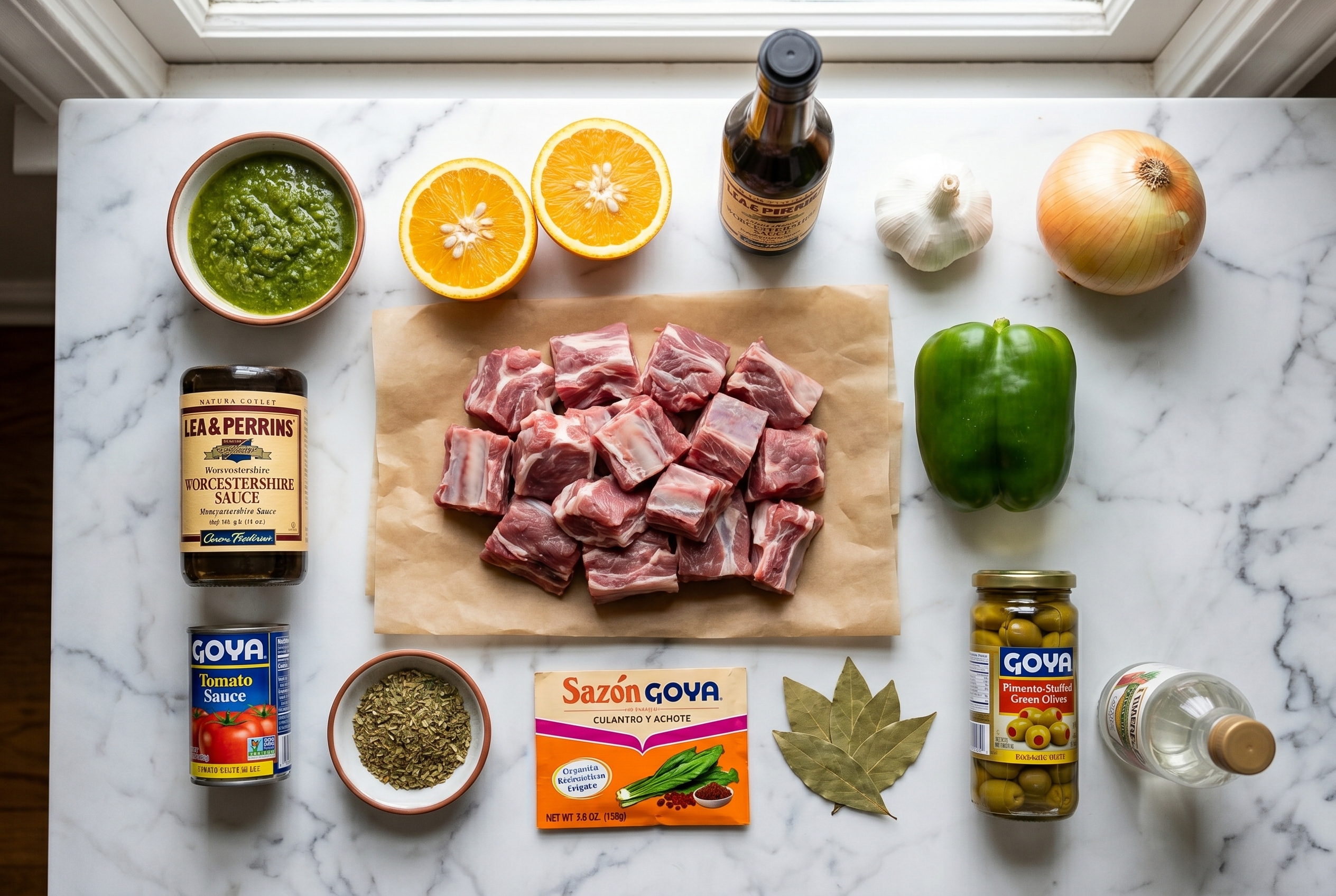
- 3 lb bone-in goat meat (shoulder or leg), cut into 2-inch cubes
- 1 cup sour orange juice (or ½ cup OJ + ½ cup lime juice)
- 6 garlic cloves, mashed
- 1 tablespoon dried Dominican oregano
- 2 teaspoon salt, plus more to taste
- 1 teaspoon black pepper
- 2 tablespoon Worcestershire sauce
- 2 tablespoon white vinegar
- 4 tablespoon sofrito (homemade or store-bought)
- 3 tablespoon oil (corn or vegetable)
- 1 medium onion, diced
- 1 green bell pepper, diced
- 1 can (8 oz) tomato sauce
- 2 bay leaves
- 1 teaspoon sazón with cilantro and achiote
- ½ cup pimento-stuffed green olives
- 3 cups water
Equipment: A large heavy caldero or Dutch oven (at least 6 quarts) is essential. A sharp chef's knife for breaking down the goat if it's not already cubed.
6 Things to Serve With Chivo Guisado
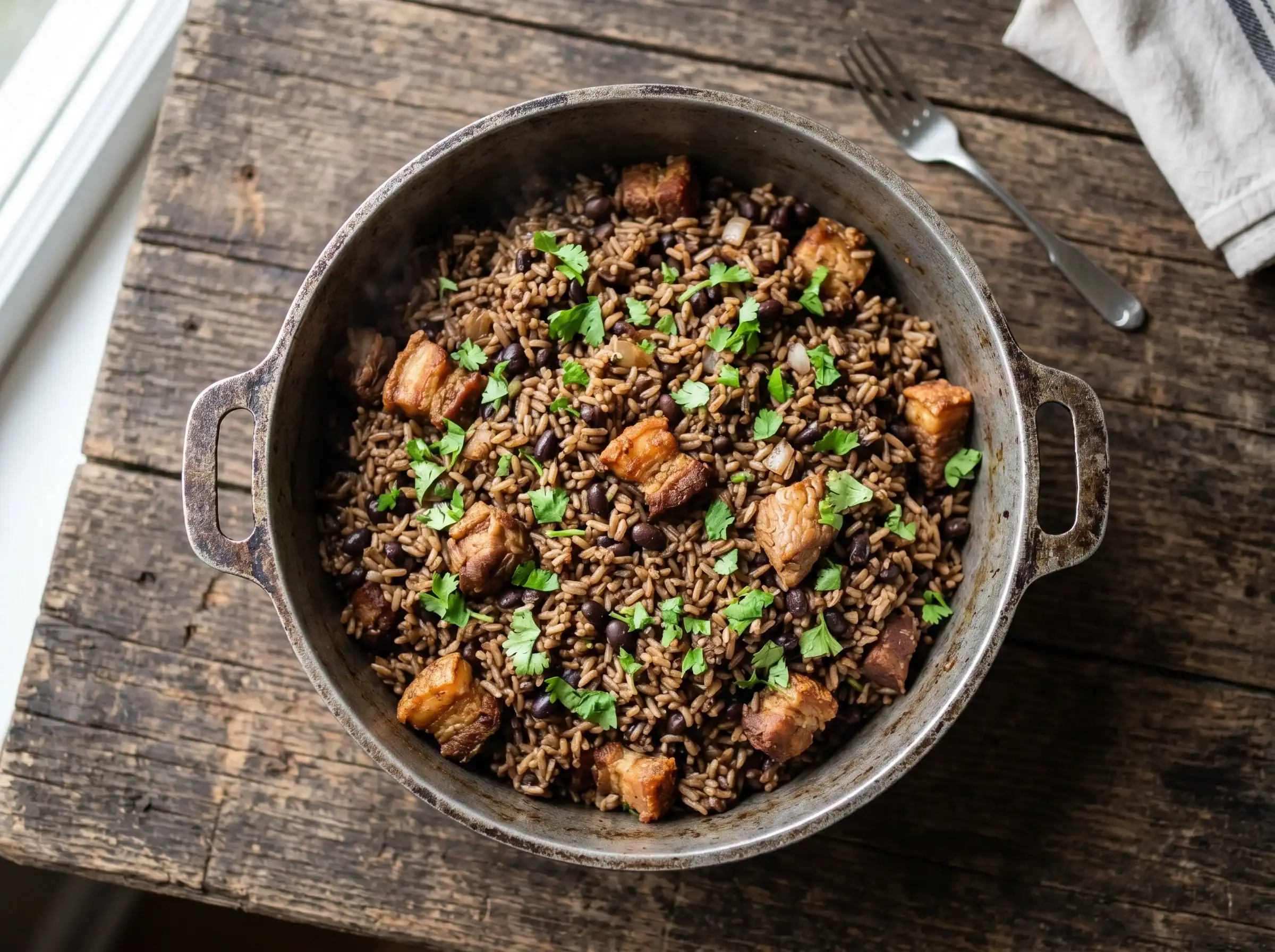
- Moro de guandules: The traditional Monte Cristi pairing — pigeon peas and rice cooked together.
- Arroz blanco: Simple fluffy white rice when you want the chivo to be the star.
- Moro de habichuelas rojas: Red beans and rice for a heartier plate.
- Tostones: Crispy smashed plantains for soaking up the sauce.
- Ensalada verde: Simple green salad to cut through the rich gravy.
- Aguacate: A few slices of avocado on the side, always.
Step-by-Step Instructions
Step 1 — Marinate Overnight
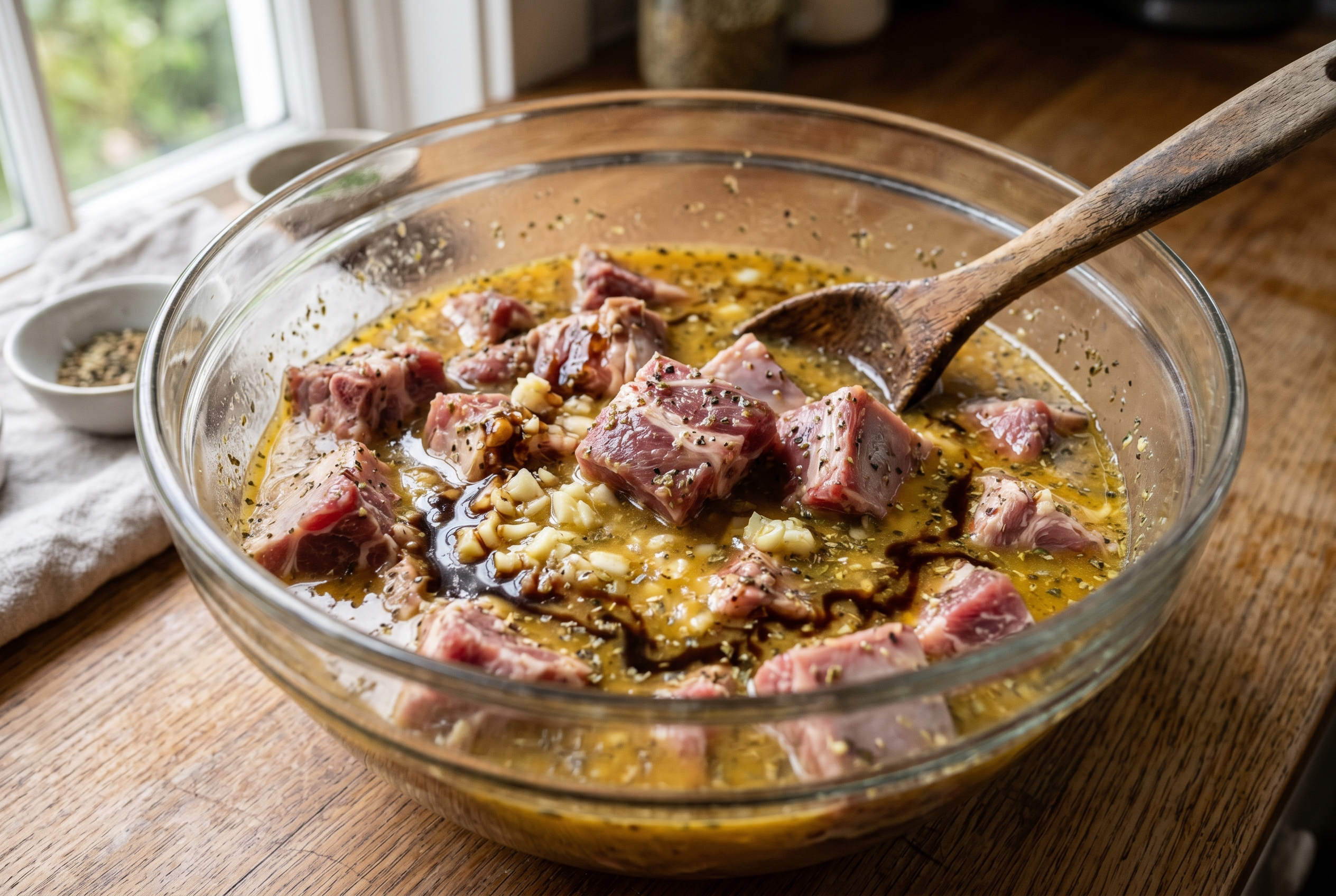
In a large bowl, combine the cubed goat meat with 1 cup sour orange juice, 6 mashed garlic cloves, 1 tablespoon oregano, 2 teaspoon salt, 1 teaspoon black pepper, 2 tablespoon Worcestershire, and 2 tablespoon vinegar. Toss thoroughly so every piece is coated. Cover and refrigerate at least 12 hours, ideally 24. This is non-negotiable — skip the marinade and the goat will be tough and gamey.
Step 2 — Rinse and Sear
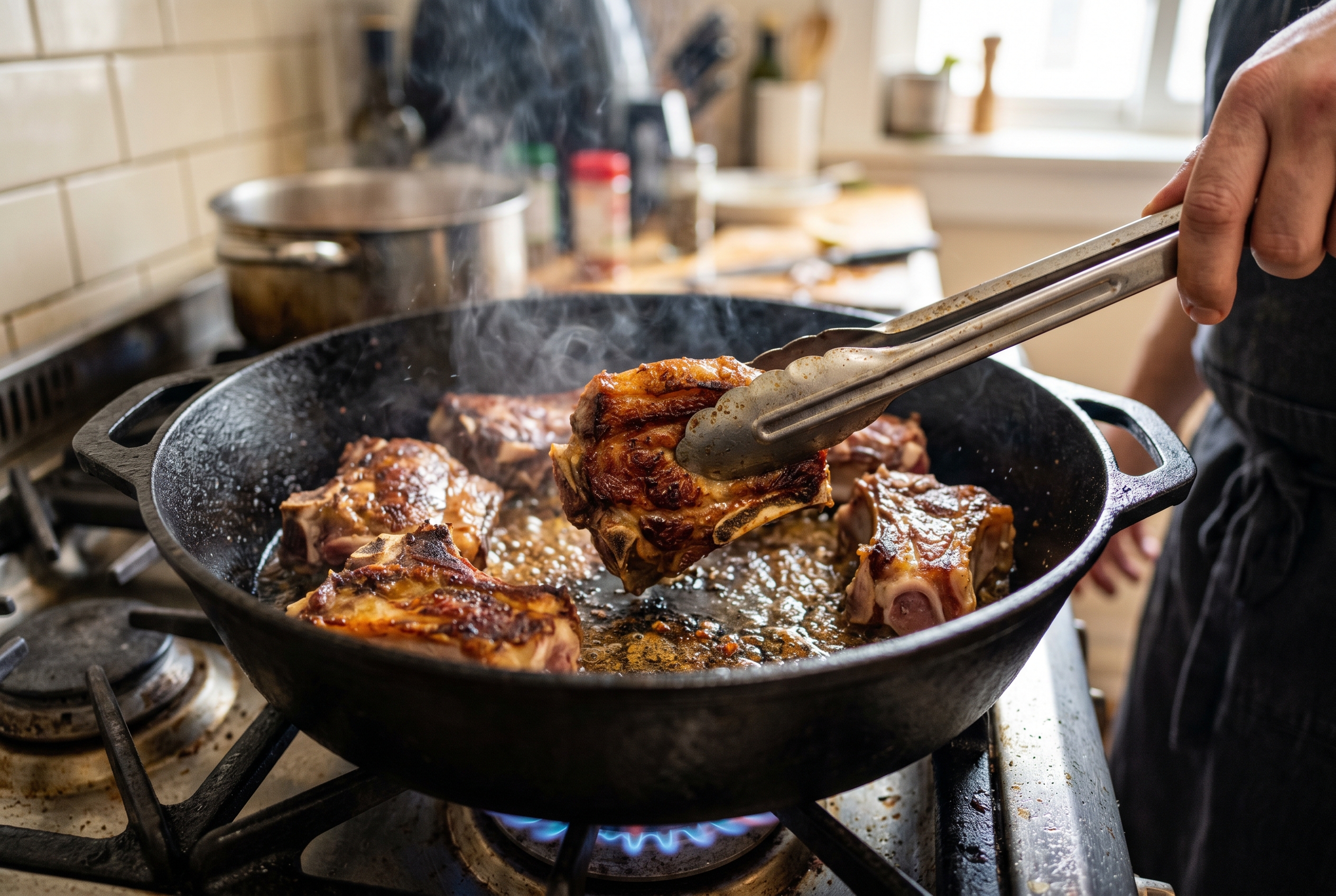
Drain the marinated goat, reserving about ½ cup of the marinade liquid. Give the meat a brief rinse under cold water (some Dominican cooks skip this — I like it because it prevents the sour orange from burning in the pan). Pat dry. Heat 3 tablespoon oil in a large caldero over medium-high heat. Sear the goat in 2-3 batches until deeply browned on all sides, about 4-5 minutes per batch. Transfer to a plate.
Step 3 — Build the Sofrito Base
In the same caldero (don't clean it — the browned bits are flavor gold), drop the heat to medium. Add the diced onion and green pepper. Sauté 3-4 minutes until softened. Add the 4 tablespoon sofrito and cook another 2 minutes, stirring constantly. The kitchen should already smell like a Dominican holiday.
Step 4 — Add Tomato and Seasonings
Pour in the 8 oz can of tomato sauce. Add the bay leaves, 1 teaspoon sazón, and the pimento-stuffed olives. Stir to combine. Let it bubble for 2 minutes so the tomato cooks out its raw flavor and the sazón blooms into the fat.
Step 5 — Return the Goat and Simmer
Return the seared goat and any juices on the plate back to the caldero. Add 3 cups of water and the ½ cup reserved marinade. The liquid should just cover the meat. Bring to a boil, then drop heat to low, cover, and simmer 90 minutes. Check at the halfway point and stir. If the level drops too fast, add another ½ cup of water.
Step 6 — Uncover, Skim, and Reduce
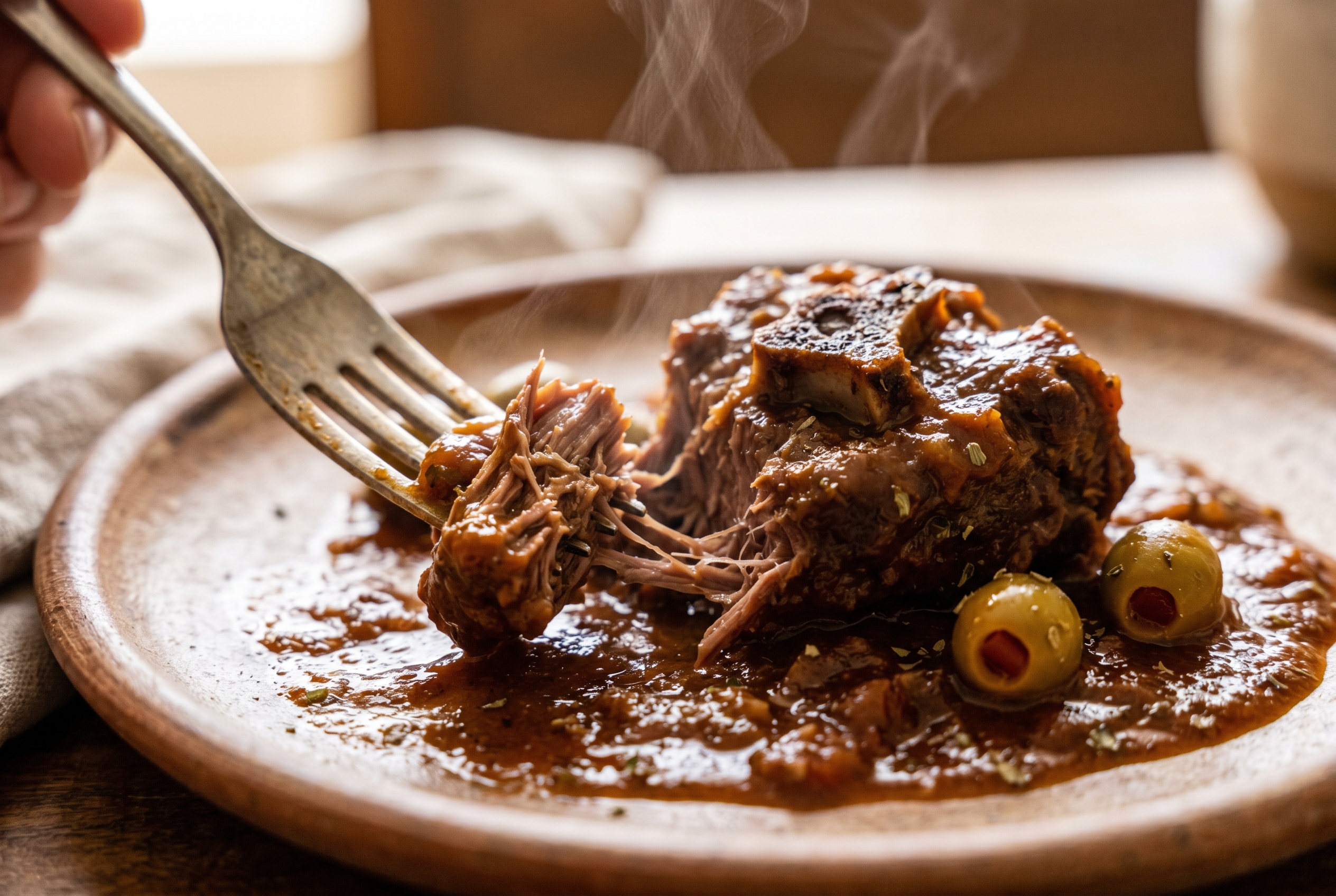
After 90 minutes, uncover the caldero. Skim off any foamy or oily layer on the surface with a spoon — this removes excess fat and any last traces of gaminess. Continue simmering uncovered for 20 more minutes to thicken the sauce. The goat should be fork-tender and pulling away from the bone. Taste and adjust salt. Remove bay leaves. Serve hot over moro de guandules or arroz blanco.
Pro Tips for Perfect Chivo Guisado
- The overnight marinade is non-negotiable: I'll say it again because it's the single most important step. 12 hours minimum, 24 ideal. The sour orange and Worcestershire tenderize the goat and neutralize gaminess. Skip it and your chivo will be tough and strong-tasting in the wrong way.
- Use sour orange — really: Naranja agria is the traditional citrus for chivo. If you're in a city with a Latin grocery, go get it. The OJ+lime substitute is passable, but the real thing has a bitter-tangy complexity the substitute can't match.
- Don't skip the skimming: Goat renders a fair amount of fat during the simmer. Skimming the surface foam at the end of cooking makes the sauce cleaner, the flavor brighter, and removes any last gamey notes.
- Low and slow, always: Once you cover the caldero, keep the heat low. A rolling boil will toughen the meat. You want tiny lazy bubbles at the edges — that's the braise happening properly.
- Get bone-in goat when possible: The bones add flavor and body to the sauce. Boneless goat works but you lose some of the richness. Ask the butcher for shoulder, leg, or a mix with bone-in.
Variations
Chivo Picante (Spicy Chivo)
Add 1-2 whole ají caballero or habanero peppers (pierced but not chopped) to the caldero with the water in Step 5. Remove before serving or let guests fish it out. The heat perfumes the sauce without dominating it. Common in Cibao country cooking.
Monte Cristi Style with Wild Oregano
If you can find fresh wild Dominican oregano (oregano poleo), add 2 tablespoon of fresh leaves to the marinade and another tablespoon to the simmer. This is the true northwest style — the wild oregano from the dry Monte Cristi hills is what makes that region's chivo legendary.
Pressure Cooker Chivo
Follow the recipe through Step 4, but transfer everything to a pressure cooker with just 2 cups of water (not 3). Cook at high pressure for 35 minutes with a natural release. Uncover, reduce on sauté mode for 10-15 minutes. Cuts total cook time by more than half.
What to Serve With Chivo Guisado
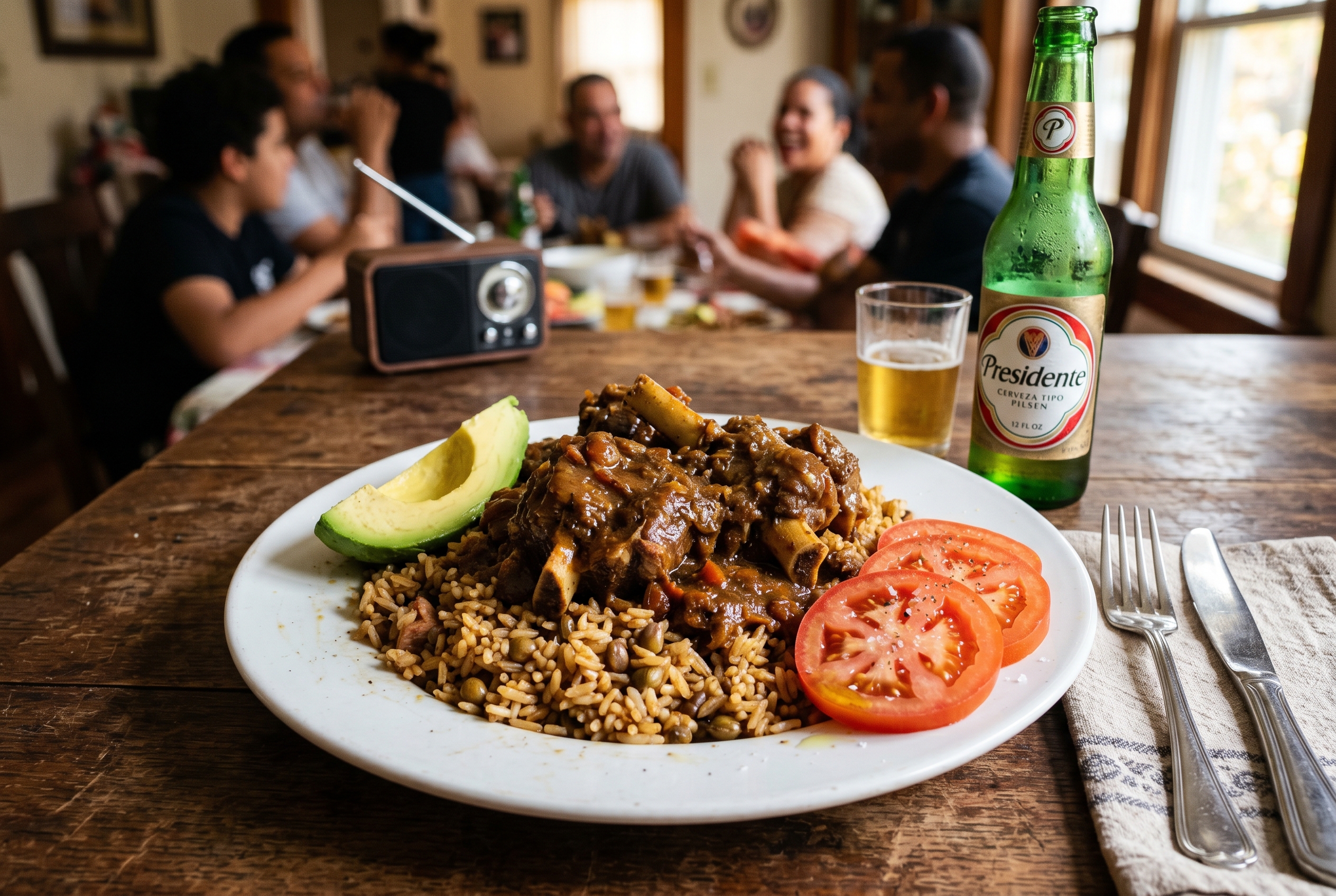
- Moro de guandules: The traditional northwest pairing — pigeon peas cooked into rice.
- Arroz blanco: When you want the chivo flavor to lead.
- Tostones: For sopping up the thick gravy.
- Ensalada verde: Simple salad to balance the richness.
- Aguacate: Sliced avocado, every time.
Frequently Asked Questions
Where can I buy goat meat?
Latin and Caribbean groceries almost always carry goat — ask for "chivo" or "cabrito." Halal butchers reliably stock it. Some supermarkets in diverse neighborhoods have goat in the freezer section. Online, specialty meat providers ship frozen goat nationwide. Ask for shoulder or leg, bone-in if possible.
Why does goat meat taste gamey?
Gaminess comes from compounds in the fat and surface of the meat that aren't neutralized without proper preparation. The overnight sour-orange and Worcestershire marinade breaks down those compounds. If your chivo tastes gamey, either the marinade time was too short, the meat wasn't rinsed after marinating, or the finished sauce wasn't skimmed. All three matter.
Can I use lamb instead of goat?
Yes — lamb shoulder or lamb leg both work and have a similar braising profile. Reduce the simmer time to 75 minutes since lamb tends to be more tender than goat. The flavor will be different (lamb is milder and sweeter) but the method carries over perfectly.
How long does chivo guisado keep?
4-5 days in the fridge, covered. It tastes better on day 2 — the flavors deepen and the sauce thickens further. It also freezes beautifully for up to 3 months. Freeze in portions with plenty of sauce so the meat doesn't dry out when reheated.
Can I make chivo guisado without Worcestershire?
It's a key part of the Dominican marinade — it adds savory depth and helps break down the meat. If you don't have it, substitute 2 tablespoon soy sauce mixed with 1 teaspoon brown sugar and ½ teaspoon vinegar. Close enough.
Is chivo guisado the same as curry goat?
Completely different dishes. Jamaican curry goat uses curry powder, Scotch bonnet, and coconut milk. Dominican chivo guisado uses sofrito, tomato, sour orange, and oregano. Both are fantastic goat stews — but they're from different Caribbean culinary traditions with different flavor profiles.
Can I double the recipe for a party?
Absolutely — this is traditionally made in enormous quantities for weddings and fiestas. Double or triple freely. Just make sure your caldero is big enough to sear the meat in batches and hold all the liquid. Simmer time stays roughly the same; maybe add 15 minutes if you've really loaded it up.
What part of the goat should I use?
Shoulder and leg are the most traditional cuts for chivo guisado — they have enough fat and collagen for a long braise. Ribs also work if you can find them. Avoid loin and other lean cuts; they dry out in a stew. Bone-in is preferred for sauce flavor.
Why Monte Cristi?
Monte Cristi, in the far northwest of the Dominican Republic, is famous for goat because the dry climate and the wild oregano that grows there naturally feed the local goats. The animals absorb that herbal flavor into their meat. Monte Cristi chivo has a distinct flavor that's celebrated nationally, and the town's cooks have refined the guisado method over generations.
Can I marinate goat longer than 24 hours?
Up to 48 hours is fine. Past that, the citric acid starts breaking the meat down past tenderizing into mushy territory. If you need more lead time, marinate for 24 hours in citrus, then transfer to plain sofrito + oil for the remaining time.
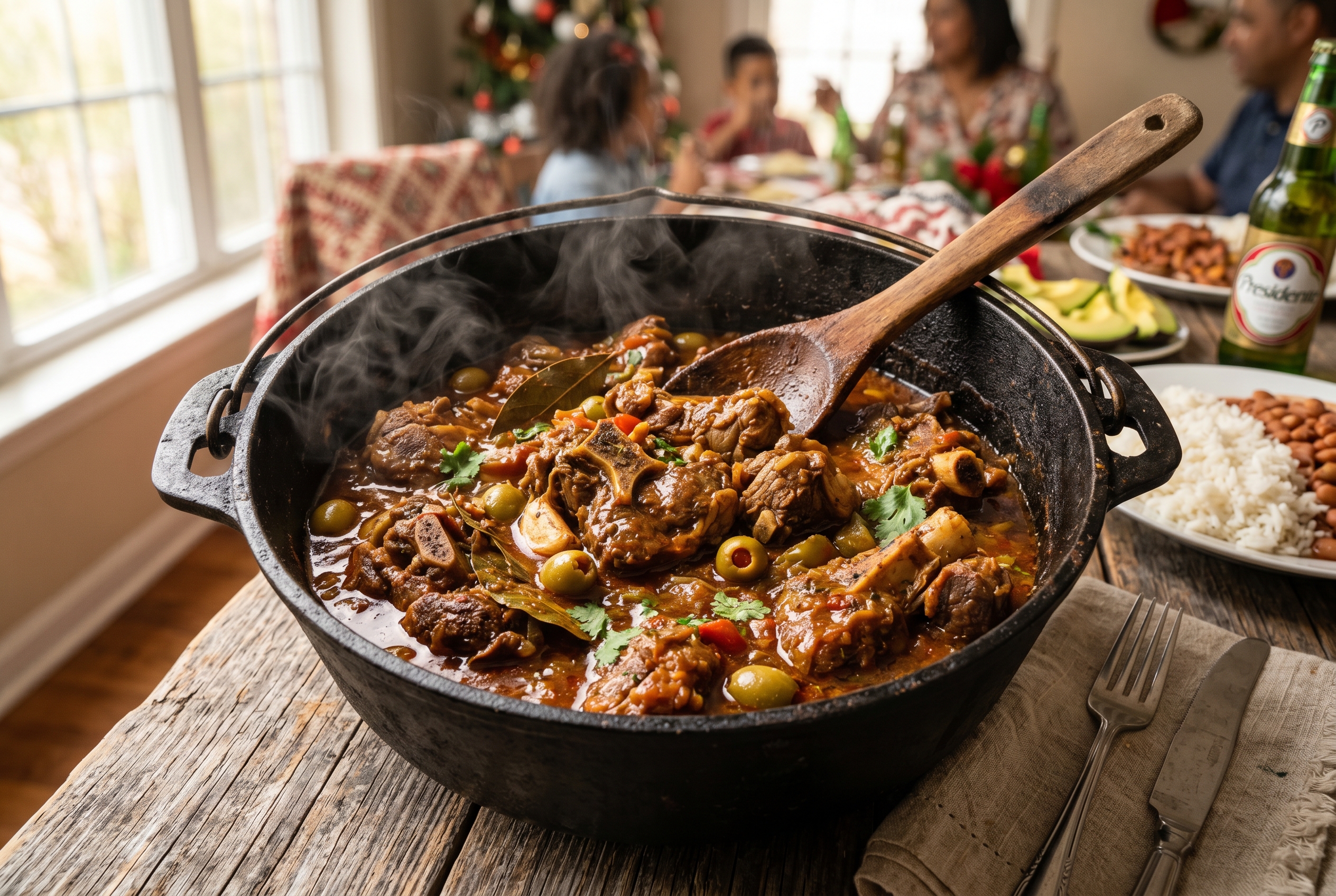
Chivo Guisado (Dominican Stewed Goat)
Ingredients
Method
- Combine cubed goat with sour orange, garlic, oregano, salt, pepper, Worcestershire, and vinegar. Toss to coat. Cover and refrigerate 12-24 hours.

- Drain goat, reserving ½ cup of marinade. Rinse briefly and pat dry. Heat oil in caldero over medium-high. Sear goat in 2-3 batches until deeply browned. Transfer to plate.
- Lower heat to medium. Sauté onion and green pepper 3-4 minutes in the same caldero. Add sofrito and cook another 2 minutes.
- Add tomato sauce, bay leaves, sazón, and olives. Let bubble for 2 minutes.
- Return goat and juices to caldero. Add 3 cups water and reserved marinade. Bring to boil, reduce heat, cover, simmer 90 minutes.
- Uncover, skim surface foam and fat. Simmer uncovered 20 more minutes to thicken. Goat should be fork-tender. Adjust salt. Remove bay leaves. Serve hot.
Nutrition
Video
Notes
Tried this recipe?
Let us know how it was!Shop This Recipe
View on Amazon →
View on Amazon →
View on Amazon →
As an Amazon Associate I earn from qualifying purchases at no extra cost to you.
Marinate tonight. Simmer tomorrow. Feed everyone you love. That's the chivo way.
You May Also Like
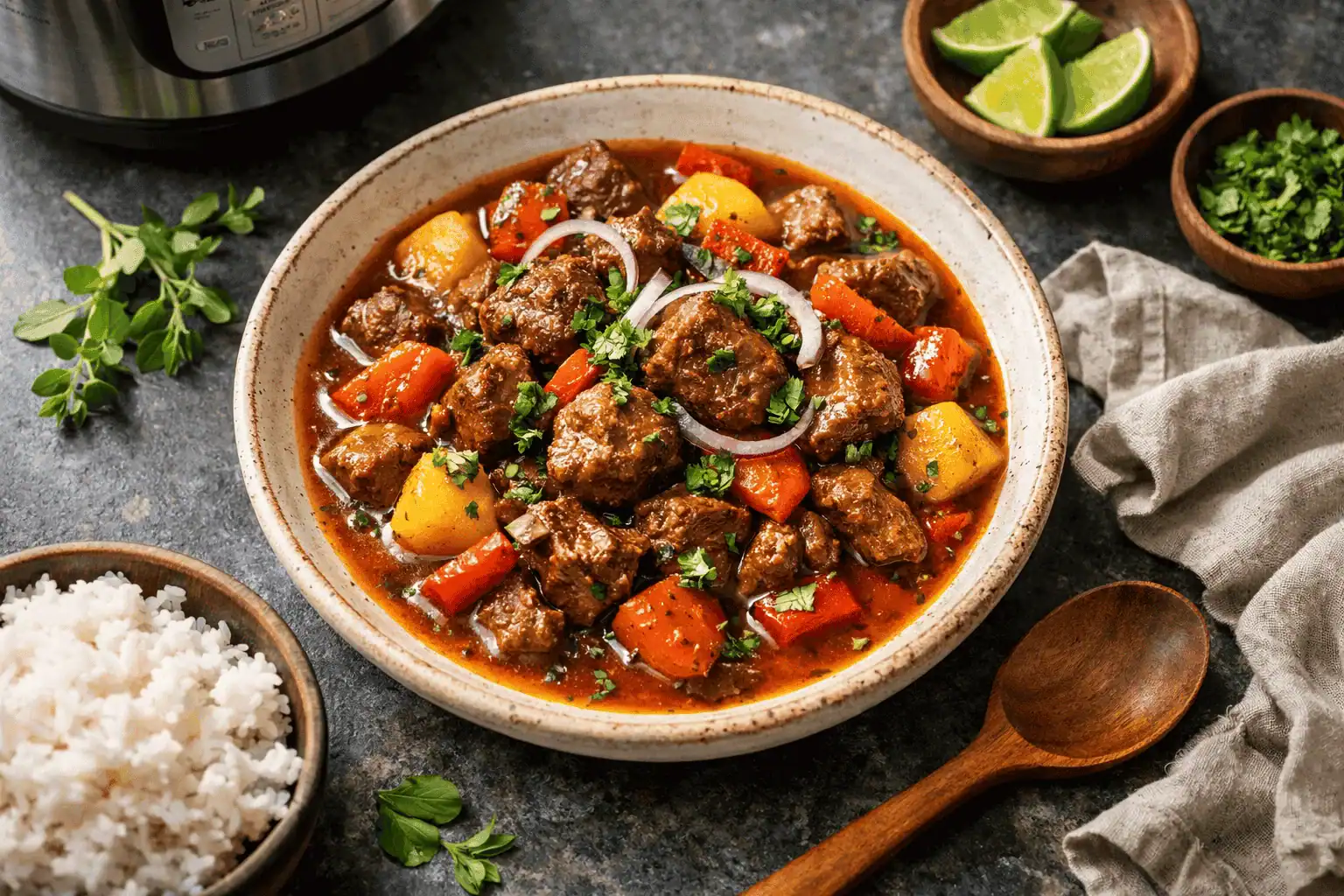
📺 Watch a similar recipe: Dominican Chivo Guisado (Instant Pot Goat Stew)
- Camarones Guisados — Dominican Shrimp — Dominican stewed shrimp in a quick criollo sauce of sofrito, tomato, peppers, and.
- Asopao de Pollo Dominicano Recipe — Dominican chicken and rice soup — thicker than a broth, looser than arroz.
- Slow Cooker Dominican Pot Roast (Carne Guisada Style) — A 5-lb sirloin tip roast slow-cooked Dominican-style — marinated in sofrito, sazón, lime.
Leave a Reply