
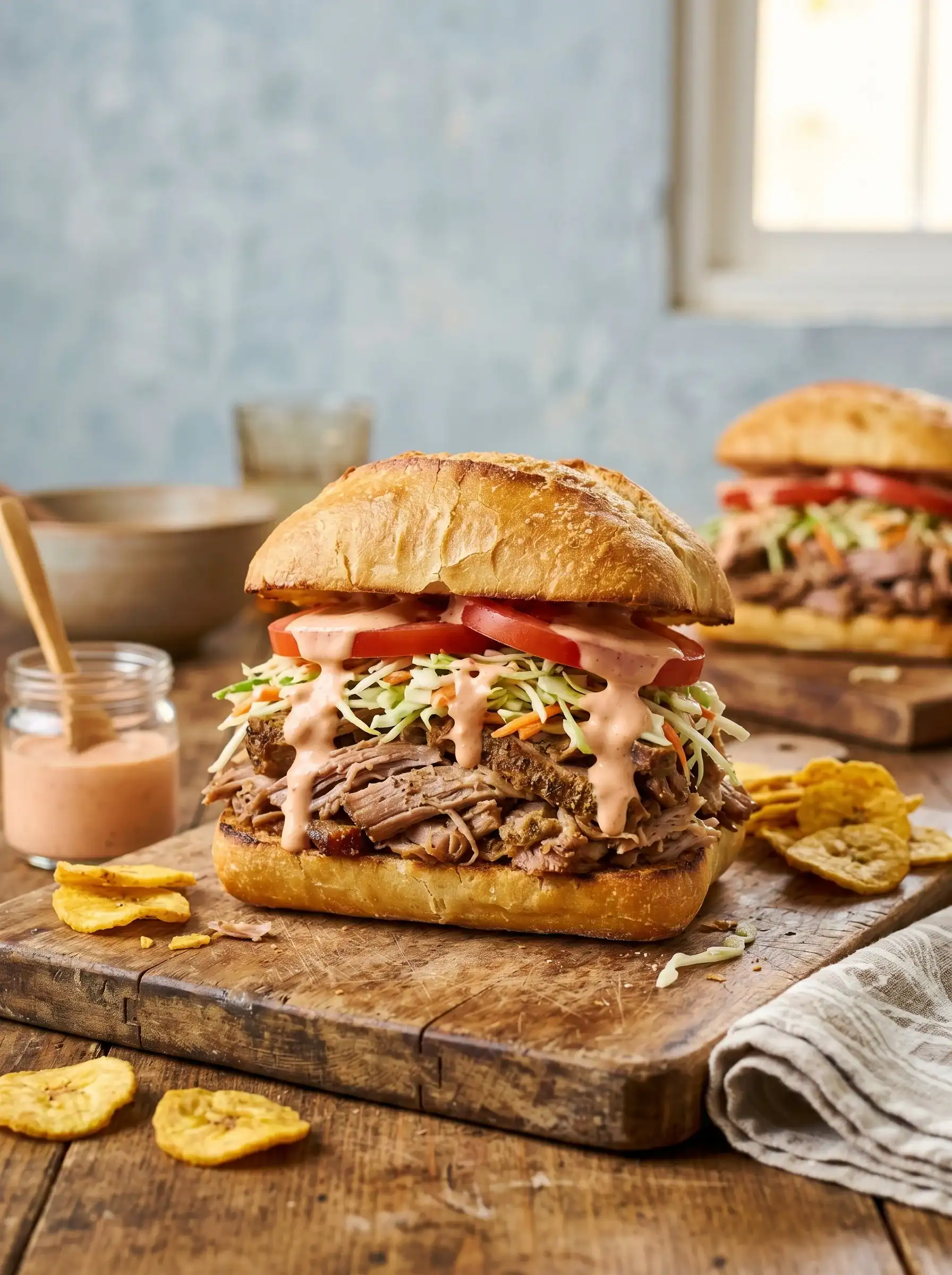
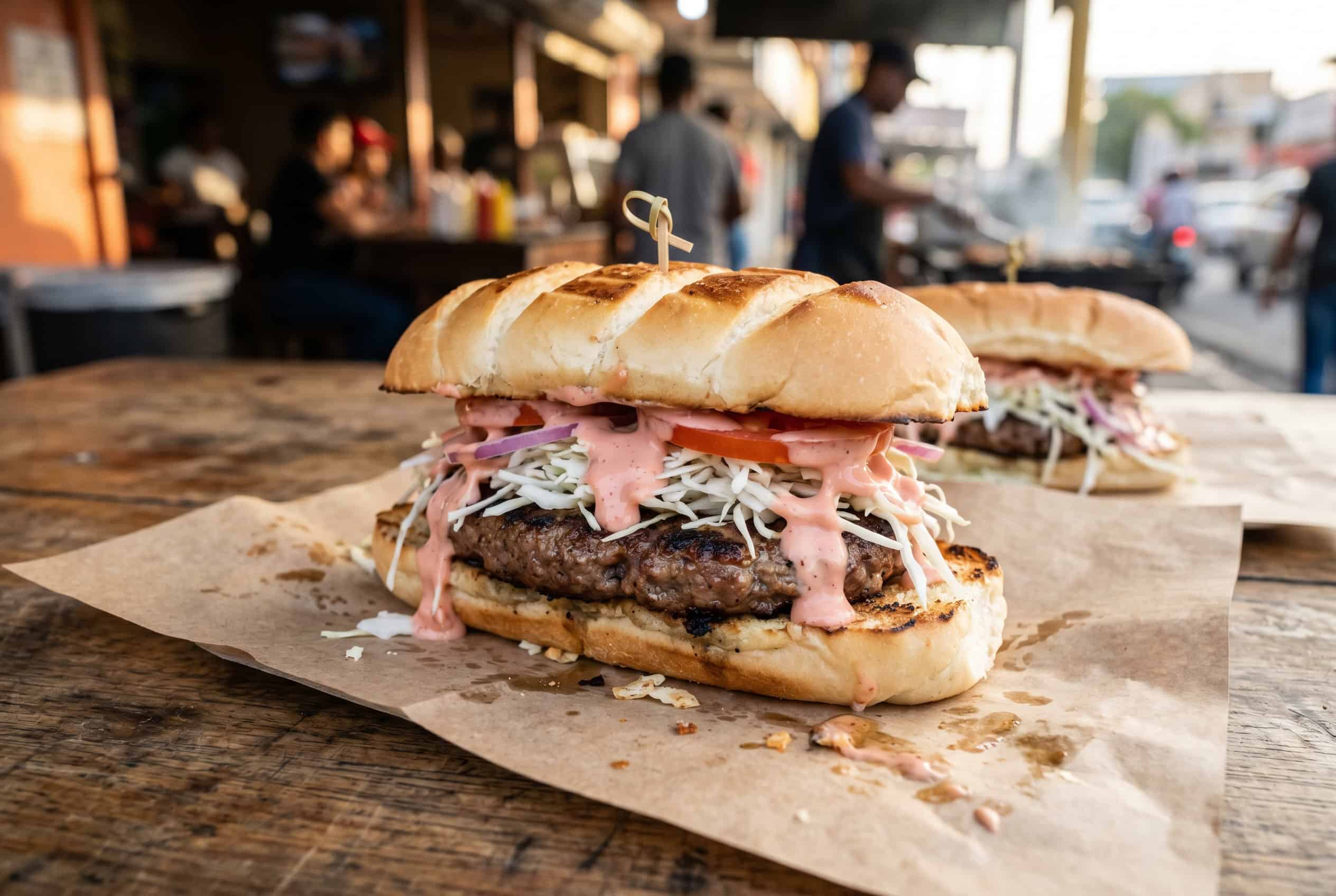
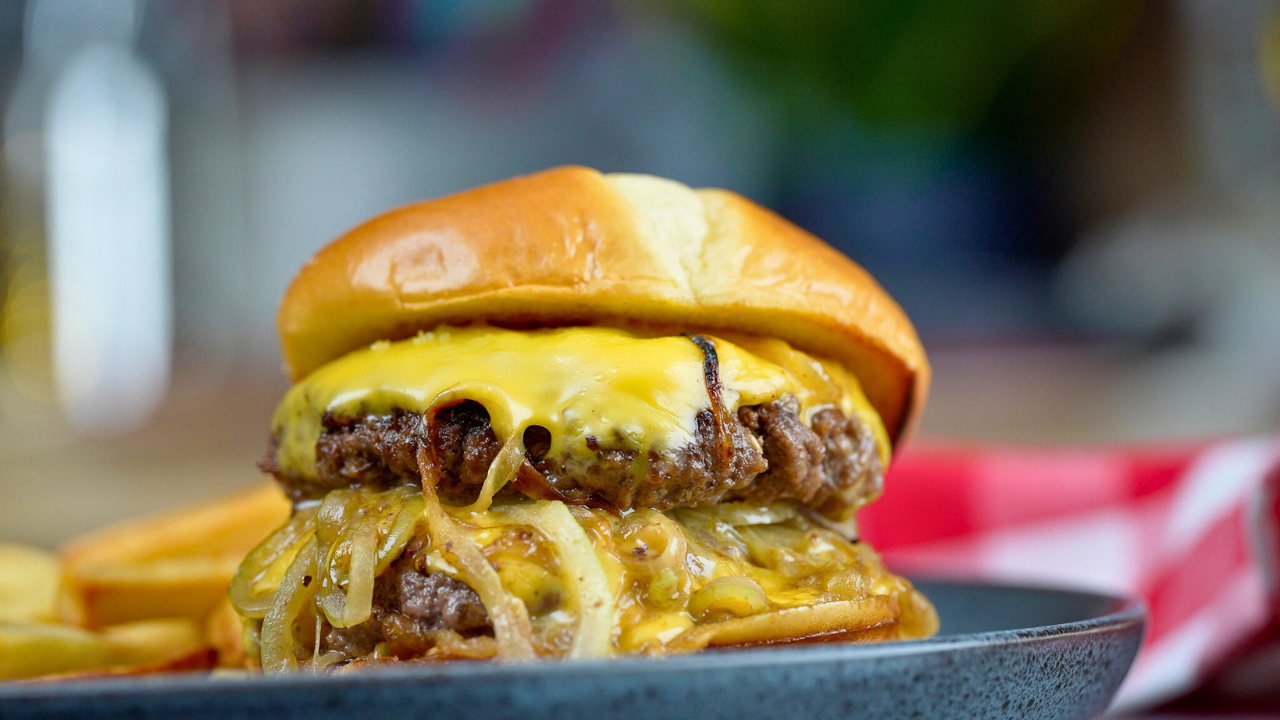
There are two great Dominican street sandwiches and you need to know both. The chimi is the Dominican burger — seasoned beef, cabbage, the pink sauce, on a toasted bun, eaten out of a paper bag at 2 a.m. The sandwich de pierna is the other one. It's slow-roasted pork leg — pernil-style — pulled or sliced thin, piled into a pan de agua roll, hit with the same pink sauce, topped with cabbage slaw and tomato and avocado, and wrapped in brown parchment paper. It's what you get at the colmado when you want something filling. It's what the carrito on the corner hands you at 3 a.m. on a Sunday. It's the sandwich that ends a night out.
Sandwich de pierna dominicano doesn't show up in American food media. Dominicans know it cold, but outside the diaspora almost nobody has heard of it. The combination of slow-marinated pork, crusty bread, vinegary slaw, and the sweet-tangy pink sauce (mayo + ketchup, sometimes with a touch of soy) is one of those Dominican flavor equations that hits on the first bite and then your brain reorganizes itself around wanting another one immediately. It's not fancy. It's not plated. You eat it standing up, leaning forward so the sauce doesn't drip onto your shirt. That's the sandwich.
This post is going to do two things. First, the real marinade — the one my tía taught me, which is the same one the guy at the carrito on the corner uses, which is the same one at every halfway-decent Dominican restaurant from Santo Domingo to New York. Second, the assembly — because a great sandwich de pierna lives or dies on the layering. Too much slaw and the bread goes soggy. Not enough sauce and it's dry. Wrong bread and the whole thing falls apart in your hand. I'm going to walk you through each one.
Why You'll Love This Sandwich de Pierna
- It's the Dominican late-night sandwich: This is what the carrito on the corner is selling at 3 a.m. Deeply savory, slightly acidic, crunchy from the slaw, soft and juicy from the pork. Every bite hits multiple notes.
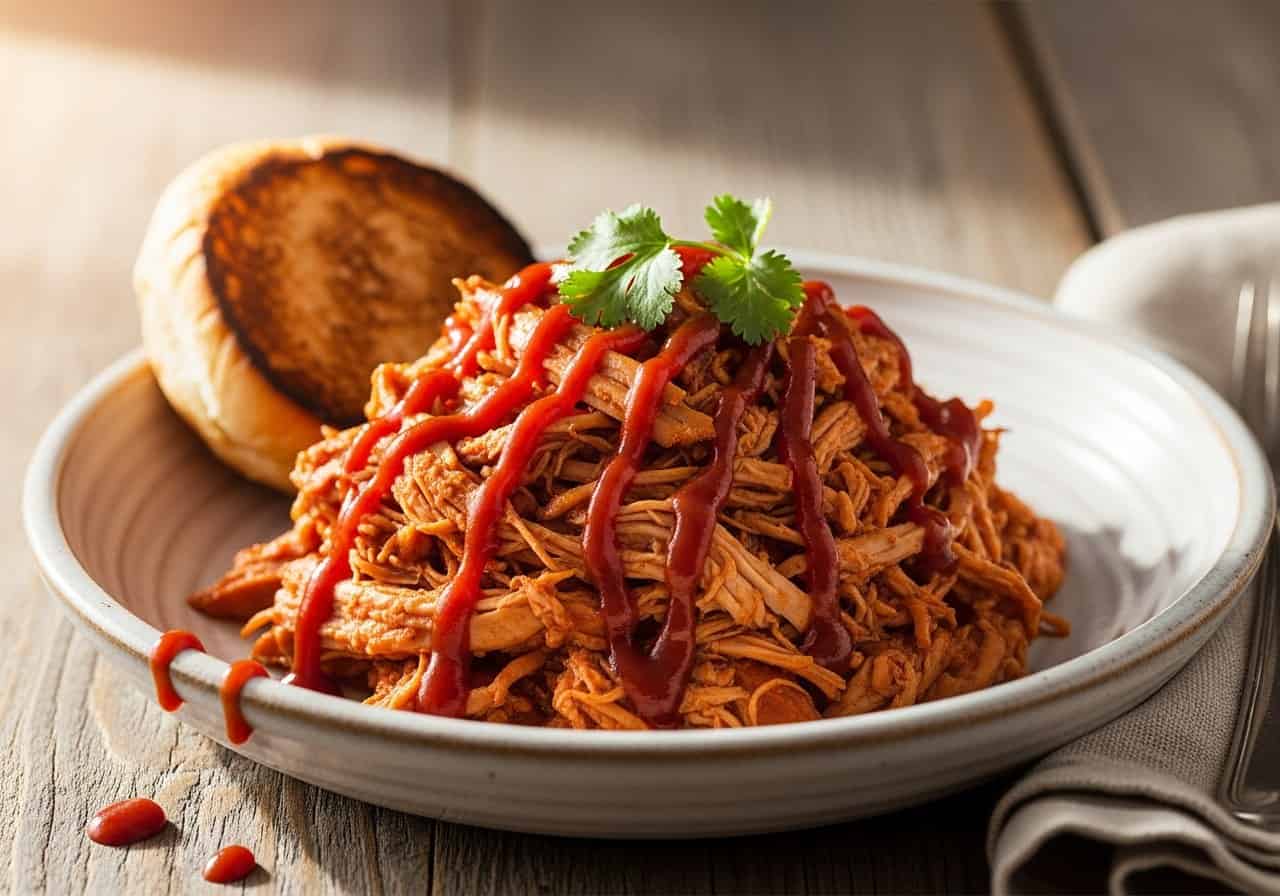
- The pork is unreal: Marinated overnight in garlic, sour orange, sofrito, and sazón, then slow-roasted until it pulls apart with two forks. It's pernil, basically — but aimed at sandwiches, so it gets sliced or pulled instead of carved.
- Builds 6 full sandwiches from one roast: This is a feed-a-crowd situation. One 3-pound pork leg gives you dinner for six, or leftovers for days.
- Pink sauce is magic: The Dominican salsa rosada — mayo + ketchup + a dash of soy — is the secret weapon that makes every bite taste like a Dominican sandwich and not just "pulled pork."
- Leftover pork is a cheat code: The pork freezes beautifully. Pull out a container a month later, reheat, assemble a sandwich. You'll thank yourself.
- Nobody in English has the real recipe: The Americanized "Cuban sandwich" posts don't touch this. This is the real Dominican version.
What Is Sandwich de Pierna Dominicano?
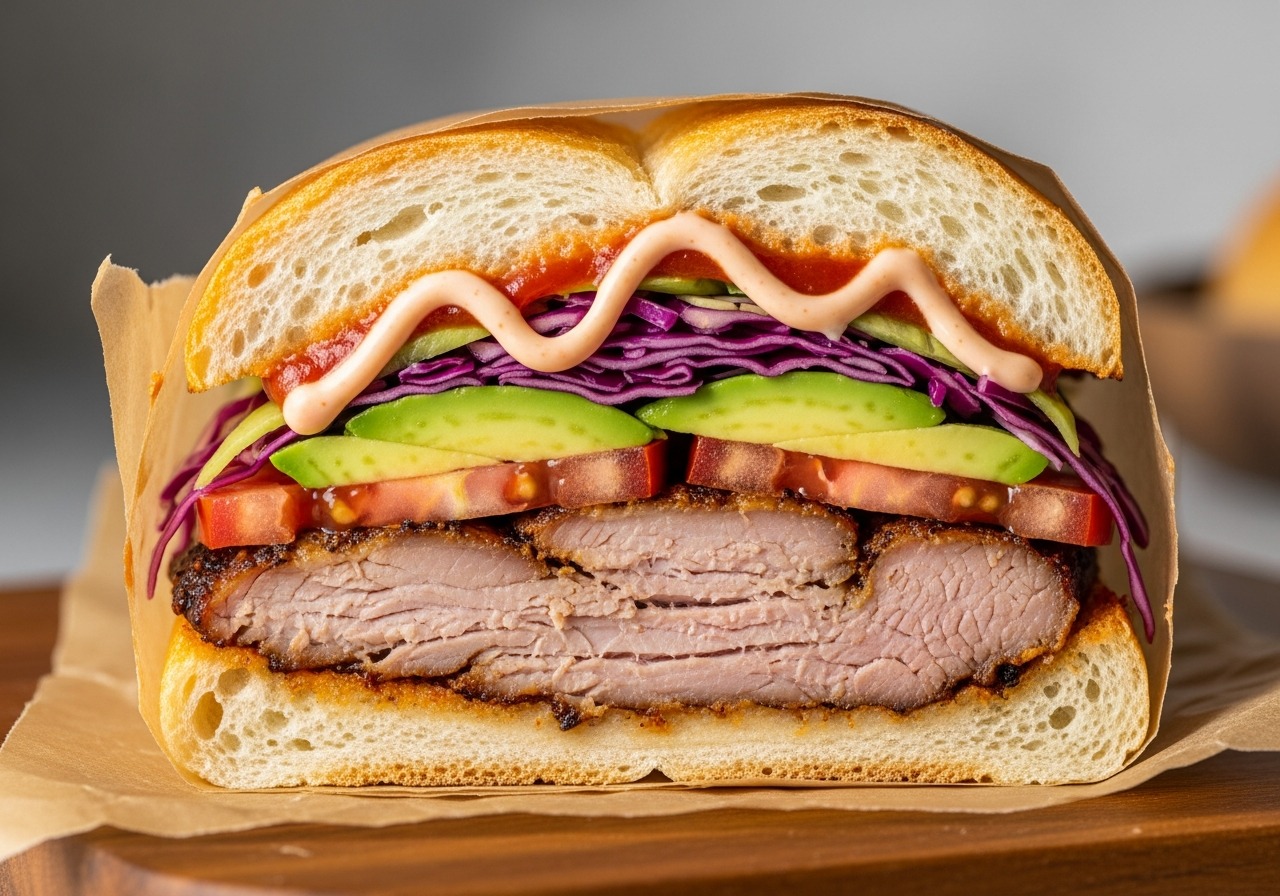
Sandwich de pierna is a Dominican street food sandwich built around pierna asada — roasted pork leg — as the protein. The pork is marinated for at least 8 hours (ideally 24) in a classic Dominican seasoning paste: mashed garlic, sour orange juice, Dominican oregano, adobo, sazón, and sofrito. Then it's slow-roasted at 325°F, covered first to keep it tender, uncovered at the end to crisp the outside. Once rested, the pork is sliced thin or pulled apart with two forks and piled onto a split, warm, crusty pan de agua roll. On top of the pork goes shredded cabbage dressed with a little vinegar and salt, slices of tomato, a few slices of avocado, and a generous spread of the Dominican pink sauce — mayo blended with ketchup (and sometimes a tiny splash of soy sauce) — on both cut sides of the bread.
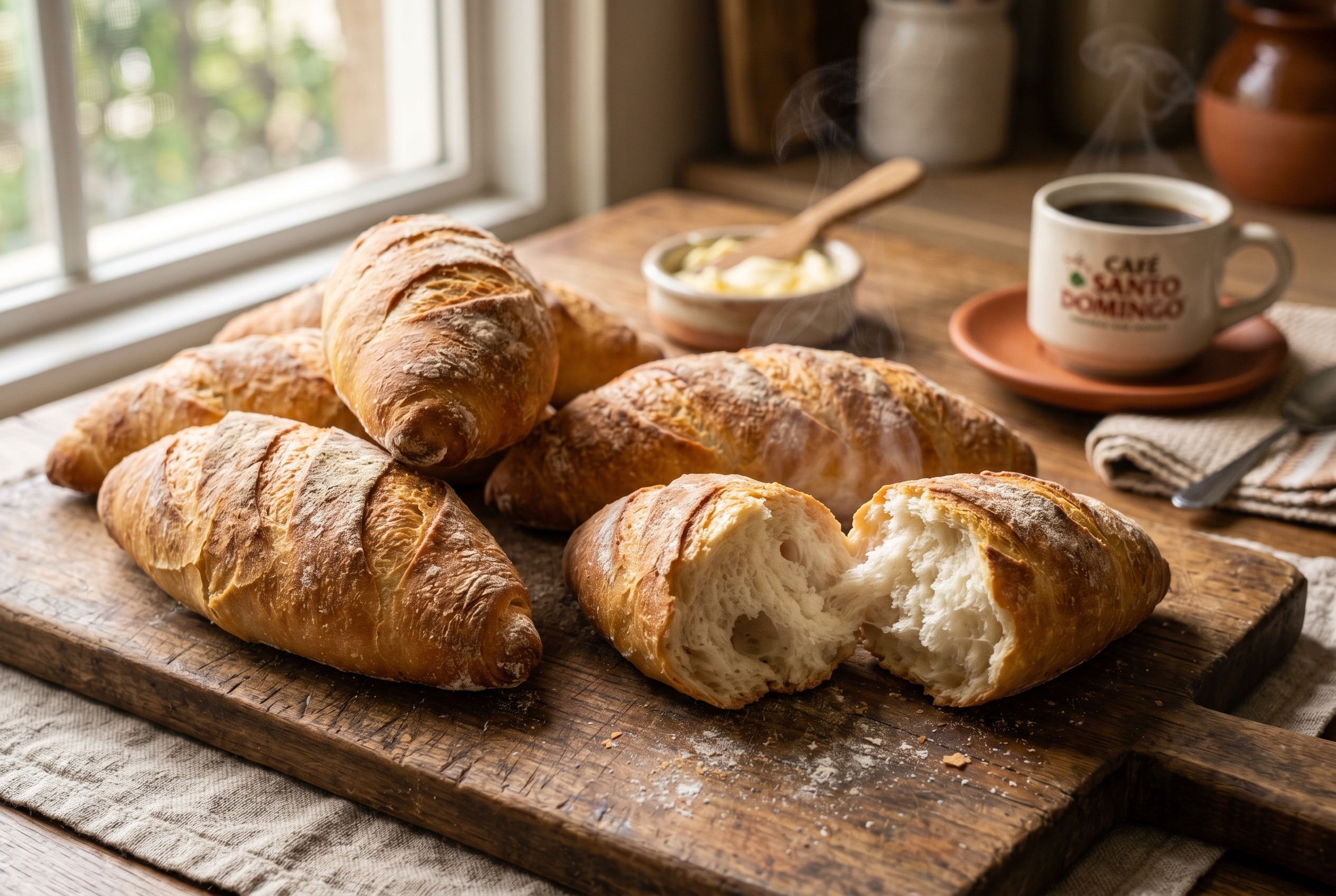
What makes it specifically Dominican — not Cuban, not Puerto Rican, not any other Latin pork sandwich — is three things. First, the marinade: sour orange (naranja agria) and sofrito are the Dominican pork signature. Second, the pink sauce: Cubans don't use it, Puerto Ricans don't really use it on pork, but Dominicans put that salsa rosada on almost every sandwich. Third, the bread: pan de agua has a completely different texture than a Cuban roll — crusty outside, soft and slightly chewy inside, built to soak up pork juices without collapsing. The three together make this sandwich distinctly ours.
Pierna vs. Pernil — What's the Difference?
This trips people up. In Dominican Spanish, pernil refers to the pork shoulder — the whole roasted shoulder that shows up at Christmas Eve dinner served as a centerpiece. Pierna literally means "leg" and refers to the pork leg cut, which is leaner and slightly more structured than the shoulder. For sandwich de pierna, you use the leg because it slices cleaner and doesn't fall apart as dramatically as shoulder — it gives you tidy, layered sandwich meat rather than full-on pulled pork. That said, if your butcher only has shoulder, use shoulder. The sandwich will still be great; it'll just be slightly more shredded. The marinade and method are identical. Check our full pernil dominicano post for the shoulder version destined for the dinner table.
Why Pan de Agua Is the Right Bread
Pan de agua — Dominican "water bread" — is the sandwich's skeleton. The crust is hard and crackly, which means it doesn't go soggy when the pork juices and pink sauce soak in. The crumb is tender and slightly chewy, which means it compresses under pressure and holds the pork in place instead of squeezing it out. American bakery sub rolls come close but are usually a little too bready — they soak up too much sauce and can turn to mush. If you have access to homemade pan de agua or a good Dominican bakery, that's the move. Otherwise, a torpedo roll or French baguette cut into 6-inch pieces works.
Ingredients You'll Need
Step 4 — Rest, Then Slice or Pull
Pull the pork out of the oven and let it rest, loosely tented in foil, for 15 minutes. This is non-negotiable — cutting it immediately lets all the juices run out onto the board and you end up with dry sandwich meat. After the rest, decide your move: slice thin against the grain for more structured sandwiches with cleaner bites, or pull apart with two forks for a messier, more saucy pulled-pork style. I go pulled 70% of the time because I want the sandwich to soak up every drop of pan juice. Either way, work on a big cutting board and toss the meat with a few spoonfuls of the reserved pan juices for moisture.
Step 5 — Build the Slaw and the Pink Sauce
While the pork rests, toss the shredded cabbage with the vinegar, oil, and a pinch of salt. Let it sit 10 minutes. The vinegar takes the raw edge off the cabbage but keeps the crunch — this is the acid that cuts the richness of the pork and makes the sandwich balanced.
Whisk mayo, ketchup, and (optional) soy sauce in a small bowl until it's a uniform pink. Taste. Adjust to your preference — a little more ketchup for sweeter, a little more mayo for creamier. This is the Dominican pink sauce that goes on almost everything — chimi burgers, carne frita, and of course the sandwich de pierna.
Step 6 — Warm the Bread
Turn the oven down to 325°F if you haven't already. Slice the pan de agua rolls open lengthwise (most of the way through, not all the way). Place directly on the oven rack — not a sheet pan — for 2 minutes. This recrisps the crust and warms the crumb. Cold bread under hot pork makes a sad sandwich. Warm bread is the move.
Step 7 — Layer the Sandwich
Layering order matters. Spread pink sauce on both cut sides of the warm bread — this creates the moisture barrier that keeps the crust from going soggy too fast. Pile on a generous portion of pork (maybe 4–6 ounces per sandwich depending on how big your rolls are). Spoon a little extra pan jus on top. Add a small handful of slaw. Top with 2 slices of tomato and 2 slices of avocado. Close the sandwich, press lightly with your palm, wrap in a sheet of brown parchment paper (like they do at the carrito), and serve with a lime wedge on the side.
Pro Tips for Perfect Sandwich de Pierna
- 24 hours in the marinade is the sweet spot: 8 hours works, but the flavor penetration at 24 is noticeably better. Make the sandwich a two-day project.
- Sour orange is worth hunting down: Any Latin grocery has it frozen or bottled. It's what separates a Dominican pork sandwich from a generic pulled pork sandwich. If you genuinely cannot find it, a half-and-half mix of lime and regular orange juice is the closest sub.
- Don't skip the water in the pan: Covered roasting with water = tender. No water = dry. That ½ inch of water in the bottom of the pan creates a steam environment that keeps the pork juicy while the outside develops flavor.
- Rest 15 minutes, no less: If you slice or pull at 2 minutes rested, you lose moisture. 15 minutes redistributes the juices back through the meat.
- Pink sauce on both sides: Sauce only on one side means dry bread on the other. Both sides = every bite has sauce and the bread stays soft-not-soggy.
- Eat it immediately: This sandwich is best within 5 minutes of assembly. After that, even the best bread starts to lose structure. Assemble to order if you're feeding a group — pork in one bowl, slaw in one bowl, bread warm, sauce in a squeeze bottle. Let people build their own.
- Freeze the pork, not the sandwich: Cooked pork freezes beautifully for 2 months in a sealed container with some of the pan juices. Thaw overnight, reheat covered at 300°F with a splash of water, and the sandwich tastes like you just made it.
Variations
Sandwich de Pierna con Queso (Cheesy Version)
Some carritos add a slice of Swiss or American cheese under the pork so it melts from the heat. This is a "cubano"-leaning move but Dominican cooks have embraced it. Lay the cheese on the bottom half of the warm bread, pile hot pork on top, and the cheese melts into the crust. Adds richness and a salty note.
Spicy Pink Sauce
Add 1 teaspoon of hot sauce (Frank's, tabasco, or Dominican aji picante) to the pink sauce. Some Dominican home cooks also add a pinch of smoked paprika for depth. Gives the sandwich a subtle kick without overwhelming the pork.
Pressed Dominican-Cuban Hybrid
Build the sandwich, then press it in a panini press or a skillet with a heavy pot on top for 2 minutes per side. The bread gets crisp and pressed, cheese (if using) melts completely, everything gets hot all the way through. This is closer to a Cuban sandwich in texture but with the Dominican flavor profile. Excellent for a late-night snack when you want something hot and compressed.
What to Serve With Sandwich de Pierna
- Tostones or yuca fries: A handful of yuca fries or tostones on the side turns this into a full meal. Hit both with a little salt and dip in extra pink sauce.
- Presidente or Malta: A cold Presidente (Dominican lager) is the traditional pairing. Non-drinkers get a Malta — the sweet Dominican malt soda. Either one works.
- Carne frita dominicana: Serve two sandwiches with a plate of carne frita for a Dominican street food board. This is what a Saturday night dinner with friends should look like.
- Ensalada verde: A simple Dominican green salad with tomato, onion, and a vinaigrette on the side if you want something lighter.
- Pernil dominicano: If you make pernil for a Sunday dinner, use the leftovers for sandwich de pierna all week. Same method, different destination.
Cultural Notes
The Carrito, the Colmado, the Late Night
- The carrito tradition: In Santo Domingo and in Dominican neighborhoods from New York to Miami, the carrito — a food cart pulled up on a busy corner, usually open late — is where you get a sandwich de pierna. The guy has a steam tray of roasted pork ready to go, a rack of pan de agua, the pink sauce in a squeeze bottle, cabbage in a container. Sandwich assembled in 60 seconds. Wrapped in paper. Handed over.
- Colmado culture: A Dominican colmado (corner store) will also sell sandwich de pierna if they've got a pork leg in the back. It's fast, cheap, and filling — the ideal workday lunch in Santo Domingo.
- The pink sauce as national condiment: Mayo + ketchup is the Dominican salsa. It goes on chimi burgers, on carne frita, on this sandwich, on French fries. Every Dominican household has the squeeze bottle setup. Non-Dominicans underestimate how much this little sauce defines the cuisine.
- The 3 a.m. sandwich: There's a specific cultural moment that belongs to sandwich de pierna — it's after the club, after the bar, after the late-night dancing, and you're hungry. The carrito is open. You get a pierna and a Presidente. You eat it standing on the sidewalk. That's Dominican.
You May Also Like This
Frequently Asked Questions
What is sandwich de pierna dominicano?
Sandwich de pierna dominicano is a Dominican street-food sandwich made from slow-roasted pork leg marinated in garlic, sour orange, sofrito, and sazón, sliced or pulled and piled onto a crusty pan de agua roll with shredded cabbage slaw, tomato, avocado, and Dominican pink mayo-ketchup sauce. It's sold at carritos, colmados, and Dominican restaurants and is especially popular as late-night food.
What's the difference between sandwich de pierna and a Cuban sandwich?
Completely different sandwiches. A Cubano has sliced ham, roast pork, Swiss cheese, pickles, and mustard on pressed Cuban bread. Sandwich de pierna has only the pork (no ham, no pickles, no mustard), the Dominican pink sauce (no cheese usually), a cabbage slaw, tomato and avocado, on pan de agua bread that isn't pressed. The flavor profile is more savory-creamy-tangy rather than salty-sharp.
Can I use pork shoulder instead of pork leg?
Yes, absolutely. Pork shoulder (pernil) is slightly fattier and shreds more dramatically, so your final sandwich will lean more pulled-pork than sliced. Same marinade, same roasting method, same internal temperature (195°F). Some Dominican cooks actually prefer shoulder because it stays juicier. Use whatever your butcher has.
What can I substitute for sour orange?
Half lime juice + half regular orange juice is the closest easy substitute. If you can find frozen sour orange juice at a Latin market (it's sold under the name "naranja agria" or "jugo de naranja agria"), grab a bottle — it keeps for months in the freezer and it's the correct flavor for sandwich de pierna, pernil, mofongo marinade, and basically every Dominican pork dish.
Can I make this in a slow cooker?
Yes. Marinate as directed. Put the pork in the slow cooker with ¼ cup water or broth, cook on low for 8 hours. You won't get the crispy exterior, but the meat will be fork-tender. Transfer to a sheet pan after cooking, crank the oven to 450°F, and blast it for 10–15 minutes to crisp the outside before slicing or pulling. The bread and sandwich assembly are identical.
How long does the roasted pork keep?
Sliced or pulled and stored in an airtight container with some of the pan juices, the pork keeps 4 days in the fridge and reheats beautifully. It freezes 2 months in a sealed container — thaw in the fridge overnight, reheat covered at 300°F with a splash of water. Don't reheat dry — the moisture is what makes the meat taste fresh.
What bread should I use if I can't find pan de agua?
A crusty torpedo roll or a French baguette cut into 6-inch pieces works well. Avoid soft hoagie rolls or brioche — they get soggy fast. You want a bread with a defined crust and a relatively dense crumb. Portuguese rolls, Italian sub rolls, or a good bakery baguette all work. If your bread feels too soft, toast it lightly before assembling.
Is the pink sauce supposed to be sweet?
Slightly. The ketchup brings natural sweetness, which balances the salty pork and acidic slaw. If yours feels too sweet, cut the ketchup back to 1½ tablespoons and add another tablespoon of mayo. If it's not sweet enough for your taste, add a small squeeze more ketchup. It's a flexible ratio — every Dominican household has their own version.
Can I make this vegetarian?
Not really — pierna means pork leg, it's the entire point of the sandwich. If you want a Dominican-flavored veggie sandwich, marinate thick slabs of portobello mushrooms or firm tofu in the same garlic-sour orange-sofrito mix and roast them at 375°F for 25 minutes. Assemble with slaw and pink sauce. It's a different sandwich — good in its own right, just not sandwich de pierna.
Sandwich de Pierna Dominicano
Ingredients
Method
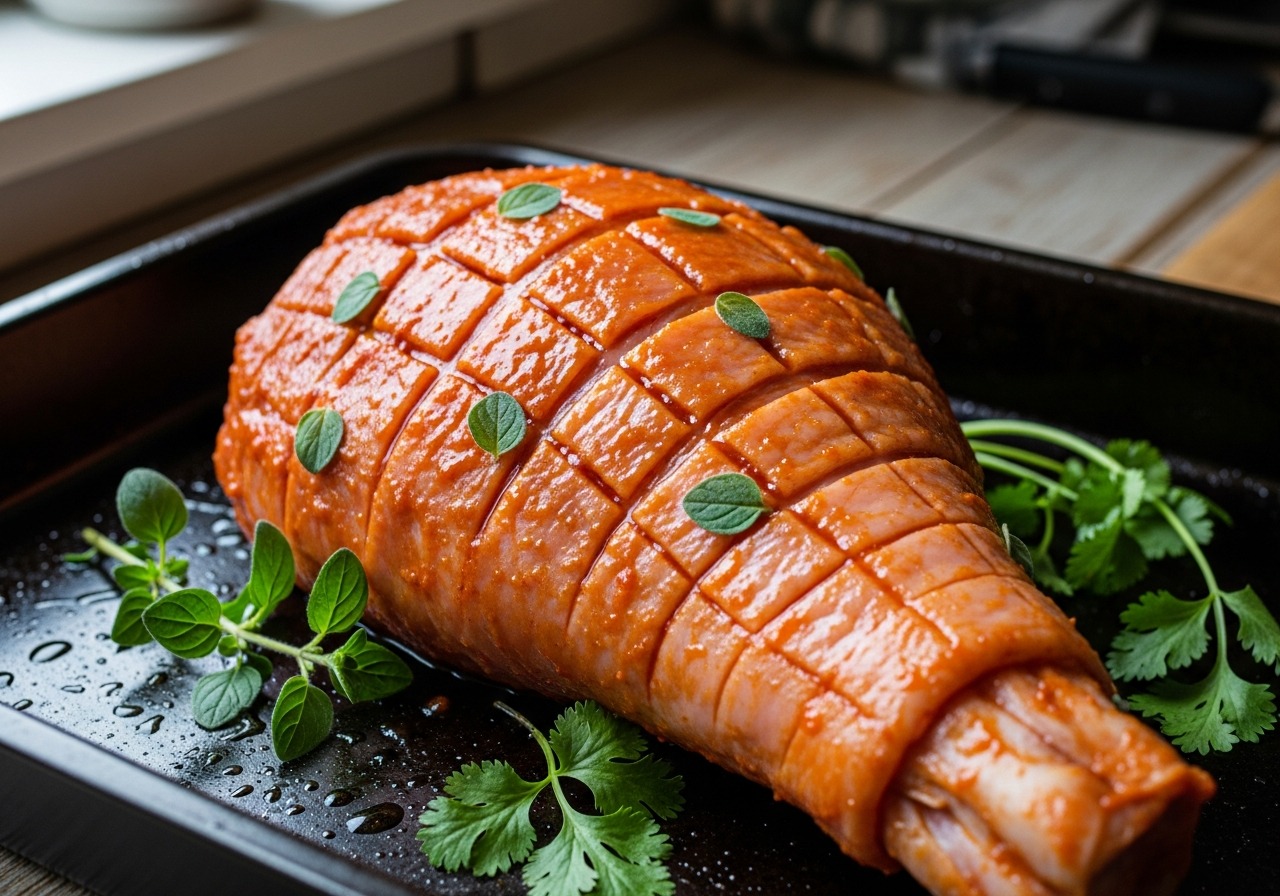
- The night before: Mash the garlic with salt into a paste. Mix in the adobo, oregano, sazón, sofrito, sour orange juice, and black pepper. Score the pork leg in a crosshatch pattern ½ inch deep and rub the paste everywhere — into the scores, under any loose skin, all over. Cover and refrigerate at least 8 hours, preferably 24.

- Preheat oven to 325°F. Place pork in a roasting pan with ½ inch of water in the bottom. Cover tightly with foil and roast for 2 hours. The water keeps it steamy and tender inside.
- Uncover the pan, drain excess water if too much, and return to the oven uncovered. Roast another 30 minutes until the outside is deeply golden and the internal temperature hits 195°F for easy pulling.
- Rest the pork, tented loosely in foil, for 15 minutes. Then slice thin against the grain or pull apart with two forks — whichever you prefer.
- Make the slaw: toss shredded cabbage with vinegar, oil, and a pinch of salt. Let sit 10 minutes so it softens slightly but keeps its crunch.
- Make the pink sauce: whisk mayo, ketchup, and soy sauce (if using) in a small bowl.
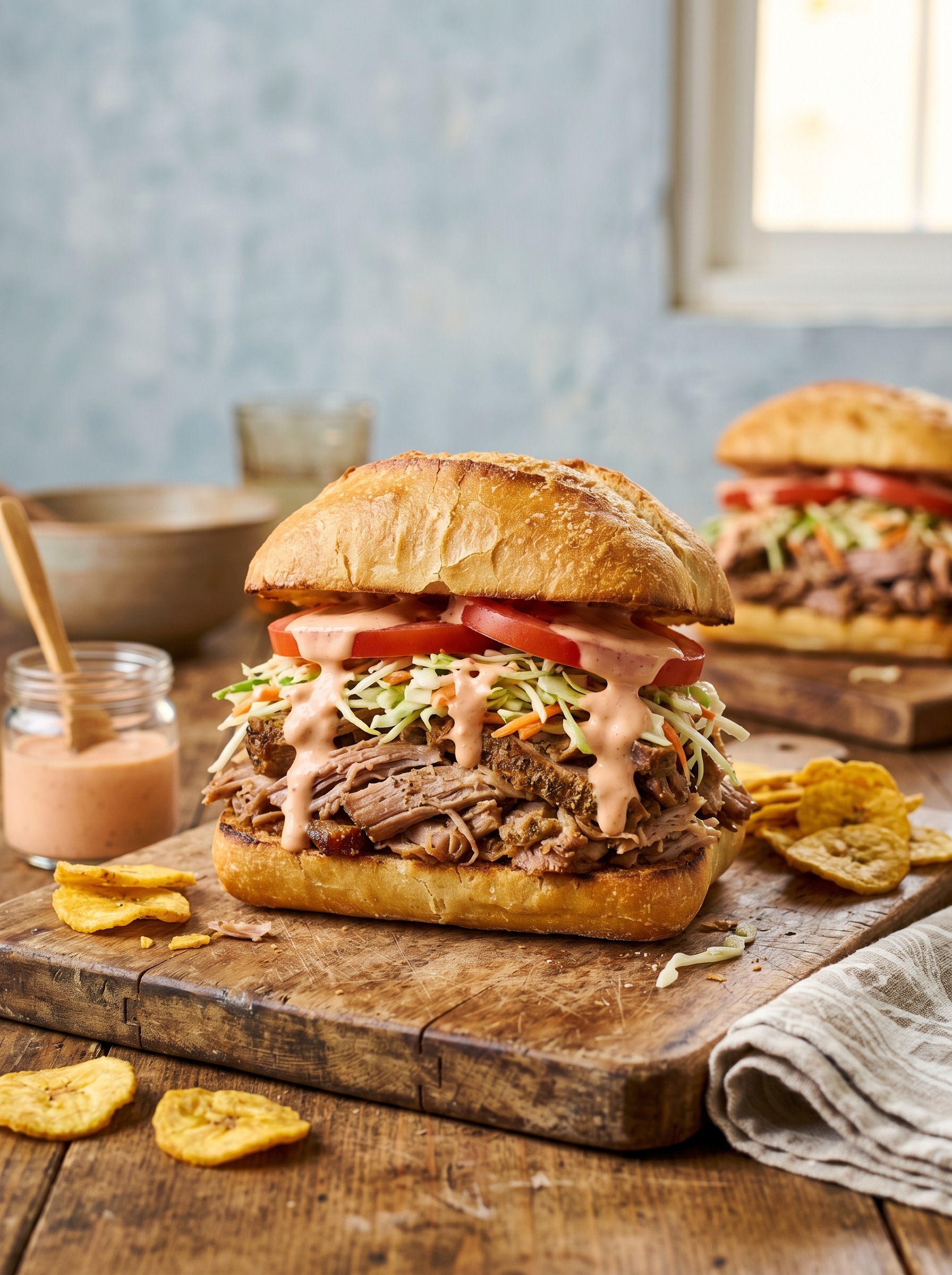
- Slice pan de agua rolls open and warm in a 325°F oven for 2 minutes — just to crisp the crust. Spread pink sauce on both cut sides. Pile on a generous scoop of pork, top with slaw, tomato slices, and avocado. Press lightly, wrap in parchment or paper for street-food feel, and serve with lime wedges.
Nutrition
Notes
Tried this recipe?
Let us know how it was!Shop This Recipe
View on Amazon →
View on Amazon →
View on Amazon →
As an Amazon Associate I earn from qualifying purchases at no extra cost to you.
Wrap it in brown parchment, hand it over with a lime wedge, and tell them it's the sandwich their abuela would recognize. Welcome to the Dominican kitchen.

Leave a Reply