
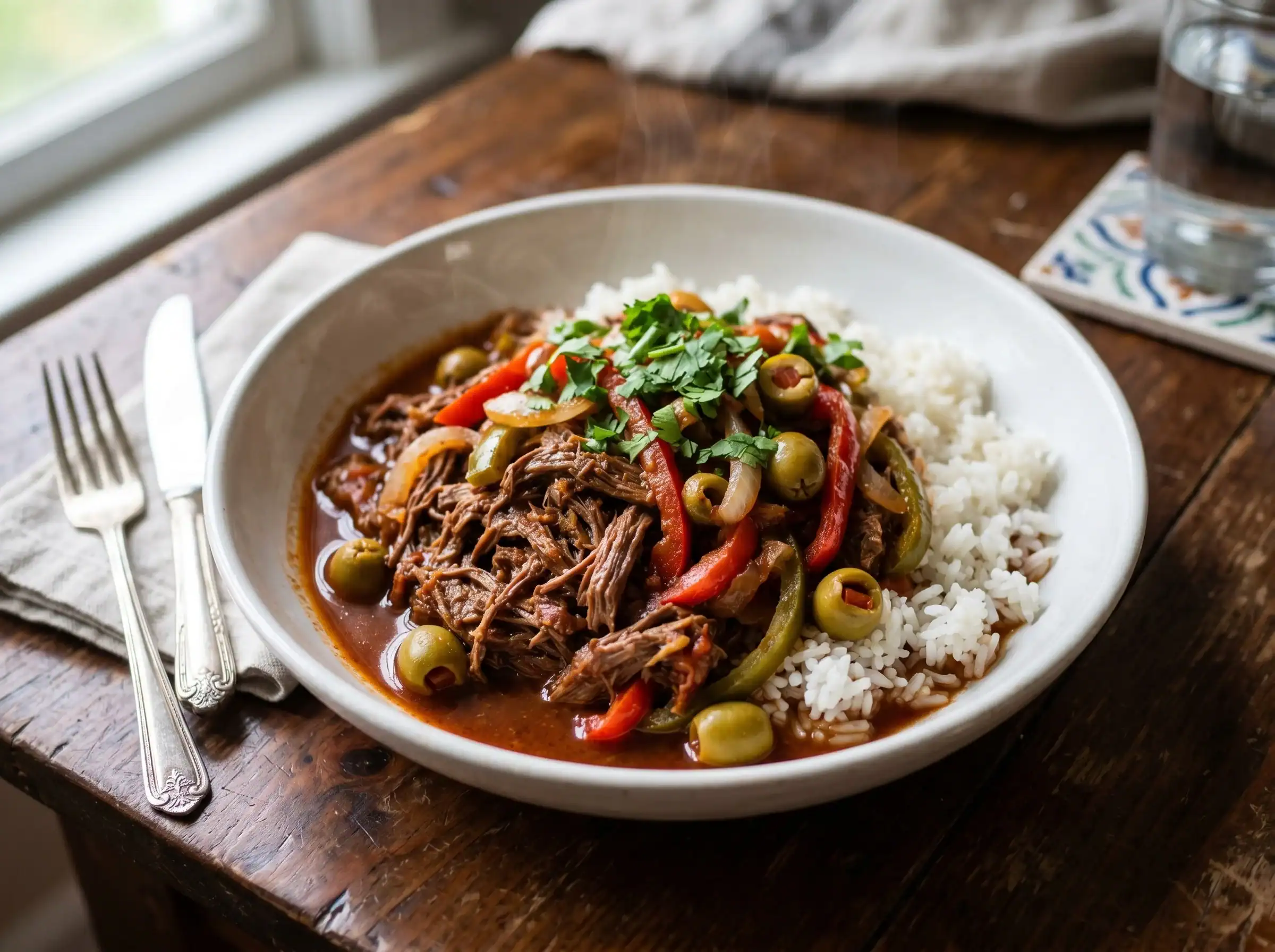
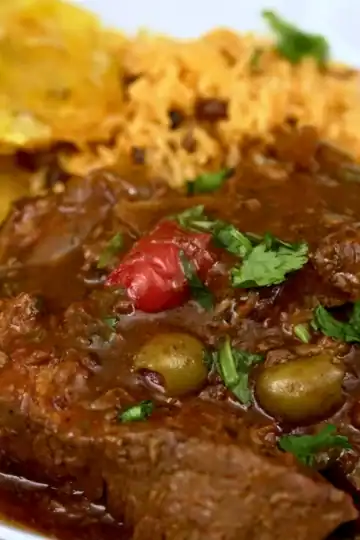
Ropa vieja is Cuba's national dish, and if you have ever tasted it made right — shredded flank steak in a rich, pepper-flecked tomato sauce with briny green olives — you understand why it has traveled across the entire Caribbean. The name translates to "old clothes" because the shredded beef looks like a pile of colorful tattered rags. I know that sounds unappetizing. Trust me — it looks beautiful on a plate and tastes even better.
I grew up Dominican, not Cuban, but great Caribbean food does not care about borders. Ropa vieja was a regular in our house the same way it lives in Cuban homes, Puerto Rican homes, and in every Caribbean restaurant from Miami to Santo Domingo. My dad made it in a cast iron Dutch oven that his mother passed down, and that smell of slow-braising beef with bay leaves is one of the first Sundays I can remember.
The Story Behind Ropa Vieja
There is a Spanish folktale that says ropa vieja was invented by a poor man who had nothing in his house but old clothes. When company came over, he threw his old clothes in a pot, added water, and prayed over them. The miracle — in the folktale — was that his prayers turned the clothes into a savory stew. The truth is probably more mundane: Spanish cooks braising beef until it fell apart into colorful rag-like strands, and the name stuck because the visual is undeniable. Whatever the origin, the dish crossed the ocean with Spanish colonizers and became one of the defining plates of Cuban cuisine.
Today you find versions of ropa vieja across the entire Spanish-speaking Caribbean and Latin America. Puerto Ricans make theirs with slight variations. Venezuelans have carne mechada, a close cousin. Panamanians have their own take. Even in the Canary Islands — where a lot of Cuban-Spanish culinary DNA traces back — ropa vieja shows up as a beloved home dish. Every version is right. There is no one true recipe. This is mine — Cuban in bones, Dominican in flourish.
Why Ropa Vieja Is Worth the Time
Let me be honest with you up front: this is not a 30-minute weeknight dinner. It is a 2.5-hour Sunday project. Flank steak is a tough cut of meat — it comes alive only when you slow-braise it for 1.5 to 2 hours to break down the connective tissue. You cannot rush this. If you try to, you will end up with a pile of chewy beef strands instead of the melting tender strands this dish deserves.
But — and this is important — almost all of that 2.5 hours is hands-off. You put the beef in a pot, you cover it with water, aromatics go in, you set the heat to low, you walk away. The sauce comes together in 25 minutes while the beef rests. And the whole dish tastes even better the next day, so you can make it on Saturday and serve it on Sunday. Ropa vieja is the perfect make-ahead dish.
Ingredients You Need
The Beef
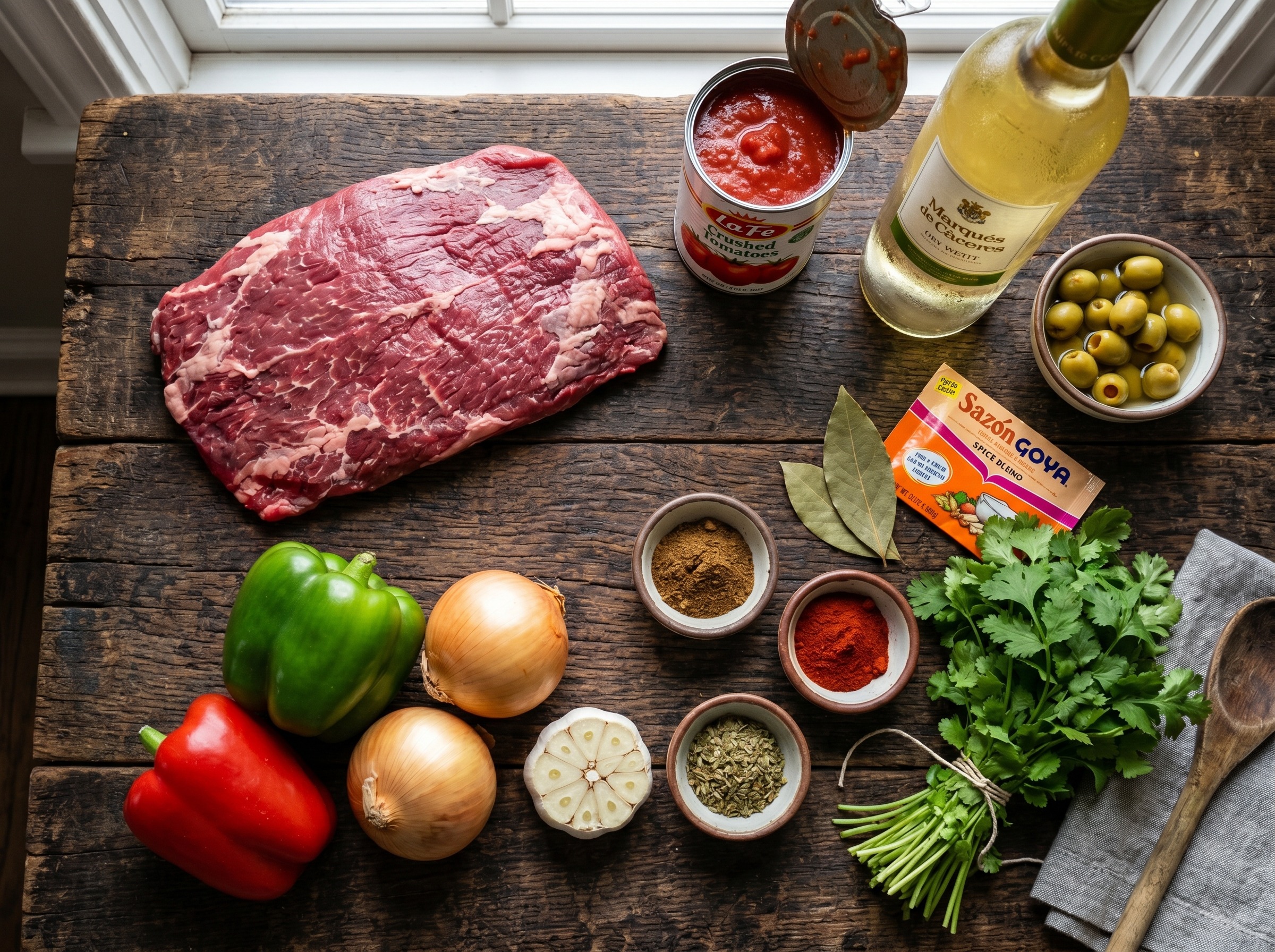
Flank steak is the traditional cut — a long, flat, fibrous piece of beef that shreds beautifully along the grain into those signature long strands. You want 2 pounds for 6 servings. Skirt steak is a great substitute, and both shred into the long strands you are looking for. Avoid chuck roast, brisket, or short rib — they shred into crumbles, not strands, and you lose the visual identity of ropa vieja.
The Braising Liquid
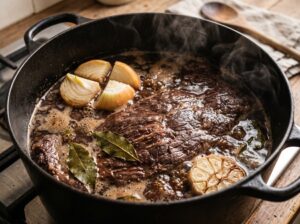
Simple on purpose — quartered onion, a head of garlic cut in half crosswise (not peeled), bay leaves, salt, and water. This is the flavor base the beef cooks in. You will reserve 1 cup of this liquid for the sauce later, so do not throw it out. The broth is where half the flavor lives.
The Sauce
- Bell peppers — one red, one green — sliced thin. The two colors are visual and practical, and both add sweet pepper flavor.
- Onion, sliced thin — cooked low and slow until silky. Do not brown it.
- Garlic — minced fresh, added late so it does not burn.
- Crushed tomatoes — one 14oz can. The base of the sauce.
- Dry white wine — half a cup. Brings acidity that balances the tomato and further tenderizes the beef. Sub chicken stock if you do not have wine, but wine is better.
- Cumin, smoked paprika, oregano, sazón — the flavor backbone. Smoked paprika is the move, not sweet paprika.
- Green olives with pimento — half a cup. The briny pop that makes ropa vieja ropa vieja. Capers work too if you prefer them.
- Fresh cilantro — for garnish at the end. Adds brightness.
How to Make Ropa Vieja
Step 1: Braise the Beef Low and Slow
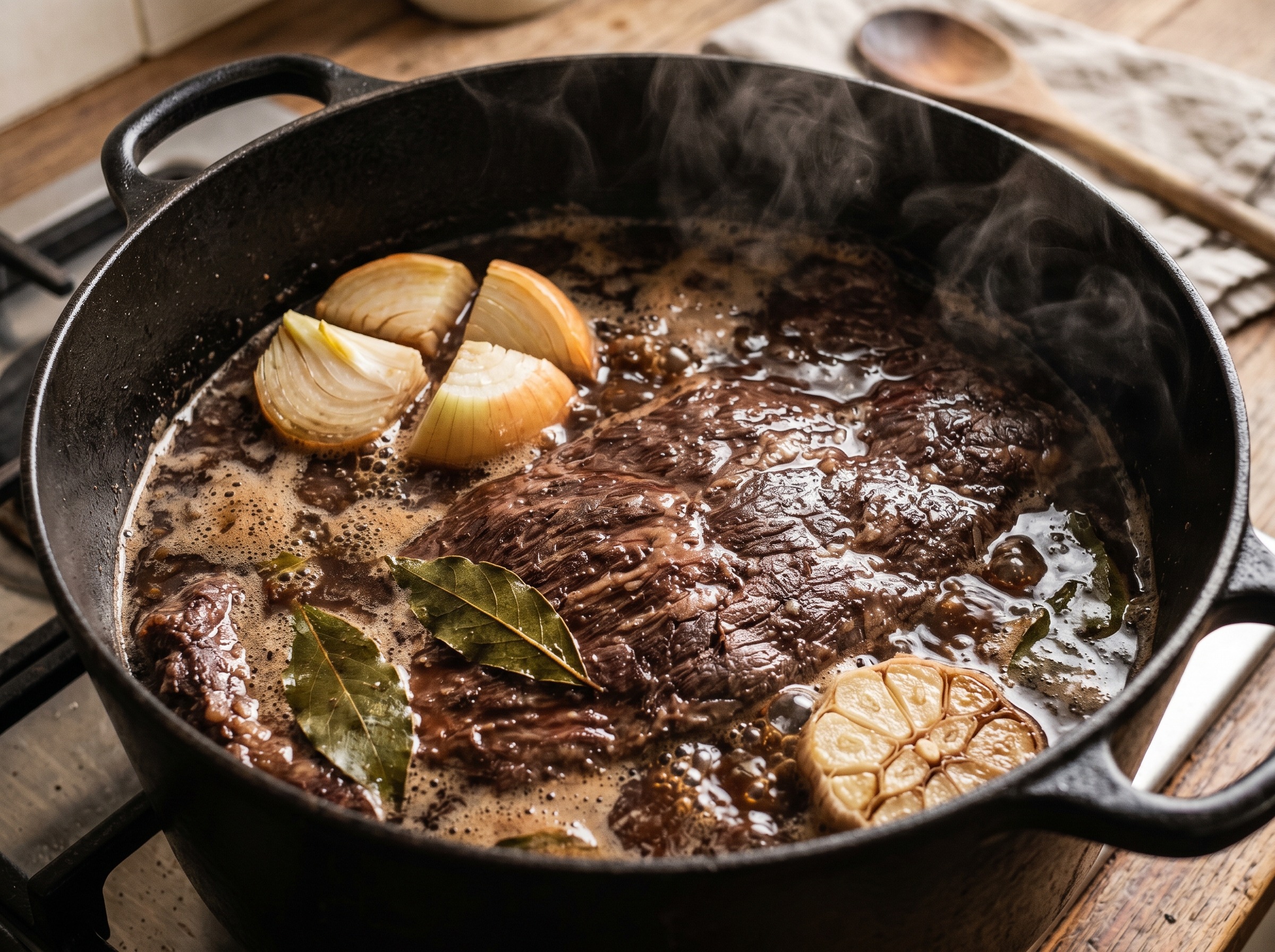
Put the flank steak in a heavy pot or Dutch oven. Add the quartered onion, halved garlic head (cut side down so the flavor releases), bay leaves, and a teaspoon of salt. Cover with water by about an inch. Bring it to a rolling boil over high heat — this brings the impurities to the surface as foam. Skim the foam off and discard it. Now reduce the heat to low.
Here is the key: you want a bare simmer, not a boil. Small bubbles should rise lazily to the surface. A rolling boil toughens the beef — the violence of boiling contracts the muscle fibers and squeezes the moisture out. Cover the pot partially (leave a small gap for steam) and let it go for 1.5 to 2 hours. Check at 1.5 hours by pulling a strand with a fork — if it shreds easily, it is done. If it is still tight, give it another 20-30 minutes.
Step 2: Shred the Beef (the Right Direction)
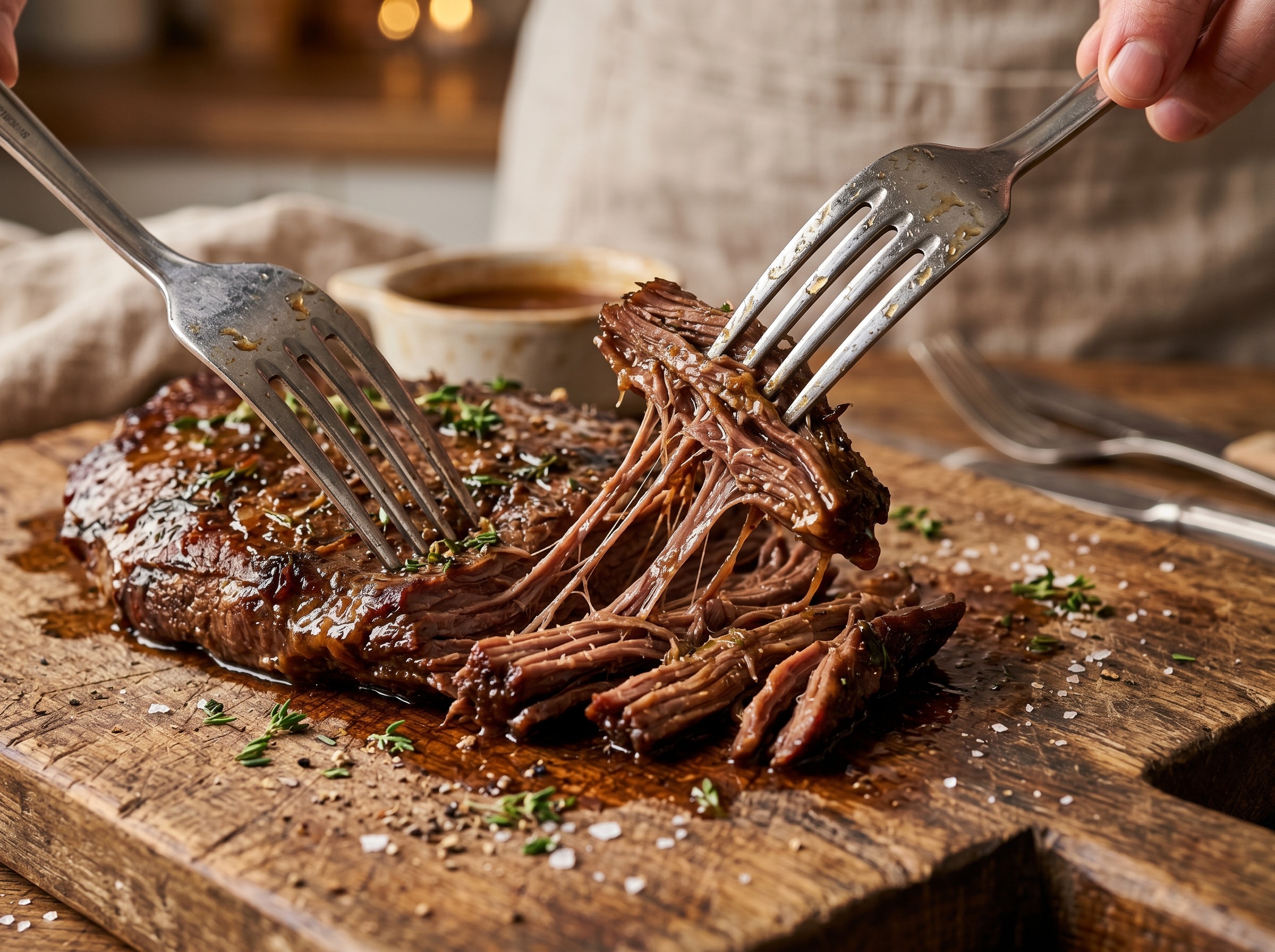
Remove the beef from the pot with tongs. Let it cool for 10 minutes — cool enough to handle but still warm. Reserve 1 cup of the braising liquid (strain it through a fine mesh sieve). Toss out the onion, garlic, and bay leaves.
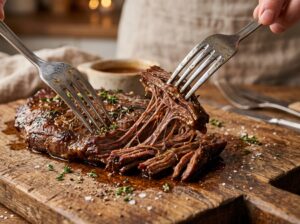
Now shred — and pay attention to direction. Flank steak has very obvious grain (long visible lines running through the meat). You want to pull your forks along the grain, not across it. Along the grain gives you the long ropy strands. Across the grain gives you short stringy bits. If your ropa vieja looks like a pile of crumbles instead of strands, this is the step you got wrong. Use two forks and pull gently.
Step 3: Build the Sauce
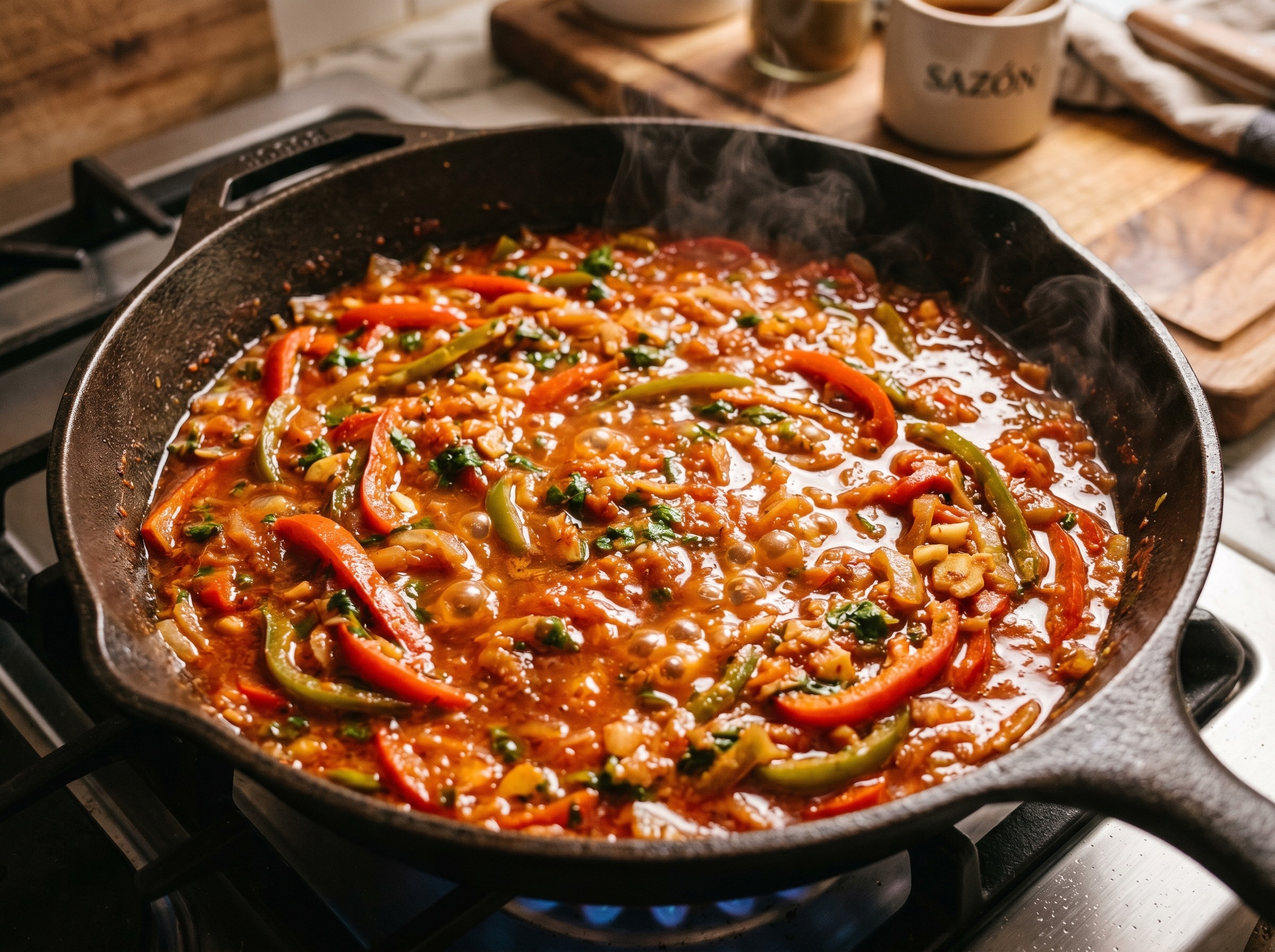
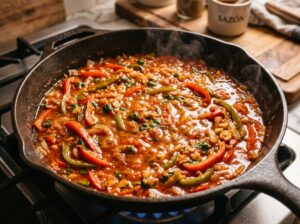
In the same Dutch oven (or a large skillet), heat the olive oil over medium heat. Add the sliced onion and both bell peppers. Cook for 5 to 7 minutes, stirring occasionally. You want them soft and silky, not browned. If they start to brown, drop the heat. Slow, gentle cooking is what develops the sweet vegetable base without bitterness.
Add the minced garlic and cook for one minute until fragrant — any longer and it burns. Pour in the white wine and scrape up any brown bits from the bottom of the pan. Let it reduce by half, about 2 minutes. The kitchen should smell amazing at this point.
Stir in the crushed tomatoes, cumin, smoked paprika, oregano, and sazón. Simmer for 5 minutes to let the raw tomato cook out and the flavors come together. Taste. The sauce should taste balanced but assertive — seasoned but not finished. It will come into focus when the beef and braising liquid go in.
Step 4: Marry the Beef and Sauce
Add the shredded beef and the reserved 1 cup of braising liquid. Stir gently to coat every strand — be patient, do not shortcut this. You want sauce on every piece of beef, not just on top. Simmer uncovered over low heat for 15 to 20 minutes. The sauce will reduce and thicken until it clings to the beef instead of pooling at the bottom of the pan. This is the moment you know it is done.
During the last 5 minutes, stir in the green olives with pimento. Taste. Adjust salt and pepper. Olives are salty, so do not salt too early — wait until after they go in. Garnish with chopped fresh cilantro just before serving.
Pro Tips from My Kitchen
- Flank or skirt — not chuck. The cut matters. Flank or skirt shred into strands. Chuck shreds into crumbles. Different dish.
- Shred along the grain. I will say it twice because it is the most common mistake. Along the grain = strands. Across the grain = crumbles.
- Never dump the braising liquid. Strain it, reserve 1 cup, and add it to the sauce. That is half the flavor right there.
- Bare simmer, not a boil. A rolling boil makes the beef tough. Small lazy bubbles are what you want.
- Ropa vieja tastes better the next day. The flavors deepen overnight. Make it ahead, store in the fridge, reheat gently. Sunday lunch is even better as Monday dinner.
- Do not skip the wine. The acidity balances the tomato and tenderizes the meat further. Sub chicken stock if you must, but try it with wine first.
- Smoked paprika, not sweet. Smoked gives the sauce the depth that is impossible to fake.
- Taste before salting. Olives, sazón, and the braising liquid all add salt. Final-season at the end, not before.
Why I Think Everyone Should Learn This Dish
Ropa vieja is one of those recipes that teaches you something about cooking every time you make it. You learn what a low, patient braise does for a tough cut of meat. You learn why aromatics matter — how an onion and a halved garlic head can infuse a pot of water until it becomes something you could drink straight. You learn the difference between boiling and simmering, and why it matters. You learn that the shred direction changes the final texture. And you learn that the dish tastes different — and better — the next day.
Once you have these skills, they transfer to every other braised meat dish you will ever make. Chuck roast. Pot roast. Beef stew. Osso buco. Short ribs. Ropa vieja is the gateway drug to braising, and it is also the destination — because even after you have mastered every other braise, this one remains a top-three dinner on any Sunday I get to cook for my family.
Make-Ahead and Storage
Ropa vieja is one of those dishes that genuinely improves with time. The flavors meld overnight in the fridge and the sauce thickens further. You can make the whole thing a day ahead, refrigerate, and reheat gently on the stove with a splash of water if it gets too thick.
Leftovers keep in the fridge for 4 days in an airtight container. To reheat, warm gently over low heat with a splash of water or stock to loosen the sauce. Do not blast it in the microwave — the beef toughens and the sauce separates. Low and slow on the stovetop is the only right way.
Freezes great for up to 3 months. Portion into freezer bags, lay flat, and freeze. Thaw in the fridge overnight before reheating. I keep a bag in my freezer for the nights I cannot think of what to cook.
What to Serve with Ropa Vieja
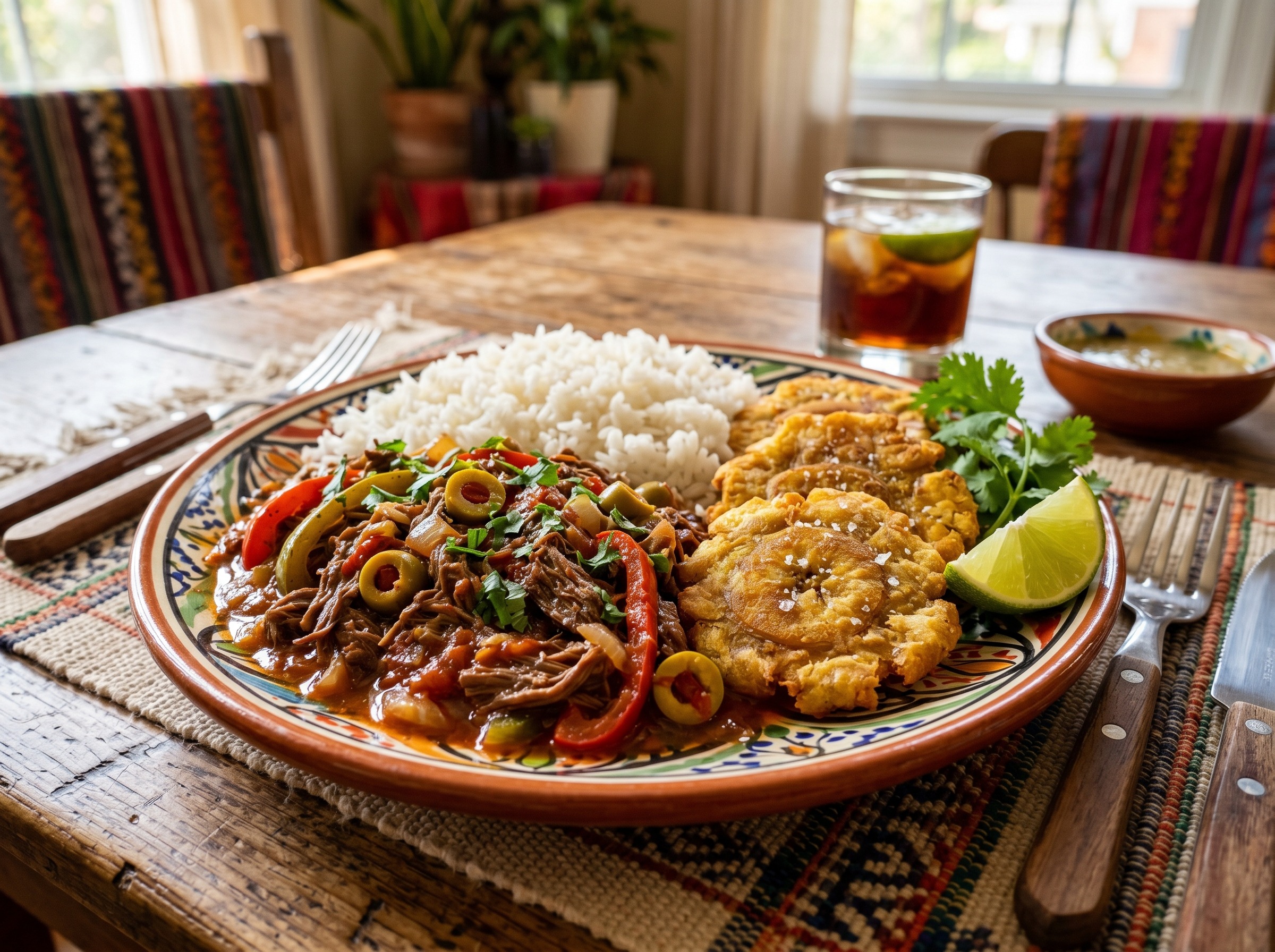
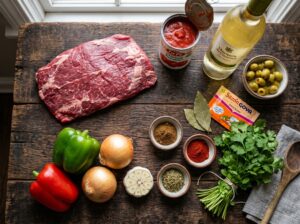
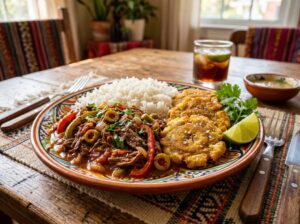
The classic Caribbean plate: fluffy white rice as a bed for the sauce to pool into, with tostones or plantains on the side. Add black beans if you want to go full Cuban. A simple avocado-tomato salad with lime keeps the plate bright. A lime wedge for squeezing over the beef at the last moment is a game-changer that I never skip.
For a Dominican twist, serve it with pollo guisado-style rice or even over a bed of mashed plantains. Ropa vieja is flexible — it plays well with almost any starch.
Frequently Asked Questions
What cut of beef is best for ropa vieja?
Flank steak is traditional and ideal. Skirt steak is the best substitute — both shred into the long strands ropa vieja is famous for. Avoid chuck roast, brisket, and short rib — they shred into crumbles instead of strands and you lose the visual signature of the dish.
Can I make ropa vieja in a slow cooker or Instant Pot?
Yes on both. Slow cooker: braise the beef on low for 6-8 hours with the same aromatics. Instant Pot: 45 minutes on high pressure with natural release. Both work, but you still build the sauce on the stovetop separately and combine them at the end. The stovetop braise gives the most control over texture, but the pressure cooker is a great shortcut for weeknight ropa vieja.
Is ropa vieja Cuban or Dominican?
Ropa vieja is Cuba's national dish, but it is beloved across the entire Caribbean. Dominican, Puerto Rican, and Venezuelan cooks all make their own versions with small regional twists. My version leans slightly Dominican — a little more sazón, a little more olive — but the dish itself is 100% Cuban in origin. Great Caribbean food travels.
What does "ropa vieja" mean?
"Ropa vieja" literally translates to "old clothes" in Spanish. The name comes from the appearance of the dish — shredded beef with strips of red and green peppers and onions looks like a pile of colorful tattered rags. There is a Spanish folktale about a poor man who prayed over a pot of old clothes and they turned into a savory stew. The name stuck.
Can I use capers instead of green olives?
Yes. Capers are more common in some regional versions and bring a similar salty brine. Use 2-3 tablespoons of capers in place of the half cup of olives. You can also combine the two for extra briny depth — a handful of olives plus a spoonful of capers is a great move.
Can I skip the wine?
Yes, substitute ½ cup of chicken stock plus 1 tablespoon of white wine vinegar. You lose a little complexity but the dish still works. Dry white wine (like Sauvignon Blanc) is best if you have it — do not use sweet or oaky wines like Chardonnay.
Why is my ropa vieja tough?
Two reasons: you rushed the braise, or you boiled instead of simmered. Flank steak needs at least 1.5 hours at a bare simmer to break down the connective tissue. A rolling boil contracts the muscle fibers and makes the meat tough. If yours came out tough, return it to the liquid and simmer another 30-45 minutes — it will come back.
What is the difference between ropa vieja and carne mechada?
Carne mechada is Venezuelan and Colombian shredded beef, often made with skirt or flank and a similar braising method, but the sauce is usually tomato-based without olives or wine. Ropa vieja leans more Cuban with the wine, olives, and smoked paprika. They are cousins, not twins.
Shop This Recipe
A few pieces of gear that make this recipe easier. These are Amazon affiliate links — if you buy through them I get a small commission at no cost to you, which helps me keep this blog running.
- All-Clad Dutch Oven — the right size for braising 2 lbs of flank steak. An investment piece I still use every week.
- Wüsthof Classic Chef Knife — thin-slicing peppers and onions is easier with a great knife.
- John Boos Maple Cutting Board — big enough to shred a whole flank steak on.
You May Also Like This
Watch me make this recipe step by step. Seeing the shred direction and the sauce consistency is worth a thousand words.
If ropa vieja is your kind of comfort food, you will love my pollo guisado — a Dominican chicken stew with a similar soul. Want more Caribbean classics? Check out my Dominican food guide for the full lineup.
Make this on a Sunday, eat it on a Monday. Even better on Monday. — Kelvin
Ingredients
Method
- Place the flank steak in a large heavy pot or Dutch oven with the quartered onion, halved garlic head, bay leaves, and salt. Add enough water to cover the beef by about an inch. Bring to a boil over high heat, then skim any foam that rises to the surface.

- Reduce the heat to low, cover partially, and simmer gently for 1.5 to 2 hours until the beef is fork-tender and shreds easily. Do not rush this — low and slow is how the connective tissue breaks down. A rolling boil will make the beef tough and stringy.
- Remove the beef from the pot and set aside to cool slightly. Reserve 1 cup of the braising liquid and strain it through a fine mesh sieve to remove solids. This liquid is liquid gold — it is where all the flavor lives. Never pour it down the drain.
- Once the beef is cool enough to handle, shred it into long strands with two forks, pulling along the grain. You want long ropy strands, not a pile of meat crumbles. Shredding the correct direction is what gives ropa vieja its signature tattered-rags look.
- In a large heavy skillet or the Dutch oven, heat the olive oil over medium heat. Add the sliced onion, red bell pepper, and green bell pepper. Cook for 5 to 7 minutes, stirring occasionally, until the vegetables are soft and the onion is translucent. Do not brown them — you want silky, not caramelized.
- Add the minced garlic and cook for 1 minute until fragrant. Pour in the white wine and scrape up any bits from the bottom of the pan. Let the wine reduce by half, about 2 minutes.
- Stir in the crushed tomatoes, cumin, smoked paprika, oregano, and sazón. Simmer for 5 minutes to let the flavors meld and the raw tomato edge cook off.
- Add the shredded beef and the reserved 1 cup of braising liquid to the sauce. Stir gently to coat every strand. Simmer uncovered over low heat for 15 to 20 minutes until the sauce thickens and clings to the beef rather than pooling at the bottom.
- Stir in the green olives with pimento during the last 5 minutes of simmering. Taste and adjust salt and pepper. Garnish with fresh chopped cilantro just before serving.
- Serve hot over
Leave a Reply