
Pudín de pan is the dessert Dominican grandmothers invented because nobody throws food out. You've got half a bag of pan de agua going stale on the counter, you've got eggs, milk, a little rum hiding in the cabinet — and by Sunday afternoon you've got a caramel-topped dessert that smells like the whole island walked through your kitchen. Just bread that refuses to die.
In my abuela's house in Santo Domingo, Saturday was baking day for Sunday dessert. She'd pull out whatever pan de agua was left from the week — already rock hard — and drop it into a big mixing bowl with warm milk. Then came the clove. Three or four whole cloves crushed in a mortar, a stick of canela broken in half, fresh ginger, a splash of ron Brugal. That smell would start crawling out of the kitchen around 4pm and by 5pm half the cousins had mysteriously shown up "just to say hi."
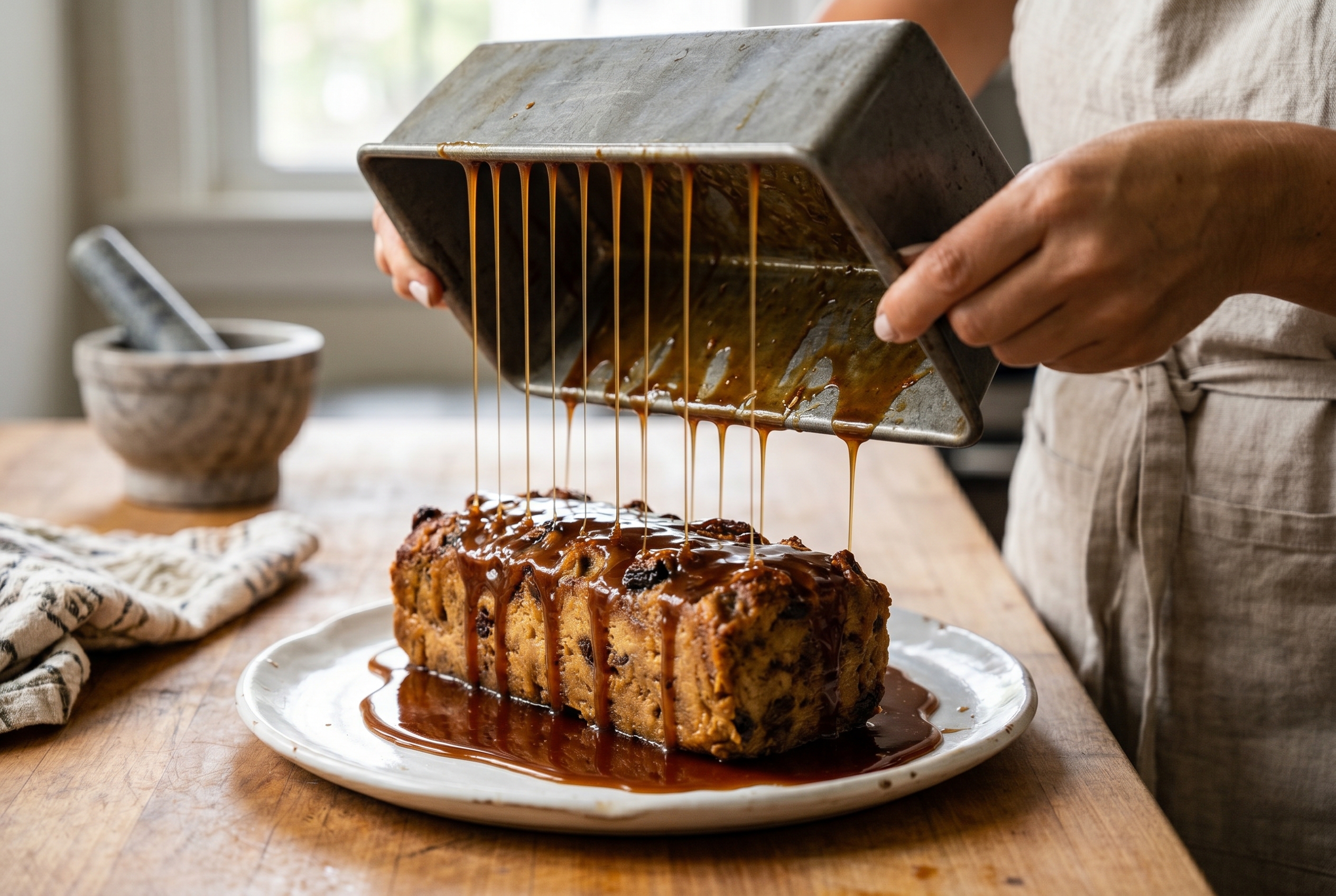
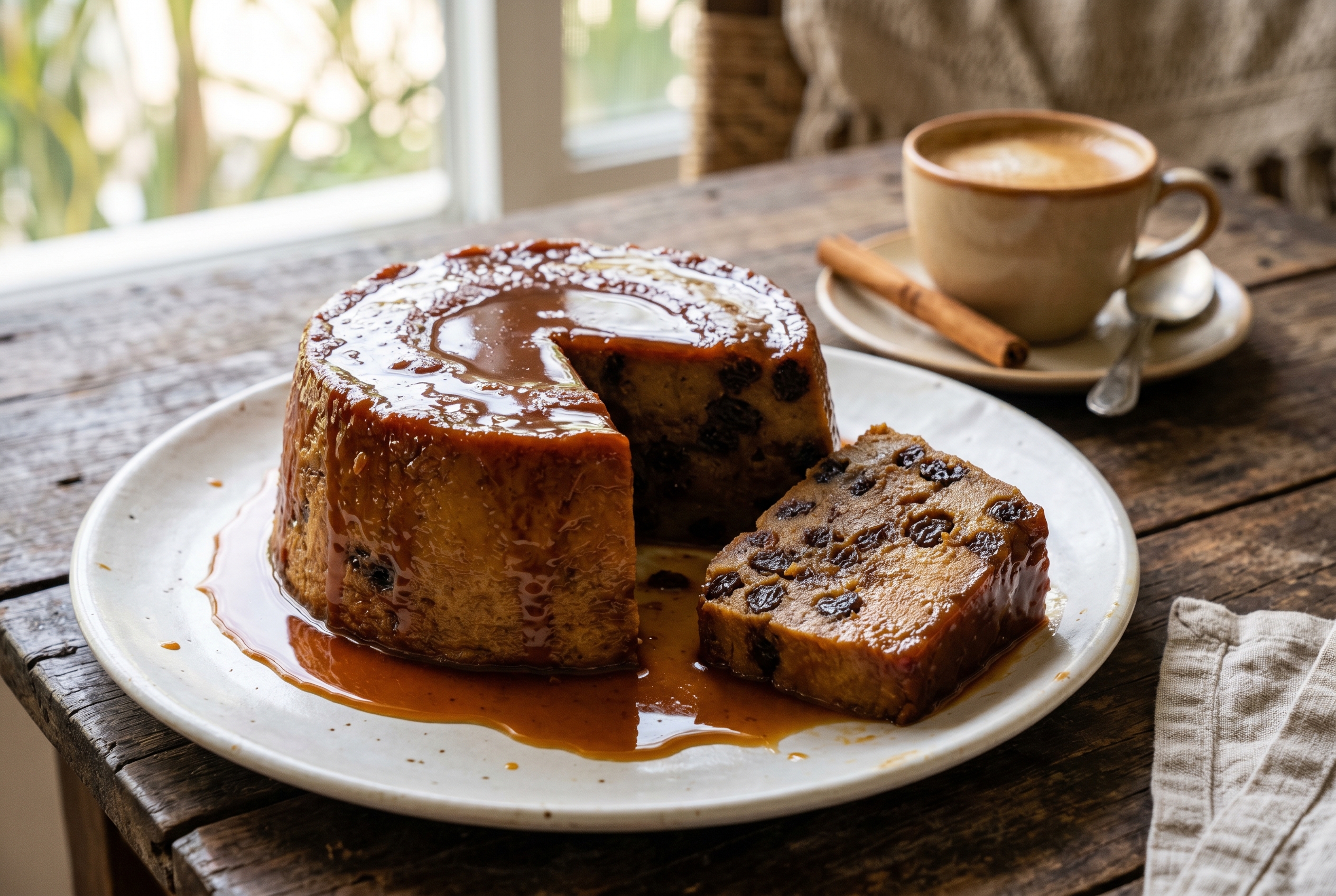
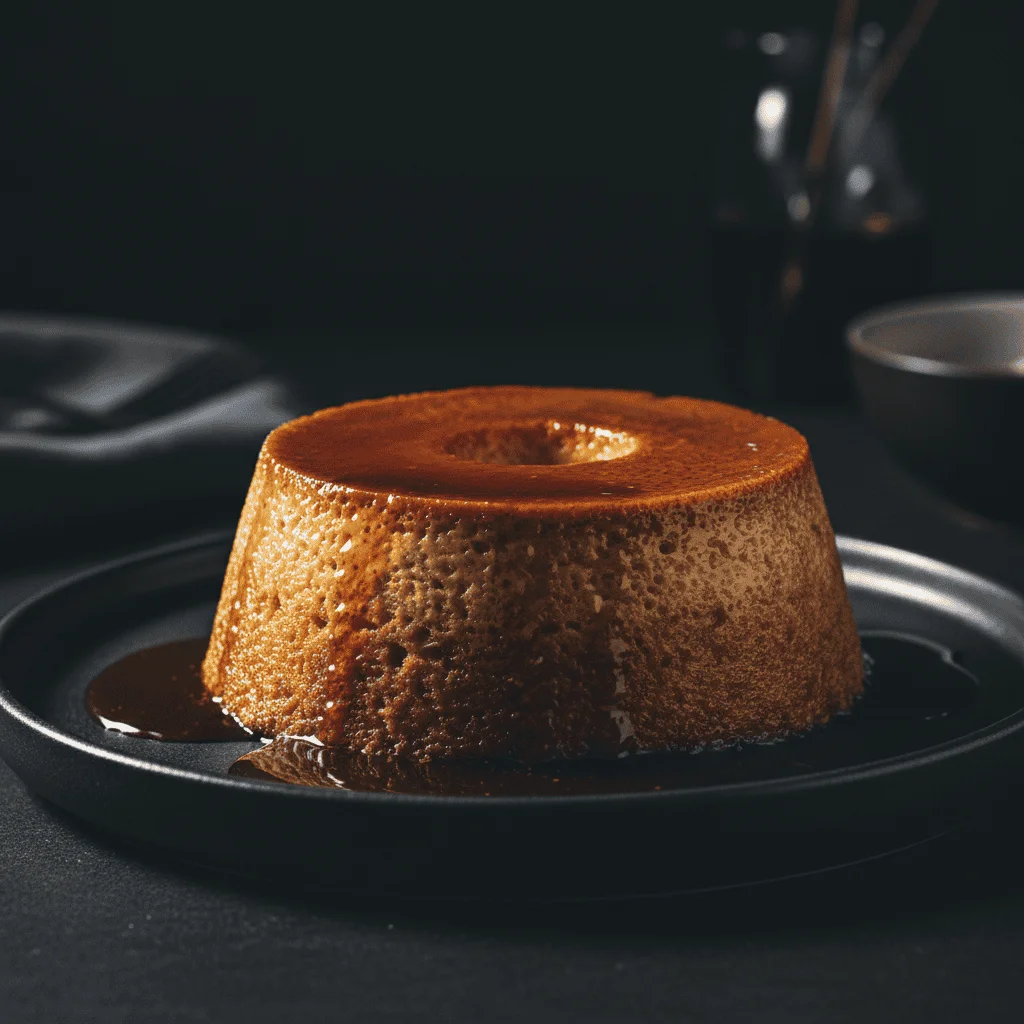
The other thing I remember is the caramel. She'd make it in an old aluminum mold on the stovetop and swirl it until it was deep amber, the color of a good rum. When she unmolded the pudín the next day after an overnight chill, that caramel would cascade down the sides in thick dark streams. That's the shot. That's what tells you Sunday dessert is happening. This is the traditional grandma version — no cream cheese, no shortcuts. Just bread, eggs, milk, spice, and time.
Why You'll Love This Pudín de Pan Dominicano
- Zero waste dessert: This recipe exists because stale bread is too good to throw away. Old pan de agua, old baguette, old brioche — all of it gets a second life.
- Smells like Dominican Sunday: Cloves, canela, ginger, rum, and caramelized sugar in a hot oven. Your house is going to smell like your tía's kitchen for the rest of the day.
- Unmolds like flan: Unlike the chunky American version, this pudín is smooth and dense and turns out clean onto a plate with dark caramel pouring over the top. Party dessert energy.
- Heavy on the spice: This is not a shy bread pudding. The spice profile is loud — warm, aromatic, a little boozy from the rum. Very Dominican, not at all subtle.
- Gets better overnight: You make it the day before, chill it, unmold it cold. The flavors deepen and the texture firms up. Perfect for planning ahead.
What Is Pudín de Pan?
Pudín de pan is the Dominican solution to stale bread. The recipe takes stale pan de agua, drowns it in spiced milk until the bread breaks down, adds eggs, sugar, and rum, then bakes the whole thing in a caramel-lined mold submerged in a water bath. What comes out is something closer to a flan than to what most Americans think of as bread pudding.
That's the key thing to understand. This is not the chunky, casserole-style, cubes-of-bread-swimming-in-custard American bread pudding. In pudín de pan, the bread disappears completely. You soak it long enough, blend it smooth enough, and bake it gently enough that when you slice it, the interior is one uniform dense custard. No chunks. The bread becomes invisible structure — it gives the pudín chew and density, but you can't see it anymore.
The flavor profile is heavily spiced, which is very Dominican. Canela, clavo dulce, jengibre, a splash of rum. Pudín de pan leans into all of it. It's baked in a loaf pan or tube mold lined with dark caramel, set inside a larger roasting pan with hot water so it cooks gently in a baño de maría. After baking, it chills overnight. When you unmold it, the caramel has turned into a loose sauce that cascades down the sides. Dense, not fluffy. Smooth, not chunky. Aromatic, not subtle.
Pudín de Pan vs Flan de Pan vs Flan de Leche
Pudín de Pan — the traditional grandma version
This is the original. Stale bread soaked in spiced milk until it disintegrates, blended smooth with eggs and sugar, baked in caramel in a baño de maría. Heavy on cinnamon, cloves, ginger, rum. The bread is fully integrated — no visible chunks, no cream cheese, no modern additions. This is what abuela made with whatever was in the kitchen.
Flan de Pan — the hybrid
Flan de pan is a more modern version. It takes the pudín de pan concept but adds cream cheese to the blend, which makes the texture richer, smoother, and more flan-like. If traditional pudín de pan is grandma-style, flan de pan is the fancier cousin you bring to a birthday party. Full recipe at flan de pan dominicano — same base idea, very different texture.
Flan de Leche — no bread at all
Flan de leche is the classic Dominican flan — eggs, milk, evaporated milk, condensed milk, sugar, vanilla. No bread involved. Lighter, jigglier, more custardy. It's what most people think of when they say "flan." Full recipe at flan de leche dominicano. Same caramel mold and baño de maría technique, totally different body. Pudín de pan sits at the opposite end of the flan spectrum — denser, spicier, more rustic.
Ingredients You'll Need
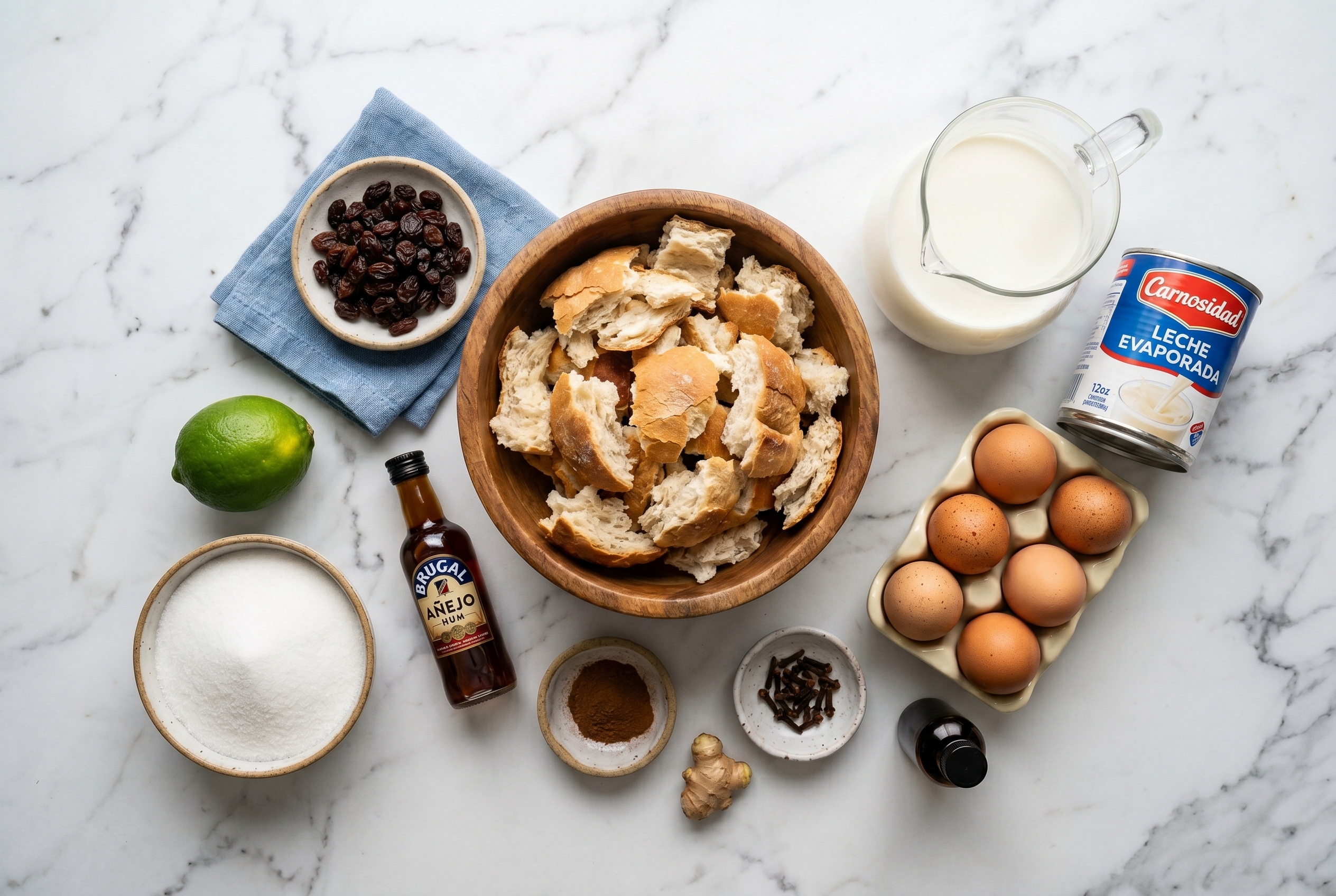
For the caramel:
- 1 cup granulated sugar — goes dry into the pan first
- 3 tablespoon water — helps the sugar melt evenly
For the pudín:
- 1 loaf stale pan de agua (about 400g or 8 cups torn) — day-old or two-day-old is perfect
- 2 cups whole milk — warm, not hot
- 1 (12 oz) can evaporated milk — this is the Dominican base
- 5 large eggs — room temperature
- 1 cup granulated sugar — for the custard, separate from the caramel
- 2 teaspoon ground cinnamon (or 1 canela stick steeped in the milk)
- ½ teaspoon ground cloves — do not skip this, it's the Dominican signature
- ½ teaspoon ground ginger — fresh grated is even better
- 2 teaspoon pure vanilla extract
- 3 tablespoon dark rum — Brugal, Barceló, or whatever you have
- Zest of 1 lime — Dominican secret weapon, cuts the richness
- ¼ teaspoon salt
- ½ cup raisins — soaked in 2 tablespoon rum for 10 minutes (optional but traditional)
Equipment: A 9x5 loaf pan or a round tube mold (flanera), a larger roasting pan for the water bath, a blender or food processor, a whisk, aluminum foil.
Why Pan de Agua Is the Best Bread for This
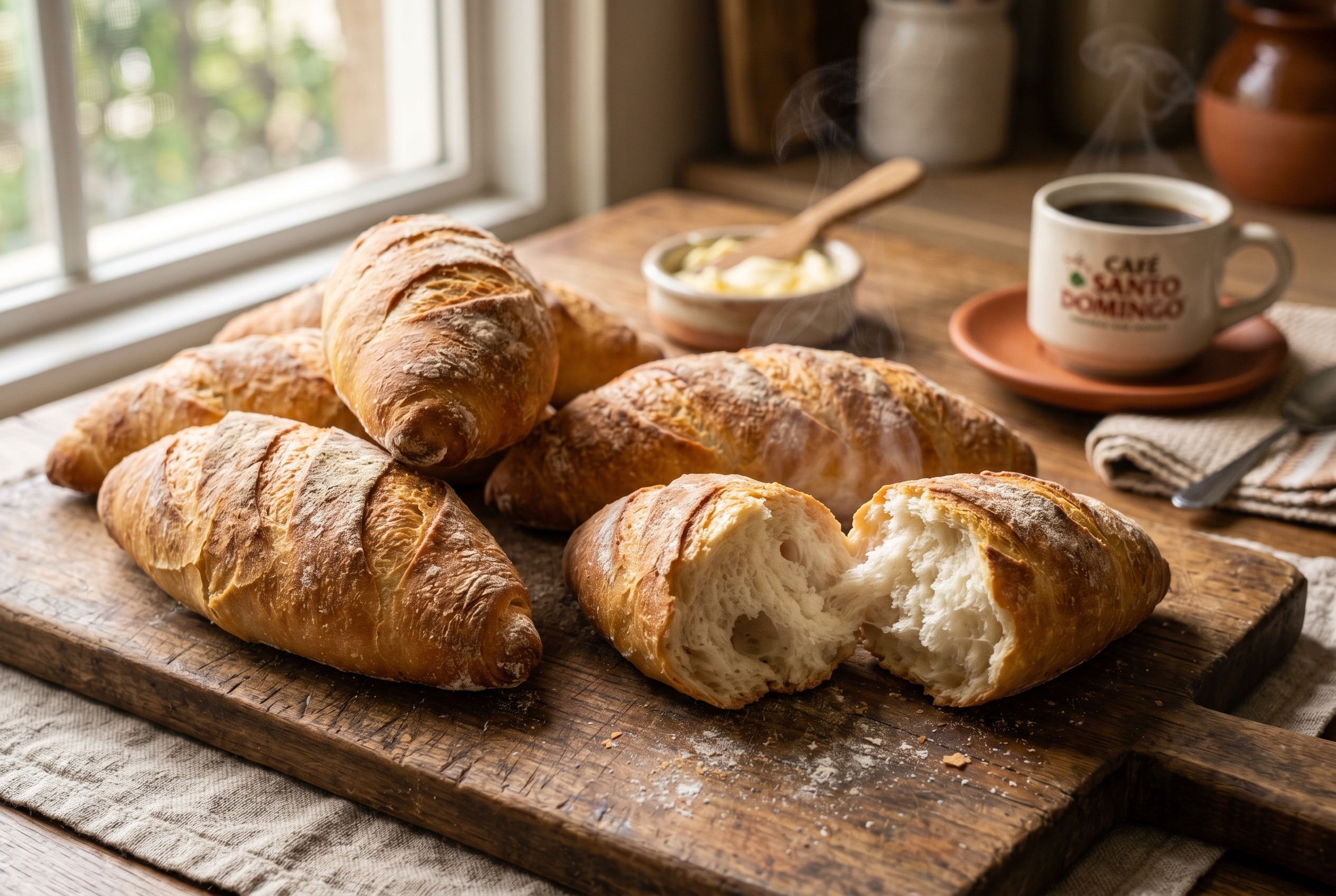
Pan de agua goes stale fast — it's a lean water-based bread with no fat to keep it soft — so every Dominican household ends up with old pan de agua sitting around. That's exactly what this recipe was built for. Pan de agua is neutral in flavor and has a soft open crumb, so it soaks up the spiced milk fast and breaks down smooth. If you've never made it yourself, check out my pan de agua recipe — bake a batch Friday, eat some fresh, use the leftovers for pudín on Sunday. French bread, brioche, or Portuguese rolls work in a pinch, but nothing hits like day-old pan de agua.
Step-by-Step Instructions
Step 1 — Make the Caramel and Line the Mold
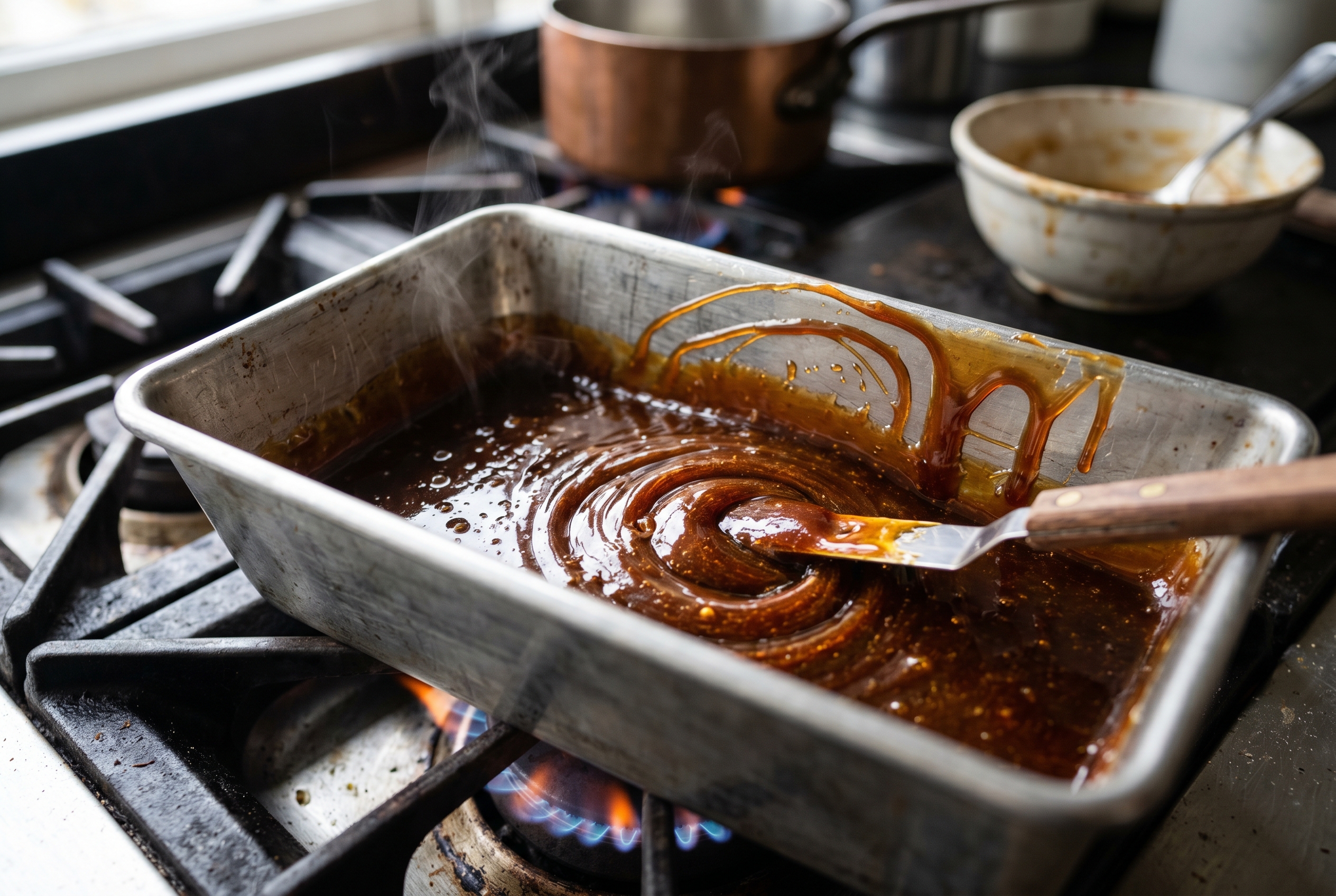
Put the 1 cup of sugar and 3 tablespoons of water directly into your loaf pan or flanera over medium-low heat. (If your mold can't go on direct heat, make the caramel in a small saucepan and pour it in.) Swirl gently — don't stir with a spoon, that's how you get crystallization. Let the sugar melt, then darken to deep amber, about 8-10 minutes. When it smells nutty and looks like dark honey, kill the heat and swirl the caramel up the sides to coat about an inch up the walls. Set aside to harden.
Step 2 — Soak the Bread
Tear the stale pan de agua into rough chunks — crust and all — into a large mixing bowl. Pour the warm whole milk and evaporated milk over the top. Press the bread down with a wooden spoon or your hands. Let it sit for a full 30 minutes. The bread should absorb everything and turn into a thick sloppy mush. If there's dry bread still showing, add another splash of milk. Completely saturated — that's what separates traditional pudín de pan from chunky American bread pudding.
Step 3 — Blend Until Smooth
Transfer the soaked bread mixture to a blender in batches (or use an immersion blender in the bowl). Blend on high until you have a smooth, thick, pourable batter — no bread lumps, no visible chunks. It should look like thick pancake batter. If your blender is struggling, add a tablespoon or two more milk. This step is critical. Stop blending while there are still lumps and you'll get chunky American-style pudding, not pudín de pan.
Step 4 — Add Eggs, Sugar, Spices, and Rum
Pour the smooth bread base back into a large bowl. Add the 5 eggs one at a time, whisking well after each. Whisk in the 1 cup sugar, cinnamon, cloves, ginger, vanilla, rum, lime zest, and salt. Taste — it should be sweet and aromatic with that Dominican spice warmth. Want it stronger? Add a pinch more clove. Fold in the rum-soaked raisins last. Preheat oven to 325°F.
Step 5 — Bake in a Water Bath (Baño de María)
Pour the batter into the caramel-lined loaf pan and cover tightly with foil. Place the loaf pan inside a larger roasting pan, then pour hot tap water into the roasting pan until it comes halfway up the sides of the loaf pan. That's the baño de maría — it keeps the pudín from overcooking. Slide into the oven and bake 70-80 minutes, until a knife inserted in the center comes out mostly clean with a little custard clinging. The center should still jiggle slightly — it sets up as it cools.
Step 6 — Chill Overnight and Unmold
Lift the loaf pan out of the water bath and cool on the counter 30 minutes. Cover and transfer to the fridge for at least 6 hours, ideally overnight. This chill is non-negotiable — it firms up the texture and loosens the caramel into a sauce. To serve, run a thin knife around the edges, place a serving plate upside down over the top, and flip in one confident motion. Tap a couple of times. Lift the pan off slowly and watch the caramel cascade down. Slice thick and serve cold.
Pro Tips for Perfect Pudín de Pan
- Take the caramel darker than you think: Most home cooks pull it too early. For real Dominican pudín, you want deep amber — color of an old penny. That bitterness balances the sweet custard. Light caramel tastes flat.
- Soak the bread longer: 30 minutes is the minimum. An hour is better. The more the bread breaks down before blending, the smoother the final pudín.
- Blend until truly smooth: Run the blender longer than you think is necessary. See any bread texture? Not done.
- Water should hit halfway up the mold: Too little and the sides overcook. Too much and water splashes in. Hot tap water, not boiling.
- Chill overnight, seriously: Do not unmold warm. The pudín will collapse and the caramel won't be loose. 6 hours minimum, overnight is better.
Variations
Raisin Version (Pudín de Pan con Pasas)
The most traditional version. Soak ½ cup dark raisins in 2 tablespoons rum for 10 minutes, fold into the batter before pouring into the mold. The raisins sink as it bakes and end up dotted throughout. Some abuelas add chopped walnuts or pecans — good move.
Coconut Pudín de Pan
Replace 1 cup of the whole milk with full-fat coconut milk. Add ½ cup shredded unsweetened coconut after blending. Tropical, rich, very common in the cibao region. Bake time stays the same. The coconut gives a subtle chew against the smooth custard.
Guava Pudín de Pan
Cut ½ cup guava paste (pasta de guayaba) into small ½-inch cubes. After pouring the batter into the mold, scatter the guava cubes across the top — they sink partway as it bakes and create jammy pockets of guava inside. Serve with extra guava paste melted with water on the side. My kids fight over this one.
What to Serve With Pudín de Pan
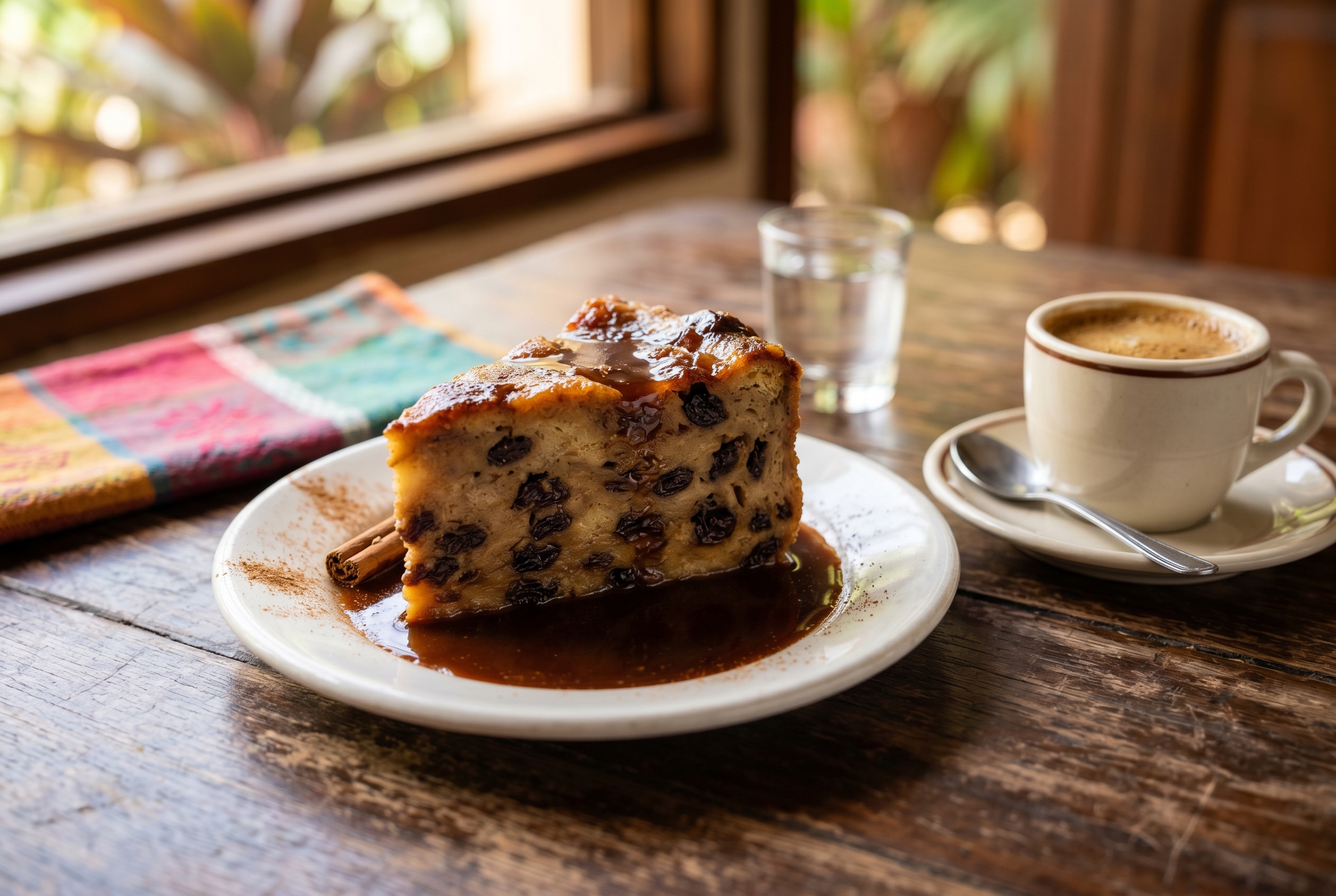
- Dominican coffee: A small cup of café dominicano — strong, black, with a little sugar — is the classic pairing. The bitterness cuts right through the sweet caramel.
- Flan de leche dominicano: If you're putting out a Dominican dessert spread, serve a slice of pudín de pan next to a wedge of flan de leche so people can compare the two textures side by side.
- Dulce frío dominicano: Another chilled Dominican dessert that plays well with the warm spices of pudín de pan. Great for summer parties.
- Bizcocho dominicano: The fluffy pineapple-filled Dominican birthday cake. Pudín de pan is dense, bizcocho is airy — put them on the same table for maximum contrast.
- Habichuelas con dulce: If you're going full Dominican dessert mode during Semana Santa, pudín de pan belongs right next to a bowl of habichuelas con dulce. Both heavy on the warm spices.
You May Also Like
Frequently Asked Questions
What's the difference between pudín de pan and American bread pudding?
Texture, mostly. American bread pudding is chunky — cubes of bread swimming in custard, baked in a casserole, served warm with a sauce. Dominican pudín de pan soaks the bread until it breaks down, blends it smooth, bakes in a caramel-lined mold in a water bath, and unmolds cold. Dense and flan-like, not chunky. Different dessert entirely.
What bread should I use?
Stale pan de agua is the gold standard — day-old absorbs liquid faster than fresh. Stale French bread, brioche, Portuguese rolls, or sandwich bread work in a pinch. Avoid anything too sweet or heavily seasoned. You want a neutral white bread that's gone hard.
Can I skip the rum?
You can, but something gets lost. Rum marries with cloves and cinnamon in a way that's hard to replace. If you can't use alcohol, substitute 2 extra teaspoon vanilla extract and 1 teaspoon rum extract. Same aromatic function, no booze.
Why is my caramel crystallizing?
Two likely reasons. First, you stirred it. Never stir caramel with a spoon — only swirl. Stirring splashes sugar onto the sides and causes crystals. Second, your pan wasn't clean. If it crystallizes, add another tablespoon of water and a squeeze of lemon juice and let it re-melt.
Why did my pudín collapse?
Almost always because you unmolded it warm, or overbaked it. Let it cool to room temp, then refrigerate at least 6 hours before unmolding. If the top cracks after baking, oven was too hot — next time drop to 315°F.
Can I make it without a water bath?
Technically yes, but the texture suffers. Without the baño de maría, the eggs cook too fast and the pudín gets rubbery and grainy. Don't be scared of the water bath — it's just putting the loaf pan inside a bigger pan and filling with hot tap water.
How long does it keep?
Covered in the fridge, up to 5 days. Flavor improves on day two and three as the spices settle in. Serve cold — it doesn't reheat well.
Can I freeze it?
You can, but I don't love it. Freezing makes the texture grainy when it thaws. Wrap individual slices tightly in plastic then foil, freeze up to 1 month, thaw overnight in the fridge. I'd rather halve the recipe and eat it fresh.
Can I make it in individual ramekins?
Yes, and they look beautiful. Divide the caramel between 8-10 ramekins, pour batter in, bake in a water bath at 325°F for 35-40 minutes. Chill and unmold the same way. Great for dinner parties.
How is this different from flan de pan?
Flan de pan adds cream cheese, which gives it a silkier, cheesecake-leaning texture. Pudín de pan keeps it traditional — no cream cheese, just bread, milk, eggs, sugar, and spice. Pudín is denser and more rustic. Full recipe for the hybrid at flan de pan dominicano.
Pudín de Pan Dominicano
Ingredients
Method
- Make the caramel: combine 1 cup sugar and 3 tablespoon water in a loaf pan or flanera over medium-low heat. Swirl (don't stir) until sugar melts and turns deep amber, 8-10 min. Swirl up the sides to coat. Set aside to harden.

- Tear stale pan de agua into chunks in a large bowl. Pour warm whole milk and evaporated milk over top. Press bread down to submerge. Soak 30 minutes until fully saturated.
- Transfer soaked bread to a blender in batches (or use immersion blender). Blend on high until completely smooth with no lumps or visible bread chunks. Batter should look like thick pancake batter.
- Pour blended base into large bowl. Whisk in eggs one at a time. Add 1 cup sugar, cinnamon, cloves, ginger, vanilla, rum, lime zest, and salt. Whisk until smooth. Fold in rum-soaked raisins.
- Preheat oven to 325°F. Pour batter into caramel-lined mold. Cover tightly with foil. Place inside larger roasting pan.
- Pour hot tap water into roasting pan until halfway up the sides of the loaf pan. Slide setup carefully into oven.
- Bake 70-80 minutes until a knife inserted in center comes out mostly clean. Center should still jiggle slightly. Lift loaf pan out of water bath, cool on counter 30 min, then refrigerate at least 6 hours (overnight is best).
- To serve: run a thin knife around edges, place a serving plate upside down over the mold, flip in one confident motion. Tap, lift pan off slowly, and watch the dark caramel cascade down. Slice thick and serve cold.
Nutrition
Video
Notes
Tried this recipe?
Let us know how it was!Shop This Recipe
View on Amazon →
View on Amazon →
View on Amazon →
As an Amazon Associate I earn from qualifying purchases at no extra cost to you.
Bake one this Saturday, chill it overnight, and unmold it Sunday afternoon. Serve it cold with coffee. That's the Dominican way.

Leave a Reply