
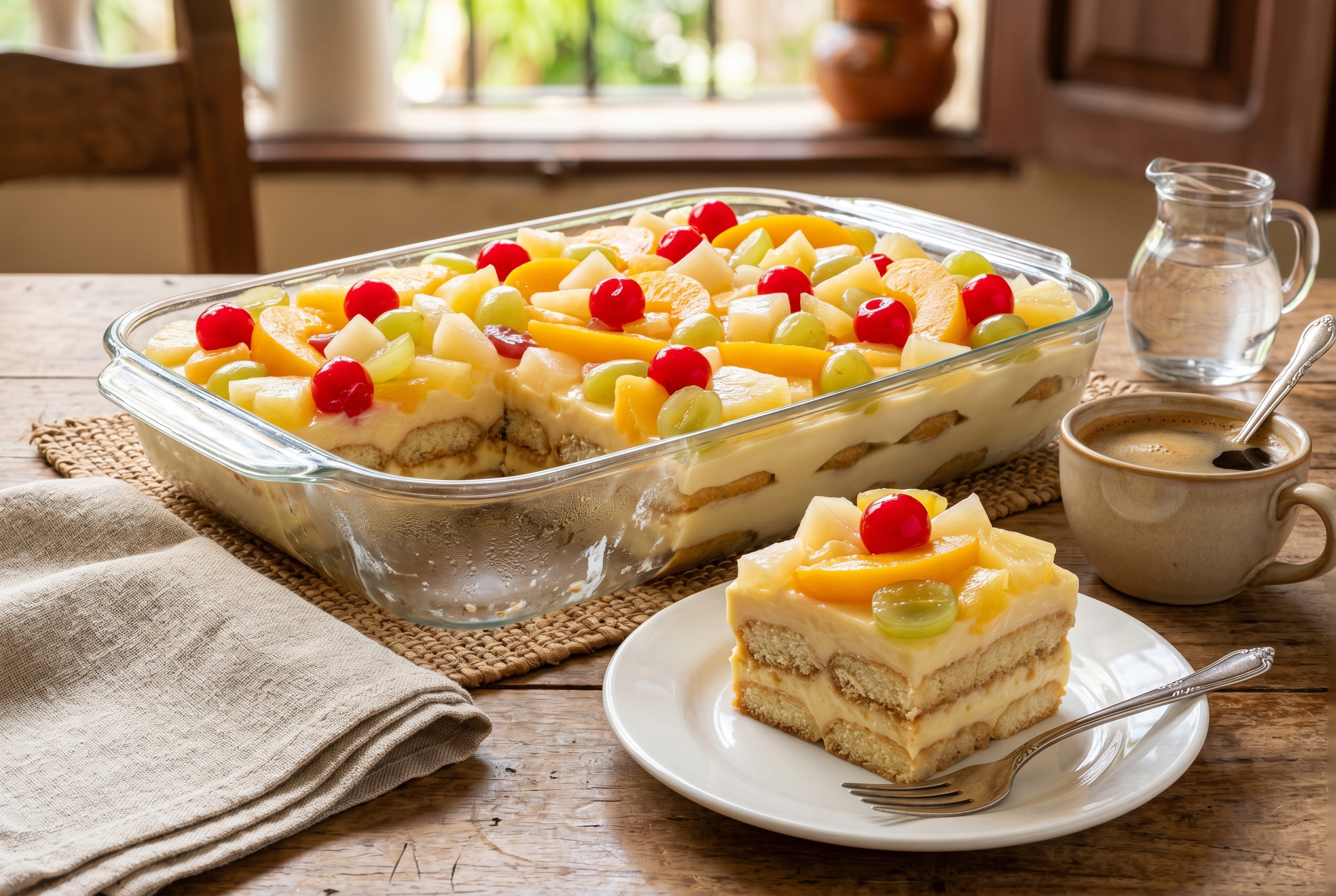
Dulce frío dominicano is the dessert of every Dominican summer cookout, every kid's cumpleaños, every Sunday family lunch where tía shows up with a glass Pyrex covered in foil and you already know what's inside. Layers of bizcotelas soaked in a thick condensed-milk custard, topped with drained canned fruit cocktail, chilled in the nevera overnight until the whole thing sets into something between a pudding, a trifle, and a cake. Cold, sweet, a little creamy, a little bit of everything. Every Dominican has eaten a thousand squares of this in their life and will eat a thousand more.
Growing up in Santo Domingo, my abuela would start dulce frío the night before any celebration. I remember walking into the kitchen as a little kid and seeing her at the stove, stirring a pot of condensed milk with a wooden spoon, whispering to the custard like it was a person. She'd let me help layer the bizcotelas into her beat-up glass dish, the same one she'd been using since before I was born. Then she'd cover it with foil, slide it into the nevera, and say "mañana." I'd go to bed already thinking about breakfast — because in my house, a slice of cold dulce frío with coffee the morning after a party was as sacred as the party itself.
Dominicans also call this dessert "dulce de nevera" — fridge sweet — because that's literally where it lives and where it becomes itself. You can't rush dulce frío. It has to sit in the cold for hours so the cookies drink up the custard and go soft, so the fruit juice bleeds down just a little, so every layer talks to the next one. That overnight wait is the whole magic. Let me show you how we do it.
If you have ever searched for a Dominican flan recipe, chances are this is the dessert you are looking for. Dulce frio dominicano — literally "cold sweet" — is the Dominican version of flan that shows up at every birthday party, family cookout, and Sunday dinner across the island. While it shares DNA with the custard flans found across Latin America, the Dominican version stands apart with its lighter, silkier texture and the unmistakable flavor of vanilla, evaporated milk, and a hint of lime zest that makes it uniquely Caribbean.
The history of dulce frio traces back to Spanish colonial influence on Dominican cuisine. Spanish settlers brought the tradition of egg custard desserts to the island, but Dominican cooks adapted the recipe with locally available ingredients — condensed milk, evaporated milk, and tropical flavorings — creating something entirely their own. Unlike Mexican flan, which tends to be denser and richer with a deeper caramel, Dominican dulce frio is airy, cool, and refreshing, making it the perfect ending to a heavy meal of rice, beans, and meat.
What makes a great Dominican flan recipe is all about technique. The caramel needs to be dark amber but not burnt, the custard must be strained to remove any chalazae from the eggs, and the baking has to be gentle — always in a water bath — to prevent cracks and air bubbles. These details separate an average flan from the kind that makes people ask for the recipe.
Why You'll Love This Dulce Frío Dominicano
- Pure Dominican nostalgia: One bite and you're back at a cumpleaños in the patio with salsa music, a table of comida, and a plastic cup of soda in your hand.
- No oven required: This is a stovetop custard and a fridge set — perfect for Dominican summer when nobody wants to turn the oven on.
- Make ahead, always: Dulce frío has to sit overnight anyway, so it's the ultimate prep-the-day-before party dessert. Show up, pull foil, serve.
- Feeds a crowd: One 9x13 dish cuts into 12 generous squares. Easy to double for a big Dominican potluck.
- Simple pantry ingredients: Condensed milk, evaporated milk, eggs, cornstarch, vanilla, a pack of ladyfingers, a can of fruit cocktail. That's it. No fancy imports.
What Is Dulce Frío?
Dulce frío translates straight to "cold sweet," and the nickname "dulce de nevera" (fridge sweet) says the rest. It's the Dominican version of an icebox cake or trifle — a no-bake layered dessert built from ladyfinger cookies soaked in a thick cooked condensed-milk custard, topped with canned fruit cocktail, and chilled overnight in a glass baking dish until the whole thing sets into creamy sliceable layers. Every Dominican household has a version. Every abuela swears hers is the best.
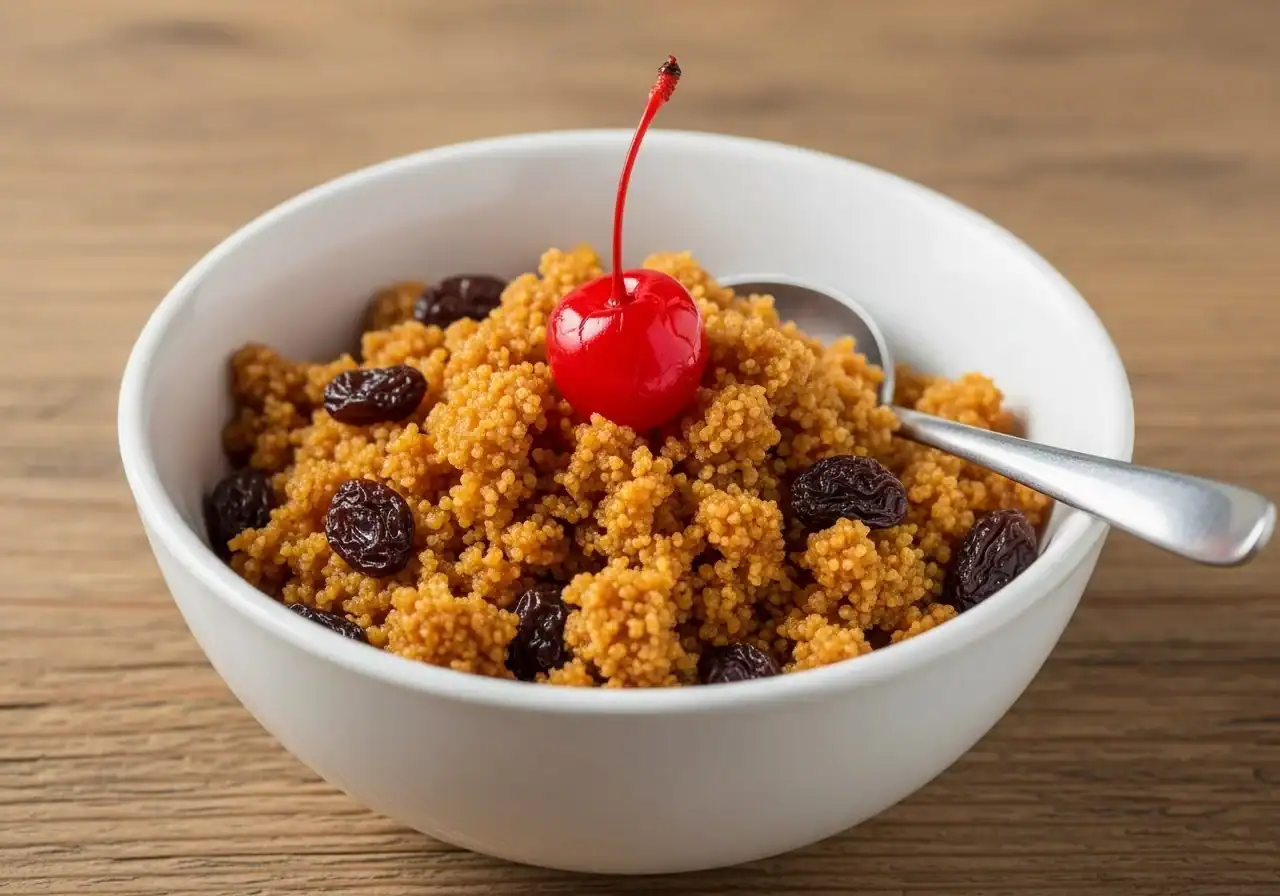
The structure is always the same. Bottom layer: bizcotelas (Dominican name for ladyfingers, also called soletillas or savoiardi in other Spanish-speaking countries). Middle layer: a custard cooked with condensed milk, evaporated milk, egg yolks, cornstarch, and vanilla until thick and glossy. More cookies. More custard. Then the top gets crowned with a can of well-drained fruit cocktail — those little cubes of peach, pear, pineapple, grape, and the bright red cherry that every Dominican kid fought over as a child. Some families go further and pipe suspiro (Dominican meringue) across the top for a fancier look at quinceañeras and baby showers. Either way the canned fruit cocktail is non-negotiable. It's the flag that says this is dulce frío and nothing else.
This dessert lives at every Dominican summer gathering, every birthday party, every church potluck, every Sunday almuerzo. It's the dessert a Dominican mom brings to a coworker's barbecue. It's what the abuela pulls out of the nevera the morning of a cumpleaños. No oven, no fuss, feeds a crowd, gets better the longer it sits. There's a reason it's been on Dominican tables for generations.
Ingredients You'll Need
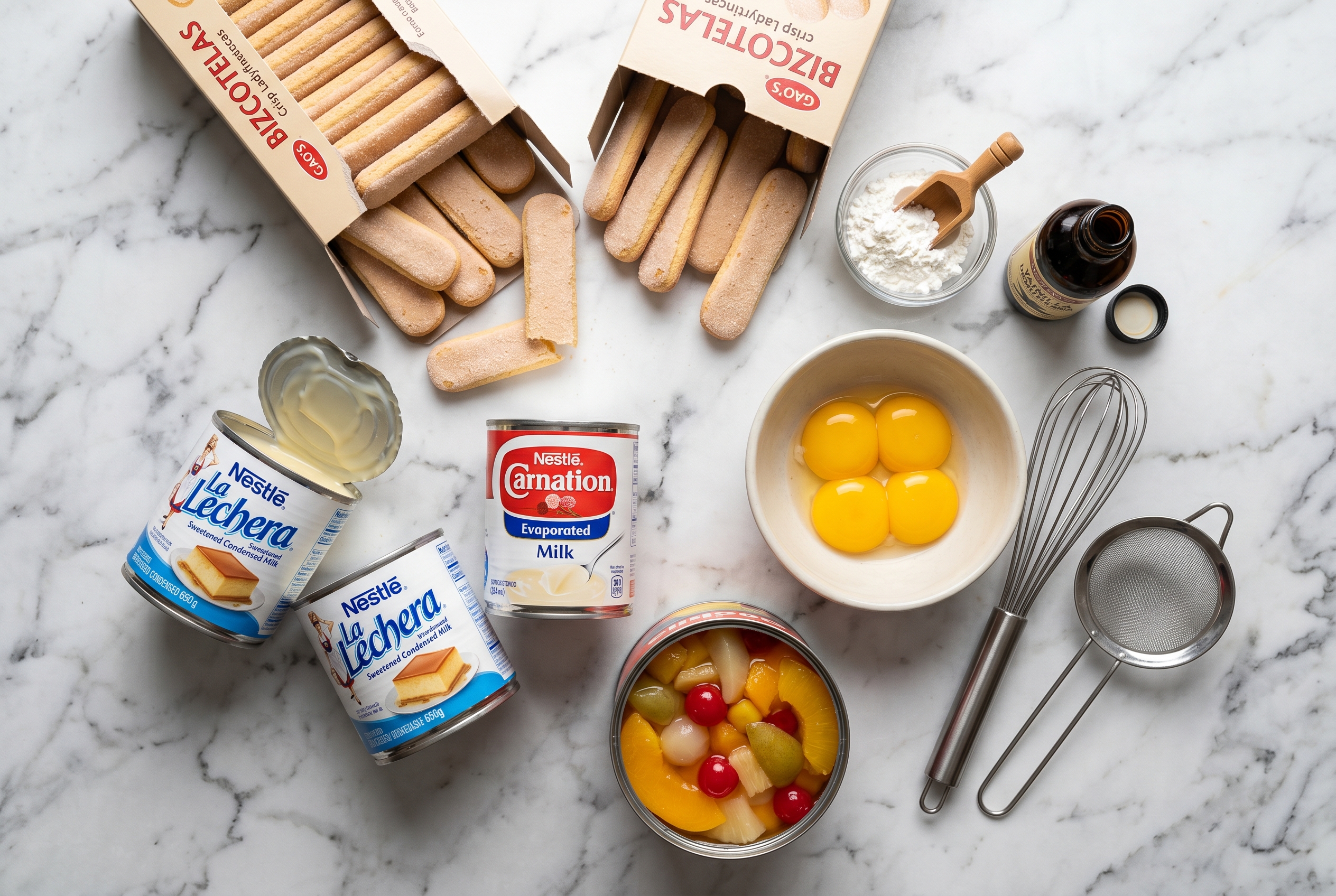
- 2 packages ladyfingers (bizcotelas/soletillas, about 400g total) — the crisp Italian-style ones, not the soft sponge kind
- 2 cans sweetened condensed milk (14 oz each) — the sweetness and body of the custard
- 1 can evaporated milk (12 oz) — thins the custard so it's pourable and creamy
- 4 egg yolks — thicken and enrich the custard (save the whites for suspiro if you want)
- 2 tablespoon cornstarch — the insurance policy that keeps the custard from running
- 1 teaspoon vanilla extract — pure vanilla, no imitation
- 1 large can fruit cocktail (15 oz) — drained very well, juice reserved if you want to brush the cookies
- Optional: suspiro (Dominican meringue) — for topping fancy versions at parties
Equipment: A medium saucepan, a whisk, a fine-mesh strainer, a 9x13 glass baking dish, an offset spatula for smoothing layers, and plastic wrap or foil for covering.
What to Look for in Your Ladyfingers
Bizcotelas, soletillas, and savoiardi are all the same cookie — a dry, crisp, finger-shaped sponge biscuit dusted with sugar. Dominican abuelas have always called them bizcotelas, Italians call them savoiardi, and that's exactly what you want. Avoid the soft, cake-style "ladyfingers" sold in some American bakery sections — they turn into mush the second the custard hits them. You need the crunchy kind that can drink up liquid and still hold their shape. Goya makes a solid pack you'll find in any Dominican supermercado or the Hispanic aisle at a regular grocery store. Italian brands like Balocco or Vicenzi work just as well. If the package says savoiardi, you're good.
Step-by-Step Instructions
Step 1 — Whisk the Custard Base
In a medium saucepan off the heat, whisk together both cans of condensed milk, the can of evaporated milk, the 4 egg yolks, the 2 tablespoons of cornstarch, and the teaspoon of vanilla. Whisk until completely smooth — no cornstarch lumps, no streaks of egg yolk. This is the moment to pass it through a fine-mesh strainer if you see any bits of egg white or cornstarch clumps. A smooth base now means a smooth custard later.
Step 2 — Cook the Custard
Set the saucepan over medium-low heat and stir constantly with a whisk or wooden spoon. Don't walk away. Don't check your phone. The custard will start thin, then somewhere between 8 and 12 minutes it will suddenly thicken up and coat the back of the spoon. You're looking for the texture of warm pudding — thick enough that when you drag a spoon across the bottom of the pan, the trail holds for a second before filling back in. Pull it off the heat the moment it gets there. Overcooking gives you a grainy, eggy custard.
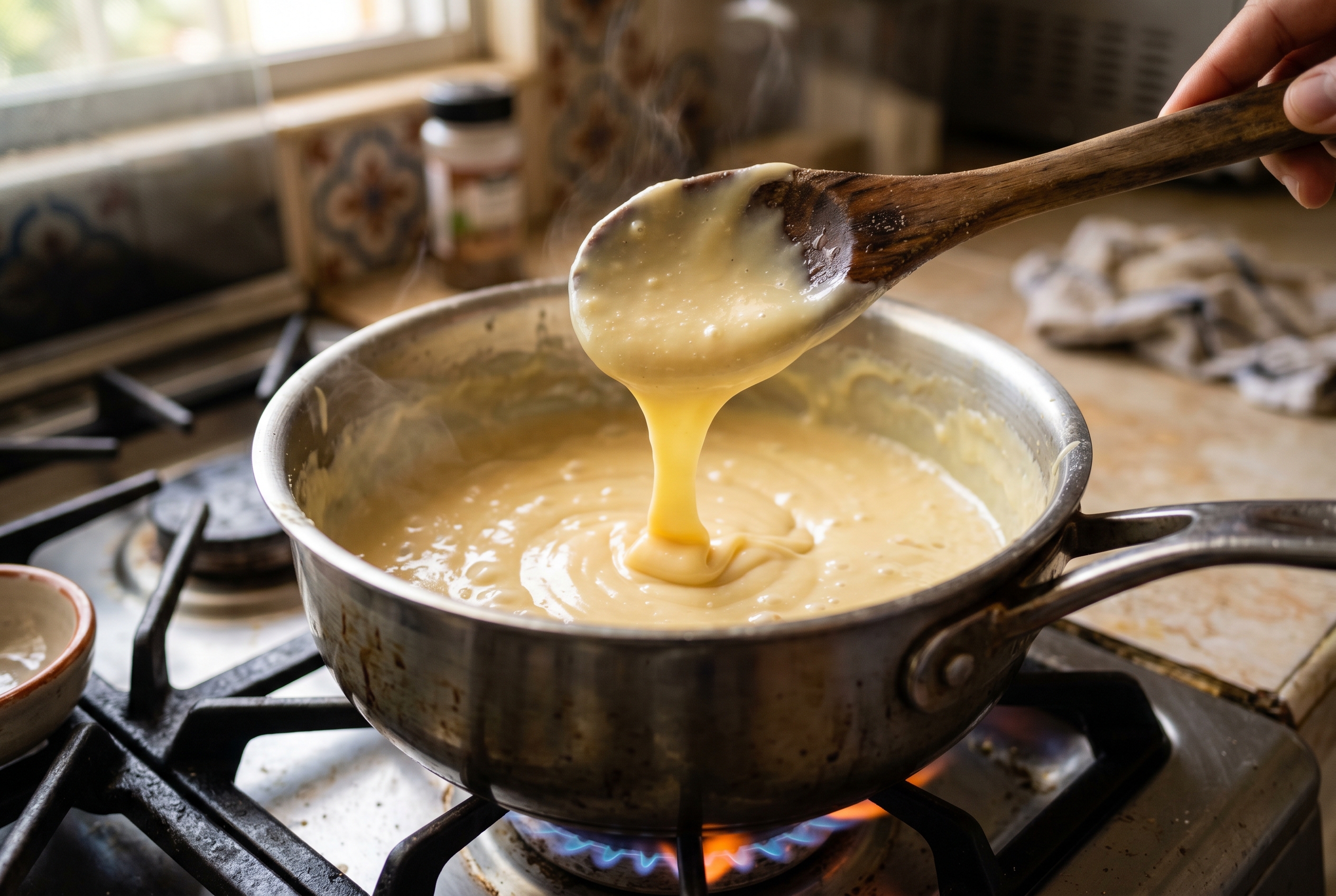
Step 3 — Cool the Custard
Pour the hot custard into a bowl and press a piece of plastic wrap directly onto the surface so it doesn't form a skin. Let it cool for 15-20 minutes until it's just warm to the touch, not hot. You don't want it boiling hot when you pour it over the cookies — too much heat will turn the bizcotelas into mush instead of letting them absorb slowly. Warm is perfect. Cold is fine too if you want to cool it completely.
Step 4 — Layer the Cookies and Custard
Grab your 9x13 glass dish. Arrange a single snug layer of bizcotelas across the bottom — break a few to fill in the gaps around the edges. Pour about half of the warm custard evenly over the cookies, using an offset spatula to spread it into the corners. Add a second layer of ladyfingers on top, going the opposite direction if you're feeling organized. Pour the remaining custard over that second layer and smooth the top flat.
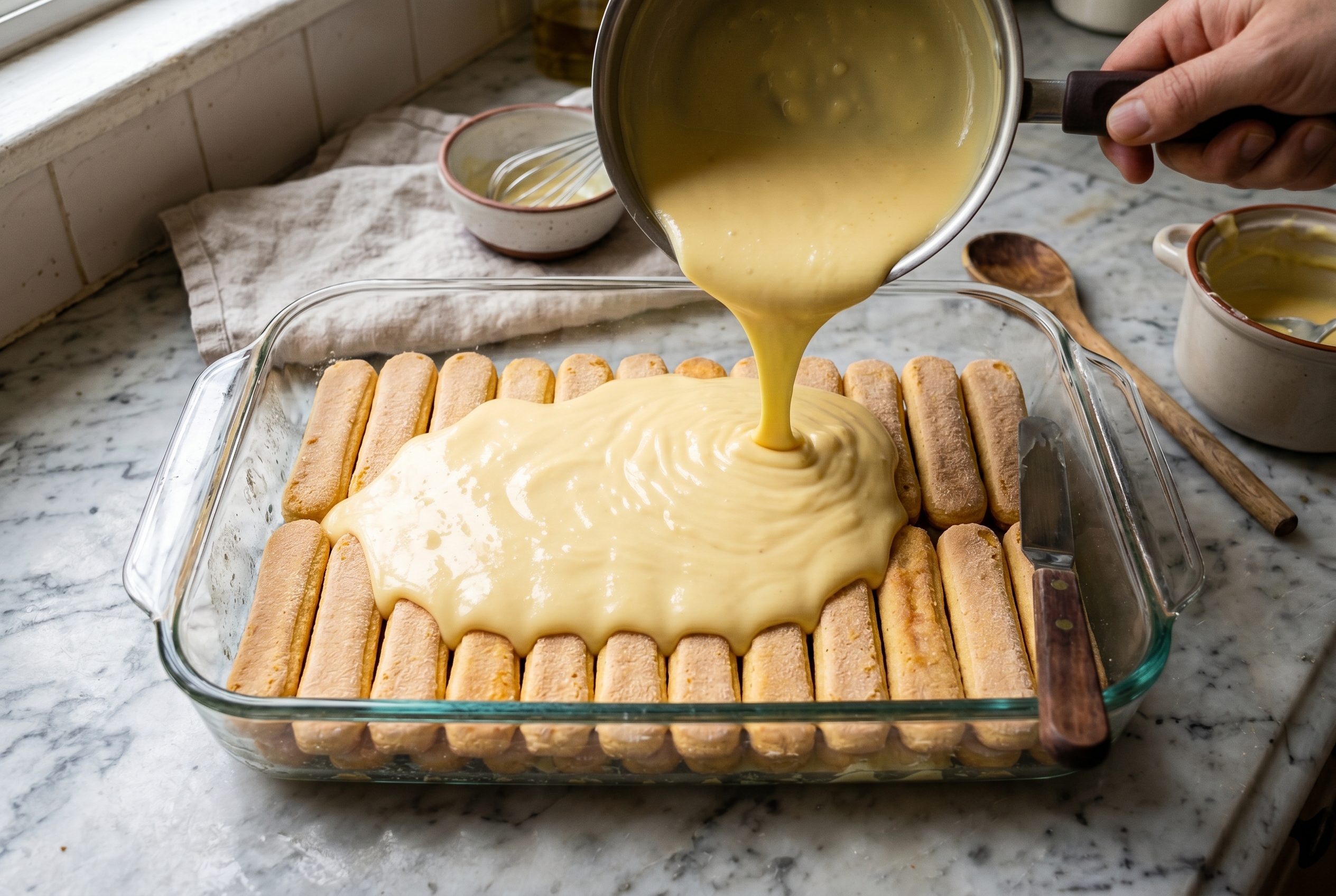
Step 5 — Top With Fruit Cocktail
Open your can of fruit cocktail and drain it in a fine-mesh strainer for a full 5 minutes — you want those fruit cubes as dry as possible so the juice doesn't bleed and turn your custard watery. Spoon the drained fruit evenly across the top of the custard, distributing the cherries, peaches, pears, pineapple, and grapes so every square cut will have a little bit of everything. If you're going fancy, this is where you'd pipe on suspiro.
Step 6 — Chill Overnight
Cover the dish tightly with plastic wrap or foil and slide it into the fridge. Chill for a minimum of 6 hours, but overnight is the real answer. This is where the bizcotelas absorb the custard and go soft, where the layers marry, where the whole thing sets into something you can cut into clean squares with a sharp knife. When you're ready to serve, pull it out, cut into 12 squares, and scoop each one onto a plate with a little spatula. Best served straight from the fridge, cold.
Pro Tips for Perfect Dulce Frío
- Strain the custard base: Before cooking, push the raw mixture through a fine-mesh strainer to catch any cornstarch lumps or egg white bits. Smooth base, smooth custard.
- Cook over medium-low, never high: A hot flame scrambles the egg yolks and gives you a grainy, eggy-tasting custard. Low and slow with constant stirring is the only way.
- Drain that fruit cocktail aggressively: Even 30 extra seconds of draining matters. Wet fruit bleeds red and yellow juice down into the custard and turns the top swampy.
- Use the right ladyfingers: Crisp bizcotelas/savoiardi only. Soft cake-style ladyfingers fall apart before the custard even sets. Read the package.
- Don't skip the plastic wrap on the custard: Pressing plastic directly on the surface while it cools prevents the dreaded skin that ruins the texture when you spread it.
- Patience is the real ingredient: A 2-hour chill gives you a decent dessert. A 12-hour chill gives you dulce frío. Plan ahead — start the night before you need it.
Variations
Fresh Fruit Dulce Frío
Swap the canned fruit cocktail for a mix of fresh strawberries, kiwi, mango, and peach cubes. Toss the fresh fruit with a spoonful of sugar and a splash of lemon juice 15 minutes before using so it releases a little syrup. Drain that liquid off before topping. Beautiful for bridal showers or anywhere you want a less nostalgic, more modern look.
Chocolate Dulce Frío
Whisk 3 tablespoons of unsweetened cocoa powder into the custard base before cooking for a chocolate version. Skip the fruit cocktail on top and finish instead with a dusting of cocoa powder and a handful of shaved dark chocolate. Tastes like a Dominican tiramisu. Not traditional, but every kid at the party will ask for seconds.
Quick Weeknight Dulce Frío
Short on time? Skip the stovetop custard entirely. Prepare two boxes of instant vanilla pudding using 1 can of evaporated milk and 1 can of condensed milk instead of the milk the box calls for. Layer with bizcotelas exactly the same way. Not quite as rich as the real thing, but done in 20 minutes and still crowd-approved. My mom does this on weeknights and nobody complains.
What to Serve With Dulce Frío
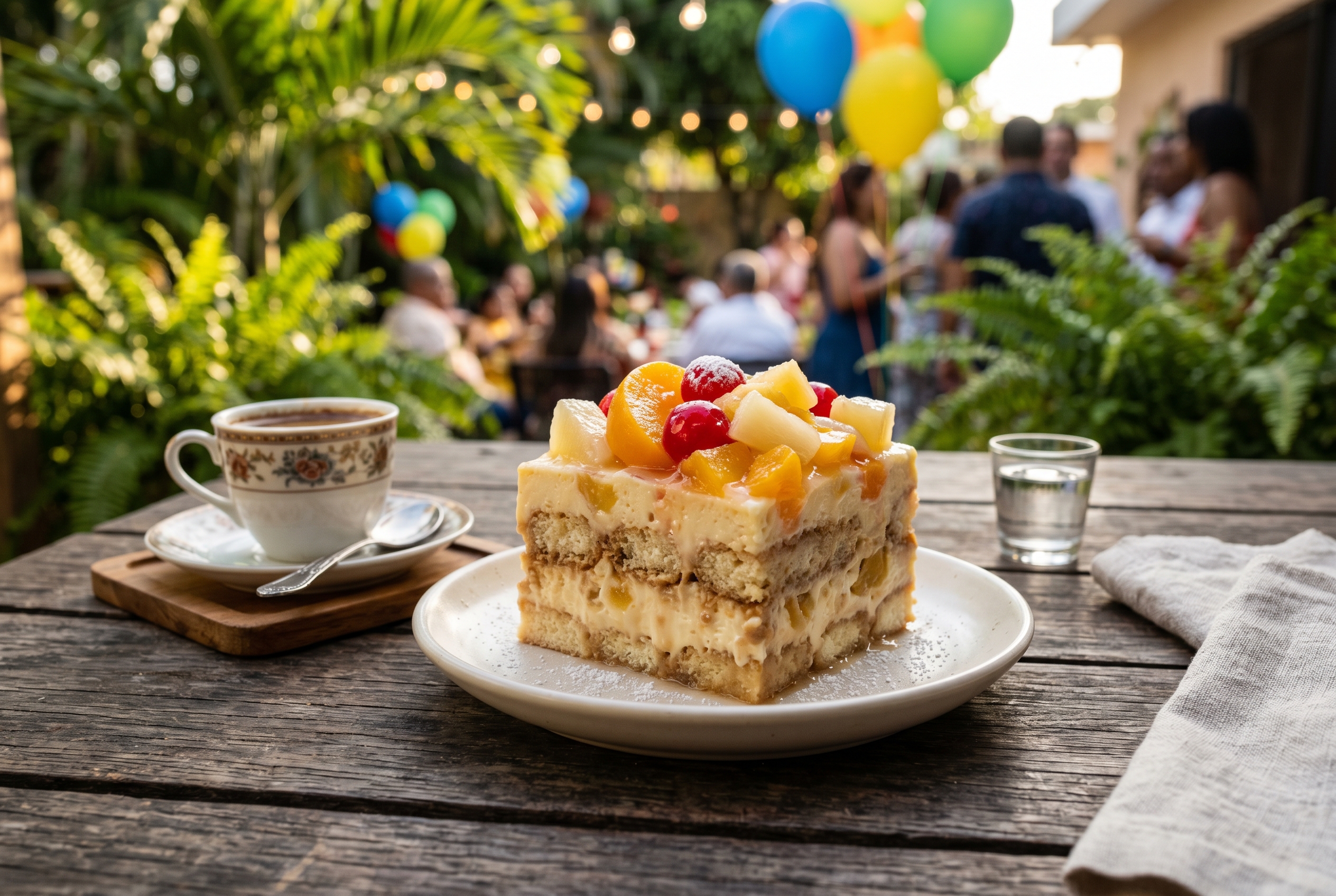
- Dominican coffee: A little cortadito or a straight colao after lunch cuts the sweetness perfectly. This is the classic Dominican pairing.
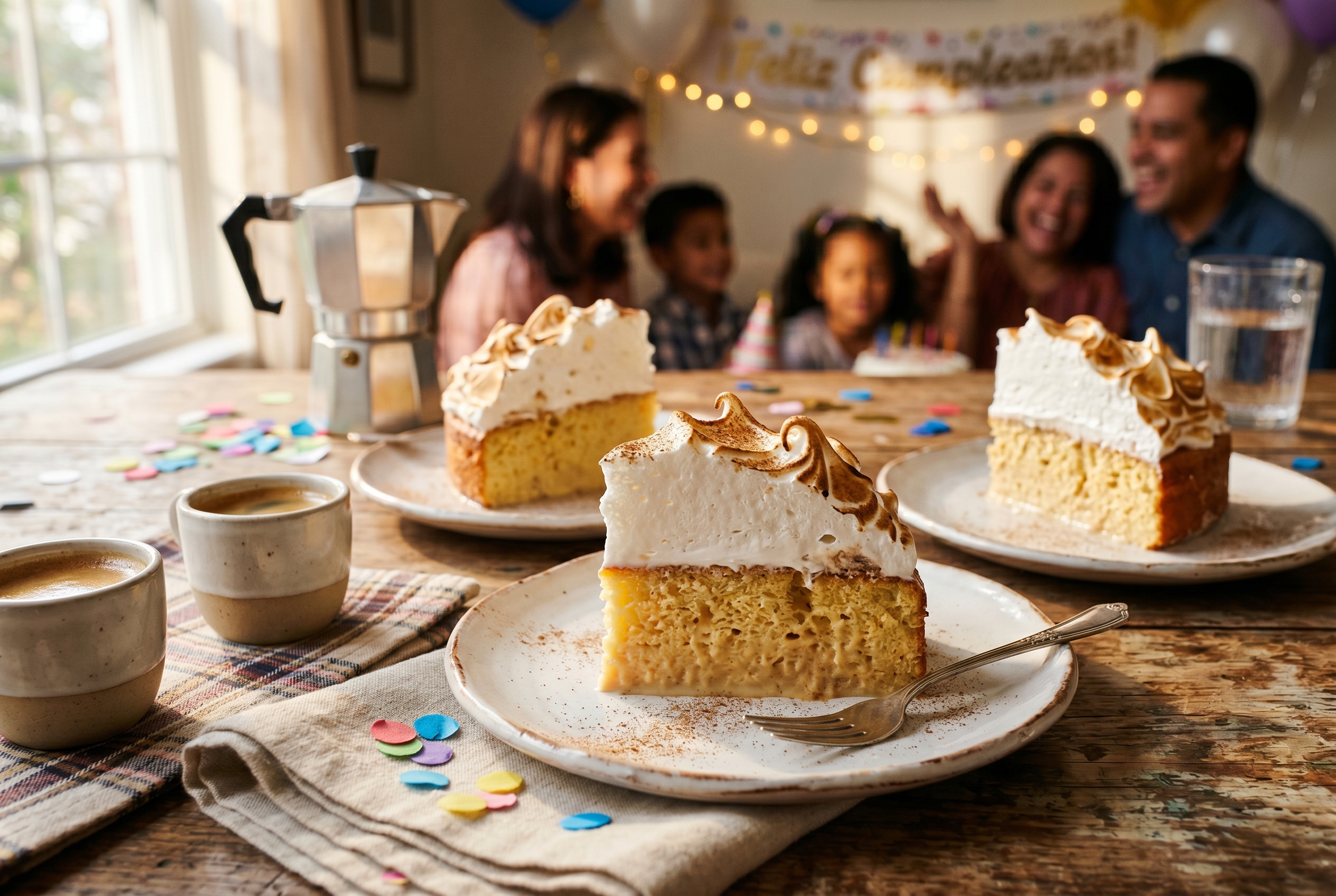
- Tres leches dominicano: Making a dessert table for a big party? Put dulce frío and tres leches side by side and let the guests fight over which is better.
- Flan de leche dominicano: Another creamy cold Dominican classic. The two together on the same dessert table is a Dominican grandma flex.
- Habichuelas con dulce: During Semana Santa, Dominicans eat both — habichuelas con dulce in a cup and a slice of dulce frío on the side. Two cold sweet classics.
- Dominican sancocho: For a summer potluck, serve sancocho as the main and cut squares of dulce frío for dessert. That's a Dominican Sunday in one meal.
You May Also Like
Frequently Asked Questions
What is dulce frío?
Dulce frío is a traditional Dominican no-bake dessert made of layered ladyfinger cookies soaked in a cooked condensed-milk custard, topped with drained canned fruit cocktail, and chilled overnight in a glass baking dish. It's also called "dulce de nevera" (fridge sweet) because it lives and sets in the refrigerator. Every Dominican family has a version and it shows up at nearly every birthday, summer cookout, and potluck. For a true Dominican evening, serve it with a small pour of mamajuana drink for the adults.
Are bizcotelas the same as ladyfingers?
Yes, identical. Bizcotelas is the Dominican name, soletillas is used in Spain and other Spanish-speaking countries, and savoiardi is the Italian name. They're all the same crisp, dry, sugar-dusted finger-shaped sponge biscuit. If the package says any of those three words, you've got the right cookie. Goya makes a common brand in Dominican supermarkets, and Italian brands like Balocco or Vicenzi work perfectly.
Can I use canned vanilla pudding?
Yes, and plenty of busy Dominican moms do exactly this on weeknights. Prepare two boxes of instant vanilla pudding using 1 can of evaporated milk and 1 can of condensed milk in place of the regular milk on the box. Layer as normal. Not quite as rich as homemade custard but still absolutely satisfying, and it's ready in about 20 minutes. Great shortcut when you forgot it was your kid's birthday tomorrow.
Why does my custard taste eggy?
You cooked it too hot or too long. Egg yolks scramble at high heat and give off that distinct eggy flavor. Cook the custard over medium-low, stir constantly, and pull it off the heat the moment it coats the back of a spoon. If you already have an eggy batch, pass it through a fine-mesh strainer to catch any cooked egg bits and add an extra ½ teaspoon of vanilla to mask the flavor.
Can I use fresh fruit instead of canned?
You can, and it looks beautiful, but traditional Dominican dulce frío uses canned fruit cocktail — that specific mix of peach, pear, pineapple, grape, and the neon red cherry is part of the nostalgia. If you go fresh, use strawberries, mango, kiwi, and peach cubes. Toss with a little sugar, let it release juice, then drain well before topping so it doesn't make the custard soupy.
How long does dulce frío keep in the fridge?
Covered tightly with plastic wrap or foil, dulce frío keeps for 3-4 days in the refrigerator. The cookies get softer over time and by day 3 the texture is closer to a pudding than a trifle, which some people actually prefer. After 4 days the fruit starts to release more liquid and things get watery, so eat it before then.
Can I freeze dulce frío?
Not really recommended. The custard texture breaks when it freezes and thaws — you end up with a watery, separated mess. If you absolutely have to freeze it, do so in individual portions in freezer-safe containers and eat within 1 month, thawing slowly in the fridge overnight. The flavor will still be there but the silky custard texture is gone.
Why are my cookies too soggy or too hard?
Too soggy means you poured very hot custard over the cookies or used soft cake-style ladyfingers instead of crisp bizcotelas. The crisp kind absorbs liquid slowly and holds structure. Too hard means you didn't give it enough chill time — the bizcotelas need a minimum of 6 hours, ideally overnight, to fully absorb the custard and soften into that signature cake-like texture.
Can I make dulce frío in individual cups?
Absolutely, and it looks beautiful for parties. Use clear glass cups or small mason jars. Break the bizcotelas into pieces to fit, alternating with custard, and top each with a spoonful of drained fruit cocktail. Chill the same way, covered, for at least 6 hours. This is my move for dessert tables at bridal showers and baby showers — everyone gets their own little cup.
What's the difference between dulce frío and tres leches?
They're both cold Dominican desserts that use condensed and evaporated milk, but they're structurally different. Tres leches is a baked sponge cake soaked in three milks. Dulce frío is a no-bake trifle made by layering ladyfingers with cooked custard. Tres leches is soft and sponge-y; dulce frío is creamy and more pudding-like. Both show up at Dominican birthdays. They complement each other, they don't compete.
Dulce Frío Dominicano
Ingredients
Method
- In a medium saucepan off the heat, whisk together both cans of condensed milk, the evaporated milk, egg yolks, cornstarch, and vanilla until completely smooth. Pass through a fine-mesh strainer if needed.
- Set over medium-low heat and stir constantly with a whisk or wooden spoon for 8-12 minutes until the custard thickens and coats the back of a spoon. Pull off heat immediately.

- Pour custard into a bowl. Press plastic wrap directly onto the surface. Cool 15-20 minutes until just warm to the touch.
- Arrange a single layer of ladyfingers across the bottom of a 9x13 glass baking dish. Pour half the warm custard over, spreading into corners with an offset spatula. Add a second layer of ladyfingers, then pour remaining custard on top and smooth flat.
- Drain the can of fruit cocktail in a fine-mesh strainer for a full 5 minutes. Spoon the drained fruit evenly across the top of the custard, distributing cherries, peaches, pears, pineapple, and grapes. Pipe suspiro on top if using.
- Cover tightly with plastic wrap or foil. Chill in the refrigerator for at least 6 hours, ideally overnight, until the cookies have absorbed the custard and the whole dessert sets firm enough to slice.
- Cut into 12 squares. Serve cold straight from the fridge with Dominican coffee.
Nutrition
Video
Notes
Tried this recipe?
Let us know how it was!Shop This Recipe
View on Amazon →
View on Amazon →
View on Amazon →
As an Amazon Associate I earn from qualifying purchases at no extra cost to you.
If you're building a Dominican dessert table, pair this with my bizcocho dominicano — the classic birthday cake that belongs next to every dulce frío.
Make it the night before. Pull it from the nevera cold. Cut a square. That's the Dominican way.
Looking for more authentic Dominican dishes? Explore all our Dominican recipes — over 100 dishes from breakfast to dessert.


Leave a Reply