
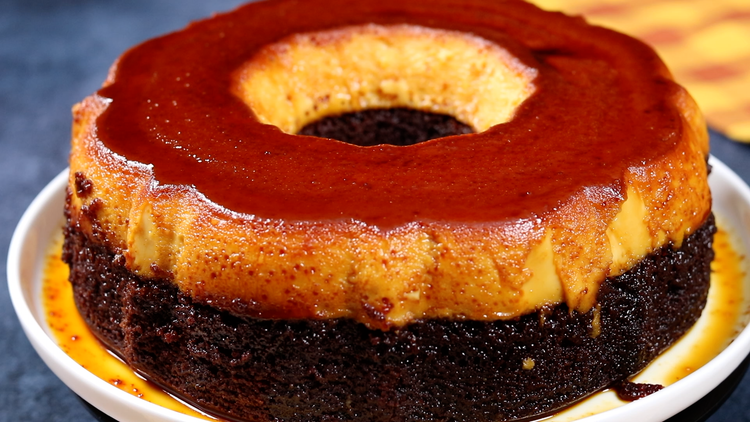
Flan dominicano is the dessert that shows up at every important event in a Dominican household — birthdays, baptisms, Noche Buena, Sunday lunches when someone wants to show off. It's tall, dense, silky, with a bottom layer of amber caramel that melts into sauce when you unmold it. And it's different from the flan you've had at Mexican restaurants. No cream cheese. No cream. Just condensed milk, evaporated milk, and eggs — the Dominican holy trinity of dessert.
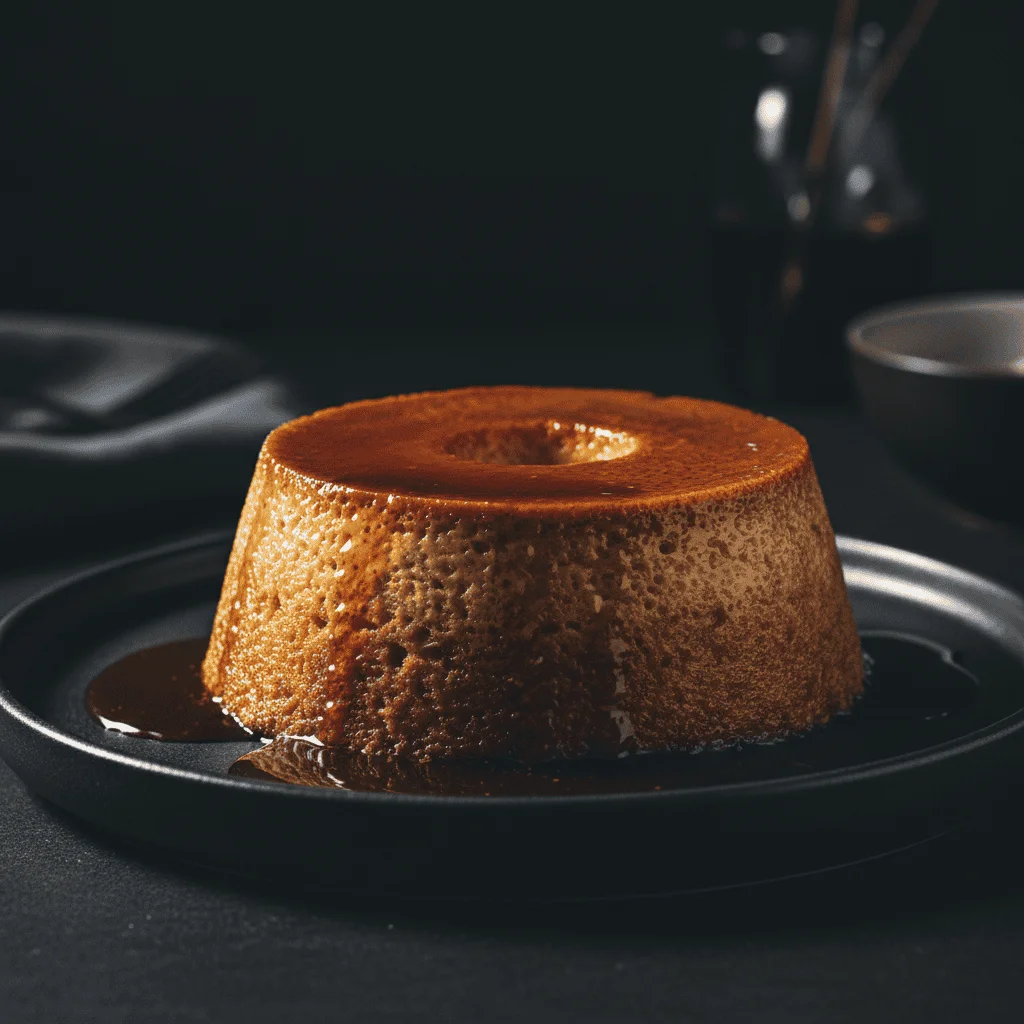
My abuela made flan every Sunday. The flanera lived on a specific shelf in her kitchen — round aluminum, stained amber from decades of caramel, with a tight-fitting lid. She'd make the caramel in it directly, swirl it, pour in the custard, and set it in a bigger pot of water to steam on the stove. No oven needed. That's the old-school Dominican way. The version I'm giving you today is the baked water-bath method, which is easier for home cooks and gives you the same silky, dense, caramel-bottomed flan every time.
This recipe has been on my site for a while, and I'm refreshing it with a cleaner method, better tips, and the Dominican touches I keep forgetting to include — the pinch of salt, the lime zest, the strain step that takes 30 seconds and changes everything. If you've been making Dominican flan for years, this is the upgrade. If you've never made one before, start here.
Why You'll Love This Flan Dominicano Recipe
- Six pantry ingredients: Sugar, water, condensed milk, evaporated milk, eggs, vanilla. That's it — plus an optional pinch of lime zest for the Dominican touch.
- Make ahead, always: Flan has to chill overnight, so you make it the day before. One less thing to do when guests arrive.
- The silkiest texture: Strained custard + water bath + low oven = zero bubbles, zero rubberiness, all silk.
- Not-too-sweet: Dominican flan is denser and less sugary than Mexican flan napolitano. Real dessert, not fake dessert.
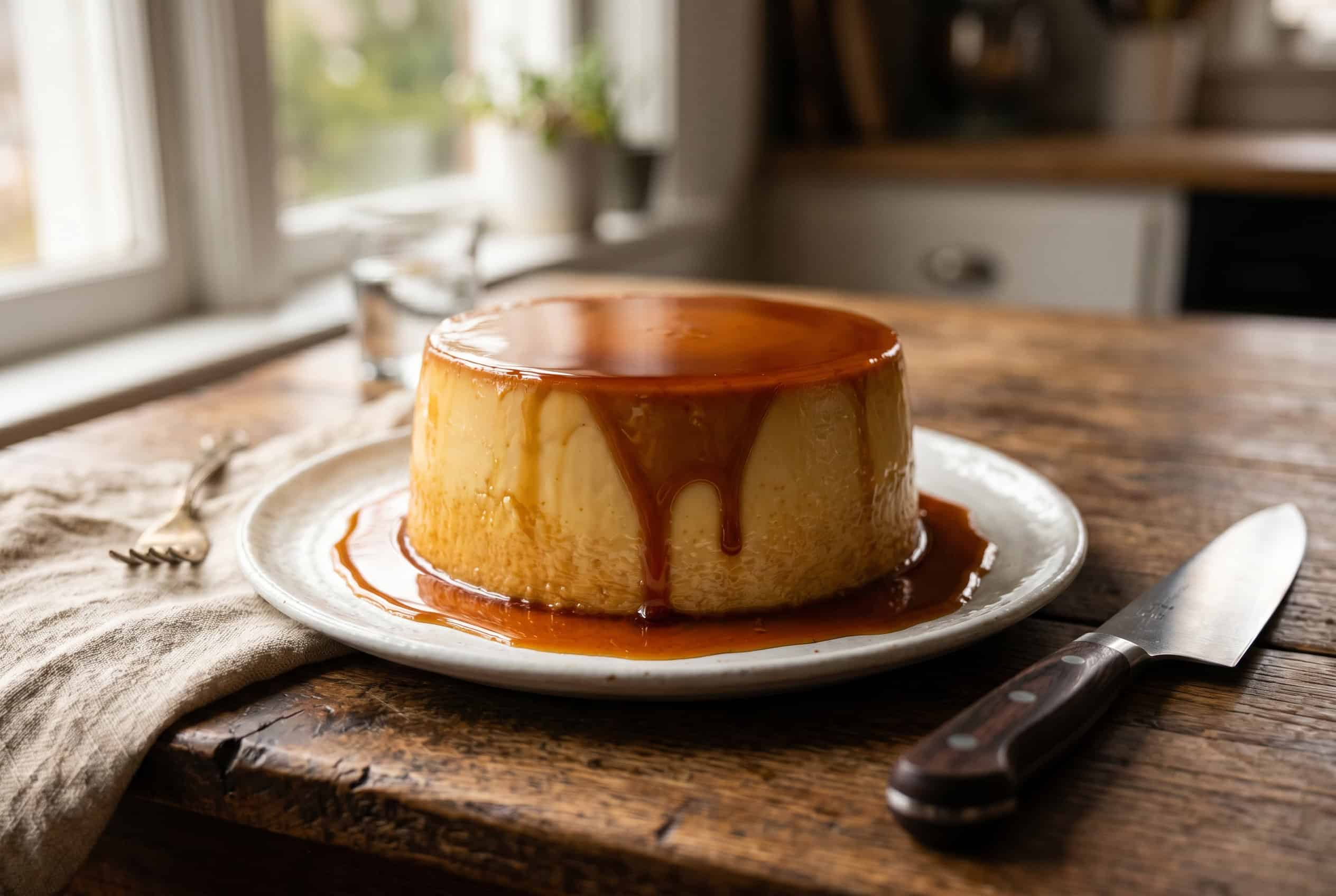
- A showstopper when you unmold it: The moment of flipping the flan out of the pan and watching the caramel run down the sides — that's a Dominican kitchen moment.
What Is Flan Dominicano?
Flan dominicano is a baked egg custard with a bottom layer of caramel that becomes a sauce when the flan is inverted onto a plate. The custard is made with sweetened condensed milk, evaporated milk, and whole eggs — no cream, no cream cheese, no extra milk. It's baked in a water bath at a low temperature until just set, then chilled thoroughly (overnight is ideal) before being unmolded. The texture is denser than crème caramel, more rich than French flan, and the flavor is deeper and more caramel-forward than Mexican flan napolitano.
The dessert came to the Dominican Republic the same way it came to most of Latin America — Spanish colonial cooking brought the custard tradition from Europe, and local cooks adapted it with the ingredients they had. The Dominican version locked in after condensed and evaporated milks became widely available in the early 20th century. My abuela's generation grew up making it this way, and I grew up eating it cold out of the fridge for breakfast the day after every family party.
What makes it specifically Dominican? Three things. First, the condensed-milk + evaporated-milk + eggs formula — no cream, no cheese. Second, it's typically denser, taller, and cut in wedges like a cake, not in shallow ramekins. Third, it's often flavored with a tiny bit of lime zest or dark rum — subtle Dominican touches that distinguish it from Cuban, Puerto Rican, or Mexican flans. The caramel is also pushed darker than other versions, which gives it that amber, almost bittersweet edge that balances the sweetness of the custard.
Ingredients You'll Need
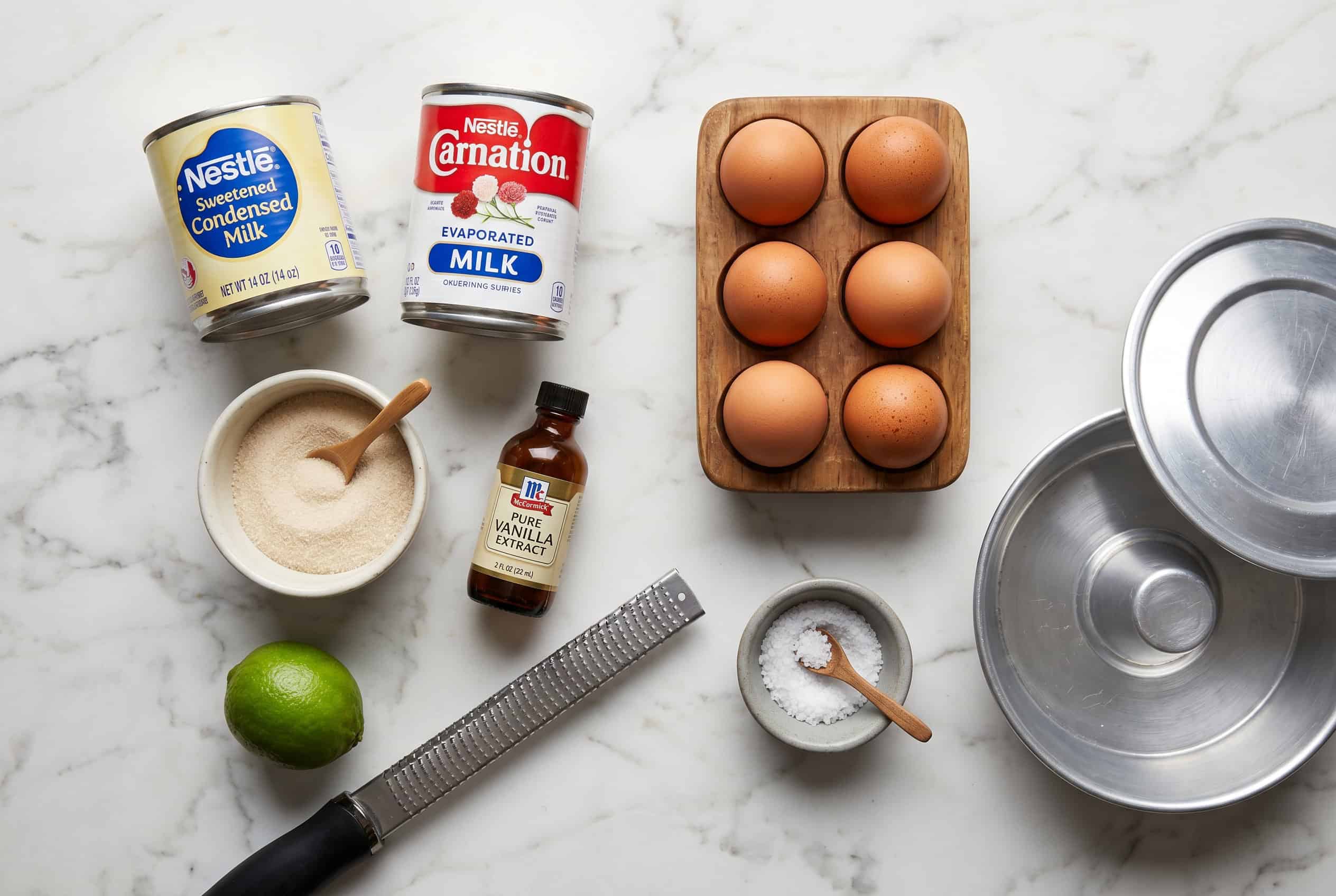
For the caramel:
- 1 cup granulated sugar
- ¼ cup water
For the custard:
- 1 can (14 oz) sweetened condensed milk
- 1 can (12 oz) evaporated milk
- 6 large eggs
- 1 teaspoon pure vanilla extract
- ½ teaspoon fine salt
- 1 teaspoon lime zest (optional Dominican touch)
Equipment: A traditional flanera or a 2-quart loaf pan / round cake pan / metal ring mold. A larger roasting pan or deep baking dish for the water bath. A fine-mesh strainer. A blender or whisk for the custard. Aluminum foil for covering.
5 Things That Make Dominican Flan Different from Other Flans
- No cream cheese: Mexican flan napolitano includes cream cheese for extra richness. Dominican flan does not — it stays pure milk and egg.
- Denser and taller: Baked in a flanera or loaf pan rather than shallow ramekins, giving a proper cake-like slice.
- Deeper caramel: Dominicans push the caramel to a darker amber, almost bittersweet, for flavor balance against the sweet custard.
- Often a hint of citrus: A pinch of lime zest or a splash of dark rum appears in many family recipes. Not always, but often.
- Served chilled, in wedges: Unmolded onto a platter, sliced into 8 wedges, eaten cold the day after. Great paired with pan de agua and coffee for breakfast.
Step-by-Step Instructions
Step 1 — Make the Caramel
Put the sugar and water in a medium heavy-bottomed saucepan (or directly in a flanera if you have one). Set over medium heat. Do not stir. Let the sugar dissolve into the water and start bubbling. In about 8-10 minutes, it will begin to turn golden, then amber. When it reaches a deep amber color — think dark honey, not black — take it off the heat immediately. The caramel keeps cooking in the residual heat. Swirl the pan to even out the color.

Step 2 — Coat the Pan with Caramel
Immediately pour the hot caramel into your flanera or loaf pan. Tilt and swirl the pan to coat the bottom and slightly up the sides. Work fast — the caramel hardens quickly. If it sets before you finish coating, that's fine; it'll melt again when the flan bakes. Set the pan aside to cool while you make the custard. Preheat the oven to 325°F.
Step 3 — Blend the Custard
In a blender, combine the condensed milk, evaporated milk, eggs, vanilla, salt, and lime zest (if using). Blend on low speed for about 30 seconds — just until smooth. Don't overblend; you don't want to incorporate a lot of air, which creates bubbles and holes in the finished flan. A whisk works fine too if you prefer.
Step 4 — Strain the Custard
Pour the custard through a fine-mesh strainer into a large measuring cup or bowl. This catches any little bits of egg white (chalaza) and any bubbles, giving you that silky, porcelain-smooth texture. Don't skip this step — it takes 30 seconds and makes a massive difference in the final result.

Step 5 — Bake in a Water Bath
Pour the strained custard into the caramel-coated pan. Cover the top tightly with aluminum foil (or use the flanera lid if you have one). Place the flanera in a larger roasting pan. Pour hot water into the outer pan until it comes halfway up the sides of the flanera. Slide carefully into the 325°F oven. Bake for 55-65 minutes, until the custard is just set but still has a slight jiggle in the center when you nudge it. A knife inserted near the edge should come out clean, but the center should still be a little wobbly — it'll finish setting as it cools.
Step 6 — Cool, Chill, and Unmold
Remove the flan from the water bath and uncover. Cool at room temperature for 1 hour, then transfer to the fridge and chill for at least 4 hours — overnight is ideal, and 24 hours is even better. When ready to serve, run a thin knife around the edge. Place a deep serving plate upside-down over the pan. Using both hands, flip the whole thing over in one confident motion. Lift the pan away slowly — the flan will release with the caramel cascading down the sides. That's the moment.

Pro Tips for Perfect Flan Dominicano
- Don't overcook: A slight jiggle in the center is what you want. If it's firm all the way through when it comes out of the oven, you've gone too far and the texture will be rubbery instead of silky. Start checking at 50 minutes.
- The water bath is not optional: The water keeps the temperature around the flan gentle and even. Without it, the edges cook fast and the center stays raw, or worse — the whole thing goes rubbery. Make the water bath every time.
- Strain every time: I know I said it above, but it bears repeating. Strain the custard. It's 30 seconds of work for a dramatically better texture. Any Dominican abuela will tell you the same.
- Chill fully before unmolding: Hot or warm flan will collapse when you flip it. Give it at least 4 hours in the fridge, ideally overnight. The caramel also needs that time to melt into the liquid sauce — if you unmold while warm, you'll have hard caramel bits stuck to the pan.
- Go dark on the caramel: A pale caramel tastes flat. Push it to a deep amber — almost mahogany — for that bittersweet edge. If it tastes slightly burnt when you smell it, you're right at the edge. Pull it off the heat immediately.
Variations
Flan de Coco (Coconut Flan)
Replace the evaporated milk with 1 can (13.5 oz) of full-fat coconut milk. Add ½ cup shredded sweetened coconut to the custard before straining (or after, if you want a smooth flan). Ultimate tropical Dominican version — common at beach wedding receptions.
Flan de Queso
For a richer Puerto Rican-adjacent version, add 4 oz softened cream cheese to the custard before blending. This pushes the flan toward Mexican napolitano territory. Not traditional Dominican, but many Dominican-American households make it this way.
Flan with Rum
Add 2 tablespoon dark Dominican rum (Brugal Añejo is classic) to the custard before straining. Or drizzle a spoonful on top after unmolding. Adult version — perfect for Noche Buena dinner.
What to Serve With Flan Dominicano
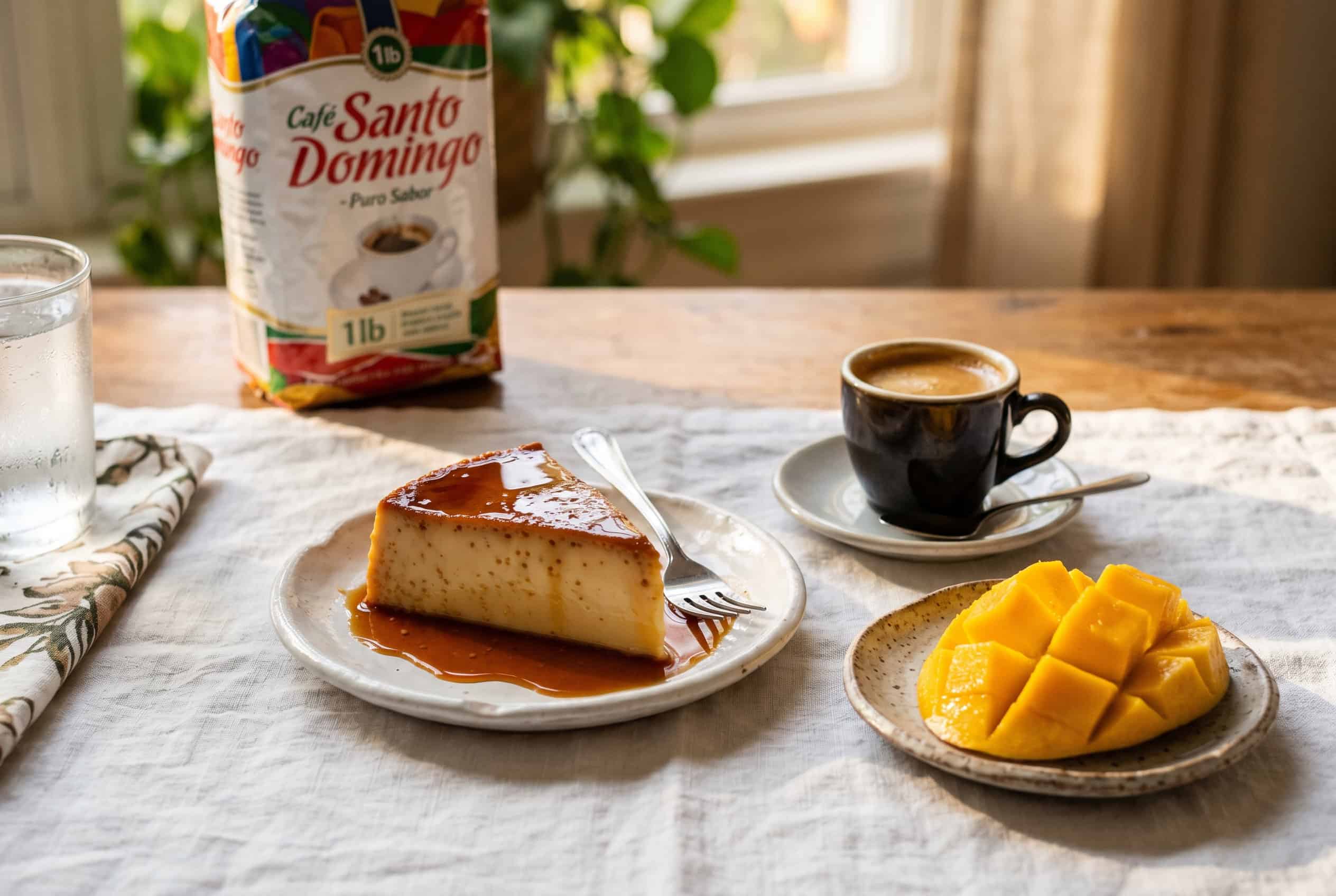
- A small cup of strong Dominican coffee: Santo Domingo or Café Induban, black, unsweetened. The bitter coffee against the sweet flan is the perfect contrast.
- After a full Dominican Sunday meal: Serve after la bandera for the classic family lunch ending.
- With pan de agua: At breakfast the morning after. Slice of flan, piece of pan, coffee. Yes, really.
- Fresh fruit: Slices of mango, pineapple, or passion fruit on the plate alongside.
- A drizzle of dark rum: For adult occasions — just a teaspoon over the top at the table.
Frequently Asked Questions
What's the difference between Dominican flan and Mexican flan?
Dominican flan uses only condensed milk, evaporated milk, and eggs — no cream cheese, no cream. Mexican flan napolitano typically includes cream cheese, which makes it richer and smoother. Dominican flan is denser, taller, and has a more caramel-forward flavor. Both are delicious, but they're not the same dessert. And to end dinner like we do on the island, pair dessert with my mamajuana recipe for the after-dinner toast.
Can I make this without a flanera?
Absolutely. A 9-inch round cake pan, a 2-quart loaf pan, or even a soufflé dish works great. Just make sure whatever you use is oven-safe and deep enough (at least 3 inches) to hold the custard. Cover tightly with foil since you won't have a flanera lid.
Why did my flan turn out rubbery?
Overcooking. Flan should come out of the oven with a slight jiggle in the center — it'll finish setting as it cools and chills. If it's firm all the way through when hot, you've gone past the point of no return and the texture will be rubbery instead of silky. Start checking at 50 minutes and trust the jiggle.
Why did my caramel seize up and turn hard?
That's normal. As long as you coated the bottom of the pan before it hardened, the caramel will melt back into a liquid sauce while the flan bakes and chills. When you unmold, the caramel should be a loose amber sauce. If it's still hard after chilling overnight, you may have cooked it too dark or your pan may be too cold — but the flan will still taste great.
How far in advance can I make flan?
Up to 3 days ahead, kept covered in the fridge (still in the pan). The flavor actually improves after 24 hours as everything melds. Do not unmold until you're ready to serve — it keeps better in the pan.
Why do I need to strain the custard?
Straining removes the chalaza (that stringy bit of egg white) and any undissolved bits, plus it knocks out air bubbles. Without straining, you can get little holes and chewy spots in the finished flan. With straining, you get that silky, porcelain-smooth Dominican-restaurant texture. It's worth 30 seconds.
Can I make flan dominicano on the stovetop?
Yes — traditional flanera method. Set the sealed flanera inside a larger pot with 2-3 inches of water and simmer covered on low heat for about 60-75 minutes. This is how my abuela did it. The water bath does the work — same principle as the oven method. Check water level occasionally and top up as needed.
How do I unmold without the flan breaking?
Chill fully (overnight is best). Run a thin knife around the edge. Place a deep-rimmed serving plate over the pan. Holding both tightly together, flip in one smooth motion. Don't hesitate halfway. Let it sit for a few seconds upside down — you'll usually hear a soft "thud" as the flan drops. Then lift the pan away slowly.
Can I freeze flan?
Not recommended. Freezing changes the custard texture — it becomes icy and grainy when thawed. Flan keeps 3-4 days in the fridge, which is more than enough for most situations. If you have extra, share it. Someone in your life wants some flan.
Is flan dominicano gluten-free?
Yes — naturally gluten-free. No flour, no wheat of any kind. Just make sure your vanilla extract is gluten-free (most are) and you're good to go. Safe dessert for gluten-free guests at a Dominican party.
Flan Dominicano
Ingredients
Method
- In a heavy saucepan (or directly in flanera), combine sugar and water over medium heat. Do not stir. Cook until deep amber, about 8-10 minutes.

- Pour hot caramel into flanera or loaf pan. Tilt to coat bottom and up the sides. Set aside. Preheat oven to 325°F.
- Blend condensed milk, evaporated milk, eggs, vanilla, salt, and lime zest on low until smooth, about 30 seconds.
- Strain custard through fine-mesh sieve into caramel-coated pan.
- Cover tightly with foil (or flanera lid). Set in larger pan and fill outer pan with hot water halfway up the flanera. Bake 55-65 min until just set with slight jiggle in center.
- Cool 1 hour at room temp. Chill at least 4 hours or overnight. Run knife around edge. Invert onto plate — caramel will pour down as sauce.
Nutrition
Notes
Tried this recipe?
Let us know how it was!Shop This Recipe
View on Amazon →
View on Amazon →
View on Amazon →
As an Amazon Associate I earn from qualifying purchases at no extra cost to you.
Make it today. Chill overnight. Unmold in front of your family like a Dominican abuela.
Planning a Cinco de Mayo feast? Check out all my Cinco de Mayo recipes for a complete party menu.
Looking for more authentic Dominican dishes? Find more Dominican desserts and recipes — over 100 dishes from breakfast to dessert.
You May Also Like
📺 Watch a similar recipe: Authentic Dominican Arroz con Dulce (Coconut Rice Pudding)
- Dominican Arepa — Authentic Cornmeal Coconut Cake Recipe — Learn to make authentic Dominican Arepa — a dense, golden cornmeal and coconut.
- Dulce de Leche en Tabla — Dominican Milk Candy Slab — Make Dulce de Leche en Tabla — a traditional Dominican firm milk candy.
- Arroz Con Dulce — Authentic Dominican arroz con dulce — creamy sweet rice cooked in coconut milk.
Leave a Reply