
Pescado con coco is the dish that tells you you're in Samaná. Drive three hours northeast from Santo Domingo, past the palm groves and the cacao farms, and you'll end up on a peninsula where the Dominican Republic meets the Atlantic and the kitchens meet West Africa. That's where this dish comes from — a red snapper simmered slowly in a sauce of coconut milk, sofrito, tomato, and culantro, served over arroz blanco with maduros on the side. Rich, tropical, distinctly Samaná.
Growing up in Santo Domingo, pescado con coco wasn't a weekday dish for us. It was the reward for making the trip to the north coast — that moment when you sit down at a beachside comedor in Las Terrenas or Las Galeras and someone puts a whole fish in front of you drowning in orange-red coconut sauce. The smell alone is enough to justify the drive. My tía used to make this for us whenever we visited Samaná family, and I still cook it the way her neighbor from Sánchez taught her — with real culantro, full-fat coconut milk, and a sauce reduced until it coats the fish.
This is the home version I make now. Fillets instead of whole fish (easier on weeknights), the same Samaná flavors, all built in one caldero. Twenty minutes of prep and thirty minutes of cooking and you have a plate that smells like the Samaná coast. When I close my eyes over the first bite, I can hear the waves at Playa Rincón and feel the heat of the afternoon sun on the palm-thatched roof of an open-air comedor. That's what this dish does when you cook it right.
A note before we start: this isn't a fusion dish or a "Caribbean-inspired" version. This is Dominican home cooking from a specific part of the country. If you follow the recipe as written — with full-fat coconut milk, real culantro, and a gentle simmer — you'll taste exactly what Samaná tastes like. No shortcuts, no shortcuts needed.
Why You'll Love This Pescado con Coco Recipe
- Authentic Samaná flavor: Full-fat coconut milk, culantro, and sofrito — the exact sauce base used on the peninsula's coast.
- One-pan dinner: Sofrito, sauce, and fish all cook in the same caldero. Minimal cleanup, maximum flavor.
- Under an hour: Twenty minutes prep, thirty minutes cooking. Weeknight doable, weekend worthy.
- Gluten-free and dairy-free: Coconut milk does all the richness work — no butter, no cream, no flour.
- Tropical but balanced: The sauce is rich but the lime and tomato keep it bright. Not heavy.
What Is Pescado con Coco?
Pescado con coco is a Dominican dish of fish — traditionally whole red snapper (chillo) — simmered in a sauce built on coconut milk, sofrito, tomato, onion, bell pepper, garlic, and culantro. It's native to Samaná, the peninsula on the Dominican Republic's northeastern coast, where Afro-Caribbean, Haitian, and Dominican culinary traditions overlap and feed each other. The sauce is thick enough to coat the fish but thin enough to spoon over arroz blanco. Ripe plantains (maduros) on the side are non-negotiable.
Samaná has a culinary identity distinct from the rest of the country. In the 1820s, a group of freed African-American settlers arrived on the peninsula from Philadelphia, bringing with them Southern US and West African cooking techniques. Their descendants — the Samaná Americans — mixed those traditions with Dominican sofrito and Taíno ingredients, plus later Haitian migration influences. The result: dishes like pescado con coco, coconut bread (pan de coco), and Johnny cakes that you won't find in Santo Domingo or Santiago. Coconut, specifically, is used in Samaná the way it's used in the Caribbean coasts of Colombia and Panama — as a savory base, not just a dessert ingredient.
The traditional presentation in Samaná is the whole fish — head, tail, and all — served bathed in sauce on a wide platter. At home most of us use fillets because they're easier to eat and faster to cook. The sauce doesn't care which cut you use. What matters is the fat content of the coconut milk (full-fat, always), the freshness of the fish, and the culantro — not cilantro, culantro (recao), the longer-leafed, more pungent cousin that grows wild in Dominican backyards and is essential to Samaná cooking.
Ingredients You'll Need
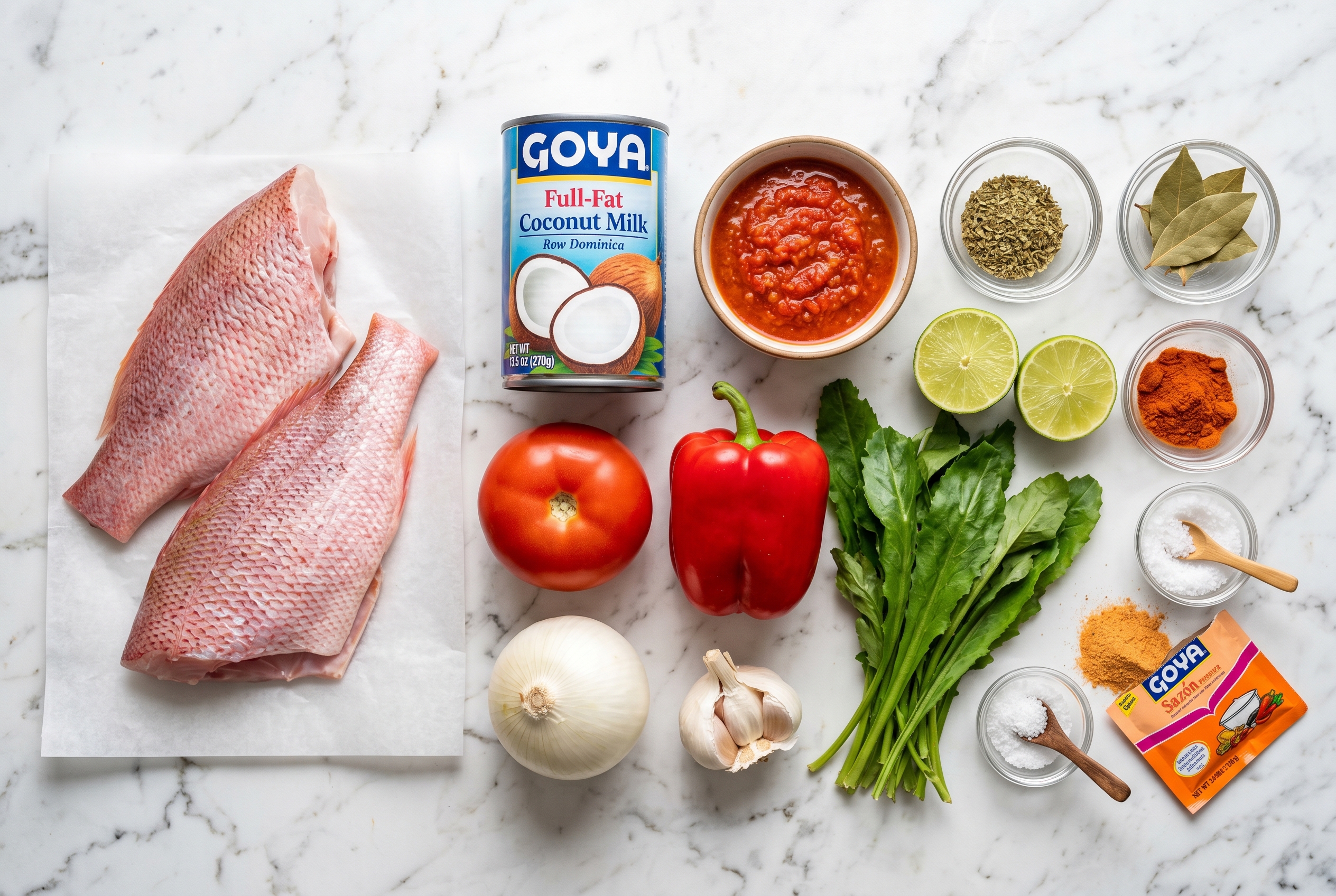
- 2 lb red snapper fillets (or whole snapper, or sea bass)
- Juice of 2 limes
- 1 teaspoon salt (plus more for sauce)
- 3 tablespoon vegetable or olive oil
- 3 tablespoon sofrito (Dominican sazón líquido)
- 1 medium onion, thinly sliced
- 1 red bell pepper, thinly sliced
- 3 garlic cloves, minced
- 1 can (8 oz) tomato sauce
- 1 tablespoon tomato paste
- 1 can (13.5 oz) full-fat coconut milk
- 1 teaspoon sazón (Goya con culantro y achiote)
- 1 teaspoon dried Dominican oregano
- 1 bay leaf
- ½ teaspoon paprika
- 1 tablespoon fresh culantro, chopped (or cilantro as substitute)
- Salt and black pepper to taste
Equipment: A wide caldero or Dutch oven with a lid, a sharp knife for the fish, a fish spatula for flipping.
6 Things to Serve With Pescado con Coco
- Arroz blanco: The non-negotiable pairing — the rice soaks up the coconut sauce.
- Maduros: Sweet fried plantains are the classic Samaná side.
- Tostones: If you want starch and crunch instead of sweetness.
- Habichuelas guisadas: Optional but welcomed for a full bandera-style plate.
- Aguacate: Thick avocado slices cool and balance the rich sauce.
- Wasakaka: A small bowl at the table for extra garlic punch.
Step-by-Step Instructions
Step 1 — Marinate the Fish
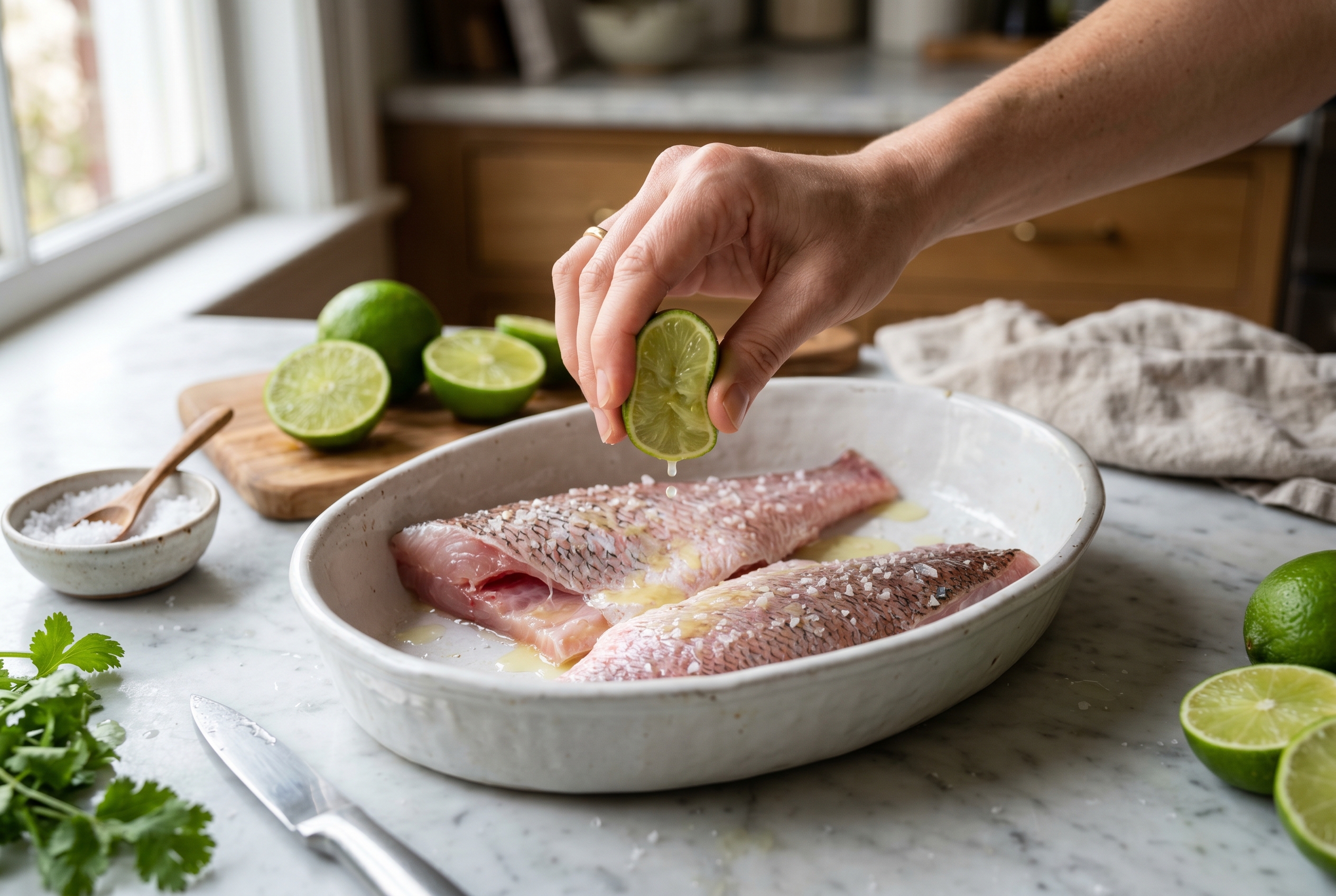
Pat the snapper fillets dry with paper towels. Place them in a shallow dish and rub with the juice of 2 limes and 1 teaspoon salt. Let sit for 15 minutes while you start the sauce. The lime tightens the flesh and knocks out any fishy smell — a Dominican step you never skip.
Step 2 — Build the Sofrito Base
Heat 3 tablespoon oil in a wide caldero or Dutch oven over medium heat. Add the sofrito and let it sizzle for 30 seconds — you'll smell the onion, pepper, and garlic wake up. Add the sliced onion and red pepper. Sauté for 4-5 minutes until the onion is translucent and the pepper softens. Stir in the minced garlic and cook 30 seconds more, watching that it doesn't burn.
Step 3 — Add the Tomato Paste
Push the vegetables to the side of the pan and add the 1 tablespoon tomato paste to the cleared space. Toast it in the oil for 30-60 seconds until it darkens slightly — this caramelization is where deep umami comes from. Stir to combine with the vegetables.
Step 4 — Build the Coconut Sauce
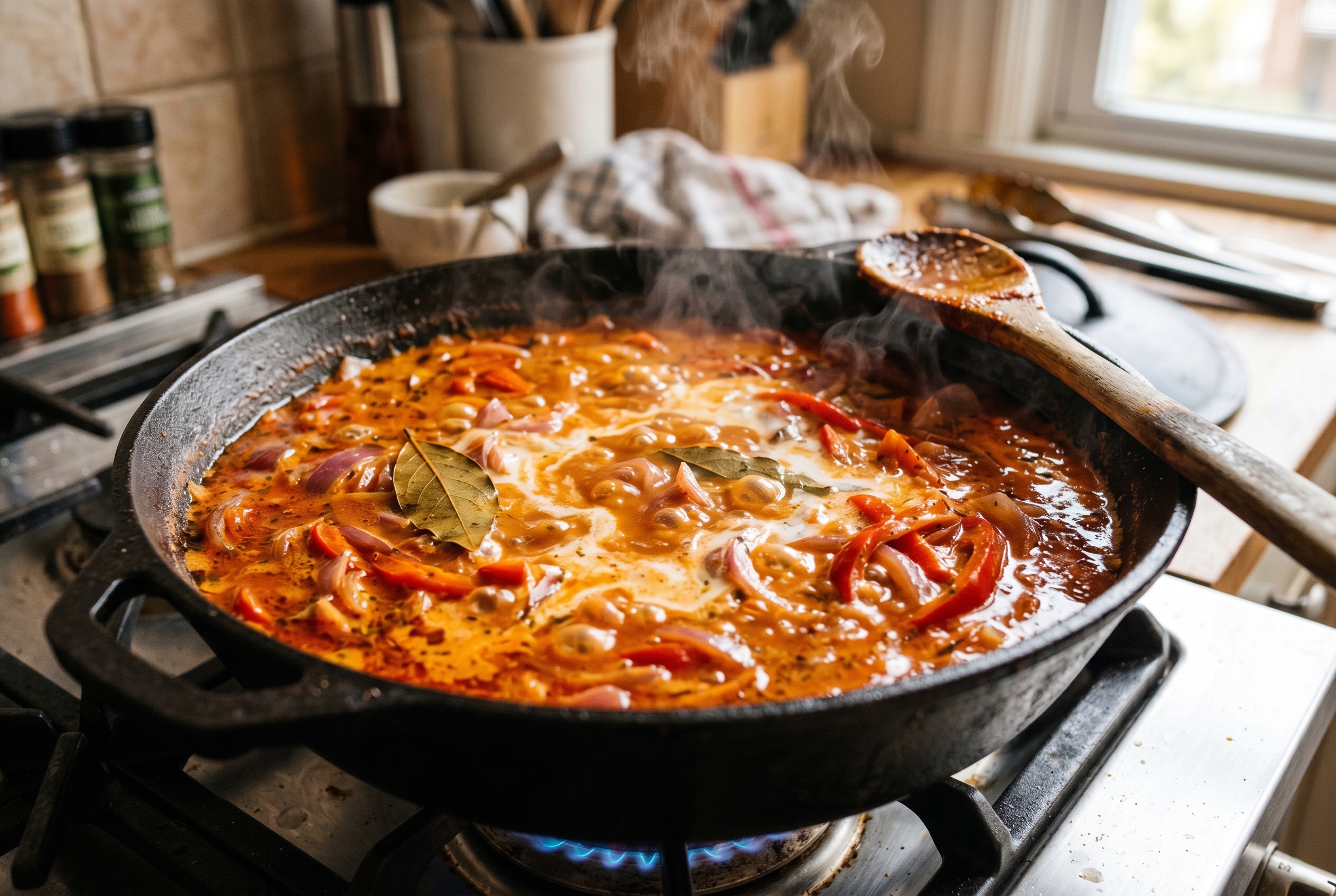
Pour in the tomato sauce, then the full can of coconut milk (shake the can first). Add the sazón, oregano, bay leaf, and paprika. Stir well. Bring to a gentle simmer and let it cook for 5 minutes — the sauce will deepen in color to a warm orange-red and the flavors will meld. Taste and season with salt and pepper. The sauce should taste almost finished at this point.
Step 5 — Nestle the Fish in the Sauce
Lower the heat to medium-low. Gently lay the marinated snapper fillets into the simmering sauce, spooning sauce over the tops so they're partially submerged. Cover the pan and cook for 8 minutes. Uncover, carefully flip each fillet with a fish spatula, cover again, and cook another 4-7 minutes until the fish flakes easily with a fork. Thick fillets take the full 15 minutes; thinner cuts are done at 12.
Step 6 — Finish and Serve
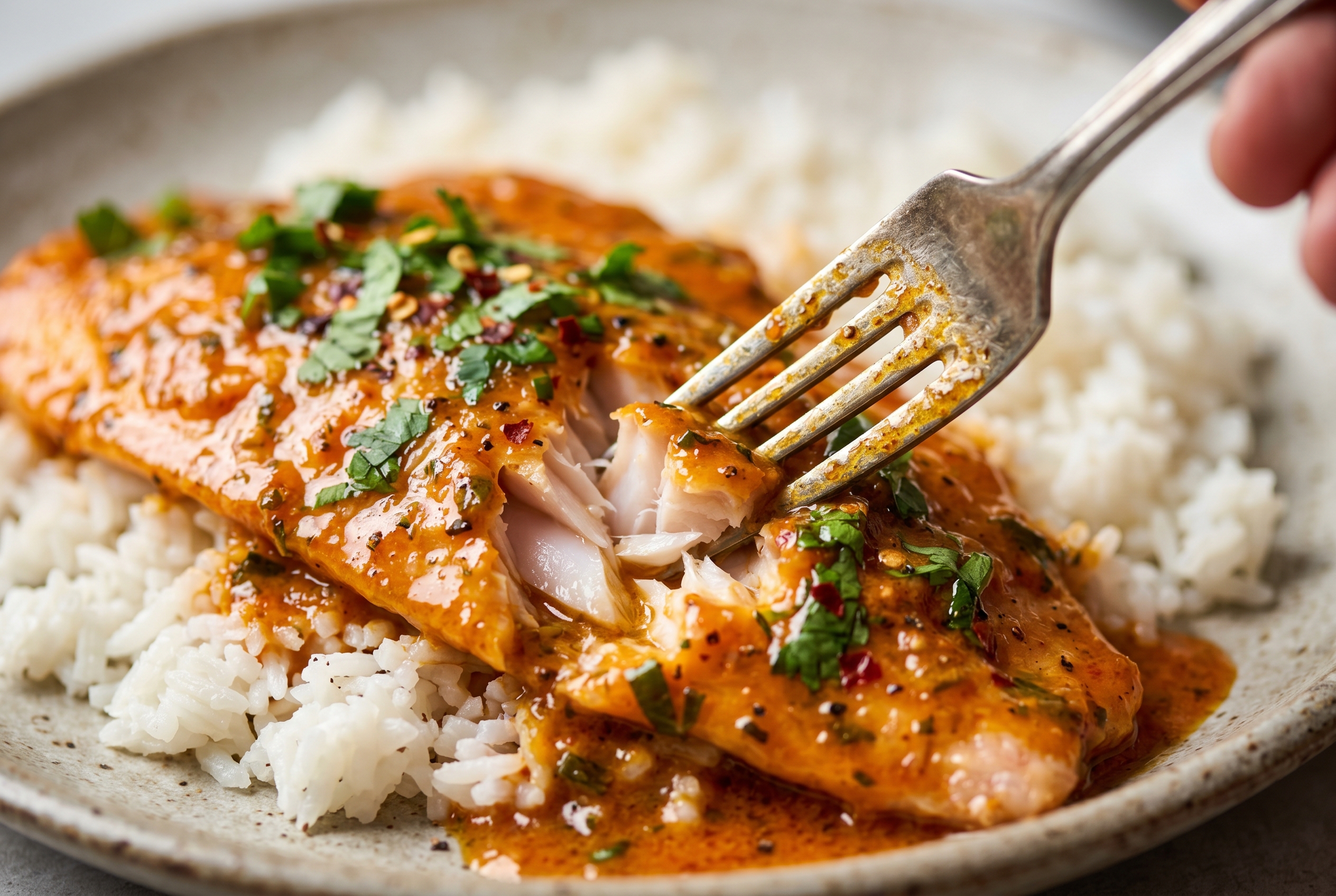
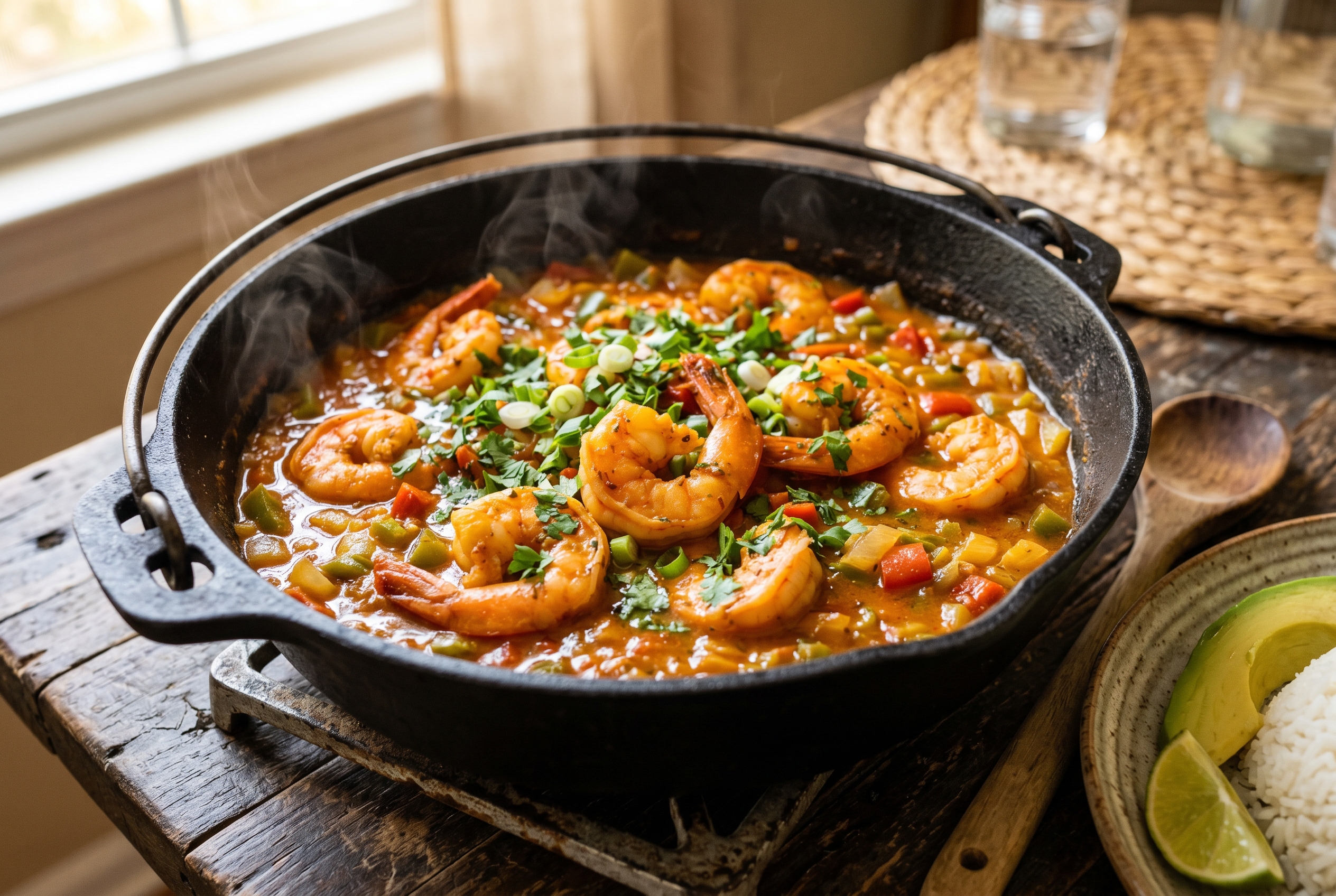
Kill the heat. Sprinkle the chopped culantro over the fish. Let the pan rest uncovered for 2 minutes — this is when the sauce thickens slightly and the culantro perfumes everything. Serve the fish with a generous ladle of sauce over arroz blanco, with maduros and avocado on the side. Lime wedges at the table for anyone who wants extra brightness.
Pro Tips for Perfect Pescado con Coco
- Use full-fat coconut milk, not lite: The fat is what gives the sauce its body and silkiness. Lite coconut milk separates and makes a thin, watery sauce that never thickens properly. Get the real stuff — usually in the Asian or Latin section.
- Culantro, not cilantro, if you can find it: Culantro (also called recao or Mexican coriander) has longer leaves and a stronger, more savory version of cilantro's flavor. It's the herb of Samaná. Latin groceries carry it fresh. If you can't find it, cilantro works — just use slightly more.
- Don't overcook the fish: Snapper goes from perfect to dry fast. As soon as it flakes with a fork, it's done. If the sauce needs more reducing after the fish is cooked, remove the fish to a plate and reduce the sauce separately, then pour over before serving.
- Lime-marinate, always: Fifteen minutes in lime juice is non-negotiable for Dominican fish cooking. It's how you eliminate any fishy smell and season the flesh before it hits the heat.
- Simmer, don't boil: Once the fish is in the sauce, keep the heat at a gentle simmer — little bubbles, not a rolling boil. High heat breaks up the fillets and can curdle the coconut milk.
Variations
Whole Fish Samaná Style
Use a whole 2-3 lb red snapper, scaled and cleaned. Score the sides with three diagonal cuts on each side. Marinate with lime and salt for 20 minutes. Nestle the whole fish into the sauce and cook 10 minutes per side, basting with sauce. This is how they serve it at the beachside comedores on Playa Cosón.
Spicy Pescado con Coco
Add 1 finely diced aji caballero or habanero to the sofrito at Step 2. Samaná cooks sometimes add a Scotch bonnet (a nod to the Haitian influence). Adds warmth without overpowering the coconut.
Shrimp con Coco
Swap the fish for 1 ½ lb peeled large shrimp. Build the same sauce, then add the shrimp at the very end and cook just 3-4 minutes until pink. A quick weeknight version of the same flavor.
What to Serve With Pescado con Coco
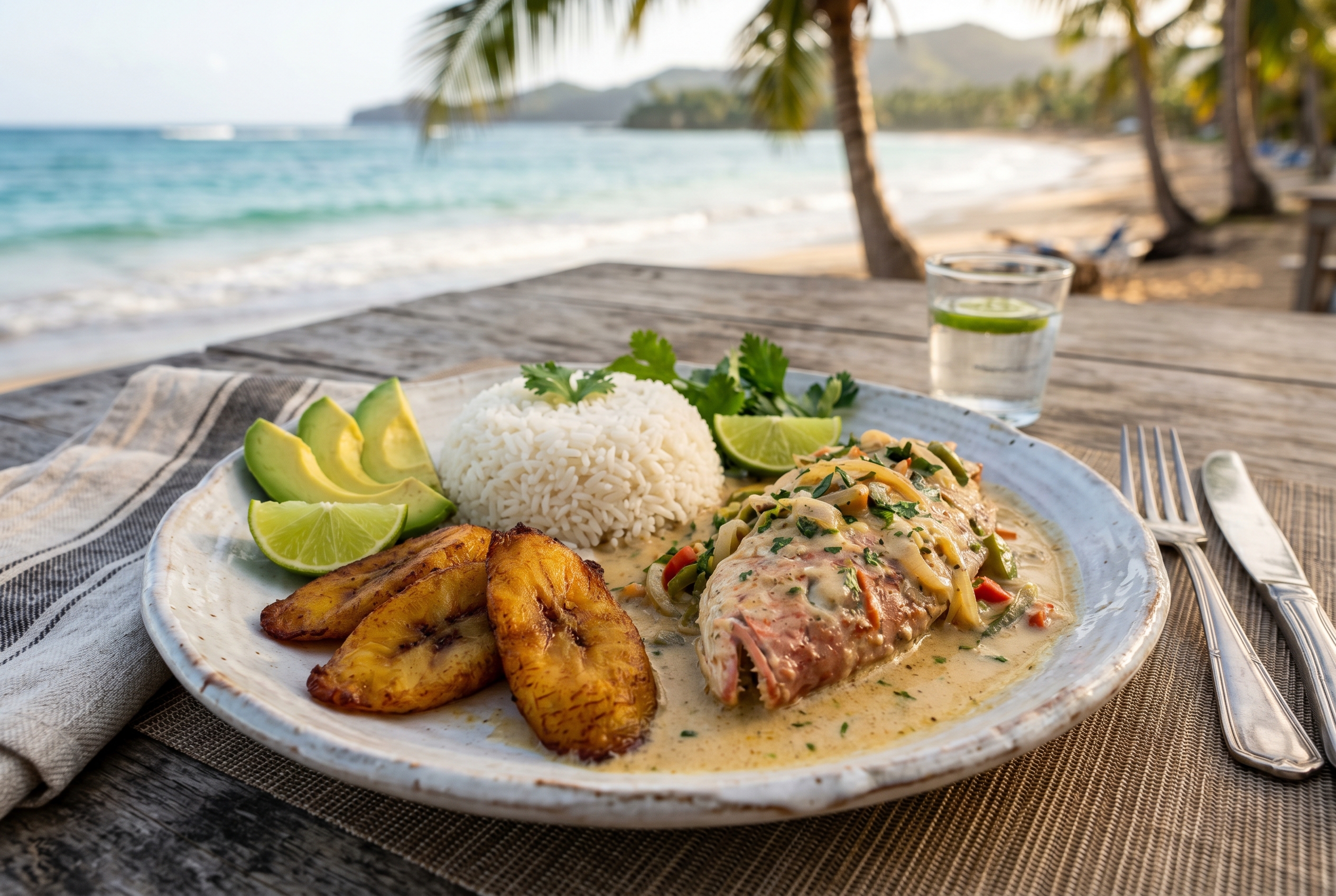
- Arroz blanco: The essential base for the coconut sauce.
- Maduros: Sweet plantains — the Samaná classic pairing.
- Aguacate: Thick avocado slices for cooling contrast.
- Tostones: If you prefer crunch over sweet.
- Habichuelas guisadas: For a fuller Dominican plate.
Frequently Asked Questions
What kind of fish is best for pescado con coco?
Red snapper (chillo) is the traditional and most authentic choice — it's what they use in Samaná. Sea bass, grouper, mahi-mahi, and tilapia all work as substitutes. You want a firm white fish that holds up in a braise without falling apart. Avoid delicate fish like sole or flounder — they'll break up in the sauce.
Can I use light coconut milk?
I don't recommend it. Light coconut milk has most of the fat removed, which is exactly what gives this sauce its body and silky texture. It'll come out thin and watery. If health is the concern, cut the portion size rather than switching to lite — full-fat coconut milk still has a reasonable calorie footprint per serving.
What is culantro and can I substitute cilantro?
Culantro (also called recao, Mexican coriander, or sawtooth herb) is a Caribbean herb with long serrated leaves and a flavor similar to cilantro but deeper and more savory. It's essential to authentic Samaná cooking. If you can't find fresh culantro at a Latin or Asian grocery, substitute an equal or slightly larger amount of cilantro — the flavor will be less intense but still good.
Can I make this ahead of time?
The sauce can be made up to a day ahead and refrigerated. Gently reheat it, then add the marinated fish and simmer as directed. I don't recommend cooking the whole dish ahead — reheated fish loses its texture fast. Sauce today, fish at dinner time is the right move.
My sauce split or looks curdled — what happened?
Coconut milk can split under high heat, which is why I insist on a gentle simmer. If it happens, remove from heat, whisk vigorously, and add a tablespoon of cold water while whisking — this usually brings it back together. Going forward, keep the heat at medium-low once the coconut milk goes in.
Do I have to use sofrito?
Yes — sofrito is the flavor foundation of Dominican cooking and this dish specifically relies on it. If you don't have it made, blend a small onion, 1 bell pepper, 4 garlic cloves, a handful of cilantro, and 1 teaspoon vinegar into a rough paste and use 3 tablespoon of that. It's the quick version and it works.
Can I use whole fish instead of fillets?
Absolutely — whole fish is the traditional Samaná preparation and arguably more flavorful (the bones add depth to the sauce). Scale and clean a 2-3 lb red snapper, score the sides, marinate with lime, and simmer 10 minutes per side in the sauce. Serve on a platter, head and all.
How spicy is pescado con coco?
The traditional version is mild — the flavor is rich and aromatic, not hot. If you want heat, add a diced habanero or Scotch bonnet to the sofrito. That's the Haitian-influenced version you'll see in northern Samaná near the border regions.
Why is this dish specific to Samaná?
Samaná has a distinct culinary identity shaped by its coastal location, African-American freedmen settlers from the 1820s, Haitian migration, and Taíno ingredients. Coconut as a savory base is rare elsewhere in the DR but central in Samaná, Puerto Plata, and the north coast. This dish is the peninsula's signature plato fuerte.
How do I store and reheat leftovers?
Store in an airtight container in the fridge up to 2 days. Reheat gently in a covered pan over low heat with a splash of water or coconut milk to loosen the sauce. Don't microwave — the fish texture suffers. Fish dishes are always best fresh, but leftover pescado con coco is still a treat, especially with fresh rice on day two.
Can I freeze pescado con coco?
I don't recommend freezing the finished dish — the fish texture breaks down and the coconut milk separates when thawed. You can, however, freeze the coconut sofrito sauce on its own (without the fish) for up to 2 months. Thaw in the fridge overnight, warm gently, and add fresh fish to finish. That gives you a shortcut to a 20-minute weeknight version of this dish.
What wine pairs with pescado con coco?
A crisp, off-dry white like Riesling or Gewürztraminer works beautifully — the slight sweetness complements the coconut and the acid cuts the richness. A dry rosé is also a solid choice. At home in Santo Domingo, though, we usually drink this with a cold Presidente beer or a jugo de chinola (passion fruit juice). Both work better than you'd expect.
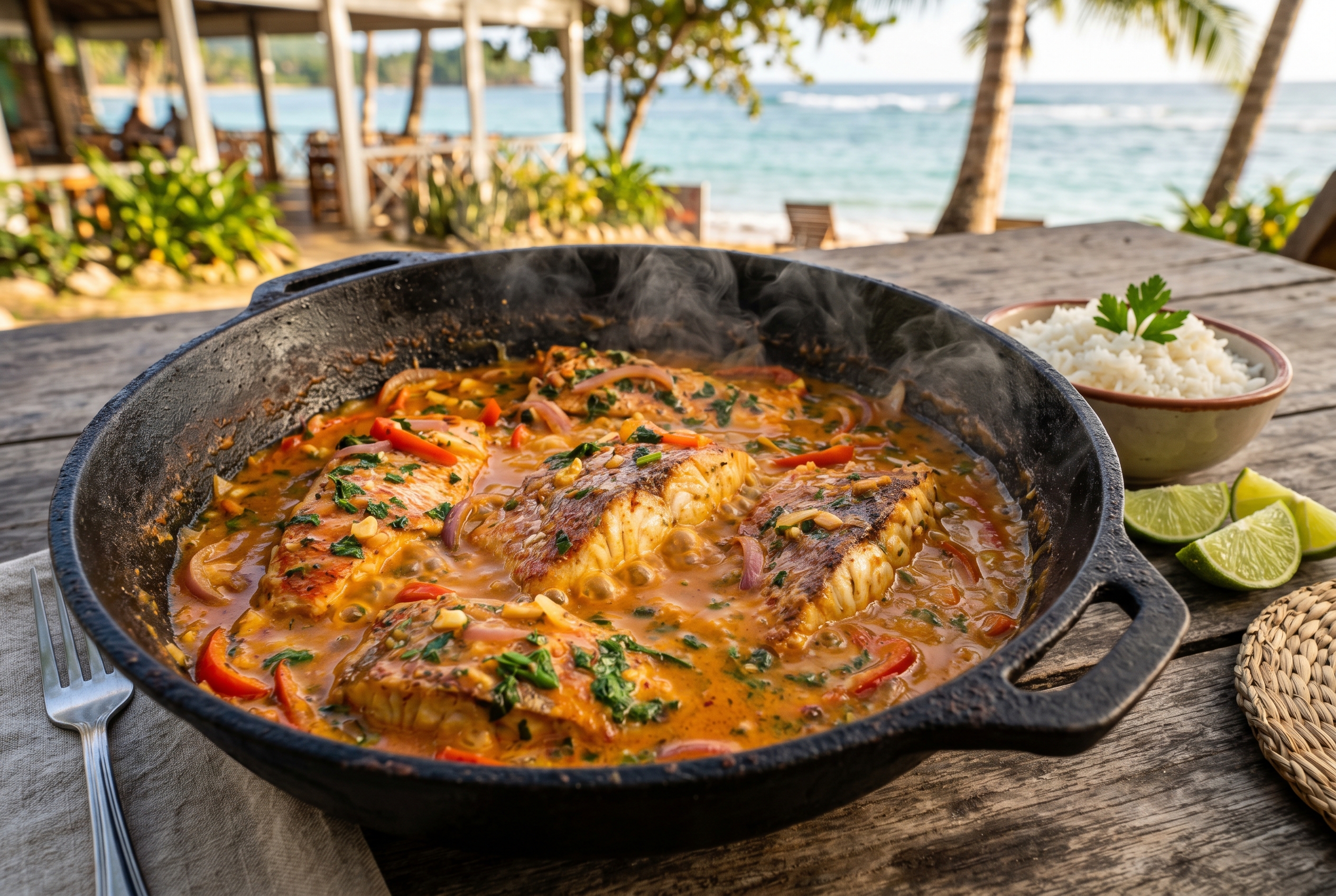
Pescado con Coco (Dominican Fish in Coconut Sauce)
Ingredients
Method
- Pat fish dry. Rub with lime juice and 1 teaspoon salt. Rest 15 min.

- Heat oil in wide caldero. Add sofrito, onion, bell pepper. Sauté 4-5 min. Add garlic, cook 30 sec.
- Push veg aside. Toast tomato paste in oil 30-60 sec until darkened. Stir to combine.
- Add tomato sauce, coconut milk, sazón, oregano, bay leaf, paprika. Simmer 5 min. Taste and season.
- Lower heat. Nestle fish in sauce, spoon sauce over tops. Cover, cook 8 min. Flip, cover, cook 4-7 min until flaky.
- Remove from heat. Sprinkle culantro. Rest 2 min. Serve with arroz blanco and maduros.
Nutrition
Video
Notes
Tried this recipe?
Let us know how it was!Shop This Recipe
View on Amazon →
View on Amazon →
View on Amazon →
As an Amazon Associate I earn from qualifying purchases at no extra cost to you.
Make this on a Sunday. Close your eyes after the first bite. You're on the Samaná coast.
You May Also Like
📺 Watch a similar recipe: Pan Seared Sea Bass in Lemon Garlic Butter
- Dominican Carne Guisada Recipe (Authentic Beef Stew) — Authentic Dominican beef stew with azúcar quemada, sofrito, and a rich mahogany sauce.
- Dominican Breakfast Ideas: 6 Authentic Morning Recipes — Complete guide to Dominican breakfast — from the iconic mangu con tres golpes.
- Dominican Habichuelas con Dulce Recipe (Easter Sweet Beans) — The traditional Dominican Holy Week sweet bean dessert with coconut milk, evaporated milk.


Leave a Reply