
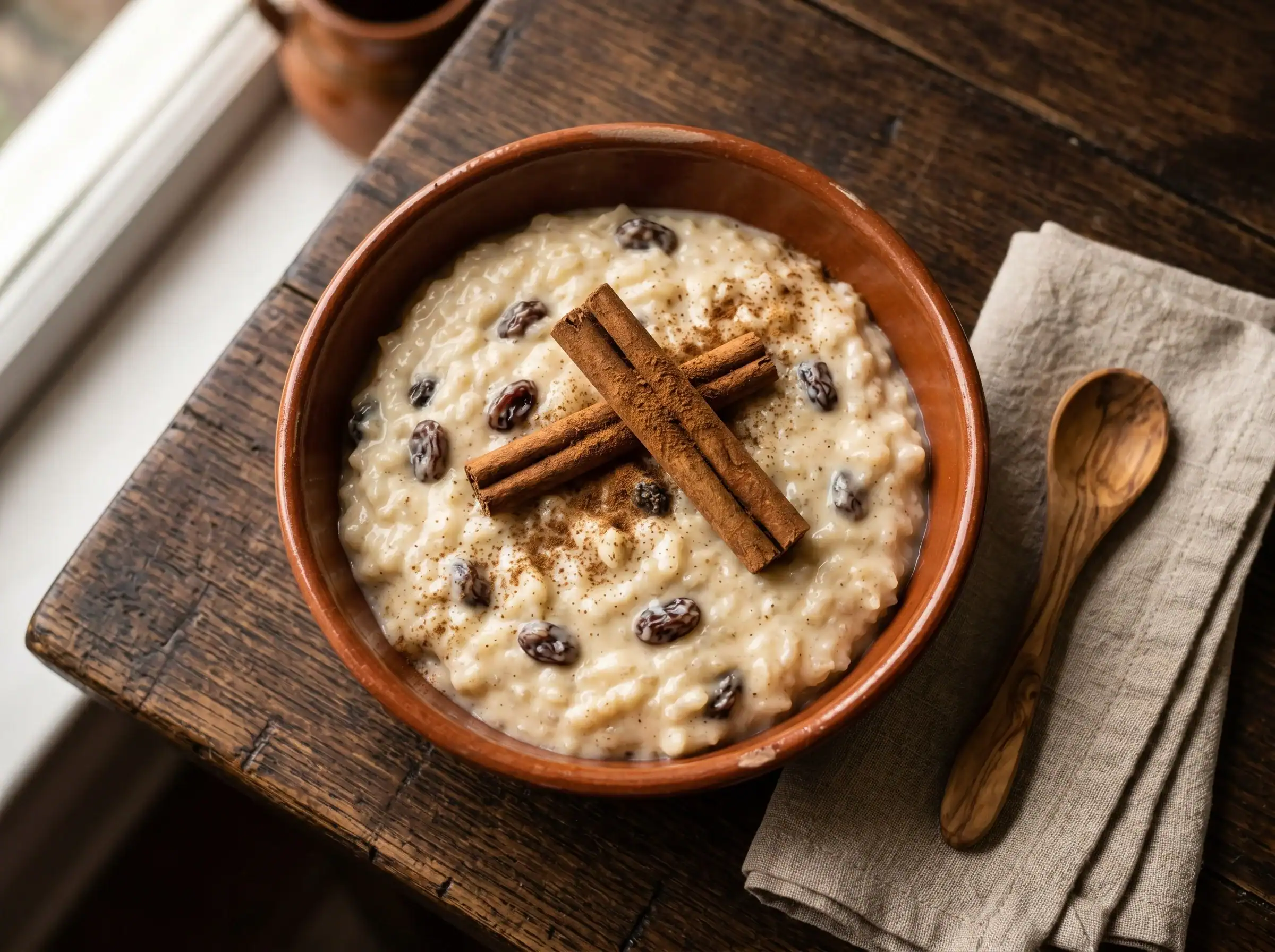
Arroz con leche is the first dessert most Dominican kids ever loved. Soft rice simmered in milk with a cinnamon stick, sweetened with condensed milk, studded with raisins, finished with a dust of canela on top. In my house in Santo Domingo, my mom made it on Sundays in a big pot, and we ate it warm out of shallow bowls while the rest of the neighborhood took their afternoon naps.
What makes the Dominican version different is the texture. Mexican arroz con leche is thick and almost pudding-like. Spanish versions can be even thicker. Ours is SOUPIER — looser, almost drinkable when warm, with the milk still swimming around the soft grains of rice. That's the way my abuela made it, that's the way my mom made it, that's the way I still make it today. If you try to cook it down to thick pudding, you've made something else.
Today I'm sharing the exact recipe I grew up eating. Simple ingredients, 45 minutes on the stove, stirred patiently so nothing sticks. It's a Sunday dessert, an after-school snack, and a New Year's Eve tradition in many Dominican households. Once you make it right, you'll understand why every Dominican family has their own version.
Why You'll Love This Arroz con Leche Dominicano Recipe
- Authentic Dominican texture: Loose and creamy-soupy, not thick and stodgy like other Latin versions. The way it's supposed to be.
- Pantry-staple ingredients: Rice, milk, condensed milk, cinnamon, raisins. Nothing fancy. Total cost under $8 for a big pot.
- Works warm or cold: Eat it warm right off the stove, or chill it for a silky cold dessert the next day.
- Kid-friendly forever: Every Dominican child grew up on this. Your kids will too. No complicated flavors, no bitter notes.
- One pot, no fuss: Heavy pot, wooden spoon, cinnamon stick. The whole thing happens in one vessel from start to finish.
What Is Arroz con Leche Dominicano?
Arroz con leche is a rice-and-milk dessert found across the entire Spanish-speaking world, but every country makes it differently. The Dominican version uses short- or medium-grain rice first cooked in water with a cinnamon stick, then finished with evaporated milk, condensed milk, and whole milk until the grains are tender and suspended in a rich, sweet, soupy milk. Raisins, lime zest, and vanilla round out the flavor. A generous dust of ground cinnamon goes on top right before serving.
The dish arrived in the Dominican Republic through the Spanish, who brought the idea of cooking rice in sweetened milk from their own Moorish-influenced kitchens centuries ago. Once the recipe hit the Caribbean, Dominicans adapted it — using condensed milk (widely available on the island since the early 1900s) for sweetness instead of granulated sugar, and keeping the consistency loose because that's how tropical desserts tend to run when served warm in hot weather.
What separates Dominican arroz con leche from the Mexican and Spanish versions is exactly that texture. In Mexico, the rice is typically cooked down until most of the milk is absorbed — the result is a thick, almost spoonable pudding. In Spain, it's even denser, often baked in the oven with caramelized sugar on top like crème brûlée. The Dominican version stops cooking while the milk is still pourable. When you tilt the bowl, it sloshes. That's how you know you did it right.
Ingredients You'll Need
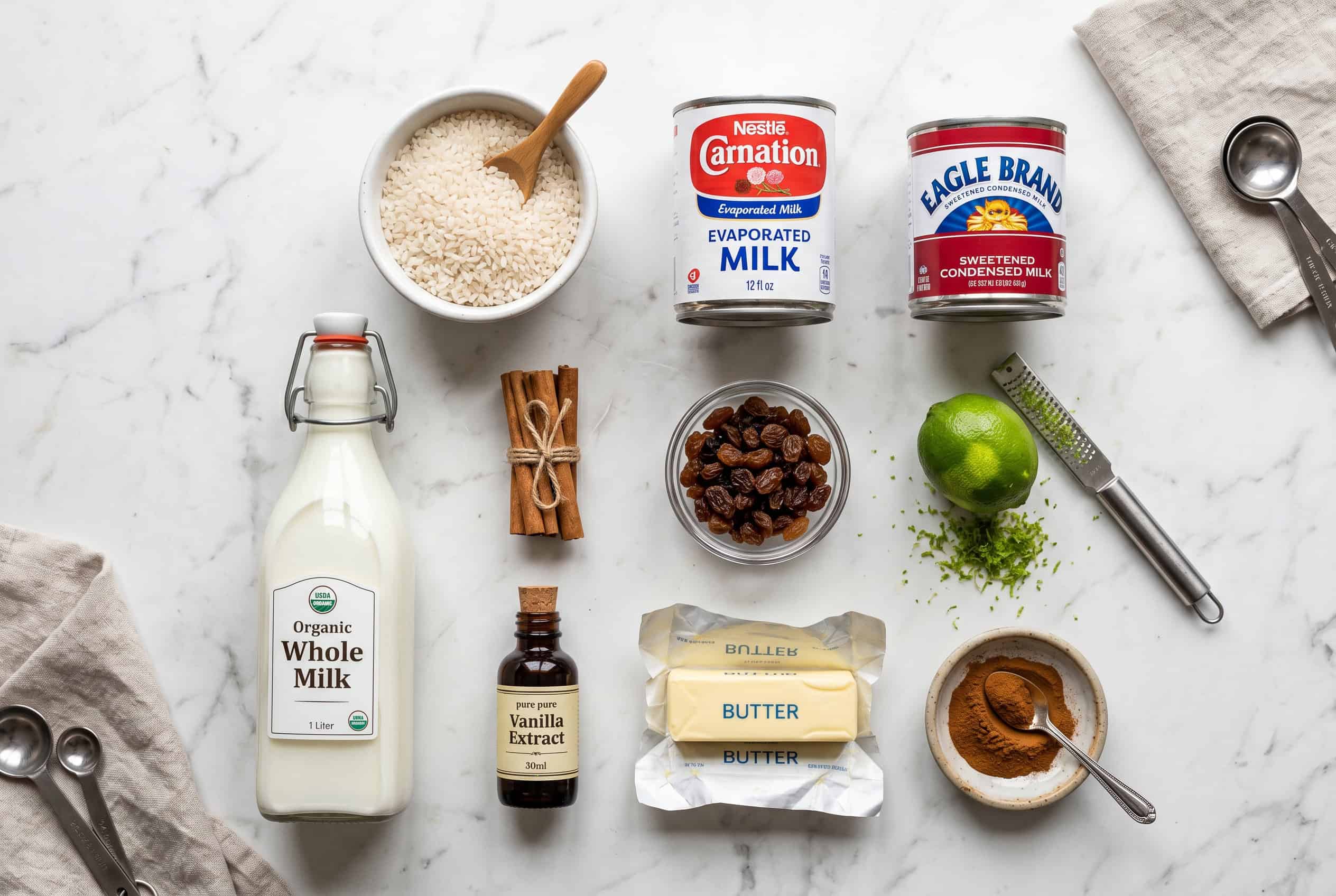
- 1 cup medium-grain rice, rinsed (short-grain works too)
- 4 cups water
- 1 cinnamon stick
- 1 teaspoon lime zest (or lemon zest)
- ¼ teaspoon salt
- 1 can (12 oz) evaporated milk
- 1 can (14 oz) sweetened condensed milk
- 1 cup whole milk
- ½ cup raisins
- 1 teaspoon vanilla extract
- 2 tablespoon butter (optional, for extra silkiness)
- Ground cinnamon, for dusting
Equipment: A heavy-bottomed pot (4-quart or bigger) and a wooden spoon are the only requirements. A heavy pot matters — thin pots scorch milk.
7 Keys to Perfect Dominican Arroz con Leche
- Use short- or medium-grain rice: Long-grain stays too firm. Short-grain or medium-grain releases starch and gives the milk its body.
- Rinse the rice first: A quick rinse washes off excess starch. Skip this and the dessert gets gluey instead of silky.
- Cook rice in water first, milk second: The rice needs water to fully cook and swell. Dumping milk in at the start causes it to curdle and scorch.
- Keep it soupy: Pull it off the heat while the milk is still loose and pourable. It thickens as it cools — you want to stop cooking BEFORE it looks done.
- Stir often after the milk goes in: Milk burns on the bottom if you walk away. Gentle heat, frequent stirring, wooden spoon.
- Condensed milk is the sweetener: Don't add sugar on top. The can of condensed milk provides the perfect sweetness for a Dominican palate. Adding more makes it cloying.
- Pair it with flan dominicano or serve alongside morir soñando: Classic Dominican dessert spread for Sundays and holidays.
Step-by-Step Instructions
Step 1 — Rinse the Rice and Start It Cooking
Rinse 1 cup of medium-grain rice under cold water until the water runs mostly clear. Transfer to a heavy 4-quart pot with 4 cups of water, 1 cinnamon stick, 1 teaspoon of lime zest, and ¼ teaspoon of salt. Bring to a boil over medium-high heat, then reduce to low, cover, and simmer for 18-20 minutes until the water is fully absorbed and the rice is tender but not mushy.

Step 2 — Add the Three Milks
Uncover the pot. Pour in 1 can of evaporated milk, 1 can of sweetened condensed milk, and 1 cup of whole milk. Stir gently with a wooden spoon to combine. The mixture will look watery at this point — that's correct. Keep the heat on medium-low.
Step 3 — Add the Raisins and Simmer
Add ½ cup of raisins to the pot. Simmer uncovered over medium-low heat for 20-25 minutes, stirring every 2-3 minutes with the wooden spoon. Scrape the bottom each time — this is where milk scorches first. The mixture will slowly thicken as the rice absorbs more liquid and releases starch.

Step 4 — Check for Doneness
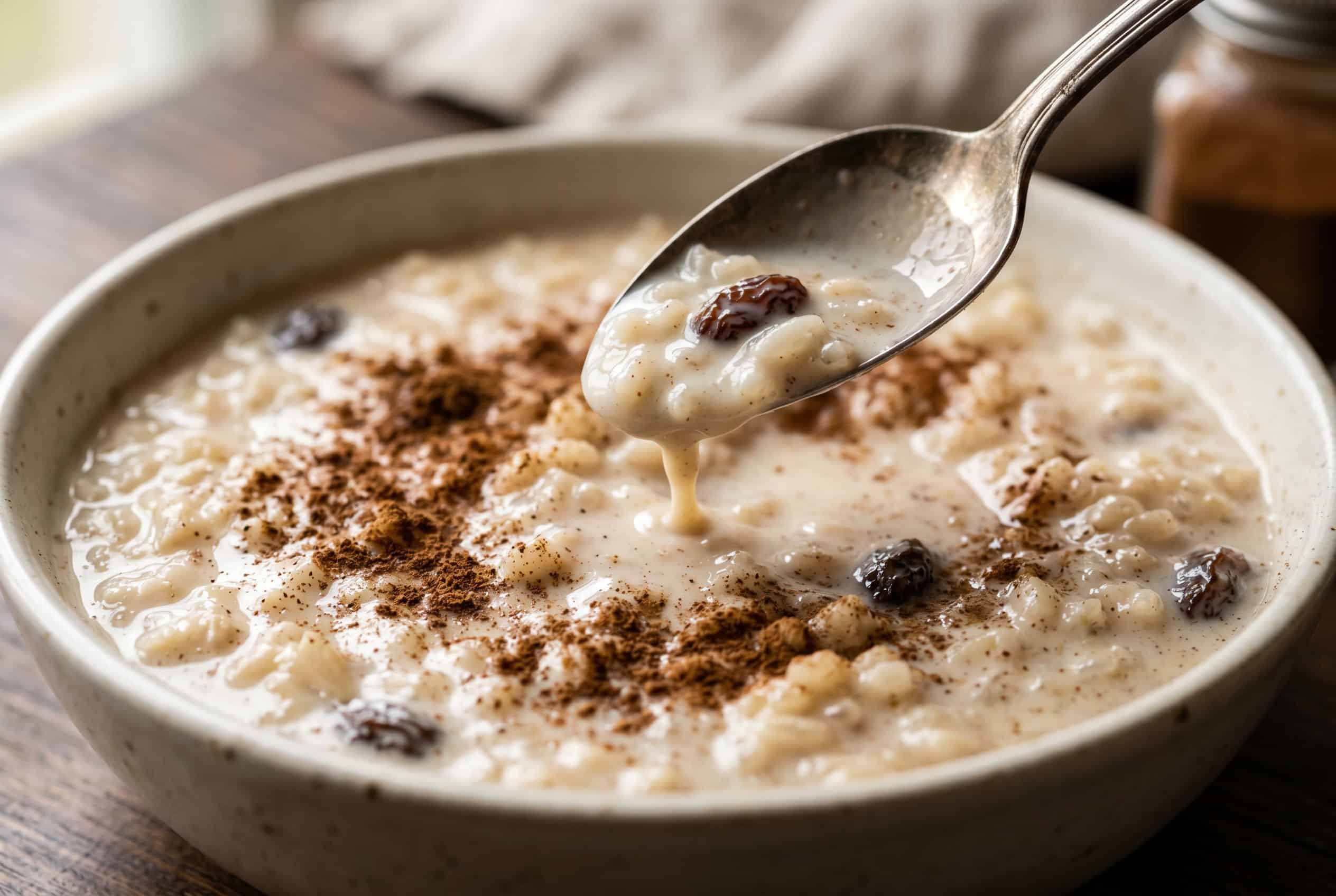
The arroz con leche is done when the rice grains are plump and tender, and the milk has thickened but is still pourable — not pudding-thick. It should slosh around the pot when you stir. Remember: it thickens as it cools. Pull it off while it still looks slightly too loose.
Step 5 — Finish with Vanilla and Butter
Turn off the heat. Stir in 1 teaspoon of vanilla extract and 2 tablespoon of butter (if using — the butter adds a silky richness but isn't strictly required). Fish out the cinnamon stick and discard it. Let the pot rest for 10 minutes so the flavors settle and the texture finishes thickening.
Step 6 — Serve Warm or Chilled
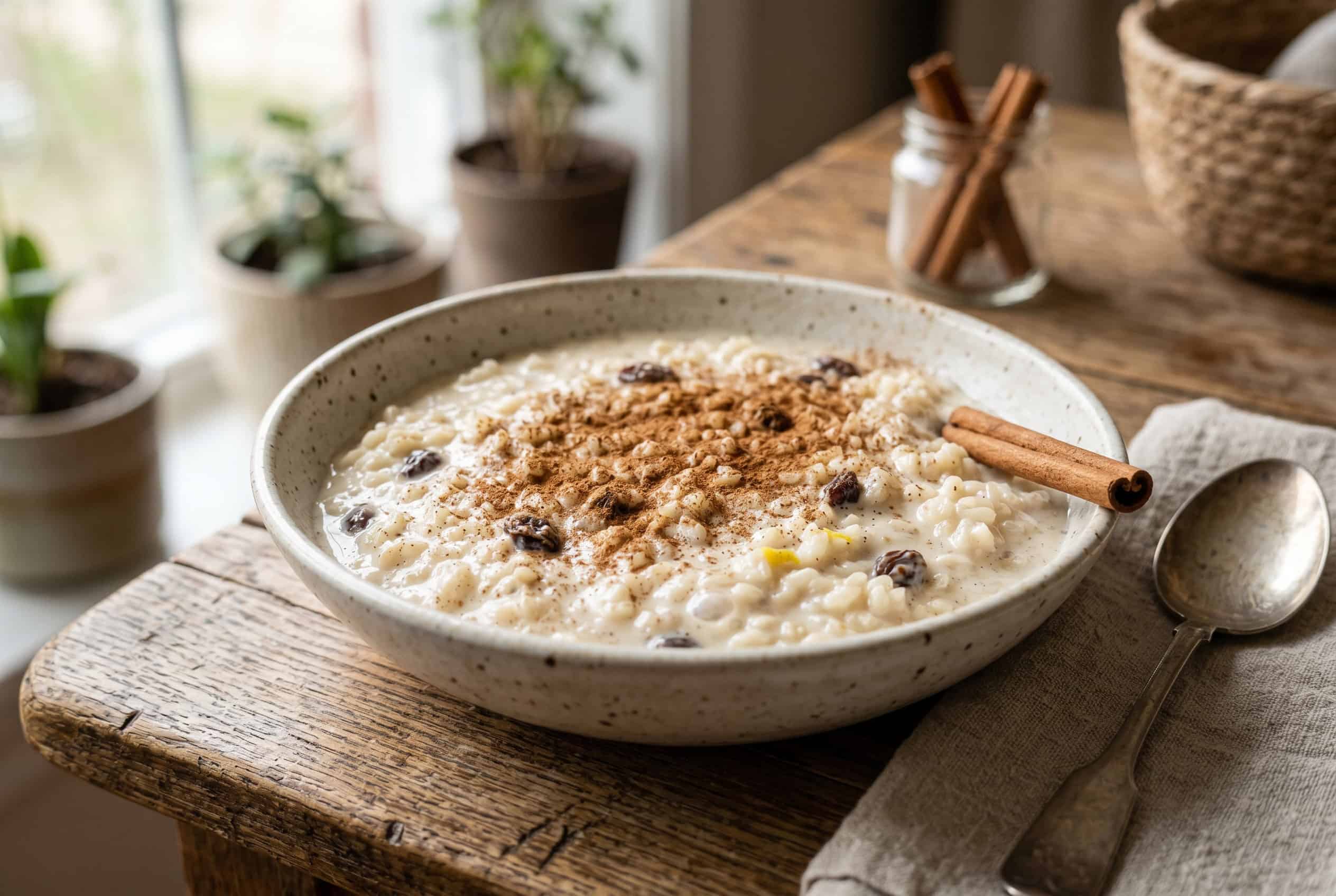
Ladle into shallow bowls or wide mugs. Dust generously with ground cinnamon right before serving. Eat warm for the traditional Dominican experience, or cover and chill in the fridge for 2-3 hours and serve cold on a hot afternoon. Both versions are authentic.
Pro Tips for Perfect Arroz con Leche
- Use a heavy pot, always: Thin pots guarantee scorched milk on the bottom. A heavy-bottomed stockpot or Dutch oven distributes heat evenly and forgives a minute of distraction.
- Stir often, not constantly: Every 2-3 minutes is right. Constant stirring breaks the rice grains. No stirring burns the bottom. Find the rhythm.
- Pull it early — it thickens as it cools: The single biggest mistake is cooking it too long. When you think "one more minute," turn it off. Cold arroz con leche should still be loose and creamy.
- Skip sugar — condensed milk is plenty: Dominican arroz con leche gets its sweetness entirely from the sweetened condensed milk. No granulated sugar needed. Adding more makes it cloying.
- Plump the raisins: If your raisins are very dry, soak them in warm water for 10 minutes before adding. Plump raisins integrate better with the creamy milk than hard, shriveled ones.
Variations
Coconut Arroz con Leche
Replace the cup of whole milk with 1 cup of coconut milk. Adds a tropical Caribbean note and slightly richer texture. Very popular on the north coast of the DR, especially in Samaná where coconut is everywhere.
No Raisins
Some people (and many Dominican kids) don't like raisins. Skip them entirely or replace with small pieces of dried cranberry or dried apricot. The dish still works perfectly well without them.
Extra-Rich Version
Stir in ½ cup of heavy cream at the end along with the vanilla and butter. Makes it decadent, like restaurant-grade arroz con leche. Especially good for Christmas or New Year's Eve when it's meant to feel like a treat.
What to Serve With Arroz con Leche
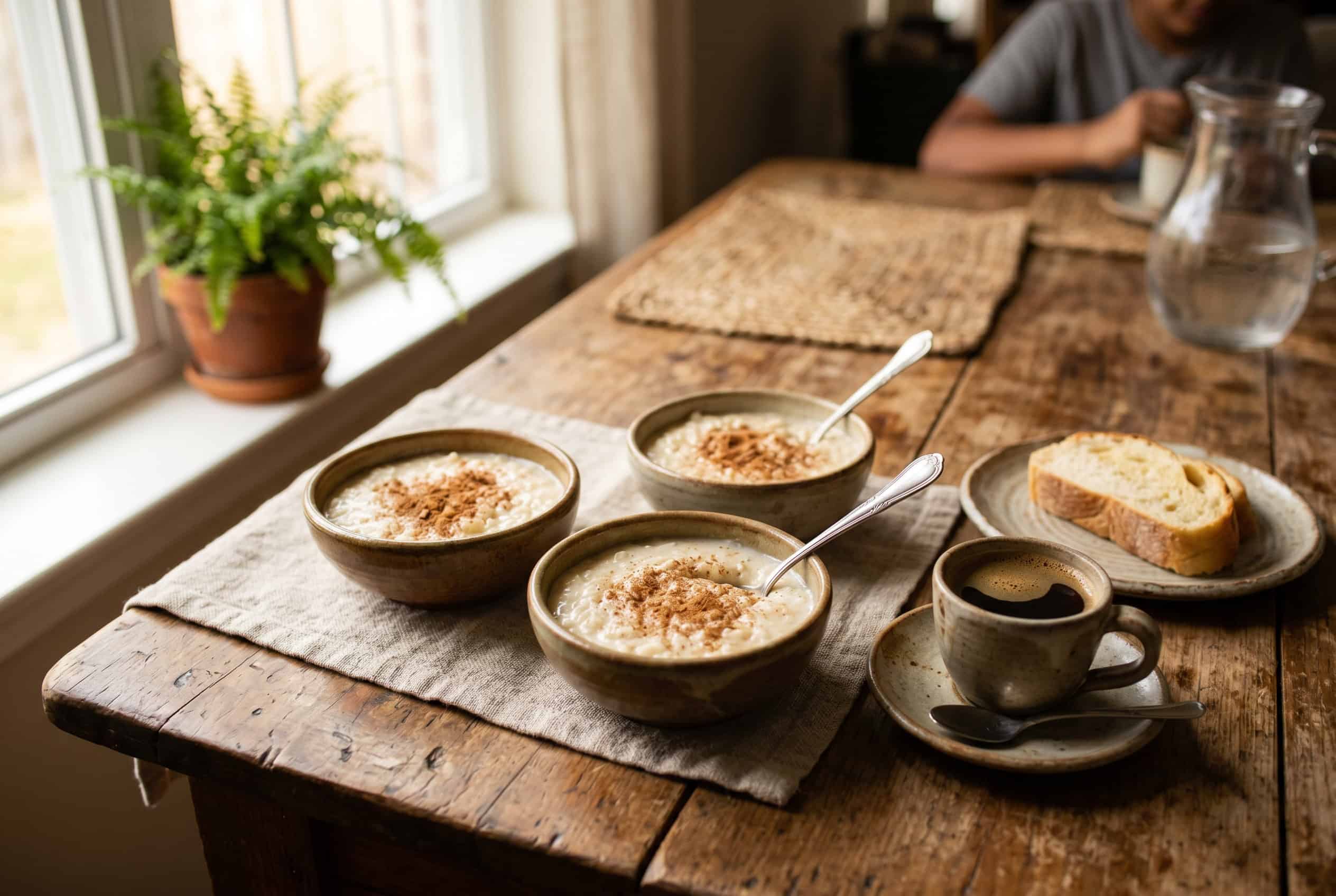
- Flan dominicano: Two classic Dominican desserts on the same Sunday table.
- Morir soñando: The orange-and-milk drink pairs beautifully with the creamy dessert.
- Pan de agua: Toast a slice and dip it into the arroz con leche — Dominican comfort food move.
- Strong black coffee: Bitter espresso cuts the sweetness perfectly. How the older generation eats it.
- After la bandera dominicana: The traditional Sunday lunch closer after a big plate of rice, beans, and meat.
Frequently Asked Questions
Why is Dominican arroz con leche soupier than Mexican?
It's a regional preference that goes back generations. Dominican cooks stop cooking while the milk is still pourable because that's how the dish is eaten on the island — often warm in hot weather, where a thick pudding would feel too heavy. Mexican cooks cook it down further because their palate prefers the denser pudding. Neither is wrong — they're different traditions.
Can I use long-grain rice?
Not ideal. Long-grain stays too separate and firm, and doesn't release enough starch to thicken the milk. Short-grain or medium-grain (like Arroz Valencia, Arborio, or a standard Dominican short-grain) is the right choice. Jasmine and basmati are not suitable.
How long does it keep in the fridge?
Up to 4 days in a covered container. It thickens significantly as it cools — if you want to loosen it back up, stir in a splash of whole milk when reheating or eating cold. The flavor actually gets better on day 2 as the cinnamon and vanilla settle.
Can I freeze it?
Not recommended. The rice texture gets grainy and the milk separates when thawed. Better to make a smaller batch more often than freeze a big one.
Do I need the lime zest?
It's traditional in Dominican arroz con leche — adds a subtle brightness that balances all the dairy and sweetness. You can skip it if you don't have citrus, or substitute lemon zest. Orange zest works too. The dish won't fail without it, but the flavor is noticeably flatter.
Can I make it dairy-free?
Yes — replace all three milks with full-fat coconut milk, or with a combination of coconut milk and oat milk. Use sweetened condensed coconut milk (available in cans at most grocery stores) in place of the regular condensed milk. The result is a coconut-heavy version that's genuinely delicious, just not the traditional Dominican profile.
Why did mine come out thick and pasty?
You cooked it too long. Arroz con leche thickens dramatically as it cools, so you have to pull it off while the milk still looks too loose. If it's already pasty in the pot, it'll be cement by the time it's cool. Stir in a splash of milk to loosen, and cook less next time.
What kind of pot is best?
A heavy-bottomed 4-quart pot or Dutch oven. Thin-walled pots scorch milk almost immediately. Enameled cast iron is ideal. Stainless steel with an aluminum core works. Nonstick is fine for this too since it's a low-heat cook.
Is arroz con leche gluten-free?
Yes, naturally. Rice, milk, cinnamon, vanilla, and raisins are all gluten-free. Just confirm your vanilla extract is pure (some cheap imitations contain gluten). It's a great dessert for gluten-free guests at Dominican family gatherings.
When do Dominicans eat arroz con leche?
Sunday afternoons as a classic dessert after the big family lunch. After school as a warm snack. New Year's Eve as part of the traditional holiday spread alongside flan and other sweets. It's not a restaurant dessert so much as a home kitchen one — every Dominican mom and abuela has her own version.
Arroz con Leche Dominicano
Ingredients
Method
- Rinse rice. Combine with water, cinnamon stick, lime zest, salt in heavy pot. Boil, then simmer covered 18-20 min until water absorbed.

- Uncover. Add evaporated milk, condensed milk, whole milk. Stir gently.
- Add raisins. Simmer uncovered on medium-low 20-25 min, stirring every 2-3 min. Scrape bottom to prevent scorching.
- Check doneness — should be pourable-creamy, NOT thick pudding. Remember it thickens as it cools.
- Off heat. Stir in vanilla and butter. Remove cinnamon stick. Rest 10 min.
- Ladle into bowls. Dust generously with ground cinnamon. Serve warm or chilled.
Nutrition
Notes
Tried this recipe?
Let us know how it was!Shop This Recipe
View on Amazon →
View on Amazon →
View on Amazon →
As an Amazon Associate I earn from qualifying purchases at no extra cost to you.
Make it this Sunday. Dust the cinnamon on right before serving. Eat it warm from the pot.
You May Also Like
📺 Watch a similar recipe: Authentic Dominican Arroz con Dulce (Coconut Rice Pudding)
- Tres Leches Cake Recipe — A heavenly Tres Leches Cake — traditional Latin American dessert with a light.
- Habichuelas con Dulce (Dominican Sweet Cream Beans) — A beloved Dominican Easter dessert made from creamy blended red beans simmered with.
- Authentic Bizcocho Dominicano Recipe (Birthday Cake) — Light-as-air Dominican sponge cake with pineapple jam filling and fluffy suspiro frosting. The.






Leave a Reply