This prime rib recipe delivers everything a holiday centerpiece should — a deeply browned, garlic-and-herb crusted exterior with a perfectly pink, edge-to-edge medium-rare center. And the "trick" behind that steakhouse-quality crust costs almost nothing: it's all in how you use your oven.
Prime rib has a reputation as an intimidating, special-occasion splurge, but the method is genuinely simple. You bring the roast to room temperature, coat it in a fresh garlic-herb rub, and let a blast of high heat do the heavy lifting.
Here's the part most people get wrong: they roast prime rib low and slow the whole way through, and the fat never fully renders. We do the opposite — start in a screaming-hot 500°F oven to build that crackling crust and render the fat, then drop the temperature to finish the roast gently so the center stays juicy and tender.
Whether it's Christmas dinner, a birthday, or a Sunday worth celebrating, this is the garlic crusted prime rib recipe you'll come back to year after year.
About This Recipe
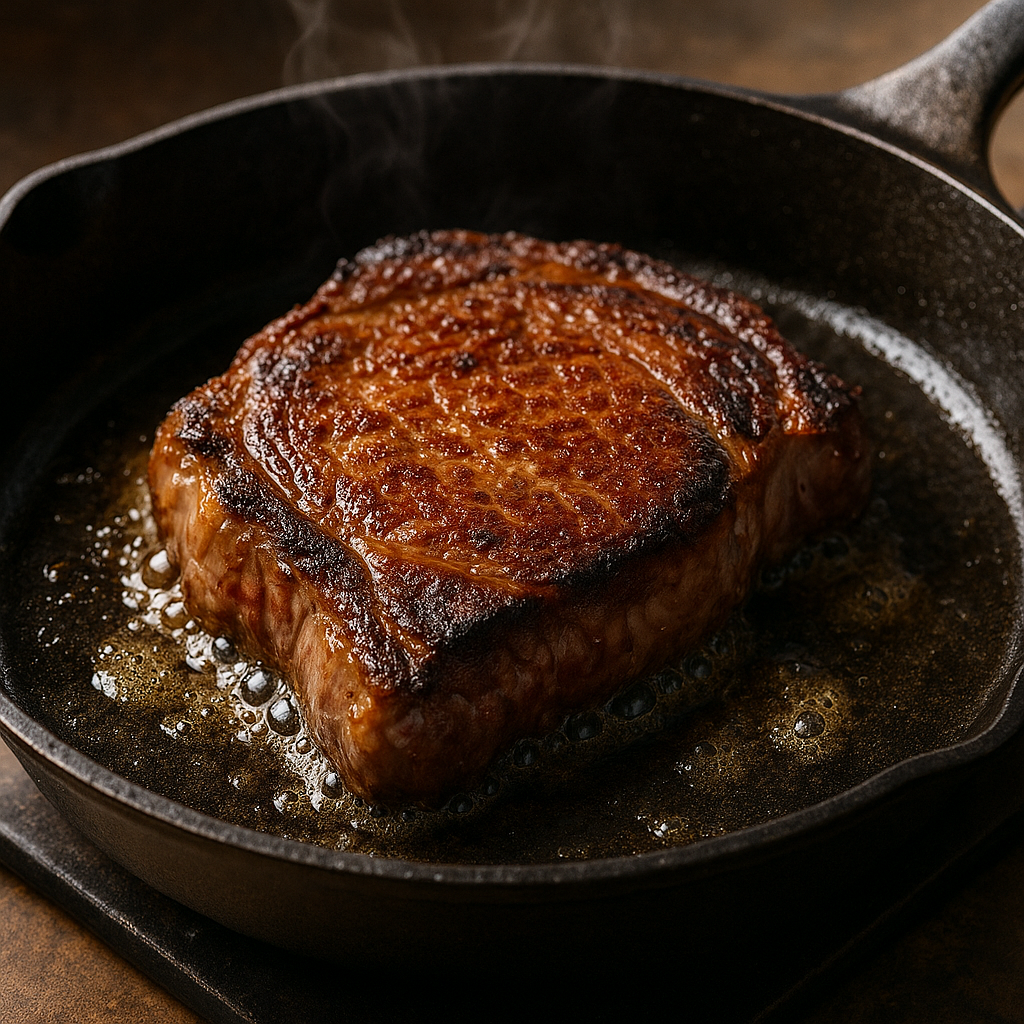
The secret to a restaurant-quality prime rib isn't an expensive gadget or a multi-day project — it's a hot oven. Starting the roast at 500°F renders the thick fat cap and builds a deep, crackling crust in the first 20 minutes. After that, you drop the heat to 325°F so the inside cooks gently and evenly to a rosy medium-rare without overshooting.
Cooking low and slow the entire time — which a lot of recipes suggest — leaves the fat under-rendered and the crust pale. That high-heat start is what separates a great prime rib from a merely good one.
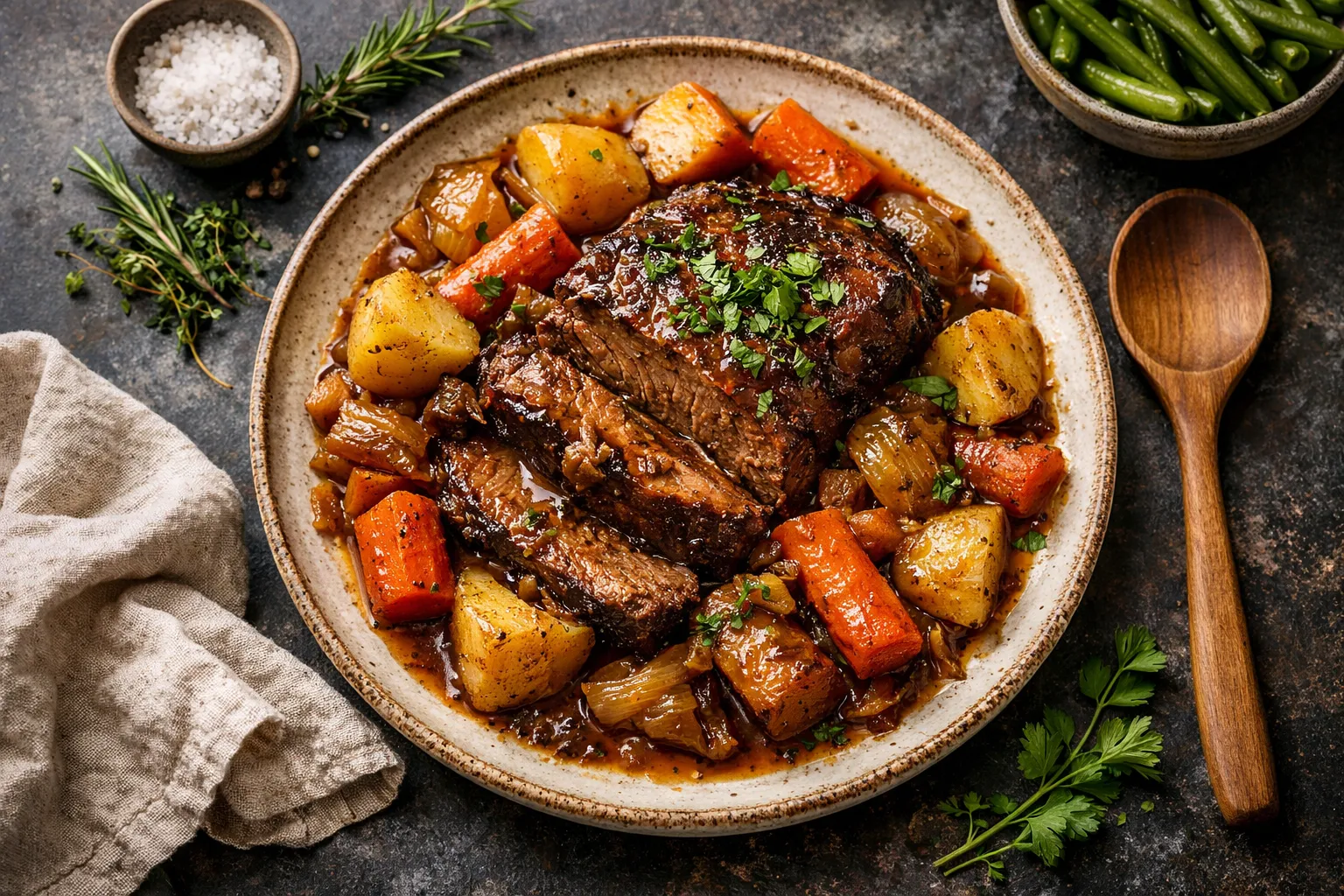
One more tip that makes a huge difference: buy a boneless roast and ask the butcher to tie the bones back on. You get the flavor and insulation of bone-in cooking with the easy carving of boneless — the best of both worlds. Add a generous coat of kosher salt and a fresh garlic-herb rub, and you've got a true holiday showstopper that's far easier than it looks.
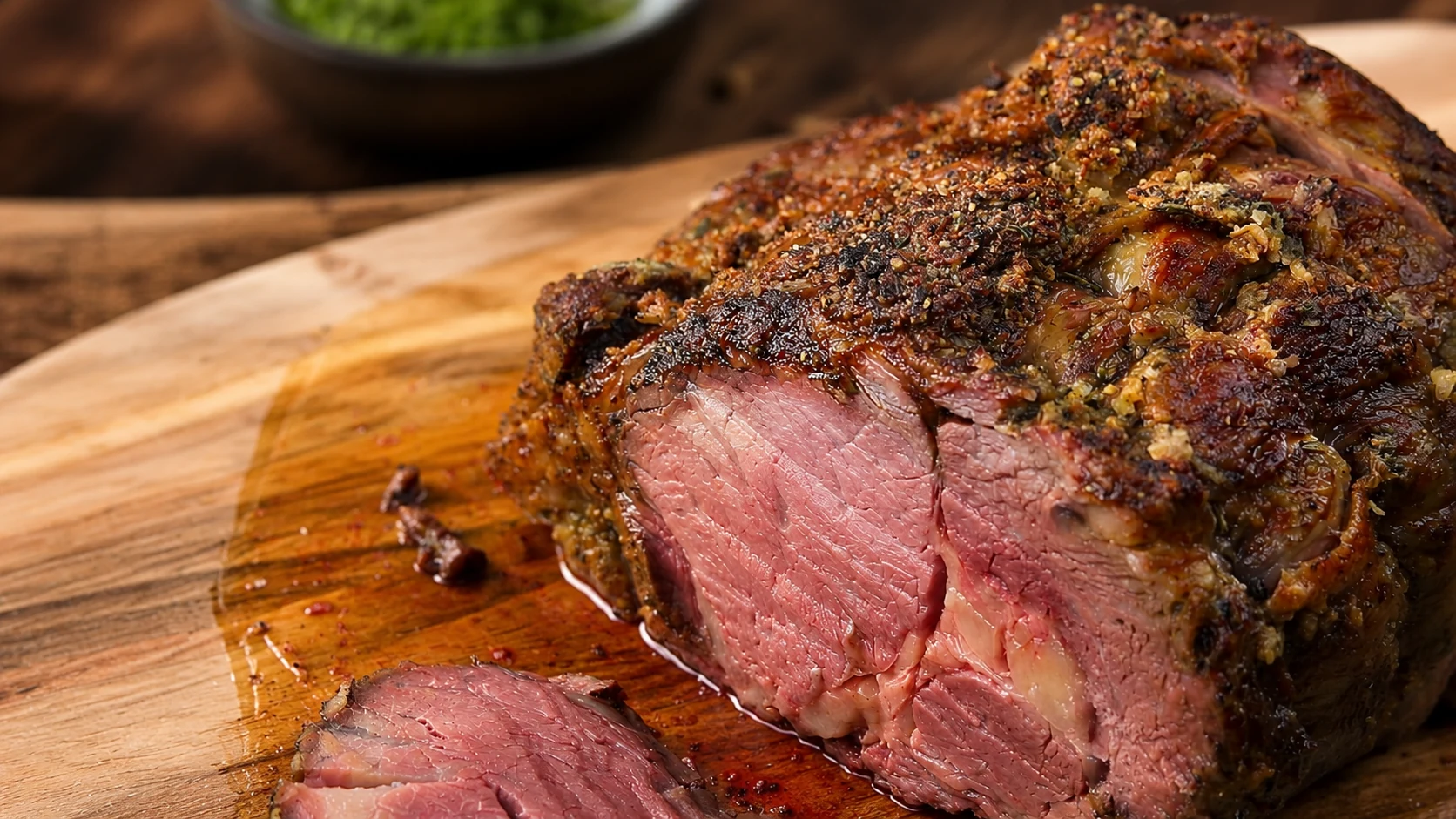
Ingredients for Prime Rib
You only need a handful of simple ingredients (exact measurements are in the recipe card below):
- Prime rib roast — About 5–7 lbs. Buy it boneless with the bones tied back on, USDA Choice or Prime grade, and plan on roughly 1 pound per person.
- Kosher salt — Used generously to season the roast all over, plus a little in the rub. Reach for coarse kosher salt, not fine table salt.
- Fresh garlic, rosemary & thyme — The base of the garlic-herb rub. Fresh, not dried, for the best aroma and crust.
- Extra-virgin olive oil — Binds the rub into a paste so it clings to the roast.
- Freshly ground black pepper — On the roast and in the rub.
Substitutions & Variations
- Boneless roast with bones tied back: A true bone-in standing rib roast works too and carves into dramatic individual portions — just expect a little more effort at the table. A boneless ribeye roast is the easiest option for beginners.
- Garlic-herb rub: Swap the rosemary and thyme for fresh oregano and a couple of bay leaves — Dominican kitchen staples — for an earthier, Caribbean-leaning crust.
- Kosher salt seasoning: Replace part of the salt with Dominican sazón completo or a jerk blend for a warm-spiced, fusion prime rib with allspice and annatto notes.
- Olive oil: Stir a spoonful of sofrito into the oil to fold fresh cilantro, peppers, and onion into the rub for extra aromatic depth.
- Horseradish sauce: Not a fan of horseradish? A bright chimichurri or a garlicky mojo sauce cuts the richness just as well.
How to Make Prime Rib
The active work here is minimal — most of the time is hands-off while the roast comes to temperature and cooks. Here's the method, step by step.
- Dry and temper the roast. Pat the prime rib completely dry with paper towels — a dry surface is essential for a crackling crust. Let it sit at room temperature for about 3 hours so it cooks evenly.
- Make the garlic-herb rub. Combine minced garlic, rosemary, thyme, ½ tablespoon kosher salt, olive oil, and black pepper into a paste. Set aside.
- Season generously. Coat the roast all over with kosher salt, then spread the garlic-herb rub over the top and sides and add more black pepper. Set it on a wire rack in a roasting pan.
- Roast hot, then low. Roast at 500°F for 20 minutes to build the crust and render the fat, then reduce the oven to 325°F and continue for 11–12 minutes per pound.
- Cook to temperature. Insert a meat thermometer into the center and pull the roast at 120°F for medium-rare. A 7-pound roast takes about 1½ hours after you reduce the heat.
- Rest. Tent the roast loosely with foil and rest for 30 minutes; the temperature rises about 10°F as it rests.
- Carve and serve. Snip the twine, lift away the bones, and carve into thick slices. Serve with au jus or creamy horseradish sauce.
What to Serve With Prime Rib
Creamy horseradish sauce is practically non-negotiable with prime rib – that sharp, sinus-clearing bite cuts through the rich beef fat like nothing else. I make mine with fresh grated horseradish, heavy cream, and a touch of Dijon for extra complexity.
For something heartier, try garlicky mojo potatoes alongside this beauty. The bright, garlicky Dominican flavors are a perfect contrast to the deep, savory meat, and the crispy edges soak up the prime rib juices like little golden sponges.
Yorkshire pudding might seem fancy, but it's just the British way of making sure no drop of that precious beef drippings goes to waste. These airy, eggy cups puff up in the same pan drippings for the ultimate comfort-food pairing.
Round out the plate with something green and bright — roasted asparagus, garlicky green beans, or a crisp salad with a sharp vinaigrette all cut the richness of the beef. And don't skip a bold glass of red; a Cabernet Sauvignon or Malbec stands up beautifully to a prime rib roast.
Frequently Asked Questions
1. What is the trick to the best prime rib?
A blazing-hot oven start. Roasting at 500°F for the first 20 minutes renders the fat cap and builds a deep, crackling crust, then dropping to 325°F finishes the roast gently so the center stays juicy.
2. What temperature do you cook prime rib at?
Start at 500°F for 20 minutes, then reduce to 325°F and roast about 11–12 minutes per pound until the center reaches 120°F for medium-rare.
3. Should I cook prime rib low and slow?
Low and slow keeps the fat from fully rendering and leaves a pale crust. A high-heat start is what gives you the crispy, well-rendered exterior that makes prime rib special.
4. Should I buy bone-in or boneless prime rib?
Get the best of both: buy a boneless roast and ask the butcher to tie the bones back on. You get the bones' flavor and insulation with easy, no-fuss carving.
5. What internal temperature is medium-rare prime rib?
Pull the roast at 120°F. It rises about 10°F while resting, landing at a perfect medium-rare around 130°F.
6. How long does prime rib take to cook?
About 11–12 minutes per pound at 325°F after the initial 500°F sear. A 7-pound roast takes roughly 1½ hours after you reduce the heat, plus a 30-minute rest.
7. Do I need to bring prime rib to room temperature?
Yes — let it sit out about 3 hours before roasting. A cold roast cooks unevenly and drops your oven temperature when it goes in.
8. Why pat the roast dry?
Surface moisture steams instead of searing. Drying the roast thoroughly with paper towels is what lets it form that crackling, caramelized crust.
9. How long should prime rib rest?
Tent it loosely with foil and rest for 30 minutes. This lets the juices redistribute and the temperature climb to its final mark before you carve.
10. What cut and grade should I buy?
A rib roast in USDA Choice or Prime grade. Prime has the most marbling and flavor if you're splurging. Plan on about 1 pound per person.
11. How much prime rib per person?
About 1 pound per person raw, which yields roughly half a pound cooked. For 8 guests, buy a 7–8 pound roast.
12. What do you serve with prime rib?
Au jus or creamy horseradish sauce, plus mashed or roasted potatoes, Yorkshire pudding, and a bright green vegetable.
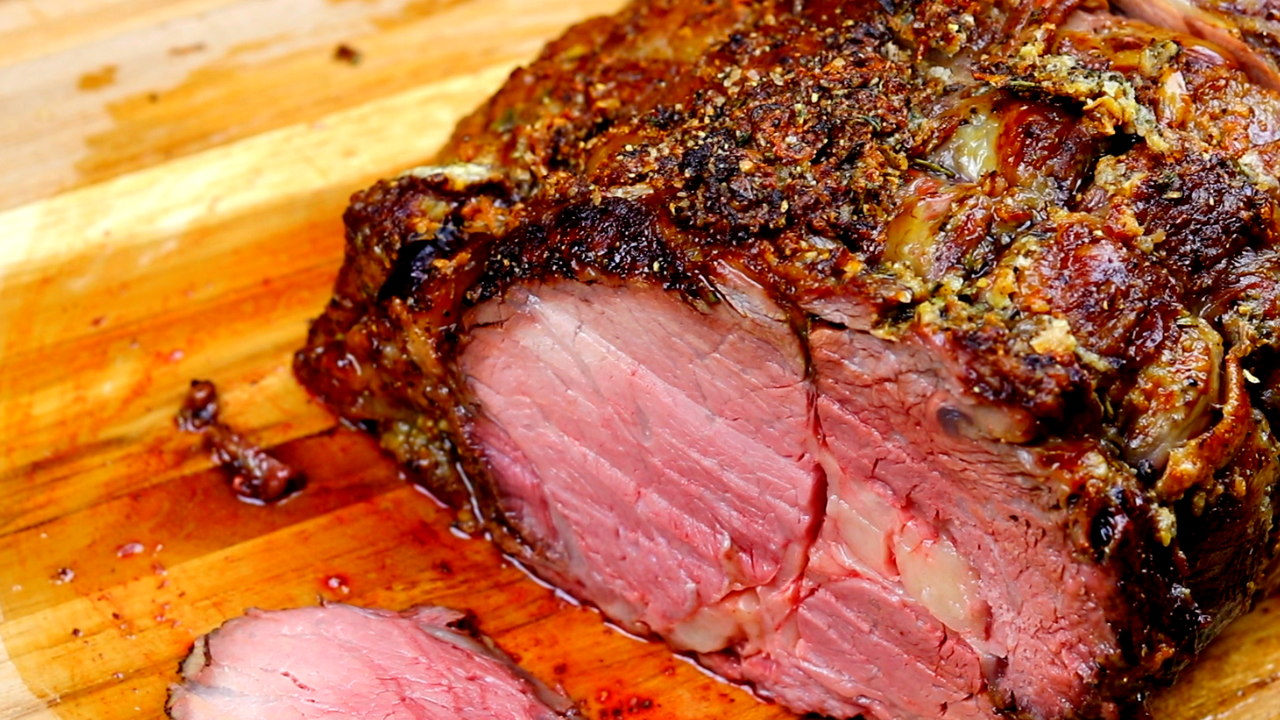
Garlic Crusted Prime Rib
Ingredients
Method
- Remove the prime rib from its packaging and pat it completely dry with paper towels — a dry surface is what gives you that crackling, crispy crust. Let the roast sit at room temperature for about 3 hours before cooking. A cold roast straight from the fridge cooks unevenly and drops your oven temperature.
- While the roast comes to temperature, combine the minced garlic, rosemary, thyme, ½ tablespoon kosher salt, olive oil, and black pepper in a small bowl. Mix into a paste and set aside.
- Once the roast is at room temperature, season it generously all over with kosher salt so it is flavored from the inside out. Spread the garlic-herb rub over the top and sides, then add a little more freshly ground black pepper. Transfer the roast to a wire rack set in a roasting pan.
- Preheat the oven to 500°F and roast for 20 minutes — the blast of high heat renders the fat and builds that deep, crackling crust. Then reduce the oven to 325°F and continue roasting for 11–12 minutes per pound. High heat is the secret here; low-and-slow alone never renders the fat the same way.
- Insert a meat thermometer into the center of the roast (this step is non-negotiable). When it reads 120°F for a medium-rare center, take the roast out of the oven. A 7-pound roast takes about 1½ hours after you reduce the heat.
- Tent the roast loosely with aluminum foil and rest for 30 minutes. The internal temperature will rise about 10°F as it rests, carrying it to a perfect medium-rare.
- Snip the butcher's twine and lift away the bones — easy, since they were tied back on. Carve into thick slices (prime rib is so tender that thin slices fall apart) and serve with au jus or horseradish sauce.
Nutrition
Video
Notes
Ask the butcher for a boneless roast with the bones cut and tied back on. You get the flavor and insulation of bone-in with the easy carving of boneless — the best of both worlds. Pat the roast bone-dry before seasoning. Any surface moisture steams instead of searing, and that is the difference between a gray exterior and a deep, crackling crust. Do not skip the 3 hours at room temperature. A cold roast drops the oven temperature and cooks unevenly, leaving you with an overdone outer ring around a cold center. Use a meat thermometer and pull at 120°F for medium-rare — it climbs another ~10°F while resting. If you are splurging, spring for a Prime grade roast; the extra marbling is worth it for a holiday centerpiece.
Leave a Reply