
Pot roast is patience in food form. A tough inexpensive cut of beef — chuck roast — breaks down over hours in liquid until the collagen converts to gelatin and the meat becomes something that falls apart at the touch of a fork. You cannot rush that process. You can only set it up right and let time do the work.
The vegetables that cook with it absorb everything. Do not skip them.
This pot roast recipe turns a tough, inexpensive chuck roast into the most tender, savory, fall-apart beef you have ever tasted. Low and slow braising in a Dutch oven with red wine, beef broth, and aromatic vegetables transforms a five-dollar cut into something that tastes like a hundred-dollar meal. Every Sunday dinner deserves this on the table.
Looking for a Dominican twist on the classic? Try my Slow Cooker Dominican Pot Roast (Carne Guisada Style) — same comfort-food energy, with sofrito, sazón, and lime.
Pot Roast Video
About This Recipe
Pot roast is the definition of American comfort food, and for good reason. The technique is simple — sear a big piece of beef, nestle it into a pot with vegetables and liquid, then let time and low heat do all the work. What comes out of the oven after a few hours is meat so tender it practically falls apart when you look at it, surrounded by vegetables that have absorbed all of those rich, beefy juices. Growing up in a Dominican household, I watched my abuela work similar magic with her pollo guisado and beef stews, teaching me that the best meals aren't about fancy techniques — they're about patience, good ingredients, and letting flavors develop naturally.
The secret to a great pot roast is the cut of meat, and this is where I get a little obsessed. Chuck roast comes from the shoulder of the cow, which is loaded with connective tissue and collagen. That sounds like a bad thing, but when you cook it low and slow, all that tough tissue melts into gelatin — and that is what gives pot roast its silky, rich texture that no lean cut can match. This is one of those rare dishes where the cheapest cut of beef gives you the best result. It's like finding gold in your backyard, hermano. I always tell people: embrace the tough cuts, because they're where the real flavor lives.
What makes this recipe special is how I build the flavor in layers, just like my Dominican grandmother taught me with her sofrito. I start with a hard sear on the beef — and I mean HARD, until it's practically black in spots — then build a proper mirepoix of carrots, onion, and celery. The tomato paste gets cooked until it's almost jammy, the garlic becomes fragrant, and then comes my secret weapon: a full cup of dry red wine that reduces down into liquid gold. The potatoes and larger carrot pieces go in later so they don't turn to mush, because nobody wants vegetables that look like they gave up on life. The result is a complete one-pot meal that fills your house with the most incredible aroma for hours — the kind that makes your neighbors suddenly very friendly.
Ingredients
- 1 chuck beef roast, 4-5 lbs
- Kosher salt and black pepper
- 8 carrots, peeled — 4 chopped small for mirepoix, 4 chopped into larger pieces for the roast
- 1 medium yellow onion, peeled and roughly chopped
- 4 ribs celery, washed and chopped
- 1 tablespoon tomato paste
- 4 cloves garlic, minced
- 2 bay leaves
- 2 sprigs of rosemary
- 2 sprigs thyme
- 4 cups low sodium beef broth
- 1 cup dry red wine
- 4 red potatoes, quartered
Substitutions & Variations
- Chuck roast — bottom round or brisket flat work as alternatives, though chuck gives the most tender, fall-apart result.
- Red wine — substitute additional beef broth if you prefer not to cook with alcohol. The wine adds depth but is not essential.
- Red potatoes — Yukon Gold potatoes hold their shape well too. Sweet potatoes add a different flavor twist.
- Fresh herbs — 1 teaspoon each of dried rosemary and dried thyme can replace the fresh sprigs.
- Tomato paste — 2 tablespoons of ketchup or ¼ cup crushed tomatoes work in a pinch.
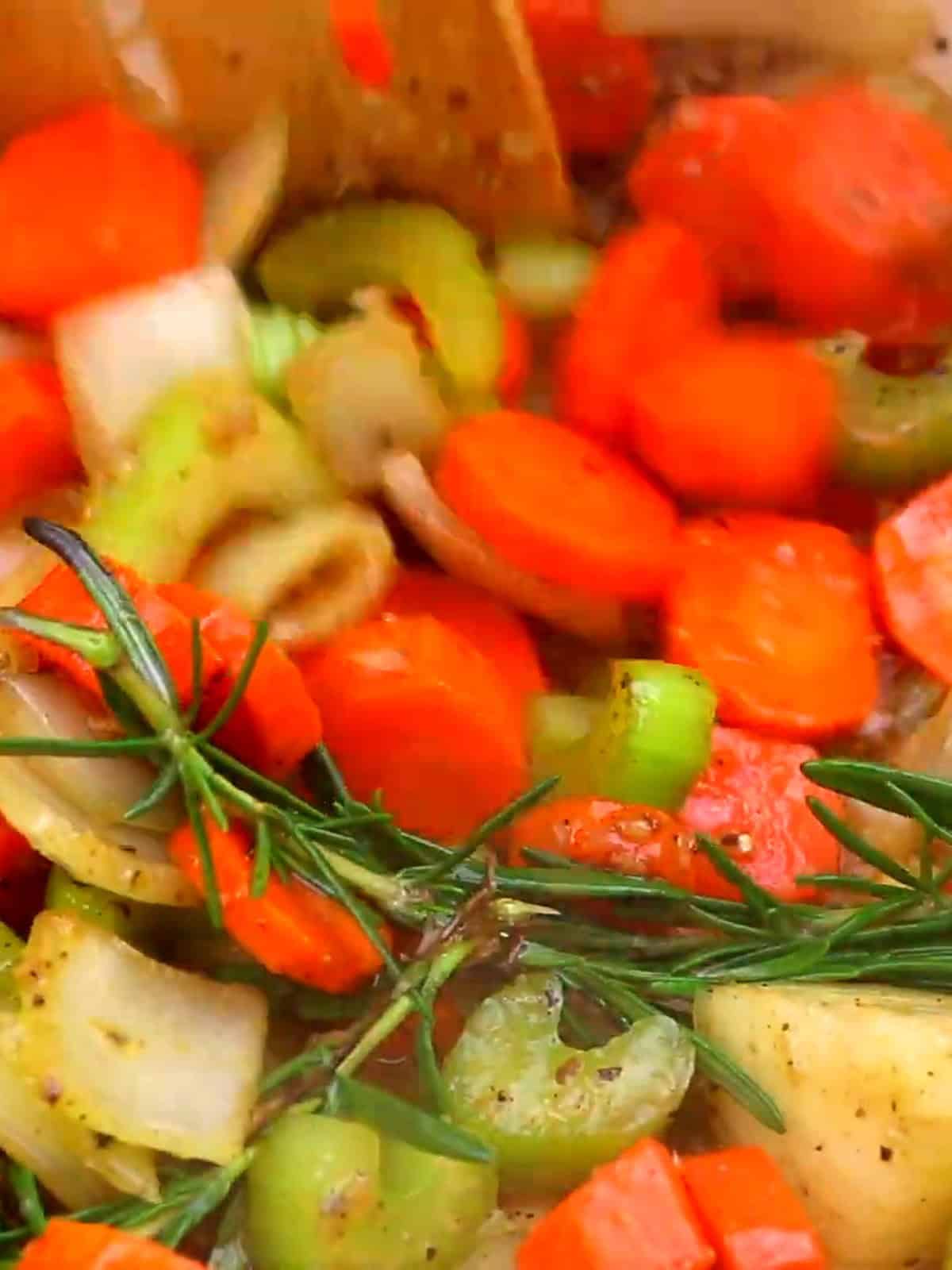
How to Make Pot Roast
- Season the chuck roast generously with kosher salt and black pepper on all sides.
- In a Dutch oven over medium-high heat, sear the roast on all sides until deeply browned, about 3-4 minutes per side. Remove and set aside.
- In the same pot, add the chopped mirepoix vegetables (4 small-chopped carrots, onion, and celery). Cook until softened, about 5 minutes.
- Add the tomato paste and minced garlic. Stir and cook for 1 minute until fragrant.
- Pour in the red wine and scrape up all the browned bits from the bottom of the pot. Let it reduce by half, about 3 minutes.
- Add the beef broth, bay leaves, rosemary sprigs, and thyme sprigs. Return the seared roast to the pot.
- Cover with a tight-fitting lid and transfer to a preheated 325°F oven. Braise for 3 hours.
- After 3 hours, add the quartered red potatoes and the larger carrot pieces. Cover and return to the oven for 1 more hour.
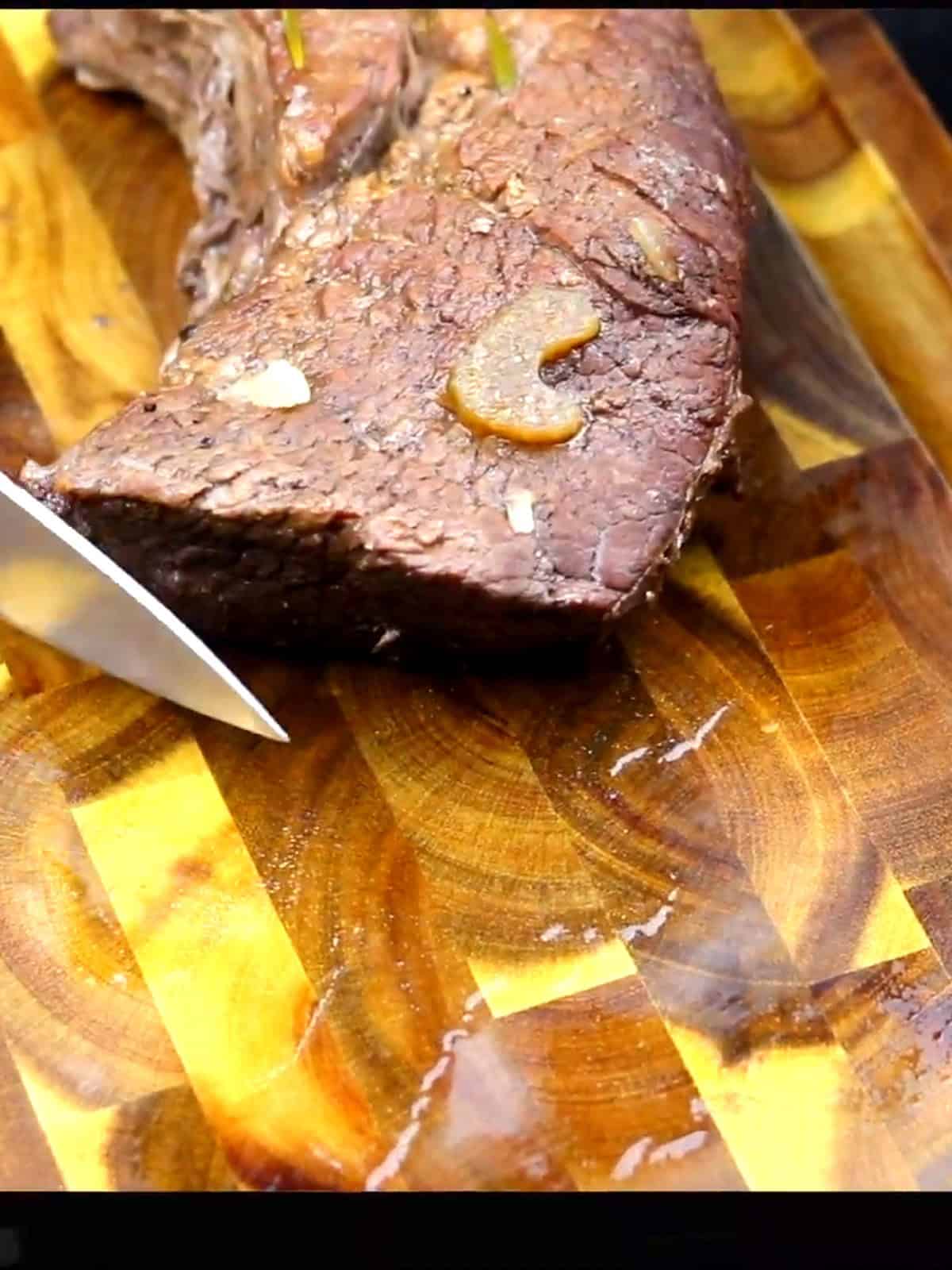
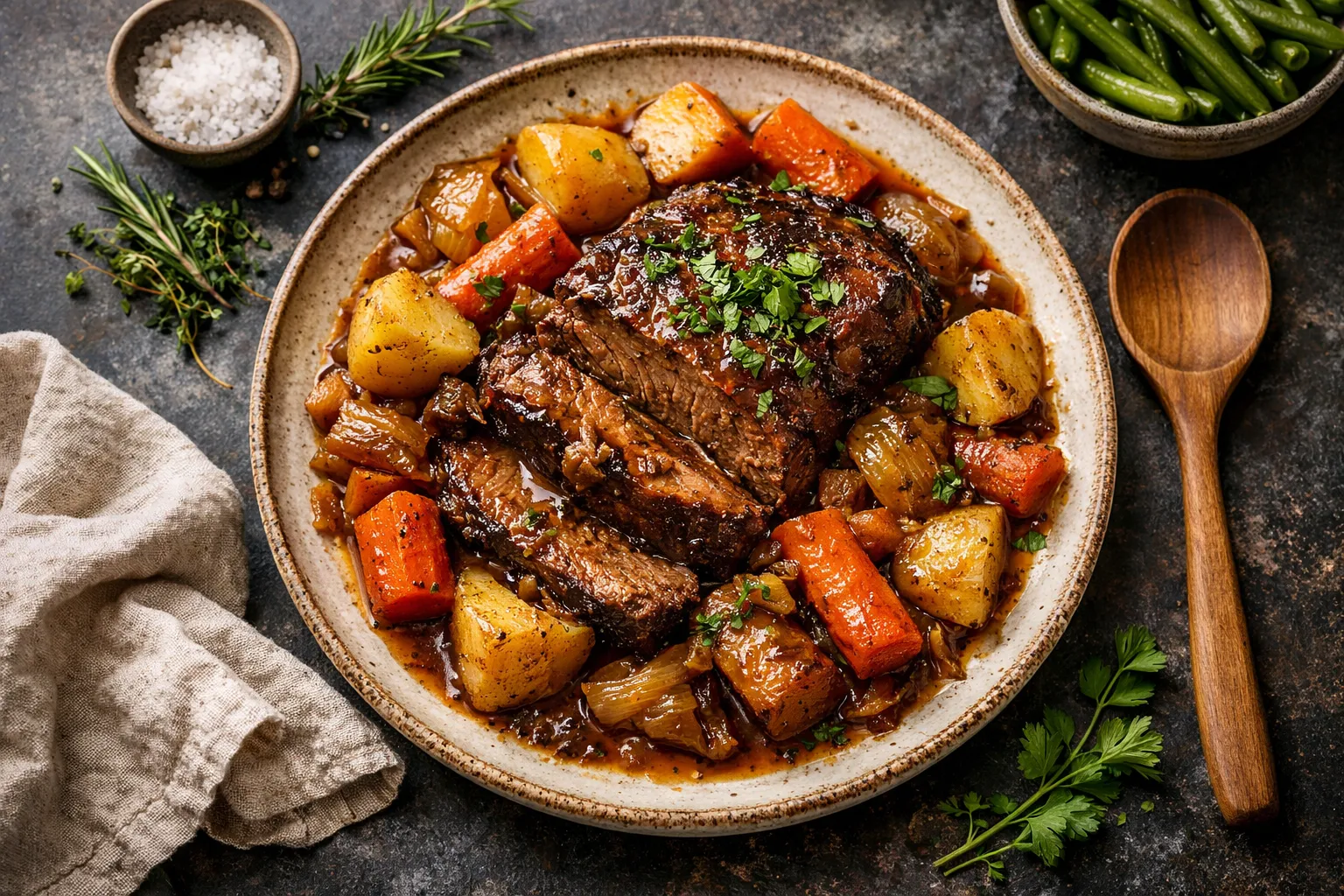
- The roast is done when the meat is fork-tender and pulls apart easily. Remove the bay leaves and herb sprigs before serving. Spoon the vegetables and braising liquid over the sliced or pulled beef.
What to Serve With Pot Roast
Crusty bread is non-negotiable with pot roast — you need something to soak up all that incredible braising liquid at the bottom of the pot. A warm, thick-sliced sourdough or French bread turns the pot juices into a meal all on their own.
For a lighter side, a simple Italian bruschetta or a crisp green salad with a tangy vinaigrette cuts through the richness of the beef beautifully. The acidity and crunch provide the perfect contrast to the tender, savory meat.
If you want to go all in on comfort food, serve it over a bed of creamy mashed potatoes or egg noodles. The combination of silky potatoes or noodles with the fall-apart beef and rich gravy is the kind of meal that makes everyone at the table go quiet because they are too busy eating.
Frequently Asked Questions
1. What is the best cut of beef for pot roast?
Chuck roast is the best choice. It comes from the shoulder and has plenty of connective tissue that breaks down into gelatin during slow cooking, giving you the most tender and flavorful result.
2. How long does pot roast take to cook?
About 4 hours total in a 325 degree oven — 3 hours for the beef alone, then 1 more hour after adding the potatoes and larger carrots. The meat should be completely fork-tender before serving.
3. Can I make pot roast in a slow cooker?
Yes. Sear the meat and build the base on the stovetop, then transfer everything to a slow cooker. Cook on low for 8-10 hours or high for 5-6 hours. Add the potatoes during the last 2 hours.
4. Do I need to use red wine?
No, but it adds tremendous depth of flavor. Substitute an equal amount of beef broth if you prefer. A splash of balsamic vinegar can mimic some of the wine's acidity.
5. Why is my pot roast tough?
It needs more time. Tough pot roast means the collagen has not fully broken down yet. Return it to the oven and check every 30 minutes. The meat should pull apart with almost no resistance when done.
6. Can I make pot roast ahead of time?
Pot roast is actually better the next day. The flavors deepen overnight in the refrigerator. Reheat gently on the stovetop or in a 300 degree oven, covered, until warmed through. The fat will solidify on top and can be easily skimmed off.
7. What temperature should the oven be?
325 degrees is the sweet spot. Low enough to gently braise the meat without drying it out, high enough to maintain a steady simmer in the braising liquid. Going higher risks tough, dry meat.
8. How should I cut the vegetables for the best results?
Cut your carrots into 2-3 inch chunks and celery into similar sized pieces to ensure they don't overcook and turn mushy. The onion should be roughly chopped into large wedges so it holds its shape during the long braising process while still releasing its flavors.
9. How do I properly store leftover pot roast?
Store leftover pot roast in the refrigerator for up to 4 days in an airtight container, keeping the meat submerged in its cooking juices to prevent drying out. For longer storage, freeze portions for up to 3 months, and always reheat gently with a splash of beef broth to maintain moisture.
10. Can I substitute other vegetables in this recipe?
Absolutely! Root vegetables like parsnips, turnips, or small potatoes work wonderfully and complement the Caribbean flavors. You can also add plantains in the last hour of cooking for a distinctly Dominican touch that pairs beautifully with the savory beef.
11. What should I do if my pot roast is cooking too quickly or slowly?
If it's cooking too fast and the liquid is bubbling vigorously, reduce your oven temperature by 25°F and cover more tightly with foil. If it's cooking too slowly, increase the temperature slightly and check that your oven is properly calibrated, as some run cooler than their settings indicate.
12. What are the best side dishes to serve with this pot roast?
Classic pairings include mashed yuca (cassava), rice and beans, or creamy mashed potatoes to soak up the rich gravy. For a true Caribbean flair, serve alongside sweet plantains, steamed cabbage, or a simple salad with avocado to balance the richness of the meat.
Ingredients
Equipment
Method
- Season the chuck roast generously with kosher salt and black pepper on all sides.
- In a Dutch oven over medium-high heat, sear the roast on all sides until deeply browned, about 3-4 minutes per side. Remove and set aside.
- In the same pot, add the chopped mirepoix vegetables (4 small-chopped carrots, onion, and celery). Cook until softened, about 5 minutes.
- Add the tomato paste and minced garlic. Stir and cook for 1 minute until fragrant.
- Pour in the red wine and scrape up all the browned bits from the bottom of the pot. Let it reduce by half, about 3 minutes.
- Add the beef broth, bay leaves, rosemary sprigs, and thyme sprigs. Return the seared roast to the pot.
- Cover with a tight-fitting lid and transfer to a preheated 325°F oven. Braise for 3 hours.
- After 3 hours, add the quartered red potatoes and the larger carrot pieces. Cover and return to the oven for 1 more hour.
- The roast is done when the meat is fork-tender and pulls apart easily. Remove the bay leaves and herb sprigs before serving. Spoon the vegetables and braising liquid over the sliced or pulled beef.
Nutrition
Video
Notes
• Use a heavy Dutch oven with a tight-fitting lid for the best results. The heavy pot retains heat evenly and the lid traps moisture.
• Let the meat rest for 10 minutes after removing from the oven before slicing or pulling. This lets the juices redistribute.
• Pot roast is even better the next day — the flavors deepen overnight in the fridge. Storage:
Store leftovers in an airtight container in the refrigerator for up to 4 days. Reheat gently on the stovetop or in a 300°F oven, covered. The fat will solidify on top in the fridge — skim it off or stir it back in for extra richness.
Tried this recipe?
Let us know how it was!Filed Under
Beef · Easy Dinner Ideas · Slow Cooker
You May Also Like
- Fall Off the Bone Pork Ribs
- Quick and Easy Glazed Ham Recipe
- The $5 Trick That Makes Prime Rib Beat Any Steakhouse

Leave a Reply