
Gochujang pork bowls are the kind of Korean weeknight dinner that converts skeptics into fans on the first bite. Ground pork browned hard in a screaming-hot pan, then glazed in a fermented Korean chili sauce — gochujang, soy, brown sugar, rice vinegar, sesame oil — until every grain is sticky, spicy, and just sweet enough. Pile it over white rice. Cool it down with thin-sliced cucumbers and shaved carrots. Crown it with a runny fried egg. Twenty minutes, one pan, zero excuses. This is the easiest Korean ground pork recipe you'll cook this year, and it's the one your kids will ask for by name.
I started making these gochujang pork bowls during a stretch where I was burned out on weeknight cooking. I needed something fast, satisfying, with real flavor — not another sheet-pan chicken. Gochujang pork bowls became the answer. Twenty minutes start to finish, one pan to wash, and the kind of bold spicy-sweet-umami payoff you usually only get at a Korean BBQ spot. Once you understand the sauce ratio — three tablespoons of gochujang to two of soy to one of brown sugar — you can swap proteins, change toppings, and run with it for the rest of your life.
This recipe feeds four, costs around $3 a serving, and gives you leftovers that reheat better than the original. Serve it Korean rice bowl style — pork over rice with cucumber, carrots, scallions, sesame seeds, and a fried egg — and you've got a complete dinner that beats takeout on price, flavor, and how-fast-it-hits-the-table. Read through the pro tips and FAQ below before you start. The sauce moves fast once the pan is hot, and a couple of small moves (don't cook the sesame oil, mix the sauce first, let the pork actually crust) are the difference between fine and great.
Kitchen Tools Used in This Recipe
As an Amazon Associate I earn from qualifying purchases.
What Is Gochujang?
Gochujang (고추장) is a Korean fermented red chili paste — the umami backbone of modern Korean cooking and the single most important ingredient in this recipe. It's made from gochugaru (Korean red chili powder), glutinous rice (mepssal or chapssal), fermented soybean powder (meju), and salt, mixed into a thick paste and aged in earthenware jars (onggi) for months — sometimes years — until the flavors deepen into something that's spicy, savory, a little smoky, and unmistakably funky in the best way. One tablespoon changes a dish. Three tablespoons in this gochujang sauce and you'll understand why Korean food hits the way it does.
You'll find gochujang in the Asian aisle of most major supermarkets, usually in a red plastic tub or a square red jar. Common brands: Chung Jung One, Sempio, CJ Haechandle, and Mother-in-Law's. Heat levels are printed on the tub in Korean — look for the GHU (Gochujang Hot-taste Unit) rating, where 1 is mild and 5 is volcanic. For most weeknight cooking, you want a level 2 or 3. Once opened, gochujang lives in the fridge essentially forever — fermentation just keeps going slowly. A single 17-ounce tub will get you through dozens of meals.
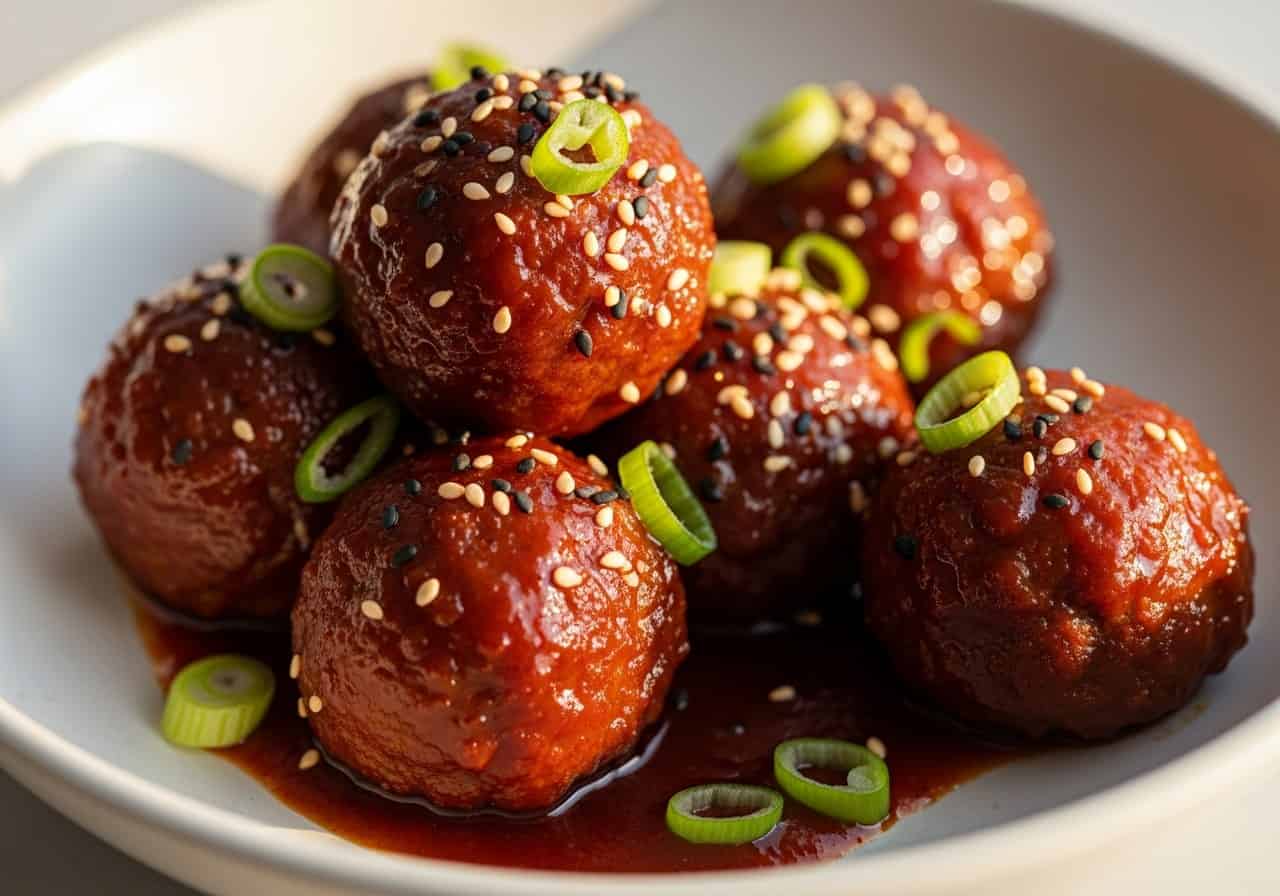
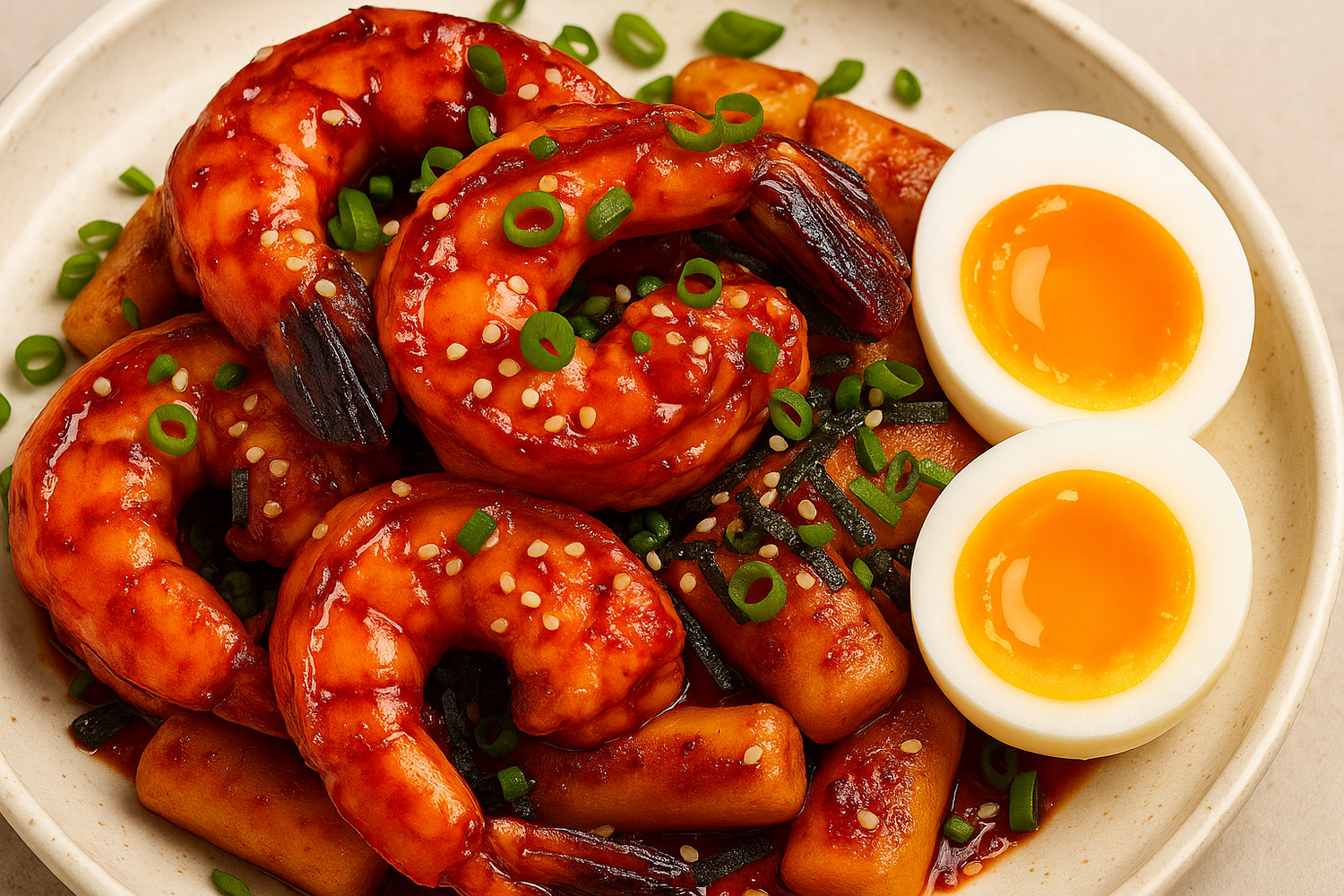
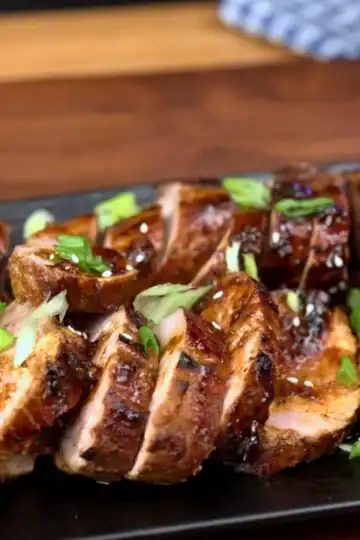
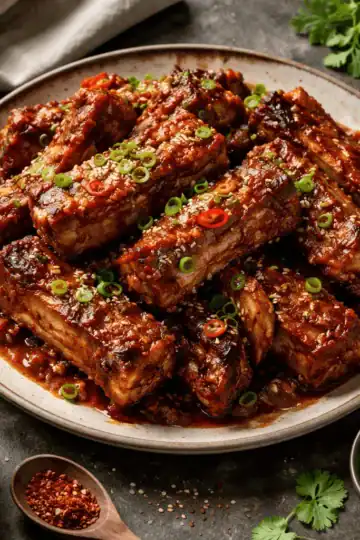
One thing to be clear about: gochujang is not Sriracha. They're not interchangeable. Sriracha is a chili-garlic hot sauce with vinegar and sugar — bright, sharp, and fresh. Gochujang is fermented — deep, savory, almost meaty. Sriracha lives on top of food. Gochujang melts into it. If you've only ever used Sriracha, your first taste of gochujang is going to be a moment. Other things gochujang is great in: Korean gochujang meatballs, gochujang shrimp with crispy rice cakes, gochujang-glazed pork tenderloin, and Korean-style spicy pork ribs.
How to Make Gochujang Pork Bowls
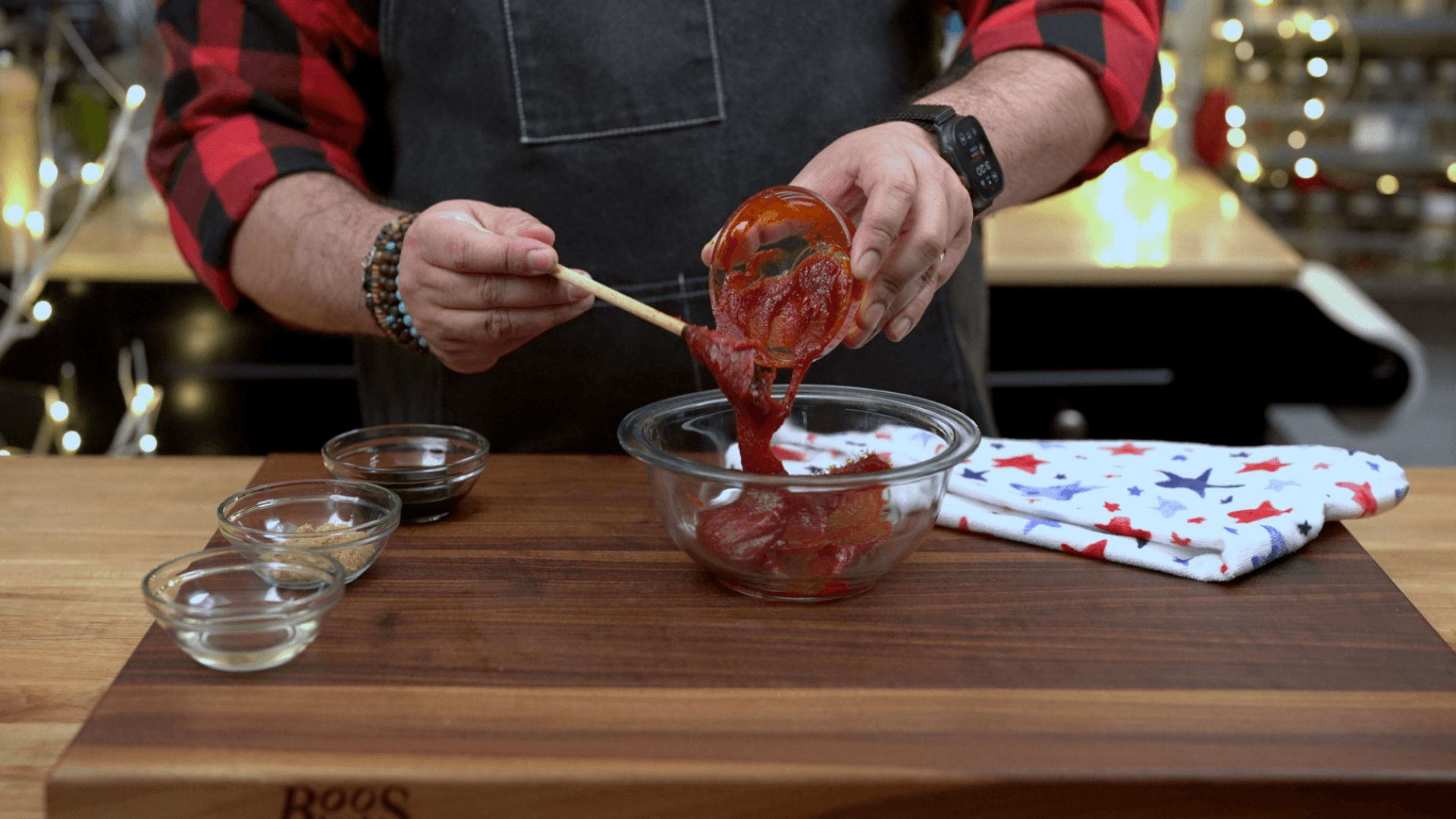
Step 1 — Mix the sauce before the pan ever sees heat. In a small bowl, whisk 3 tablespoons gochujang, 2 tablespoons soy sauce, 1 tablespoon brown sugar, and 1 tablespoon rice vinegar until smooth. Hold the sesame oil — you'll add that off-heat at the end. Set the sauce bowl right next to your pan with a spoon in it. Once this dish moves, it moves fast — a fumbling 30 seconds with a measuring spoon is the difference between glossy pork and burnt sugar.
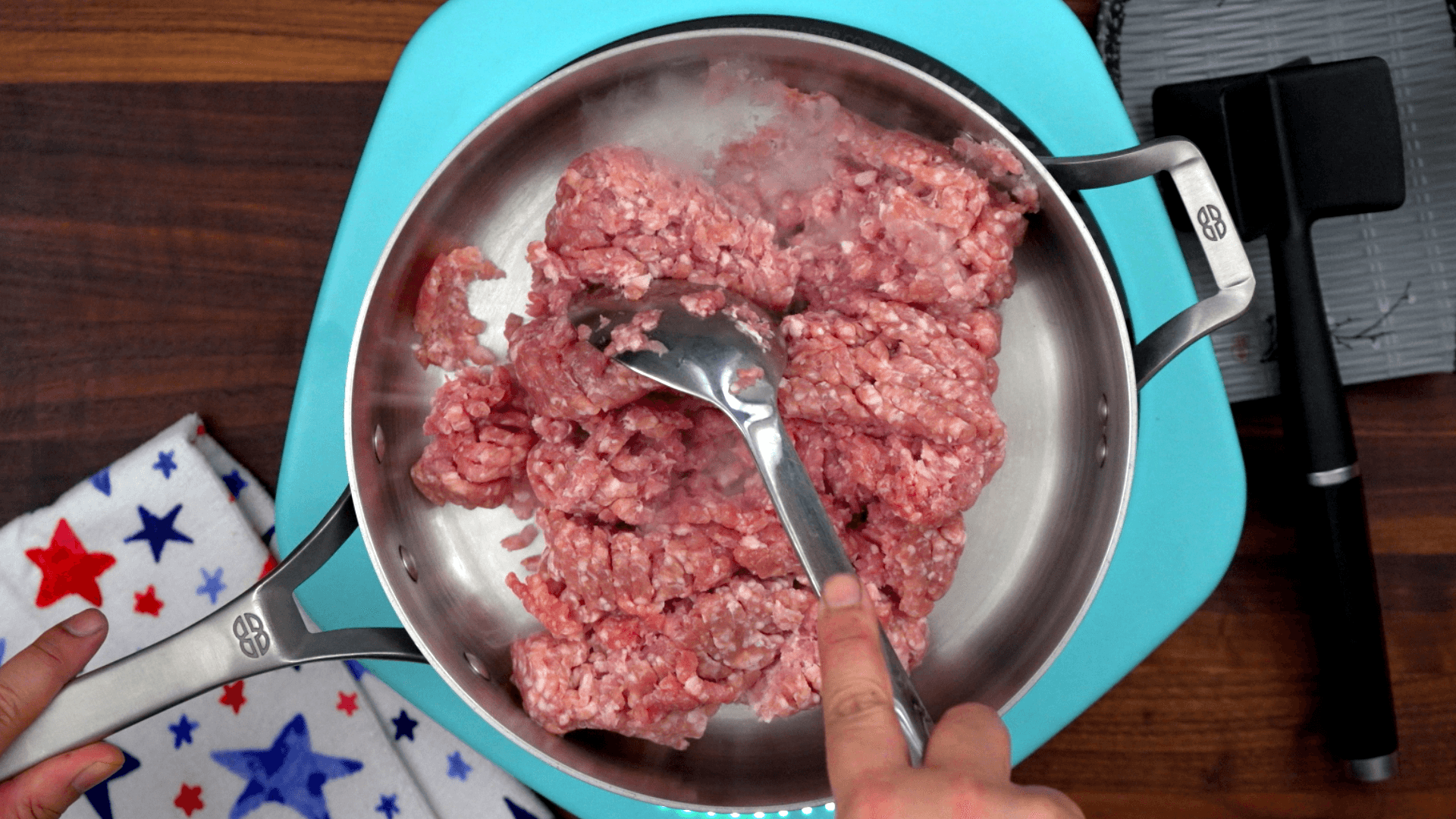
Step 2 — Brown the ground pork hard. Heat a large stainless steel or carbon steel skillet over HIGH heat for two full minutes. No oil yet — a 70/30 lean ground pork has plenty of fat to render. Add 2.33 pounds of ground pork to the dry pan and break it up into rough chunks with a spatula. Then walk away. Let the pork sit untouched for 2 full minutes — you want a real brown crust on the bottom of those clumps, not a uniform gray simmer. That crust is where 40% of the flavor lives.
Step 3 — Aromatics in, fast. Once the pork is mostly browned (still a few pink spots is fine), add 4 cloves of minced garlic and 1 teaspoon of freshly grated ginger. Stir for 60 seconds — your nose will tell you when they're done. Burnt garlic ruins this dish, so keep things moving the second the garlic and ginger hit the pan. If you're using a thinner pan and the pork looks dry, add 1 teaspoon of neutral oil here to help the garlic move around.
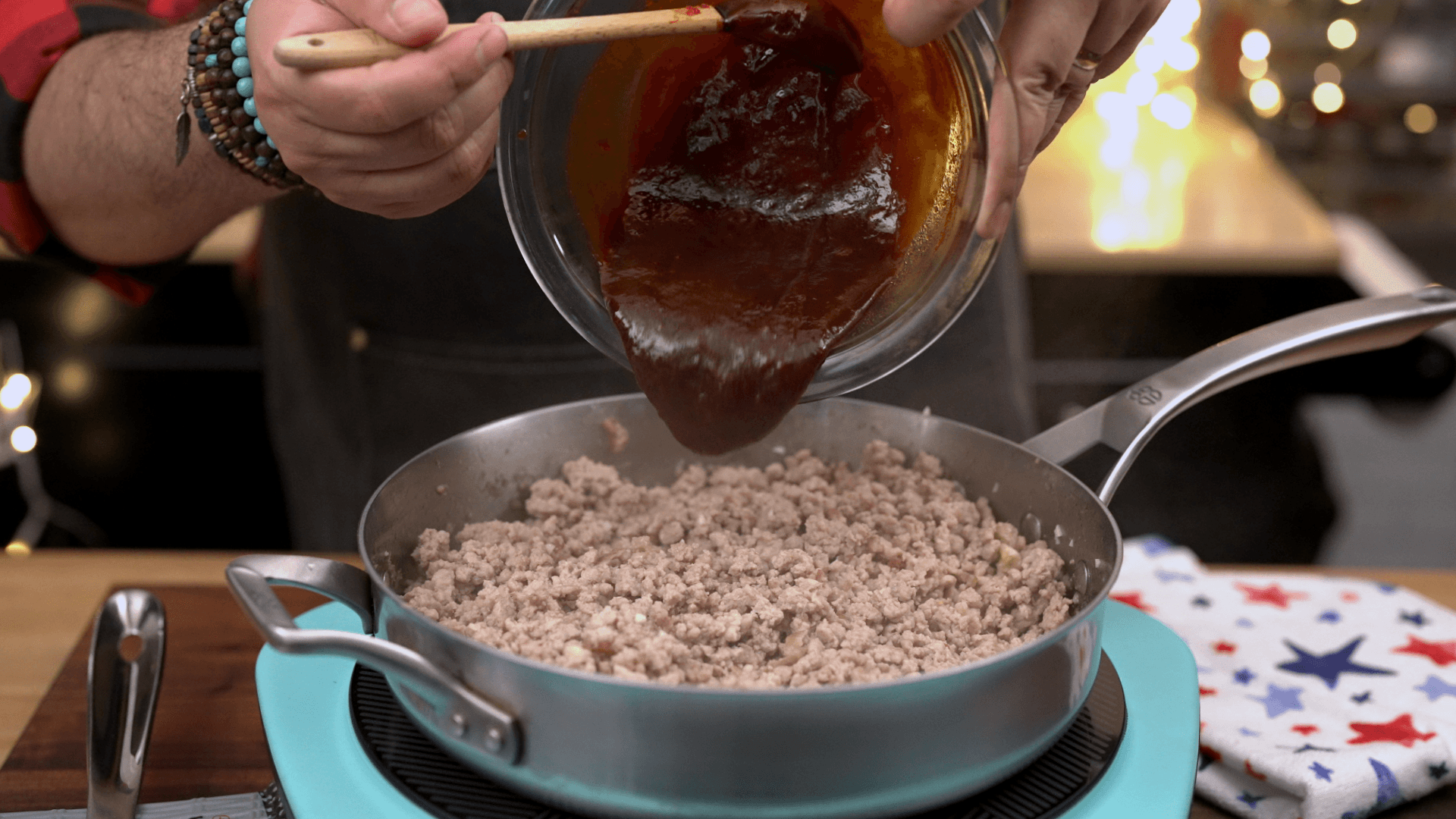
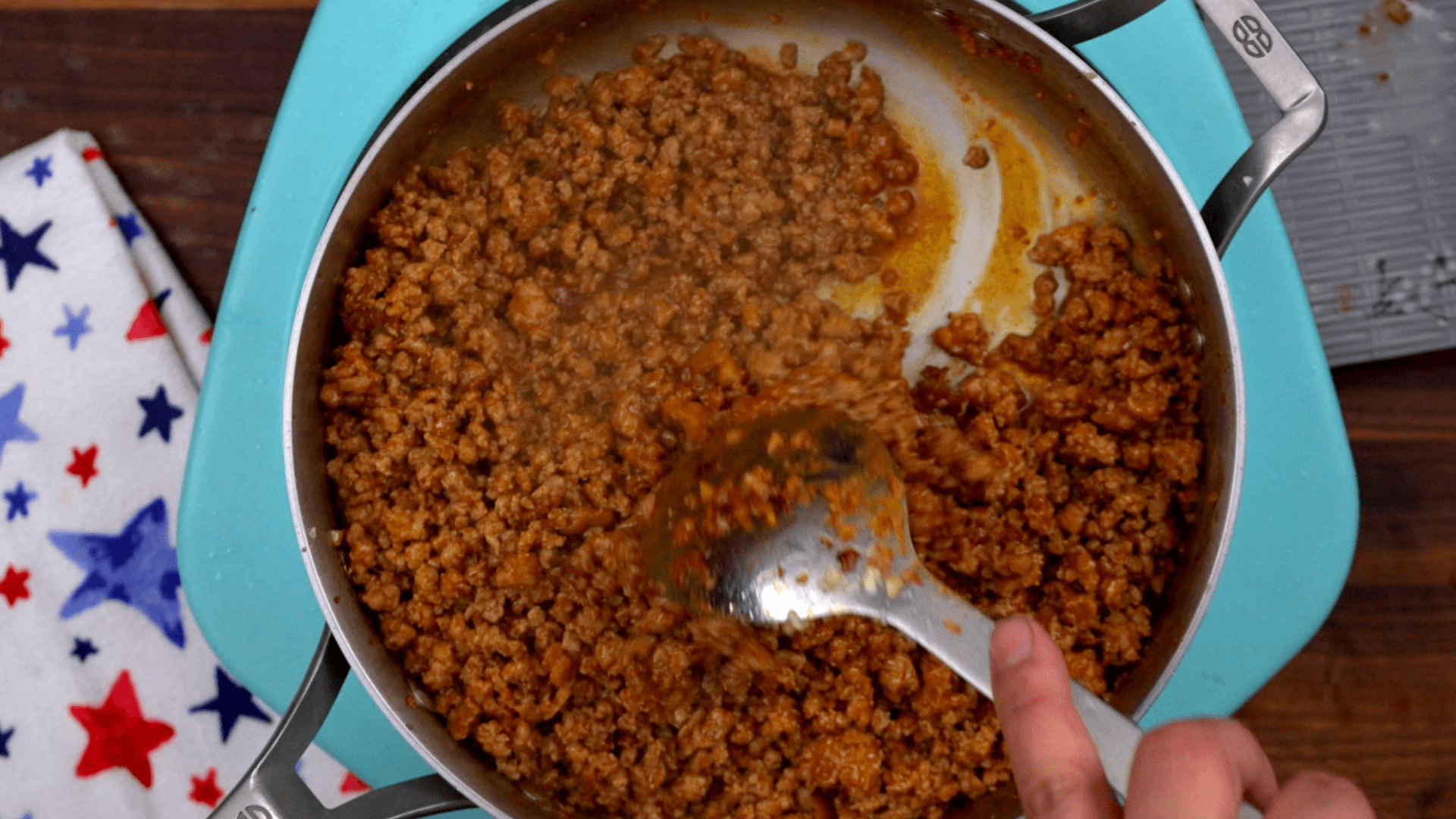
Step 4 — Pour the sauce, drop the heat, glaze. Pour the gochujang sauce over the pork all at once and toss everything to coat. Immediately drop the heat to medium. Simmer 2 minutes, stirring often, until the sauce thickens, darkens, and clings to every grain of pork. You're looking for glossy — not soupy, not dry. If it's too thick, splash in 1 tablespoon of water. If it's too thin, give it 30 more seconds.
Step 5 — Finish with sesame oil off heat. Pull the pan off the burner. Drizzle 1 tablespoon of toasted sesame oil over the pork and stir. Never cook sesame oil. Heat kills its nutty depth and turns it bitter — Korean cooks finish dishes with sesame oil, they don't sauté in it. This is the rule that separates Korean cooking from generic Asian-inspired weeknight dinners.
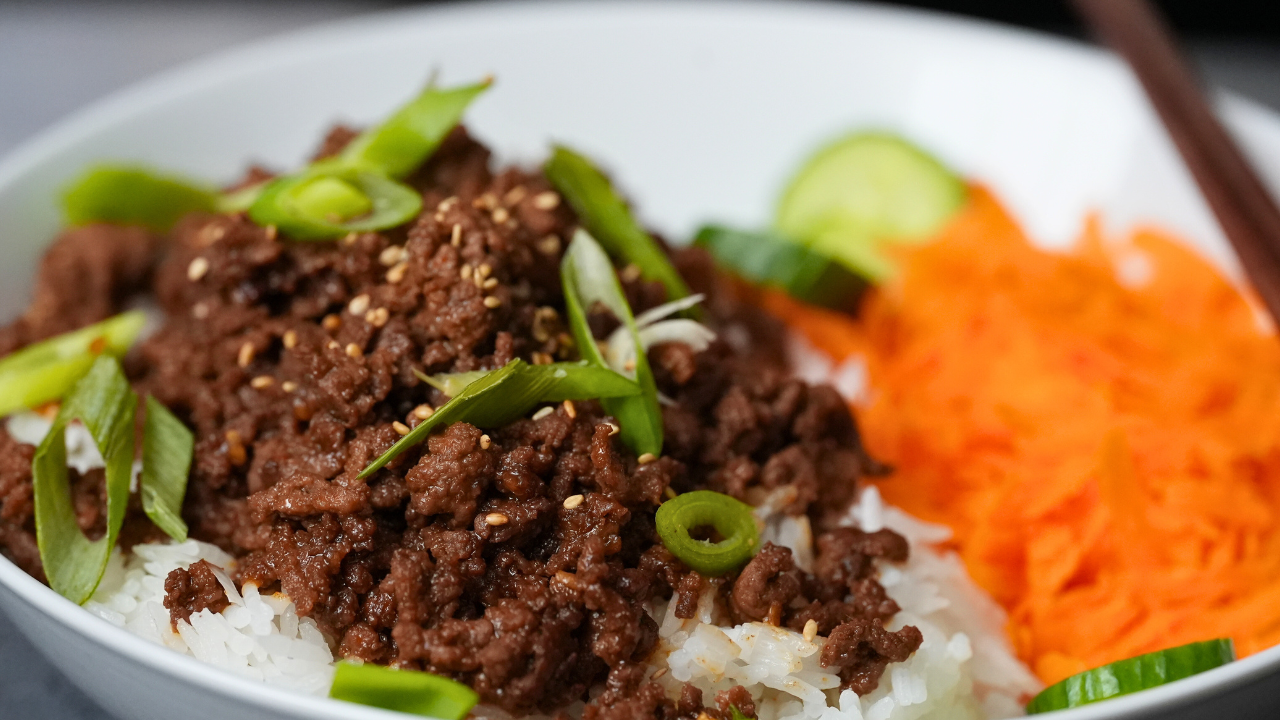
Step 6 — Prep the cool toppings. While the pork rests in the pan (5 minutes off heat does it no harm), slice 1 cup of mini cucumbers paper-thin — a horizontal spiralizer set to ribbon-blade gives you those signature curly rings you see in Korean banchan plates. If you don't have a spiralizer, a Y-peeler or a sharp knife works. Shave 1 cup of carrots into long ribbons with a Y-peeler. These cool, crunchy toppings aren't optional garnish — they're half of what makes a Korean rice bowl taste balanced instead of one-note spicy.
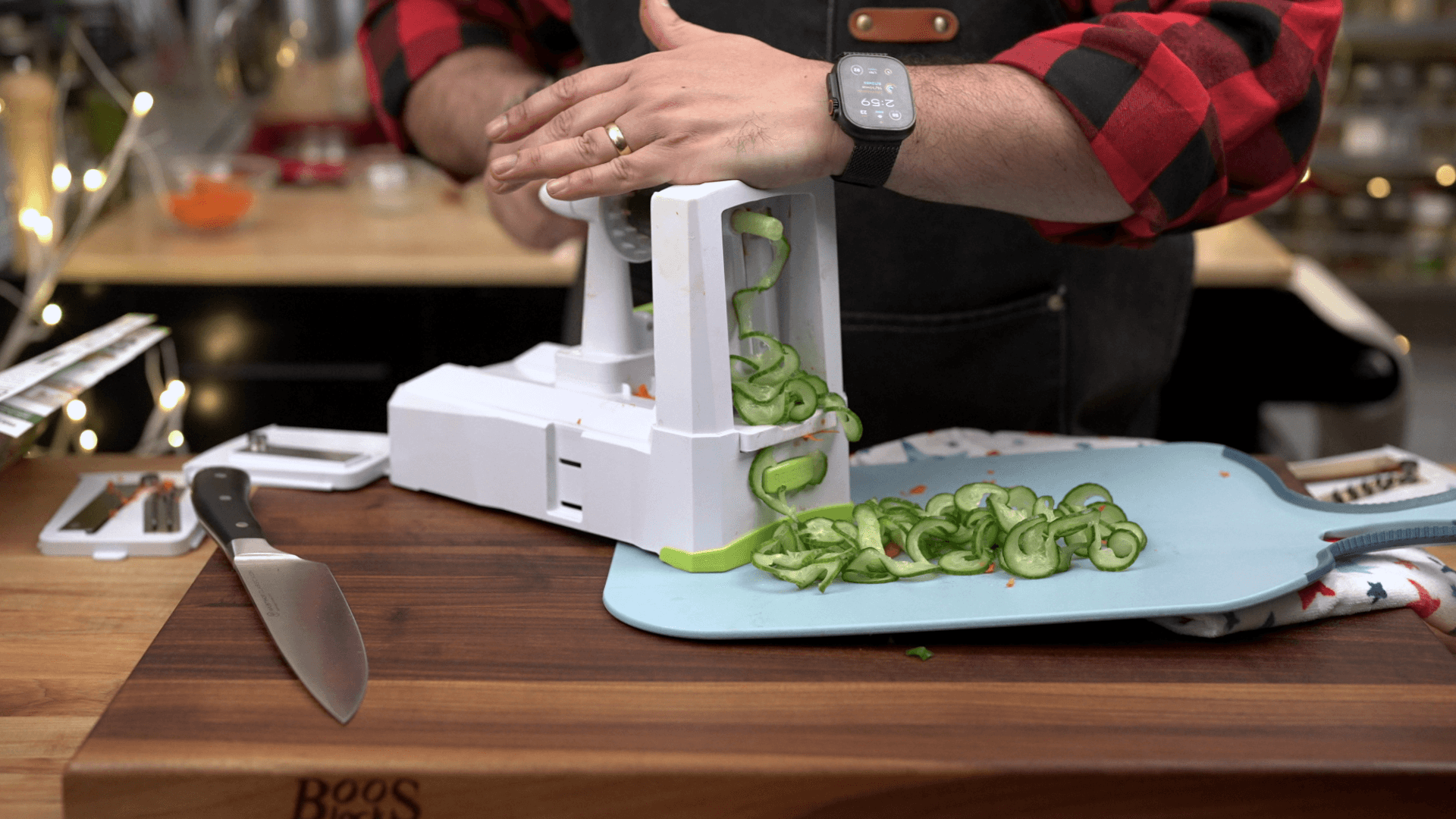
Step 7 — Fry the eggs runny. In a non-stick pan over medium heat with a teaspoon of neutral oil, fry one egg per bowl. Let the whites set for about 90 seconds, then drop the heat to low, add a teaspoon of water to the pan, and cover for 30 seconds to set the top of the white without overcooking the yolk. You want crispy lacy edges and a yolk that breaks like a flag at half-mast. Don't skip the egg — the runny yolk cutting through the spicy pork is the whole reason this dish hits the way it does.
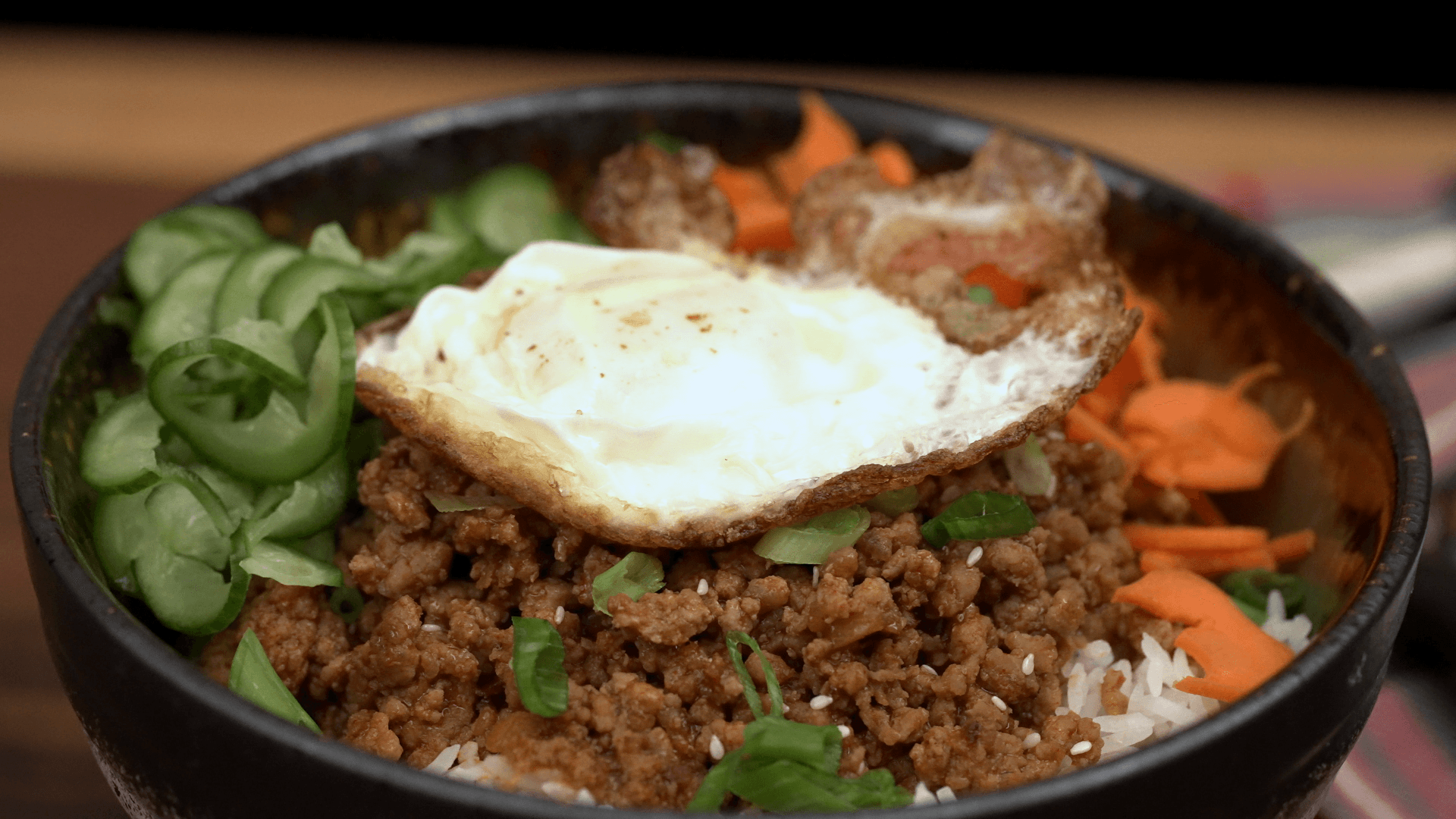
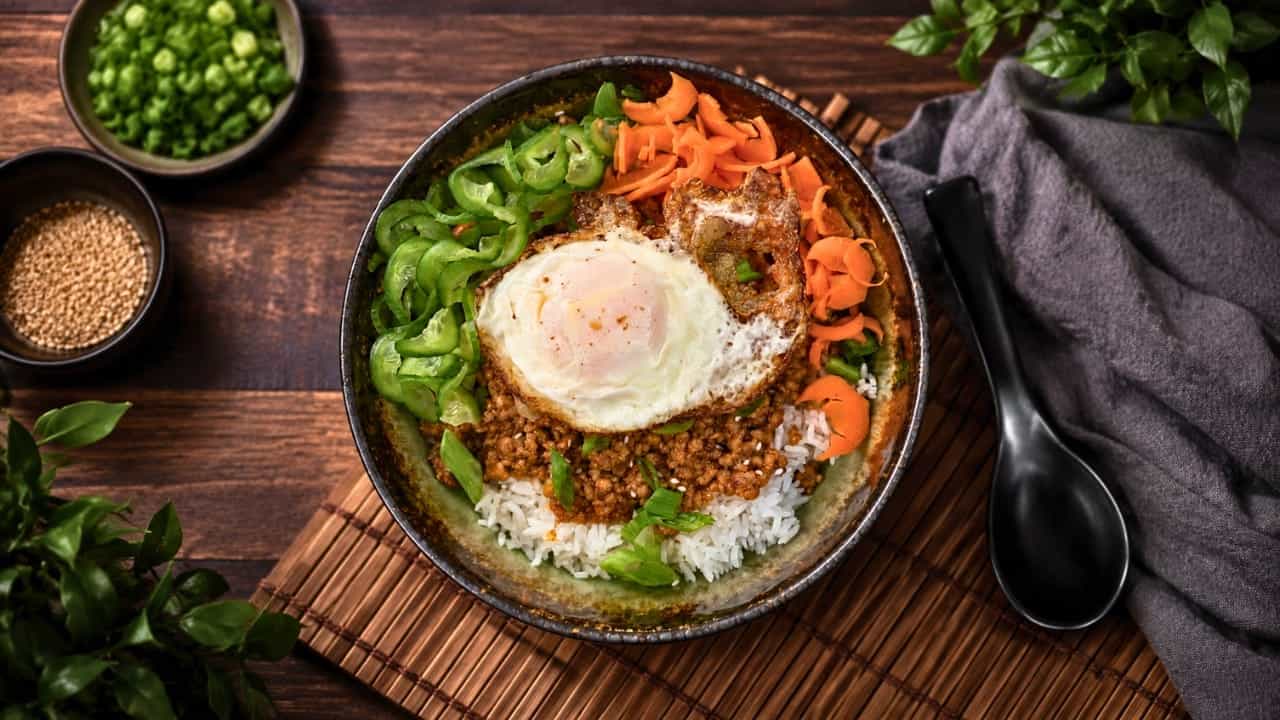
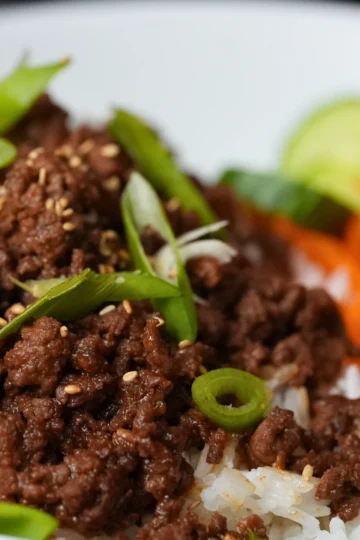
Step 8 — Build the bowl. Scoop ½ cup of fluffy short-grain or jasmine rice into the bottom of each bowl. Mound the gochujang pork on top. Arrange cucumber ribbons on one side, carrot ribbons on the other. Crown with the fried egg. Shower with sliced green onions and a heavy pinch of toasted sesame seeds. Serve immediately while the egg is still runny and the rice is steaming. Break the yolk at the table. That's the moment.
Pro Tips for the Best Gochujang Pork Bowls
- Mix the sauce first. Always. The pan moves too fast to be measuring gochujang one-handed while ground pork burns. Bowl, whisk, spoon, set next to the stove. Done.
- Use 70/30 ground pork, not 90/10. Leaner pork dries out and gets crumbly in this dish. The fat is what makes the sauce cling. If 70/30 isn't available, 80/20 works — but skip 90/10 and definitely skip ground pork loin.
- Don't stir for the first two minutes. A real brown crust on the bottom of the pork clumps is non-negotiable for flavor. If your pork is leaching gray water, your pan isn't hot enough — crank it.
- Finish sesame oil off-heat — every single time. The most common mistake I see with Korean home cooking is sautéing in sesame oil. It belongs at the end, drizzled, after the pan is off the burner.
- Don't substitute Sriracha for gochujang. They're built on completely different flavor logic. Sriracha is vinegar-forward; gochujang is fermented and savory. The dish won't fail with Sriracha — it just won't be this dish.
- Cucumber and carrot are not garnish. The cool crunch against hot sticky pork is the architecture of the bowl. Skipping the vegetables turns a great dinner into a meh one.
- Use a wide pan, not a deep pot. A 12-inch skillet gives the pork room to brown. A Dutch oven steams it. Maillard reaction needs surface area.
- Want it spicier? Add an extra tablespoon of gochujang at Step 4, or finish each bowl with chili crisp or a drizzle of gochujang-honey hot sauce. Want it milder for kids? Drop to 2 tablespoons of gochujang and add 1 extra tablespoon of brown sugar — keeps the flavor depth without the burn.
- Day-two leftovers are better than day one. The pork keeps absorbing the gochujang overnight. Bento boxes for the week.
Did You Know? Gochujang and Korean Comfort Food Facts
- Gochujang is at least 400 years old. The first written records of gochujang appear in Korean cookbooks from the late 1500s, after Korean traders brought chili peppers back from the Americas via Portuguese ships. Before that, Korean cuisine used black pepper and Sichuan peppercorn for heat — chilies completely rewrote the flavor profile of the country in two generations.
- It's traditionally aged outdoors in onggi. Onggi are unglazed Korean earthenware jars that breathe — the porous clay lets the fermentation slowly exchange gas with the outside air while keeping moisture in. Old-school gochujang factories still age their tubs on rooftops in tubs the size of barrels. Commercial gochujang at the supermarket is fermented faster in stainless steel tanks, but the artisanal stuff is still done in onggi.
- Korean ground pork rice bowls are a modern dish. Traditional Korean cuisine leans heavily on grilled or braised whole cuts (samgyeopsal, bulgogi, jeyuk-bokkeum). The "ground pork over rice" bowl format is a 2010s home-cook adaptation that exploded on Korean YouTube and made its way into the American weeknight rotation through TikTok and Instagram. It's been called the Korean answer to taco meat.
- Jeyuk-bokkeum is the closest traditional dish. If you order "spicy pork stir-fry" at a Korean restaurant, you're getting jeyuk-bokkeum — thin-sliced pork shoulder marinated in gochujang sauce and stir-fried with onions and scallions over high heat. These ground pork bowls are essentially a quick weeknight take on that flavor profile, scaled down to ingredients you already have.
- The egg-on-rice tradition is bibimbap-coded. Korean rice bowls almost always finish with a fried or raw egg yolk on top — the yolk acts as a binder when you mix everything together (bibim = mix; bap = rice). That's why we serve these bowls with the egg whole and let you break it at the table.
- Spicy food is Korean comfort food. A 2019 study from Pusan National University found Koreans consume more capsaicin per capita than any other country except Thailand. Spicy gochujang dishes are the equivalent of mac and cheese for many Korean households — what people crave when they want to feel taken care of.
- Want a beef version? Try the Easy Korean Ground Beef Bowls Recipe — same bowl architecture, swapped protein, slightly different sauce that leans soy-and-sugar instead of gochujang-forward.
Nutrition Facts (Per Serving)
520 Calories · 38g Protein · 28g Fat · 9g Saturated Fat · 32g Carbohydrates · 2g Fiber · 8g Sugar · 820mg Sodium · 165mg Cholesterol
Estimates based on 2.33 lb 70/30 ground pork divided into 4 servings, including the gochujang sauce, ½ cup cooked white rice per bowl, one fried egg, and standard cucumber and carrot topping portions. Numbers shift if you swap to lean ground pork (drops fat by ~8g), increase rice to a full cup (adds ~100 calories), or skip the egg (drops cholesterol by ~150mg).
Storage and Meal Prep
Refrigerator: Store the cooked gochujang pork separately from the rice and toppings in an airtight container for up to 4 days. The pork actually deepens in flavor overnight — gochujang continues to penetrate every grain. Day-two pork is honestly better than day one. Keep the cucumber and carrot ribbons in a separate container with a paper towel on top to absorb moisture.
Freezer: Freeze just the gochujang pork (no toppings, no rice) in flat zip-top bags for up to 3 months. Lay the bag flat in the freezer so it thaws fast. Don't freeze the rice or vegetables — rice gets gummy on the thaw and cucumbers turn to mush.
Reheating: Best method is a hot non-stick skillet over medium heat with a teaspoon of water to loosen the sauce — 3 to 4 minutes, stirring often. Microwave works for desk lunches: cover with a damp paper towel and heat in 45-second bursts, stirring between, until hot. Don't dump it cold onto hot rice — the cold meat kills the bowl.
Meal prep ideas:
- Pack into bento boxes: rice on one side, gochujang pork on the other, cucumber and carrot in a separate compartment, hard-boiled egg instead of fried
- Wrap in butter lettuce leaves like Korean ssam for a low-carb lunch
- Pile into a warm tortilla with kimchi and avocado for a Korean-Mexican fusion taco
- Top a green salad with the cold pork — the gochujang sauce doubles as dressing
- Roll into nori sheets with rice for quick homemade kimbap-style hand rolls
- Stir into a hot bowl of ramen or udon broth as instant flavor base
- Stuff into Hawaiian rolls with a smear of mayo for slider game-day food
What to Serve With Gochujang Pork Bowls
Gochujang pork bowls are already a complete one-bowl meal — protein, carb, vegetable, fat, all in one dish. But if you're feeding a crowd or want to lean into a full Korean BBQ-style spread, here's what to add to the table:
- Kimchi — store-bought baechu kimchi (napa cabbage) is fine; Mother-in-Law's and Jongga are both reliable brands. Spicy-sour-funky to balance the sweet-spicy of the pork.
- Korean cucumber salad (oi muchim) — sliced cucumbers tossed with rice vinegar, sugar, gochugaru, sesame seeds, and a pinch of salt. Even cooler crunch than the ribbon topping.
- Steamed broccoli or bok choy with sesame oil — simple, cuts through the richness
- Seaweed soup (miyeok-guk) — light, mineral, perfect counterweight
- Pickled radish (danmuji) — those bright yellow disks you get at Korean BBQ. Sweet, crunchy, addictive.
- Soju or a crisp lager — Hite, Cass, or any light Korean lager. Wine pairing? Off-dry riesling or grüner veltliner if you must.
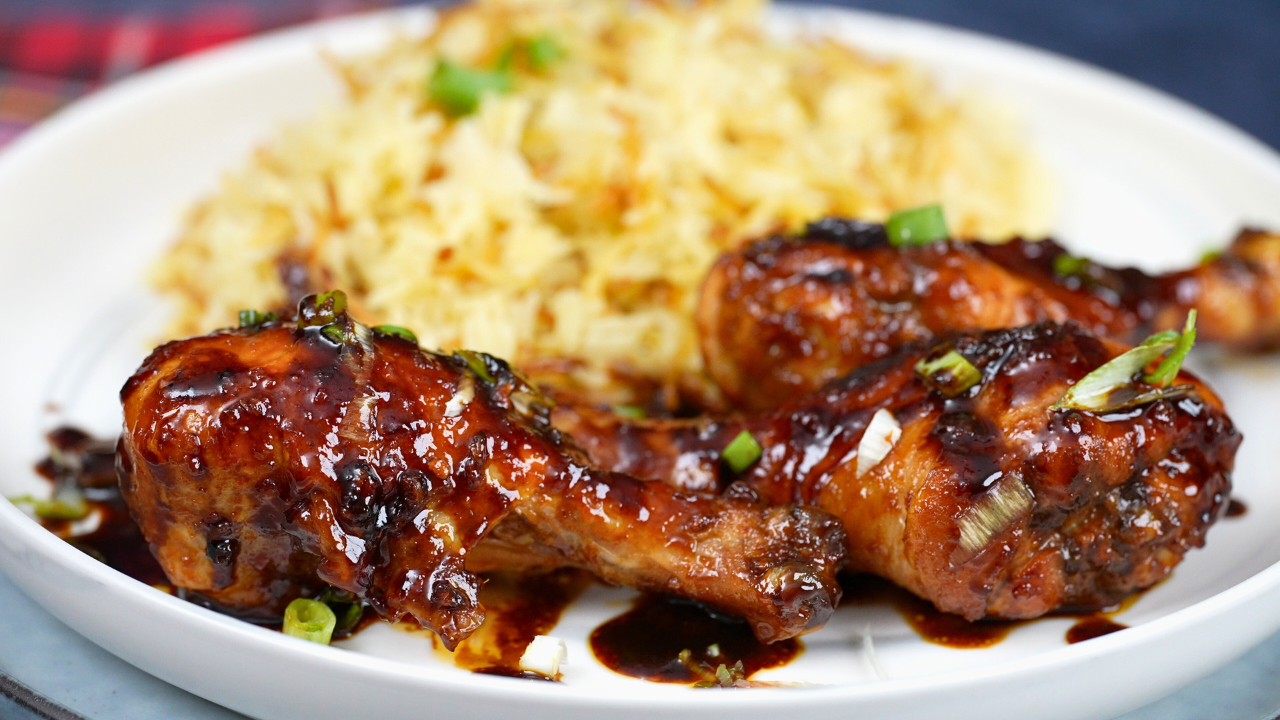
For a side dish format with the same Korean flavor profile, try the Korean drumsticks alongside, or build a full Korean weeknight spread with sticky Korean gochujang meatballs as the appetizer.
Frequently Asked Questions
What does gochujang taste like?
Gochujang is spicy, savory, slightly sweet, and deeply umami — closer in profile to miso than to a typical hot sauce. The fermentation gives it a funky, almost cheesy backbone that bright vinegar-based sauces don't have. First-time tasters often describe it as "barbecue sauce with attitude" — sweet on the front, spicy in the middle, lingering savory at the end. It does not taste like Sriracha.
Can I substitute Sriracha or sambal oelek for gochujang?
Honestly? No. The whole point of this recipe is the fermented depth of gochujang — Sriracha is too vinegary and bright, sambal oelek is just crushed chili without the savory aging. If you absolutely cannot find gochujang, the closest emergency substitute is a mix of 2 tablespoons miso paste + 1 tablespoon sambal oelek + 1 teaspoon honey, but the result is approximately gochujang the way Velveeta is approximately Gruyère.
Can I use ground beef or ground chicken instead of pork?
Yes — but with adjustments. Ground beef works at an 85/15 ratio with the same sauce; cook a minute less because beef toughens faster than pork. Ground chicken thigh works at any fat percentage but loses 30% of the richness — add 1 extra tablespoon of brown sugar and 1 teaspoon of sesame oil to compensate. Ground turkey breast does not work well here — too lean, no fat for the sauce to cling to. For a beef-specific version, see the Korean ground beef bowls.
How spicy is this recipe?
Medium. Three tablespoons of standard gochujang (level 2 or 3 GHU) over four servings lands at about 4 out of 10 on the spicy scale — noticeable warmth that builds, but not painful. Kids 8+ usually handle it fine; younger kids should get the modified version (2 tablespoons gochujang + extra brown sugar). For heat seekers, scale to 4 or 5 tablespoons of gochujang and finish each bowl with chili crisp.
Do I need a spiralizer for the cucumbers?
No, but it makes the bowls look like a restaurant plate. A horizontal spiralizer with the ribbon blade gives you those signature curly cucumber rings. Without one: use a Y-peeler to make ribbons (drag the peeler down the length of the cucumber), or just slice the cucumbers as thin as possible with a sharp knife. The taste is identical — only the texture changes slightly.
Can I make this gluten-free?
Yes — with one substitution. Most commercial gochujang contains wheat (used as a glutinous starch). Look for explicitly gluten-free gochujang from Chung Jung One or Wholly Gochujang — both are widely available online and at some Whole Foods. Swap regular soy sauce for tamari or gluten-free soy sauce. Everything else in the recipe is naturally gluten-free.
Can I meal prep this for the week?
Absolutely — this is one of the best meal-prep recipes in my rotation. Cook the gochujang pork on Sunday, store in 4 separate containers with rice on one side and pork on the other. Keep the cucumber and carrot ribbons in their own container (they only last 3 days fresh; the pork lasts 4–5). Fry the egg fresh each morning — takes 2 minutes — and the bowl tastes like you cooked it that night.
Why does my sauce keep burning?
Two possible culprits. First, the heat is too high after you add the sauce — drop to medium immediately when the sauce hits the pan. Brown sugar caramelizes fast and bitter at high heat. Second, your pan is too dry — if the pork is lean (90/10 or leaner), there's not enough fat to keep the sauce from sticking. Splash in 1 tablespoon of water if you see the sauce darkening too fast.
What rice should I use for Korean pork bowls?
Traditional Korean rice is short-grain or medium-grain white rice — slightly sticky, holds its shape under sauce. Brands: Nishiki, Tamaki Gold, Kokuho Rose. If you only have jasmine rice, that works fine too — slightly more fragrant, slightly less sticky. Long-grain American rice (like Uncle Ben's) is the wrong call here; the grains stay too separate and the sauce slides off. Brown rice works for a healthier swap but adds nutty flavor that competes with the gochujang.
How do I get the egg yolk runny without raw whites?
The water-and-lid trick. Fry the egg in a non-stick pan over medium heat for 90 seconds until the white is mostly set on the bottom. Drop the heat to low, add 1 teaspoon of water to the pan (off to the side, not on the egg), and immediately cover with a lid for 30 seconds. The steam sets the top of the white without cooking the yolk. Pull when the white is just opaque on top. Practice on a Tuesday before serving to guests on a Saturday.
"A lot of people overcomplicate cooking because they think good food requires talent they don't have. It doesn't. It requires heat, seasoning, and the confidence to just try. Cooking a real meal instead of opening a bag — that's an act of self-respect. Don't underestimate it."
Gochujang Pork Bowls
Ingredients
Method
- Mix the sauce before you touch the stove. In a small bowl combine the gochujang, soy sauce, brown sugar, and rice vinegar. Stir until smooth and set it next to the pan. Once this moves, it moves fast.
- Heat a large skillet or wok over HIGH heat. Add the ground pork and break it up fine. Let it sit for 2 full minutes without stirring — you want real color and a crust on the bottom. That's flavor.
- Once most of the pink is gone, add 4 cloves of minced garlic and 1 teaspoon fresh grated ginger. Stir and cook for 1 minute until fragrant. Your nose will tell you when it's ready.
- Pour the sauce over the pork and toss everything to coat. Drop to medium heat. Simmer 2 minutes until thick, sticky, and glossy. Right before pulling off heat, stir in the sesame oil. Never cook sesame oil — add it off the heat or you lose all the flavor.
- Slice the mini cucumbers thin — a spiralizer gets you clean ribbon rings. Shave the carrots into ribbons with a peeler. Set both aside. These toppings are not optional.
- In a separate pan over medium heat, fry one egg per bowl. Lid on for 30 seconds to set the whites without overcooking the yolk. Keep it runny — that yolk breaking over the pork is the whole shot.
- Build the bowl: rice first, pork on top, cucumbers on one side, carrots on the other, egg right in the center. Finish with sliced green onions and a pinch of sesame seeds. Serve immediately.
Nutrition
Video
Notes
Tried this recipe?
Let us know how it was!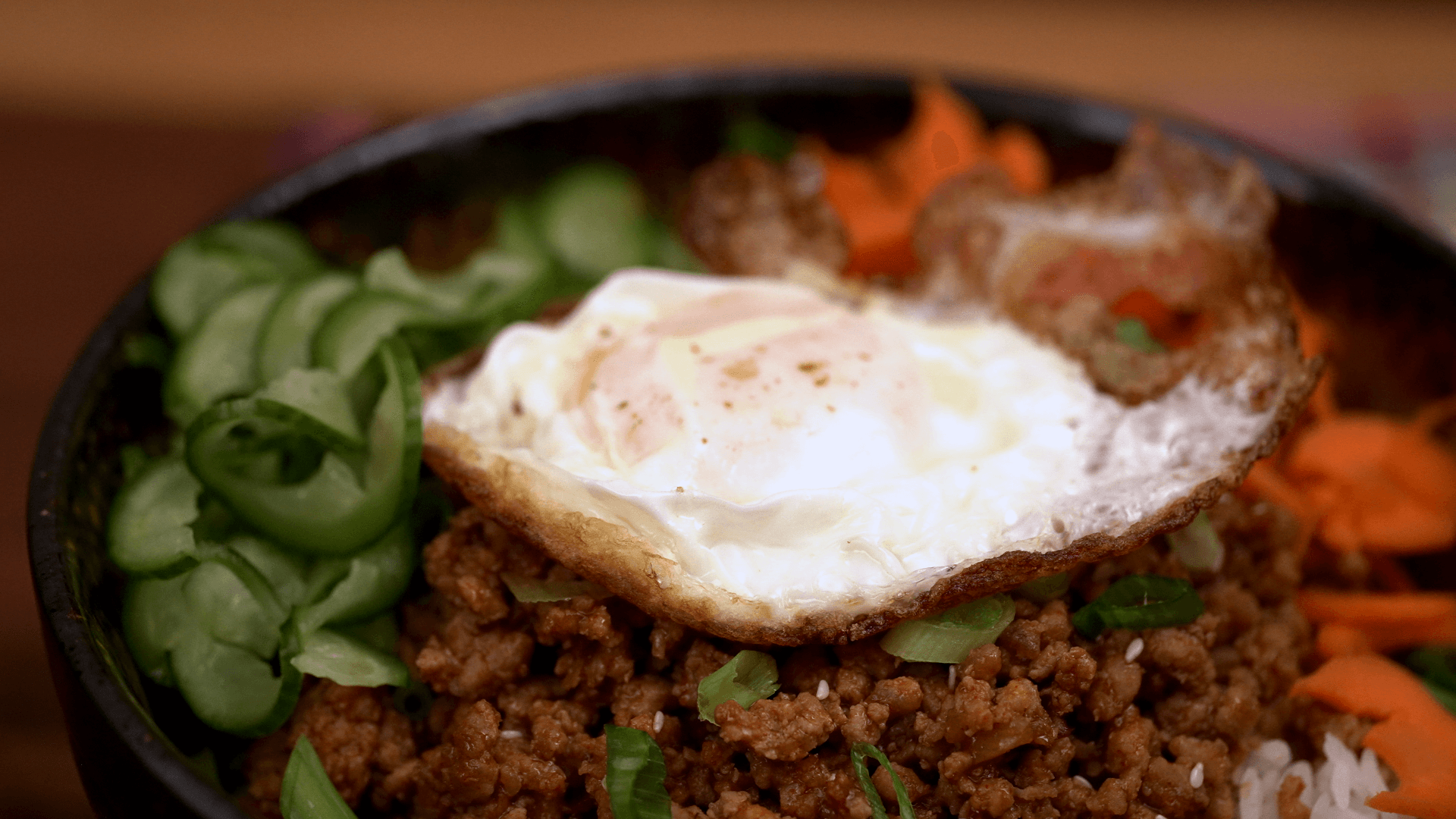
Leave a Reply