
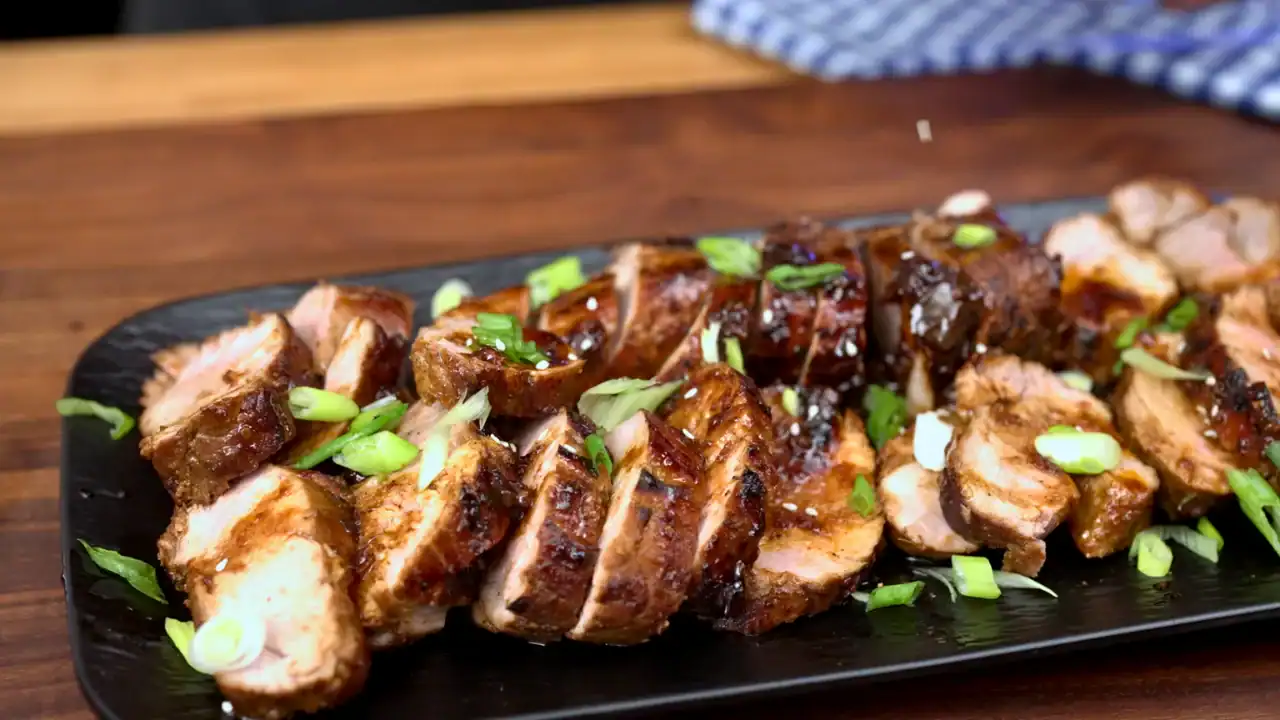
If you've never cooked with gochujang, this is the recipe that's going to change that. It's a Korean chili paste with deep, funky heat — not just spicy, but layered and complex. It turns a simple pork tenderloin into something that tastes like it took way more effort than it did.
This gochujang glazed pork tenderloin comes together in under 35 minutes. You get a sticky, caramelized crust on the outside, juicy pink pork on the inside, and a glaze that coats every single slice. Serve it over steamed rice and you've got a complete meal that the whole table will ask about.
Whether you're already a fan of Korean flavors or just looking for a new weeknight dinner to add to the rotation — this one earns a permanent spot.
This post contains affiliate links. I may earn a small commission at no extra cost to you.
Gochujang pork tenderloin is one of those recipes that sounds fancy but comes together in under 30 minutes with just a handful of pantry staples. Gochujang — the fermented Korean chili paste made from red chili flakes, glutinous rice, and soybeans — brings a complex, slightly sweet heat that caramelizes beautifully on pork tenderloin. Unlike hot sauce that just adds burn, gochujang delivers layers of umami, sweetness, and slow-building warmth that make every bite more interesting than the last.
Pork tenderloin is the ideal canvas for a gochujang glaze because it is lean, cooks quickly, and absorbs marinades like a sponge. The key is not to overcook it — pork tenderloin should be pulled from the oven at 145°F internal temperature and rested for 5 minutes, which brings it to a perfect, slightly blush-pink finish that is juicy and tender. The USDA updated their guidelines years ago, so there is no need to cook pork to 160°F anymore. Trust the thermometer, and you will be rewarded with incredibly succulent meat.
This recipe works beautifully year-round. In summer, sear the gochujang-glazed tenderloin on a hot grill for gorgeous char marks and smoky flavor. In cooler months, roast it in the oven at high heat for a sticky, lacquered crust. Either way, the gochujang glaze caramelizes into a sweet-spicy bark that is absolutely addictive.
Why You'll Love This Recipe
- Ready in 35 minutes start to finish
- Bold Korean-inspired flavors with simple pantry ingredients
- Works for weeknights but impressive enough for guests
- The glaze doubles as a sauce — nothing wasted
What Is Gochujang?
Gochujang is a fermented Korean chili paste made from red chili peppers, glutinous rice, fermented soybeans, and salt. It has a complex heat that's spicy, slightly sweet, and deeply savory all at once. You can find it in most grocery stores in the international aisle or on Amazon. Once you have a tub, you'll find yourself reaching for it constantly.
Ingredients and Notes
- Pork tenderloins (about 1 lb each) — lean, fast-cooking, and ideal for high-heat glazing.
- Gochujang paste (3 tbsp) — the star. Haechandle and O'Food are both widely available. Haechandle runs hotter.
- Soy sauce (2 tbsp) — adds saltiness and umami depth to balance the gochujang.
- Honey (2 tbsp) — helps the glaze caramelize and stick to the pork.
- Sesame oil (1 tbsp) — adds that signature nutty Korean flavor; add it last when whisking.
- Garlic cloves, minced (4) — fresh only, not jarred.
- Fresh ginger, grated (1 tbsp) — brightens the glaze. Keep a knob in your freezer and grate from frozen.
- Rice vinegar (1 tbsp) — cuts the sweetness and adds balance.
- Brown sugar (1 tbsp) — deepens the caramelization on the sear.
- Neutral oil (2 tbsp) — avocado or vegetable. High smoke point needed for the sear.
- Kosher salt (1 tsp) and black pepper (½ tsp) — base seasoning before the glaze.
- Scallions and sesame seeds — finishing touches that add freshness and texture.

How to Make Gochujang Glazed Pork Tenderloin
Step 1 — Trim and Dry the Pork
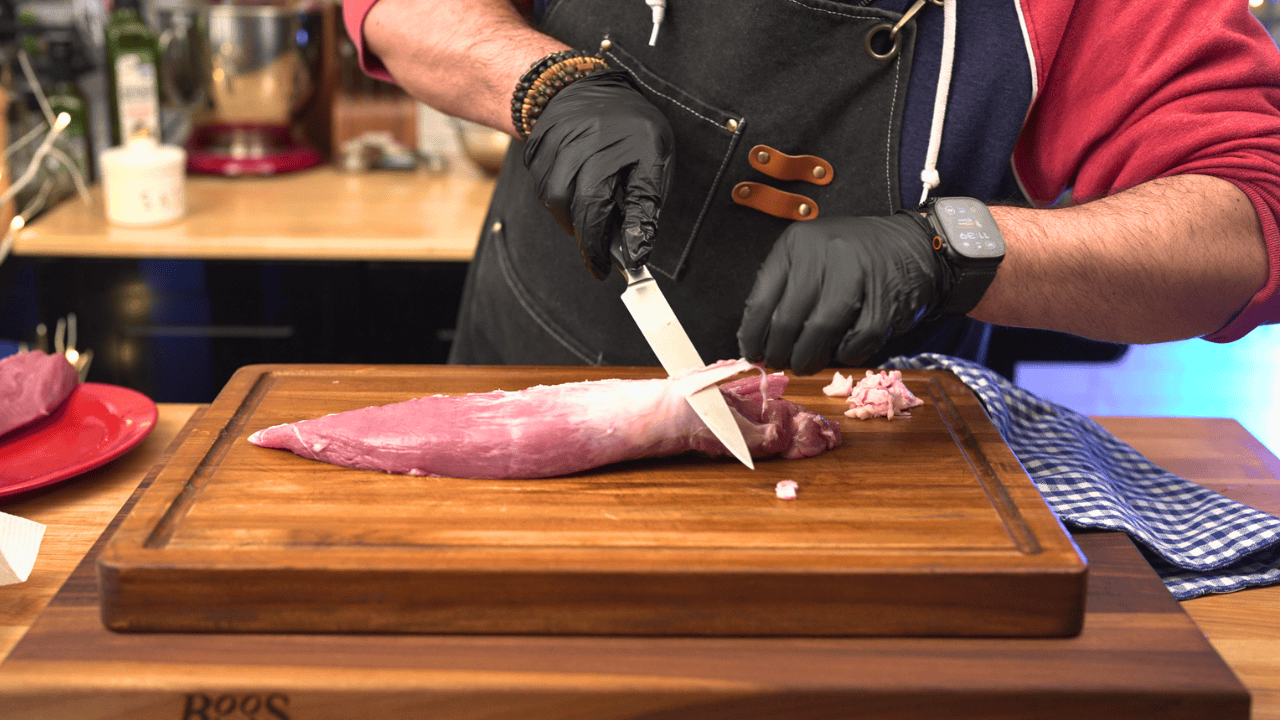
Pull your tenderloins out and trim off the silver skin — that thin, shiny membrane on one side. It won't break down in cooking and will turn chewy if you leave it. Slide a sharp knife under one edge and pull it off in strips. Then pat the pork completely dry with paper towels. Dry meat is the difference between a real sear and steamed pork. For trimming, a sharp boning or chef knife with a thin flexible blade gets under the membrane cleanly.
Step 2 — Make and Split the Glaze
In a bowl, whisk together your gochujang, soy sauce, honey, sesame oil, garlic, ginger, rice vinegar, and brown sugar until it's completely smooth. Now divide it into two separate bowls. One bowl is for the raw pork. The other stays clean and gets brushed on cooked pork. This is non-negotiable for food safety.
Step 3 — Season, Brush, and Rest at Room Temp
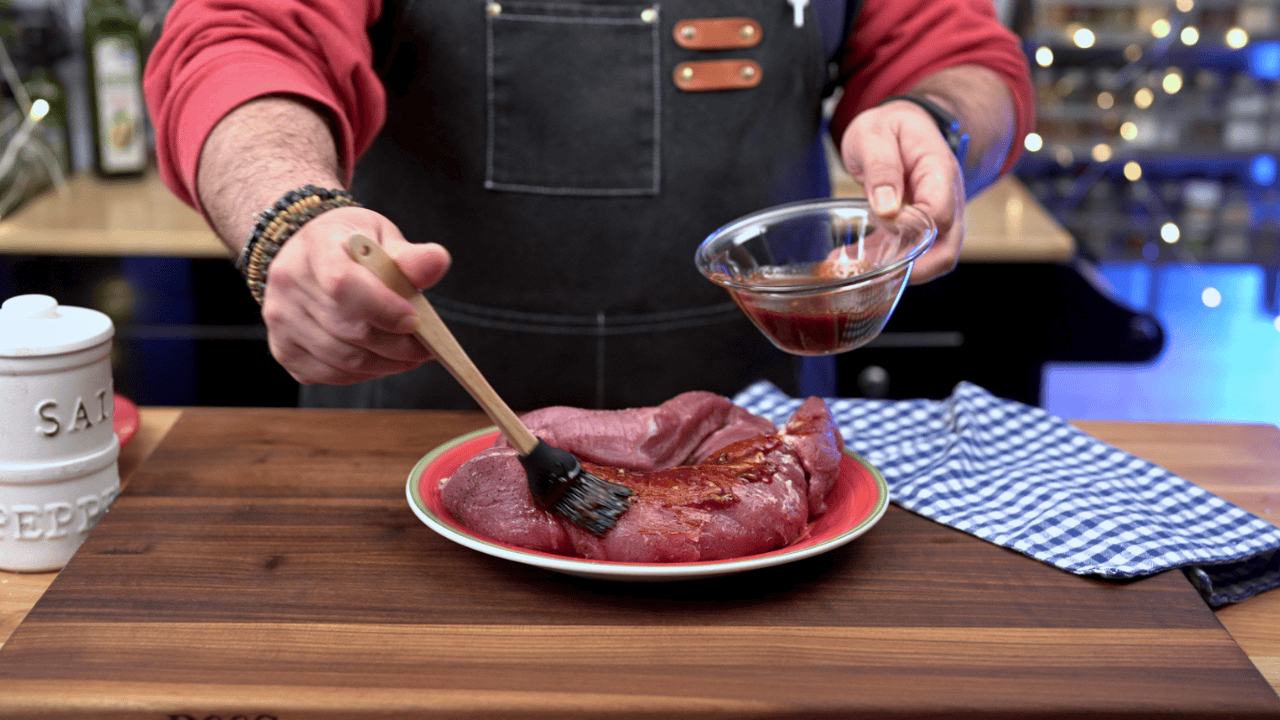
Season the tenderloins all over with kosher salt and black pepper. Brush them with the raw-side glaze, then let them sit at room temperature for 20 minutes. This takes the chill off so the meat cooks evenly instead of fighting itself in the pan. A silicone basting brush gives the most even coverage and won't shed bristles into the pan.
Step 4 — Hard Sear in a Smoking Hot Skillet
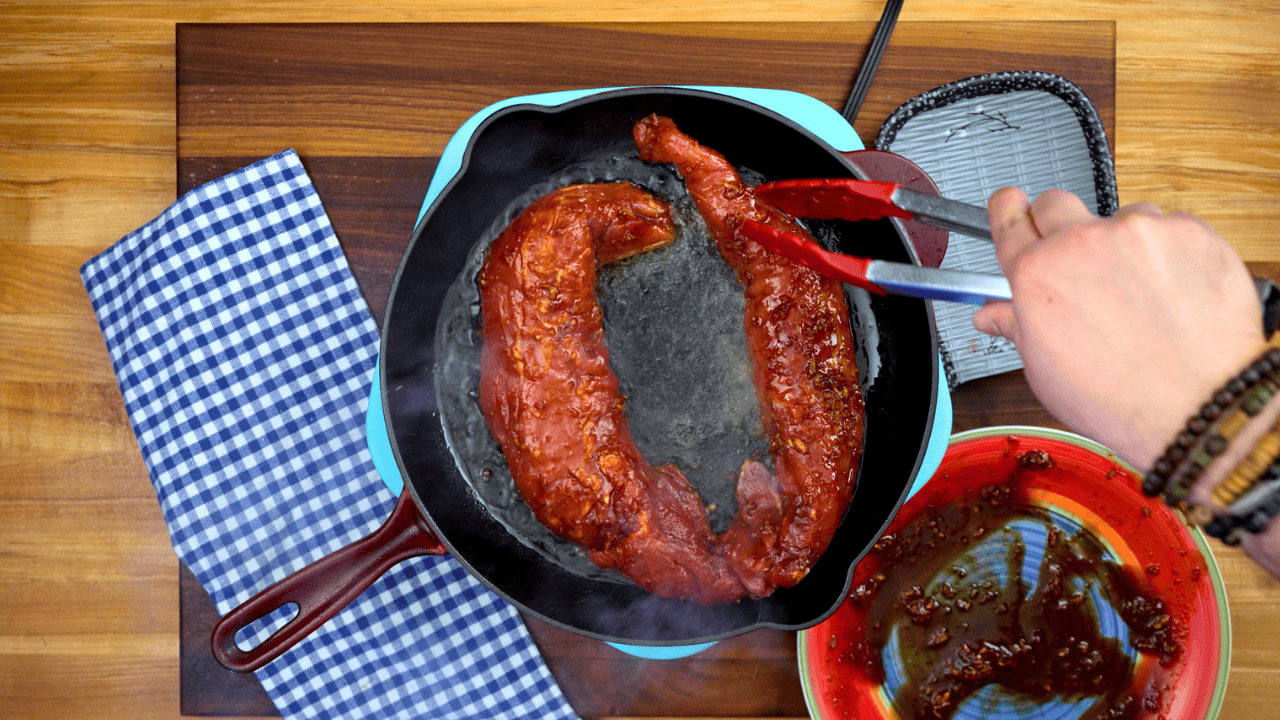
Heat 2 tablespoons of neutral oil in a heavy oven-safe skillet over high heat until it's just starting to smoke. Lay the pork in carefully — it should sizzle hard the second it hits. Sear 2 minutes per side on all four sides. You're building the crust here, not cooking the inside. An oven-safe cast iron skillet is ideal — it sears hard, holds heat, and goes straight from stovetop to oven.
Step 5 — Glaze and Roast at 400°F to 145°F Internal
Brush the seared pork generously with the reserved clean glaze. Slide the whole skillet straight into a 400°F oven. Roast 10 to 13 minutes, brushing on more glaze at the halfway point, until a thermometer in the thickest part reads 140°F. Pull it. Carryover heat will bring it to 145°F while it rests. An instant read thermometer takes the guesswork out — pull at 140°F and don't second-guess it.
Step 6 — Rest Uncovered for 8 Minutes
Move the pork to a cutting board and rest uncovered for a full 8 minutes. Do not tent with foil — the trapped steam will turn your beautiful crust soft and that's the last thing we want.
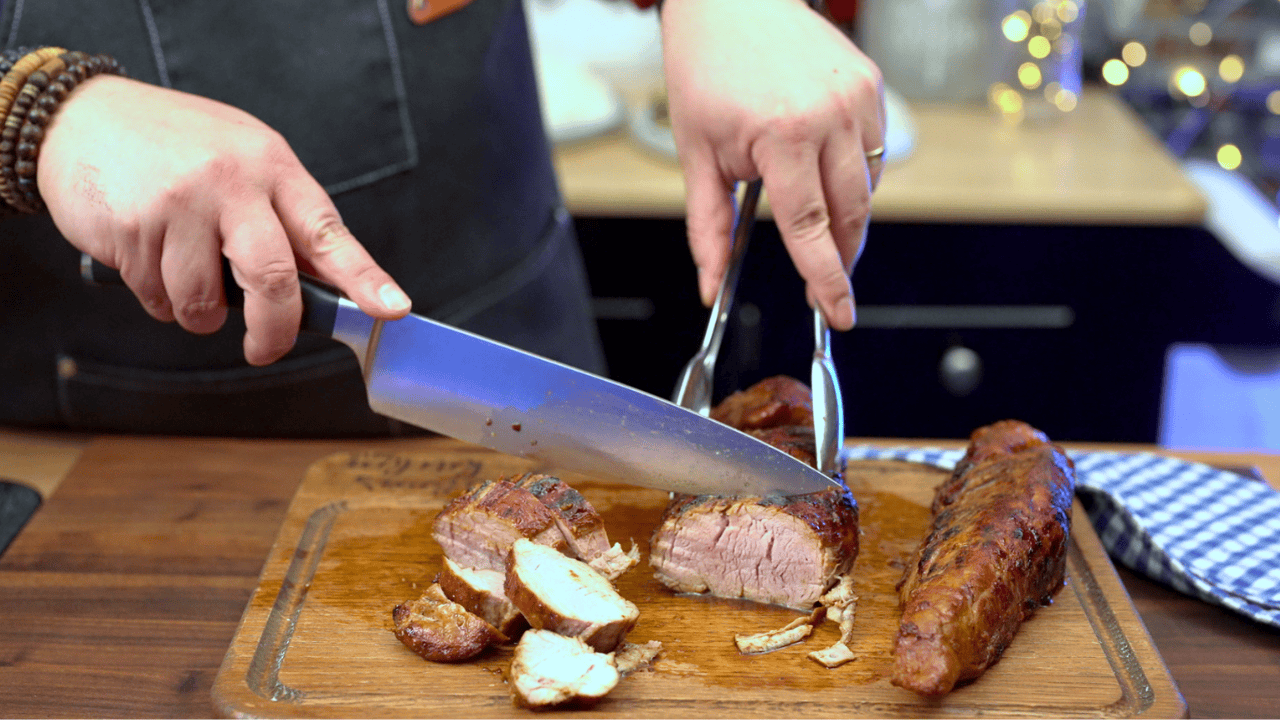
Step 7 — Slice on the Diagonal, Finish, and Serve
Slice the tenderloin on a sharp diagonal into half-inch medallions. Drizzle any resting juices from the board back over the top, then finish with sliced scallions and a generous shower of sesame seeds. Serve over steamed rice and don't be surprised when the table goes quiet. A solid cutting board with a juice groove keeps the resting juices contained for that final drizzle.
Pro Tips
- Never tent with foil during rest — it steams off the crust.
- Always split the glaze into two bowls — never brush cooked meat with raw-pork glaze.
- Watch the thinner tenderloin in the oven — it will hit temp faster.
- Pull at 140°F; carryover heat brings it to 145°F.
- Gochujang varies by brand — taste your glaze before brushing and adjust honey if needed.
How to Store and Reheat
Refrigerate leftovers in an airtight container for up to 3 days. Reheat in a skillet over medium-low with a splash of water to loosen the glaze. Avoid the microwave — it toughens the pork.
What to Serve With Gochujang Pork Tenderloin
- Steamed white rice
- Quick cucumber salad
- Sautéed bok choy
- Roasted broccoli
- Maduros (for a Dominican-Korean fusion plate)
FAQ
Can I make this without an oven-safe skillet?
Yes — sear in any skillet, then transfer pork to a baking dish and roast. Pour remaining glaze over before roasting.
How spicy is gochujang?
Medium. Use 2 tablespoon for mild, 3 for medium, 4 if you want real heat.
Can I marinate overnight?
Yes, up to 24 hours in the fridge. The glaze penetrates deeper and the flavor intensifies.
Can I grill this instead?
Absolutely. Sear over high heat, then move to indirect heat to finish. Same 145°F target.
What if I can't find gochujang?
Mix sriracha with a teaspoon of white miso as a substitute. Gets you about 80% of the way there.
If you make this, I want to hear about it. Drop a comment below and tell me how it went. Did you go mild or full heat? And don't forget to grab the printable recipe card below.

Gochujang Glazed Pork Tenderloin
Ingredients
Method
- Trim silver skin from tenderloins and pat completely dry with paper towels.
- Whisk together gochujang, soy sauce, honey, sesame oil, garlic, ginger, rice vinegar, and brown sugar until smooth. Split into two bowls.
- Season pork with salt and pepper. Brush with raw-side glaze and rest at room temp 20 minutes.
- Heat oil in oven-safe skillet over high heat until smoking. Sear 2 minutes per side on all four sides.
- Brush reserved clean glaze over pork. Roast at 400°F for 10–13 minutes, glazing at the halfway point, until internal temp hits 145°F.
- Rest uncovered on cutting board 8 minutes.
- Slice on the diagonal, drizzle resting juices over top, finish with scallions and sesame seeds. Serve over rice.
Video
Notes
Tried this recipe?
Let us know how it was!More Korean
Frequently Asked Questions
What does gochujang taste like on pork tenderloin?
Gochujang on pork tenderloin creates a sweet, savory, and mildly spicy glaze. The fermented paste adds deep umami notes along with a fruity chili heat that builds gradually rather than hitting you all at once. When roasted, the sugars in the gochujang caramelize, creating a sticky, lacquered crust that is sweet and smoky.
What internal temperature should gochujang pork tenderloin reach?
Cook your gochujang pork tenderloin to an internal temperature of 145°F (63°C), then let it rest for 5 minutes before slicing. The temperature will rise another 5 degrees during resting. This gives you perfectly juicy, slightly pink pork that is safe to eat according to USDA guidelines.
What sides pair well with gochujang glazed pork tenderloin?
Steamed jasmine rice, quick-pickled cucumbers, and a crisp Asian slaw are classic pairings. Roasted sweet potatoes or bok choy also complement the sweet-spicy glaze. For a complete Korean-inspired meal, serve with kimchi and a drizzle of sesame oil over rice.

Leave a Reply