
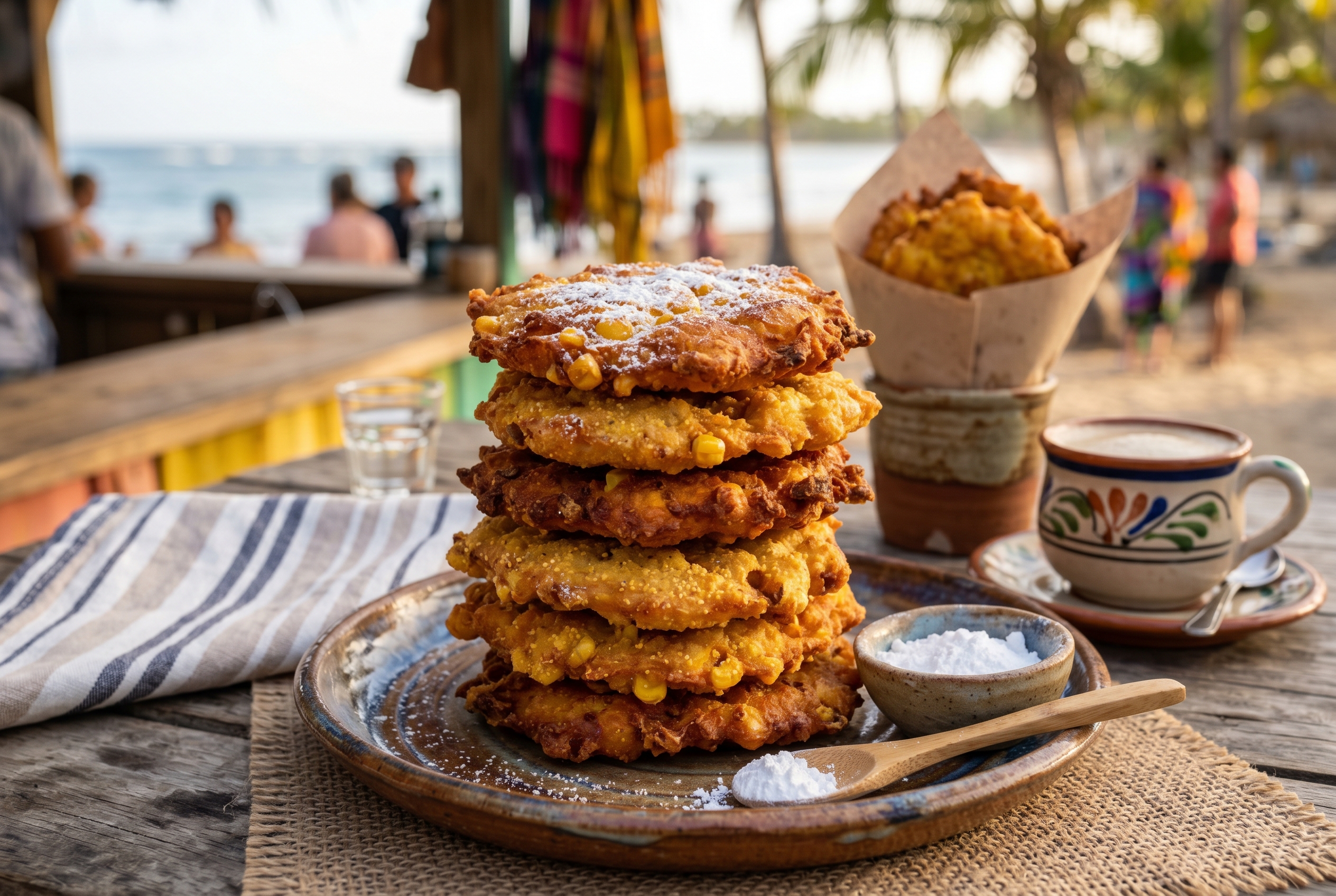
Arepitas de maíz are the Dominican corn fritters that you'll find bubbling out of a big pot of oil at every beach stand along the DR coast. Crispy on the outside, tender inside, with that unmistakable aromatic hit of toasted anise seed and a tiny bit of sweetness. They're not like the Colombian or Venezuelan arepas — those are big, pan-cooked, savory, and stuffed. Arepitas dominicanas are small, deep-fried, slightly sweet, and eaten plain by the handful, straight out of a paper cone while you're standing with your feet in the sand at Boca Chica.
Growing up, these were my Sunday beach memory. My family would pile into the car, drive to Juan Dolio or Boca Chica, and the second we got there my mom would find the arepitas lady — every beach had one. She'd frying them right on the sand in a giant caldero over a little propane burner, scooping tablespoons of batter into the oil, pulling out golden fritters and handing them to you still too-hot-to-hold in a paper cone. The smell of anise and hot oil mixed with the sea air — I still get that flash of memory every time I make these at home.
The recipe is very forgiving. Yellow cornmeal, a little flour, milk, egg, cheese, anise seeds, sugar, salt. Mix, rest, fry, done. Let me walk you through it.
Why You'll Love This Arepitas de Maíz Recipe
- Beach-stand authentic: This is the exact recipe you remember from the DR coast — slightly sweet, aromatic with anise, crispy as anything.
- Quick to make: Start to finish in 30 minutes. One bowl, one pan, done.
- Crowd-pleasing snack: Kids love them. Adults love them. They disappear as fast as you can fry them.
- Cheap pantry ingredients: Cornmeal, flour, milk, egg, cheese. No special Dominican imports needed.
- Sweet or savory: Dust with sugar for dessert vibes, or serve plain as a snack with coffee.
What Are Arepitas de Maíz?
Arepitas de maíz are small Dominican corn fritters made from yellow cornmeal, flour, milk, egg, cheese, and anise seeds. The batter is scooped by the tablespoon and deep-fried until golden and crispy on the outside, tender and cakey inside. The word arepita is the diminutive of arepa — literally "little arepa" — but the Dominican version has almost nothing in common with the Colombian or Venezuelan arepas you might know. Those are big, savory, pan-cooked corn cakes split and stuffed. Arepitas dominicanas are small, sweet, and fried.
The signature flavor comes from anise seeds — a small amount of them toasted in a dry pan to wake up the aroma, then mixed into the batter. That little pop of licorice-like flavor is what makes Dominican arepitas taste different from every other corn fritter in Latin America. Grated queso blanco adds a mild savory note that balances the sweetness. The sugar isn't enough to make them dessert-level sweet — just enough to hint at it.
In the DR, arepitas are classic beach food and colmado snack food. You'll find them stacked in paper cones at beach stands, sold out of rolling carts in parks, and cooked at home for the grandkids on rainy afternoons. They're also a common merienda — the Dominican mid-afternoon snack — served with a café con leche. They're not a fancy dish, but they're deeply loved. Every Dominican has a memory tied to a specific batch of arepitas.
The other thing worth knowing: arepitas are one of the few Dominican foods that have stayed nearly unchanged for generations. My abuela made them the same way her mother made them, and her mother before her. Cornmeal, milk, egg, cheese, anise, a little sugar. No shortcuts, no modernizing, no fusion. That consistency is part of why they taste like home — bite into a properly made arepita and you're tasting something that hasn't changed in a hundred years. That's not a small thing.
Ingredients You'll Need
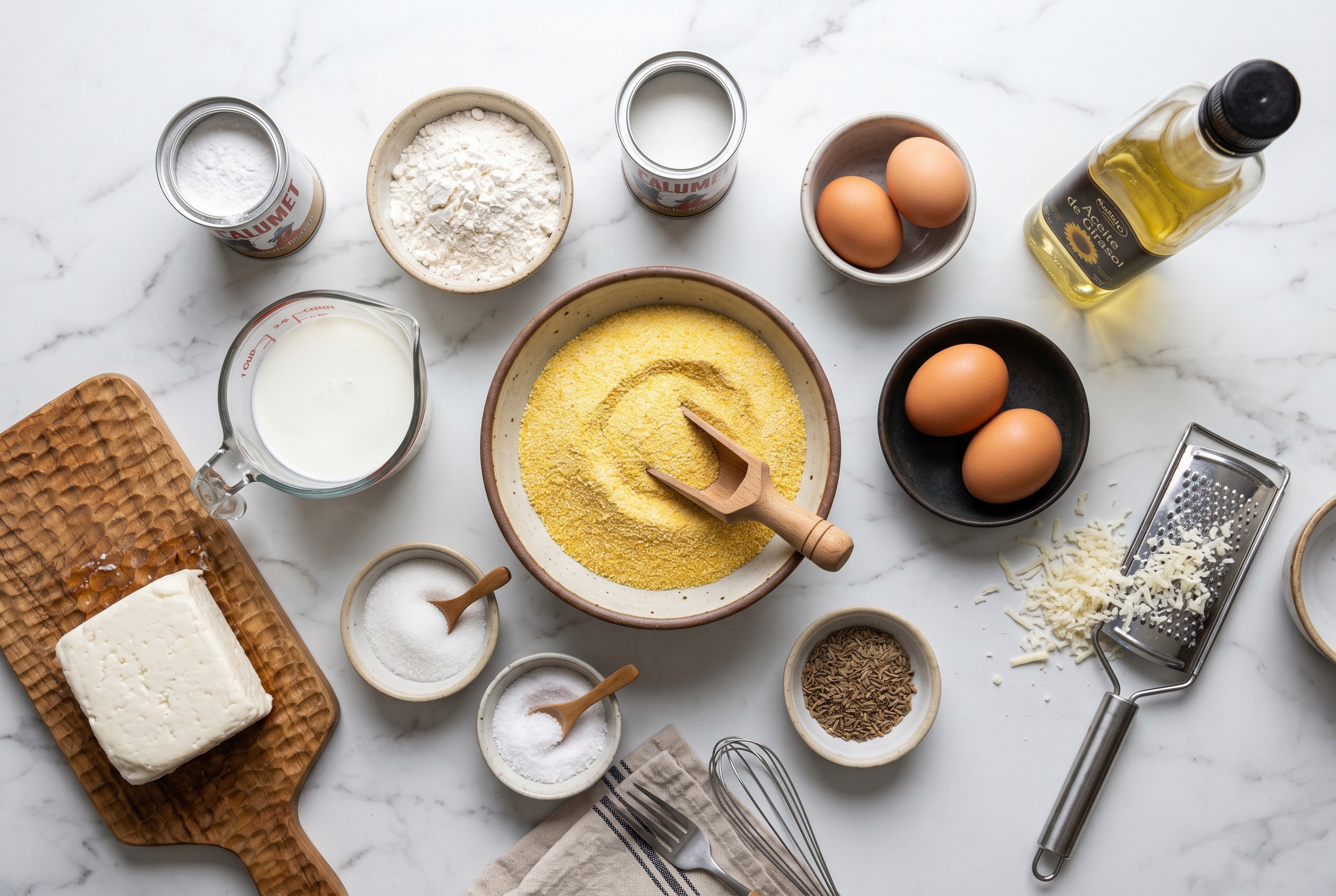
- 1 cup yellow cornmeal — fine or medium grind works
- ½ cup all-purpose flour
- ½ cup milk (whole milk preferred)
- 2 eggs, beaten
- ½ cup grated queso blanco (or queso de freír or a mild white cheese)
- 1 teaspoon anise seeds — this is the flavor that makes them Dominican
- 1 teaspoon sugar
- ½ teaspoon salt
- 1 teaspoon baking powder
- Vegetable oil for frying (about 3 cups in a deep pan)
- Extra sugar for dusting (optional)
Equipment: A small skillet for toasting anise, a mixing bowl, a deep heavy pan or caldero for frying, a slotted spoon, paper towels.
5 Things to Pair With Arepitas de Maíz
- Dominican coffee (café con leche): The classic merienda pairing. Dunk an arepita into hot café con leche and thank me later.
- Morir soñando: The sweet milk-and-orange-juice drink plays beautifully against anise.
- Chocolate caliente: Dominican hot chocolate with arepitas on a cold rainy day is elite.
- Mangu: A couple of arepitas on the side of a mangu breakfast adds nice textural contrast.
- Fresh tropical fruit: Mango, papaya, or pineapple cuts the richness nicely.
Step-by-Step Instructions
Step 1 — Toast the Anise Seeds
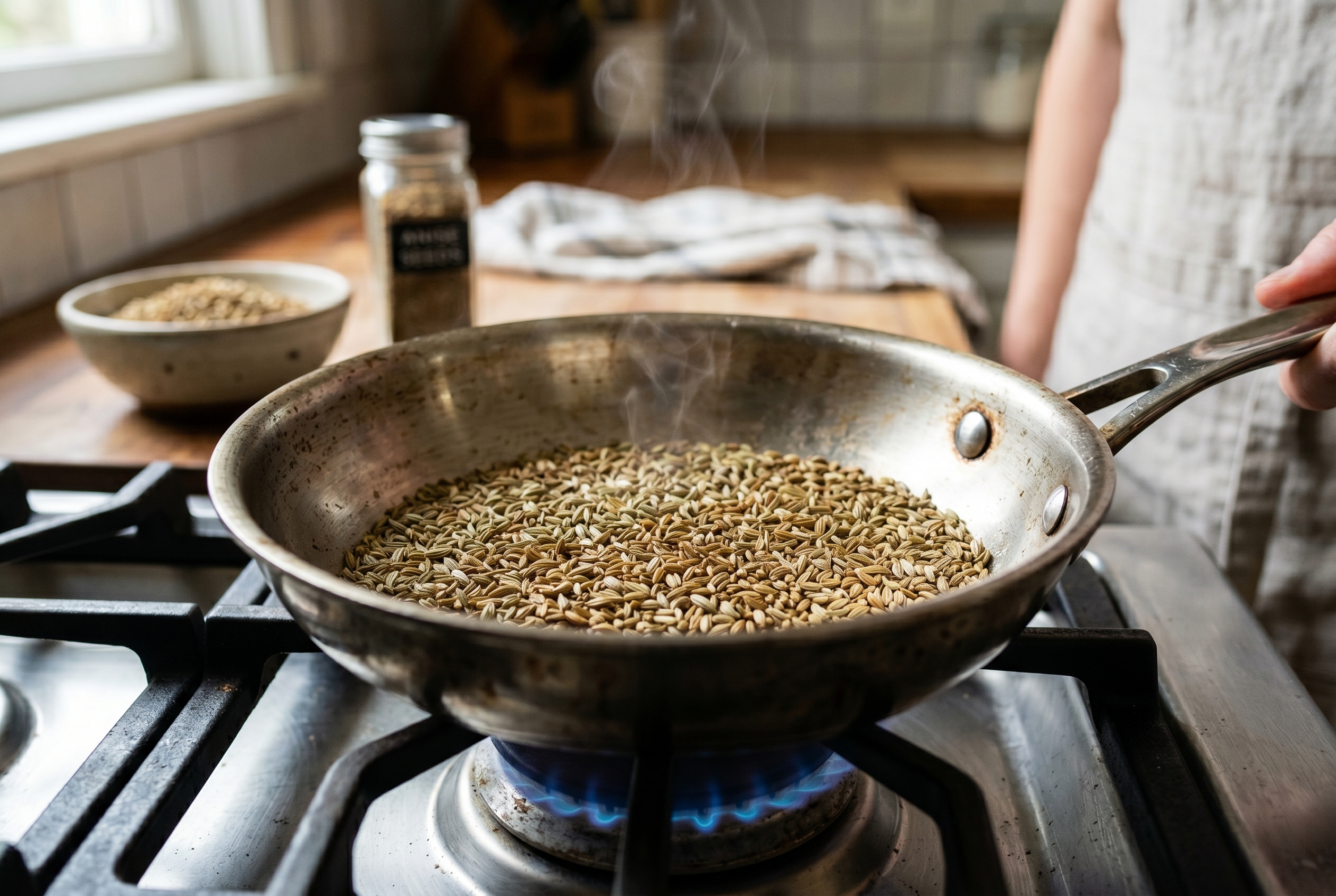
Heat a small dry skillet over medium heat. Add the anise seeds and toast for 30 seconds to 1 minute, shaking the pan constantly, until fragrant. Don't let them burn — just wake them up. Remove from heat and let cool for a minute. This step is small but non-negotiable — it's where all the arepita flavor comes from.
Step 2 — Mix the Dry Ingredients
In a medium mixing bowl, whisk together the yellow cornmeal, flour, sugar, salt, baking powder, and the toasted anise seeds. Make sure everything is evenly distributed so the salt and baking powder don't clump.
Step 3 — Whisk the Wet Ingredients
In a separate bowl or measuring cup, whisk together the milk and beaten eggs until smooth. Pour the wet mixture into the dry mixture. Stir with a wooden spoon or spatula until everything just comes together. Don't overmix — a few lumps are fine.
Step 4 — Fold in the Cheese and Rest
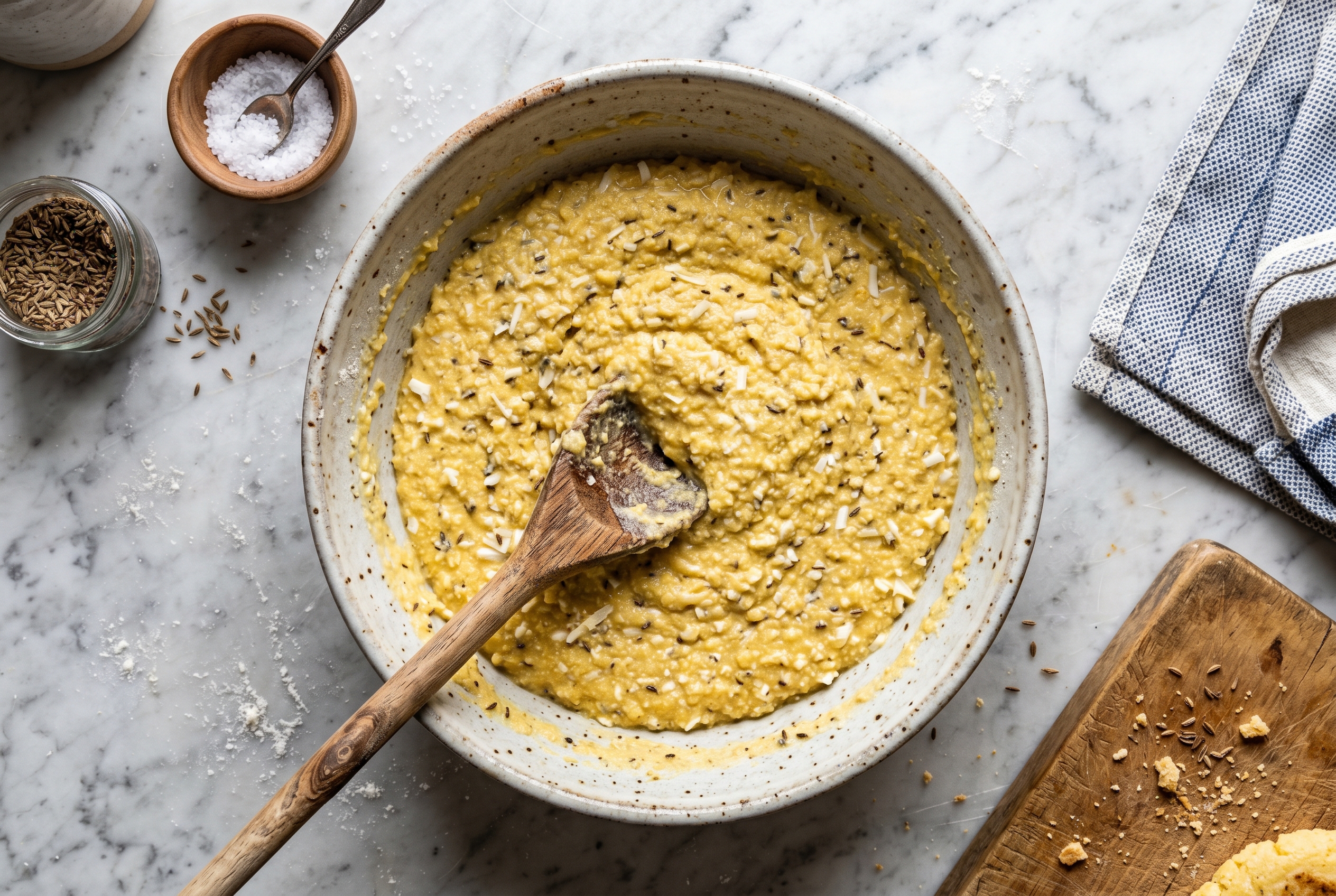
Gently fold in the grated queso blanco. The batter should be thick enough to hold its shape on a spoon — somewhere between pancake batter and thick muffin batter. Let the batter rest at room temperature for 10 minutes so the cornmeal can hydrate. This rest is what gives you the tender interior instead of a gritty one.
Step 5 — Heat the Oil and Fry
Heat about 2 inches of vegetable oil in a deep heavy pan to 350°F. Use a thermometer — temperature matters here. Drop the batter in by rounded tablespoons, a few at a time. They'll sink briefly, then float and puff up. Fry for 2-3 minutes per side, turning once, until deeply golden and crispy all over.
Step 6 — Drain and Serve Warm
Remove the arepitas with a slotted spoon and let them drain on a paper-towel-lined plate. If you want the slightly sweet beach-stand version, dust them with a little extra sugar while still warm. Serve immediately — arepitas are infinitely better hot. A paper cone is optional but traditional.
Pro Tips for Perfect Arepitas de Maíz
- Toast the anise seeds: This step takes 30 seconds and transforms the whole recipe. Skip it and you lose the signature Dominican aroma. Don't skip it.
- Oil at 350°F: Too cold and the arepitas soak up oil and come out greasy. Too hot and they brown outside while staying raw inside. Use a thermometer.
- Let the batter rest: Ten minutes is the magic number. The cornmeal needs that time to absorb moisture and soften. Skip the rest and you get a gritty texture.
- Serve warm: Arepitas are meant to be eaten right out of the oil, not hours later. If you must hold them, keep them in a 200°F oven for max 15 minutes.
- Don't crowd the pan: Give the arepitas room to puff up. Fry 5-6 at a time in a medium pan, not more. Crowding drops the oil temperature and makes them greasy.
Variations
Sweet Arepitas (Arepitas Dulces)
Increase the sugar in the batter to 3 tablespoons and add a splash of vanilla extract. After frying, roll the arepitas in cinnamon sugar while still warm. Dessert-level sweet — great with ice cream.
Cheesy Savory Arepitas
Skip the sugar and anise entirely. Double the cheese to 1 cup and add ¼ cup chopped fresh cilantro or scallions. Fry as normal. Serve with hot sauce or wasakaka as a savory snack.
Baked Arepitas
For a lighter version, drop tablespoons of batter onto a parchment-lined sheet pan, brush the tops with oil, and bake at 400°F for 18-20 minutes. Not as crispy as fried, but close. Flip halfway for even browning.
What to Serve With Arepitas de Maíz
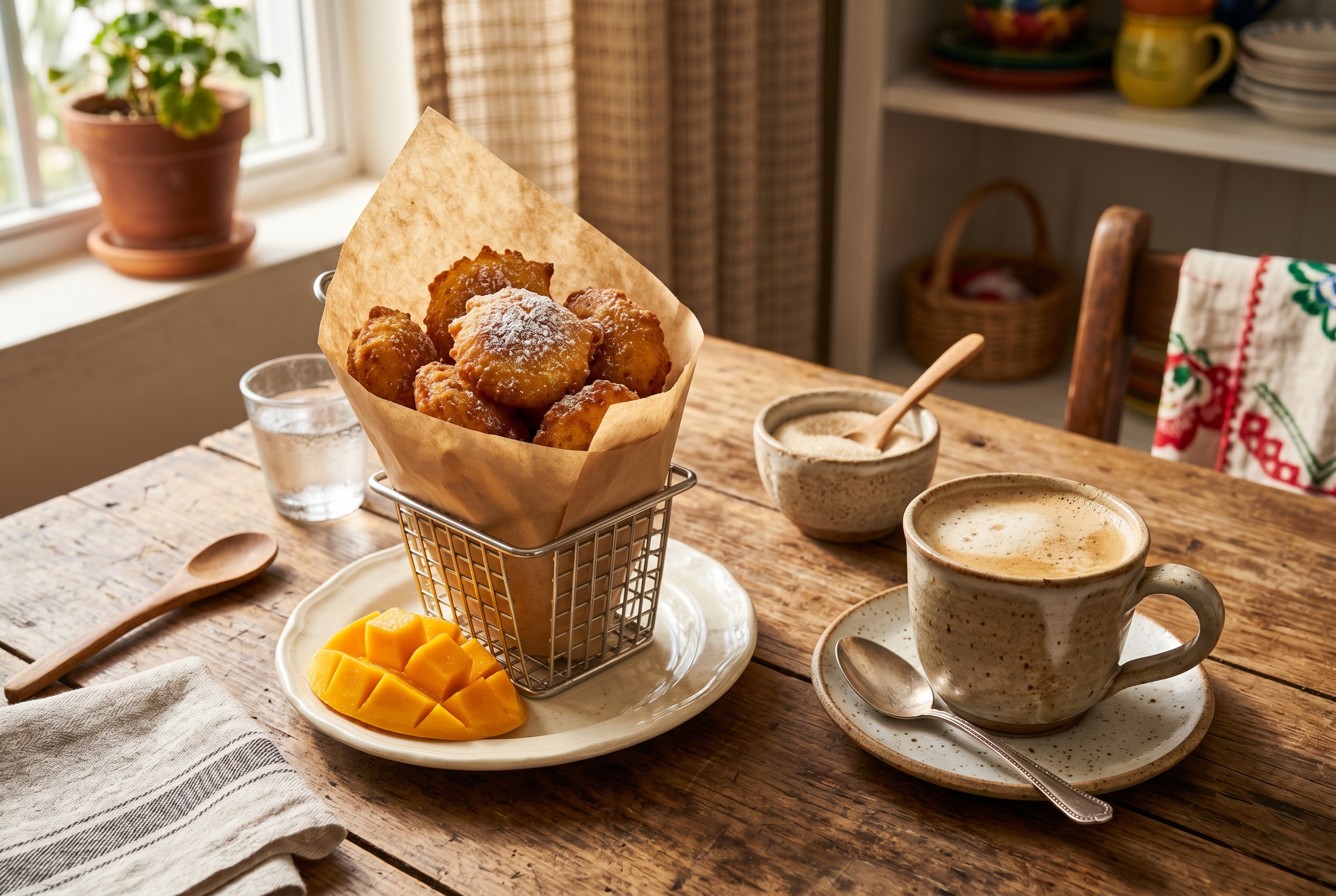
- Café con leche: The ultimate Dominican afternoon pairing.
- Morir soñando: Sweet and citrusy, plays beautifully with anise.
- Mangu: On the side of a breakfast plate for texture contrast.
- Fresh mango or papaya: Tropical fruit cuts the richness.
- Dominican hot chocolate: Rainy day magic — thick hot chocolate and warm arepitas.
You May Also Like
Frequently Asked Questions
What's the difference between Dominican arepitas and Colombian/Venezuelan arepas?
Completely different dishes despite the shared name. Colombian and Venezuelan arepas are made from masarepa (precooked corn flour), shaped into thick patties, and cooked on a hot griddle. They're usually split and stuffed with meats, cheese, or eggs. Dominican arepitas are made from yellow cornmeal, mixed into a batter with flour, milk, and egg, and deep-fried into small fritters. They're snack food, not a meal base.
Can I use cornmeal from the American supermarket?
Yes. Any yellow cornmeal — Quaker, Bob's Red Mill, store brand — works fine. Fine or medium grind is preferred over coarse. Don't use masa harina or masarepa; those are precooked corn flours for different dishes and will change the texture.
What cheese should I use?
Queso blanco (sold as queso fresco in most American stores) or queso de freír are the most authentic. If you can't find either, use a mild white cheese that holds its shape when heated — farmer's cheese, pressed cottage cheese, or even a mild mozzarella. Avoid anything that melts too easily like cheddar.
Can I skip the anise seeds?
You can, but then they're not really arepitas de maíz — they're just corn fritters. Anise is the defining flavor. If you can't find whole anise seeds, a ¼ teaspoon of ground anise or fennel seed works as a substitute. Don't use star anise — the flavor is too strong.
Why are my arepitas greasy?
Oil temperature is too low. The batter should sizzle immediately on contact with the oil. If the oil is under 340°F, the arepitas sit in it instead of frying, and they absorb oil. Use a thermometer and bring the oil back up to 350°F between batches.
Can I make the batter ahead of time?
Up to 2 hours in the fridge. Any longer and the baking powder starts to lose its punch. Give the batter a gentle stir before frying — don't whip it or you'll deflate it.
Can I freeze arepitas?
Yes, but they lose some crispness. Freeze cooled fried arepitas on a sheet pan until solid, then transfer to a zip-top bag for up to 1 month. Reheat from frozen in a 375°F oven for 8-10 minutes.
Are arepitas de maíz gluten-free?
Not as written — there's ½ cup all-purpose flour in the recipe. To make them gluten-free, substitute a 1:1 gluten-free flour blend or increase the cornmeal to replace the flour. Texture changes slightly but still works.
How many arepitas does this recipe make?
Roughly 18 tablespoon-sized fritters. You can adjust the size — smaller bite-size fritters give you 24, larger silver-dollar-pancake sized ones give you about 12. Cooking time changes accordingly.
Can I use plantain flour instead of cornmeal?
No — plantain flour behaves completely differently. Stick to yellow cornmeal. That's the corn in arepitas de maíz.
What if the arepitas come out too dense?
Two likely causes. First, you may have overmixed the batter — once the wet and dry are combined, stir just enough to bring it together. Overmixing develops gluten from the flour and makes the interior tough. Second, your baking powder may be old. It loses potency after about 6 months of being opened. If your arepitas are heavy and dense instead of light and tender, swap in a fresh tin.
Arepitas de Maíz (Dominican Corn Fritters)
Ingredients
Method
- Toast anise seeds in a dry skillet over medium heat for 30-60 sec until fragrant. Cool slightly.

- Whisk cornmeal, flour, sugar, salt, baking powder, and toasted anise in a bowl.
- In a separate bowl whisk milk and beaten eggs. Pour into dry ingredients. Stir until just combined.
- Fold in grated queso blanco. Rest batter 10 minutes at room temp.
- Heat 2 inches of oil to 350°F. Drop batter by rounded tablespoons. Fry 2-3 min per side until deeply golden.
- Drain on paper towels. Dust with sugar while warm if desired. Serve immediately.
Nutrition
Video
Notes
Tried this recipe?
Let us know how it was!Shop This Recipe
View on Amazon →
View on Amazon →
View on Amazon →
As an Amazon Associate I earn from qualifying purchases at no extra cost to you.
Fry a batch this afternoon. Grab a café con leche. That's the perfect Dominican merienda.


Leave a Reply