
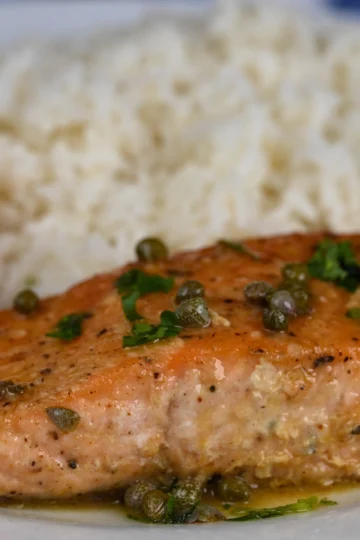
This Baked Salmon with Garlic and Dijon is light, flavorful, and comes together in no time. Perfect for a healthy weeknight dinner or when you want something a little more elegant, this recipe never disappoints. Fresh, simple, and absolutely delicious!

About This Recipe
Here's what separates restaurant salmon from home-cooked: we score the skin in a crosshatch pattern before baking, but only cut halfway through the fat layer, never into the flesh. This prevents the skin from shrinking and pulling the fillet into that ugly curved shape you see with overcooked salmon. The garlic and Dijon mixture actually needs to be applied to dry fish - any surface moisture creates a barrier that prevents the flavors from penetrating. In professional kitchens, we pat the salmon completely dry, then let it sit uncovered for 10 minutes before applying the garlic-Dijon paste. This technique, combined with starting the fish skin-side down on a preheated sheet pan, creates that perfect contrast: crispy, seasoned top with silky, flaky interior. Most home cooks apply wet seasonings to wet fish and wonder why the flavors sit on the surface instead of melding into each bite.
Ingredients for Baked Salmon with Garlic and
- 2 ½ lb salmon filet
- 3 tablespoon fresh parsley, chopped
- 3 tablespoon olive oil
- 1 fresh lemon, juiced
- 6 garlic cloves, pressed
- 1 tablespoon Dijon mustard
- 1 teaspoon sea salt or to taste
- ½ teaspoon black pepper or to taste
- 1 Lemon, sliced into rings for garnishing
Substitutions & Variations
- Dijon mustard: Replace with 1 tablespoon of sofrito or recaito for a Caribbean twist that adds aromatic herbs and peppers instead of the tangy mustard bite.
- Fresh parsley: Substitute with cilantro or culantro (recao) for a more pronounced Latin flavor that pairs beautifully with the garlic and lemon.
- Salmon filet: Use red snapper, mahi-mahi, or grouper which are popular Caribbean fish that will give you a flakier, milder taste than the rich salmon.
- Olive oil: Switch to coconut oil for a subtle tropical flavor that complements the fish while adding a hint of island essence.
- Fresh lemon juice: Replace with sour orange (naranja agria) juice or lime juice for a more authentic Caribbean citrus profile that's slightly more tart and aromatic.
- Garlic cloves: Add a minced scotch bonnet or habanero pepper along with the garlic for a spicy Dominican-style preparation that brings heat without overwhelming the fish.
How to Make Baked Salmon with Garlic and
- Preheat the oven to 450˚F and line a rimmed baking sheet with parchment paper. Slice salmon into even portions and arrange them on a lined baking sheet, skin-side-down.
- In a small bowl, combine: 3 tablespoon parsley, 6 pressed garlic cloves, 3 tablespoon oil and lemon juice, 1 tablespoon Dijon, 1 teaspoon salt, and ½ teaspoon pepper.
- Generously spread the marinade over the top and sides of the salmon.
- Bake at 450°F for 12-15 min or until just cooked through and flaky. Don't over-cook.
What to Serve With Baked Salmon with Garlic and
The bright, tangy flavors of this salmon pair beautifully with creamy coconut rice - the richness balances the Dijon's sharpness perfectly. I love serving it alongside my Dominican-style yuca with garlic mojo, which echoes the salmon's garlic notes while adding that comforting starchy element every good meal needs.
For something lighter, try roasted asparagus with lemon zest - the veggie's slight bitterness plays off the salmon's richness, while the citrus ties everything together. The textures work magic too: that crispy asparagus against the flaky, tender fish creates the kind of contrast that makes each bite interesting.
Don't sleep on a simple arugula salad dressed with olive oil and balsamic vinegar. The peppery greens cut through the salmon's richness, while the tangy dressing complements those Dijon flavors without competing. It's one of those classic pairings that just works every single time.
Frequently Asked Questions
1. What type of salmon is best for baking?
Center-cut fillets about 1-1.5 inches thick give the most even baking. Atlantic salmon is fattier and more forgiving, while wild sockeye has a deeper, more intense flavor.
2. What is in the garlic Dijon topping?
Dijon mustard, minced garlic, honey, lemon juice, and fresh herbs mixed together and spread over the salmon before baking. The mustard creates a flavorful, golden crust.
3. What temperature and time for baked salmon?
400 degrees for 12-15 minutes for 1-inch thick fillets. The salmon is done when it flakes easily with a fork and the internal temperature reaches 130-135 degrees.
4. Should I bake skin-on or skin-off?
Skin-on is recommended — the skin protects the bottom of the fillet from direct heat and peels off easily after baking. It also adds flavor if you crisp it.
5. How do I prevent salmon from drying out?
Do not overbake — salmon continues cooking after you pull it from the oven. The Dijon-honey glaze also acts as a moisture barrier. Pull at 130 degrees for the juiciest result.
6. What does the Dijon mustard do?
The mustard adds tangy, sharp flavor, helps the garlic and herbs adhere to the fish, and forms a thin protective crust that seals in moisture during baking.
7. Can I broil instead of bake?
Yes — broil 6 inches from the heat for 8-10 minutes. The high heat caramelizes the Dijon glaze quickly while the inside stays moist. Watch carefully to prevent burning.
8. What fresh herbs complement garlic Dijon salmon?
Fresh dill is the classic pairing. Parsley, chives, and tarragon also work beautifully with the mustard and lemon flavors.
9. What sides pair well with baked salmon?
Roasted asparagus, steamed rice, lemon-herb couscous, sauteed green beans, or a light arugula salad all complement the rich garlic Dijon flavors.
10. How do I store leftover baked salmon?
Refrigerate for up to 2 days in an airtight container. Leftover Dijon salmon is excellent served cold over salads, in grain bowls, or flaked into pasta.
Baked Salmon with Garlic and Video
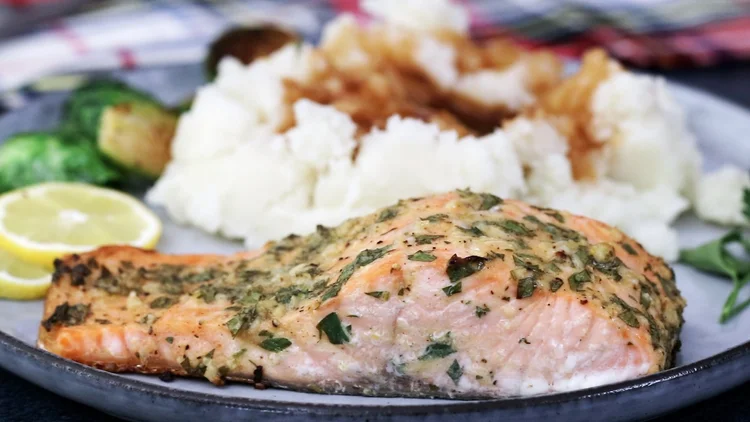
Baked Salmon with Garlic and Dijon
Ingredients
Method
- Preheat the oven to 450˚F and line a rimmed baking sheet with parchment paper. Slice salmon into even portions and arrange them on a lined baking sheet, skin-side-down.
- In a small bowl, combine: 3 tablespoon parsley, 6 pressed garlic cloves, 3 tablespoon oil and lemon juice, 1 tablespoon Dijon, 1 teaspoon salt, and ½ teaspoon pepper.
- Generously spread the marinade over the top and sides of the salmon.
- Bake at 450°F for 12-15 min or until just cooked through and flaky. Don't over-cook.
Nutrition
Notes
Buy salmon with the skin on even if you won't eat it - the skin acts as a natural barrier preventing overcooking and keeps the flesh incredibly moist during baking, something I learned after years of comparing skinless versus skin-on fillets. Mix your Dijon with minced garlic 15 minutes before cooking and let it sit - the mustard's acidity breaks down the garlic's harsh bite and creates a more mellow, integrated flavor that won't overpower the delicate salmon. Press the garlic-Dijon mixture firmly into the flesh using the back of a spoon, not just spreading it on top - this ensures the flavors penetrate deeper and won't slide off during baking like I see happen constantly. Choose center-cut fillets that are uniformly thick rather than tail pieces - theeven thickness ensures consistent cooking throughout, and the higher fat content in center cuts pairs perfectly with the tangy Dijon without drying out.
Tried this recipe?
Let us know how it was!Filed Under

Leave a Reply