
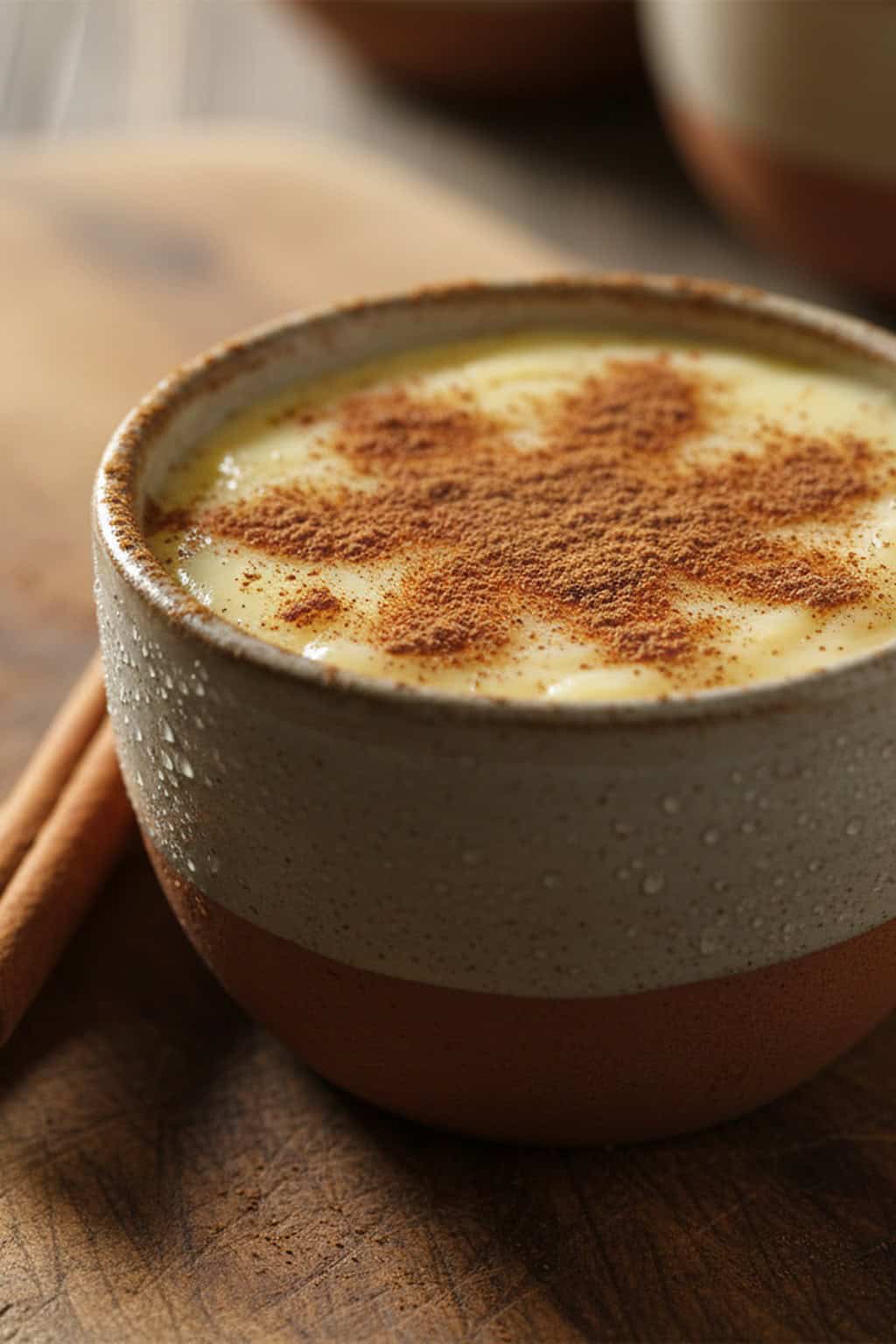
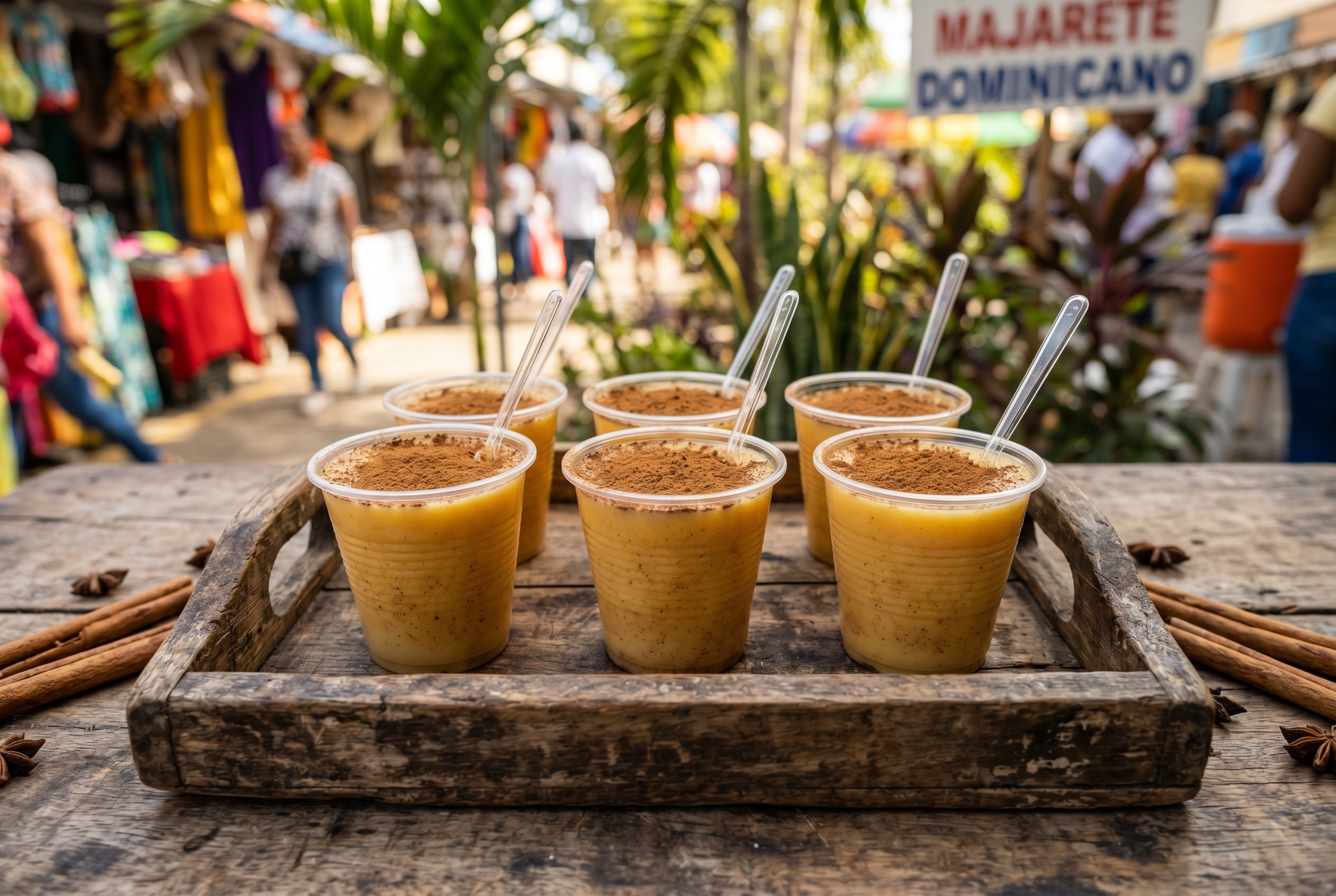
Sunday mornings in Santo Domingo have a sound and a smell. The sound is bachata drifting out of somebody's window and the horn of the guy pushing a cart down the calle. The smell, if you're near a park or a malecón, is sweet corn, coconut, and cinnamon — because that cart is usually selling majarete. He rolls up with a styrofoam cooler full of little plastic cups, each one topped with a heavy dusting of ground cinnamon, and people line up three or four deep. Twenty-five pesos. Cold. Silky. Gone in four spoonfuls. That's a Dominican Sunday.
Majarete is the dessert most Dominicans grew up on but almost nobody outside the island knows. It's a chilled corn pudding, somewhere between a thick drink and a soft pudding — smooth enough to sip but firm enough to hold the cinnamon on top. Sweet corn, coconut, a whisper of vanilla, and that warm hit of cinnamon on the first bite. It's not custard, not horchata, not any gringo pudding. It's its own thing, deeply Dominican.
What makes real majarete real is the fresh corn. The old-school way — the way my tías do it — is to cut the kernels off four ears of corn, blend them with a little milk, and strain through cheesecloth until you've got pure white corn milk. That corn milk is the base. You cook it down with coconut milk, sugar, cinnamon, and a bit of cornstarch to set it, and chill it cold. Shortcut versions with masa harina or corn flour taste grainy and flat. Fresh corn is what gives majarete that bright sweetness that makes you close your eyes on the first bite.
Why You'll Love This Majarete Dominicano
- Tastes like a Sunday in Santo Domingo: Close your eyes and you're back at the park with a plastic cup and a little cucharita, cinnamon all over the top.
- Only 9 ingredients: Fresh corn, milk, coconut milk, sugar, cinnamon, vanilla, cornstarch, salt, ground cinnamon on top. Nothing weird.
- No baking, no special equipment: A blender, a strainer, a pot. That's it. If you have a kitchen, you can make majarete.
- Naturally gluten-free: No flour anywhere. Corn and cornstarch do all the structural work.
- Make-ahead friendly: Majarete needs to chill for at least 2 hours anyway. Make it the night before and it's even better the next day.
What Is Majarete?
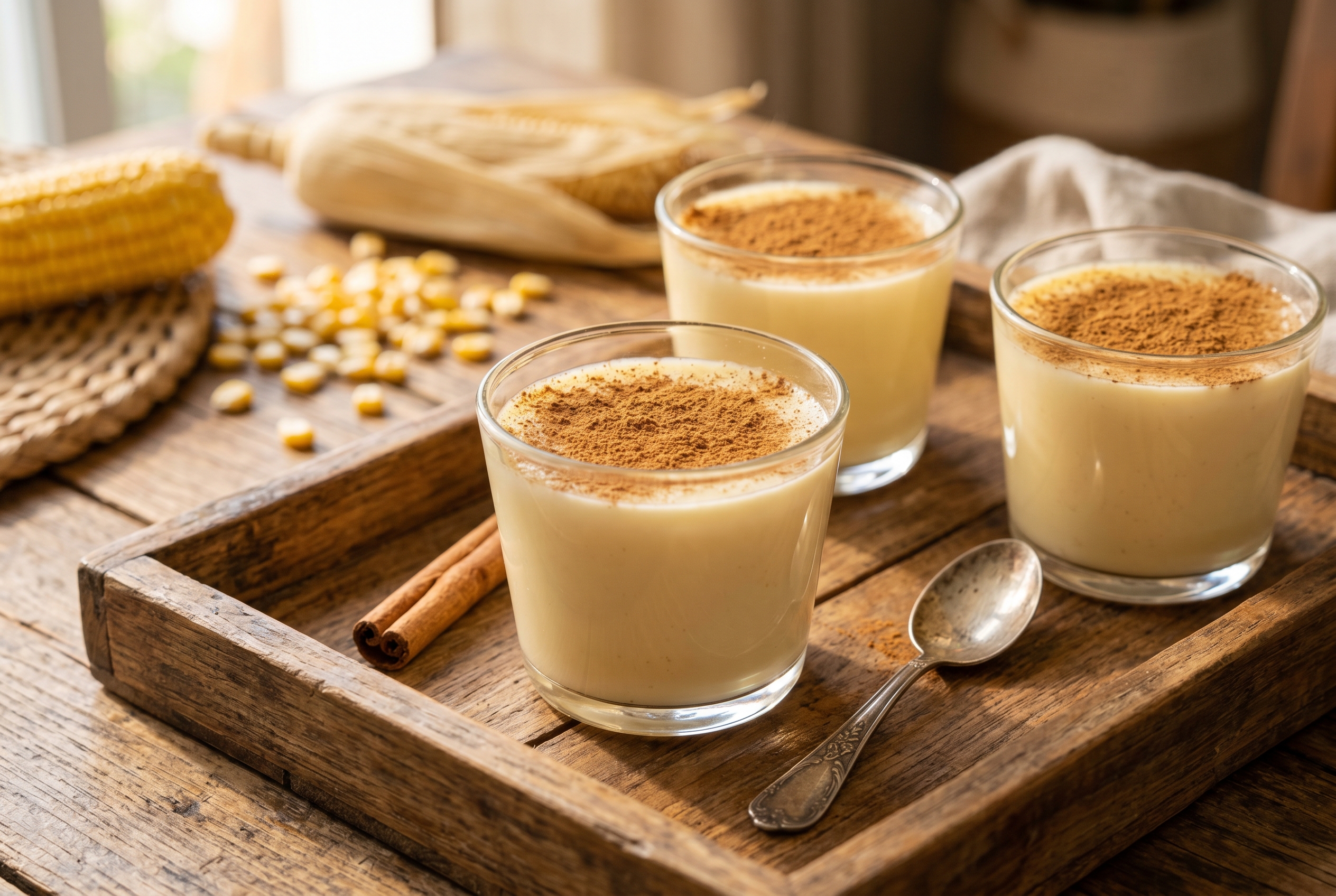
Majarete is a silky Dominican corn pudding made from fresh sweet corn that's been blended, strained, and cooked down with milk, coconut milk, sugar, and cinnamon. It's served cold in small cups with a heavy dusting of ground cinnamon on top. The texture is the first thing you notice — smoother than any pudding you've had, almost pourable if you tilt the cup, but thick enough to coat the back of a spoon. Dominicans eat it with a tiny plastic cucharita. It's not super sweet, not heavy — the kind of dessert you can eat a whole cup of on a hot afternoon and feel refreshed afterward.
The roots go deep — all the way back to the Taíno, the indigenous people of Hispaniola. Corn (maíz) was sacred to them. They ground it, fermented it, and made corn-milk drinks and puddings from it. When enslaved Africans were brought to the island, they folded coconut milk into the tradition — coconut being an ingredient that came with them across the Atlantic. Modern majarete is that collision: Taíno corn-milk base, African coconut, Spanish sugar and cinnamon. Three cultures in a plastic cup.
You'll only find majarete in this exact form in the DR. There are corn-based puddings all over Latin America — Venezuela has majarete too but slightly different, Colombia has mazamorra, Mexico has atole — but the Dominican version with coconut milk, that specific silky texture, and the Sunday street-vendor tradition is ours. In some regions of the DR people call it "maicena" (literally "cornstarch") because of the cornstarch that sets it. If you've only had corn pudding the American way — baked, eggy, served warm — this is a completely different animal. A cousin, not a sibling.
Fresh Corn vs Canned vs Frozen
Fresh corn is the move. Four ears of sweet corn in season blended and strained gives you that bright, floral, just-picked flavor that makes majarete taste alive. Frozen corn is an acceptable second place — use good-quality frozen sweet corn, thaw it fully, and you'll still get clean corn flavor, losing maybe 15% of the brightness. Canned corn works in a pinch but I don't love it — the canning liquid leaves a slightly tinny, dull taste. If it's all you have, drain and rinse well and add an extra splash of vanilla. But if you can get fresh, get fresh. It's the whole dessert.
Ingredients You'll Need
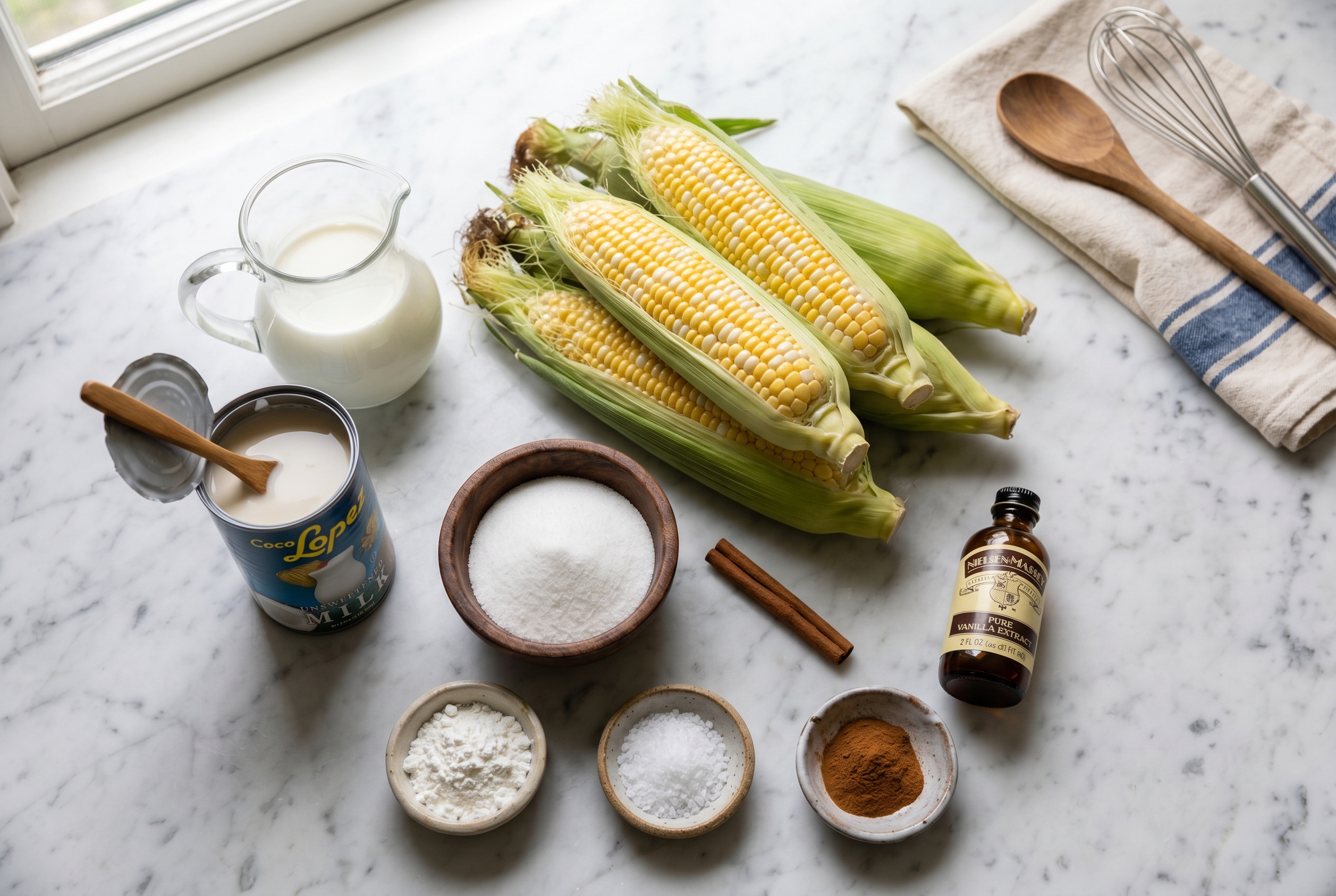
- 4 ears fresh sweet corn (or 3 cups frozen sweet corn, thawed) — the star of the whole thing
- 2 cups whole milk — full fat, don't substitute skim
- 1 can (13.5 oz) coconut milk — full-fat unsweetened, shake the can well
- ¾ cup sugar — adjust to taste, some corn is sweeter than others
- 1 cinnamon stick — a real stick, not pre-ground
- 1 teaspoon vanilla extract — pure, not imitation
- 3 tablespoon cornstarch — what sets the pudding
- ¼ teaspoon salt — balances the sweetness, don't skip
- Ground cinnamon for garnish — heavy dusting on every cup
Equipment: A blender, a fine mesh strainer, a piece of cheesecloth, a medium saucepan, a whisk, a rubber spatula, and 6-8 small cups or ramekins for serving. A kitchen scale helps but isn't required.
Step-by-Step Instructions
Step 1 — Cut & Blend the Corn
Stand each ear of corn upright on a cutting board and cut the kernels off with a sharp knife, from top to bottom. Get as close to the cob as you can — that's where the sweetest corn milk lives. You should end up with about 3 cups of kernels. Toss them in the blender with 1 cup of the whole milk. Blend on high for 2 full minutes until you have a thick, frothy, pale yellow liquid. Don't rush this — the longer you blend, the more corn milk you extract.
Step 2 — Strain Through Cheesecloth
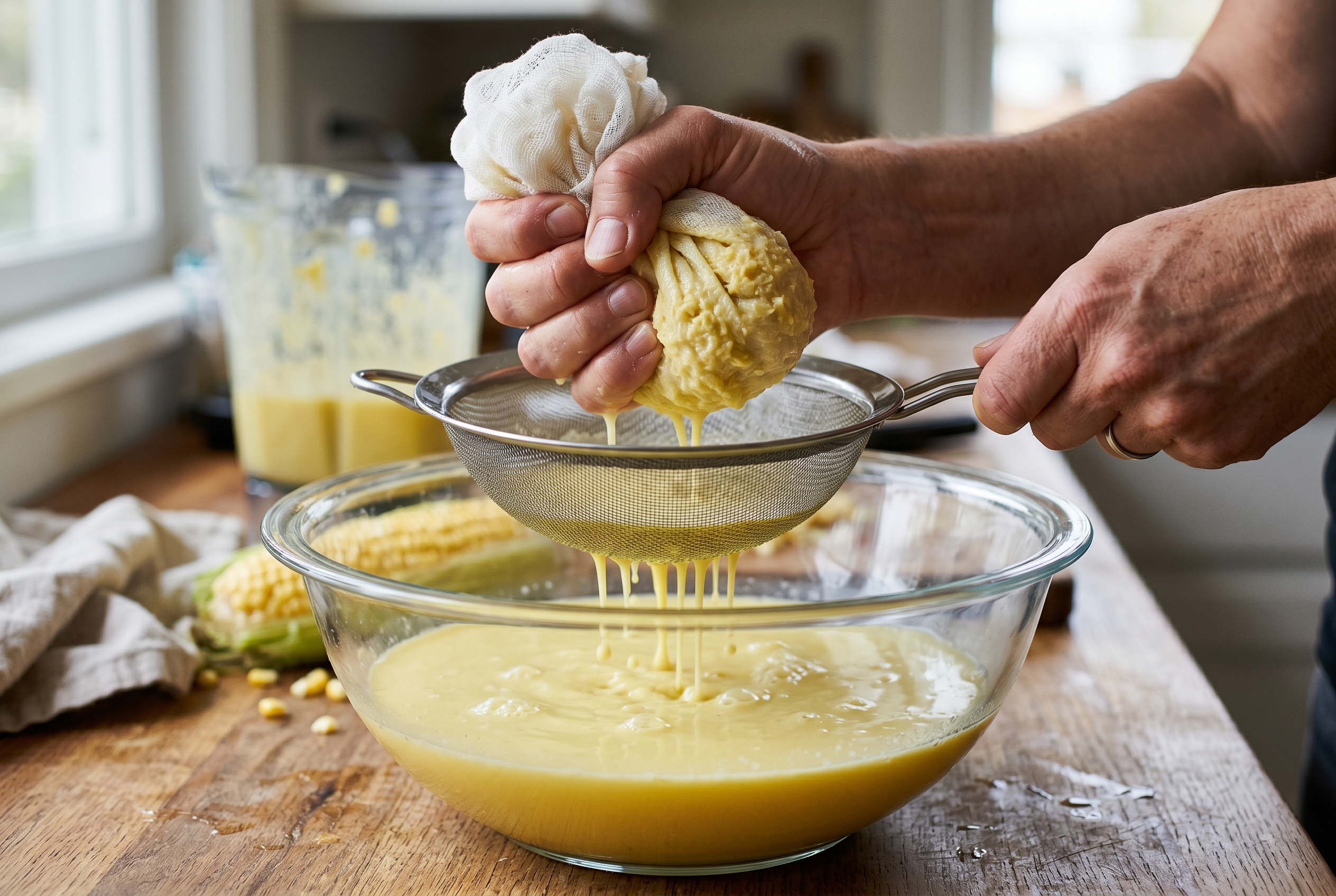
Set a fine mesh strainer over a large bowl and line it with a double layer of cheesecloth. Pour the corn and milk mixture in. Let gravity do most of the work first, then gather up the corners of the cheesecloth and squeeze — hard. You want every drop of that corn milk. The solids left behind in the cheesecloth (the corn pulp) should look almost dry when you're done. Toss the pulp. What's in your bowl is pure corn milk, and it's liquid gold.
Step 3 — Combine Liquids & Heat
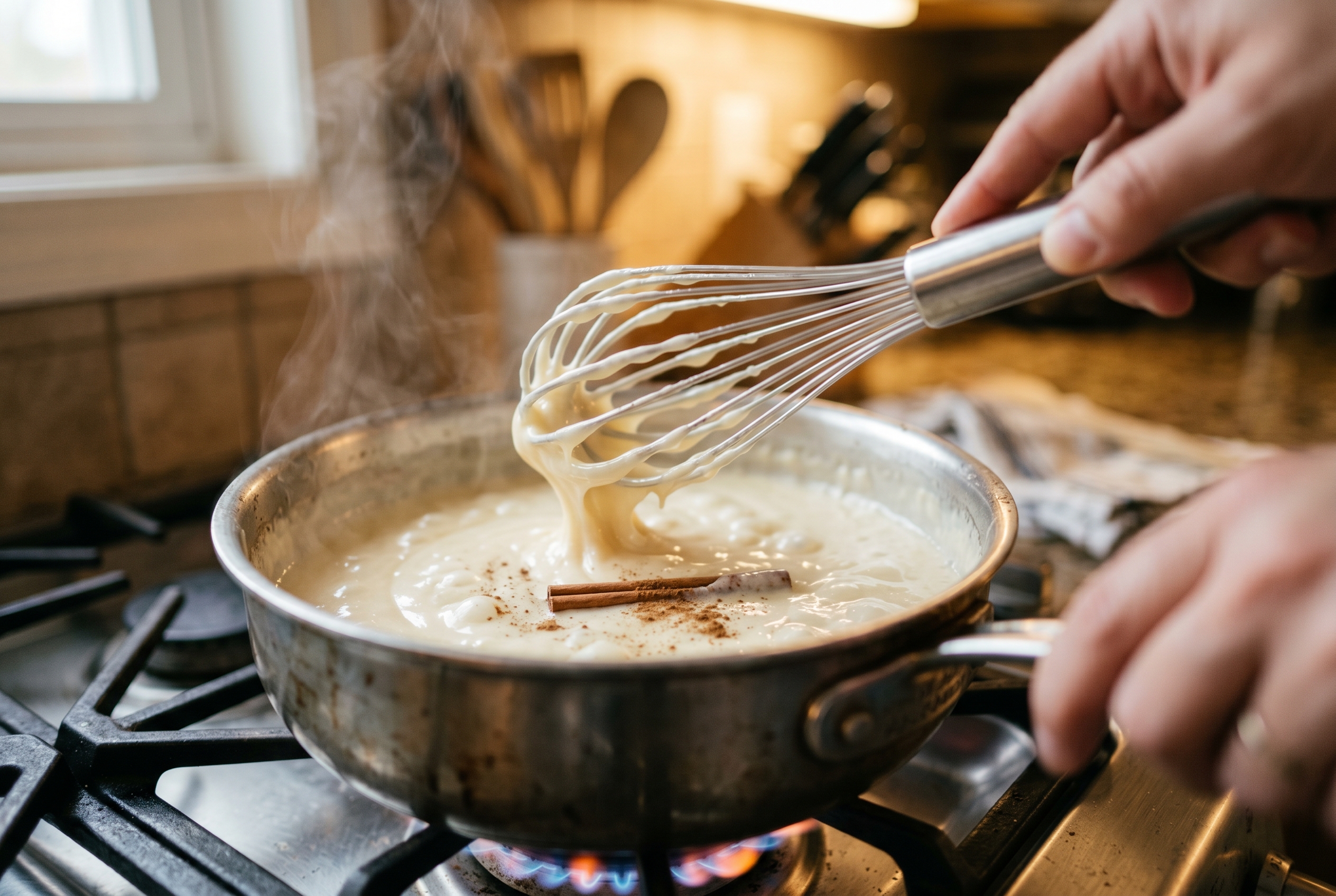
Pour the strained corn milk into a medium saucepan. Add the remaining 1 cup of whole milk, the full can of coconut milk, sugar, salt, and the cinnamon stick. Whisk everything together over medium heat until it's smooth and the sugar has dissolved. Don't let it boil yet — you're just warming it and waking up the cinnamon. This takes about 5 minutes. You should start smelling that sweet corn-coconut-cinnamon mix coming off the pan. That's the Dominican Sunday smell right there.
Step 4 — Thicken With Cornstarch
In a small bowl, whisk the cornstarch with ¼ cup of cold water until you've got a smooth slurry — no lumps. Slowly pour the slurry into the warm corn milk mixture while whisking constantly. Turn the heat up to medium-high and keep whisking. Within 3-4 minutes the mixture will start thickening noticeably — it goes from thin and milky to glossy and coating-the-back-of-a-spoon thick. Once it's thick enough that it holds a line when you run your finger through it on the spoon, kill the heat. Stir in the vanilla extract. Fish out the cinnamon stick.
Step 5 — Cool & Chill
Pour the hot majarete into 6-8 small cups, ramekins, or one big bowl. Tap them gently on the counter to release any bubbles and to smooth the surface. Let them cool at room temperature for about 20 minutes, then cover each one with plastic wrap pressed directly onto the surface of the pudding (this prevents a skin from forming) and transfer to the fridge. Chill for at least 2 hours, preferably 4. Majarete needs to be fully cold for the texture to set up properly — don't rush this step.
Step 6 — Serve With Cinnamon
Right before serving, take the plastic wrap off the cups and dust the top of each one with a heavy pinch of ground cinnamon. I mean heavy — don't be shy. Dominican street majarete has so much cinnamon on top you almost can't see the pudding underneath. That's how you want it. Serve cold, with a small spoon. If you're feeling fancy, add a tiny piece of cinnamon stick on top as garnish. Eat immediately while the cinnamon is still dry and aromatic.
Pro Tips for Perfect Majarete
- Strain twice for silky texture: After squeezing the cheesecloth, pour the corn milk through a fine mesh strainer one more time. Any last bit of pulp you catch makes the final majarete silkier. Old Dominican trick — strain twice, always.
- Slurry the cornstarch first: Never dump dry cornstarch directly into hot liquid. It will lump up instantly and you'll spend ten minutes chasing lumps. Mix it with cold water first into a smooth slurry, then whisk it in slowly.
- Taste for sugar while it's warm: Corn sweetness varies ear to ear. Taste after step 3 and before you add the cornstarch — if it needs more sugar, add it now while everything still dissolves easily.
- Chill at least 2 hours — really: Warm majarete has a weird slightly-loose texture. It only becomes the proper silky-firm pudding after it's been cold for a couple hours. Best case, make it the night before.
- Dust cinnamon right before serving: If you dust cinnamon on top hours ahead, it turns into a damp paste instead of that fragrant dry powder. Keep the cinnamon in a little dish and hit each cup at the last second.
Variations
Coconut-Forward Majarete
If you want the coconut to hit harder, swap one of the cups of whole milk for a second can of coconut milk. The result is richer, creamier, and has a deeper tropical flavor. Some folks on the south coast of the DR make it this way — closer to the African side of the recipe's heritage.
Chocolate Majarete
Whisk 3 tablespoons of unsweetened cocoa powder into the corn milk mixture in step 3. You get a majarete that's halfway between corn pudding and hot chocolate, chilled. Dust with cinnamon and a tiny bit of cocoa on top. Kids go crazy for this one.
Dairy-Free Majarete
Replace the whole milk with a second can of coconut milk (so you're using 2 full cans total). The texture stays silky and the flavor leans into the coconut hard. Perfect for anyone lactose intolerant or who just wants a vegan version. Every other step stays identical.
What to Serve With Majarete
- Dominican coffee: A tiny cup of strong black Dominican coffee next to the majarete. The bitter coffee cuts the sweet pudding perfectly.
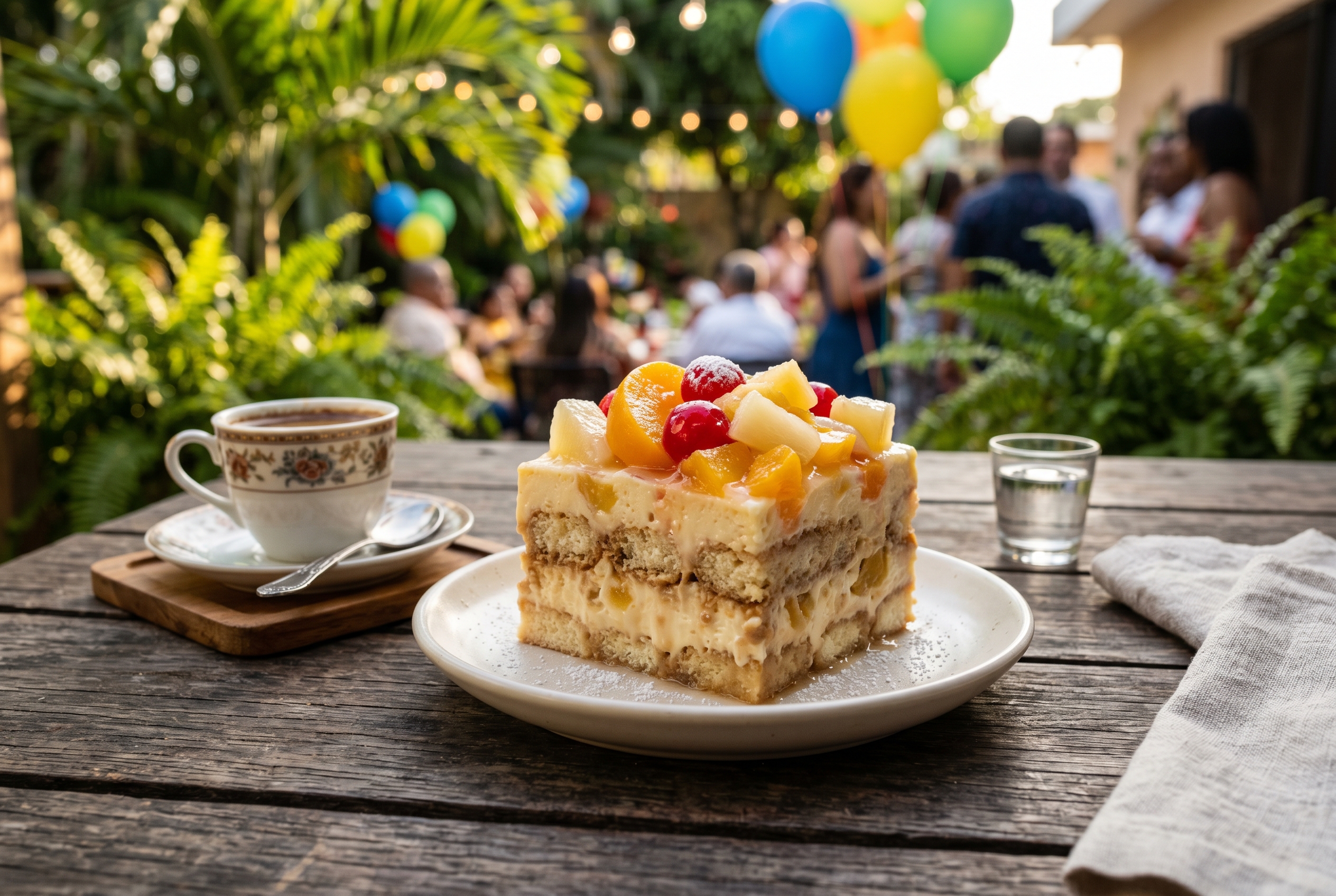
- Bizcocho dominicano: A slice of Dominican birthday cake and a cup of majarete on a Sunday afternoon. Classic combo.
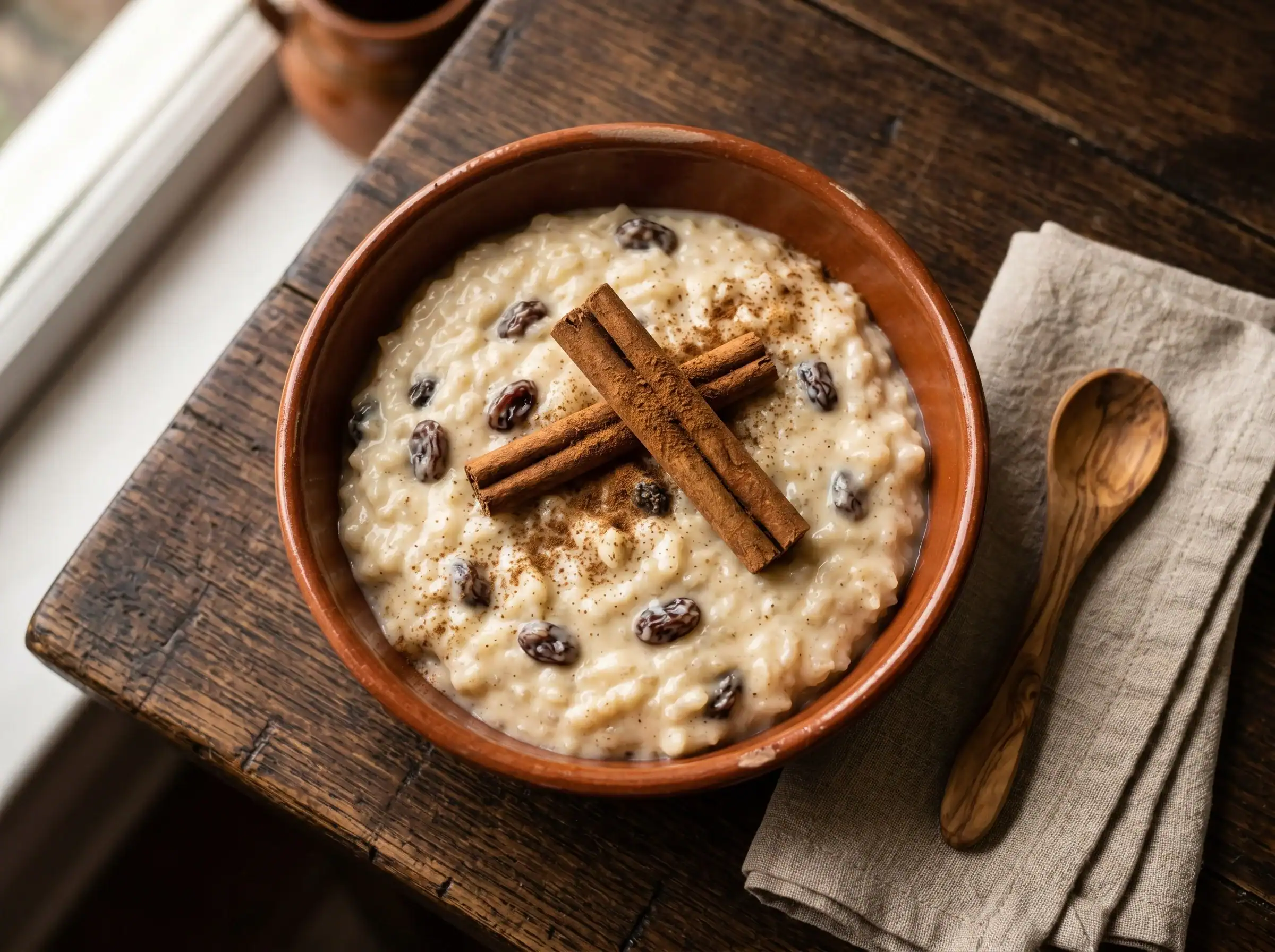
- Arroz con leche: Two Dominican puddings on one tray — offer both and let people pick. They'll try both.
- Habichuelas con dulce: During Semana Santa, majarete shows up next to habichuelas con dulce on Dominican dessert tables. Both chilled, both cinnamon-dusted.
- Dulce frio: Another chilled Dominican dessert. Serve a trio of chilled sweets after a heavy sancocho dinner.
Cultural Notes
The Deep History Behind the Cup
- Taíno origin: Majarete starts with the Taíno, the indigenous people of Hispaniola. Corn was a sacred crop, and corn-milk drinks were part of pre-Columbian food culture. The word and the technique of extracting corn milk trace back to them.
- African coconut influence: The coconut milk in majarete came with the African diaspora. Coconut wasn't native to the Taíno kitchen — it arrived with enslaved West Africans and got folded into the corn-milk base, creating the version we know today.
- Sunday street food and the "maicena" nickname: In modern DR, majarete is Sunday park food — sold from coolers and carts in plastic cups all over the country. In some regions, especially the Cibao, people call it "maicena" after the cornstarch that sets it. Same thing, different name.
You May Also Like
Frequently Asked Questions
What is majarete?
Majarete is a silky Dominican corn pudding made from fresh sweet corn that's been blended, strained through cheesecloth, and cooked down with milk, coconut milk, sugar, and cinnamon. It's served cold in small cups with ground cinnamon dusted heavily on top. It sits somewhere between a thick drink and a soft pudding — smooth, cool, not too sweet.
Can I use canned corn?
You can, but I don't recommend it. Canned corn has a slightly tinny flavor and duller color. If it's all you have, drain and rinse thoroughly and bump up the vanilla. Frozen sweet corn (thawed) is a much better substitute for fresh.
Why do I need to strain the corn?
Straining is what separates real silky majarete from a gritty imitation. You're trying to extract the liquid from the corn (the corn milk) while leaving the fibrous pulp behind. That pure corn milk is what gives majarete its clean flavor and smooth texture. If you skip the strain, you get something grainy that won't chill up properly.
How thick should majarete be?
Thick enough to coat the back of a spoon when you pull it out of the pot, but still pourable. When it's fully chilled, it should be firm enough to hold the shape of the cup when you tilt it slightly, but soft enough that a spoon glides through without resistance. If it's too stiff, you added too much cornstarch. If it's runny after chilling, not enough.
Can I make majarete dairy-free?
Yes, easily. Replace the whole milk with a second can of full-fat coconut milk. The texture stays silky and the flavor leans more coconut. It's vegan-friendly if you use a plant-based cornstarch (most are). Every other step is identical.
How long does majarete keep in the fridge?
Covered tightly, majarete keeps in the fridge up to 4 days — flavor deepens after day one. If the surface forms a thin skin, whisk gently before serving. Don't dust cinnamon on top until you're actually serving each cup.
Can I freeze majarete?
I wouldn't. Cornstarch-thickened puddings separate and get grainy when frozen and thawed, and the silky texture is the whole point. Make a smaller batch more often — it comes together in 30 minutes of active work.
Is majarete a drink or a pudding?
Both and neither. Dominicans drink it straight from the cup when it's thin and eat it with a spoon when it's thicker. The version here sits on the pudding end — spoon territory. For a drinkable version, reduce the cornstarch to 2 tablespoons.
What are the Taíno origins of majarete?
The Taíno were the indigenous people of Hispaniola before European contact, and corn was a sacred staple in their food culture. The majarete technique — blending and straining corn to extract its milk — traces back to those pre-Columbian practices. The coconut came later with the African diaspora, and sugar and cinnamon came with the Spanish.
Why coconut milk in majarete?
Coconut milk is the African influence on the dish. When enslaved West Africans were brought to Hispaniola, they brought a food culture built around coconut, which got folded into the Taíno corn-milk base over the centuries. The coconut also adds richness without the heaviness of cream.
Majarete Dominicano
Ingredients
Method
- Cut kernels off 4 ears of corn (about 3 cups). Add to blender with 1 cup of the whole milk. Blend on high for 2 full minutes until frothy and pale yellow.
- Line a fine mesh strainer with a double layer of cheesecloth over a large bowl. Pour in the corn-milk mixture, then gather the cheesecloth and squeeze hard to extract every drop of corn milk. Discard pulp.

- Strain the corn milk a second time through the fine mesh strainer alone for extra silkiness.
- Pour strained corn milk into a medium saucepan. Add remaining 1 cup whole milk, coconut milk, sugar, salt, and cinnamon stick. Whisk over medium heat 5 minutes until smooth and sugar dissolves. Do not boil.
- Whisk cornstarch with ¼ cup cold water in a small bowl to make a smooth slurry. Slowly whisk slurry into the warm milk mixture. Raise heat to medium-high and whisk constantly 3-4 minutes until thickened and glossy.
- Remove from heat. Stir in vanilla. Remove and discard cinnamon stick.
- Divide hot majarete into 6-8 small cups or ramekins. Tap on counter to smooth. Cool at room temp 20 minutes.
- Press plastic wrap directly onto surface of each cup. Refrigerate at least 2 hours, preferably 4, until fully cold and set.
- Right before serving, remove plastic wrap and dust each cup heavily with ground cinnamon. Serve cold with a small spoon.
Nutrition
Video
Notes
Tried this recipe?
Let us know how it was!Shop This Recipe
View on Amazon →
View on Amazon →
View on Amazon →
As an Amazon Associate I earn from qualifying purchases at no extra cost to you.
Make a batch on Saturday night, chill it overnight, and serve it Sunday with heavy cinnamon on top. That's how we do it in Dominican kitchens.
Looking for more authentic Dominican dishes? Check out our complete Dominican recipe collection — over 100 dishes from breakfast to dessert.

Leave a Reply