
Disclosure: This post contains affiliate links. As an Amazon Associate I earn from qualifying purchases at no extra cost to you.
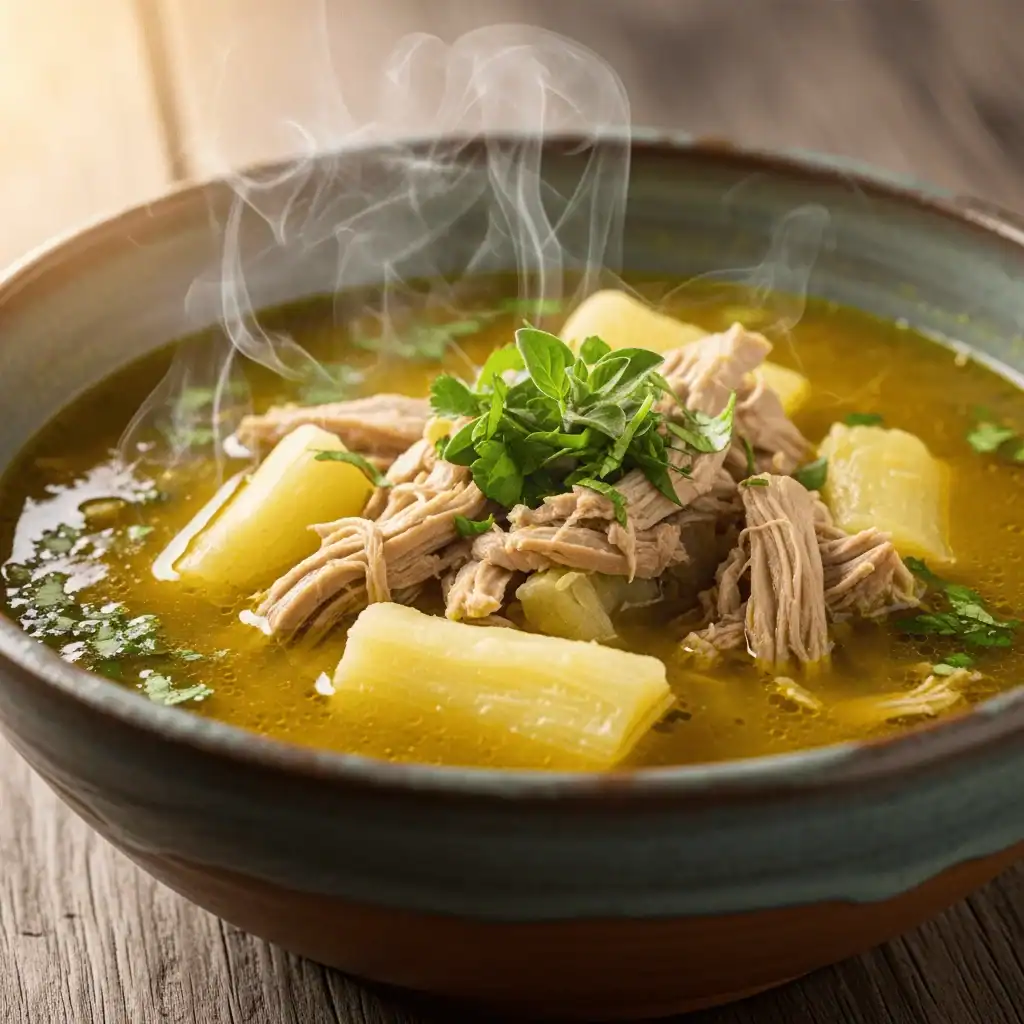
Caldo de Gallina Criolla is one of the most revered soups in Dominican cooking — a rich, deeply golden hen broth that is infinitely more complex and nourishing than any ordinary chicken soup. Made with a whole criollo hen (a free-range, pasture-raised bird), this caldo is slow-simmered for hours to extract every bit of collagen, fat, and flavor from the bones. The result is a silky, golden broth that warms you from the inside out.
In the Dominican Republic, gallina criolla (criollo hen) is the preferred bird for this broth. These are the free-range hens you see in backyards and small farms across the country — tougher and leaner than supermarket broilers, but packed with flavor that develops beautifully over a long, slow simmer. If you can find a criollo or farm-raised hen at a Latin market, it's worth seeking out. If not, a regular whole chicken works well with the same approach.
What sets caldo de gallina apart from sopa de pollo is the emphasis on the broth itself. While sopa de pollo is hearty and vegetable-forward, caldo is about that clear, golden liquid — fragrant, collagen-rich, and deeply seasoned with culantro, garlic, and Dominican spices. It's often served as a first course before a large meal, or as a standalone dish with rice and root vegetables on the side.
This is comfort food at its most elemental. Try it alongside our Sopa de Pollo Dominicana for two very different takes on Dominican chicken broth — both essential in any Dominican kitchen.
🧠 Did You Know?
- Gallina criolla (criollo hen) can take 2 to 3 hours to become tender because they are older, more active birds than commercial broilers — but that long cook time is exactly what produces the richest, most collagen-filled broth.
- In Dominican culture, caldo de gallina is often prescribed as a restorative meal after illness, childbirth, or surgery — the concentrated broth is believed to have healing and strengthening properties.
- Criollo hens are typically raised on traditional small farms in the Dominican Republic, where they roam freely and eat grain and kitchen scraps — making the resulting broth noticeably more flavorful than that of commercially raised chickens.
🧾 Ingredients
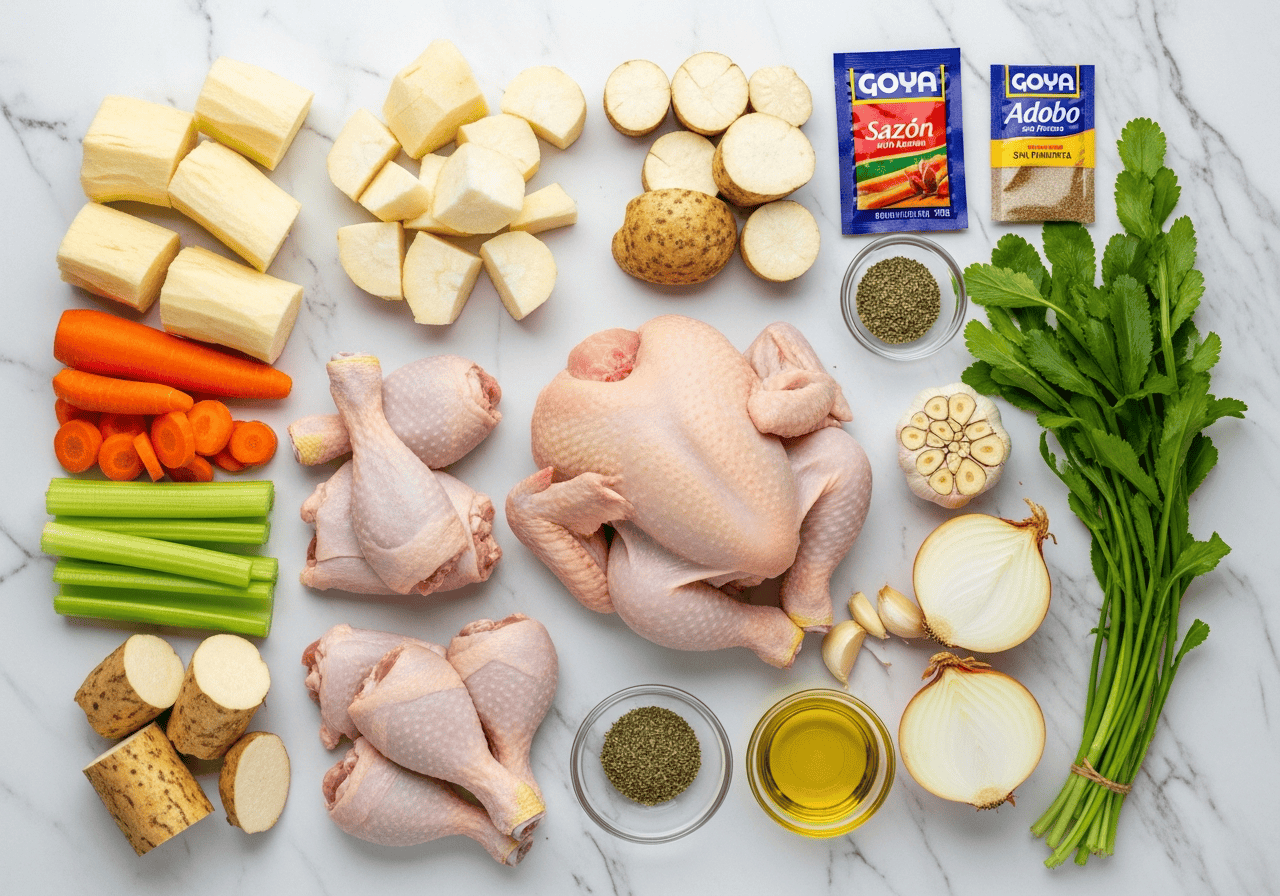
Full measurements are in the recipe card below. Here's what you'll need:
🛒 Shop This Recipe
View on Amazon →
View on Amazon →
View on Amazon →
As an Amazon Associate I earn from qualifying purchases at no extra cost to you.
👨🍳 How to Make Caldo de Gallina Criolla
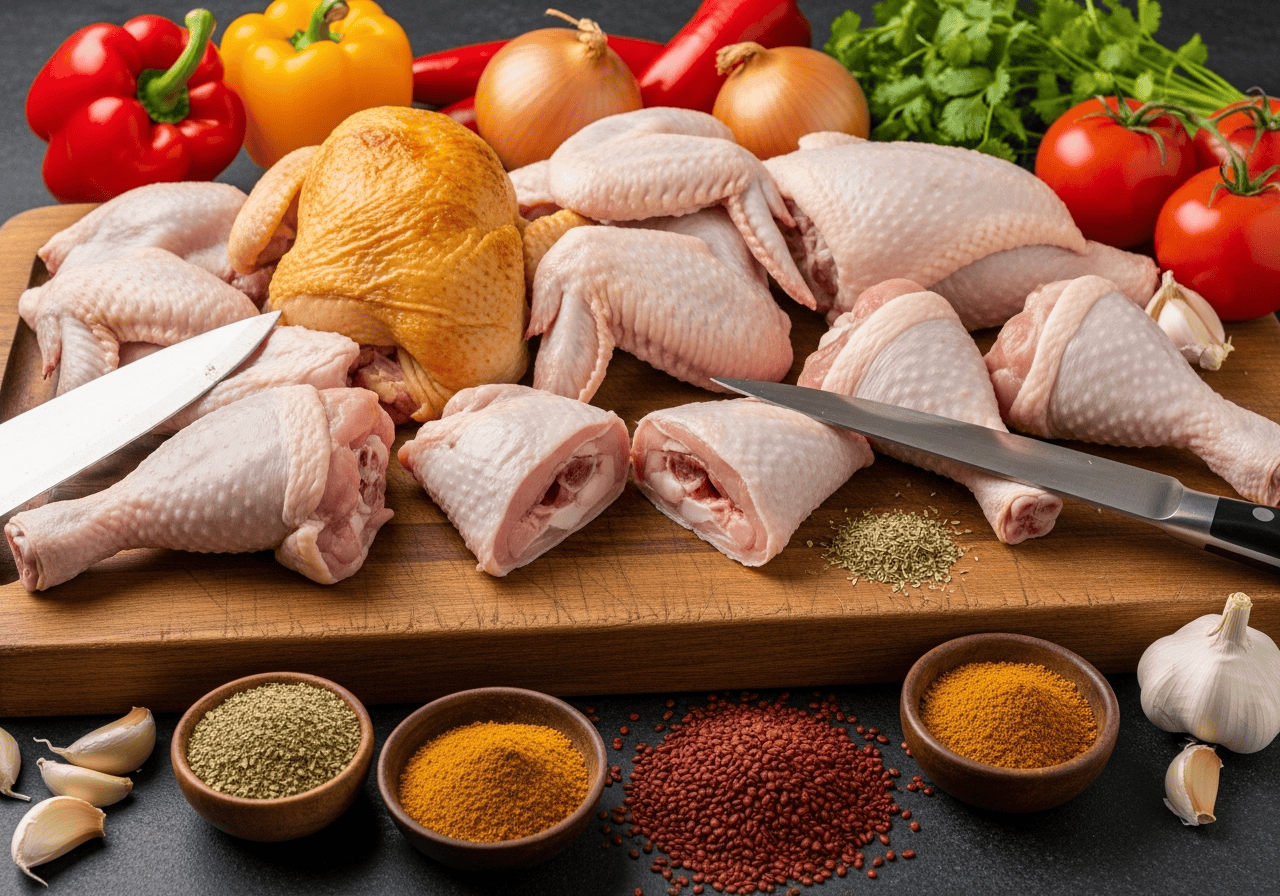
Follow these steps for perfect results. Full printable recipe card with exact measurements is below.
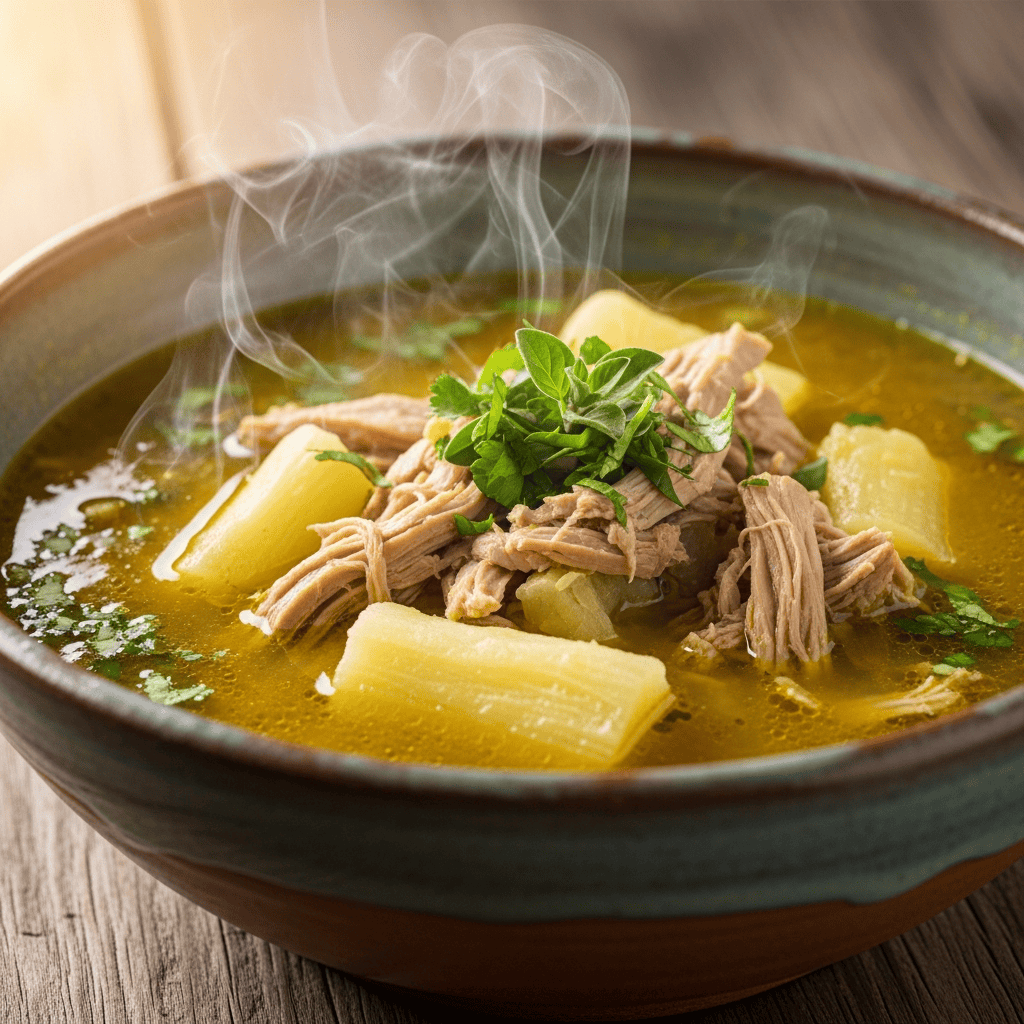
Caldo de Gallina Criolla
Ingredients
Equipment
Method
- Season the hen: Rub hen pieces with adobo, sazón, and oregano. Let sit for 15 minutes.
- Start the broth: Place hen pieces in a large stockpot. Cover with water and bring to a boil over high heat. Skim off all the gray foam that rises to the surface during the first 10 minutes — this is essential for a clean, clear broth.
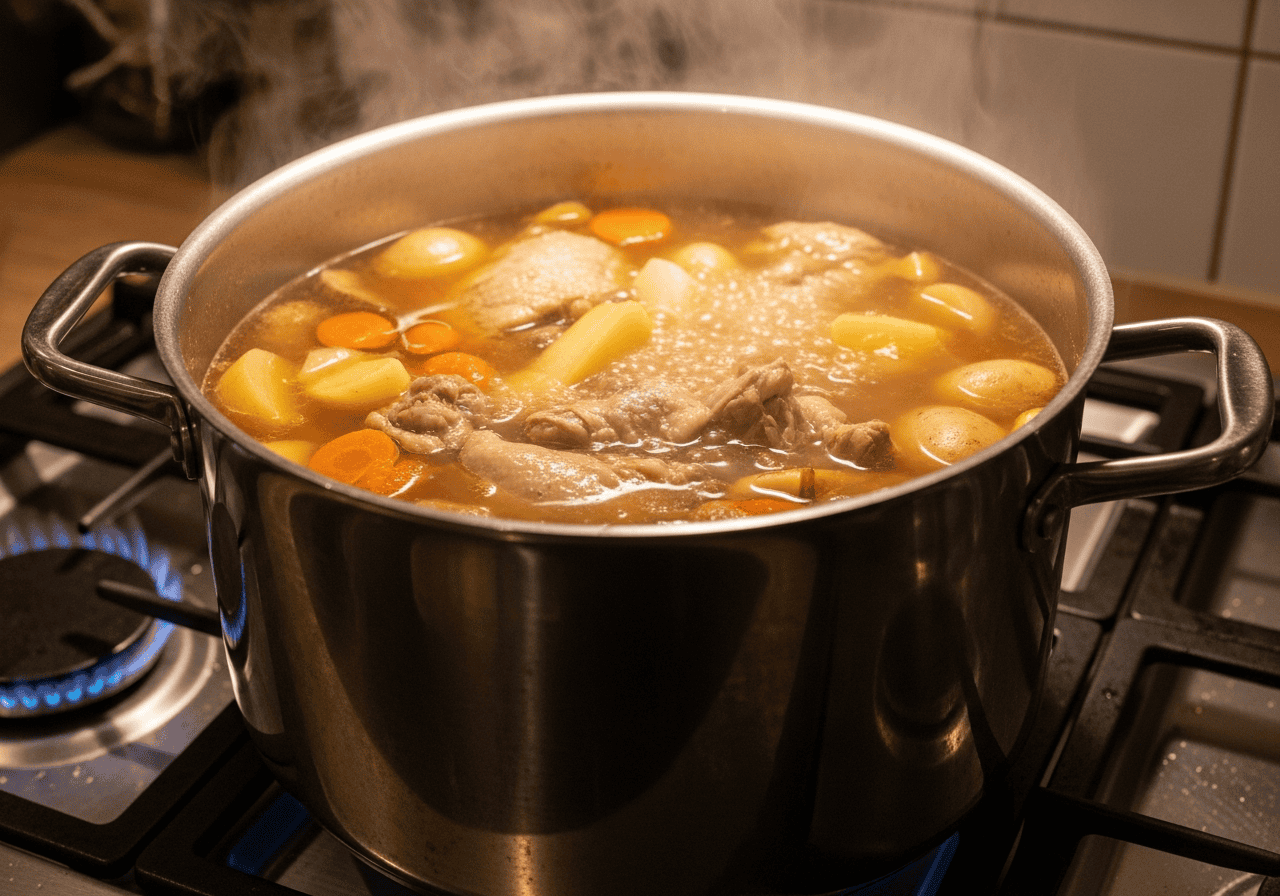
- Add aromatics: Reduce heat to a steady simmer. Add halved onion, garlic head, celery, carrots, bay leaves, and culantro sprigs. Season with additional salt. Simmer uncovered for 1.5 to 2 hours, until the hen meat is very tender and falling off the bone. (A regular chicken will be done in about 45–60 minutes.)
- Add root vegetables: Add yuca and ñame (or yautía). Continue simmering for 25–30 minutes until very tender.
- Strain and refine: If you want a pure, clear caldo, remove all the hen pieces and vegetables. Strain the broth through a fine mesh strainer. Return the broth to the pot and add back the hen meat and desired vegetables.
- Taste and adjust: Season the broth with salt until it tastes rich and well-seasoned. Remove bay leaves and culantro sprigs.
- Serve: Ladle into deep bowls with hen pieces and root vegetables. Squeeze fresh lime juice over the top. Garnish with fresh cilantro. Serve with white rice on the side.
Nutrition
Video
Notes
Tried this recipe?
Let us know how it was!💡 Pro Tips for the Best Caldo de Gallina Criolla
- The key to a clear, golden caldo is diligent skimming during the first 10–15 minutes of boiling. Don't skip this step — it's what separates a clean, restaurant-quality broth from a murky one.
- A farm-raised hen (gallina criolla) produces a dramatically richer, more flavorful broth than a supermarket broiler. If you can find one at a Latin or Asian grocery, it's worth the extra time it takes to cook.
- Make the broth a day ahead and refrigerate overnight — the fat will solidify on the surface and can be easily lifted off with a spoon, giving you a lighter, cleaner caldo.
- Add a parmesan rind to the simmering broth for an unexpected layer of savory depth — a trick borrowed from Italian cooking that works beautifully here.
🎬 Watch How to Make Caldo de Gallina Criolla
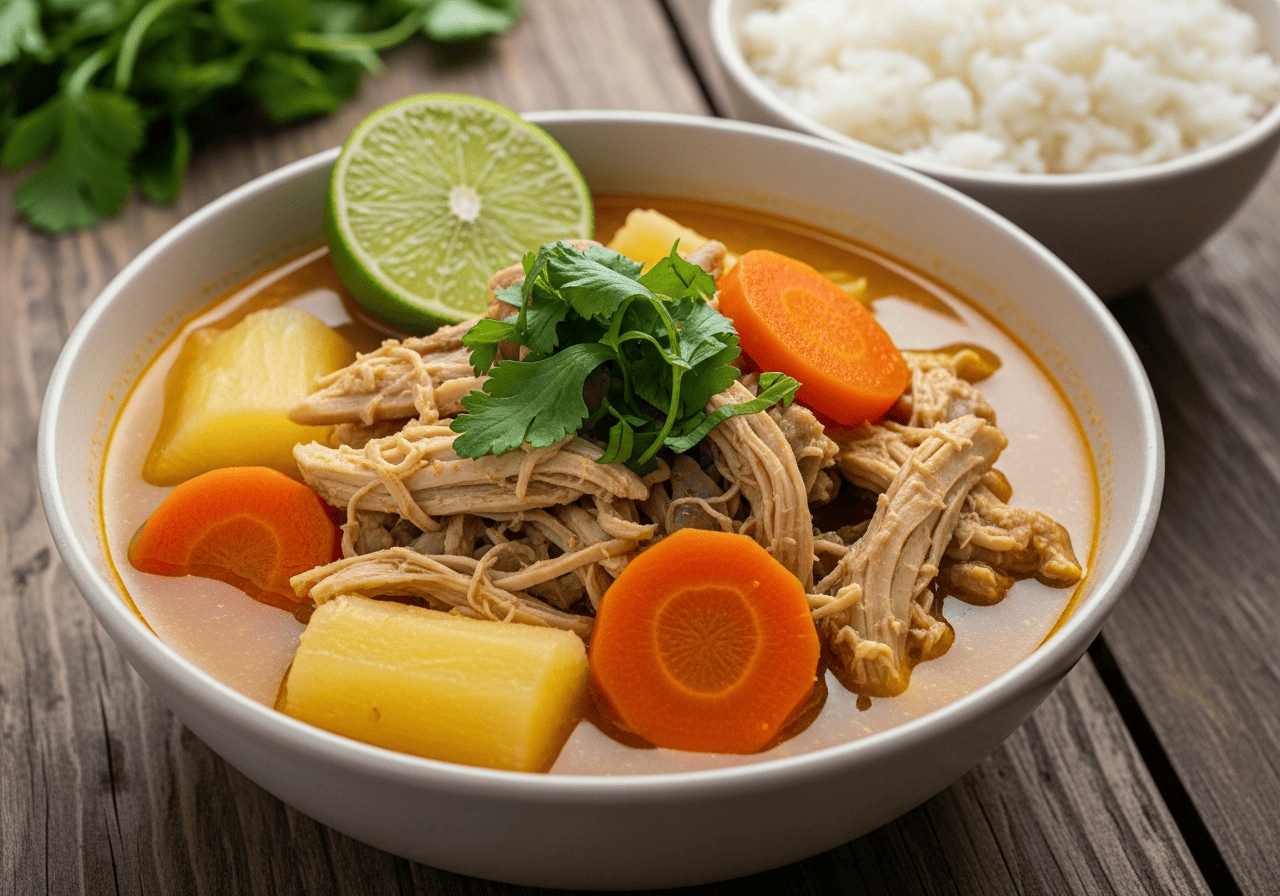
🍽️ What to Serve With Caldo de Gallina Criolla
- White Rice (Arroz Blanco)
- Tostones
- Avena Dominicana Caliente
- Sopa de Pollo Dominicana
- Mondongo Dominicano
❓ Frequently Asked Questions
Caldo de gallina criolla is a traditional Dominican hen broth made by slow-simmering a whole criollo (free-range) hen with root vegetables, fresh herbs, and Dominican spices for 2+ hours. It produces a rich, deeply golden broth prized for its flavor and nourishing properties.
What is a gallina criolla?Gallina criolla is a free-range, pasture-raised hen common in the Dominican Republic and across the Caribbean. These birds are older, leaner, and more active than commercial broilers, which makes them tougher but much more flavorful — especially for broth-based dishes that benefit from long simmering times.
Can I use regular chicken instead of gallina criolla?Yes — a regular whole chicken works well. It will cook faster (about 45–60 minutes instead of 2 hours) and produce a slightly less rich broth. For the richest possible broth with regular chicken, use a whole bird and cut it into pieces rather than using boneless cuts.
What is the difference between caldo de gallina and sopa de pollo dominicana?Caldo de gallina focuses on the broth itself — it's lighter, clearer, and more refined, with the hen cooked long and slow to extract maximum flavor. Sopa de pollo dominicana is heartier and more vegetable-forward, with a thicker, more sofrito-seasoned base. Both are delicious in different ways.
How do I get a clear, golden broth?Three keys: (1) Start with cold water and bring slowly to a boil. (2) Skim all the gray foam that rises to the surface in the first 10–15 minutes of boiling. (3) Simmer gently — a rolling boil will make the broth cloudy. Optional: strain through a fine mesh strainer before serving.
How long does caldo de gallina keep?Store in an airtight container in the refrigerator for up to 4 days. The broth will gel when cold — a sign of a collagen-rich, nutritious caldo. Reheat gently on the stovetop. Freeze the broth (without vegetables) for up to 3 months.
What root vegetables can I use in caldo de gallina?Traditional options include yuca (cassava), ñame (yam), yautía (taro), and carrots. These Caribbean root vegetables add body and subtle sweetness to the broth. If unavailable, substitute with potatoes, parsnips, or turnips — the flavor will differ slightly but the soup will still be delicious.
🥡 Storage & Reheating
Refrigerate caldo de gallina in an airtight container for up to 4 days. The broth will solidify when cold — reheat on the stovetop over medium heat. To freeze, cool completely, then transfer to freezer-safe containers. The broth alone freezes beautifully for up to 3 months; root vegetables may soften after thawing.

Leave a Reply