
Disclosure: This post contains affiliate links. As an Amazon Associate I earn from qualifying purchases at no extra cost to you.
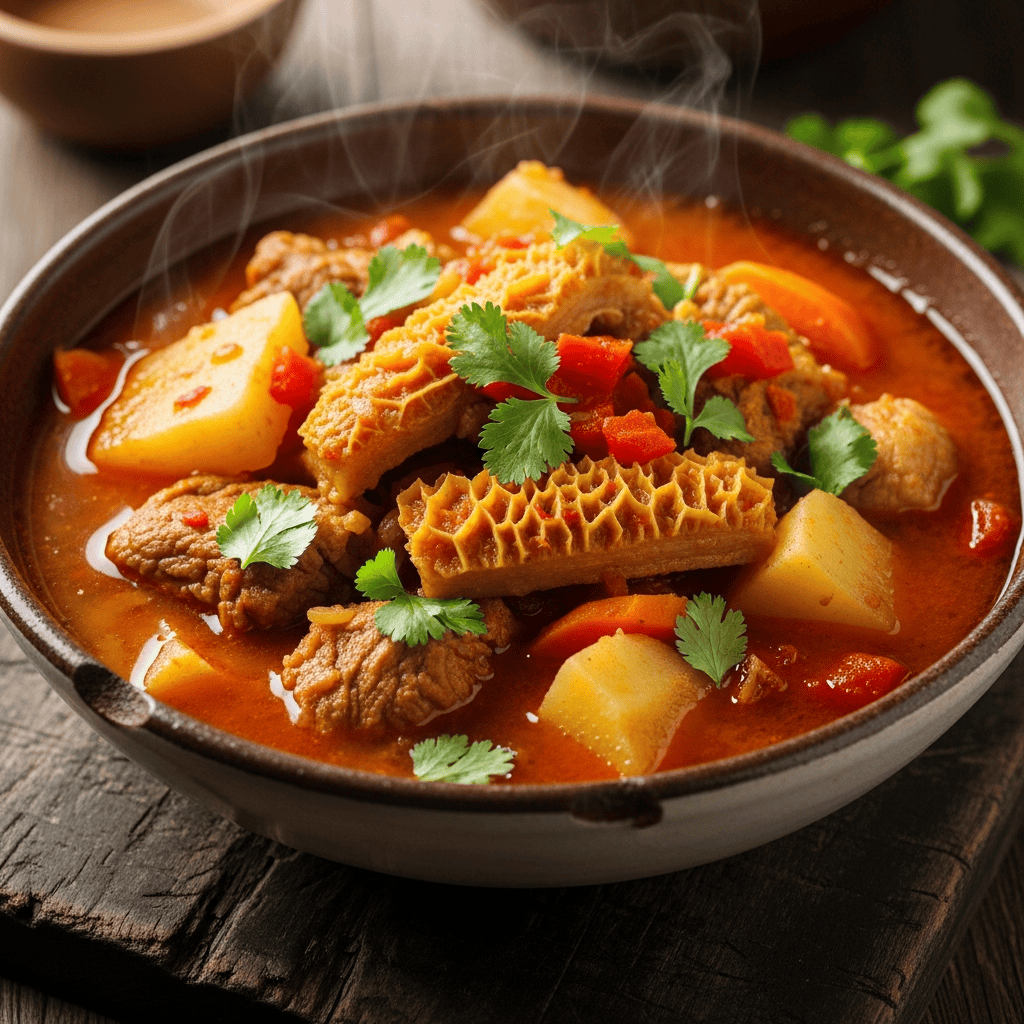
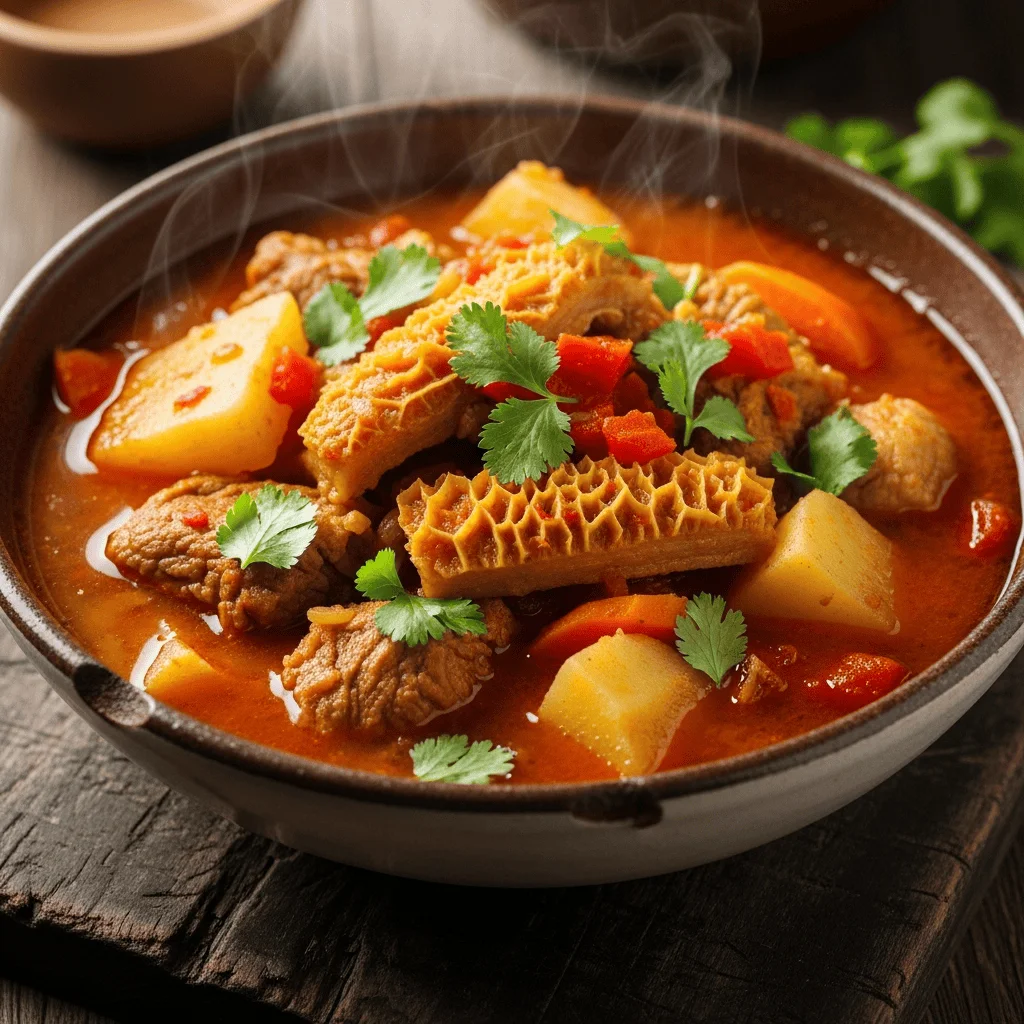
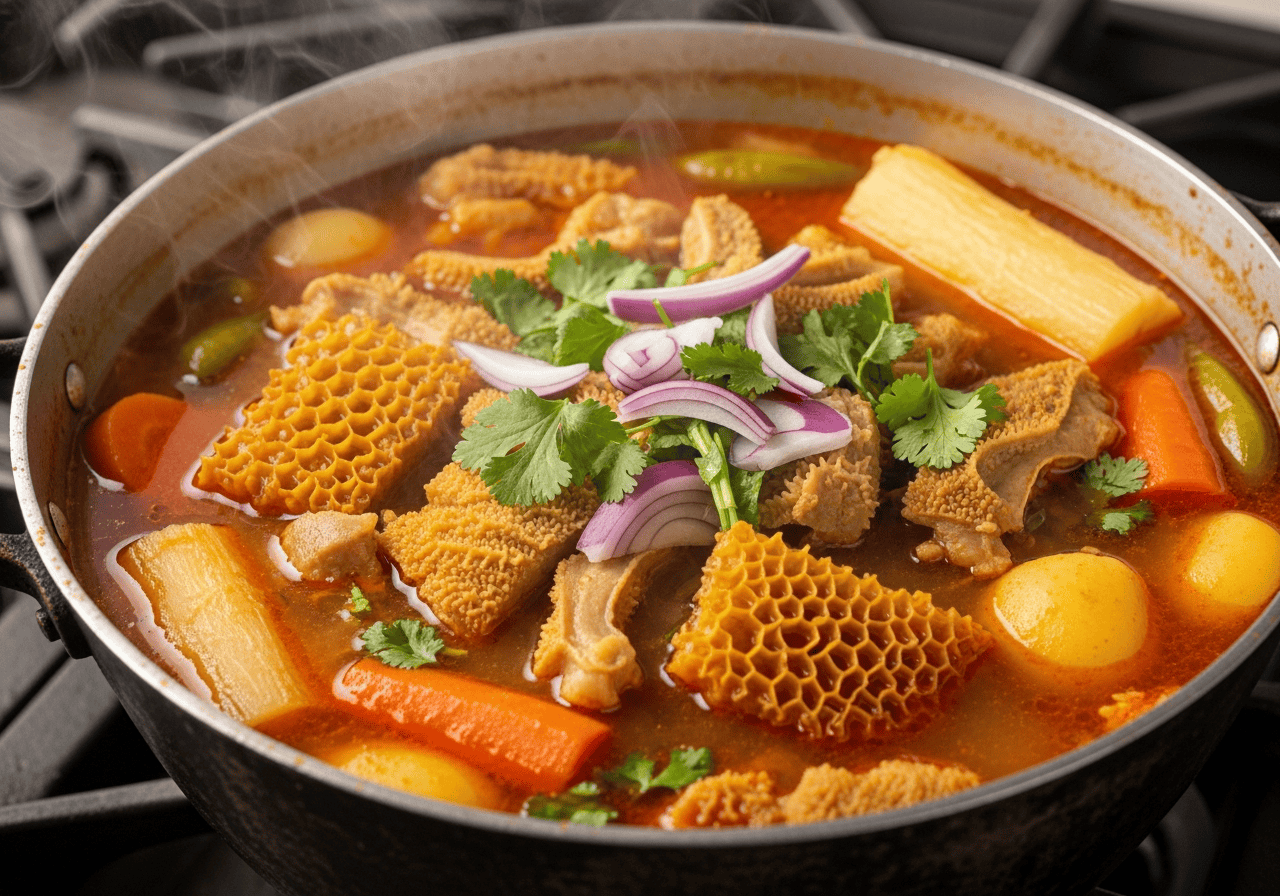
Mondongo Dominicano is one of those dishes that divides people — until they try it. This bold, deeply flavorful tripe stew is a cornerstone of Dominican home cooking, built on a foundation of sofrito, root vegetables, fresh herbs, and a long, patient simmer that transforms honeycomb tripe into something remarkably tender and satisfying. Once you understand what mondongo is about, you'll be a believer.
In Dominican culture, mondongo is weekend food. It's the dish that requires time, attention, and love — which is exactly why it tastes like a hug from someone's grandmother. The base is a rich orange-colored sofrito broth loaded with yuca, yautía, carrots, and celery. The tripe absorbs every flavor it's cooked with, becoming silky and deeply seasoned by the time it's ready to serve.
The key to great mondongo starts before you even turn on the stove: cleaning the tripe properly. A thorough rinse with lime juice and vinegar removes any off-odors and preps the tripe for a clean, fresh braise. After that, the hard work is mostly waiting — let the stew do its thing over low heat for a couple of hours.
Serve mondongo with a side of white rice and a squeeze of lime — the acidity brightens the rich, hearty broth beautifully. And if you're building out your Dominican recipe repertoire, don't miss our Sopa de Pollo Dominicana and Rabo Encendido — they share the same bold flavor DNA as this stew.
🧠 Did You Know?
- Mondongo is enjoyed across the Caribbean and Latin America under different names — in Puerto Rico it's called mondongo, in Colombia and Venezuela it's known as mondongo or mute, and in Mexico it goes by menudo or pancita.
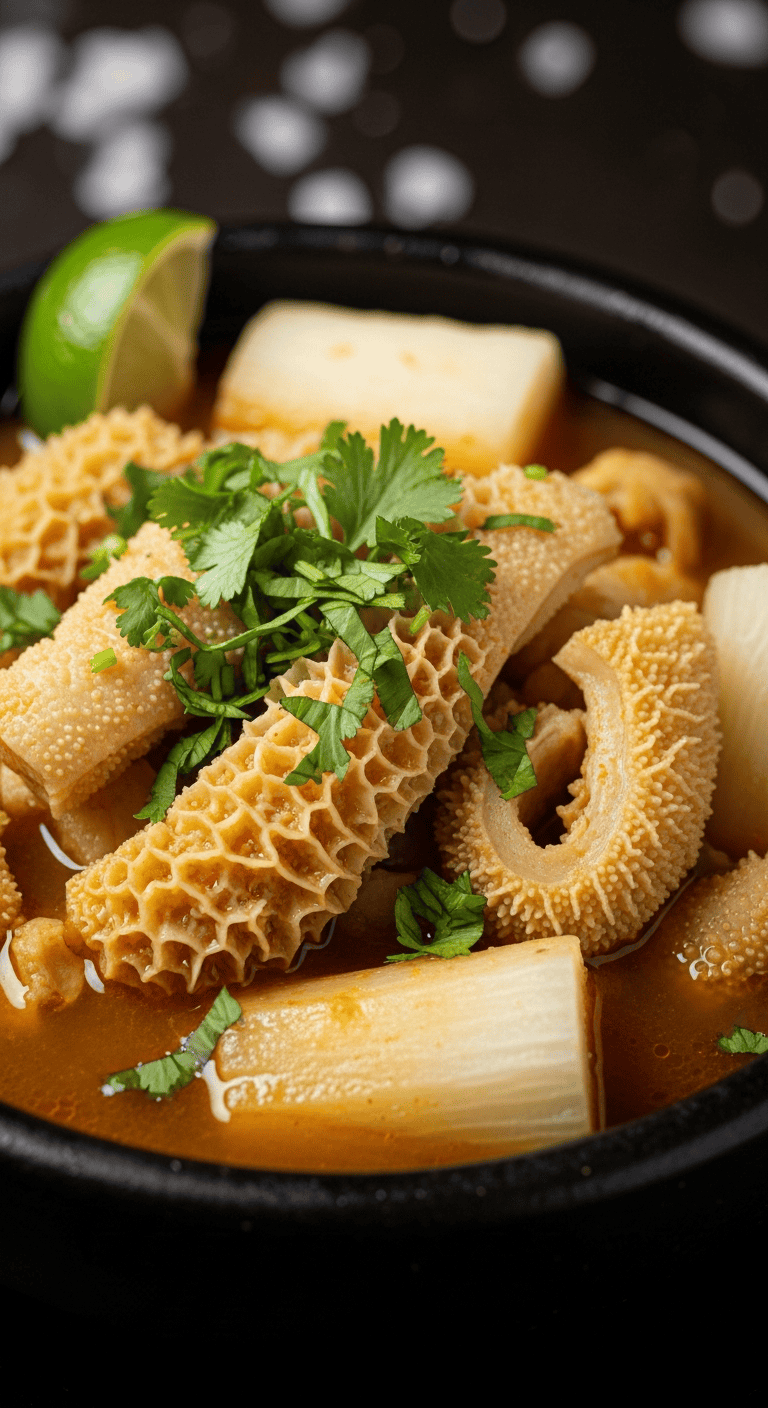
- Honeycomb tripe — named for its distinctive pattern — comes from the second stomach (reticulum) of cattle and is prized for its texture, which becomes tender and almost silky after a long braise.
- Tripe is one of the most nutrient-dense cuts available — it's high in protein, zinc, selenium, and B vitamins, while being relatively low in fat compared to other slow-cook cuts.
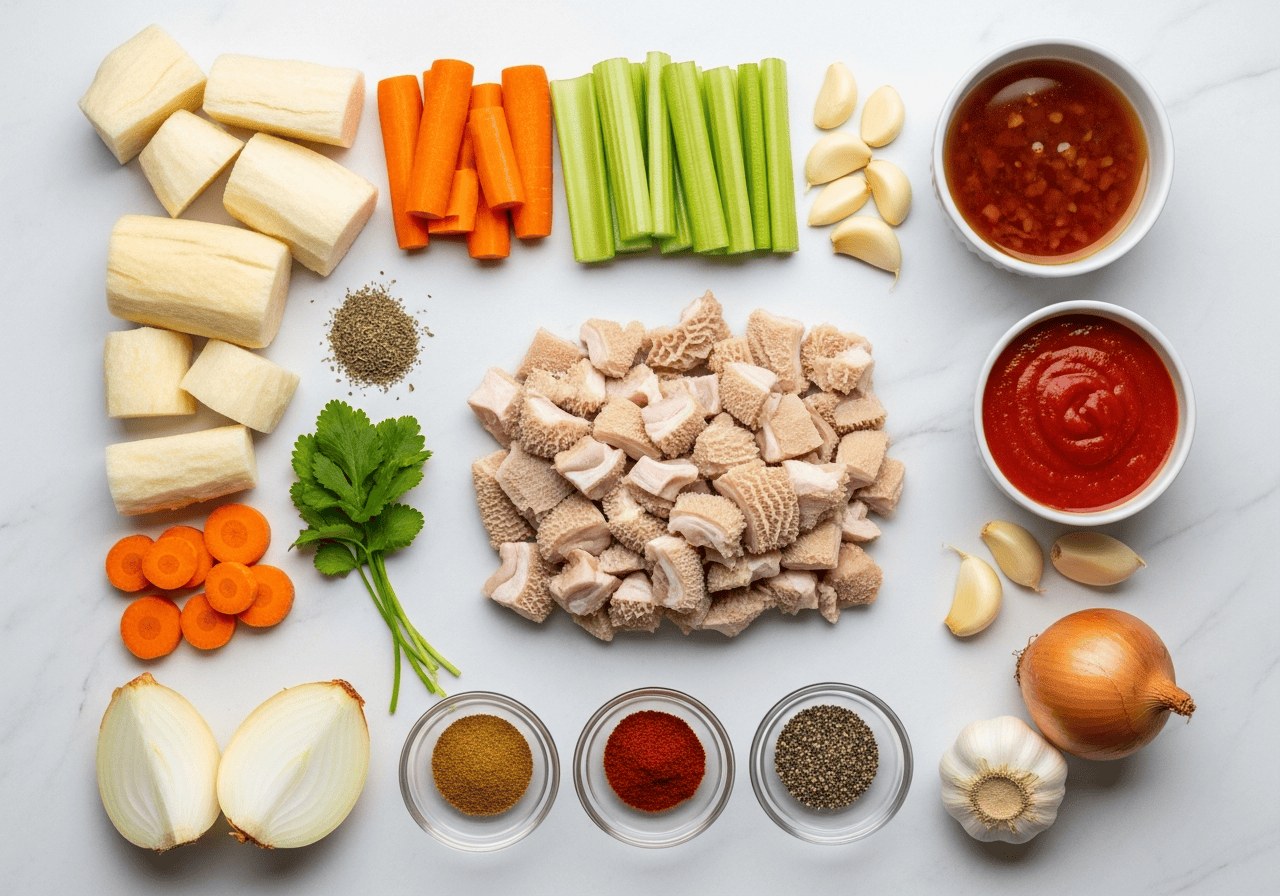
🧾 Ingredients
Full measurements are in the recipe card below. Here's what you'll need:
🛒 Shop This Recipe
View on Amazon →
View on Amazon →
View on Amazon →
As an Amazon Associate I earn from qualifying purchases at no extra cost to you.
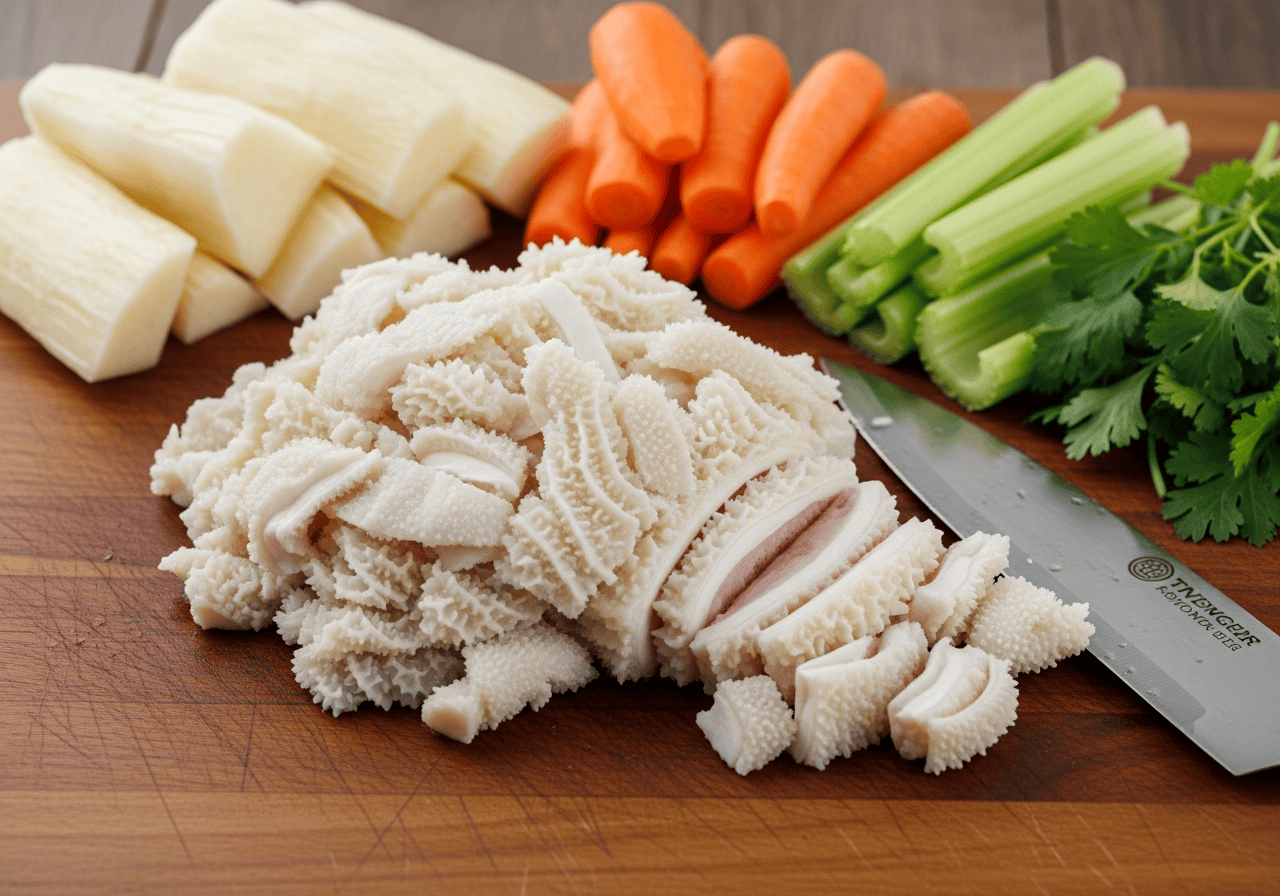
👨🍳 How to Make Mondongo Dominicano
Follow these steps for perfect results. Full printable recipe card with exact measurements is below.
Mondongo Dominicano
Ingredients
Equipment
Method
- Clean the tripe: Place tripe pieces in a large bowl. Add white vinegar, lime juice, and salt. Toss to coat and let sit for 10 minutes. Rinse thoroughly under cold running water until clean and odor is gone. Drain well.
- Parboil (optional but recommended): Place cleaned tripe in a large pot of salted water, bring to a boil, and cook for 15 minutes. Drain and rinse. This step removes any remaining impurities and improves the texture.
- Build the sofrito base: Heat olive oil in a large heavy-bottomed pot over medium heat. Sauté onion and garlic until softened, about 3 minutes. Add sofrito, tomato sauce, sazón, adobo, and oregano. Cook, stirring, for 3 minutes until the sauce is fragrant and slightly darkened.
- Add tripe and liquid: Add the parboiled tripe to the sofrito base. Pour in broth or water, add bay leaves and culantro. Bring to a boil, then reduce to a low simmer. Cover and cook for 1.5 hours, stirring occasionally.
- Add root vegetables: After 1.5 hours, add the yuca, yautía, carrots, and celery. Continue simmering, covered, for another 30–40 minutes until the vegetables are fork-tender and the tripe is very soft.
- Finish and season: Remove bay leaves. Taste and adjust salt and pepper. The broth should be rich, orange-colored, and flavorful. If it's too thick, add a splash of broth; if too thin, simmer uncovered for 10 minutes.
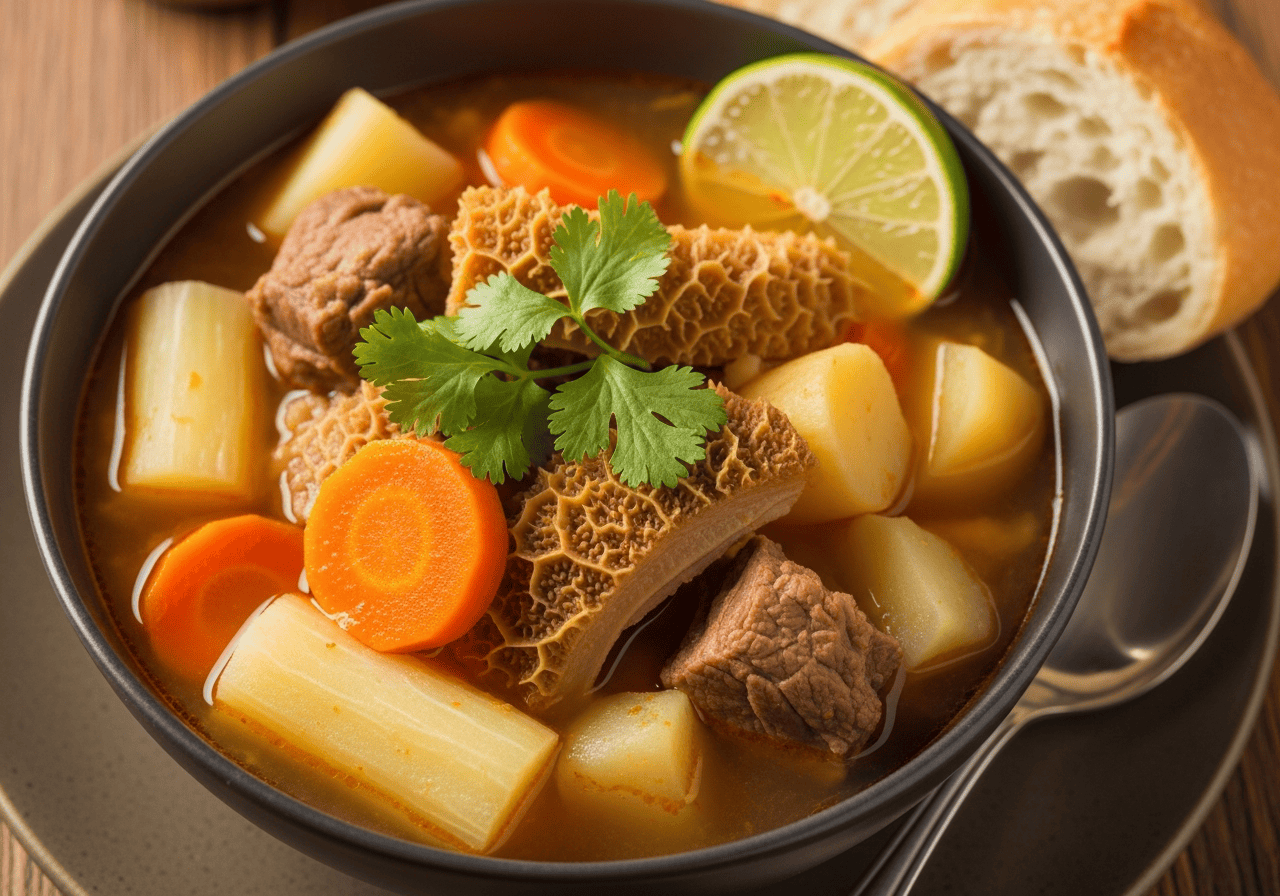
- Serve: Ladle into deep bowls, squeeze fresh lime juice over the top, and serve with white rice and crusty bread. Garnish with fresh culantro.
Nutrition
Notes
Tried this recipe?
Let us know how it was!💡 Pro Tips for the Best Mondongo Dominicano
- Clean the tripe in two stages — first the vinegar/lime soak, then parboil in salted water. This two-step process guarantees the cleanest, freshest-tasting mondongo.
- Cut the tripe into uniform 2-inch pieces before cooking — they'll cook evenly and are the perfect bite size when served.
- Don't rush the simmer. The long, slow cook is what transforms tripe from chewy to silky. Low and slow for 2 hours total is the sweet spot.
- The stew should be brothy — not thick like a gravy. If it reduces too much, add a cup of hot broth to restore the consistency.
🎬 Watch How to Make Mondongo Dominicano
🍽️ What to Serve With Mondongo Dominicano
- White Rice (Arroz Blanco)
- Tostones (Fried Green Plantains)
- Lime Wedges (for squeezing)
- Rabo Encendido Dominicano
- Caldo de Gallina Criolla
❓ Frequently Asked Questions
Mondongo dominicano is a traditional Dominican tripe stew made with cleaned honeycomb tripe, root vegetables (yuca, yautía, carrots), and a rich sofrito-based broth. It's a beloved comfort food throughout the Dominican Republic and across the Caribbean.
How do you clean tripe for mondongo?Soak the tripe in a mixture of white vinegar, lime juice, and salt for 10 minutes, then rinse thoroughly under cold water. For extra cleanliness, parboil in salted water for 15 minutes, then drain and rinse again before adding to the stew.
How long does mondongo take to cook?Mondongo takes about 2 to 2.5 hours of cooking after a 30-minute prep. The tripe needs at least 1.5 hours of simmering before it becomes tender, followed by another 30–40 minutes with the root vegetables.
Can I make mondongo in a pressure cooker?Yes — cook the tripe on High Pressure for 30 minutes, then add the vegetables and cook for another 10 minutes. Natural release for 10 minutes. This dramatically cuts down on cooking time while still achieving great texture.
What vegetables go in mondongo dominicano?Traditional Dominican mondongo includes yuca (cassava), yautía (taro root), carrots, and celery. Some cooks also add name (ñame), corn on the cob, or chayote. The root vegetables add body and subtle sweetness to the rich broth.
Is mondongo the same as menudo?They are related but different. Both are tripe-based soups popular across Latin America and the Caribbean, but mondongo dominicano uses a sofrito-based broth with Caribbean root vegetables, while Mexican menudo uses a chile-based broth (often with hominy) and has a distinctly different flavor profile.
Can I freeze mondongo?Yes — mondongo freezes exceptionally well. Cool it completely, portion into freezer-safe containers, and freeze for up to 3 months. Thaw overnight in the refrigerator and reheat on the stovetop, adding a splash of broth to thin it back out if needed.
🥡 Storage & Reheating
Refrigerate mondongo in an airtight container for up to 4 days. The tripe becomes even more tender after sitting overnight. Reheat on the stovetop over medium-low heat, adding a splash of broth or water to adjust consistency. Freeze for up to 3 months in sealed containers.


Leave a Reply