Ingredients
Method
- Trim the silver skin from the pork tenderloins. Pat dry with paper towels.
- Mix Dijon mustard, garlic, rosemary, thyme, paprika, salt, and pepper into a paste. Rub all over the tenderloins.
- Heat olive oil in an oven-safe skillet over medium-high heat. Sear the tenderloins on all sides until golden brown, about 2-3 minutes per side.
- Transfer the skillet to a preheated 400°F oven. Roast for 15-20 minutes until the internal temperature reaches 145°F.
- Remove from oven. Add butter and honey to the pan and baste the tenderloins.
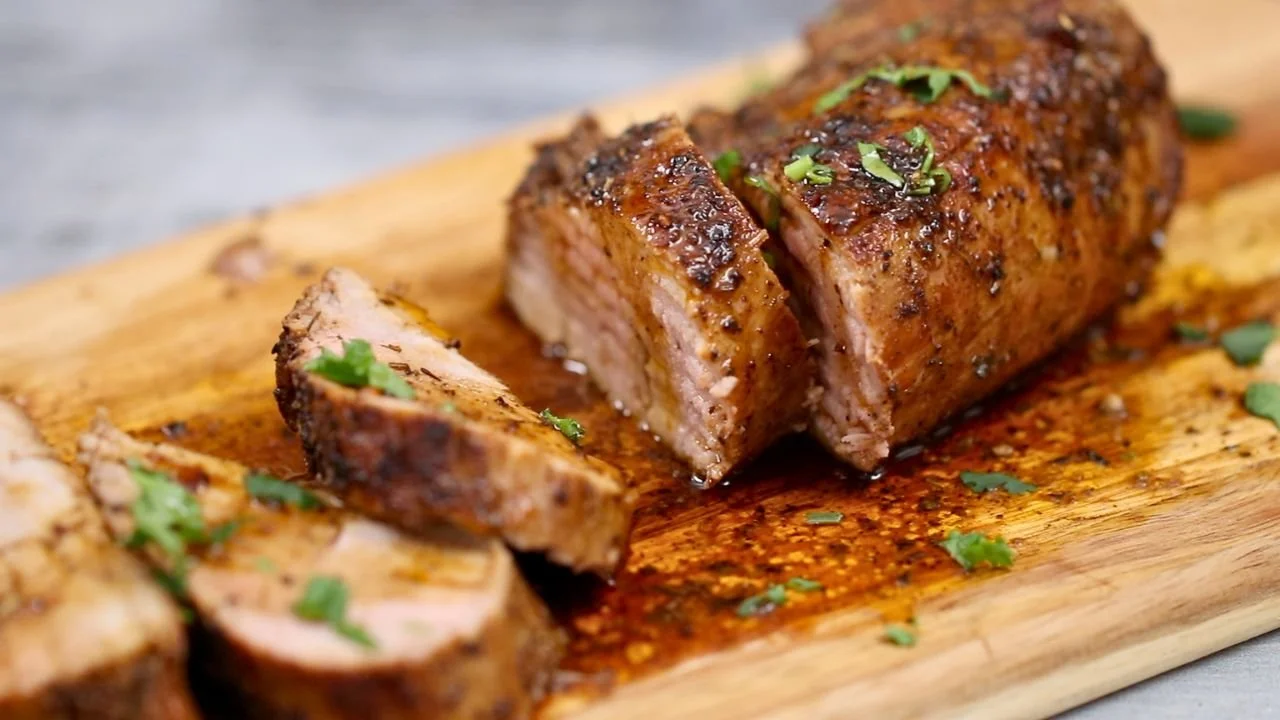
- Rest for 10 minutes before slicing into medallions. The temperature will carry over to a safe 145°F. Drizzle with pan juices and serve.
Nutrition
Video
Notes
Pro Tips:
Choose tenderloins that feel firm but not rock-hard when pressed, and avoid any with dark spots or excessive silver skin. The best ones have a slight pink blush and uniform thickness - this ensures even cooking and tells you the meat is fresh enough to safely cook to a perfect medium. Always sear at medium-high heat for exactly 2-3 minutes per side before roasting. This creates the Maillard reaction that locks in flavor compounds, but going too hot will char the outside before the inside reaches temperature, leaving you with burnt edges and raw centers. Pull your tenderloin at 140°F internal temperature, not the USDA's 145°F. I've cooked hundreds of these, and that extra 5 degrees means the difference between succulent and sawdust. Carryover cooking will bring it to a safe 145°F while resting, giving you perfectly pink, juicy meat. Let the meat rest for exactly 10 minutes after cooking, then slice against the grain at a 45-degree angle in ½-inch thick pieces. This technique breaks down the muscle fibers and creates maximum surface area for your pan sauce to cling to, making every bite more flavorful and tender. Storage & Meal Prep: Refrigerator: Store sliced or whole leftover tenderloin in an airtight container for up to 3–4 days. Pour any pan juices over the meat before sealing to keep it moist. Freezer: Wrap individual portions tightly in plastic wrap, then place in a freezer-safe bag. Keeps well for up to 2–3 months. Thaw overnight in the refrigerator before reheating. Reheating: Warm slices gently in a skillet over medium heat with a splash of broth or pan juices to prevent drying out. You can also microwave in 30-second intervals or reheat in a 350°F oven until warmed through. Meal Prep Idea: Slice the cooled tenderloin into medallions and portion into containers with roasted vegetables or rice for easy grab-and-go lunches all week.
Choose tenderloins that feel firm but not rock-hard when pressed, and avoid any with dark spots or excessive silver skin. The best ones have a slight pink blush and uniform thickness - this ensures even cooking and tells you the meat is fresh enough to safely cook to a perfect medium. Always sear at medium-high heat for exactly 2-3 minutes per side before roasting. This creates the Maillard reaction that locks in flavor compounds, but going too hot will char the outside before the inside reaches temperature, leaving you with burnt edges and raw centers. Pull your tenderloin at 140°F internal temperature, not the USDA's 145°F. I've cooked hundreds of these, and that extra 5 degrees means the difference between succulent and sawdust. Carryover cooking will bring it to a safe 145°F while resting, giving you perfectly pink, juicy meat. Let the meat rest for exactly 10 minutes after cooking, then slice against the grain at a 45-degree angle in ½-inch thick pieces. This technique breaks down the muscle fibers and creates maximum surface area for your pan sauce to cling to, making every bite more flavorful and tender. Storage & Meal Prep: Refrigerator: Store sliced or whole leftover tenderloin in an airtight container for up to 3–4 days. Pour any pan juices over the meat before sealing to keep it moist. Freezer: Wrap individual portions tightly in plastic wrap, then place in a freezer-safe bag. Keeps well for up to 2–3 months. Thaw overnight in the refrigerator before reheating. Reheating: Warm slices gently in a skillet over medium heat with a splash of broth or pan juices to prevent drying out. You can also microwave in 30-second intervals or reheat in a 350°F oven until warmed through. Meal Prep Idea: Slice the cooled tenderloin into medallions and portion into containers with roasted vegetables or rice for easy grab-and-go lunches all week.
