
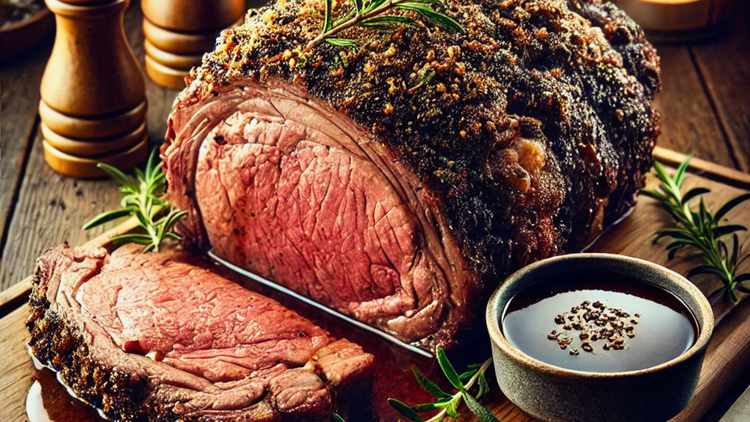
This Garlic Crusted Prime Rib is one of those recipes you'll find yourself making over and over again. It's simple, delicious, and always gets rave reviews. Whether you're a beginner or a seasoned cook, you're going to love how easy and tasty this turns out!
About This Recipe
Here's something that'll change your prime rib game forever: not all garlic behaves the same when crushed into a crust. Dominican ajo criollo (creole garlic) has higher allicin content than standard supermarket varieties, creating a more intense, almost spicy bite that pairs beautifully with beef's richness. But here's the kicker — when you crush garlic for a crust, you want it slightly damp, not bone dry. The moisture helps create steam pockets during roasting that prevent the garlic from burning while the meat develops its crust. I learned this from watching my tía make pernil — she'd always add a tiny splash of lime juice to her garlic paste. For prime rib, I do the same but with a drop of beef stock. This creates a paste that caramelizes instead of charring, giving you that golden, aromatic crust that makes people think you went to culinary school. Trust me, once you try this technique, you'll never go back to dry garlic rubs.
Ingredients for Garlic Crusted Prime Rib
- 1 7-pound prime rib roast (boneless, tied with bones by the butcher)
- 6 cloves garlic — minced
- 1 stem fresh rosemary — minced
- 3 branches fresh thyme — minced
- 3 tablespoons olive oil
- ½ tablespoon kosher salt — plus more for seasoning
- Freshly ground black pepper — to taste
How to Make Garlic Crusted Prime Rib
- Prepare the Prime Rib:Pat the roast completely dry using paper towels to ensure a crispy crust.Generously season the roast with kosher salt and let it sit at room temperature for 3 hours.
- Pat the roast completely dry using paper towels to ensure a crispy crust.
- Generously season the roast with kosher salt and let it sit at room temperature for 3 hours.
- Make the Garlic-Herb Rub:In a small bowl, combine minced garlic, rosemary, thyme, olive oil, kosher salt, and black pepper. Mix until it forms a paste.
- In a small bowl, combine minced garlic, rosemary, thyme, olive oil, kosher salt, and black pepper. Mix until it forms a paste.
- Apply the Rub:Once the roast has come to room temperature, coat it generously with the garlic-herb rub, covering the top and sides evenly.
- Once the roast has come to room temperature, coat it generously with the garlic-herb rub, covering the top and sides evenly.
- Preheat and Start Roasting:Preheat your oven to 500°F (260°C). Place the seasoned roast on a rack inside a roasting pan.Roast at 500°F for 20 minutes to develop a crispy crust.
- Preheat your oven to 500°F (260°C). Place the seasoned roast on a rack inside a roasting pan.
- Roast at 500°F for 20 minutes to develop a crispy crust.
- Adjust the Temperature and Continue Cooking:Reduce the oven temperature to 325°F (165°C) and roast for 11–12 minutes per pound, or until the internal temperature reaches 120°F (49°C) for medium-rare.
- Reduce the oven temperature to 325°F (165°C) and roast for 11–12 minutes per pound, or until the internal temperature reaches 120°F (49°C) for medium-rare.
- Rest the Roast:Remove the roast from the oven and tent it loosely with aluminum foil. Let it rest for 30 minutes. The temperature will rise about 10°F, resulting in a perfect medium-rare.
- Remove the roast from the oven and tent it loosely with aluminum foil. Let it rest for 30 minutes. The temperature will rise about 10°F, resulting in a perfect medium-rare.
- Carve and Serve:Remove the strings and separate the bones from the roast. Slice the prime rib into thick portions for serving.Serve with au jus or horseradish sauce for an extra burst of flavor.
- Remove the strings and separate the bones from the roast. Slice the prime rib into thick portions for serving.
- Serve with au jus or horseradish sauce for an extra burst of flavor.
What to Serve With Garlic Crusted Prime Rib
My honey-glazed carrots are absolutely perfect with this prime rib - the sweetness plays beautifully against all that savory garlic, and the tender carrots complement the meat's richness without competing. Plus, those caramelized edges add just the right amount of texture contrast to each bite.
For something more traditional from my Dominican roots, try serving this with crispy tostones on the side. The plantains' mild, starchy flavor helps balance the intensity of the garlic crust, while that satisfying crunch gives you textural variety that makes every forkful interesting.
A simple arugula salad dressed with lemon and good olive oil cuts through all that beautiful richness like a dream. The peppery greens and bright acidity cleanse your palate between bites, letting you truly appreciate each slice of that perfectly seasoned prime rib.
Frequently Asked Questions
1. What is prime rib?
Prime rib (standing rib roast) is a large, bone-in beef roast cut from the rib section. It is one of the most impressive and flavorful cuts of beef, perfect for holidays and special occasions.
2. How many pounds per person should I buy?
Plan for 1 pound of bone-in prime rib per person (about ¾ pound boneless). For 8 guests, buy an 8-pound roast (about 4 ribs). Better to have leftovers than not enough.
3. What makes the garlic crust?
A paste of minced garlic, fresh rosemary, thyme, Dijon mustard, olive oil, salt, and cracked pepper rubbed generously all over the roast. The garlic crust becomes aromatic and crispy during roasting.
4. What temperature should I roast prime rib?
Start at 500 degrees for 15 minutes to sear the garlic crust, then reduce to 325 degrees until the internal temperature reaches 120-125 degrees for medium-rare.
5. What internal temperature for medium-rare?
Pull the roast at 120-125 degrees — it rises 5-10 degrees during resting to reach a perfect 130 degrees medium-rare. This is the gold standard temperature for prime rib.
6. How long does prime rib take per pound?
About 15 minutes per pound at 325 degrees for medium-rare. A 10-pound roast takes approximately 2.5 hours, but always use a thermometer rather than time alone.
7. Should I dry age or dry brine the prime rib?
A dry brine (salting generously and refrigerating uncovered for 24-48 hours) dramatically improves flavor and produces a crispier crust. It is the easiest upgrade you can make.
8. How long should prime rib rest before carving?
At least 20-30 minutes tented loosely with foil. Resting is critical — it allows the juices to redistribute. Cutting too soon releases the juices onto the cutting board.
9. How do I make au jus from the drippings?
Strain the pan drippings, skim the fat, add beef broth and a splash of red wine, and simmer until reduced by a third. The natural jus from the roast is liquid gold.
10. What sides pair with prime rib?
Yorkshire pudding, creamy horseradish sauce, garlic mashed potatoes, roasted vegetables, creamed spinach, and popovers are all classic prime rib accompaniments.
Garlic Crusted Prime Rib Video
Garlic Crusted Prime Rib
Ingredients
Method
- Prepare the Prime Rib:Pat the roast completely dry using paper towels to ensure a crispy crust.Generously season the roast with kosher salt and let it sit at room temperature for 3 hours.
- Pat the roast completely dry using paper towels to ensure a crispy crust.
- Generously season the roast with kosher salt and let it sit at room temperature for 3 hours.
- Make the Garlic-Herb Rub:In a small bowl, combine minced garlic, rosemary, thyme, olive oil, kosher salt, and black pepper. Mix until it forms a paste.
- In a small bowl, combine minced garlic, rosemary, thyme, olive oil, kosher salt, and black pepper. Mix until it forms a paste.
- Apply the Rub:Once the roast has come to room temperature, coat it generously with the garlic-herb rub, covering the top and sides evenly.
- Once the roast has come to room temperature, coat it generously with the garlic-herb rub, covering the top and sides evenly.
- Preheat and Start Roasting:Preheat your oven to 500°F (260°C). Place the seasoned roast on a rack inside a roasting pan.Roast at 500°F for 20 minutes to develop a crispy crust.
- Preheat your oven to 500°F (260°C). Place the seasoned roast on a rack inside a roasting pan.
- Roast at 500°F for 20 minutes to develop a crispy crust.
- Adjust the Temperature and Continue Cooking:Reduce the oven temperature to 325°F (165°C) and roast for 11–12 minutes per pound, or until the internal temperature reaches 120°F (49°C) for medium-rare.
- Reduce the oven temperature to 325°F (165°C) and roast for 11–12 minutes per pound, or until the internal temperature reaches 120°F (49°C) for medium-rare.
- Rest the Roast:Remove the roast from the oven and tent it loosely with aluminum foil. Let it rest for 30 minutes. The temperature will rise about 10°F, resulting in a perfect medium-rare.
- Remove the roast from the oven and tent it loosely with aluminum foil. Let it rest for 30 minutes. The temperature will rise about 10°F, resulting in a perfect medium-rare.
- Carve and Serve:Remove the strings and separate the bones from the roast. Slice the prime rib into thick portions for serving.Serve with au jus or horseradish sauce for an extra burst of flavor.
- Remove the strings and separate the bones from the roast. Slice the prime rib into thick portions for serving.
- Serve with au jus or horseradish sauce for an extra burst of flavor.
Nutrition
Notes
Choose garlic heads that feel heavy for their size with tight, papery skin — loose or lightweight bulbs have less moisture content, which means your crust will burn before it caramelizes properly during the long roasting process. After years of making this, I've learned to score the fat cap in a crosshatch pattern before applying the garlic crust because it creates channels for the garlic oils to penetrate deeper into the meat while preventing the crust from sliding off. Mix your crushed garlic with just enough kosher salt to create a paste consistency — the salt draws out garlic's natural oils and creates better adhesion to the meat than dry seasonings ever could. Let your crusted prime rib sit uncovered in the fridge for 2-4 hours before roasting because this dries the surface slightly, ensuring better browning while keeping the garlic paste firmly attached throughout cooking.
Leave a Reply