
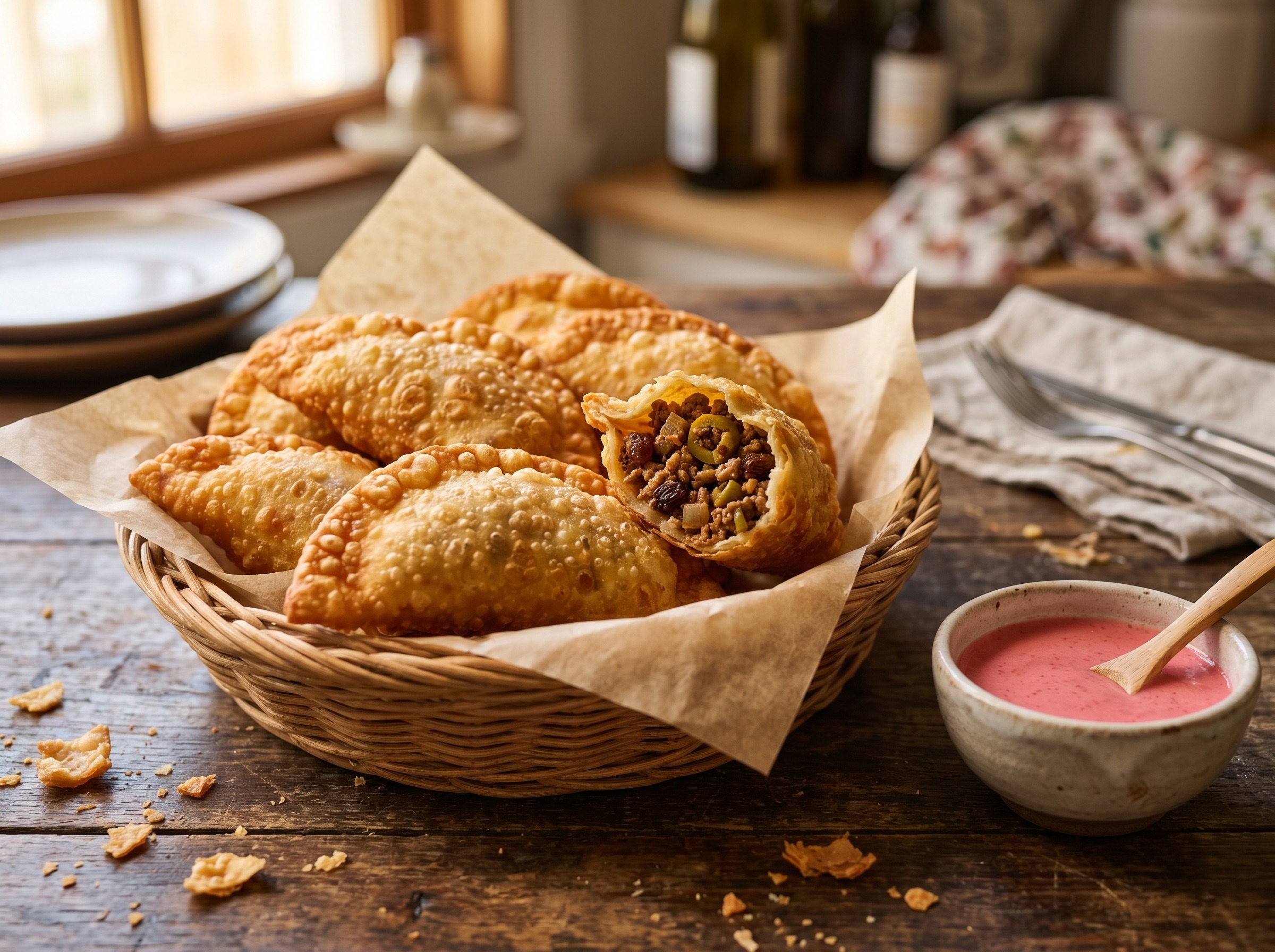
Empanaditas dominicanas are the snack I have eaten at every birthday, every Sunday afternoon, every colmado stop on a hot day in Santo Domingo. In the Dominican Republic these are also called pastelitos — the name varies by region and family but the recipe is the same. Crispy fried half-moon pastries stuffed with seasoned beef picadillo — simple food, made right, that disappears faster than you can plate them. My mom used to fry a tray of forty and there would be eight left by the time I got home from playing. This is her recipe, the one I have been making since I was tall enough to reach the stove.
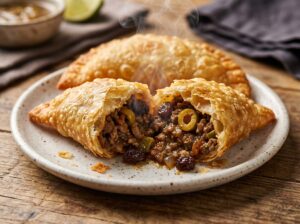
Unlike quipes (which use bulgur wheat) or Puerto Rican empanadillas (which lean flakier and thinner), Dominican empanaditas use a simple flour-based dough that fries up sturdy, golden, and slightly crispy — a dough that can hold a spoonful of juicy picadillo without falling apart in hot oil. The filling is classic: ground beef cooked with sofrito, green olives, and raisins. Those raisins are not optional for me. They bring the sweet pop that makes the savory beef sing.
The Cultural Context
Empanaditas in the DR are not fancy. They are not plated. They are not Instagram food. They come in greasy brown paper bags from the corner colmado for twenty pesos apiece. They come piled on a platter at every quinceañera, every wedding, every Christmas Eve. When my mom had company coming over, she did not ask what we wanted for appetizers — she made empanaditas, because nobody ever turned them down. They are the most universally loved Dominican food I can think of.
The combination of olives and raisins in the picadillo is the Spanish colonial influence showing up loud and clear. Moorish cuisine, which heavily influenced Spanish cooking, loved the sweet-savory balance — and it traveled to the Caribbean with Spanish colonizers and stuck. Cuban picadillo uses the same combo. Puerto Rican picadillo uses it. Dominican picadillo uses it. It is one of those flavor profiles that connects the entire Caribbean back to a shared history. Skip the raisins if you want — but if you have never tried them, just try them. That sweet pop against the salty olive is the whole point.
Why This Recipe Works
A lot of recipes online tell you to buy frozen empanadita discs (the Goya yellow pack). Those work in a pinch and I am not going to shame you — I keep a pack in my freezer for weeknights. But homemade dough is a completely different texture. It is sturdier, it has structure, and it fries up with actual bite. Once you make it from scratch once, you understand why abuelas never bought the frozen discs.
The three things that separate great empanaditas from mediocre ones: cold dough, dry filling, and clean oil at 350°F. Get those three right and everything else takes care of itself. I will walk you through each one below.
Ingredients You Need
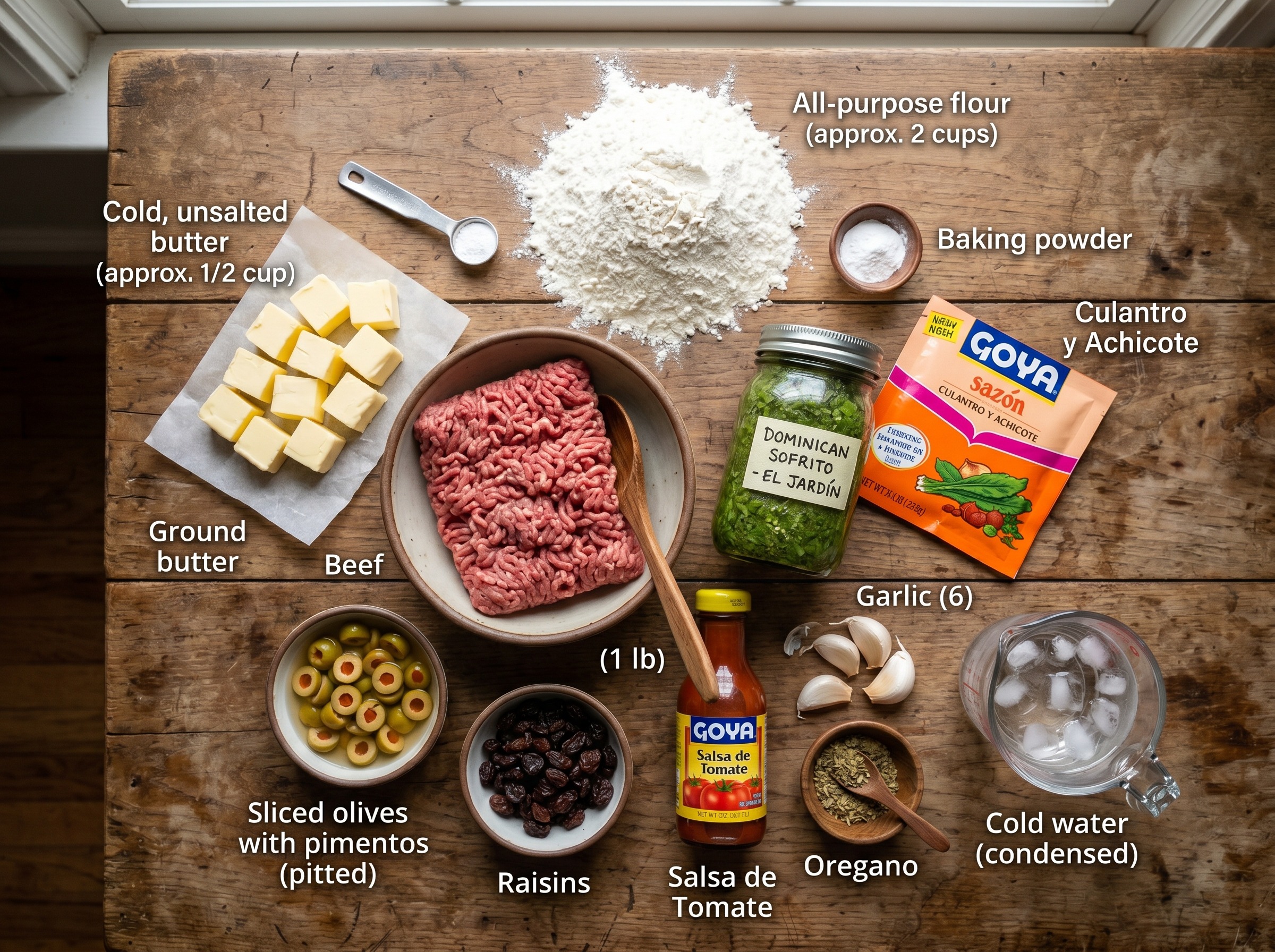
For the Dough
- All-purpose flour — standard flour works. No need for bread flour or pastry flour.
- Salt, sugar, baking powder — the baking powder gives the dough a subtle puff in the oil. The sugar is not for sweetness, it is for browning.
- Cold butter or shortening — I use butter for flavor, but vegetable shortening makes a slightly flakier dough and is what most Dominican abuelas use. Either works.
- Cold water — ice cold. Warm water kills the dough.
- Egg yolk — for sealing the edges so nothing leaks out in the oil.
For the Picadillo Filling
- Ground beef (80/20) — the fat is the flavor. Leaner than that and the filling goes dry.
- Sofrito — make your own Latin sofrito if you have 10 minutes, or use a good jarred one. It is the flavor base of everything Dominican.
- Sazón and adobo — the Caribbean flavor bombs. One packet of sazón and a teaspoon of adobo is all this filling needs.
- Dominican oregano — it is more pungent than Mediterranean oregano. If you can find it, use it. Regular oregano works too.
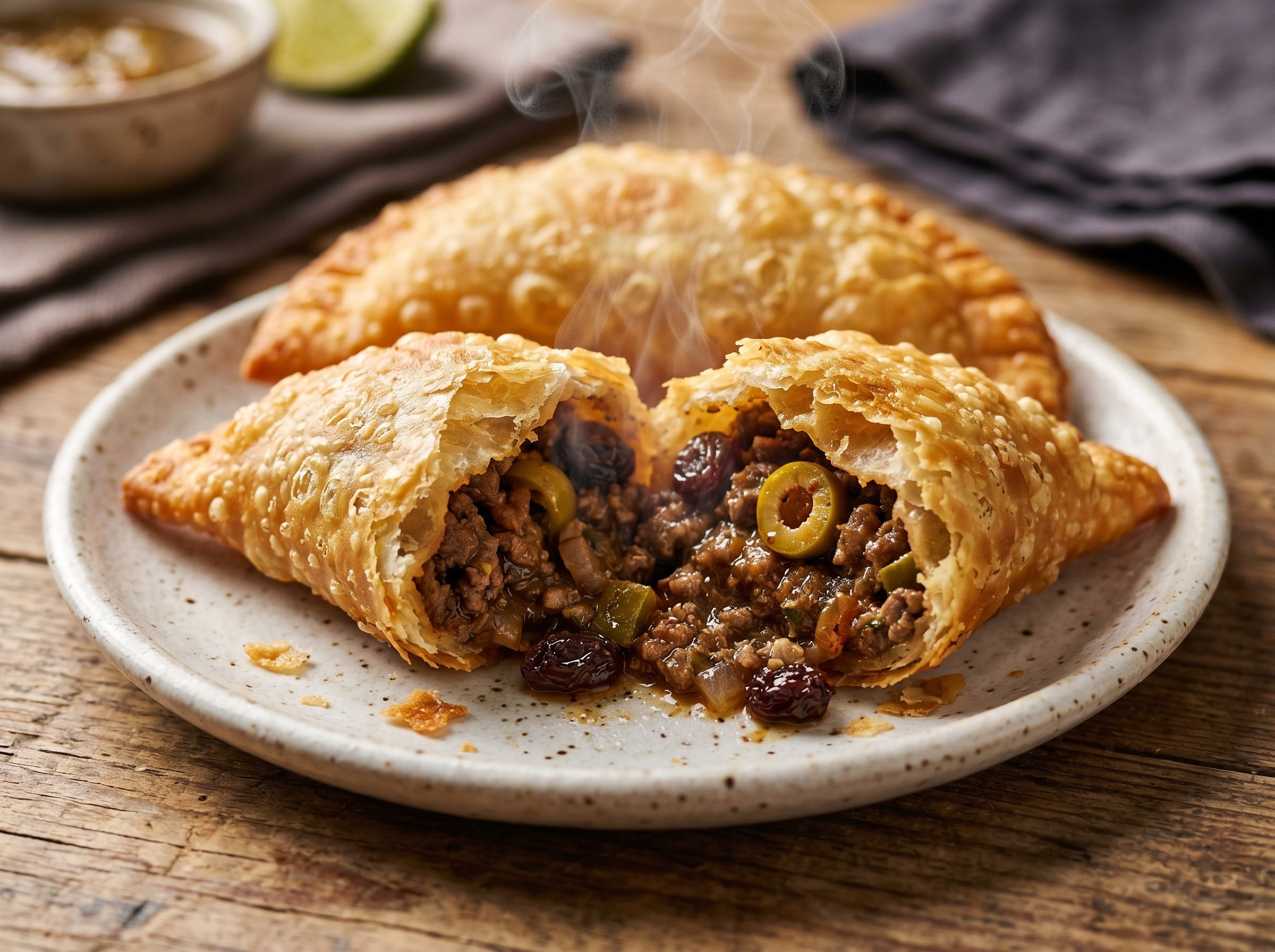
- Green olives and raisins — this is the flavor that makes Dominican picadillo different from every other Latin picadillo. Salty olives, sweet raisins, savory beef. Do not skip them.
- Tomato sauce — just a quarter cup. Enough to bind the filling, not enough to make it wet.
How to Make Empanaditas Dominicanas
Step 1: Cook the Filling (and Cool It Completely)
I always make the filling first because it needs to cool completely before it hits the dough. Hot filling turns cold dough into a soggy mess — and the butter starts melting before the empanadita sees oil. Make it, spread it on a plate, and stick it in the fridge while you work on the dough.
Start with the sofrito in a hot skillet. One minute in the oil, then add the ground beef. Break it apart with a wooden spoon, season with adobo, sazón, oregano, and garlic. Once the beef is browned and the liquid has cooked off, stir in the tomato sauce, olives, and raisins. Simmer for 5 minutes. You want it dry, not saucy. A wet filling will sog out the dough and blow out the seal.
Step 2: Make the Dough
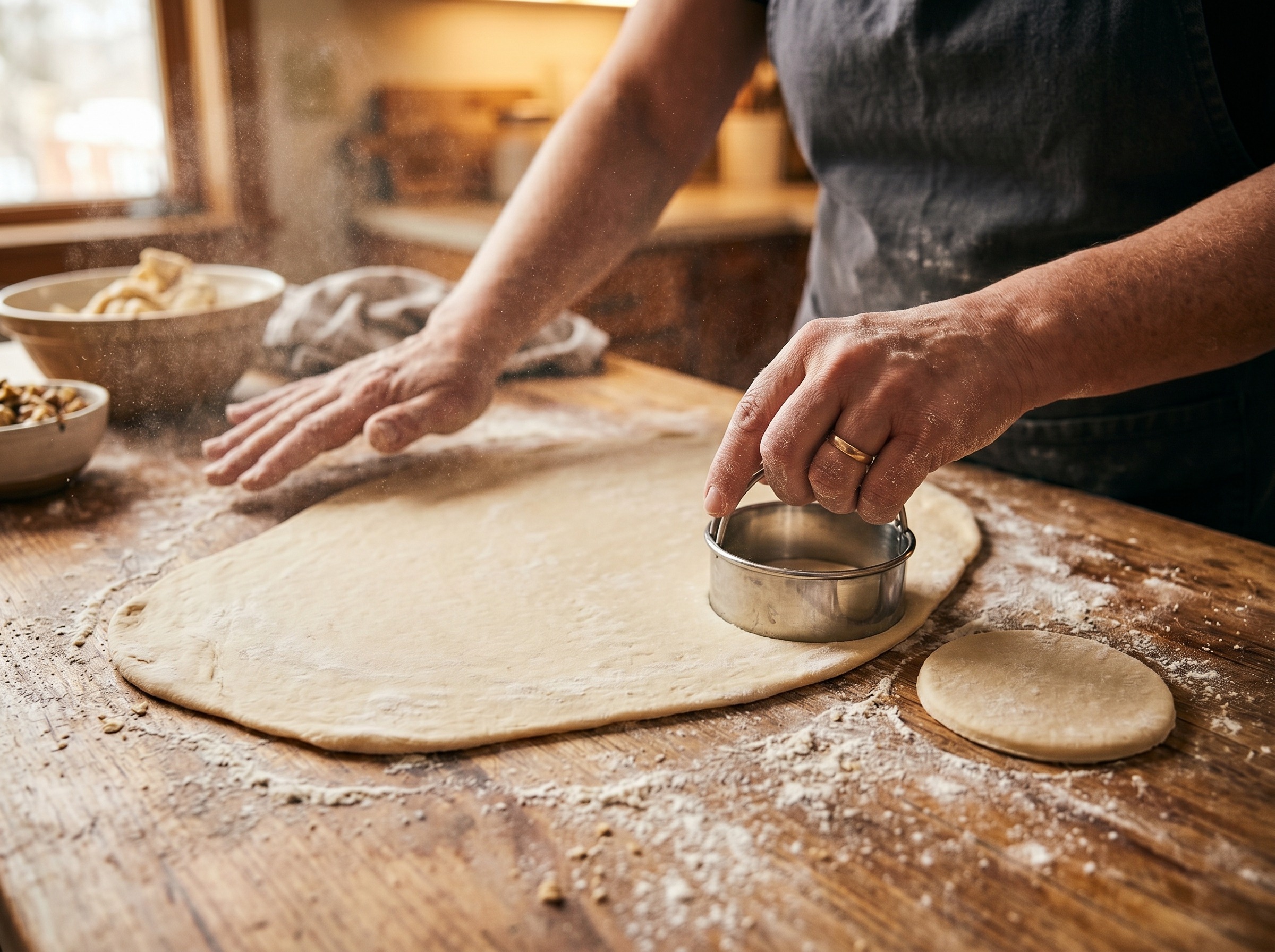
Whisk the dry ingredients together. Cut in the cold cubed butter until the mixture looks like coarse crumbs with pea-sized bits of butter still visible — do not work it until smooth. Those pockets of butter are what give the dough structure when it hits the hot oil.
Add cold water gradually — a little splash at a time, stirring with a fork. Stop the moment the dough comes together. If it feels dry, add another teaspoon. If it feels sticky, you went too far. Knead it 4 or 5 times on a floured surface, just until smooth. Wrap in plastic and rest at room temperature for 20 minutes. This is not a skip-able step. Resting lets the gluten relax so the dough rolls thin without springing back on you.
Step 3: Roll, Cut, Fill
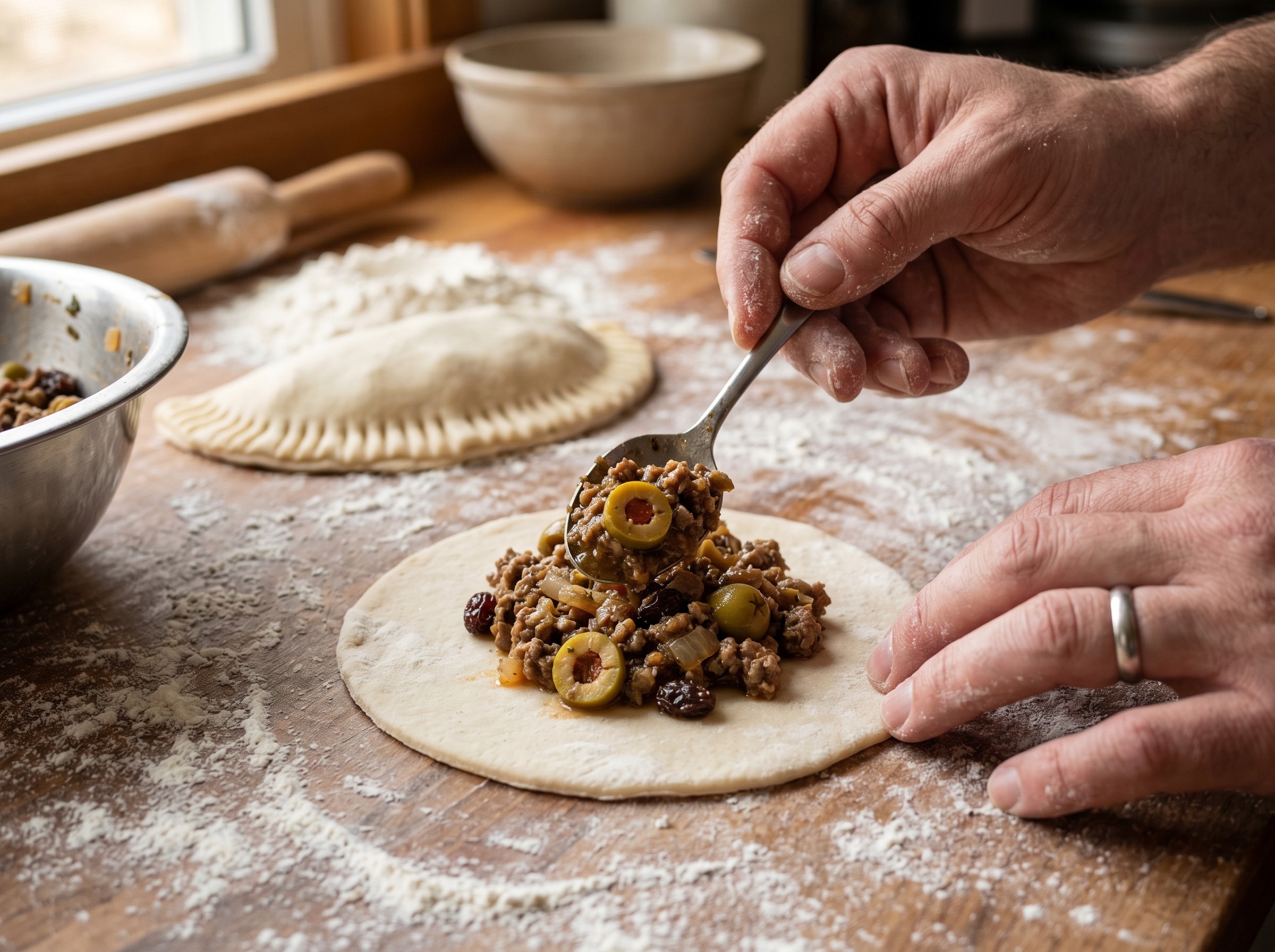
Lightly flour your work surface and roll the dough to about ⅛ inch — thin enough to see the shape of your rolling pin through it if you tilt it to the light. Use a 4-inch round cutter, or the rim of a glass or small bowl, to cut circles. Re-roll the scraps once for more circles. Do not re-roll a second time — the dough turns tough.
Place one tablespoon of cooled filling in the center of each circle. Measure it. I know it feels stingy — trust me. Overfilling is the #1 reason empanaditas blow out in hot oil. Brush the edge of the circle lightly with beaten egg yolk. Fold over, press the edges together with your fingers, then seal firmly by pressing the tines of a fork along the entire edge. The fork seal is not decorative. It is structural.
Step 4: Fry Them Golden
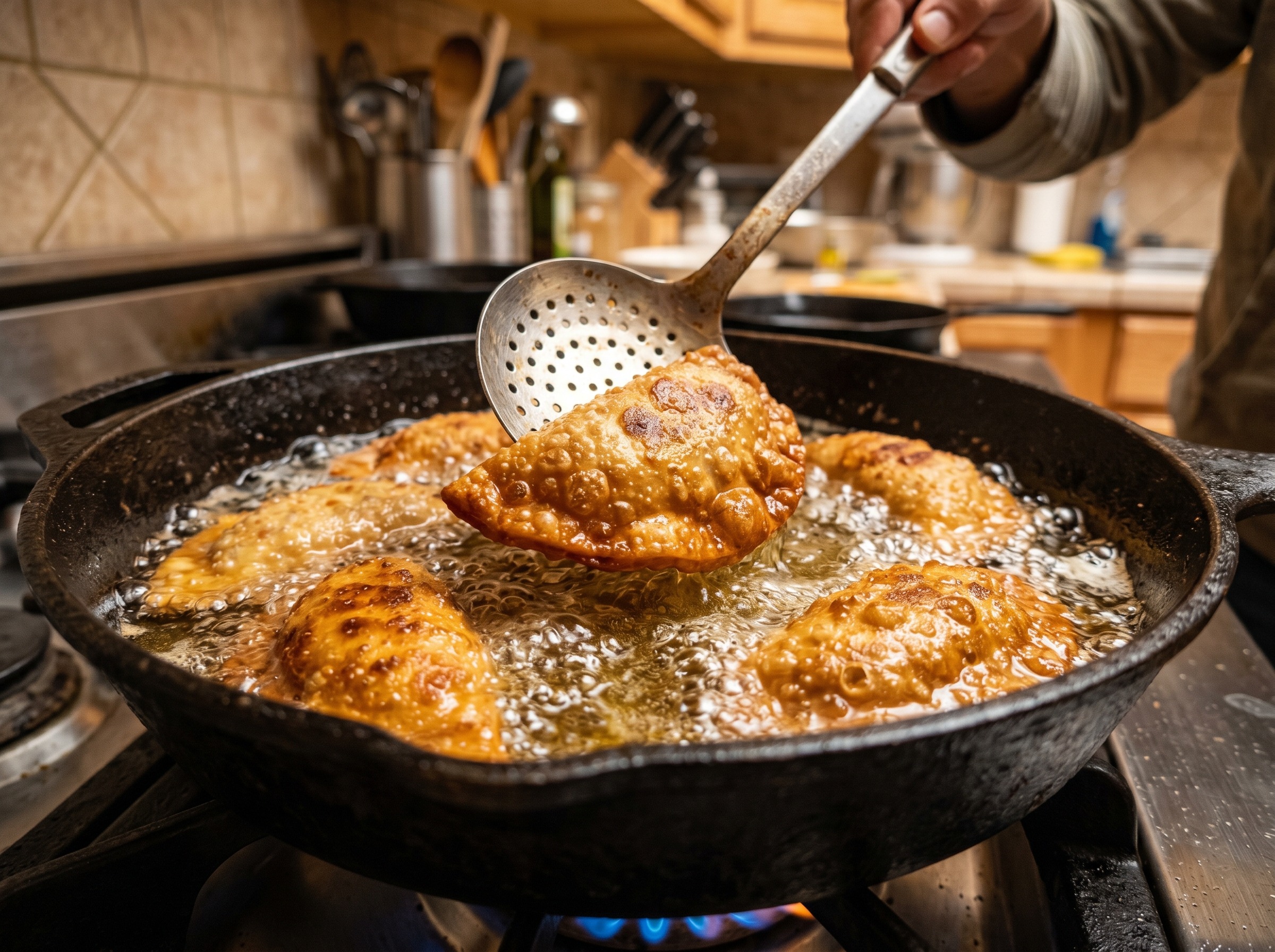
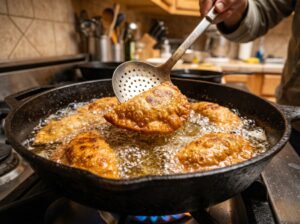
Heat three inches of neutral oil (vegetable or canola) in a heavy deep pot or Dutch oven to 350°F. Use a thermometer. Eyeballing oil temperature is the single biggest mistake I see beginners make. Too hot and the dough burns before the inside cooks. Too cool and the dough absorbs oil and turns greasy instead of crispy.
Fry in small batches — 3 or 4 at a time, max. Crowding the pot drops the oil temperature hard and fast, and you end up with soggy empanaditas. Fry for 2 to 3 minutes per side until deeply golden brown and puffed. Turn gently with a slotted spoon. Transfer to a wire rack set over paper towels. Not directly on paper — the bottoms go soggy from trapped steam. The rack lets air circulate and they stay crispy.
Pro Tips from My Kitchen
- Keep the dough cold. If your kitchen is hot, work in two batches — keep half the dough in the fridge while you roll the other. Warm dough stretches and tears when you try to seal it.
- One tablespoon of filling. Max. I know it looks like not enough. Trust the measurement. Overfilling is how you end up with picadillo floating in your oil.
- Cool the filling completely. Hot or warm filling turns the dough greasy and limp before it even hits the oil. I will wait 30 minutes rather than risk a soggy shell.
- The fork seal is structural, not decorative. A loose seal blows open in hot oil and dumps filling everywhere. Press hard all the way around.
- Do not fry hotter than 350°F. Higher temperature browns the dough before the inside cooks through. You will have raw flour taste inside a golden shell.
- Salt them the second they hit the rack. A light sprinkle of salt on a hot empanadita is chef's kiss.
- Wire rack over paper towels — not on paper. Paper traps steam under the empanadita and the bottom goes soft in minutes. The rack saves the crunch.
How Many Empanaditas Per Person
Here is my Dominican party math, refined over three decades of family gatherings: at a meal as appetizers, plan on 3 per person minimum. For a party spread with other snacks, 4-5 per person. For a party where empanaditas are the main attraction, 6-8 per person. If there are kids — add two. Kids destroy empanaditas faster than anyone. This recipe makes 18, which serves 4-6 people depending on the occasion. If you are feeding more than that, double it. It doubles perfectly. Triple it. Make fifty. You will not regret it.
Pro move for big parties: assemble everything the day before, freeze the raw stuffed empanaditas on sheet trays, and fry straight from frozen just before guests arrive. They come out identical to fresh and you are not tied to the stove while your friends drink your rum.
Variations I Like
- Chicken picadillo — sub ground chicken for beef. Cook it a little shorter. Works beautifully.
- Queso y jamón — diced ham and shredded mozzarella for a kid-friendly version. My nieces demand these at every party.
- Pizza filling — a kid classic in DR. Tomato sauce, mozzarella, and mini pepperoni. Sounds weird, tastes right.
- Baked instead of fried — brush with egg wash and bake at 400°F for 20 minutes. Not quite the same crunch, but healthier, and you can make 30 at a time. Good for parties.
- Air fryer version — 400°F for 10-12 minutes, flip halfway, brush lightly with oil. Crispier than baked, cleaner than fried.
What to Serve Them With
Empanaditas are finger food — they do not need a plate, they need a sauce. My go-to is wasakaka sauce, the garlicky herb sauce that cuts right through the richness. Dominican pink sauce (mayo plus ketchup, nothing fancy) is the other classic. Some people go for hot sauce or sweet chili. For drinks — a cold Presidente, Materva, or a tall glass of morir soñando.
For a full Dominican meal, serve them alongside a small plate of dominican chimis, or make them part of a Sunday spread with tostones and a simple salad.
Storage and Reheating
Empanaditas lose their crunch within 30 minutes of coming out of the oil — it is their nature. Eat them fresh if possible. If you have leftovers, store them in an airtight container in the fridge for up to 3 days. Reheat in a 375°F oven for 8 to 10 minutes, or an air fryer for 5 minutes at 375°F. Never microwave them — microwaving turns the shell rubbery and the filling into steamy paste.
To freeze: assemble them, freeze on a sheet tray until solid, then transfer to a zip-top bag. Fry straight from frozen — add an extra minute per side. This is how Dominican colmados keep empanaditas ready at all times.
Frequently Asked Questions
What is the difference between empanadas and empanaditas?
Size is the main difference. Empanaditas (the diminutive, "little empanadas") are snack-sized, about 4 inches across, meant to be eaten in 2-3 bites. Empanadas are larger, often 6+ inches, and served as a meal. In the Dominican Republic, the term empanaditas specifically refers to the small fried flour-dough ones sold at colmados and parties.
Can I use store-bought empanada discs?
Yes, and no shame in it. Goya makes the yellow-pack discs that are standard in every Dominican freezer section. Thaw them in the fridge, fill them, and fry. The texture is different from homemade — slightly softer, less structure — but they work. Use them on busy weeknights. Save the homemade dough for when you have time.
Why did my empanaditas burst open in the oil?
Three reasons, in order of likelihood: you overfilled them (more than one tablespoon), you did not seal the edges tight enough with a fork, or your oil was too hot (above 375°F) which expanded the filling too fast. The fix: measure your filling, fork-seal firmly all the way around, and keep oil at 350°F.
Can I bake empanaditas instead of frying?
Yes. Brush them with beaten egg yolk on top, place on a parchment-lined sheet tray, and bake at 400°F for 18 to 22 minutes until golden. The texture is more like a biscuit than a crispy fried shell, but they are still delicious. For a closer approximation, brush the outside with melted butter or oil before baking.
Can I make the dough ahead of time?
Yes. The dough keeps wrapped in plastic in the fridge for up to 2 days. Let it sit at room temperature for 15 minutes before rolling, or it will crack. You can also freeze the rolled and cut circles — stack with parchment between them — for up to 2 months.
What can I substitute for sofrito?
If you do not have sofrito, substitute 2 tablespoons of finely minced onion, 2 tablespoons of minced green bell pepper, and 2 cloves of minced garlic cooked for 2 minutes in oil before adding the beef. Not identical, but a close approximation.
Are Dominican empanaditas the same as quipes?
No. Quipes (kibbehs) are a Dominican-Lebanese specialty made with bulgur wheat dough and a similar seasoned beef filling. Empanaditas use flour-based dough. Both are fried and delicious, but they are distinct. If you are curious about Dominican snack foods in general, check out my Dominican food guide for the full lineup.
How do I reheat leftover empanaditas without losing the crunch?
Air fryer at 375°F for 5 minutes, or a regular oven at 375°F for 8-10 minutes. Never microwave them — microwaving destroys the shell. If you only have a microwave, wrap in a damp paper towel and accept that the crunch is gone.
Shop This Recipe
A few tools that make this recipe easier. These are Amazon affiliate links — if you buy through them I get a small commission at no cost to you, which helps me keep this blog running.
- Round Pastry Cutter Set — the 4-inch cutter is the perfect empanadita size.
- ThermoPro Deep Fry Thermometer — no more guessing oil temperature.
- Heavy-Duty Cast Iron Frying Pan — holds heat better than anything else I own.
You May Also Like This
If empanaditas are your speed, you will love my dominican chimi — the Dominican street burger that is basically an empanadita's cousin. Serve them with wasakaka sauce or Dominican pink sauce and you have a party.
Looking for more Dominican classics? My Dominican food guide rounds up everything — from breakfast mangú to Sunday sancocho. Start there if you are new to this cuisine.
Make these once for a weekend family gathering. Do not plan for leftovers — there will not be any. — Kelvin
Ingredients
Method
- Make the filling first so it can cool while you mix the dough. In a large skillet over medium heat, add the sofrito and cook for 1 minute. Add the ground beef, breaking it up with a wooden spoon. Season with adobo, oregano, garlic, and sazón. Cook until the beef is browned, about 8 minutes.

- Stir in the tomato sauce, green olives, and raisins. Simmer uncovered for 5 minutes until most of the liquid cooks off — the filling should be dry, not wet. Wet filling will make the dough soggy. Taste, adjust salt and pepper. Transfer to a bowl and cool completely before filling.
- While the filling cools, make the dough. In a large bowl, whisk together flour, salt, baking powder, and sugar. Cut in the cold cubed butter with a pastry cutter or two forks until the mixture looks like coarse crumbs with pea-sized bits of butter. Gradually add cold water, a little at a time, mixing with a fork until the dough comes together — do not overwork it.
- Turn the dough onto a lightly floured surface and knead gently 4-5 times until smooth. Wrap in plastic and rest at room temperature for 20 minutes. This relaxes the gluten so the dough rolls thin without springing back.
- Lightly flour your surface and roll the dough to ⅛-inch thickness. Cut out 4-inch circles using a cutter or the rim of a bowl. Re-roll the scraps once to get more circles — do not re-roll a second time or the dough gets tough.
- Place about 1 tablespoon of cooled filling in the center of each circle. Do not overfill — filling that touches the edge prevents sealing. Lightly brush the edge of the circle with beaten egg yolk. Fold the dough over into a half-moon shape and press the edges together with your fingers, then seal firmly by pressing the tines of a fork along the entire edge. The fork crimp is non-negotiable — it prevents filling from blowing out during frying.
- In a heavy deep pot or Dutch oven, heat 3 inches of neutral oil to 350°F (175°C). Use a thermometer — eyeballing oil temperature is the most common mistake beginners make. Too hot and the dough burns before the inside cooks. Too cool and they absorb oil and turn greasy.
- Fry the empanaditas in batches of 3-4 at a time, keeping oil temperature steady. Fry 2-3 minutes per side until deep golden brown and puffed. Turn gently with a slotted spoon. Transfer to a wire rack set over paper towels — not directly on paper, or the bottoms go soggy.
- Serve hot with wasakaka sauce or Dominican pink sauce (mayo-ketchup). Empanaditas lose their crunch within 30 minutes — eat them fresh.
Nutrition
Notes
Tried this recipe?
Let us know how it was!Never Miss a Recipe
Get Kelvin's latest Dominican & Caribbean recipes straight to your inbox — free.

Leave a Reply