
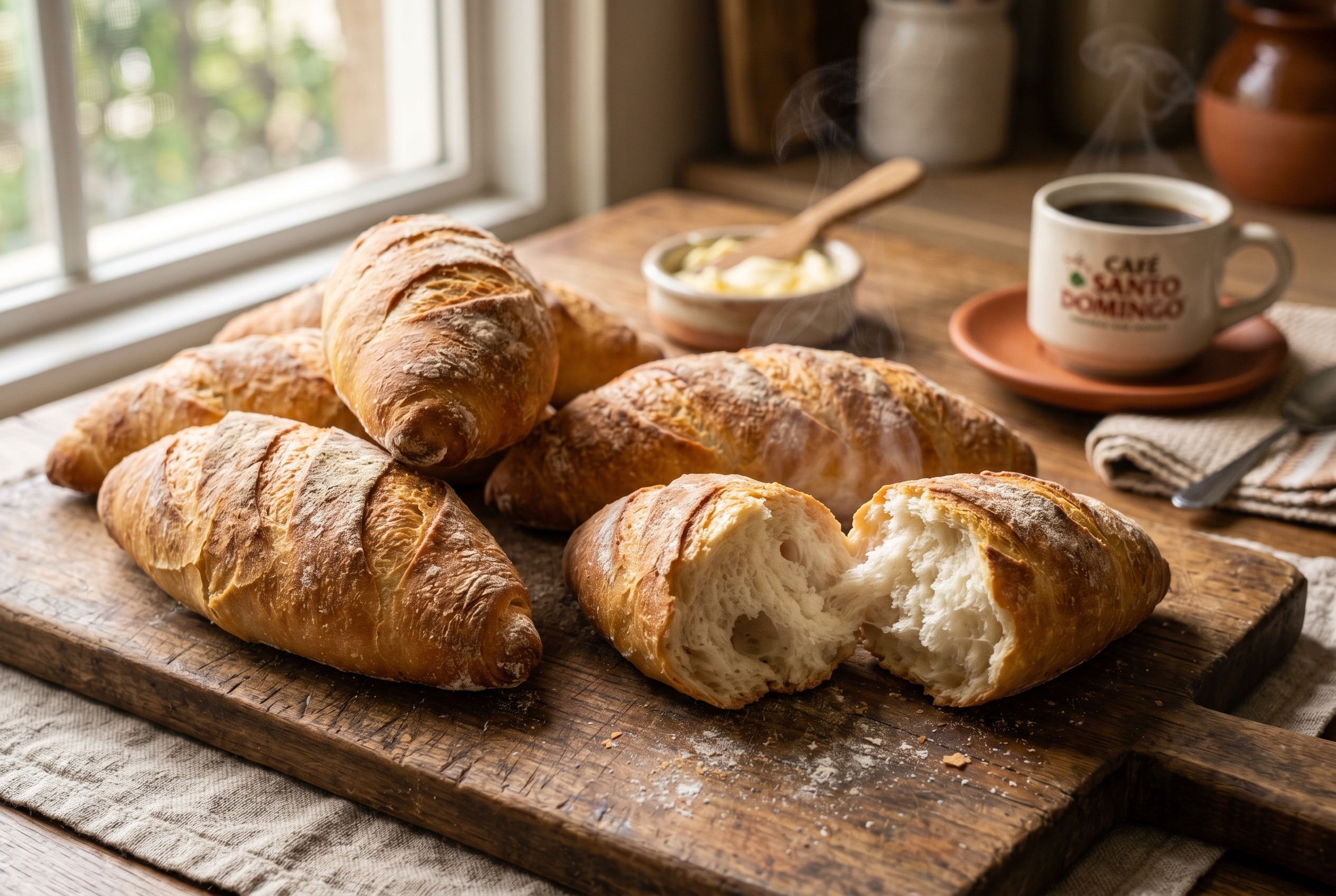
Pan de agua is the bread that rules the Dominican Republic. Every morning, in every barrio from Santo Domingo to Santiago, you'll see people walking home from the colmado with a paper bag full of warm pan de agua tucked under their arm. The crust cracks when you squeeze it. The inside is soft and airy and still warm from the panadería oven. This is the bread that goes with everything — mangu, queso frito, salami, avocado, morir soñando. If there's a Dominican breakfast happening, there's pan de agua on the table.
Growing up in Santo Domingo, my grandmother would send me to the panadería around the corner every morning with a few pesos. I'd come back with four or five pieces of pan de agua wrapped in brown paper, the bag already steamy and warm against my chest. She'd split them open while they were still hot, spread butter on the insides, and pile on slices of queso de freír or Dominican salami. That memory — the smell of fresh pan de agua first thing in the morning — is probably the deepest food memory I have.
Today I'm sharing the homemade version I've been making for years in my own kitchen. The secret to real pan de agua is a very hot oven and a pan of water on the bottom rack to create steam. That's literally why it's called "water bread." Let me walk you through it.
Why You'll Love This Pan de Agua Recipe
- Authentic Dominican flavor: Crusty outside, soft and airy inside — just like the loaves coming out of Dominican panaderías at 6am.
- Simple ingredients: Flour, water, yeast, salt, sugar, a little oil. Six ingredients. No special Dominican imports needed.
- Better than store-bought: Supermarket "pan de agua" is a pale imitation. Homemade is what you actually remember from the DR.
- Great for sandwiches: Split a pan de agua, stuff it with queso frito, salami, eggs, avocado — that's breakfast done right.
- Foolproof if you follow the steam trick: The pan of water on the bottom rack is the whole game. Once you do it, you get bakery-quality crust every time.
What Is Pan de Agua?
Pan de agua literally translates to "water bread." It's a lean yeasted bread — meaning no milk, no eggs, no butter in the dough — baked at very high heat with steam injected into the oven. The result is a torpedo-shaped roll with a thin crackly golden crust and a soft open-crumb interior. In the Dominican Republic, pan de agua is the everyday table bread the way a baguette is in France or bolillos are in Mexico. Every Dominican panadería and colmado bakes it fresh every single morning.
The name comes from two things. First, the dough itself is nothing more than flour, water, yeast, salt, and a touch of sugar and oil — mostly water. Second, the baking technique relies on steam. A tray of water goes on the bottom rack of a screaming-hot oven, and the steam keeps the outside of the bread moist for the first few minutes of baking. That steam lets the dough expand fully before the crust sets, and when the crust does set, it goes thin and shatter-crisp instead of thick and chewy.
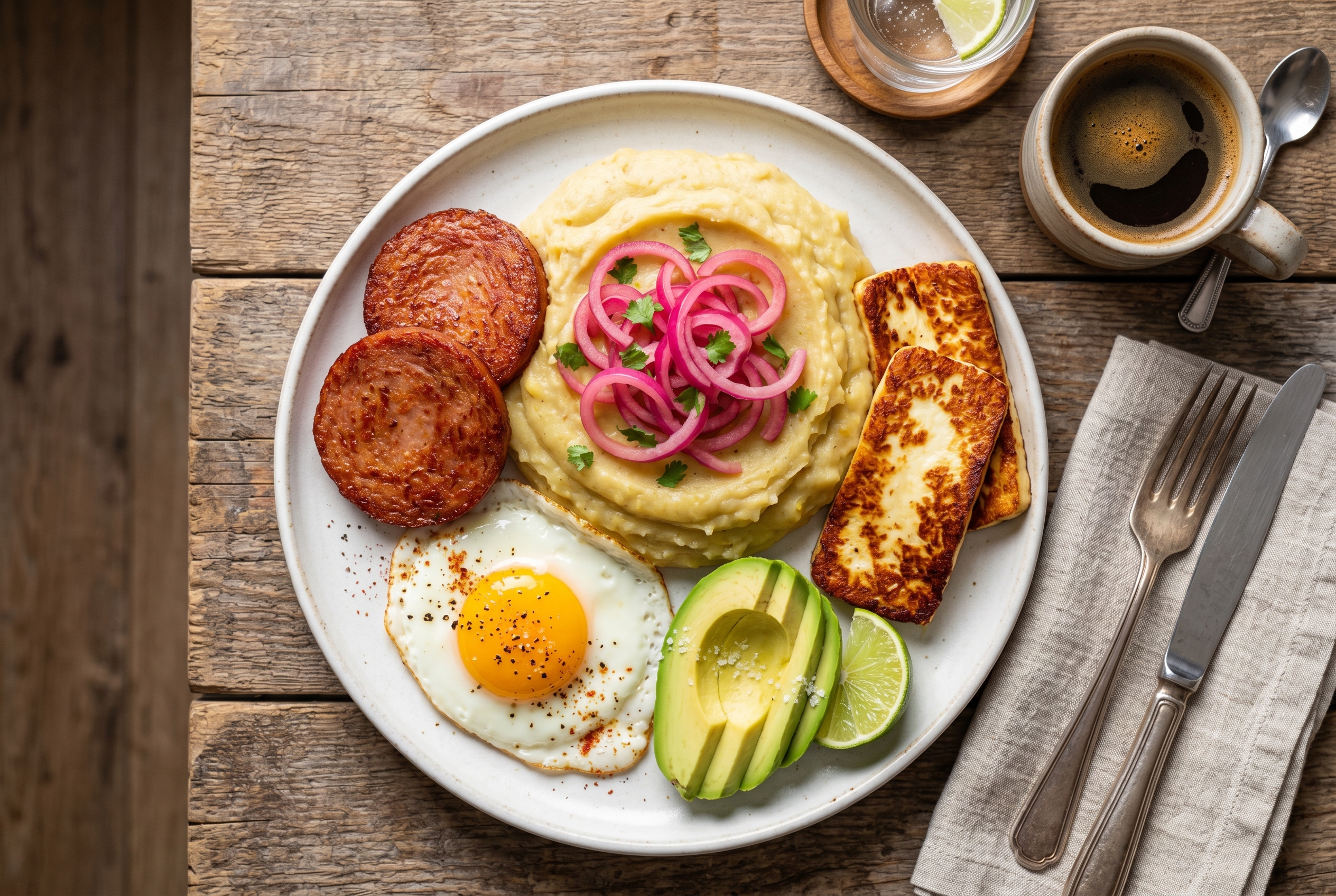
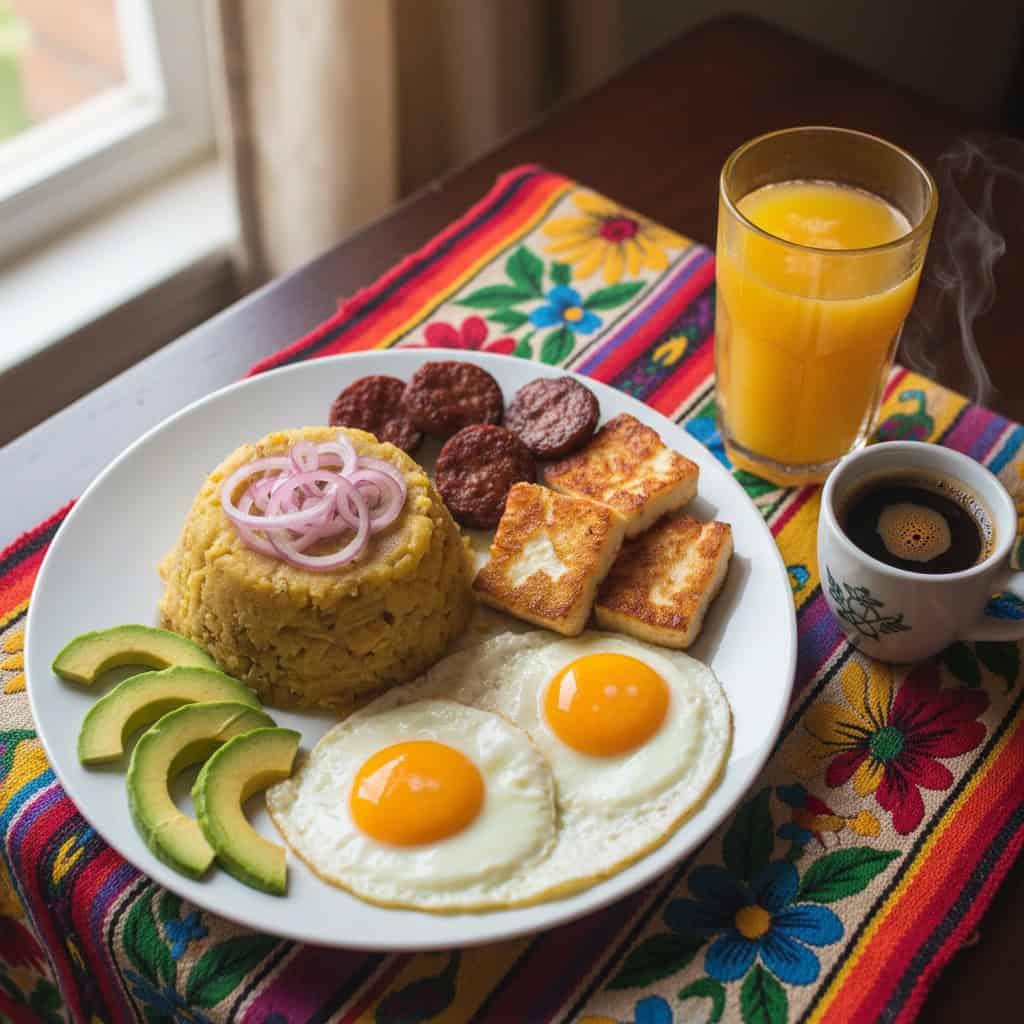
Dominicans eat pan de agua with basically everything. In the morning, it's split open and stuffed with fried salami, queso frito, scrambled eggs, or mashed avocado. With coffee, it gets dunked. At lunch, it soaks up the sauce from sancocho or pollo guisado. Late at night it's the go-to base for a quick chimi-style sandwich. The bread plays a supporting role to everything else on the Dominican table — quiet, humble, absolutely essential.
Ingredients You'll Need
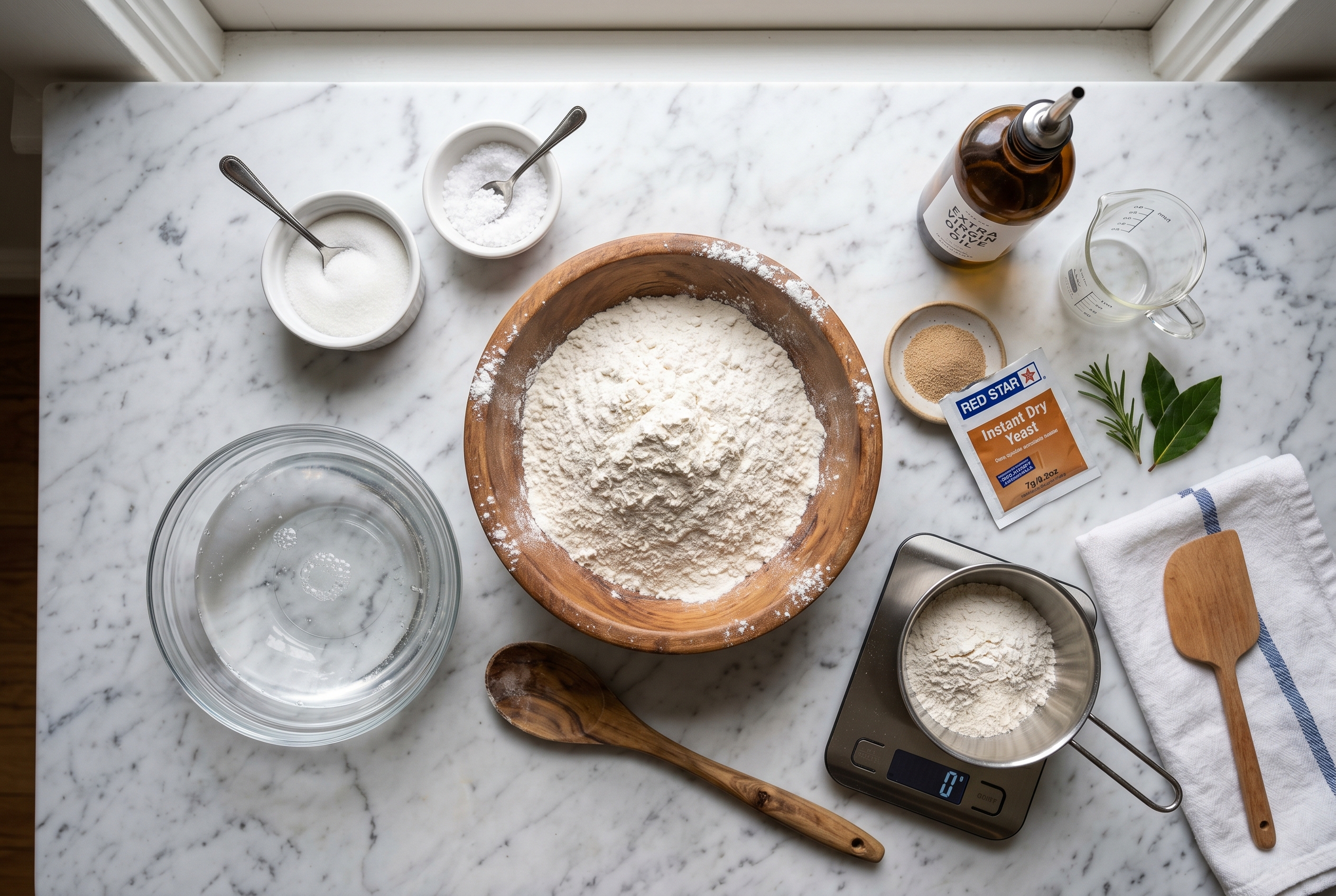
- 500g bread flour (about 4 cups) — bread flour gives the chewy structure
- 320ml warm water (about 1 ⅓ cups) — around 105°F, warm to the touch but not hot
- 7g instant yeast (1 packet or 2 ¼ tsp)
- 1 tablespoon sugar — feeds the yeast and helps with browning
- 10g salt (about 2 tsp)
- 1 tablespoon vegetable oil — a tiny bit of fat for a softer crumb
- Extra flour for shaping
- 1 cup hot water for the steam tray
Equipment: A stand mixer with dough hook (or strong arms for 10 minutes of kneading), a large bowl, a sharp razor or lame for scoring, a sheet pan, and a second pan for the steam bath.
6 Things to Eat With Pan de Agua
- Mangu: Split a hot pan de agua and scoop up the mashed plantains. Breakfast of champions.
- Queso frito: Fried Dominican cheese tucked inside a warm pan de agua. Non-negotiable Saturday morning move.
- Dominican salami: Pan-fried salami, a slice of avocado, pan de agua around it. That's the sandwich.
- Pollo guisado: Tear pieces of pan de agua and soak up every drop of the sauce. Do not waste that salsa.
- Sancocho: Dunking pan de agua into sancocho broth is a Dominican birthright.
- Morir soñando: Sweet milk and orange juice drink. Dunk the pan de agua. Trust me.
Step-by-Step Instructions
Step 1 — Mix the Dough
In the bowl of a stand mixer, combine the bread flour, instant yeast, sugar, and salt. Whisk them together dry so the salt doesn't sit directly on the yeast. Pour in the warm water and the tablespoon of oil. Turn the mixer on low with the dough hook until everything comes together into a shaggy dough, about 2 minutes.
Step 2 — Knead for 10 Minutes
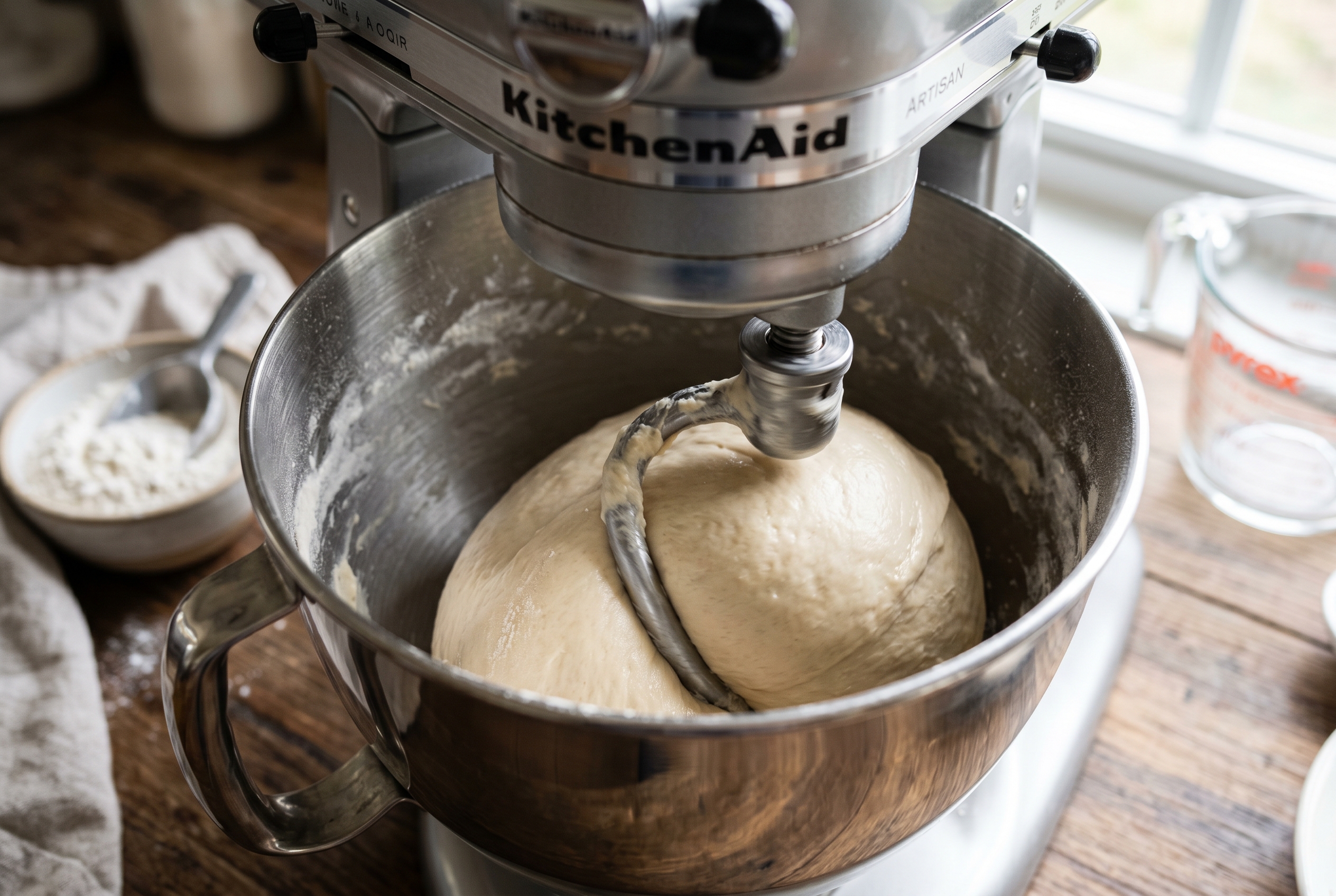
Crank the mixer up to medium-low and knead for a full 10 minutes. The dough should transform from rough and sticky to smooth, elastic, and pulling cleanly away from the sides of the bowl. If you pinch off a piece and stretch it, it should form a thin windowpane without tearing. No stand mixer? Knead by hand on a lightly floured counter for 12-15 minutes. Your arms will feel it.
Step 3 — First Rise (60 Minutes)
Lightly oil a large bowl and place the dough inside. Cover with plastic wrap or a damp towel. Let it rise in a warm spot for 60 minutes, or until it has doubled in size. In a cold kitchen this can take closer to 75-80 minutes. Don't rush it — patience is what makes the crumb open up.
Step 4 — Shape Into 6 Torpedoes
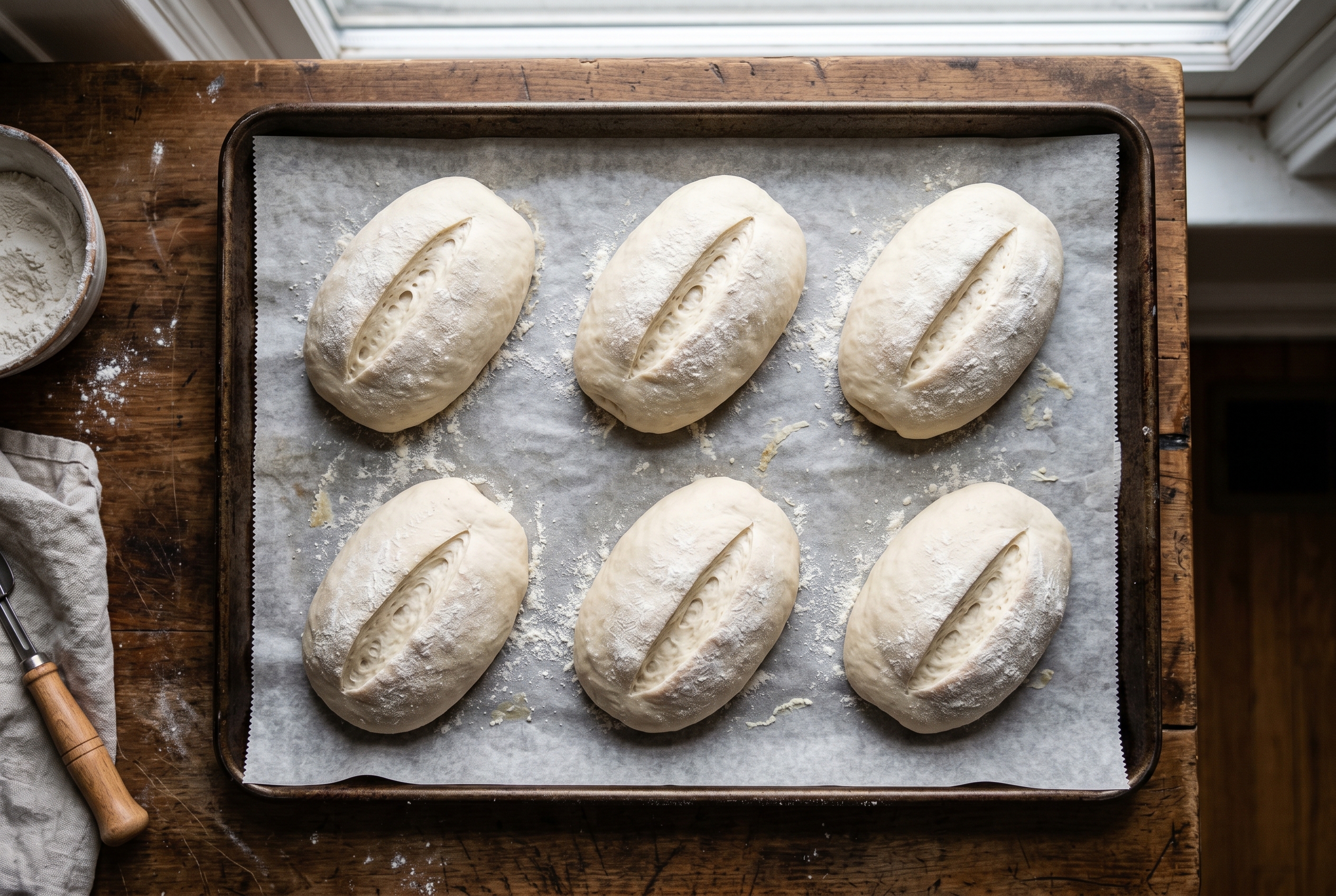
Punch the dough down gently and turn it out onto a lightly floured counter. Divide into 6 equal pieces (I use a kitchen scale — each piece should weigh around 140g). Flatten each piece into a small rectangle, fold the top down to the middle, then fold the bottom up. Roll from the top into a tight cylinder, sealing the seam with the heel of your hand. Taper the ends so each piece looks like a short torpedo or small football.
Step 5 — Second Rise and Score
Place the shaped rolls seam-side down on a sheet pan lined with parchment, spaced apart so they can expand. Cover loosely with a clean towel and let them rise 30 minutes until puffy. Meanwhile, preheat the oven to 450°F with a sheet pan or cast iron skillet on the bottom rack. Right before baking, take a sharp razor blade or lame and score a single shallow slash down the length of each roll, about ¼ inch deep.
Step 6 — Bake With Steam
Open the oven, slide the rolls onto the middle rack, and immediately pour 1 cup of hot water into the preheated pan on the bottom rack. Close the oven fast — you want to trap that steam. Bake for 22-25 minutes until the crust is deeply golden and the rolls sound hollow when you tap the bottom. Internal temp should read around 205°F. Move them to a wire rack to cool for at least 15 minutes before tearing in.
Pro Tips for Perfect Pan de Agua
- The steam is non-negotiable: Without steam, you get soft dinner rolls, not pan de agua. The water on the bottom rack creates the crackly crust. Don't skip it.
- Preheat your oven fully: Give it a full 20-30 minutes at 450°F. A not-quite-hot-enough oven is the number one reason homemade pan de agua comes out pale and sad.
- Don't underbake: Dominican pan de agua should be deeply golden, almost darkened in spots. Pale crust means a mushy interior. If you're unsure, add 2-3 more minutes.
- Cool on a wire rack: If you leave pan de agua on a hot sheet pan, the bottom steams and softens. A wire rack keeps the crust crisp all the way around.
- Best same day: Pan de agua is a same-day bread — it's at its peak within 6 hours of baking. After that, the crust softens. Revive day-old rolls with 3 minutes in a 350°F oven.
Variations
Pan de Agua Sandwiches
Bake the rolls slightly larger (divide into 4 instead of 6) for proper sandwich-size pieces. Great for stuffing with pollo guisado, fried salami, or queso frito.
Whole Wheat Pan de Agua
Replace 150g of the bread flour with whole wheat flour. The crust gets nuttier and slightly darker. Crumb is a little denser but still airy. Add an extra 2 tablespoons of water to compensate.
Mini Pan de Agua (Pancito)
Divide the dough into 12 small pieces instead of 6 for dinner-roll size pancitos. Reduce bake time to 16-18 minutes. Perfect for parties — serve with salami and cheese as Dominican pre-dinner nibbles.
What to Serve With Pan de Agua
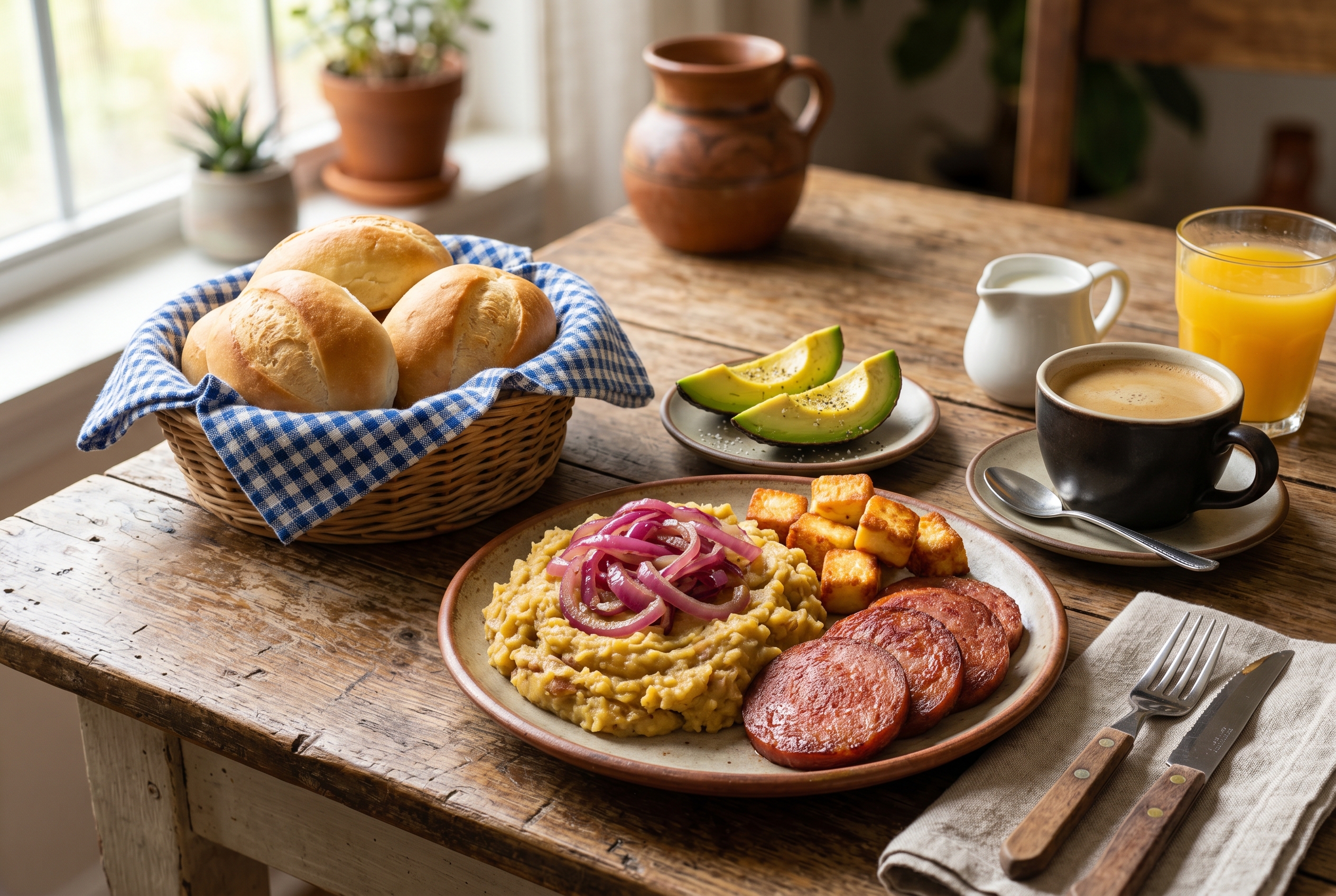
- Mangu: The ride-or-die Dominican breakfast pairing.
- Pollo guisado: Tear pan de agua and soak up the sauce.
- Sancocho: Dunk pan de agua into the broth.
- Habichuelas guisadas: Bean sauce plus crusty bread equals Dominican soul food.
- Coffee or morir soñando: Dunk. Don't fight it.
You May Also Like
Frequently Asked Questions
Why is it called pan de agua?
Two reasons. First, the dough is a lean water-based dough — no milk, no butter, no eggs, just flour and water as the base. Second, and more importantly, it's baked with steam. A pan of water in the oven creates the crackly crust that defines this bread. Water is the star ingredient both inside and outside the dough.
Can I make pan de agua without a stand mixer?
Yes, absolutely. Dominican grandmothers have been kneading this by hand for generations. Mix everything in a bowl with a wooden spoon until it comes together, then turn it out onto a lightly floured counter and knead for 12-15 minutes. You're looking for a smooth, elastic dough that springs back when you press it.
Can I use all-purpose flour instead of bread flour?
You can, but the texture will be different. Bread flour has more protein, which gives you the chewy open crumb that real pan de agua has. All-purpose works in a pinch but produces a softer, less structured roll. If bread flour is available, use it.
How do I store leftover pan de agua?
Pan de agua is best the day it's baked. If you have leftovers, keep them in a paper bag at room temperature for up to 2 days. Don't use plastic — it traps moisture and turns the crust soft. To revive, pop in a 350°F oven for 3-4 minutes.
Can I freeze pan de agua?
Yes. Let the rolls cool completely, then freeze in a zip-top bag for up to 1 month. To reheat, place the frozen rolls directly in a 350°F oven for 8-10 minutes. The crust crisps back up and the inside softens — pretty close to fresh.
Why didn't my crust get crackly?
Three possible reasons. First, not enough steam — make sure your water pan is preheated and you pour the water in the second you close the oven. Second, oven not hot enough — 450°F is the minimum. Third, not baking long enough — pale crust stays soft. The rolls should be deeply golden before you pull them out.
What's the difference between pan de agua and a baguette?
They're close cousins. Both are lean water-based breads with crackly crusts. The main differences: pan de agua is shorter and fatter (torpedo-shaped rolls), usually includes a little sugar and oil in the dough, and has a slightly softer interior crumb. A French baguette is longer, has no sugar or oil, and has a more open irregular crumb.
Can I make the dough ahead of time?
Yes. After the first rise, punch the dough down, cover the bowl with plastic wrap, and refrigerate overnight. The next day, bring it back to room temperature for 30 minutes, then shape, second rise, and bake as normal. The cold rise actually improves flavor.
Why is my dough too sticky?
Bread flour behaves differently from brand to brand, and humidity plays a role too. If your dough is sticking to the mixer bowl or the counter after 10 minutes of kneading, add flour one tablespoon at a time until it cleans up. Don't add too much at once — you want tacky, not dry.
Can I use active dry yeast instead of instant?
Yes. Dissolve the active dry yeast in the warm water with the sugar first, let it sit 5 minutes until foamy, then add to the flour and salt. Everything else in the recipe stays the same. Use the same amount (7g or 2 ¼ tsp).
Dominican Pan de Agua (Water Bread)
Ingredients
Method
- Whisk flour, yeast, sugar, and salt in mixer bowl. Add warm water and oil. Mix low with dough hook 2 minutes until shaggy.

- Knead on medium-low for 10 minutes until smooth, elastic, and pulling away from bowl.
- Transfer to oiled bowl. Cover. First rise 60 minutes until doubled.
- Divide into 6 pieces (~140g each). Shape each into a torpedo by folding and rolling tight. Seal seam.
- Place on parchment-lined sheet pan. Second rise 30 min. Preheat oven 450°F with pan on bottom rack. Score each roll lengthwise.
- Slide rolls into oven, pour 1 cup hot water into bottom pan. Bake 22-25 min until deeply golden, internal 205°F. Cool on wire rack.
Nutrition
Video
Notes
Tried this recipe?
Let us know how it was!Shop This Recipe
View on Amazon →
View on Amazon →
View on Amazon →
As an Amazon Associate I earn from qualifying purchases at no extra cost to you.
Bake a batch this weekend. Split one open warm and put butter on it. That's the Dominican way.



Leave a Reply