
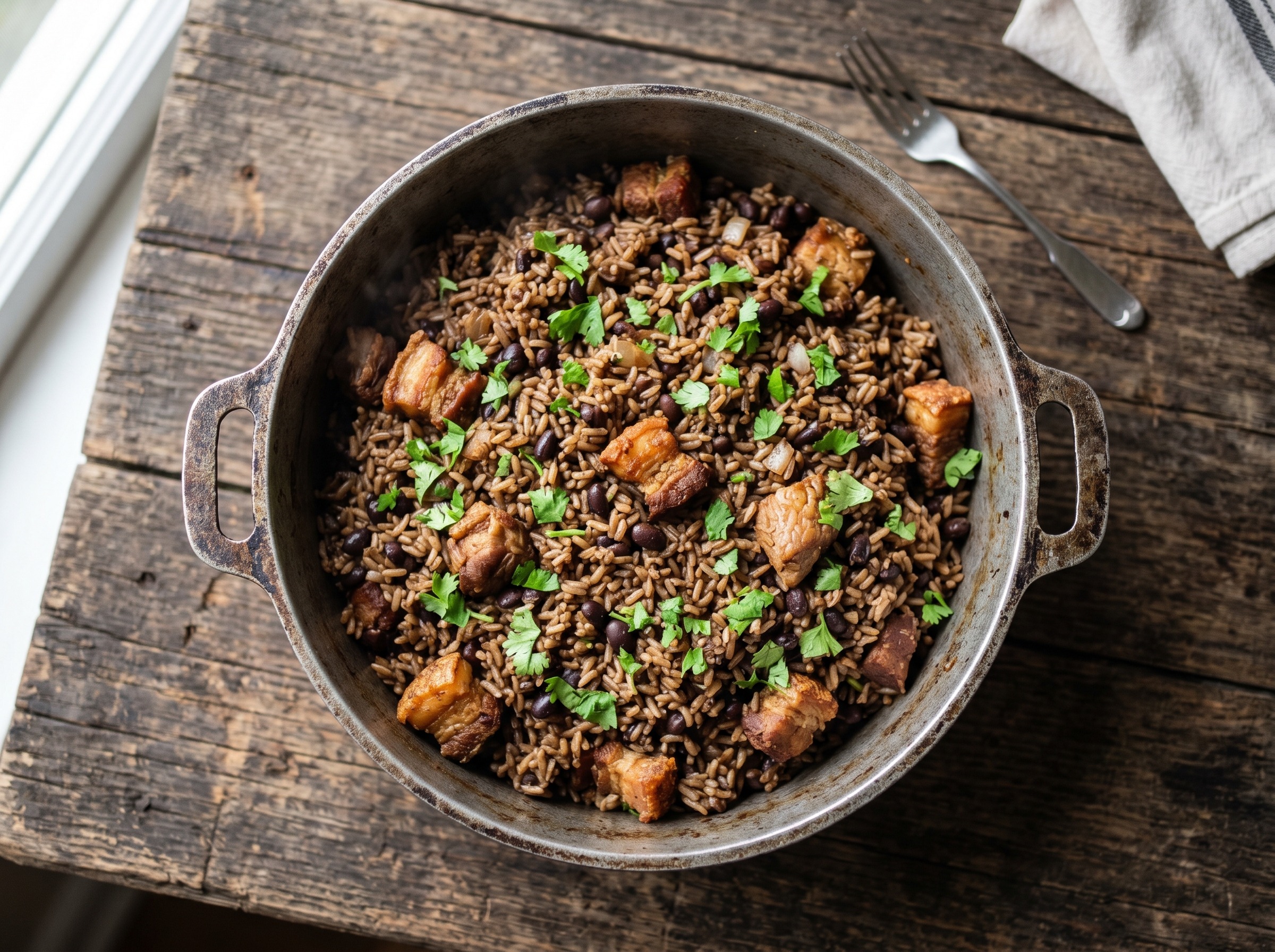
If you ever want to start a friendly debate among Dominicans, just ask whether moro-locrio counts as a moro or a locrio. Growing up in Santo Domingo, this dish showed up at family gatherings when someone decided they couldn't choose between the two, so they made both — in the same pot. My tia Marta was famous for her version, and by the time the lid came off that caldero, nobody in the house was thinking about categories anymore. They were just thinking about getting to the front of the line.
When my family moved to New York City, moro-locrio became one of those anchor dishes that kept our Dominican identity alive in a Washington Heights kitchen. My mom would make it on Sundays when she wanted something hearty but didn't feel like cooking three separate pots. One caldero, rice and beans and pork all married together, a mountain of flavor with minimal cleanup. As a kid I didn't appreciate the genius of that. Now, as someone who cooks for a living, I absolutely do.
These days, from my kitchen here in Pennsylvania, I make moro-locrio at least twice a month. It's the dish I turn to when I want comfort, depth, and that unmistakable Dominican sazón in every single grain. This recipe is my family's version — deeply seasoned, loaded with tender pork, and built on a foundation of creamy black beans that melt right into the rice. If you've never tried it, you're about to discover one of the Dominican Republic's best-kept culinary secrets. Let me walk you through every step.
Why You'll Love This Recipe
- Two iconic dishes in one pot. You get the creaminess of moro de habichuelas negras and the meaty richness of a locrio, all cooked together so the flavors fuse completely.
- Incredibly budget-friendly. Pork shoulder, canned black beans, and rice are some of the most affordable ingredients at any grocery store, and this recipe feeds a crowd.
- One-pot simplicity. Everything cooks in a single caldero or Dutch oven. Less dishes, more time enjoying your food with the people you love.
- Meal-prep champion. Moro-locrio reheats beautifully the next day — many Dominicans will tell you it tastes even better as leftovers, once all those spices have had time to deepen.
- Authentic Dominican flavor. With sazón, adobo, oregano, olives, capers, and a proper sofrito base, this rice delivers layered, complex flavor that tastes like it came straight from a Dominican home kitchen.
What Is Moro-Locrio?
To understand moro-locrio, you need to understand the two dishes it comes from. In Dominican cuisine, a moro (short for "moro de habichuelas") is rice cooked together with beans — the grains absorb the bean liquid and seasonings, creating something richer and more flavorful than plain white rice. The most famous version is moro de guandules (rice with pigeon peas), but you'll also find moro made with red beans, black beans, and lentils. Then there's locrio, the Dominican cousin of Spanish arroz con pollo or paella. In a locrio, rice is cooked with a protein — usually chicken (locrio de pollo), shrimp, salami, or pork — and the meat's juices and fat flavor every grain. It's a one-pot meal where the protein is the star.
Moro-locrio is the beautiful hybrid that happens when a Dominican cook says, "Why not both?" You take the bean-infused rice concept of a moro and combine it with the meat-studded, protein-rich approach of a locrio. The result is rice cooked with black beans and pork in the same pot. The black bean liquid tints the rice a gorgeous dark color, the pork renders its fat into every layer, and the sofrito ties it all together. It's uniquely Dominican — you won't find this exact concept in other Caribbean or Latin American cuisines. Some families make it with red beans, but the most traditional and popular version uses habichuelas negras (black beans) and pork shoulder or pork chops cut into small pieces.
Think of it as the ultimate expression of Dominican one-pot cooking: maximum flavor, minimum fuss, and enough food to feed everyone at the table twice. It's what happens when resourcefulness meets culinary genius, and it's been a staple of Dominican home cooking for generations.
The Cultural Story Behind Moro-Locrio
Moro-locrio is a dish born from Dominican practicality and creativity. In a culture where rice is sacred — served at virtually every lunch and dinner — cooks are constantly finding new ways to elevate it. The concept of cooking rice with beans stretches back centuries, influenced by West African, Taíno, and Spanish culinary traditions that converged on the island of Hispaniola. Adding meat to that equation was a natural evolution, especially in rural areas where a single pot over a wood fire was the norm. A farmer's wife might have a handful of black beans, a piece of pork from a recent matanza (pig slaughter), and rice from the local colmado. Moro-locrio was the logical, delicious result.
Today, you'll find moro-locrio at family reunions, Sunday dinners, and neighborhood cookouts across the Dominican Republic and the diaspora. It sits proudly alongside la bandera dominicana as a cornerstone of the national cuisine. In Dominican-American communities from New York to Providence to Paterson, this dish represents home. It's the kind of food that doesn't need a fancy presentation or a restaurant price tag — it just needs a well-seasoned caldero and someone who cooks with love. That's what I'm sharing with you today.
Ingredients You'll Need
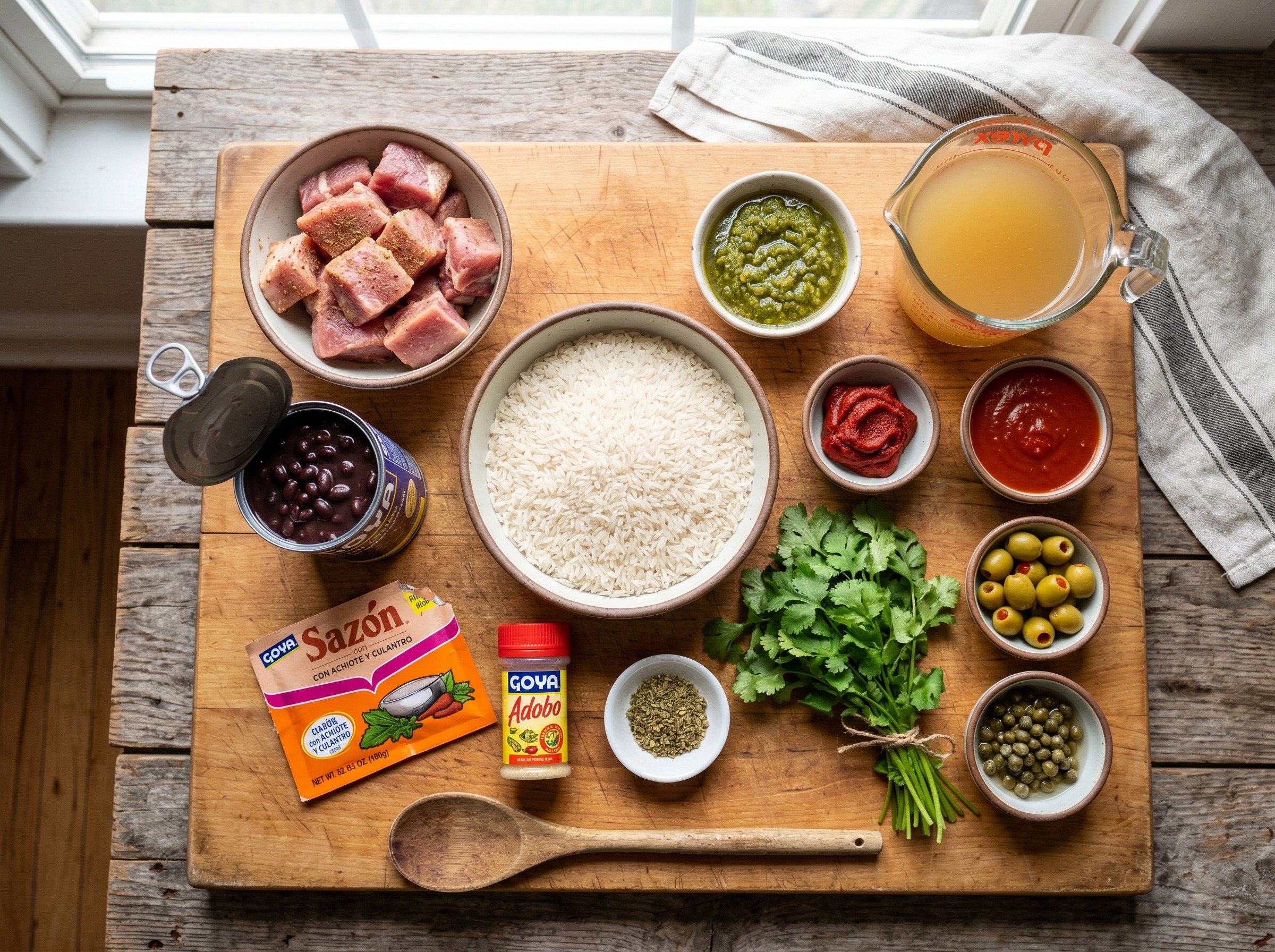
Here's what you'll need to make this Dominican moro locrio dominicano at home. Most of these ingredients are available at any grocery store, though you may want to check a Latin market for sazón and adobo if your regular store doesn't carry them.
- 1.5 lbs pork shoulder or bone-in pork chops — cut into 1-inch cubes. Pork shoulder gives you the most flavor and tenderness. Bone-in chops work great too and cook faster.
- 1 can (15 oz) black beans, undrained — or 1.5 cups of home-cooked black beans with their liquid. Don't drain them — that bean liquid is flavor gold.
- 3 cups long-grain white rice — rinsed until the water runs clear. Long-grain is essential for that fluffy, separated texture.
- ½ cup sofrito — a blend of recao (culantro), cilantro, green bell pepper, onion, garlic, and ají dulce blended together. You can make a batch or buy it pre-made.
- 2 tablespoons tomato paste — adds depth, color, and a subtle sweetness to the rice.
- ½ cup tomato sauce — works with the tomato paste to build that rich, reddish-brown base.
- 1 packet sazón con culantro y achiote — the secret weapon for color and flavor. Goya brand is the most widely available.
- 1 tablespoon adobo seasoning — all-purpose Dominican seasoning. Use the version with pepper (con pimienta) for extra kick.
- 1 teaspoon dried oregano — Dominican oregano is slightly different from Italian, but either works beautifully here.
- ¼ cup pimiento-stuffed olives — a classic Dominican rice ingredient that adds briny pops of flavor.
- 1 tablespoon capers — they work alongside the olives to add that signature Dominican tang.
- 3 cups chicken stock — low-sodium recommended so you can control the salt. You'll adjust the total liquid based on your beans.
- 2 tablespoons vegetable oil or olive oil — for browning the pork and building the sofrito base.
- ¼ cup fresh cilantro, chopped — for garnish and that final burst of herbal freshness.
- Salt and pepper to taste — taste as you go; between the adobo, sazón, and stock, you may need less salt than you think.
Equipment
The most important piece of equipment for this recipe is a good caldero (a heavy-bottomed aluminum or cast-aluminum pot) or a Dutch oven. You need something heavy that distributes heat evenly and holds it well — that's how you get the coveted concón (the crispy rice crust at the bottom). A 5- to 6-quart pot is ideal for this recipe.
Step-by-Step Instructions
Making moro-locrio is straightforward once you understand the rhythm: season and brown the pork, build your sofrito base, add the beans and liquid, then cook the rice low and slow. Here's exactly how I do it.
Step 1: Season the Pork
Cut your pork shoulder or pork chops into 1-inch cubes, removing any large pieces of excess fat but leaving some for flavor. In a bowl, season the pork generously with adobo seasoning, half the sazón packet, dried oregano, and a squeeze of lime juice if you have one handy. Toss to coat evenly and let it sit for at least 15 minutes while you prep your other ingredients. If you have time, marinating the pork for a few hours or even overnight in the fridge will take the flavor to another level.
Step 2: Brown the Pork
Heat the vegetable oil in your caldero or Dutch oven over medium-high heat. Once the oil is shimmering, add the seasoned pork in a single layer — work in batches if needed to avoid crowding the pot. Sear the pork until golden brown on at least two sides, about 3-4 minutes per side. You're not cooking it through at this stage; you're building a flavor foundation. That browning creates a fond (those caramelized bits stuck to the bottom of the pot) that will season the entire dish. Remove the pork and set it aside on a plate.
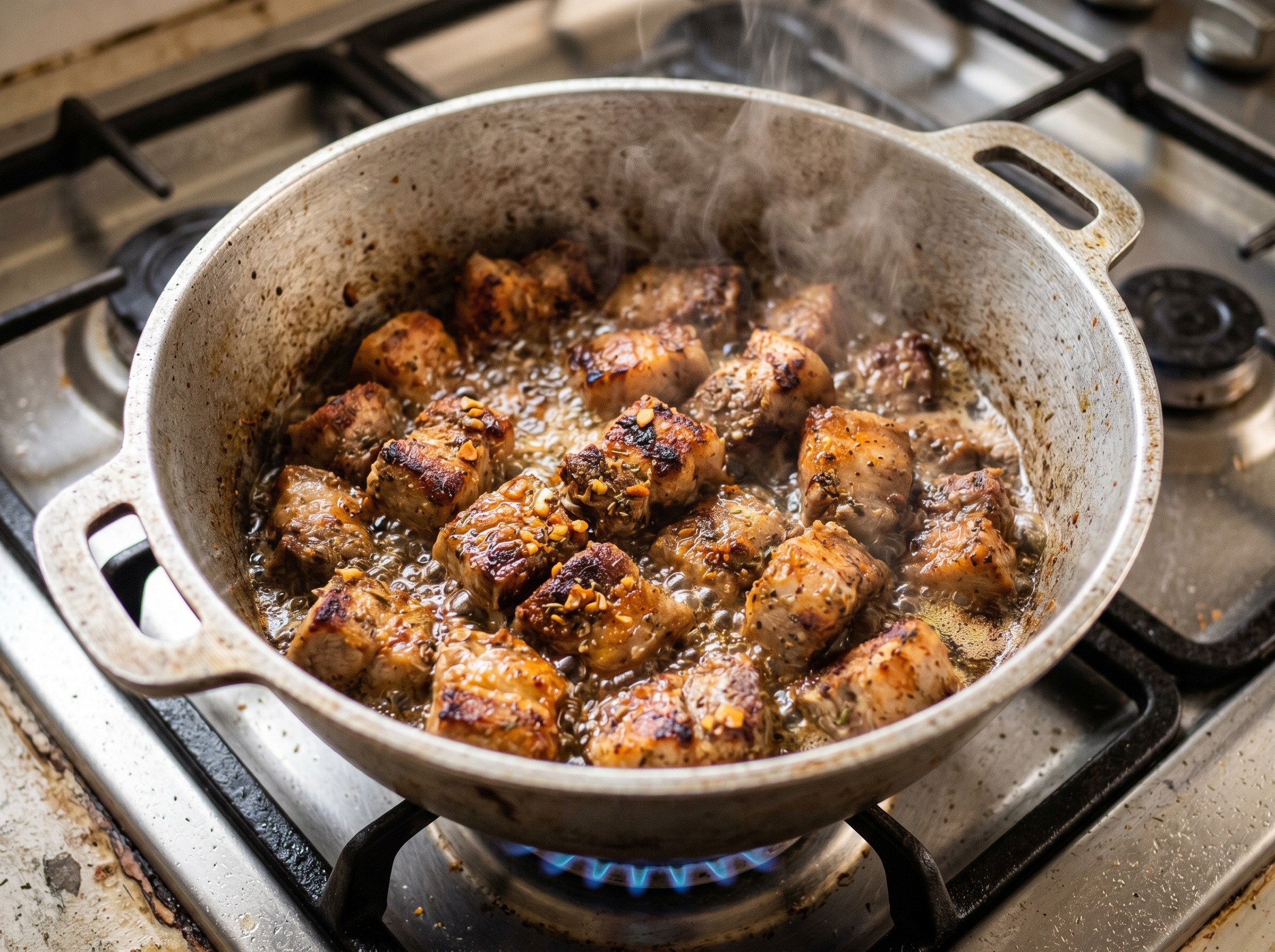
Step 3: Build the Sofrito Base
Lower the heat to medium. In the same pot with the pork drippings, add your sofrito and cook, stirring frequently, for 2-3 minutes until fragrant and slightly darkened. Add the tomato paste and stir it in, letting it cook for another minute — this caramelizes the tomato paste and removes its raw flavor. Then add the tomato sauce, the remaining half of the sazón packet, olives, and capers. Stir everything together and let it cook for 2 more minutes. Your kitchen should smell incredible at this point.
Step 4: Add the Beans and Liquid
Return the browned pork to the pot. Pour in the entire can of black beans, liquid and all. Add the chicken stock and stir to combine. The total liquid should be enough to cover the rice by about half an inch once you add it. Bring everything to a rolling boil and taste the liquid — this is your last chance to adjust the seasoning before the rice goes in. It should taste well-seasoned and flavorful, like a broth you'd happily drink on its own.
Step 5: Add the Rice and Cook
Add the rinsed rice to the boiling liquid and stir once to distribute everything evenly. Let it cook uncovered over medium heat, stirring occasionally, until most of the liquid has been absorbed and the rice is visible above the surface — this usually takes about 10-12 minutes. You'll see small craters forming on the surface where steam is escaping. This is the signal to move to the next step.
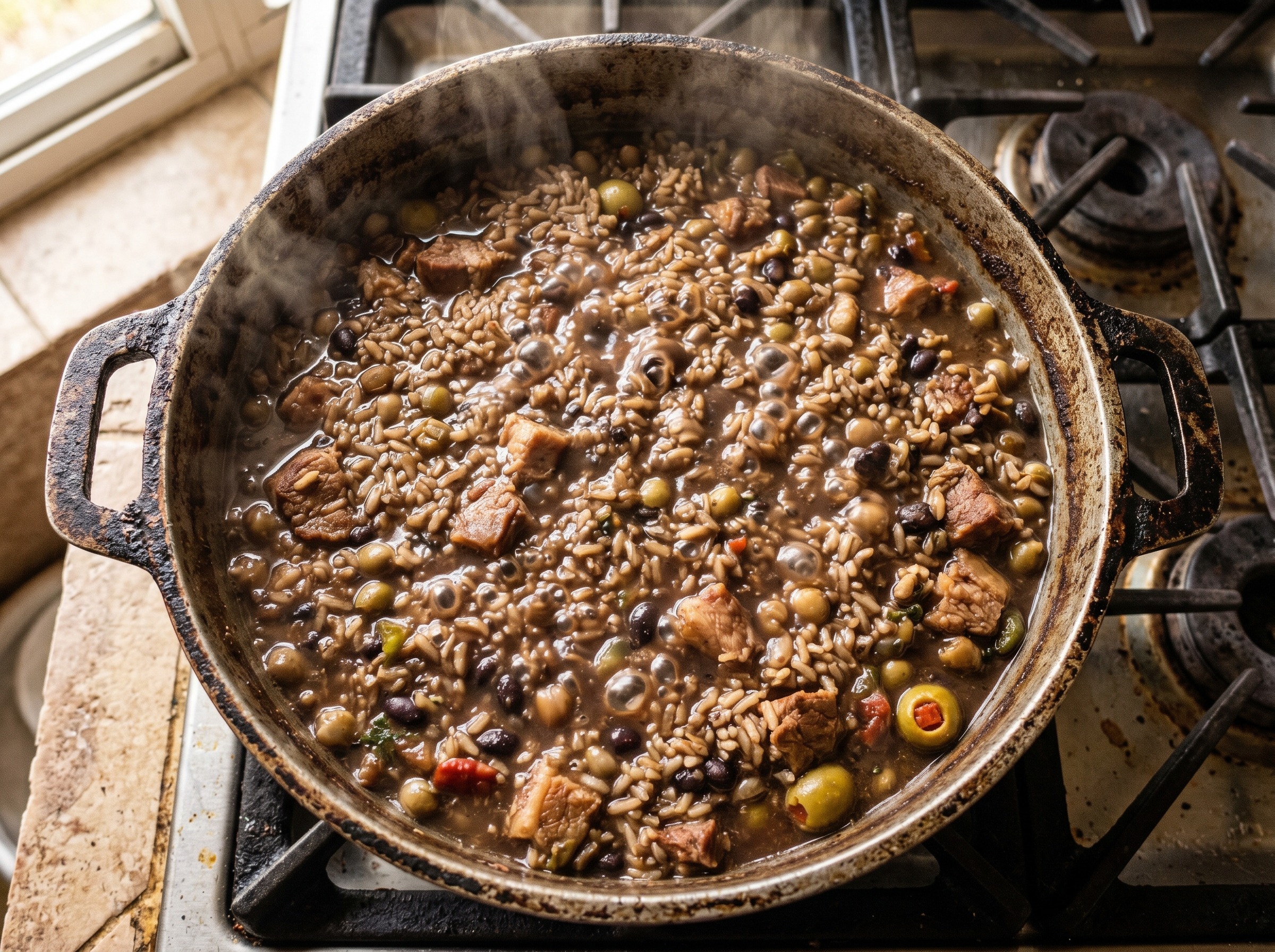
Step 6: Cover and Steam
Reduce the heat to the lowest possible setting. Give the rice one final gentle stir from the bottom to prevent sticking, then cover the pot tightly with a lid. If your lid doesn't seal well, place a sheet of aluminum foil between the pot and the lid to trap the steam. Let the rice steam undisturbed for 20-25 minutes. Resist the urge to peek — every time you lift the lid, you release steam and extend the cooking time. The rice needs this gentle, trapped heat to finish cooking perfectly.
Step 7: Fluff, Rest, and Serve
After 20-25 minutes, remove the lid and check the rice. It should be tender, fluffy, and fully cooked, with the beans and pork distributed throughout. Use a fork or large spoon to gently fluff the rice from the bottom up, folding the darker, more seasoned rice from the bottom into the lighter rice on top. If you want concón (the crispy rice crust), increase the heat to medium for 3-5 minutes before fluffing — you'll hear it crackling. Turn off the heat, cover again, and let it rest for 5 minutes. Garnish with fresh chopped cilantro and serve hot.
Pro Tips for the Best Moro-Locrio
- Don't skip browning the pork. That sear creates layers of flavor that no amount of seasoning can replicate. The fond at the bottom of the pot is liquid gold.
- Rinse your rice thoroughly. Wash it in 3-4 changes of water until the water runs clear. This removes excess starch and prevents gummy, sticky rice. You want each grain fluffy and distinct.
- Use the bean liquid. Never drain your canned beans for this recipe. That thick, starchy bean liquid is what gives the rice its creamy texture and deep color. It's the whole point of a moro.
- Taste the cooking liquid before adding rice. This is the single most important tip. Once the rice goes in, it absorbs everything — so the liquid needs to be perfectly seasoned at that stage. If it tastes bland, the rice will taste bland.
- Low and slow for the steam phase. The lowest burner setting is what you want. If the heat is too high, the bottom will burn before the top finishes cooking. Patience is everything during this stage.
- Make concón intentionally. If you want that crispy bottom crust, bump the heat to medium for 3-5 minutes right before fluffing. Listen for the crackling sound — that's your cue it's forming. Don't leave it too long or it will burn.
- Let it rest before serving. Five minutes of resting time with the lid on allows residual steam to finish cooking any slightly underdone grains on top and lets the flavors settle.
Variations
Moro-Locrio with Smoked Pork
Swap the fresh pork for smoked pork chops or smoked pork hocks. The smokiness adds an entirely new dimension to the dish and eliminates the browning step — smoked meat is already deeply flavored. Cut smoked pork chops into chunks and add them when you add the beans and stock. For pork hocks, add them whole and shred the meat after cooking.
Moro-Locrio with Red Beans
While black beans are the most traditional, some Dominican families make this with habichuelas rojas (red kidney beans). The flavor profile shifts slightly — red beans are a bit earthier and less creamy — but it's equally delicious. Use the exact same method; just swap the can of black beans for a can of red kidney beans.
Vegan Moro (No Pork)
Skip the pork entirely and make a straight moro de habichuelas negras. Replace the chicken stock with vegetable stock, double the beans, and add extra vegetables like diced calabaza (Caribbean pumpkin) or diced bell peppers for body. You'll lose the meaty richness but gain a deeply satisfying plant-based version that's still packed with Dominican flavor.
What to Serve With Moro-Locrio
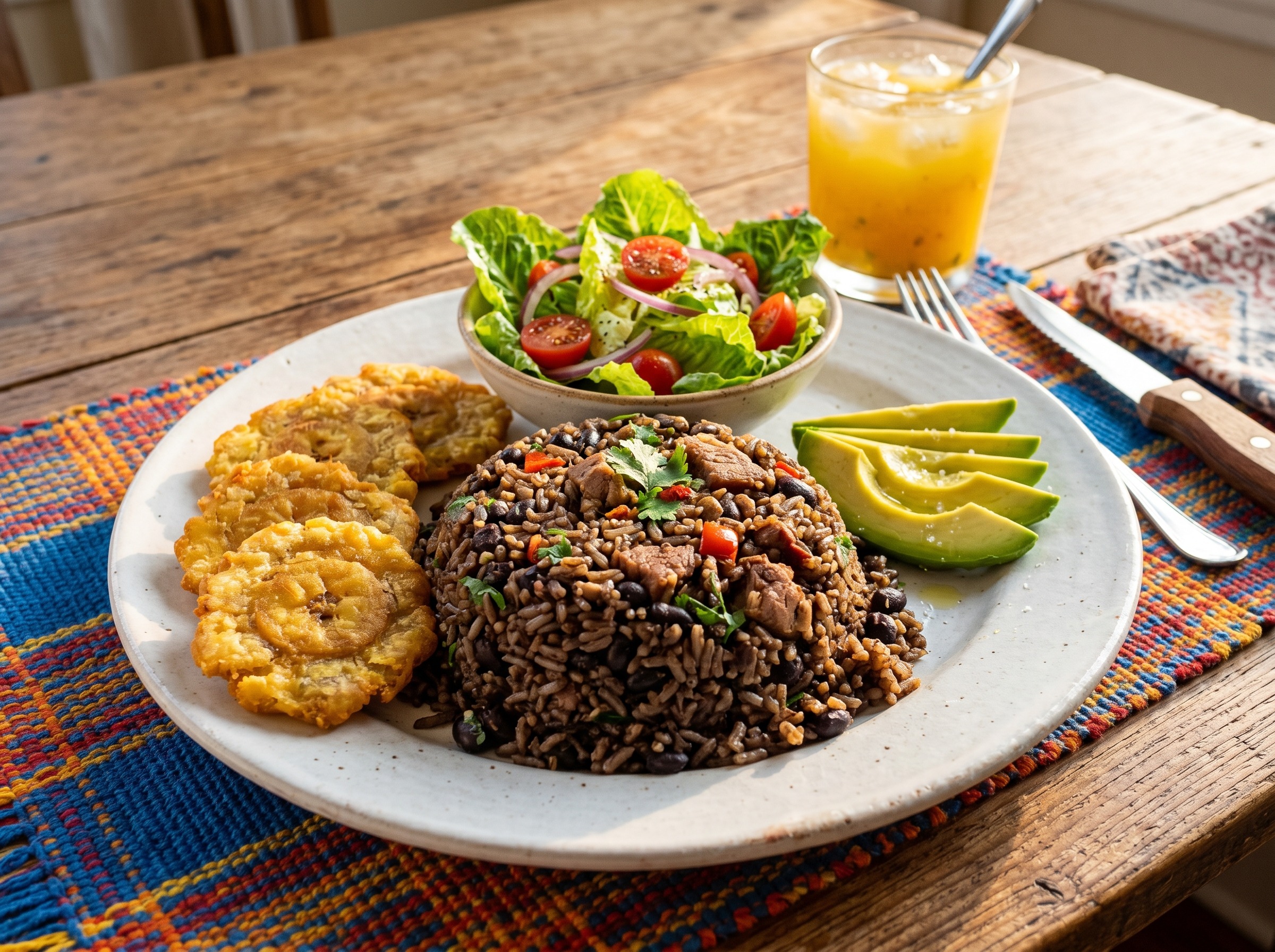
Moro-locrio is hearty enough to be a complete meal on its own, but Dominicans love to round out the plate. Here are the most authentic accompaniments:
- Tostones (fried green plantains) — the crunchy, salty contrast to the soft, seasoned rice is unbeatable. This is the number one side dish.
- Sliced aguacate (avocado) — a few slices of ripe Dominican avocado on the side add creaminess and cool down the richness of the pork.
- Ensalada verde — a simple salad of lettuce, tomato, and red onion dressed with lime juice and olive oil. The acidity cuts through the heaviness perfectly.
- Maduros (sweet plantains) — for those who love the sweet-savory contrast, caramelized sweet plantains alongside this pork and bean rice is pure magic.
- Pollo al horno or chuleta frita — if you want to go full Dominican feast mode, add a roasted chicken or fried pork chop alongside the moro-locrio. Yes, more pork on pork. We don't judge.
Watch the full step-by-step video tutorial for this moro locrio dominicano recipe on my YouTube channel. I walk you through every stage, from seasoning the pork to getting that perfect concón at the bottom of the caldero.
You May Also Like This
Frequently Asked Questions
What's the difference between moro, locrio, and moro-locrio?
A moro is rice cooked with beans (no meat). A locrio is rice cooked with a protein like chicken, pork, or shrimp (no beans). Moro-locrio is the hybrid — rice cooked with both beans and a protein in the same pot. It's uniquely Dominican and gives you the best of both worlds.
Can I use dried black beans instead of canned?
Absolutely. Soak 1 cup of dried black beans overnight, then cook them until tender but not mushy (about 45-60 minutes in a regular pot, or 20 minutes in a pressure cooker). Reserve the cooking liquid — you'll use both the beans and their liquid in the recipe, just like you would with canned beans.
What cut of pork is best for moro-locrio?
Pork shoulder (also called pork butt or Boston butt) is the best choice. It has the right balance of meat and fat, and it becomes incredibly tender during cooking. Bone-in pork chops are a close second — they cook faster and add flavor from the bone. Avoid lean cuts like pork loin, which will dry out.
How do I know when the rice is ready to cover?
Look for two signs: first, most of the liquid should be absorbed so the rice is visible above the surface. Second, you'll see small craters or holes forming on the surface where steam is escaping from below. When you see both of these, it's time to reduce the heat to low and cover the pot.
My rice is mushy. What went wrong?
The most common causes are too much liquid, not rinsing the rice, or stirring too much during the steaming phase. Make sure to rinse your rice until the water runs clear, measure your liquid carefully, and once you cover the pot for steaming, leave it completely alone. Also avoid using short-grain or medium-grain rice — stick with long-grain.
Can I make moro-locrio in a rice cooker?
You can, but I don't recommend it for the best results. You'll miss out on the browning step for the pork and the sofrito caramelization, which are critical for flavor. If you must use a rice cooker, brown the pork and build the sofrito in a skillet first, then transfer everything to the rice cooker with the rice and liquid. You won't get concón this way, though.
How long does moro-locrio last in the fridge?
Stored in an airtight container, moro-locrio keeps well in the refrigerator for up to 4 days. Reheat it in a covered pot on the stove with a splash of water or chicken stock to restore moisture. You can also freeze it for up to 3 months — thaw overnight in the fridge and reheat on the stove.
What is concón and how do I get it?
Concón is the crispy, golden-brown layer of rice that forms at the bottom of the pot. It's considered the best part by most Dominicans. To get it, after the rice is fully cooked, increase the heat to medium for 3-5 minutes. Listen for a crackling sound — that means the crust is forming. To serve it, flip the pot onto a plate or use a spoon to scrape it out. A heavy-bottomed caldero gives you the best concón.
Recipe
Here's the full printable recipe card for this Dominican moro locrio dominicano. Use the print button below to save a copy for your kitchen.
Moro-Locrio Dominicano (Rice with Black Beans and Pork)
Ingredients
Method
- Season the pork: Cut pork into 1-inch cubes. In a bowl, toss with adobo seasoning, half the sazón packet, dried oregano, and a squeeze of lime juice. Let marinate for at least 15 minutes (or up to overnight in the fridge).
- Brown the pork: Heat oil in a caldero or Dutch oven over medium-high heat. Sear the pork in batches until golden brown on two sides, about 3-4 minutes per side. Remove and set aside.
- Build the sofrito base: Lower heat to medium. Add sofrito to the pot with the pork drippings and cook 2-3 minutes until fragrant. Add tomato paste and cook 1 minute. Stir in tomato sauce, remaining sazón, olives, and capers. Cook 2 more minutes.
- Add beans and liquid: Return pork to the pot. Add the entire can of black beans (with liquid) and chicken stock. Bring to a rolling boil. Taste and adjust seasoning — the liquid should be well-seasoned and flavorful.
- Add rice and cook uncovered: Add the rinsed rice and stir once to distribute evenly. Cook uncovered over medium heat, stirring occasionally, until most of the liquid is absorbed and small craters form on the surface, about 10-12 minutes.
- Cover and steam: Reduce heat to lowest setting. Stir gently once from the bottom, then cover tightly with a lid (use foil under the lid for a better seal if needed). Steam undisturbed for 20-25 minutes. Do not lift the lid.
- Fluff and serve: Remove lid and check that rice is tender and fully cooked. For concón, increase heat to medium for 3-5 minutes until you hear crackling. Fluff with a fork from bottom to top. Cover and rest 5 minutes. Garnish with fresh cilantro and serve hot.
Nutrition
Tried this recipe?
Let us know how it was!Shop This Recipe
Here are some of the essential tools and ingredients I use every time I make moro-locrio. These affiliate links help support Kelvin's Kitchen at no extra cost to you.
Lodge Enameled Dutch Oven
The perfect heavy-bottomed pot for moro-locrio and concón. Even heat distribution and beautiful enamel finish.
Goya Sazón con Culantro y Achiote
The essential Dominican seasoning for authentic color and flavor in rice dishes. No substitute comes close.
IMUSA Traditional Colombian Caldero
An authentic cast-aluminum caldero — the traditional pot Dominican cooks use for rice. Gives you the best concón every time.
Making this moro-locrio takes me right back to my family's kitchen in Santo Domingo — the sound of the rice crackling in the caldero, the smell of sofrito filling the house, the way everyone suddenly appears when the lid comes off. I hope this recipe brings that same warmth and joy to your table. Tag me @kelvinskitchen on Instagram when you make it — I'd love to see your version. Buen provecho!

Leave a Reply