
If you grew up in a Dominican household, you already know the sound — that sizzle of longaniza hitting a hot pan, the smell of sazón and sofrito filling the kitchen, and the anticipation of a big pot of locrio bubbling away on the stove. Locrio de longaniza is one of those dishes that hits different. It is comfort food in its purest form, a dish that brings back every memory of weeknight dinners in Santo Domingo and Sunday cooking marathons in our cramped New York City apartment.
I'm Kelvin, a Dominican-American who was born in Santo Domingo and raised in New York City. Now living in Pennsylvania with my family, I spend a lot of my time trying to keep Dominican food traditions alive in my kitchen — and sharing them with all of you. Locrio de longaniza is one of the first dishes I ever learned to make on my own. My abuela used to say that if you could make a good locrio, you could feed anyone. She was right. This dish is affordable, filling, and packed with flavor that punches way above its weight.
Today I am sharing my family's recipe for locrio de longaniza — the way I learned it growing up, with a few small adjustments I have picked up over the years. Whether you are Dominican and craving a taste of home, or you have never tried this dish before and want to explore authentic Dominican cooking, this recipe will not let you down. Let's get into it.
Why You'll Love This Recipe
- One-pot wonder: Everything cooks together in a single Dutch oven or caldero, which means maximum flavor and minimal cleanup.
- Incredibly flavorful: The longaniza renders its spiced fat into the rice, infusing every single grain with smoky, garlicky, slightly spicy goodness.
- Budget-friendly: Longaniza is one of the most affordable proteins you can buy, and rice stretches it into a meal that feeds the whole family.
- Authentic Dominican flavor: This is a real-deal Dominican recipe — not a watered-down version. We use all the traditional seasonings, including sazón, adobo, and a proper sofrito base.
- Ready in under an hour: From start to finish, you are looking at about 45 minutes of total time. That is faster than delivery and ten times better.
What Is Locrio de Longaniza?
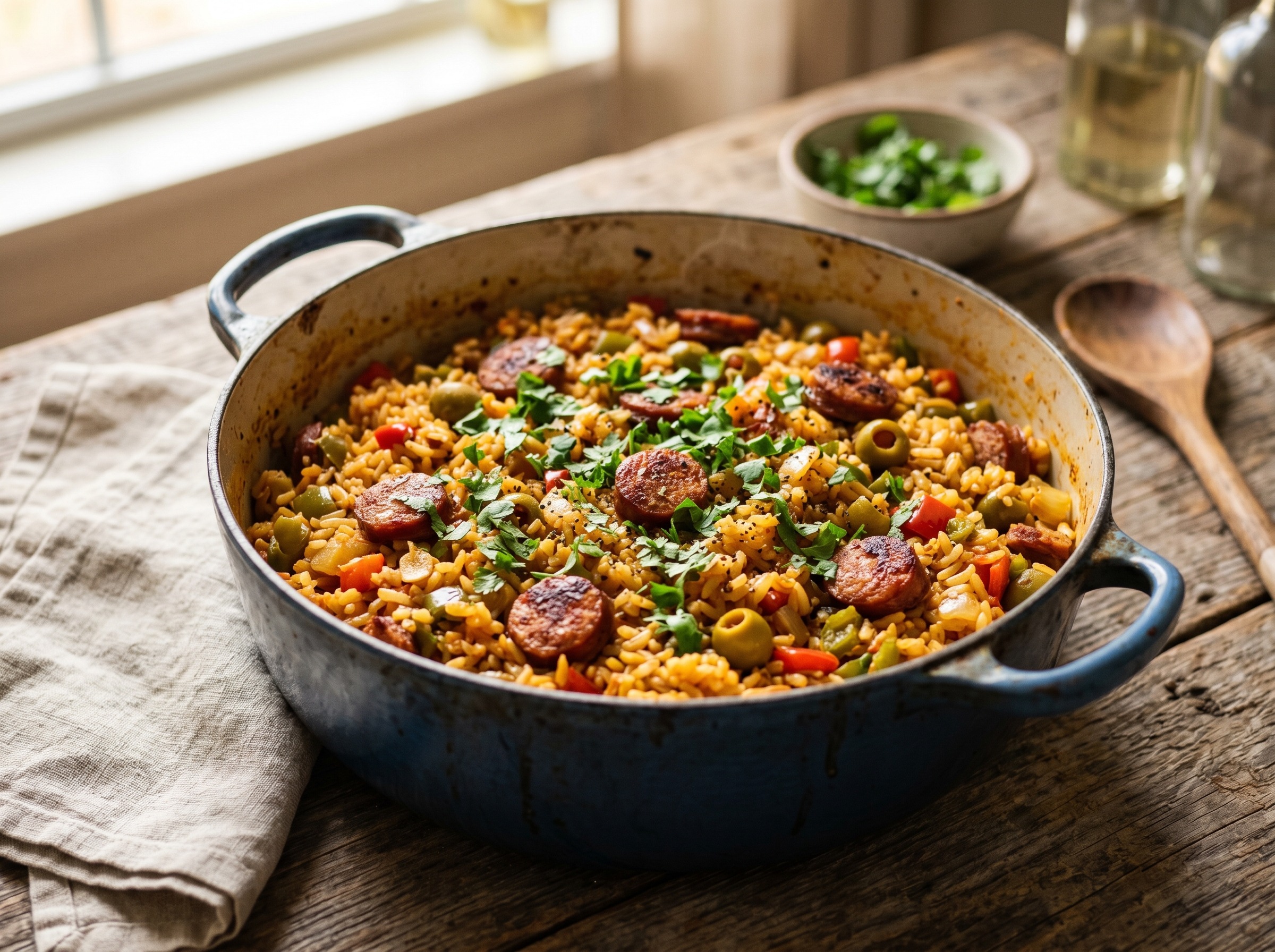
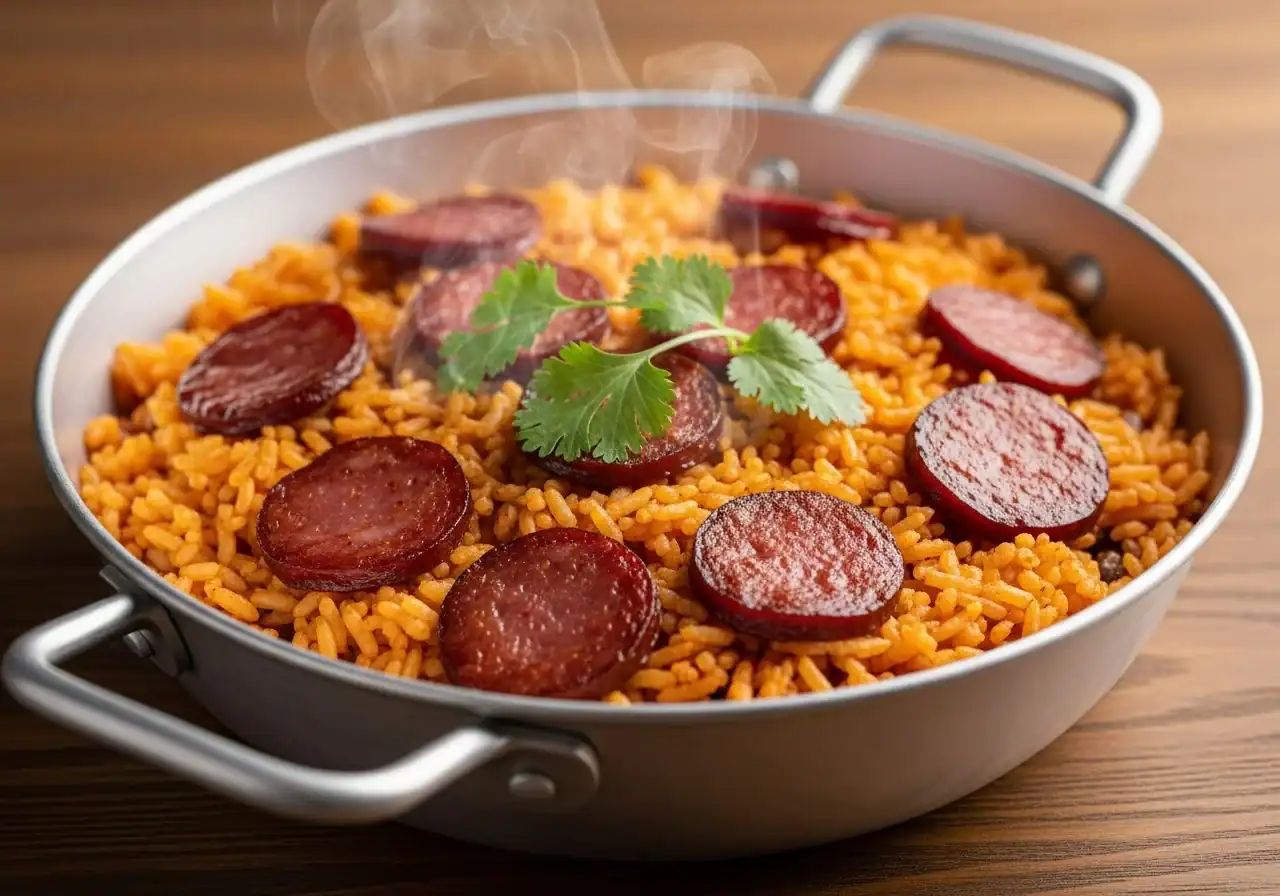
Locrio de longaniza is a traditional Dominican one-pot rice dish made with longaniza dominicana, a type of seasoned pork sausage that is a staple in Dominican cuisine. Think of it as the Dominican cousin of Spanish arroz con chorizo or even a jambalaya — rice cooked directly in a richly seasoned broth along with sliced sausage, aromatics, tomato, and olives. The result is a pot of deeply flavored, slightly sticky rice studded with rounds of savory sausage in every bite.
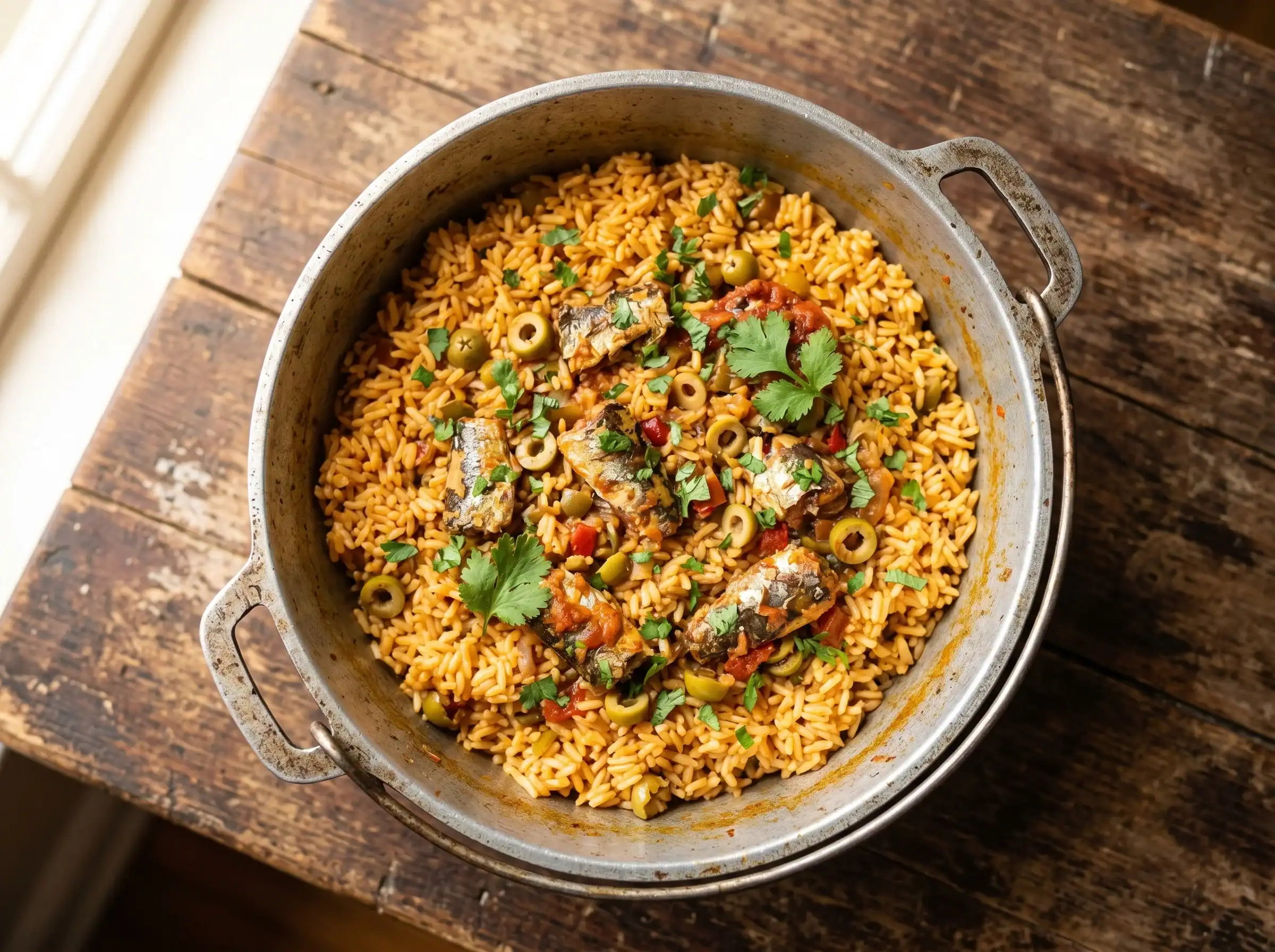
The word "locrio" comes from the broader family of Dominican rice dishes where the protein is cooked directly with the rice rather than served alongside it, as in la bandera dominicana. Locrios are everyday food in the Dominican Republic — the kind of thing you throw together on a Tuesday night with whatever protein you have on hand. There is locrio de pollo, locrio de chuleta, locrio de sardinas, and of course, locrio de longaniza. Each one follows the same basic method but takes on the unique character of its protein.
Locrio de longaniza holds a special place because of how much flavor the sausage brings on its own. Unlike chicken or pork chops, longaniza is already packed with garlic, oregano, and spices, so when it cooks down with the rice, it creates layers of flavor that you simply cannot replicate with other meats. It is a dish that is far greater than the sum of its parts.
Longaniza in Dominican Cooking
Longaniza dominicana is not the same as Mexican longaniza or Spanish longaniza — and that distinction matters. Dominican longaniza is a fresh (uncured) pork sausage that is heavily seasoned with garlic, oregano, vinegar, and black pepper. It has a coarser grind than most commercial sausages and a distinctive tangy, garlicky flavor profile that is unmistakably Dominican. You will find it at any Latino grocery store, usually in long coiled links, and it is one of the most beloved proteins on the island.
In the Dominican Republic, longaniza is eaten at every meal. It is fried for breakfast alongside mangú and served with tostones for lunch. Street vendors grill it over charcoal and serve it on a stick. But one of the most satisfying ways to enjoy it is in a locrio, where the sausage fat and spices melt into the rice and create something truly special. Every Dominican family has their own version, and debates about the "right" way to make it can get heated. The recipe I am sharing here is the way my family makes it — and I think it is pretty close to perfect.
Ingredients You'll Need
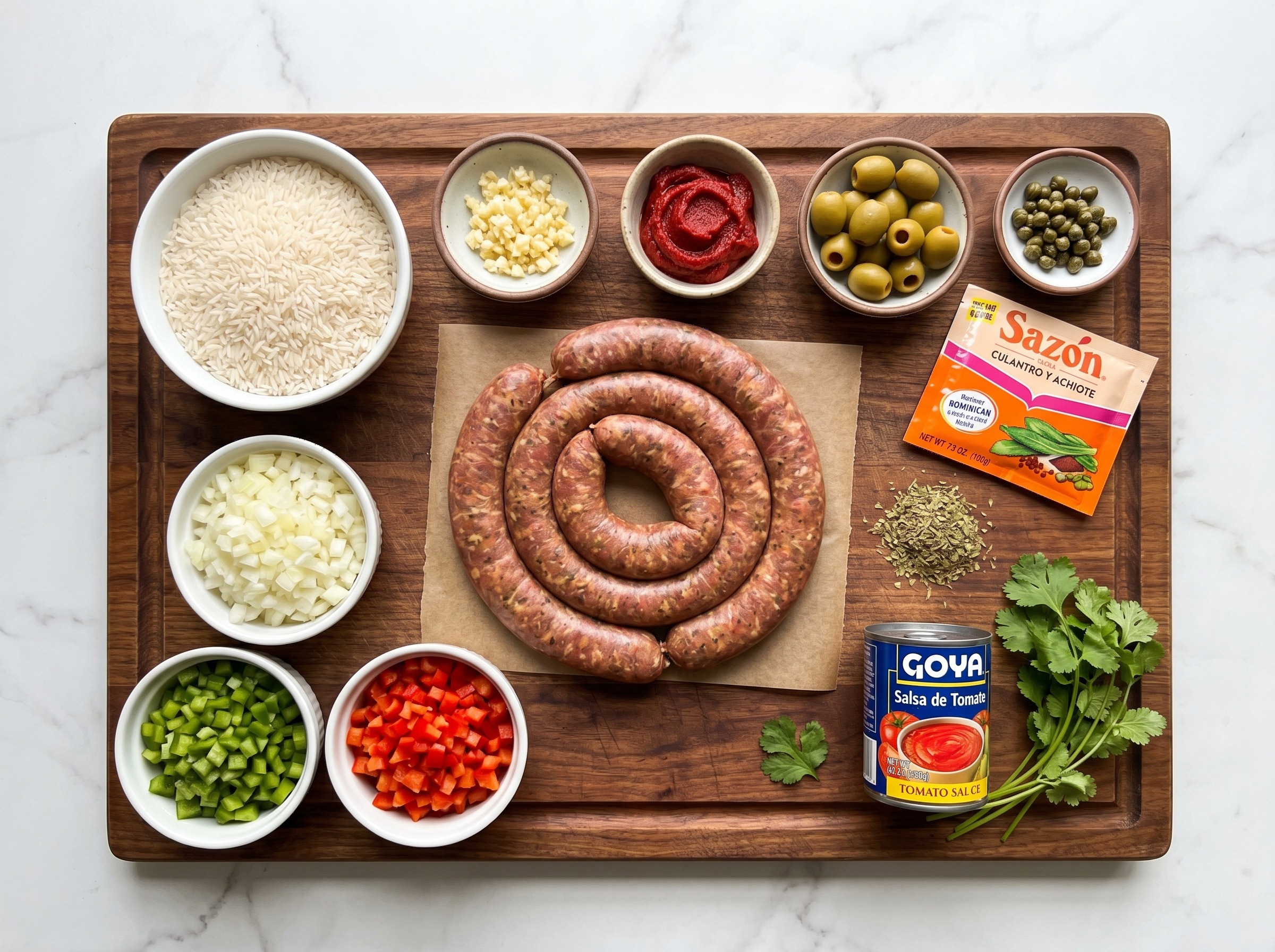
Here is what you will need to make this locrio de longaniza. Most of these ingredients are pantry staples if you cook Dominican food regularly, and everything is easy to find at a regular grocery store or any Latin market.
- 1 lb longaniza dominicana — sliced into 1-inch rounds. This is the star of the dish. If you cannot find Dominican longaniza, see my substitution notes below.
- 2 cups long-grain white rice — rinsed and drained. Long-grain rice gives you the best texture for locrio.
- 1 medium yellow onion, diced
- 1 medium green bell pepper, diced
- ½ red bell pepper, diced
- 4 cloves garlic, minced
- 3 tablespoons tomato paste
- ½ cup tomato sauce
- ¼ cup pimiento-stuffed olives
- 1 tablespoon capers
- 3 cups chicken stock — warm or at room temperature is best.
- 2 tablespoons vegetable oil
- 1 packet sazón con culantro y achiote
- 1 teaspoon adobo seasoning
- ½ teaspoon dried oregano
- ¼ teaspoon ground cumin
- Salt and pepper to taste
- Fresh cilantro, chopped — for garnish
- Juice of ½ lime — optional but recommended
Equipment
The best pot for making locrio is a traditional Dominican caldero, but a heavy-bottomed Dutch oven works perfectly. You want something with a tight-fitting lid that distributes heat evenly so the rice cooks uniformly and you get that beautiful concón (crispy rice) on the bottom.
Step-by-Step Instructions
Follow these steps for a perfect locrio de longaniza every time. The method is straightforward — the key is building layers of flavor as you go.
Step 1: Prep and Rinse the Rice
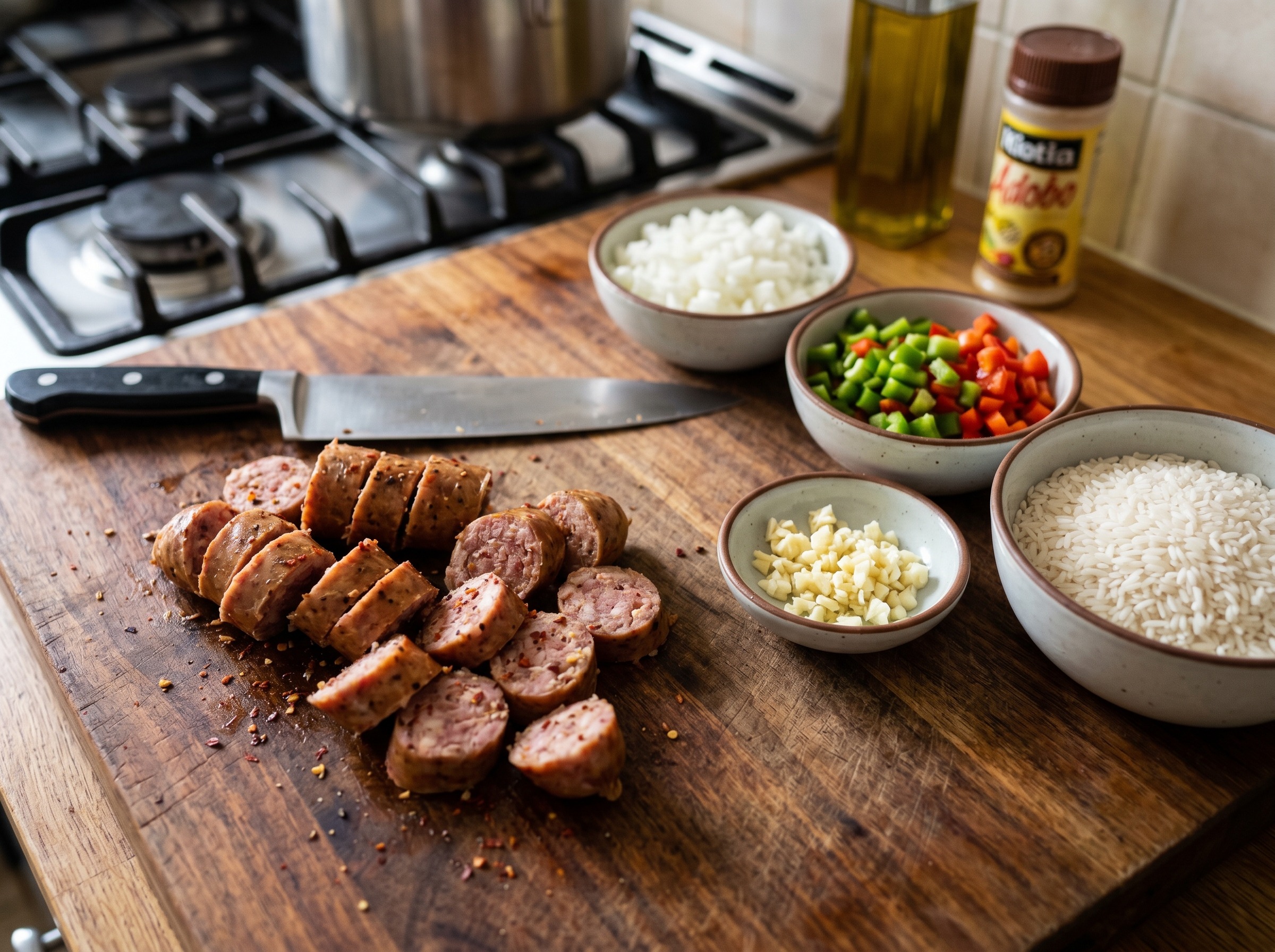
Place your 2 cups of long-grain rice in a bowl and cover with cold water. Swish the rice around with your hands, drain the cloudy water, and repeat 2 to 3 times until the water runs mostly clear. This removes excess starch and prevents the rice from becoming gummy. Drain the rice thoroughly and set it aside. While the rice drains, slice your longaniza into 1-inch rounds and prep all of your aromatics — dice the onion and peppers, mince the garlic, and measure out your seasonings.
Step 2: Brown the Longaniza
Heat the vegetable oil in your Dutch oven or caldero over medium-high heat. Add the sliced longaniza rounds in a single layer — do not overcrowd the pot. Let them cook undisturbed for about 3 to 4 minutes per side until they develop a deep golden-brown crust. The browning is critical because it creates fond (those caramelized bits stuck to the bottom of the pot) that will add incredible depth of flavor to the rice. Once browned on both sides, remove the longaniza to a plate and set aside. Leave all the rendered fat in the pot — that is liquid gold.
Step 3: Build the Sofrito Base
Reduce the heat to medium. Add the diced onion, green bell pepper, and red bell pepper to the pot with the rendered longaniza fat. Cook for 4 to 5 minutes, stirring occasionally, until the vegetables soften and become fragrant. Add the minced garlic and cook for another 30 seconds until aromatic — be careful not to burn it. Now stir in the tomato paste and cook it for about 1 minute, letting it toast slightly in the fat. This step deepens the tomato flavor and removes any raw taste.
Step 4: Season and Add Liquids
Pour in the tomato sauce and stir everything together. Add the sazón, adobo, dried oregano, and cumin. Stir well to combine. Drop in the olives and capers. Pour in the 3 cups of warm chicken stock and bring the mixture to a boil. Taste the liquid at this point and adjust the salt — it should taste well-seasoned because the rice will absorb a lot of that flavor. Return the browned longaniza to the pot.
Step 5: Add the Rice
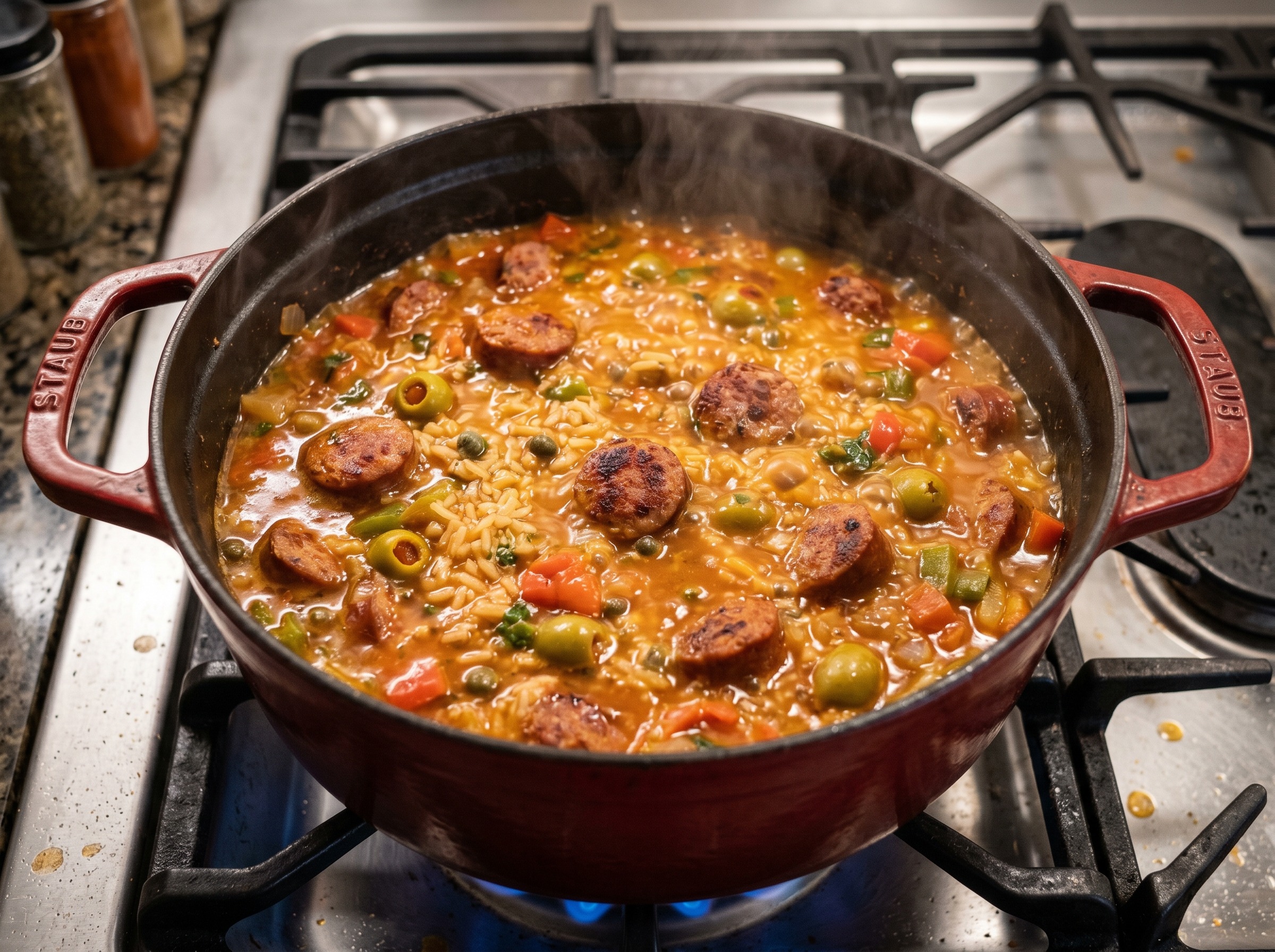
Once the liquid is at a rolling boil, add the rinsed and drained rice. Stir everything together gently to distribute the rice evenly. Let it cook uncovered on medium-high heat for about 5 to 7 minutes, stirring occasionally, until most of the liquid has been absorbed and the surface of the rice looks like it is just barely peeking above the liquid. Do not over-stir at this stage — you want the rice to absorb the liquid evenly.
Step 6: Cover and Steam
Once the liquid level drops to just below the surface of the rice, reduce the heat to the lowest setting your stove can manage. Cover the pot tightly with a lid — if your lid is not tight-fitting, place a layer of aluminum foil between the pot and the lid to create a seal. Let the rice steam undisturbed for 20 to 25 minutes. Do not lift the lid during this time. The trapped steam is what cooks the rice through and creates the concón (crispy bottom layer) that every Dominican lives for.
Step 7: Fluff, Garnish, and Serve
After 20 to 25 minutes, remove the lid and check the rice. It should be fluffy, fully cooked, and the grains should be separate. Use a fork or large spoon to gently fold the rice from the bottom up, mixing the longaniza and olives throughout. Squeeze the juice of half a lime over the top if using, and sprinkle generously with fresh chopped cilantro. Serve the locrio directly from the pot, making sure everyone gets some of that prized concón from the bottom. This locrio de longaniza is best enjoyed immediately while it is hot and fragrant.
Pro Tips for the Best Locrio de Longaniza
- Do not skip rinsing the rice. Rinsing removes surface starch that would otherwise make your locrio gummy and sticky instead of fluffy with distinct grains.
- Brown the longaniza well. That deep golden crust is not just for looks — it creates fond on the bottom of the pot that dissolves into the broth and adds an incredible layer of savory, caramelized flavor.
- Use warm stock, not cold. Adding cold stock to a hot pot drops the temperature and can shock the rice, leading to uneven cooking. Warm or room-temperature stock keeps everything at the right pace.
- Do not lift the lid while steaming. Every time you lift the lid, steam escapes and the rice loses precious moisture. Trust the process and leave it alone for the full 20 to 25 minutes.
- Low and slow for the concón. The concón — that crispy, golden rice crust on the bottom of the pot — is the best part. Keep the heat as low as possible during the steaming phase and let it develop naturally. If you want extra concón, add 5 more minutes at the end.
- Taste the broth before adding rice. This is your one chance to adjust seasoning. Once the rice goes in, it absorbs everything, so make sure the liquid is well-seasoned at this stage.
- Use a heavy pot. Thin-bottomed pots create hot spots that burn the bottom rice before the top is cooked. A cast-iron Dutch oven or traditional caldero gives you even heat distribution and perfect results.
Variations
Spicy Locrio de Longaniza
If you like heat, add 1 to 2 finely diced ajíes gustosos (Dominican sweet peppers) or a small Scotch bonnet pepper (seeded and minced) to the sofrito. You can also stir in a few dashes of your favorite Dominican hot sauce right before serving. The spice plays beautifully against the richness of the sausage fat and the sweetness of the peppers.
Locrio de Longaniza with Coconut Milk
For a creamy, slightly sweet variation inspired by coastal Dominican cooking, replace 1 cup of the chicken stock with full-fat coconut milk. The coconut milk adds a subtle richness that makes the rice even more luscious. This variation is popular in the Samaná region and is absolutely delicious. Add a pinch of extra salt to balance the sweetness of the coconut.
Baked Locrio de Longaniza
For an even more hands-off approach, complete steps 1 through 4 on the stovetop, then transfer everything to a baking dish, stir in the rice, cover tightly with aluminum foil, and bake at 350°F (175°C) for 30 to 35 minutes. The oven provides incredibly even heat and produces perfectly cooked rice with a beautiful concón on the bottom and edges of the baking dish. This method is great when you are cooking for a crowd and need the stovetop for other dishes.
What to Serve With Locrio de Longaniza
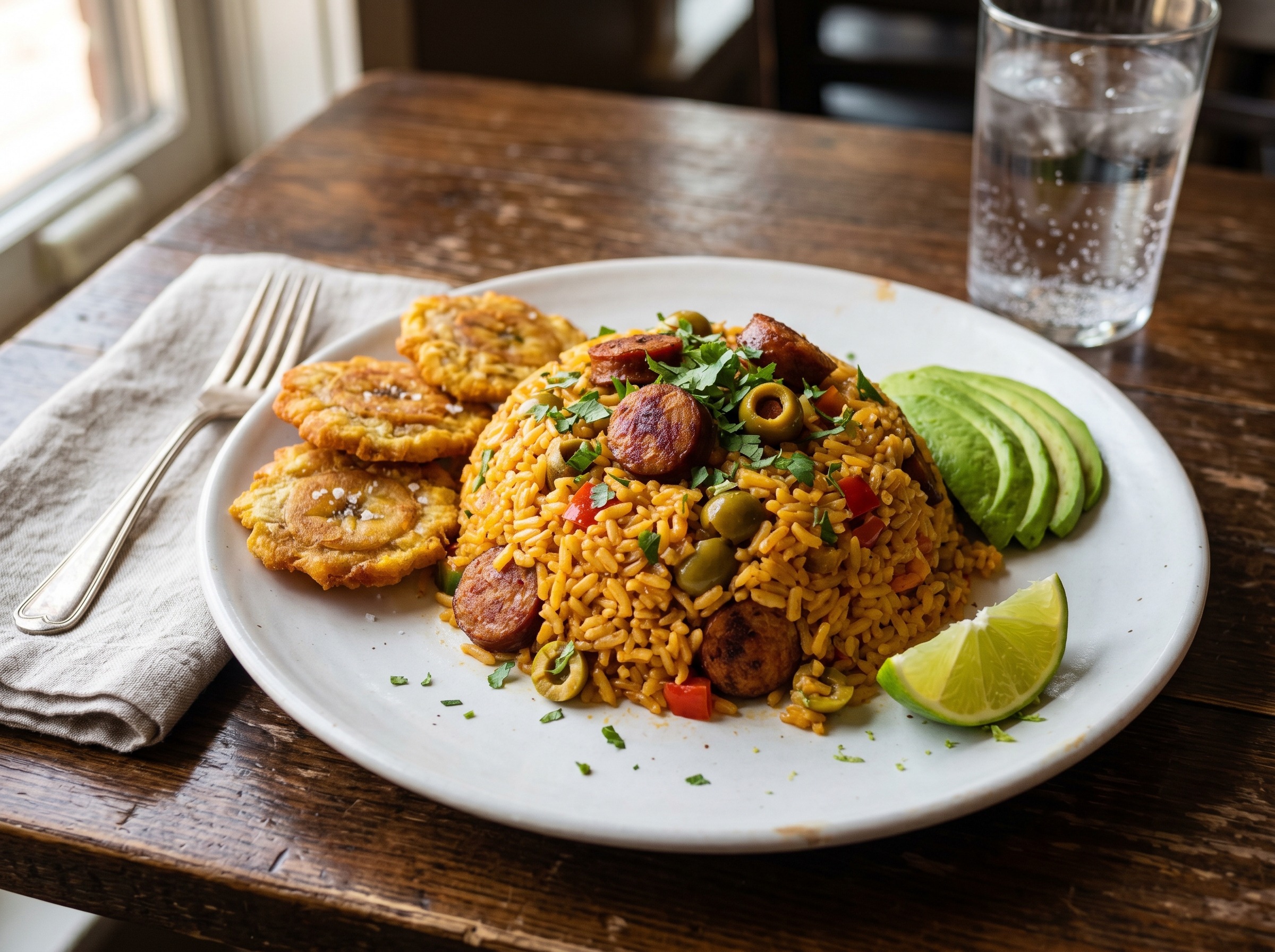
Locrio de longaniza is a complete meal on its own, but if you want to round out the plate Dominican-style, here are my favorite sides:
- Tostones (Crispy Fried Plantains) — The crunchy, salty tostones are the perfect contrast to the soft, flavorful rice. This is the classic pairing.
- Ensalada verde — A simple green salad with avocado, tomato, and a lime vinaigrette cuts through the richness of the locrio beautifully.
- Aguacate (sliced avocado) — A few slices of ripe avocado on the side is a Dominican staple. The creaminess pairs perfectly with the seasoned rice.
- Habichuelas guisadas — Stewed beans ladled over or alongside the rice add protein and a saucy element that takes the meal to another level.
- Maduros (sweet plantains) — If you want a sweet-savory contrast, fried sweet plantains are incredible with this dish.
If you enjoy this locrio de longaniza, check out some of my other favorite Dominican rice dishes and recipes:
- Locrio de Pollo (Dominican Chicken and Rice)
- Moro de Guandules (Pigeon Pea Rice)
- La Bandera Dominicana
- Dominican Tostones
You May Also Like This
Frequently Asked Questions
What is longaniza dominicana?
Longaniza dominicana is a fresh (uncured) Dominican pork sausage that is heavily seasoned with garlic, oregano, vinegar, and black pepper. It has a coarse grind and a tangy, garlicky flavor that is unique to Dominican cuisine. You can find it at most Latin grocery stores, usually sold in long coiled links.
Can I substitute a different sausage for longaniza?
If you cannot find Dominican longaniza, the closest substitutes are Italian sausage (mild or hot) or Portuguese linguiça. Spanish chorizo also works but will give the dish a smokier, more paprika-heavy flavor. The taste will be different, but the method remains the same.
Do I need to remove the casing from the longaniza?
No, you do not need to remove the casing. Simply slice the longaniza into 1-inch rounds with the casing on. The casing holds the sausage together during cooking and becomes tender as it simmers with the rice. Some people prefer to remove it — either way works fine.
What type of rice is best for locrio?
Long-grain white rice is the traditional choice for locrio and gives the best results. It cooks up fluffy with distinct, separate grains. Avoid short-grain or medium-grain rice, which will make the dish too sticky. Jasmine rice or basmati rice can work in a pinch but will have a slightly different texture and aroma.
What is concón and how do I get it?
Concón is the crispy, golden layer of rice that forms on the bottom of the pot — and it is considered the best part of any Dominican rice dish. To get good concón, use a heavy-bottomed pot, keep the heat on the lowest setting during the steaming phase, and let the rice cook for 20 to 25 minutes without lifting the lid. For extra-crispy concón, let it go an additional 3 to 5 minutes at the end.
Can I make locrio de longaniza in a rice cooker or Instant Pot?
You can adapt this recipe for an Instant Pot by browning the longaniza and sofrito using the sauté function, then adding the rice, stock, and seasonings and cooking on the rice setting or manual pressure for 8 minutes with a 10-minute natural release. A rice cooker is trickier because you miss the browning step, but you can brown the sausage separately in a skillet and then add everything to the rice cooker.
How do I store and reheat leftover locrio?
Store leftover locrio de longaniza in an airtight container in the refrigerator for up to 3 to 4 days. To reheat, add a splash of chicken stock or water to the rice, cover, and microwave in 1-minute intervals, stirring between each, until heated through. You can also reheat it in a covered skillet over medium-low heat with a little added liquid. The rice reheats beautifully and some people actually prefer it the next day when the flavors have had more time to meld.
Is locrio de longaniza spicy?
Traditional locrio de longaniza is not spicy — it is savory and well-seasoned, but not hot. Dominican longaniza has a mild heat from black pepper but nothing that would overwhelm. If you want to add heat, you can include diced hot peppers in the sofrito or serve it with Dominican hot sauce on the side.
Locrio de Longaniza (Dominican Sausage Rice)
Ingredients
Method
- Rinse the rice in cold water 2 to 3 times until the water runs mostly clear. Drain thoroughly and set aside. Slice the longaniza into 1-inch rounds. Dice the onion and peppers, and mince the garlic.
- Heat vegetable oil in a Dutch oven or caldero over medium-high heat. Brown the longaniza rounds for 3 to 4 minutes per side until deep golden brown. Remove to a plate and set aside, leaving the rendered fat in the pot.
- Reduce heat to medium. Add the diced onion, green bell pepper, and red bell pepper. Cook for 4 to 5 minutes until softened. Add the minced garlic and cook 30 seconds. Stir in the tomato paste and cook 1 minute to toast.
- Add the tomato sauce, sazón, adobo, dried oregano, and cumin. Stir to combine. Add the olives and capers. Pour in the warm chicken stock and bring to a boil. Taste and adjust salt. Return the browned longaniza to the pot.
- Once boiling, add the rinsed rice. Stir gently to distribute evenly. Cook uncovered on medium-high heat for 5 to 7 minutes, stirring occasionally, until most of the liquid is absorbed and the rice surface is just barely above the liquid.
- Reduce heat to the lowest setting. Cover tightly with a lid (use foil under the lid for a tighter seal if needed). Steam undisturbed for 20 to 25 minutes. Do not lift the lid during this time.
- Remove the lid and gently fold the rice from bottom to top with a fork or large spoon. Squeeze lime juice over the top if using. Garnish with fresh chopped cilantro. Serve immediately, making sure to scoop up the concón (crispy rice) from the bottom.
Nutrition
Video
Notes
Tried this recipe?
Let us know how it was!Shop This Recipe
Here are some of my kitchen essentials that make cooking Dominican rice dishes so much easier. These are the tools I use in my own kitchen every day:
Lodge Enameled Dutch Oven
The best pot for making locrio — heavy, even heat, perfect concón every time.
Check Price on Amazon
Instant Pot Duo 7-in-1
Great for a hands-off version of locrio. Use the sauté and pressure cook functions for perfect rice.
Check Price on Amazon
Wooden Cooking Spoon Set
Essential for stirring and folding rice without scratching your pot or breaking the grains.
Check Price on Amazon
If you make this locrio de longaniza, I want to see it! Tag me on Instagram or leave a comment below with your rating. And if this is your first time making Dominican food, welcome to the family — you are going to love it here.

Leave a Reply