
The first time I saw pig feet at the Asian market in Lancaster, PA, I almost walked right past them. They were sitting in the cold case, neatly stacked and dirt cheap — maybe $1.50 a pound. Most people don't even glance at them. But I grew up eating patas de cerdo guisadas, and seeing them brought me right back to my abuela's kitchen in the Dominican Republic. This is one of those dishes that defines who we are as a culture — nothing goes to waste, everything gets flavor, and the toughest cuts become the most tender when you give them time and love. If you've never tried braised pig feet, you're missing out on one of the most deeply satisfying comfort foods in the Caribbean. Let me show you exactly how we make them.
You May Also Like This!
What Are Dominican Braised Pig Feet?
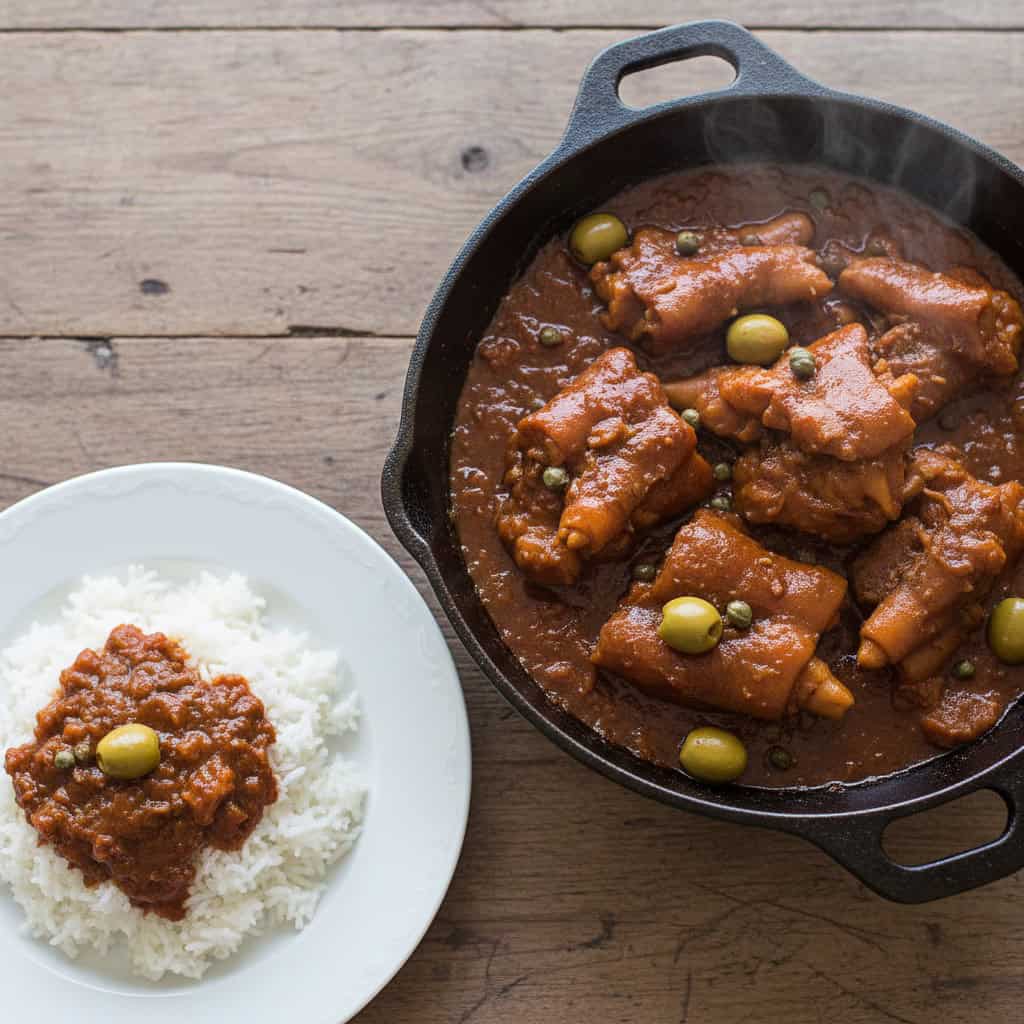
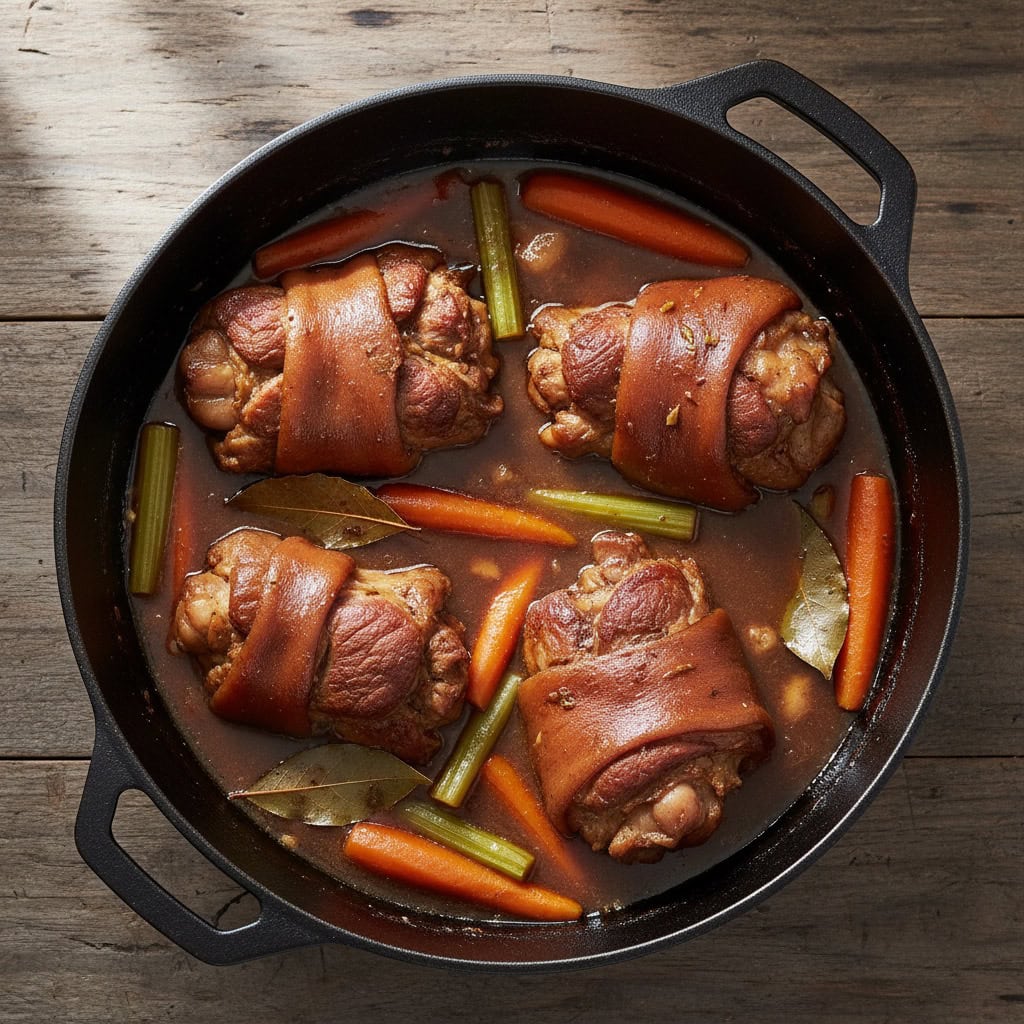
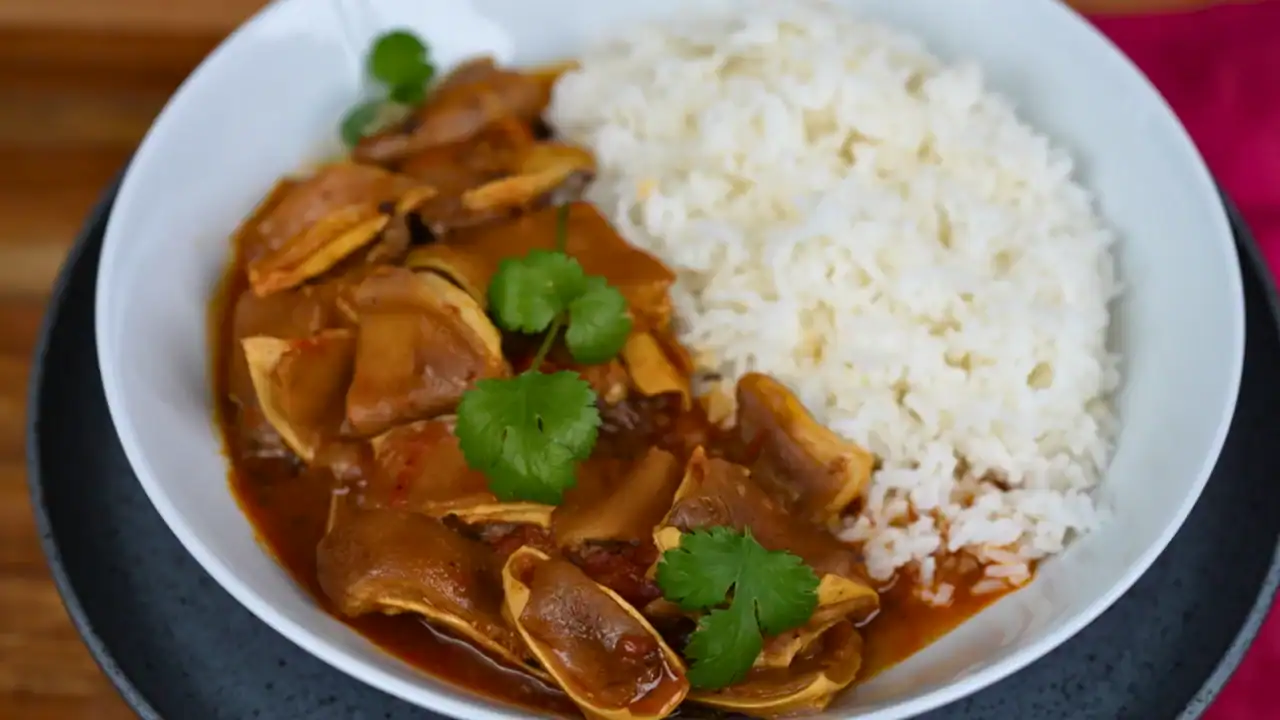
Dominican braised pig feet — known as patas de cerdo guisadas or paticas guisadas — are a traditional comfort dish found on tables across the Dominican Republic. The pig feet are first cleaned thoroughly with vinegar and lime, then seared in caramelized sugar (azucar quemada) to build deep color and flavor. They're braised low and slow in a rich sofrito-based sauce with tomato paste, olives, capers, and Dominican seasonings until the collagen breaks down completely and the meat becomes fall-off-the-bone tender. The result is a sticky, glossy, incredibly rich stew that's served over white rice. It's peasant food elevated to something extraordinary — the kind of dish that takes a cheap, overlooked cut and turns it into the star of the meal.
Why You'll Love This Recipe
- Budget-friendly: Pig feet are one of the cheapest cuts at any butcher or Asian market — usually under $2/lb. This entire dish feeds a family for under $10.
- Collagen-rich: Pig feet are loaded with natural collagen and gelatin, which is incredible for skin, joints, and gut health. The braising liquid turns into a silky, protein-packed sauce.
- Make-ahead friendly: This dish actually tastes better the next day as the flavors deepen and the sauce sets into a rich gel. Perfect for meal prep.
- Freezes beautifully: Portion it into containers and freeze for up to 3 months. Reheat from frozen and it tastes just as good as day one.
- Authentic Dominican flavor: This isn't a simplified version — it's the real deal with azucar quemada, proper sofrito, and all the traditional seasonings.
Ingredients You'll Need
Here's everything you'll need to make authentic Dominican braised pig feet. Most of these ingredients are pantry staples in any Dominican kitchen, and the rest are easy to find at any Latin grocery store or well-stocked supermarket.
- 2.45 lb pig front feet, cleaned and split
- 3 tablespoons white vinegar (for cleaning)
- 2 limes, juiced
- 2 packets sazón con culantro y achiote
- 2 teaspoons adobo seasoning
- 1 teaspoon dried oregano (Dominican)
- 6 garlic cloves
- 3 tablespoons vegetable oil
- 1 yellow onion, roughly chopped
- ½ green bell pepper, chopped
- ½ red bell pepper, chopped
- ¼ cup fresh cilantro with stems, chopped
- 2 tablespoons tomato paste
- ½ cup tomato sauce
- ¼ cup green olives with pimientos
- 1 tablespoon capers
- 3 cups chicken or pork broth
- 2 bay leaves
- 1 teaspoon sugar (for browning)
- Salt and black pepper to taste
Equipment: You'll need a heavy-bottomed Dutch oven or caldero for this recipe — it's essential for even heat distribution during the long braise. If you want to use a pressure cooker instead, an Instant Pot works great and cuts the cooking time significantly.
How to Clean Pig Feet Properly
This step is non-negotiable. Properly cleaning pig feet removes any impurities, reduces the gamey smell, and ensures your final dish tastes clean and delicious. Here's the Dominican vinegar and lime method that my grandmother taught me:
- Rinse under cold water: Place the pig feet in a large bowl and rinse them thoroughly under cold running water. Remove any visible hairs with a knife or tweezers. Some butchers do a great job of cleaning them, others don't — so always check.
- Vinegar soak: Cover the pig feet with cold water and add 3 tablespoons of white vinegar. Let them soak for 15-20 minutes. The vinegar helps draw out impurities and neutralize any strong odors.
- Lime scrub: Drain the vinegar water, then squeeze the juice of 2 limes directly over the pig feet. Use the squeezed lime halves to scrub the surface of each piece. The citric acid acts as a natural cleanser and deodorizer.
- Final rinse: Rinse the pig feet one more time under cold water, then pat dry with paper towels. They should look pale, clean, and smell neutral.
- Optional blanch: For extra-clean results, bring a large pot of water to a boil, add the pig feet, and boil for 5 minutes. Drain and discard the cloudy water. This removes any remaining scum and sets you up for a crystal-clear braising sauce.
Step-by-Step Instructions
Step 1 — Clean and Marinate
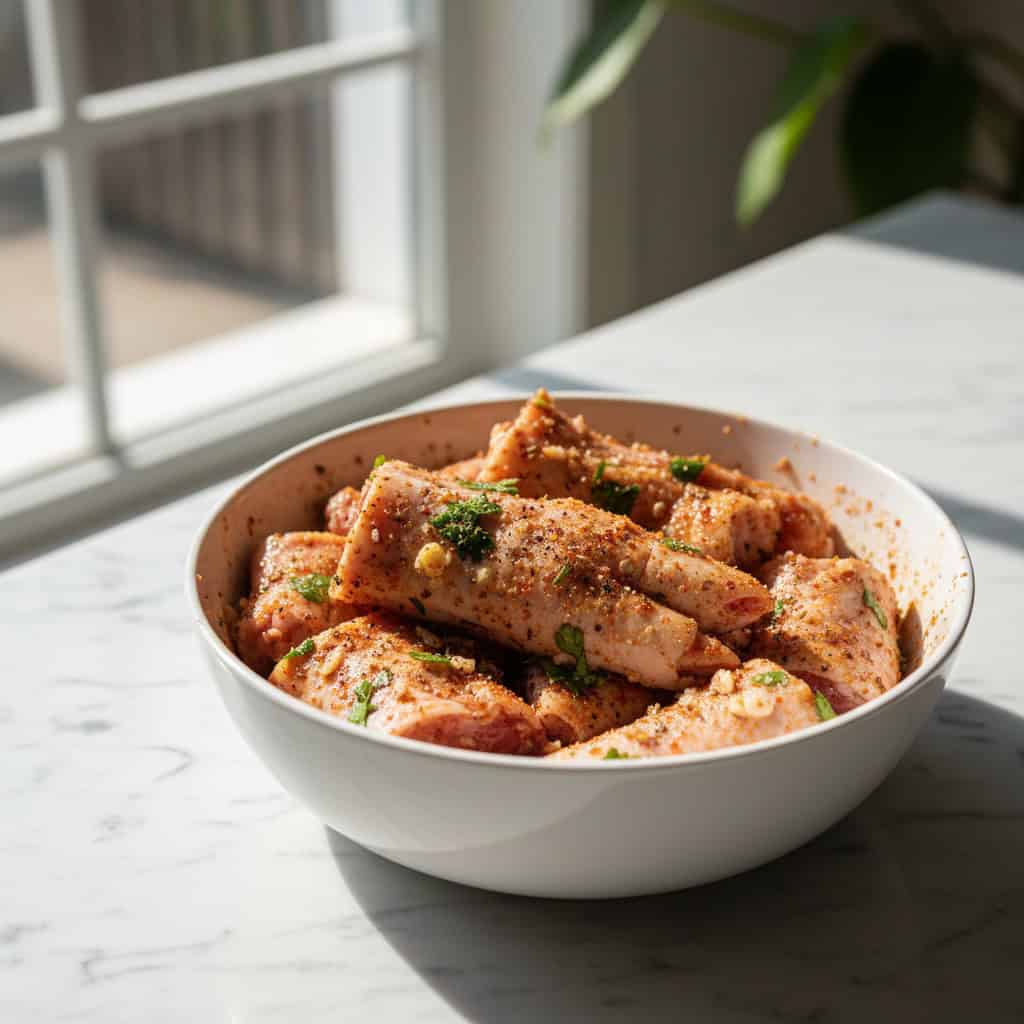
After cleaning the pig feet using the method above, place them in a large bowl. Season with sazón and adobo. In a pilón (mortar and pestle), mash together the garlic, oregano, and a pinch of salt into a paste. Rub half of the garlic-oregano paste and the dry seasonings into the pig feet. Cover and marinate in the fridge for at least 1 hour — overnight if you're serious about it. Dominican food is all about building layers of flavor from the very beginning.
Step 2 — Sear for Color (Azucar Quemada)
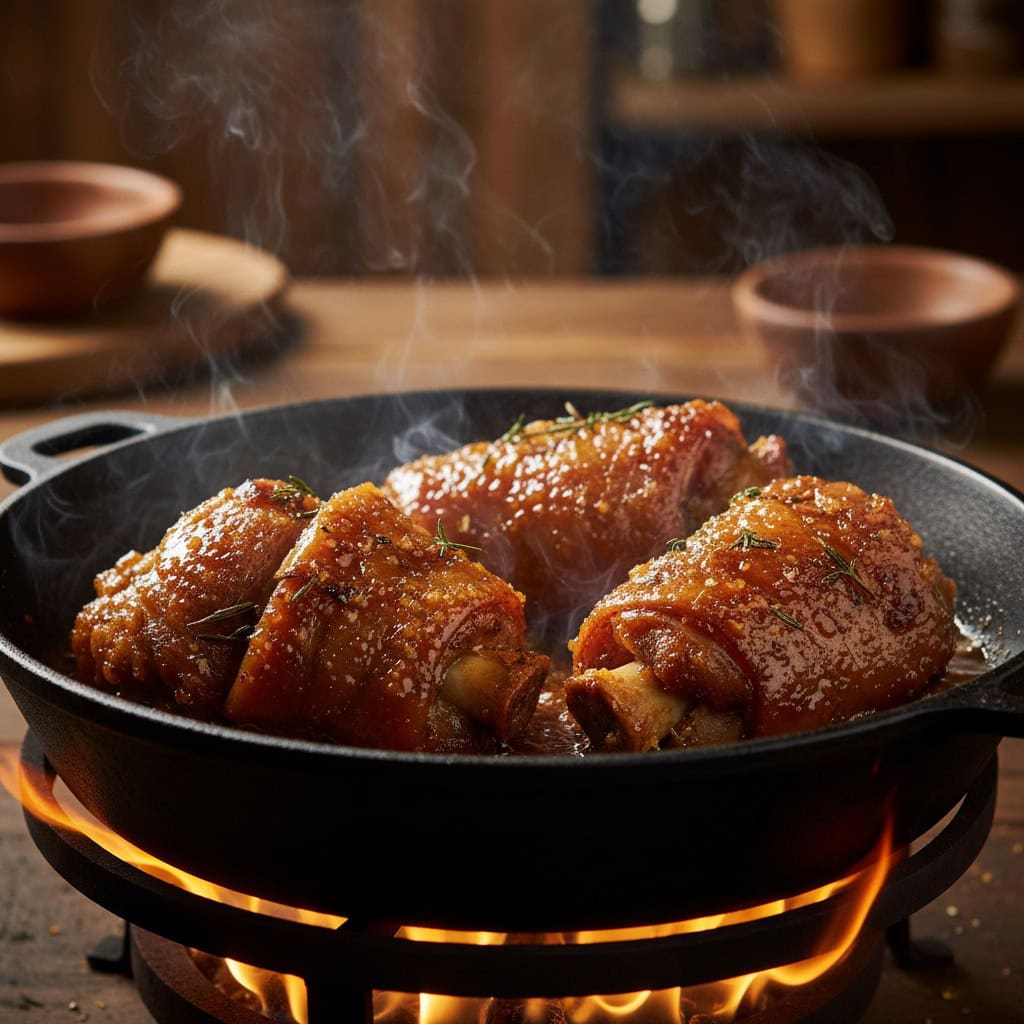
This is the step that separates Dominican braised pig feet from every other version you've seen. Heat vegetable oil in a heavy Dutch oven or caldero over medium-high heat. Add the sugar and let it caramelize to a deep amber — this gives the stew its gorgeous color. Add the pig feet in a single layer and sear undisturbed for 3–4 minutes per side until golden brown. Work in batches. Remove and set aside.
Step 3 — Build the Sofrito Base
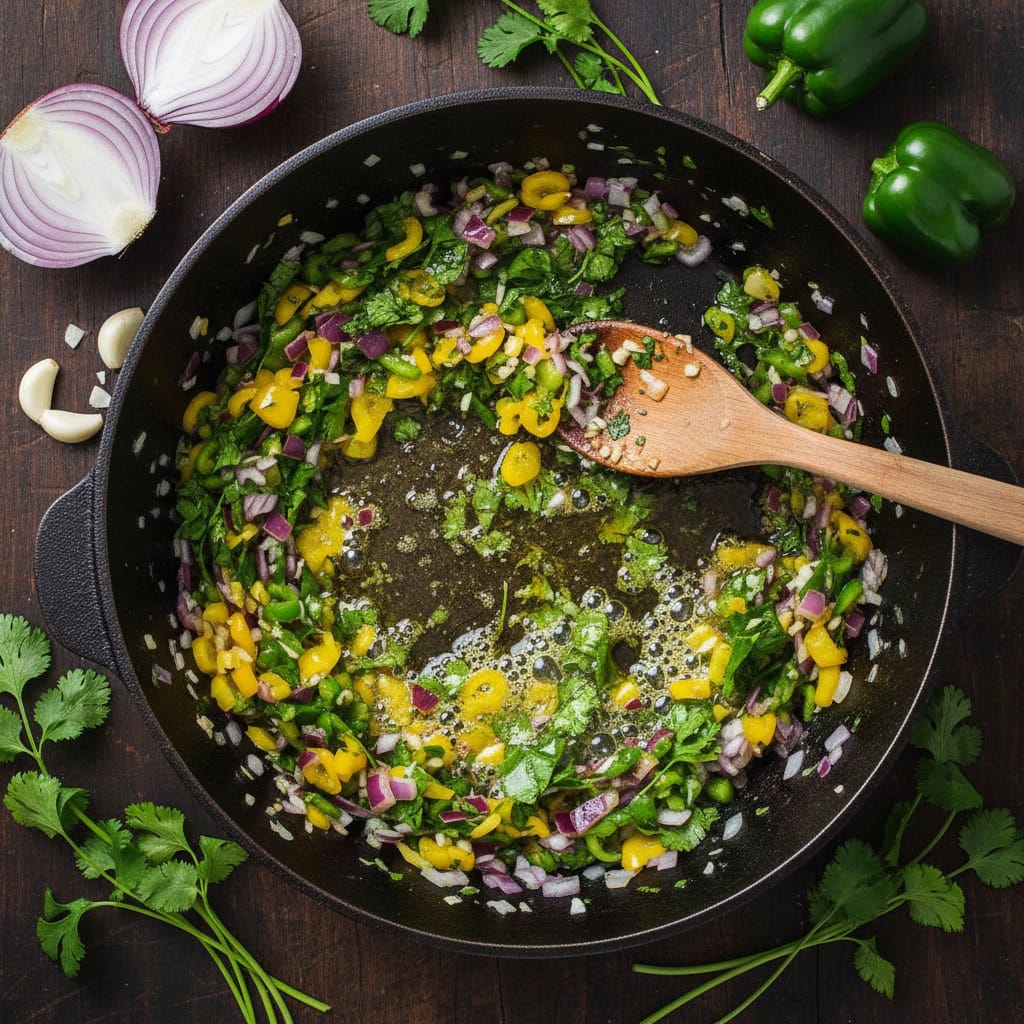
In the same pot, sauté the remaining garlic, onion, green bell pepper, and red bell pepper over medium heat until softened and fragrant, about 5 minutes. Add cilantro and stir for another minute. Push to the sides and add tomato paste — let it cook and caramelize slightly in the center for 2 minutes. That toasted tomato paste is the secret depth.
Step 4 — Braise Low and Slow
Return the pig feet to the pot. Add tomato sauce, broth, olives, capers, and bay leaves. Stir everything together, making sure the feet are mostly submerged. Bring to a boil, then reduce heat to low. Cover and simmer for 2.5 to 3 hours, turning the feet every 45 minutes, until the meat is falling off the bone and the skin is tender and gelatinous. The collagen from the pig feet naturally thickens the sauce as it cooks — no flour or cornstarch needed.
Step 5 — Reduce and Serve
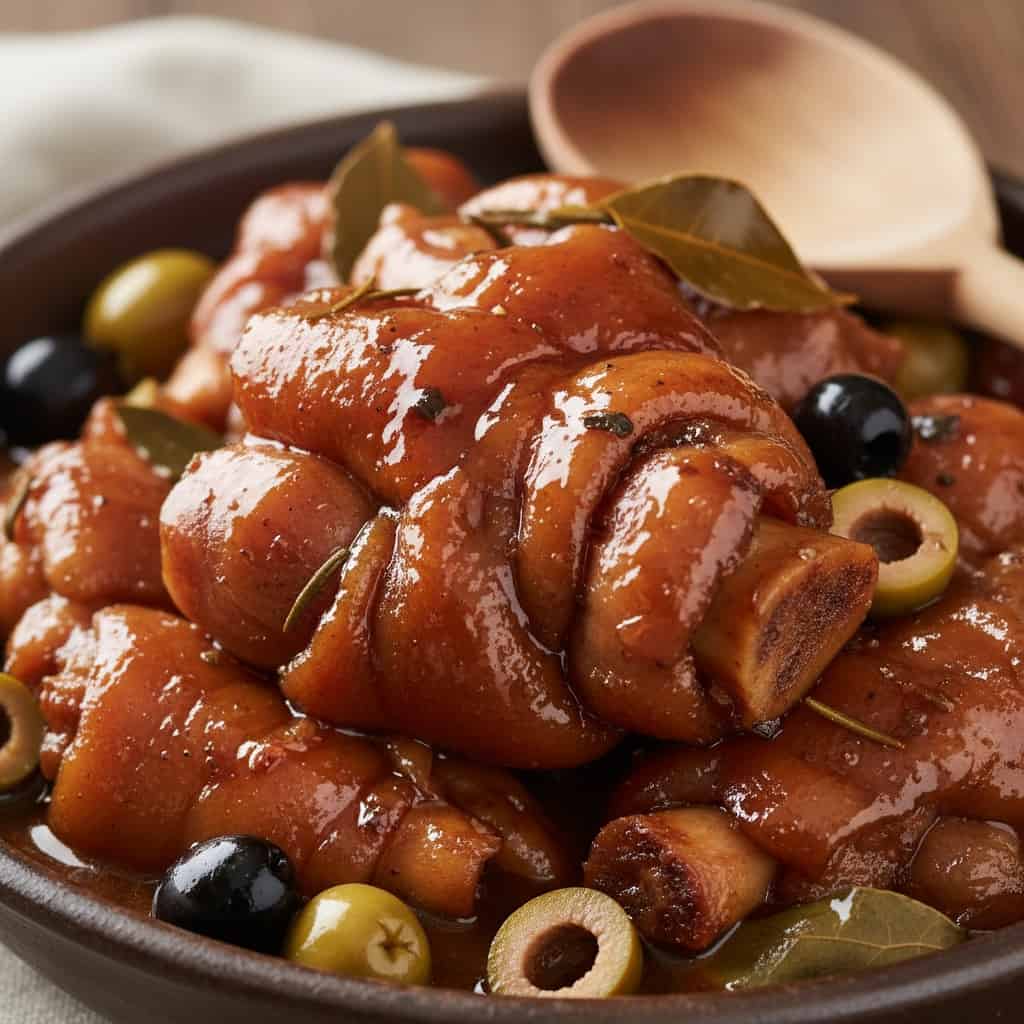
Remove the lid for the last 20 minutes and let the sauce reduce until thick and glossy — it should coat a spoon heavily. Taste and adjust with salt and pepper. Remove bay leaves. Serve over white rice with a side of tostones or boiled yuca. Spoon that thick, dark sauce generously over everything. Garnish with fresh cilantro and a squeeze of lime.
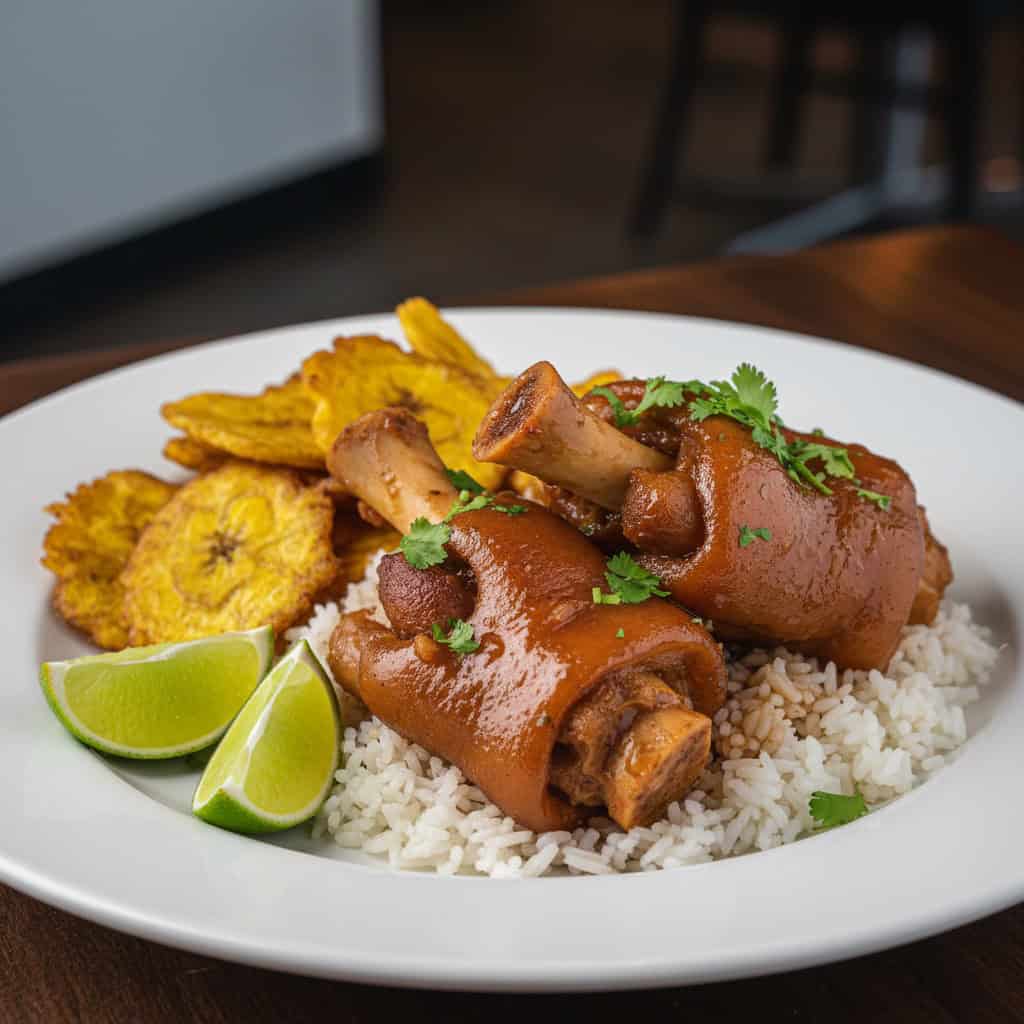
What to Serve with Dominican Pig Feet
Dominican braised pig feet are traditionally served family-style with a spread of sides. Here are the classic pairings:
- White rice: The absolute essential. The sticky braising sauce soaks into plain white rice beautifully. Use long-grain rice cooked Dominican-style with a crispy concon (crunchy rice bottom).
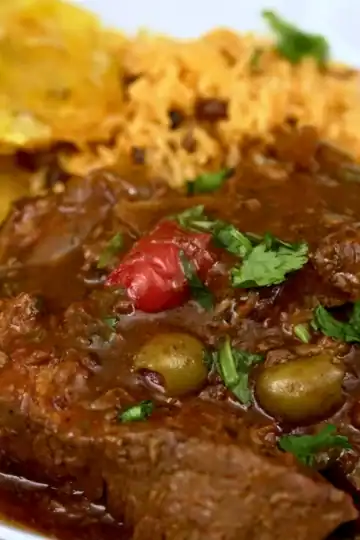
- Tostones: Twice-fried green plantains are the perfect crunchy contrast to the tender, saucy pig feet. Smash them thin, fry them crispy, and sprinkle with salt.
- Yuca (cassava): Boiled yuca with a drizzle of olive oil and pickled onions (cebolla curtida) is a hearty side that makes this meal even more filling.
- Avocado: Sliced ripe avocado on the side adds a creamy, cooling element that balances the richness of the braise. In the DR, we always have avocado on the table.
- Simple salad: A fresh tomato, onion, and avocado salad with lime dressing cuts through the richness perfectly.
Storage and Reheating Tips
One of the best things about this dish is that it stores and reheats incredibly well — it actually improves over time.
- Refrigerator: Store in an airtight container for up to 5 days. The sauce will set into a firm gel as it cools — that's the natural collagen and it's completely normal. It melts right back into a glossy sauce when reheated.
- Freezer: Portion into freezer-safe containers and freeze for up to 3 months. Thaw overnight in the refrigerator before reheating, or reheat directly from frozen on the stovetop over low heat.
- Reheating: Stovetop is best. Add a splash of water or broth, cover, and warm over medium-low heat until heated through and the sauce is glossy again. Microwave works in a pinch — cover and heat in 2-minute intervals, stirring between each.
Frequently Asked Questions
Can I use a pressure cooker or Instant Pot?
Absolutely. An Instant Pot or electric pressure cooker is a great shortcut. Follow the recipe through the searing and sofrito steps on saute mode, then pressure cook on high for 45 minutes with natural release. The results are nearly identical to the stovetop method, and you save about 2 hours of cooking time. Just make sure to reduce the liquid slightly — use about 1.5 cups instead of 2, since pressure cookers don't evaporate as much.
Why do you caramelize sugar first?
The azucar quemada (burnt sugar) technique is a cornerstone of Dominican cooking. It serves two purposes: First, it gives the meat a deep mahogany color that makes the dish look rich and appealing. Second, it adds a subtle bittersweet depth to the flavor profile that you simply can't replicate with any other ingredient. Think of it like making a roux in Cajun cooking — it's a foundational step that transforms the entire dish. Don't skip it.
Are pig feet healthy?
Yes — pig feet are surprisingly nutritious. They're one of the best natural sources of collagen, which supports healthy skin, hair, nails, and joints. A single serving provides a significant amount of protein (about 25-30g) with moderate fat. The gelatin that forms during braising is excellent for gut health and digestion. In many cultures around the world, pig feet and other collagen-rich cuts are considered healing foods. They're also incredibly affordable, making them a smart choice for nutrient-dense eating on a budget.
Can I freeze braised pig feet?
Yes, this dish freezes beautifully for up to 3 months. The high gelatin content actually helps preserve the texture and flavor during freezing. Portion the cooled pig feet and sauce into freezer-safe containers, leaving a little room for expansion. To reheat, thaw overnight in the fridge and warm on the stovetop with a splash of water. You can also reheat directly from frozen — just use low heat and add extra liquid as it thaws.
Dominican Braised Pig Feet
Ingredients
Method
- Rinse the pig feet thoroughly under cold water. Rub them with the vinegar and lime juice — get into every crevice. Let sit 10 minutes, then rinse again. Pat completely dry with paper towels. This step is non-negotiable for flavor.
- In a large bowl, combine the pig feet with sazón and adobo. In a pilón (mortar and pestle), mash together the garlic, oregano, and a pinch of salt into a paste. Rub half of the garlic-oregano paste and the dry seasonings into the pig feet. Reserve the other half for the sofrito. Cover and marinate in the fridge for at least 1 hour — overnight if you’re serious about it.
- Heat vegetable oil in a heavy Dutch oven or caldero over medium-high heat. Add the sugar and let it caramelize to a deep amber — this gives the stew its gorgeous color. Add the pig feet in a single layer and sear undisturbed for 3–4 minutes per side until golden brown. Work in batches. Remove and set aside.
- In the same pot, sauté the remaining garlic, onion, green bell pepper, and red bell pepper over medium heat until softened and fragrant, about 5 minutes. Add cilantro and stir for another minute. Push to the sides and add tomato paste — let it cook and caramelize slightly in the center for 2 minutes. That toasted tomato paste is the secret depth.
- Return the pig feet to the pot. Add tomato sauce, broth, olives, capers, and bay leaves. Stir everything together, making sure the feet are mostly submerged. Bring to a boil, then reduce heat to low. Cover and simmer for 2.5 to 3 hours, turning the feet every 45 minutes, until the meat is falling off the bone and the skin is tender and gelatinous.
- Remove the lid for the last 20 minutes and let the sauce reduce until thick and glossy — it should coat a spoon heavily. Taste and adjust with salt and pepper. Remove bay leaves.
- Serve over white rice with a side of tostones or boiled yuca. Spoon that thick, dark sauce generously over everything. Garnish with fresh cilantro and a squeeze of lime.
Video
Notes
- Pig feet from Asian markets are often cleaner and better split than supermarket versions.
- The caramelized sugar trick is classic Dominican — don’t skip it. It’s what gives the stew that deep mahogany color.
- The longer the braise, the better. 3 hours is the sweet spot — the collagen breaks down and makes the sauce naturally thick and silky.
- This reheats even better the next day. Make a big batch.
- Pressure cooker shortcut: Cook on high pressure for 45 minutes, then reduce uncovered to thicken the sauce.
Tried this recipe?
Let us know how it was!More Dominican Recipes You'll Love
If you enjoyed this recipe, check out some of our other authentic Dominican dishes:
- Dominican Pollo Guisado (Braised Chicken)
- Dominican Sancocho (Seven Meat Stew)
- Dominican Mangu with Los Tres Golpes
- Dominican Habichuelas Guisadas (Stewed Beans)
- Moro de Guandules (Rice with Pigeon Peas)
This post may contain affiliate links. As an Amazon Associate, I earn from qualifying purchases at no extra cost to you.



Leave a Reply