Ingredients
Method
- Preheat the oven to 400 degrees and lightly grease a 9x13 pan. Cook the egg noodles according to the package directions. Drain and add pasta to the prepared pan.
- Meanwhile, melt butter in a medium-sized saucepan over medium heat. Add in onion and saute for 5 to 7 minutes, until softened. Stir in garlic and flour and cook for 1 minute. Slowly pour in chicken broth and milk and bring to a simmer, stirring constantly.
- Once the mixture has thickened, stir in peas, and tuna. Pour over pasta in the 9x13 pan. Add in cheddar cheese and toss to coat.
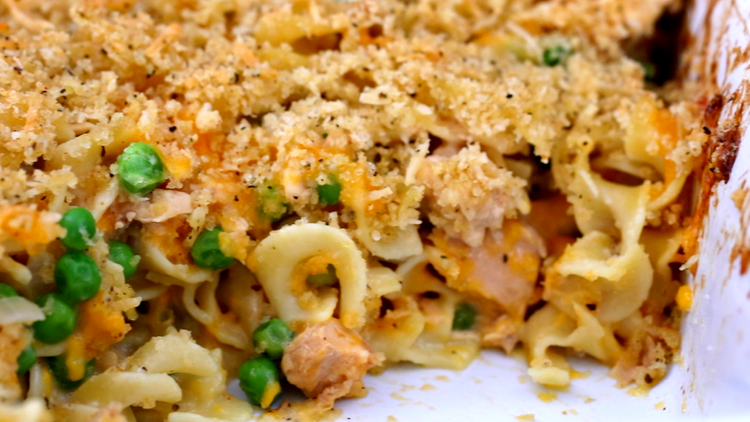
- In a small bowl, use a fork to mix together bread crumbs, parmesan, and olive oil. Sprinkle over the pasta.
- Bake in the preheated oven, uncovered, for 20 to 25 minutes, until bread crumbs are lightly browned. Serve hot.
- Enjoy your Tuna Casserole Without Soup!
- Tuna Pasta Salad
- Sweet Potato Casserole
- Campbells Green Bean Casserole
Nutrition
Notes
Pro Tips:
Always use tuna packed in oil, not water, because the oil adds richness that water-packed tuna can't match, and those extra fats help bind the casserole together instead of making it dry and crumbly like so many failed attempts I've seen. Cook your pasta exactly one minute less than al dente because it'll continue cooking in that hot cream sauce and absorb those flavors – I learned this the hard way after making mushy casseroles for months before figuring out the timing. Make your roux darker than you think you need, cooking the flour and butter until it smells nutty and toasted, because this deepens the flavor foundation and prevents that raw flour taste that haunts so many homemade cream sauces. Add a splash of the pasta cooking water to your cream sauce if it looks too thick because that starchy water helps everything come together silkier than regular water or milk ever could, creating restaurant-level smoothness at home.
Always use tuna packed in oil, not water, because the oil adds richness that water-packed tuna can't match, and those extra fats help bind the casserole together instead of making it dry and crumbly like so many failed attempts I've seen. Cook your pasta exactly one minute less than al dente because it'll continue cooking in that hot cream sauce and absorb those flavors – I learned this the hard way after making mushy casseroles for months before figuring out the timing. Make your roux darker than you think you need, cooking the flour and butter until it smells nutty and toasted, because this deepens the flavor foundation and prevents that raw flour taste that haunts so many homemade cream sauces. Add a splash of the pasta cooking water to your cream sauce if it looks too thick because that starchy water helps everything come together silkier than regular water or milk ever could, creating restaurant-level smoothness at home.