Ingredients
Method
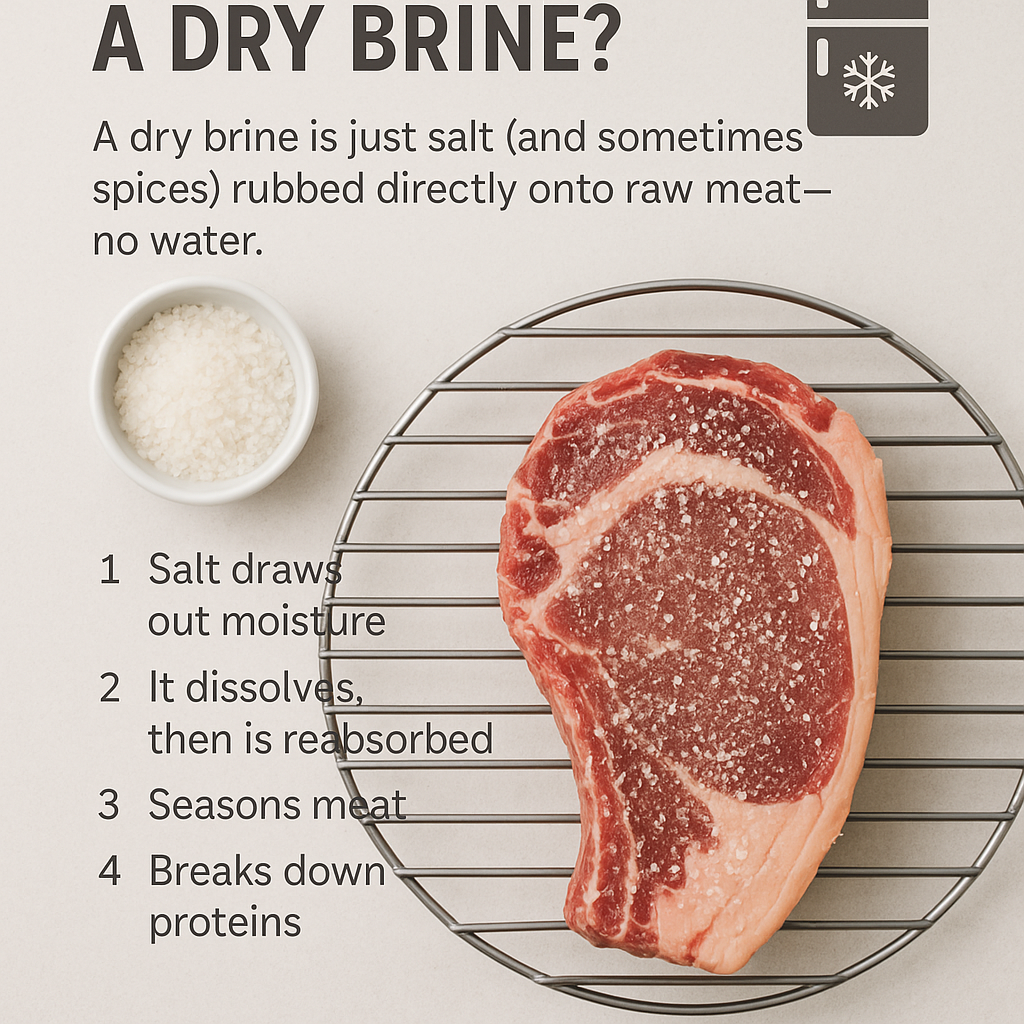
- Salt pulls moisture out of the meat.
- That moisture dissolves the salt on the surface.
- Over time, it’s reabsorbed into the meat — seasoning from the inside out.
- The salt also breaks down muscle fibers, making meat more tender.
- You end up with juicier, more flavorful food — with better browning and crispier skin.
Nutrition
Notes
Pro Tips:
Use 1% of the meat's weight in kosher salt because this ratio creates optimal osmosis without over-salting, and weighing ensures consistency across different cuts and sizes. Apply dry brine 40 minutes to 24 hours before cooking because the salt needs time to draw out moisture, then reabsorb it with dissolved proteins for maximum tenderness. Pat meat completely dry before applying salt because any surface moisture dilutes the salt concentration and prevents proper moisture extraction during the brining process. For thick cuts like pork shoulder, score the fat cap in a crosshatch pattern before dry brining because this allows salt penetration into the meat below the fat barrier.
Use 1% of the meat's weight in kosher salt because this ratio creates optimal osmosis without over-salting, and weighing ensures consistency across different cuts and sizes. Apply dry brine 40 minutes to 24 hours before cooking because the salt needs time to draw out moisture, then reabsorb it with dissolved proteins for maximum tenderness. Pat meat completely dry before applying salt because any surface moisture dilutes the salt concentration and prevents proper moisture extraction during the brining process. For thick cuts like pork shoulder, score the fat cap in a crosshatch pattern before dry brining because this allows salt penetration into the meat below the fat barrier.