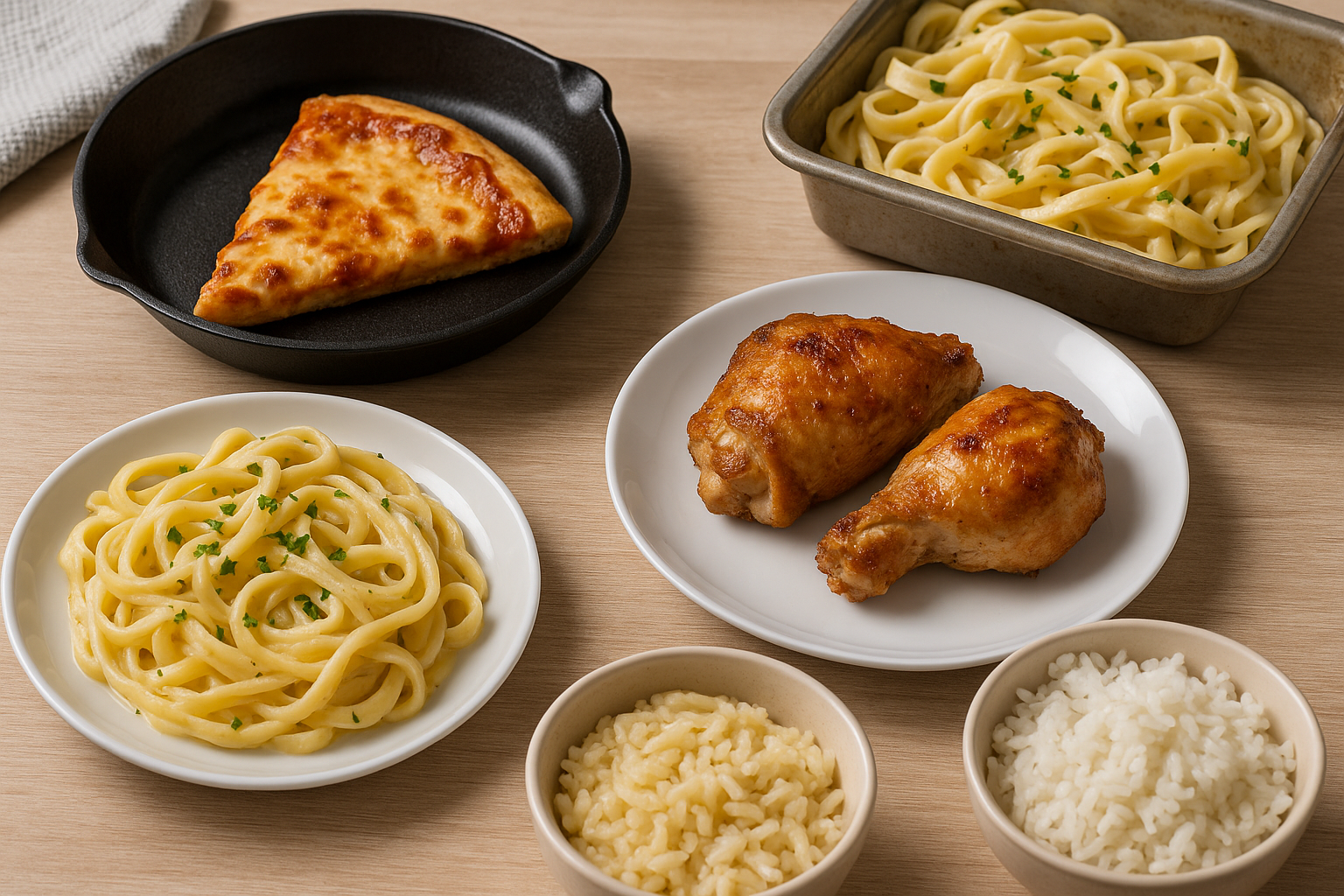
Ingredients
Method
- Preheat oven to 300°F (150°C)
- Place chicken in a baking dish
- Add a splash of broth or water
- Cover tightly with foil
- Heat 10–15 min, or until warm
Nutrition
Notes
Pro Tips:
Add liquid strategically based on the original cooking method—dry-roasted items need surface moisture (damp paper towel), while braised dishes need bottom liquid (stock or wine) because this mimics their original cooking environment and prevents texture breakdown. After years of reheating my own meal prep, I learned to reheat in 30-second intervals at 60% power, stirring between each interval, because microwaves create hot spots that continue cooking even after stopping, leading to uneven moisture distribution. Choose your reheating liquid wisely—use the original cooking liquid when possible (like sofrito for Dominican stews, coconut milk for curry), or match the fat content of the original dish because mismatched liquids create separation and greasiness. Cover tightly but vent one corner to allow excess steam to escape while retaining moisture, because too much trapped steam creates condensation that drips back and makes food soggy rather than moist—there's a crucial difference between the two.
Add liquid strategically based on the original cooking method—dry-roasted items need surface moisture (damp paper towel), while braised dishes need bottom liquid (stock or wine) because this mimics their original cooking environment and prevents texture breakdown. After years of reheating my own meal prep, I learned to reheat in 30-second intervals at 60% power, stirring between each interval, because microwaves create hot spots that continue cooking even after stopping, leading to uneven moisture distribution. Choose your reheating liquid wisely—use the original cooking liquid when possible (like sofrito for Dominican stews, coconut milk for curry), or match the fat content of the original dish because mismatched liquids create separation and greasiness. Cover tightly but vent one corner to allow excess steam to escape while retaining moisture, because too much trapped steam creates condensation that drips back and makes food soggy rather than moist—there's a crucial difference between the two.