Ingredients
Method
- Preheat oven to 500 degrees F.
- Trim silver skin or connective tissue off tenderloins with a very sharp thin knife.
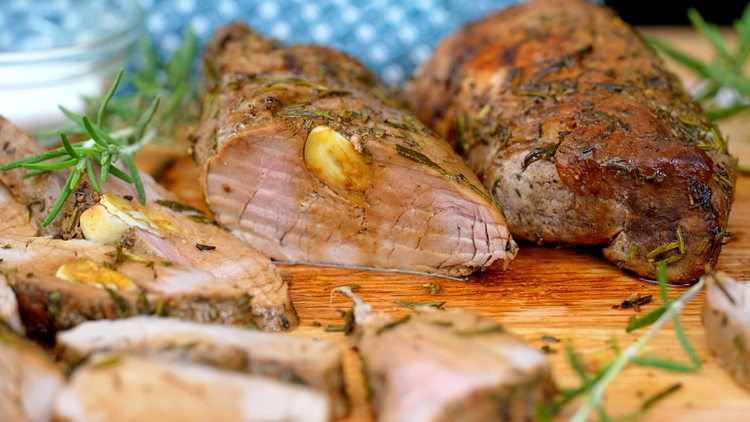
- Place tenderloins on a nonstick cookie sheet with a rim or 9x13 baking dish. Coat tenderloins in a few tablespoons of balsamic vinegar, rubbing vinegar into meat. Drizzle tenderloins with extra-virgin olive oil, just enough to coat. Cut small slits into meat and disperse chunks of cracked garlic cloves into meat. Sprinkle salt and pepper with rosemary and thyme and rub meat with blend. Roast in hot oven 20 minutes or until the internal temperature reads 145°F.
- Let meat rest, transfer to a carving board, slice and serve.
Nutrition
Notes
Pro Tips:
Buy tenderloins that are similar in thickness throughout—avoid the tapered ones. Uneven thickness means uneven cooking, and with lean pork tenderloin, there's zero margin for error. The thick end will be perfect while the thin end turns to cardboard. After years of making this, I learned to score the surface lightly in a crosshatch pattern before marinating. The balsamic penetrates deeper into those tiny cuts, and when it reduces during roasting, you get these beautiful caramelized lines that look restaurant-quality. Use aged balsamic if you can find it—the 8-year minimum kind, not grocery store 'balsamic glaze.' The concentrated grape sugars create a glossy, restaurant-style coating that cheap balsamic just can't match. It's worth the extra few dollars for the transformation. Let the reduced balsamic cool for 2-3 minutes before the final brush—this is crucial. Hot glaze slides right off, but slightly cooled glaze clings and creates that gorgeous lacquered finish that makes this dish look like it came from a high-end kitchen.
Buy tenderloins that are similar in thickness throughout—avoid the tapered ones. Uneven thickness means uneven cooking, and with lean pork tenderloin, there's zero margin for error. The thick end will be perfect while the thin end turns to cardboard. After years of making this, I learned to score the surface lightly in a crosshatch pattern before marinating. The balsamic penetrates deeper into those tiny cuts, and when it reduces during roasting, you get these beautiful caramelized lines that look restaurant-quality. Use aged balsamic if you can find it—the 8-year minimum kind, not grocery store 'balsamic glaze.' The concentrated grape sugars create a glossy, restaurant-style coating that cheap balsamic just can't match. It's worth the extra few dollars for the transformation. Let the reduced balsamic cool for 2-3 minutes before the final brush—this is crucial. Hot glaze slides right off, but slightly cooled glaze clings and creates that gorgeous lacquered finish that makes this dish look like it came from a high-end kitchen.
