Ingredients
Method
- Pat dry the shrimp with paper towels. In a bowl, season with paprika, kosher salt, and black pepper. Toss to coat evenly and set aside.
- Cut off the ends of each plantain. Make a lengthwise incision along the ridges, careful not to cut too deep. Peel the skin off and slice the plantains into one-inch pieces. Soak the slices in water to prevent browning.
- Heat 1 tablespoon of olive oil in a large skillet over medium-high heat. Cook the seasoned shrimp for about 2 minutes per side until pink and opaque. Remove from skillet and set aside.
- In a frying pan, heat enough canola oil to cover the plantains. Fry the plantain pieces in batches until golden brown, flipping occasionally. Drain on paper towels.
- In a mortar or Pilon, mash the fried plantains with butter, salt, pepper, minced garlic, and hot chicken stock. Continue mashing and adding ingredients until well combined and smooth.
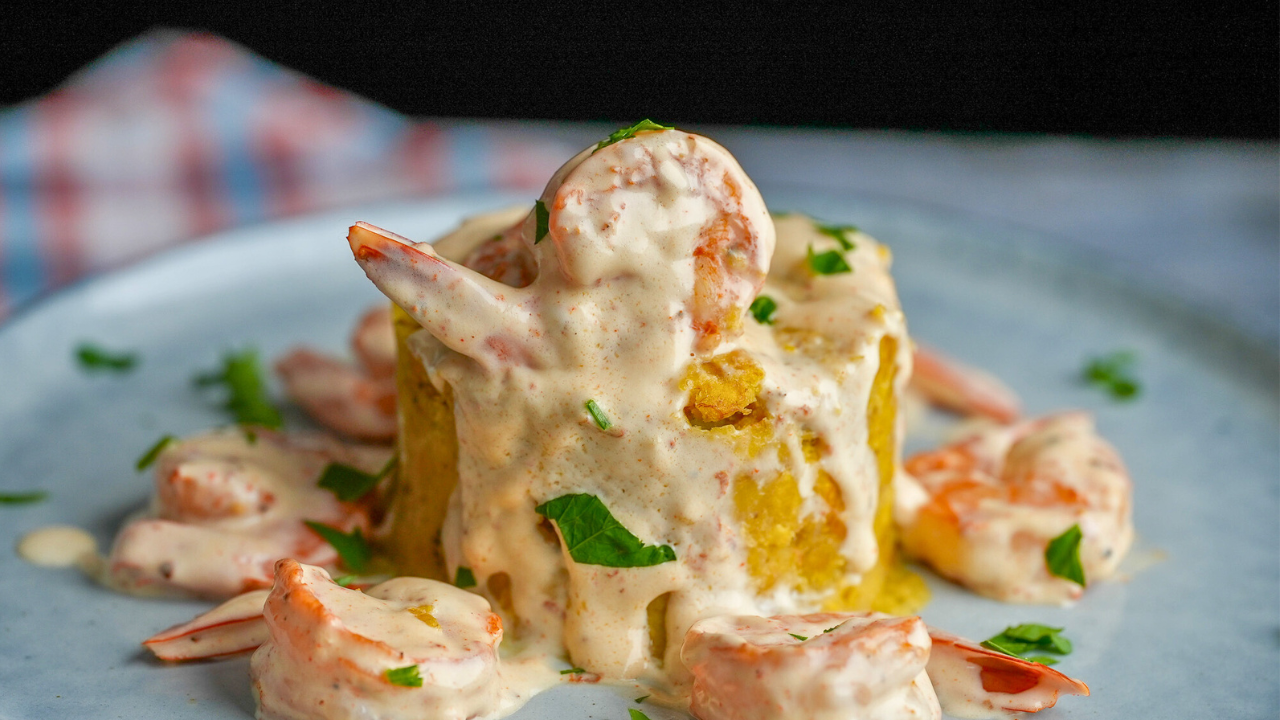
- Use a food mold or small bowl to shape the mofongo. Press it into the mold and then invert it onto a plate.
- In the same skillet used for the shrimp, heat the garlic Alfredo sauce over medium heat until it simmers. Add the shrimp back into the skillet and coat them with the sauce.
- Place the shrimp over the mofongo and drizzle with the garlic Alfredo sauce. Garnish with chopped fresh parsley.
- Serve the Garlic Shrimp Mofongo warm, as the plantains can harden if left to sit.
Nutrition
Notes
Pro Tips:
Choose plantains that are yellow with significant black spots but still firm to the touch - they should give slightly but not feel mushy. This sweetness level perfectly balances the salty chicharrón and garlic while still holding structure when mashed. Fry your plantains in the same oil you'll cook the shrimp in, but do the plantains first. The starchy plantain oil creates better browning on the shrimp and adds another layer of flavor connection between the components. When mashing in your pilón or mortar, work in small batches and use a twisting motion rather than straight pounding - this creates the proper texture without turning your plantains into purée, maintaining those rustic chunks Dominicans expect. Add the shrimp to your mofongo while both components are still hot, then immediately drizzle the reserved garlic-shrimp oil over everything. The heat helps the flavors marry and creates steam that makes each bite more aromatic.
Choose plantains that are yellow with significant black spots but still firm to the touch - they should give slightly but not feel mushy. This sweetness level perfectly balances the salty chicharrón and garlic while still holding structure when mashed. Fry your plantains in the same oil you'll cook the shrimp in, but do the plantains first. The starchy plantain oil creates better browning on the shrimp and adds another layer of flavor connection between the components. When mashing in your pilón or mortar, work in small batches and use a twisting motion rather than straight pounding - this creates the proper texture without turning your plantains into purée, maintaining those rustic chunks Dominicans expect. Add the shrimp to your mofongo while both components are still hot, then immediately drizzle the reserved garlic-shrimp oil over everything. The heat helps the flavors marry and creates steam that makes each bite more aromatic.
